Remember that there is only “one Mediator
between God and man”; that there is but “one
sacrifice for sins,” offered “once” for all
and “for ever.” Through the “one Mediator,”
by the “one sacrifice,” “draw nigh to God,
and He will draw nigh to you.” You need no
mediator(No pope) between yourself and
Christ. The priest is a false
intruder there(The pope). Jesus
calls you to come to Himself. He is both
human and divine. He is bone
of your bone, and flesh of your flesh, yet without
sin. God is in Him. He is
one with us and one with God. Suffer nothing
to come between your soul and Him. Suffer no
saint, no angel, no virgin, no priest,(No pope)
to come between you and Jesus Christ. Go to
Him for the pardon of all your sins. Make
to Him your confessions. He can
absolve you, and will, yea, does, if you truly
believe in Him. Priestly
absolution is a lie. It is a
blasphemous pretense. The sentence, “I
absolve thee,” whether from the mouth of Romish
priest or Protestant minister,
is profane. Be not deluded by it. Your
fellow sinner(The pope) cannot absolve you
from the sins you have committed against
God. Turn from these idols and vanities.
Jesus is all you need. His
blood is sufficient to atone, and cleanses those
who simply trust in Him ‘from all
sin.” “Search the Scriptures,”
they testify of Him. Come to Him
that you may have life. His heart is
touched with the feeling of our infirmities; none
can sympathize as He can; none can help as
He. To you, to each one, He
says, “Him that cometh unto ME I will in
no wise cast out.” “Heaven and earth shall pass
away, but MY WORDS shall not pass away.”
“Lord, to whom shall we go? THOU hast the
words of eternal life.” Thou alone art ALL
we need, for Thou alone art “ALL IN
ALL.
Romanism and the Reformation P. 395, 396 (1887)
Saturday, September 19, 2015


Shareholder nuns tell McDonald’s to drop antibiotics from all meat

As concern over the dangers of drug-resistant bacteria rises, a set of
shareholders led by a group of nuns is telling McDonald’s that dropping
chicken raised on human antibiotics is not enough and that it needs to
do the same with its pork and beef products.
This week, the Congregation
of Benedictine Sisters of Boerne from Texas introduced a shareholder
resolution that, if approved, would require those that supply McDonald’s
with any type of meat – be it chicken, pork or beef – to stop giving
their animals antibiotics that are used to fight disease in humans.The move comes as a new report gave letter grades to popular fast food chains based on their use of antibiotics in their products. McDonald’s scored a “C” grade, while the only two to score an “A” were Chipotle and Panera Bread. Chains like Taco Bell, Burger King and Pizza Hut were handed failing grades.
Back in March, McDonald’s announced that it would stop using human antibiotics in its chicken products by March 2017.
That move was welcomed by the Benedictine congregation, which owns stock in McDonald’s as part of the Interfaith Center on Corporate Responsibility (ICCR), but the sisters said that limiting the move to chickens is a “double standard” and insufficient considering “the damage overexposure to antibiotics has on public health.”
“We question why this important commitment isn't also being applied to the beef and pork they source, as hamburgers are a mainstay of McDonald's business,” said Sr. Susan Mika of the Congregation in a statement.
"This double standard makes no sense to us; what's good for the goose, ought to be good for the gander, or in this case, the whole farmyard."
A similar resolution was introduced by Mika in December 2014, according to CNN, but it was withdrawn when McDonald’s committed itself to limiting antibiotics in the chickens it purchases. Now, however, it’s back on the table and ICCR says there will be more to come from shareholders.
On its website, ICCR says that it “engage[s] hundreds of multinational corporations annually to promote more sustainable and just practices because … they will secure a better future for their employees, their customers and their shareholders.”
The push also comes as reports continue to highlight the danger that antibiotic-resistant bacteria poses not just for people now, but in the future. Every year, at least 2 million Americans suffer an antibiotic-resistant illness, and 23,000 of them die, according to data from the Centers for Disease Control and Prevention.
Taking antibiotics that humans rely on and using them on animals is a trend that is being increasingly linked to the rise of strong illnesses, since the bacteria develops resistance in the animals when they are not given strong enough doses. When and if the bacteria spread to humans, it becomes noticeably harder to treat.
In 2011, the US Food and Drug Administration stated that 80 percent of all antibiotics used in the United States are within the realm of animal agriculture.
Meanwhile, a separate study from December 2014 found that, if no major adjustments are made, resistant bacteria could take the lives of 10 million people around the world every year.
McDonald’s is one of many companies now trying to get past this issue. In April, the largest poultry producer in the US, Tyson Foods, announced it would also eliminate the use of human antibiotics in its chicken by September 2017.
RT
God is in control
Psalm 46:1
...God is our refuge and
strength, a very present help in trouble. 2 Therefore
will not we fear, though the earth be
removed, and though the mountains be carried into the
midst of the sea;
3 Though the waters thereof roar and be troubled, though the mountains shake with the swelling thereof. Selah. 4 There is a river, the streams whereof shall make glad the city of God, the holy place of the tabernacles of the most High. 5 God is in the midst of her; she shall not be moved: God shall help her, and that right early. 6 The heathen raged, the kingdoms were moved: he uttered his voice, the earth melted. 7 The LORD of hosts is with us; the God of Jacob is our refuge. Selah.
3 Though the waters thereof roar and be troubled, though the mountains shake with the swelling thereof. Selah. 4 There is a river, the streams whereof shall make glad the city of God, the holy place of the tabernacles of the most High. 5 God is in the midst of her; she shall not be moved: God shall help her, and that right early. 6 The heathen raged, the kingdoms were moved: he uttered his voice, the earth melted. 7 The LORD of hosts is with us; the God of Jacob is our refuge. Selah.
Psalm 47:7 For God is the King of all the earth: sing ye praises with understanding. 8 God reigneth over the heathen: God sitteth upon the throne of his holiness.
Isaiah 54: 17 No weapon that is formed against thee shall prosper; and every tongue that shall rise against thee in judgment thou shalt condemn. This is the heritage of the servants of the LORD, and their righteousness is of me, saith the LORD.
1Chronicles 29:11 Thine, O LORD, is the greatness, and the power, and the glory, and the victory, and the majesty: for all that is in the heaven and in the earth is thine; thine is the kingdom, O LORD, and thou art exalted as head above all. 12 Both riches and honour come of thee, and thou reignest over all; and in thine hand is power and might; and in thine hand it is to make great, and to give strength unto all. 13 Now therefore, our God, we thank thee, and praise thy glorious name.
1 Corinthians 15:57 But thanks be to God, which giveth us the victory through our Lord Jesus Christ. 58 Therefore, my beloved brethren, be ye stedfast, unmoveable, always abounding in the work of the Lord, forasmuch as ye know that your labour is not in vain in the Lord.
1 John 5:4 For whatsoever is born of God overcometh the world: and this is the victory that overcometh the world, even our faith. 5 Who is he that overcometh the world, but he that believeth that Jesus is the Son of God?
Romans 8:32 He that spared not his own Son, but delivered him up for us all, how shall he not with him also freely give us all things? 33 Who shall lay any thing to the charge of God's elect? It is God that justifieth. 34 Who is he that condemneth? It is Christ that died, yea rather, that is risen again, who is even at the right hand of God, who also maketh intercession for us. 35 Who shall separate us from the love of Christ? shall tribulation, or distress, or persecution, or famine, or nakedness, or peril, or sword? ... 37 Nay, in all these things we are more than conquerors through him that loved us. 38 For I am persuaded, that neither death, nor life, nor angels, nor principalities, nor powers, nor things present, nor things to come, 39 Nor height, nor depth, nor any other creature, shall be able to separate us from the love of God, which is in Christ Jesus our Lord.
The greatest want of the world is the want of men who will stand for the right though the heavens fall.
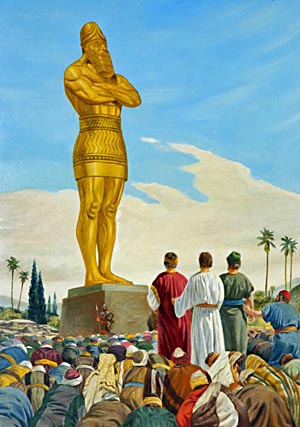
By their wisdom and justice, by the purity and benevolence of their daily life, by their devotion to the interests of the people,--and they, idolaters,--Joseph and Daniel proved themselves true to the principles of their early training, true to Him whose representatives they were. These men, both in Egypt and in Babylon, the whole nation honored; and in them a heathen people, and all the nations with which they were connected, beheld an illustration of the goodness and beneficence of God, an illustration of the love of Christ.
What a lifework was that of these noble Hebrews! As they bade farewell to their childhood home, how little did they dream of their high destiny! Faithful and steadfast, they yielded themselves to the divine guiding, so that through them God could fulfill His purpose.
The same mighty truths that were revealed through these men, God
desires to reveal through the youth and the children of today. The
history of Joseph and Daniel is an illustration of what He will do for
those who yield themselves to Him and with the whole heart seek to
accomplish His purpose.
The greatest want of the world is the want of men-- men who will not be bought or sold, men who in their inmost souls are true and honest, men who do not fear to call sin by its right name, men whose conscience is as true to duty as the needle to the pole, men who will stand for the right though the heavens fall.
But such a character is not the result of accident; it is not due
to special favors or endowments of Providence. A noble character is the
result of self-discipline, of the subjection of the lower to the higher
nature--the surrender of self for the service of love to God and man.
The youth need to be impressed with the truth that their endowments
are not their own. Strength, time, intellect, are but lent treasures.
They belong to God, and it should be the resolve of every youth to put
them to the highest use. He is a branch, from which God expects fruit; a
steward, whose capital must yield increase; a light, to illuminate the
world's darkness.
Every youth, every child, has a work to do for the honor of God and the uplifting of humanity.
Education P. 56-58.
The Saint Bartholomew's Day Massacre
The
Reformed Christians were intent on planting colonies in the New World
and this was absolutely anathema to King Philip and the Spanish Inquisition.
French
Protestants were colonizing the New World!!
The French Protestants
ignored Pope Alexander's Bull against colonizing the New World, and
as early as 1562, they tried to establish a colony in the area now known
as South Carolina. Queen Elizabeth I encouraged this colonization as
they were her co-religionists and she also bore the title:Queen of France.That colony, under Jean Ribault, was wiped out by brutal Spanish soldiers from their base in Augustine, Florida.
The French Protestants were also sending help to their suffering brethren in Holland, who were defying overwhelming odds in order to throw off the Spanish yoke.
Spain replaced France as the mainstay
of the Vatican
All during the Dark
Ages, France was known as the eldest daughter and main pillar
of the Papacy. King Pepin of the Franks (the father of Charlemagne) had given the Papal States to the Pope almost 1000 years earlier. Almost half of the real estate in the country was owned by the clergy.
With the establishment of the Jesuit Order, the Papacy became a totally Spanish owned and controlled institution.
Their 2 mains goals were: fight Protestant Christianity and keep all but Spanish away from the New World.
The
3 masterminds behind the massacre!!
The 3 masterminds
behind the massacre of the French Protestants were: King Philip II,
Pope Gregory XIII and Francis Borgia.Between this unholy trinity, it is hard to say which had the most zeal in shedding the blood of the saints.
 King Philip II (1527-1598). King from 1556 to 1598. |
 Gregory XIII (1572 to 1585) |
 Francis Borgia (1510 -1572). Jesuit general from 1565 to 1572. |
Don Francis Borgia was the great-grandson of Pope Alexander VI and co-founder of the Jesuits with Ignatius LIEola. On his mother's side he was descended from King Ferdinand of Aragon.
King Philip II was the most bigoted fanatic that ever counted beads or crossed himself before a crucifix. It was said that the only time he ever laughed was when he heard the report of the infamous massacre:
"But nothing could exceed the satisfaction which the event occasioned in the mind of Philip the Second. There was an end now of all assistance from the French Government to the Netherlands Protestants. "The news of the events upon St. Bartholomew's Day," wrote the French envoy at Madrid, St. Goard, to Charles IX., "arrived on the 7th September. The King, on receiving the intelligence, showed, contrary to his natural custom, so much gaiety, that he seemed more delighted than with all the good fortune or happy incidents which had ever before occurred to him. He called all his familiars about him in order to assure them that your Majesty was his good brother, and that no one else deserved the title of Most Christian. He sent his secretary Cayas to me with his felicitations upon the event, and with the information that he was just going to St. Jerome to render thanks to God, and to offer his prayers that your Majesty might receive Divine support in this great affair. I went to see him next morning, and as soon as I came into his presence he began to laugh, and, with demonstrations of extreme contentment, to praise your Majesty as deserving your title of Most Christian, telling me there was no King worthy to be your Majesty's companion, either for valour or prudence. He praised the steadfast resolution and the long dissimulation of so great an enterprise, which all the world would not be able to comprehend..."
"I thanked him," continued the ambassador, "and I said that I thanked God for enabling your Majesty to prove to his Master that his apprentice had learned his trade, and deserved his title of Most Christian King. I added, that he ought to confess that he owed the preservation of the Netherlands to your Majesty." (The Rise of the Dutch Republic, vol. II, p. 483).
The
French Protestants were Les Misérables
The
work of extermination began suddenly in Paris with the ringing of church
bells. Admiral Coligny—the Protestant leader—was stabbed
and his body thrown out the window.
French soldiers
and the Roman Catholic clergy fell upon the unarmed
people, and blood flowed like a river throughout the entire country.
Men, women, and children fell in heaps before the mobs and the bloodthirsty
troops. In one week, almost 100,000 Protestants perished. The rivers
of France were so filled with corpses that for many months no fish were
eaten. In the valley of the Loire, wolves came down from the hills to
feel upon the decaying bodies of Frenchmen. The list of massacres was
as endless as the list of the dead! Many were imprisoned—many sent as slaves to row the king's ships—and some were able to escape to other countries. . . . The best and brightest people fled to Germany, Switzerland, England, Ireland and eventually the United States, and brought their incomparable manufacturing skills with them. . . . France was ruined. . . . Wars, famine, disease and poverty finally led to the French Revolution—the guillotine—the Reign of Terror—the fall of the Roman Catholic monarchy—atheism—communism, etc., etc.
 Scene from the massacre of the Huguenots in Paris. |
 Blood flowed like a river on the streets of Paris. |
Pope
Gregory was jubilant when news of the massacre reached the Vatican!!
When news of the
Massacre reached the Vatican, there was jubilation! Cannons roared—bells
rung—and a special commemorative medal was struck—to honor the occasion! The Pope commissioned
Italian artist Vasari to paint a mural of the massacre—which still hangs in the Vatican!!  Medal struck by Pope Gregory XIII to commemorate the slaughter of over 100,000 French Christians!! |
 Pope Gregory XIII had the great red dragon of Satan as his heraldic symbol! |
This
is the same Pope Gregory XIII who MASSACERED the calendar in 1582
by omitting 11 days from the month of October. At the present time,
the Gregorian calendar is used in most countries of the world.
Editor's Note
The Huguenots won a short period of relief from persecution
with the ascension of Henry IV to the throne. The Edict of Nantes gave full freedom
to his Protestants subjects. The signing of this Edict inaugurated an era of peace and
great prosperity for France. However, for granting his subjects liberty of conscience, the
king was stabbed to death by a Jesuit named Ravaillac. This Edict of Toleration was
revoked in 1685, and a new storm of persecution ensued. The exodus began again with over a
million Huguenots fleeing France to avoid certain torture and death. The descendants of the survivors that reached the New World were determined that this tragedy should not occur here. Many of them were prominent in the founding of the country. They knew that an armed citizenry in France would have prevented this tragedy from ever happening—and as a result—they gave us the First and Second Amendments to the Constitution. They knew that freedom of religion and an armed citizenry go hand in hand:
Amendment 1
Congress shall make no law respecting the establishment of religion, or prohibiting the free exercise thereof; or abridging the freedom of speech, or of the press, or the right of the PEOPLE peaceably to assemble, and to petition the Government for a redress of grievances.
Amendment 2
A well regulated Militia, being necessary to the security of a free State, the right of the PEOPLE to KEEP and bear arms, shall not be infringed.
The French Protestants were called Huguenots: President George Washington had a Huguenot ancestor, as did at least 4 other Presidents: John Adams, John Quincy Adams, John Tyler, James Garfield. A Huguenot refugee named Apollos de Revoire settled in Boston, and had a son who signed his name Paul Revere....Three members of the Continental Congress—Alexander Hamilton, John Jay, and Elias Boudinot were Huguenots. Other great names include Francis Marrion, General George Patton, Clair Chennault, Admiral Dewey, Du Ponts, Henry Thoreau, Longfellow etc., etc.
References
Gray,
Janet Glenn. The French Huguenots, Anatomy of Courage. Baker
Book House, Grand Rapids, Michigan, 1981.
Motley,
John Lothrop. The Rise of the Dutch Republic. (In 2 volumes).
George Allen & Unwin Ltd., London, 1889.
Nogueres,
Henri. The Massacre of Saint Bartholomew. Allen & Unwin,
London, 1962.
Roche,
Owen I.A. The Days of the Upright; the Story of the Huguenots.
C.N. Potter, New York, 1962.
Source:
Reformation
Source:
Reformation
Friday, September 18, 2015
A mighty fortress is our God
 |
Words & Music: Martin Luther, 1529; translated from German to English by Frederic H. Hedge, 1853. This song has been called “the greatest hymn of the greatest man of the greatest period of German history” and the “Battle Hymn of the Reformation.” This hymn was sung at the funeral of American president Dwight Eisenhower at the National Cathedral in Washington, DC, March 1969. |
In 1720 a remarkable revival began in a town in Moravia. Jesuits opposed it, and the meetings were prohibited. Those who still assembled were seized and imprisoned in stables and cellars. At David Nitschmann’s house, where a hundred and fifty persons gathered, the police broke in and seized the books. Not dismayed, the congregation struck up the stanzas of Luther’s hymn,
Twenty heads of families were for this sent to jail, including Nitschmann, who was treated with special severity. He finally escaped, fled to the Moravians at Herrnhut, became a bishop, and afterwards joined the Wesleys in 1735 in their expedition to Savannah, Georgia.
Should threaten to undo us;
We will not fear, for God hath willed
His truth to triumph through us.”
Sankey, p. 106
A mighty fortress is our God, a bulwark never failing;
Our helper He, amid the flood of mortal ills prevailing:
For still our ancient foe doth seek to work us woe;
His craft and power are great, and, armed with cruel hate,
On earth is not his equal.
Our helper He, amid the flood of mortal ills prevailing:
For still our ancient foe doth seek to work us woe;
His craft and power are great, and, armed with cruel hate,
On earth is not his equal.
Did we in our own strength confide, our striving would be losing;
Were not the right Man on our side, the Man of God’s own choosing:
Dost ask who that may be? Christ Jesus, it is He;
Lord Sabaoth, His Name, from age to age the same,
And He must win the battle.
Were not the right Man on our side, the Man of God’s own choosing:
Dost ask who that may be? Christ Jesus, it is He;
Lord Sabaoth, His Name, from age to age the same,
And He must win the battle.
And though this world, with devils filled, should threaten to undo us,
We will not fear, for God hath willed His truth to triumph through us:
The Prince of Darkness grim, we tremble not for him;
His rage we can endure, for lo, his doom is sure,
One little word shall fell him.
We will not fear, for God hath willed His truth to triumph through us:
The Prince of Darkness grim, we tremble not for him;
His rage we can endure, for lo, his doom is sure,
One little word shall fell him.
That word above all earthly powers, no thanks to them, abideth;
The Spirit and the gifts are ours through Him Who with us sideth:
Let goods and kindred go, this mortal life also;
The body they may kill: God’s truth abideth still,
His kingdom is forever.
The Spirit and the gifts are ours through Him Who with us sideth:
Let goods and kindred go, this mortal life also;
The body they may kill: God’s truth abideth still,
His kingdom is forever.
Harmful and Unbiblical Teachings Exposed
1. False Teachings on CHRIST
FALSE — The Trinity doctrine that began with Tertullian, and was finalized by the Papal Church in the council of Nicea in 325 AD that says the Father is God, the Son is God, the Holy Spirit is God, yet there are not three Gods but one God.TRUE — Jesus Christ is the only begotten Son of God and was not created. The latter part of 1 John 5:7 in the KJV Bible that says, “the Father, the Word, and the Holy Ghost: and these three are one” was added to support the Trinity doctrine and never existed in the earliest manuscripts and hence is not from God. See is the trinity true or false for all the details.
2. False Teachings on MAN
FALSE — Doctrines which elevate Christians to god like status, such as “little gods,” some even teaching that since “the fall,” God is limited by man in what He can do on earth. This is typical from those in the “faith healing movement.”TRUE — Man was created in the “image of God,” a “little lower than the angels.” Once redeemed through Christ, man is indwelt and empowered by the Holy Spirit to do God's will. We are servants of God, called to serve His purposes and not our own. God is sovereign and omnipotent, and man is simply a created being, whose only power comes from above.
3. False Teachings on FAITH
FALSE — “Hyper faith” or “word faith” teachings, which seem to promise that believers can “name it and claim it,” or speak their desires into existence (similar to meta physical teachings). Attributing power to words as if they were “containers” of faith, with power in and of themselves. Also called “positive thinking” or “possibility thinking” in the milder (though still unbiblical) sense. Sometimes this teaching on the power of the spoken word becomes more like that of occultism.TRUE — God answers our prayers and petitions according to His will. God is not obligated to do our will, but as we seek Him with our whole heart, He gives us His desires so that our heart is aligned with His, and answers our prayers accordingly, in His time. See also the positive confession word of faith movement.
4. False Teachings on HEALING
FALSE — Doctrines which claim that God's will is always to heal all sickness, disease, and infirmity, and that Christ's death guarantees that believers should live without these ailments if only they have enough faith, meet certain other conditions, or even give financially to a ministry or teacher so God will “see their faith” and “give them their miracle.”TRUE — God does heal and can perform miracles as He pleases. He has not, however, removed us from the sin cursed world in which we live or redeemed our bodies from the curse of sin and death as He has redeemed our spirits. Christ bore our sickness and infirmities, and He has absolute power to heal and restore at will, but even in His will, believers still suffer pain, sickness, calamity, infirmity and even still in some countries today, martyrdom. He chooses to heal some and not others in His sovereignty and for His own glory. Even so called “faith healers” and their families get sick, suffer diseases and infirmities, and eventually die. Not until Heaven will we receive new everlastingly perfect bodies. Until then we should pray for healing (and follow biblical direction regarding healing), seek medical treatments, live wisely and strive for good health trusting that God is sovereign and knowing that nothing can harm us unless He allows it. And no man or women on earth has the right, scripturally or otherwise, to even imply that by giving financially to any ministry or teacher, God will look favourably upon them and grant their healing or miracle. See also does God always heal.
5. False Teachings on PROSPERITY
FALSE — Prosperity teachings which claim (erroneously) that not only was Jesus wealthy on earth, but that God desires all believers to be wealthy and that prosperity, in health and wealth, is guaranteed in the covenant of salvation.TRUE — God desires for us to have “abundant life” in Christ, living in the power of the Holy Spirit and experiencing the fruits of the Spirit. But oftentimes God's will may include such things as suffering, infirmities, sickness, trials, tribulation, persecution, or even martyrdom as Scripture and history so clearly testify. Jesus lived on earth without even a “place to lay His head,” and Scripture teaches that His lifestyle was far from the wealthy lifestyle some have erroneously taught Christ lived. This lie originates in an effort by such teachers to not only justify their own indulgent lifestyles, but also to promote their popular prosperity teachings and increase giving to their ministries from those who are seeking the promised health and wealth, especially since the two are often tied together in a not so subtle method of deception. Christ calls us not to seek after worldly riches, but instead to store up our treasures in Heaven and to give our lives as “living sacrifices.” As we seek first to serve His Kingdom, and of course, work as God's Word commands, we can be assured that He will provide our needs. See also the positive confession word of faith movement.
6. False Teachings on GIVING
FALSE — Teachings or statements made regarding fund raising, tithing and financial giving which are expressed as promises or guarantees (supposedly but erroneously based on the Word of God) that by giving financially, a person will become debt free, will receive a miracle (financial or otherwise), will be blessed by a certain multiplied amount within a certain period of time, or will benefit in any other way that even sounds like a “new” or “special blessing” other than what God has already told us in His Word. These statements are made even more ludicrous and discrediting to God and Christianity as a whole when promoted as if these “special offers,” supposedly from God, were for a certain number of people calling in or giving a certain amount on a certain day to a certain teacher or ministry like a cheap hard selling advertisement.TRUE — God asks us to give to His Church and His work with a cheerful heart and not under compulsion. God blesses those who give to further His Kingdom, and has expressed in His Word that He desires for His people to give a tithe of at least ten percent of their income, plus additional offerings, to support their local Church and other ministries. But God does not make “special offers” for certain numbers of people giving certain amounts on certain days to certain ministries. In fact, God looks at the heart, and much more importantly than a certain amount, God looks at the amount of one's gift in proportion to the amount of one's wealth or income, and not as is often shamefully presented, especially on television as if it were today's special for God's special blessing.
7. False Teachings on SALVATION
FALSE — Salvation is received by faith and it is kept by faith and so once saved you are always saved. Salvation cannot be lost no matter how you live and is guaranteed regardless of whether one lives a holy and righteous life or one of sin without fruit or good works. This false teaching is often supported by misquoting scriptures such as Ephesians 2:8, Galatians 2:20-21, Hebrews 10:38 and 1 Peter 1:5.TRUE — The once saved always saved is a doctrine of devils. The Bible does not guarantee salvation to those living wickedly. Salvation is by grace and faith that results in continued good works. An unrepentant believer rejects Jesus by rejecting or disobeying His Commandments. God’s Word says such a person is in danger of hell fire. (Matthew 5:29-30; 7:21-23, 1Timothy 4:1; 5:12, 15, Hebrews 6:4-6; 10:26-29, 1 John 2:24-25, 2 Peter 2:20)
8. False Teachings on the SECOND COMING of Christ
FALSE — Doctrines that claim there is a seven year tribulation period and that there will be a secret coming effectively creating a third coming of Christ. That Jesus comes secretly based on the passages that say He comes as a “thief in the night.” Also false are teachings that say that when Jesus supposedly comes secretly, that those left get a second chance at salvation. See also the secret rapture.TRUE — Some of this doctrine was manufactured initially by a Jesuit priest and dates back to the protestant reformation. There is no such scripture in the Bible that says there is a seven year tribulation period as this was part of this manufactured doctrine to take the heat of the Papal Church that had been recognized as being the beast power by all the early Protestants. Satan has successfully perpetuated this false Jesuit doctrine down the line through several people unknown to them as to its origin. Every single “thief in the night” passage is followed by sudden destruction such as 2 Peter 3:10 which says “But the day of the Lord will come as a thief in the night; in the which the heavens shall pass away with a great noise, and the elements shall melt with fervent heat, the earth also and the works that are therein shall be burned up.” There is nothing secret about total destruction. When Jesus comes as a “thief in the night” there are no second chances as the “earth also and the works that are therein shall be burned up.” The second coming is loud and visible and every eye shall see him and those that are left meet with sudden destruction. “For yourselves know perfectly that the day of the Lord so cometh as a thief in the night. For when they shall say, Peace and safety; then sudden destruction cometh upon them, as travail upon a woman with child; and they shall not escape.” This passage follows 1 Thessalonians 4:16-17 which says “For the Lord himself shall descend from heaven with a SHOUT, with the VOICE of the archangel, and with the TRUMP of God: and the dead in Christ shall rise first: Then we which are alive and remain shall be caught up together with them in the clouds, to meet the Lord in the air: and so shall we ever be with the Lord.”
9. False Teachings on DEATH
FALSE — Teachings which claim that the deceased can be contacted from the grave or that the dead can return to haunt their house. Also false are teachings that claim when a Christian dies that he immediately goes to be with Christ in heaven while the wicked immediately begin to burn in hell fire. See also what happens when you die.TRUE — Those that are supposedly contacted from the grave are lying spirits and not that of the deceased and is one of Satan’s many deceptions. There are over 30 black and white scriptures that show that the dead sleep until the second coming of Christ where the dead in Christ rise first followed by those who are alive. The Bible says that the “dead know not anything” and the “dead praise not the Lord” and that when one dies they “shall return no more to his house, neither shall his place know him any more.” One cannot place their theology on one misplaced comma such as the one in regards to the thief on the cross. There are no commas in the original Greek, and punctuation is not inspired (many such proofs can be given as shown previously.) Right after His resurrection on Sunday morning, Jesus said to Mary, “I have not yet ascended to My Father.” John 20:17. Revelation 2:7 and 22:1-2 together show that God’s throne is in paradise. Jesus went to the grave on Friday and did not go to paradise until Sunday and could not have made such a promise that would also contradict His own teaching and over 30 black and white scriptures.
10. False Teachings on HELL FIRE
FALSE — Teachings which claim that God is some unmerciful tyrant that burns those who do not accept Christ for trillions and trillions of years and even then their pain would only just be beginning. This would apply to even an extremely kind person with a heart of Gold as the expression goes, who spent their whole life serving others and did the best they could to do the right thing all their life but did not quite get around to accepting Christ. See also the Bible truth about Hades and Hell Fire.TRUE — God is far more merciful than any mortal. We would never burn our own child for all eternity because they did not accept Christ. No mortal is more merciful than God and to say we have more love and compassion when God gave His one and only son would be a dreadful insult to our Lord who is “a God full of compassion, and gracious, longsuffering, and plenteous in mercy and truth.” Psalms 86:15. Jude 1:7 says that “Sodom and Gomorrah … are set forth for an example, suffering the vengeance of eternal fire” (this eternal fire of Sodom and Gomorrah is no longer burning) and Luke 17:29 confirms the example of Jude 1:7 by stating, “it rained fire and brimstone from heaven, and destroyed them all.” This is exactly what happened with Sodom and Gomorrah and is indeed the perfect example of eternal fire where they all permanently perished. The LITERAL description of the actual event in Revelation 20:9 also confirms this, which says “and fire came down from God out of heaven, and devoured them.” The very next verse that does say “for ever” does not contradict the previous verse as it is SYMBOLIC and one cannot base their theology on one symbolic scripture when there are several black and white literal scriptures that say those that go into the lake of fire (hell) are devoured and destroyed and will perish and “the day cometh, that shall burn as an oven … and all that do wickedly, shall be stubble … it shall leave them neither root nor branch. … you shall tread down the wicked; for they shall be ashes under the soles of your feet.” (Malachi 4:1-3) and “the wicked shall perish ... they shall consume; into smoke shall they consume away.” Psalms 37:20. The black and white scriptures out number the grey! God is truly far more merciful than us and the day will come when He “shall wipe away all tears from their eyes; and there shall be no more death, neither sorrow, nor crying, neither shall there be any more pain: for the former things are passed away.” Revelation 21:4. God says “I have no pleasure in the death of him that dieth, saith the Lord GOD: wherefore turn yourselves, and live you.” Ezekiel 18:32.
11. False Teachings on SPEAKING IN TONGUES
FALSE — Teachings or statements that claim one is not saved unless they speak in tongues and that there are two types of tongues speaking where one is a personal prayer language and the tongues of Angels and the other is for preaching the gospel as it was used at Pentecost.TRUE — The gifts of the spirit are still given today (though perhaps not as prevalent at the moment until the out pouring of the latter rain) including the gift of tongues (tongues means language), which is the ability to speak in another Earthly language for the purpose of preaching the gospel just as it was first used at Pentecost. Paul taught that all the gifts of the Holy Spirit were ONLY for the profit of all, that is, they were for the benefit of the entire body of Christ, i.e., for the growth of God’s kingdom. (1Corinthians 12:7). Paul says that we all receive different gifts (1Corinthians 12:8-11) and that not all speak in tongues (1Corinthians 12:30). Paul also says that we should covet the best gifts that will best help the growth of God’s kingdom, in other words not just tongues as you see in the Church today (1Corinthians 12:31). 1Corinthians 13:1 does not say that we or Paul can speak in the tongues of Angels and reading further gives clarity. The translators of the KJV Bible also failed us on this occasion in the translating of the word “though” which in Greek is “ean”, pronounced eh-an'. This is the Thayer Definition: “1) if, in case.” Paul is saying “If” I had all knowledge, “If” I could speak in the tongues of Angels, “If” I understood all mysteries, “If” I could remove mountains, “If” I were to give my body to be burned but had not love, I might as well be like a clanging symbol. Paul is using superlatives, i.e. he is giving exaggerated examples to make his point on the importance of love and how without love it profits him nothing. Paul did not give his body to be burned and he did not understand all mysteries or have all knowledge. These last two belong to God alone. Mark chapter 16 does not indicate that if we do not speak in tongues we are not saved. Firstly, the Greek word for “new” does not mean brand new but new to them. In other words they would speak in languages that they had previously not spoken or learnt. To say you are not saved if you do not speak in tongues based on this passage, would also mean you would not be saved unless you can drink poison and not die, have cast out demons, be bitten by a deadly snake without it harming you and be able lay hands on any sick person and have them recover without failure. Obviously this is another doctrine of devils. Read carefully the passage in contention. Mark 16:17-18 “And these signs shall follow them that believe; In my name shall they cast out devils; they shall speak with new [new to them, not brand new] tongues; 18 They shall take up serpents; and if they drink any deadly thing, it shall not hurt them; they shall lay hands on the sick, and they shall recover.” Parentheses are added. We are not taught there is a gift of tongues for personal use based on 1 Corinthians 14:4 and this is based on false teaching that ignores passage context and is a bad assumption. Look what Paul is really saying in this paraphrased version. 1 Corinthians 14:1-5 “Follow after love and desire spiritual gifts but favour the gift of prophesying. 2 Because he that speaks in a language not known to others is not understood by any man present and only God knows what he is saying. 3 But if you prophesy you speak unto men for their edification, exhortation and comfort. 4 But if one speaks in a language unknown to the others, he only edifies himself which is wrong as it does not edify the Church, but he that prophesies does edify the church. 5 I don’t mind if you all speak other languages, but I would rather that you prophesy because greater is he that prophesies than he that speaks in another language unless someone interprets that language into a language known by those present so that the church may receive edifying.” So what is Paul saying? Only speak in another language in the Church if someone with the gift of interpretation interprets in the language spoken by the majority and he is especially saying that he would rather that everyone prophesied because that will always edify the Church. The whole message from Paul is that the gifts are for the profit of all and hence for the edification of the Church. Paul is saying that if it does not edify the Church then do NOT do it. He also says in 1Corinthians 14:27 that it should only be done two or three times per service. Is this what we see in the Church today? Does the Church today covet the best gifts or do they pray for the gift of tongues with expectation you should always have this gift? For full details on this very sensitive and controversial topic see what is speaking in tongues or speaking in tongues for less detail.
12. False Teachings on the LAW
FALSE
— Teachings or statements that claim the Ten Commandments or the fourth
Commandment were nailed to the cross or that the Sabbath was changed to
Sunday in honour of the resurrection. Also false is that one can choose
to observe the day or not or we can choose whatever day we desire to
keep God’s Holy Sabbath on. See also The Ten Commandments of God.
TRUE — All Ten Commandments are an eternal law of love, (Romans 13:9-10) as God is love and love is eternal as God is eternal. The Commandments are called the perfect law of liberty (freedom) not bondage. James 1:25; 2:10-12. God made the Sabbath at creation (why we have a seven day week) before sin and before Jews and asked us to “Remember” the day when He personally gave His law. God showed the correct day matters when he tested His children to see if they would keep His Commandments by testing if they would keep THE seventh day. Exodus 16:4-30. We are told we will keep the Sabbath in the new Heaven and new Earth. Isaiah 66:22-23. The Ten Commandments or the Sabbath were not nailed to the cross according to Colossians 2:16. Paul speaks of the ordinances (ceremonial law) which had ceremonial holy day sabbaths that were nailed to the cross. Galatians 4:9-10 does not say that we can observe any day or that the Sabbath was bondage. Paul refers to the ceremonial law here also that he called bondage which it was, and it included Days, Times, Months and Years which were all part of the ceremonial law. Read Galatians and the law of Moses for more detail. We cannot decide to keep or not keep the Sabbath based on Romans 14:5, which is about Jews and Gentiles judging one another and was over the yearly feast days of the ceremonial law. The real truth is that this is one of Satan’s best accomplishments and deceptions on Christianity. Satan gave power to the Papacy (Revelation 13:2) so he could have them change God’s Sabbath to Sunday which was done by Constantine in 321 AD in honour of Sun worship, hence the name SUN-day, and millions died keeping the seventh day Sabbath and were typically tortured and burned at the stake. When we keep Sunday, we do so in reverence to the Roman Catholic Church according to them. Hover for a document clip or select for original image. Jesus said, “That till Heaven and Earth pass not one jot or tittle will pass from the law.” Matthew 5:17-19. See also what is fulfilling the law and 50 very thought provoking questions on Bible prophecy regarding the Ten Commandments and the Sabbath and how it relates to antichrist. There are a lot of suppressed teachings here that the enemy has stolen from the many Churches who once knew and understood these truths. See also who changed the Ten Commandments or who moved the Sabbath for point detail on every step of how the day was changed as prophesied in the book of Daniel.
TRUE — All Ten Commandments are an eternal law of love, (Romans 13:9-10) as God is love and love is eternal as God is eternal. The Commandments are called the perfect law of liberty (freedom) not bondage. James 1:25; 2:10-12. God made the Sabbath at creation (why we have a seven day week) before sin and before Jews and asked us to “Remember” the day when He personally gave His law. God showed the correct day matters when he tested His children to see if they would keep His Commandments by testing if they would keep THE seventh day. Exodus 16:4-30. We are told we will keep the Sabbath in the new Heaven and new Earth. Isaiah 66:22-23. The Ten Commandments or the Sabbath were not nailed to the cross according to Colossians 2:16. Paul speaks of the ordinances (ceremonial law) which had ceremonial holy day sabbaths that were nailed to the cross. Galatians 4:9-10 does not say that we can observe any day or that the Sabbath was bondage. Paul refers to the ceremonial law here also that he called bondage which it was, and it included Days, Times, Months and Years which were all part of the ceremonial law. Read Galatians and the law of Moses for more detail. We cannot decide to keep or not keep the Sabbath based on Romans 14:5, which is about Jews and Gentiles judging one another and was over the yearly feast days of the ceremonial law. The real truth is that this is one of Satan’s best accomplishments and deceptions on Christianity. Satan gave power to the Papacy (Revelation 13:2) so he could have them change God’s Sabbath to Sunday which was done by Constantine in 321 AD in honour of Sun worship, hence the name SUN-day, and millions died keeping the seventh day Sabbath and were typically tortured and burned at the stake. When we keep Sunday, we do so in reverence to the Roman Catholic Church according to them. Hover for a document clip or select for original image. Jesus said, “That till Heaven and Earth pass not one jot or tittle will pass from the law.” Matthew 5:17-19. See also what is fulfilling the law and 50 very thought provoking questions on Bible prophecy regarding the Ten Commandments and the Sabbath and how it relates to antichrist. There are a lot of suppressed teachings here that the enemy has stolen from the many Churches who once knew and understood these truths. See also who changed the Ten Commandments or who moved the Sabbath for point detail on every step of how the day was changed as prophesied in the book of Daniel.
13. False Teachings on GENERATIONAL CURSES
FALSE — Teachings that claim Satan has the power to make us suffer the consequences of the sins of our fathers down to the third and fourth generations and that the sins of our fathers are a curse that requires special deliverance ministries to set us free from theses supposed curses that are a result of the sins of our fathers.TRUE — God says “The soul that sinneth, it shall die. The son shall not bear the iniquity of the father, neither shall the father bear the iniquity of the son: the righteousness of the righteous shall be upon him, and the wickedness of the wicked shall be upon him.” Ezekiel 18:20. This teaching comes from the second of the Ten Commandments of God in Exodus 20:5-6 “You shall not bow down thyself to them, nor serve them: for I the LORD your God am a jealous God, visiting the iniquity of the fathers upon the children unto the third and fourth generation of them that hate me; 6 And showing mercy unto thousands of them that love me, and keep my commandments.” It is God that does the punishing NOT Satan and verse 5 says it only applied to those who hate God. To those who love God and keep His Commandments, God shows mercy to a thousand generations. This was what was called the curse of the law which was basically God’s punishment for disobeying what was written in the book of the law. When Christ died on the cross the curse of the law (God’s punishment) ended as Christ redeemed us from the curse of the Mosaic Law. This is a recent teaching that has only come to light in the last few decades and everyone has got along just fine without the need for these special deliverance ministries for the past two thousand years. See also Bible generational curses and freemasonry.
14. False Teachings on ANTICHRIST
FALSE — Teachings that claim that Antichrist is one individual at the end of time who will sit in a rebuilt temple of God showing himself to be God. 2 Thessalonians 2:4.TRUE — John said that in his time there were MANY Antichrists and anyone that denies Jesus came in the flesh is Antichrist. 2 John 1:7. This for example could be a Church that denies Jesus came in the flesh by saying that Christ took on the sinless nature of Mary’s flesh. John says Antichrist originated from the early Church. 1 John 2:18-19 “Little children, it is the last time: and as you have heard that antichrist shall come, even now are there MANY antichrists; whereby we know that it is the last time. 19 They went out from US, but they were not of US; for if they had been of US, they would no doubt have continued with US: but they went out, that they might be made manifest that they were not all of US.” John is saying that those that are Antichrist originated from the early Church but went out on their own. This is not an individual although could be headed by an individual. John shows that Antichrist also means in place of Christ and not against Christ. Who claims to be God on Earth and places himself in place of Christ? Which Church broke away from the early Church and makes this blasphemous claim? The Greek word for “Temple” in 2 Thessalonians 2:4 is “naos” and more frequently refers to us being the temple, as in the Church. Example: Matthew 26:61, 1 Corinthians 3:16, 1 Corinthians 6:19. We are the temple of God now, that is, the Church. The physical temple was for sacrifices until Jesus died for us and then in Matthew 23:38 Jesus declares, “Behold, your house is left unto you desolate.” Paul would never call a rebuilt temple “God’s Temple” as Paul would be denying that the work of Jesus at Calvary was complete. This verse refers to someone that is seated in a position of power in the Church and shows himself to be God and is consistent with what John said about Antichrist coming from the early Church but going out on their own. See also who is the Antichrist.
15. False Teachings on 666 and the MARK OF THE BEAST
FALSE — Teachings that claim 666 IS the Mark of the Beast and claims that the Mark of the Beast is a computer chip or some other form of technology. Also false is that the Beast is Satan himself. See also 666 and the mark of the beast and what is the mark of the beast or 666 and the number of the beast to discover the origins of that mysterious number 666.TRUE — A Beast in the Bible represents a kingdom (Daniel 7:17; 7:23). A dragon is symbolic of Satan, not a beast. Revelation 12:9; 20:2. Revelation 20:10-11 proves this also, “And the DEVIL that deceived them was cast into the lake of fire and brimstone, WHERE the BEAST and the false prophet are, and shall be tormented day and night for ever and ever.” Everyone at the end of time gets a Mark in their forehead. You either receive the “Mark of the Beast” or the “Mark of God” which is called the “Seal of God.” Revelation 7:3; 9:4. The number 666 and the Mark of the Beast are separate. Read carefully Revelation 13:17, “that no man might buy or sell, save he that had the mark, or the name of the beast, or the number of his name.” 666 is the number of a man from the Beast power. Revelation 13:18 “Here is wisdom. Let him that has understanding count the number of the beast: for it is the number of a man; and his number is Six hundred threescore and six.” The Mark of God is symbolic as is the Mark of the Beast. Behind your forehead is your mind that makes free will decisions and HANDS symbolically represent your actions. The Ten Commandments are a sign upon your HAND and FOREHEAD. Deuteronomy 6:5-8 NIV “Love the LORD your God with all your heart and with all your soul and with all your strength. 6 These Commandments that I give you today are to be upon your hearts. … 8 Tie them as symbols on your HANDS and bind them on your FOREHEADS.” Note the significance of the forehead and your mind as shown in Deuteronomy 11:18 NIV, “Fix these words of mine in your HEARTS and MINDS; tie them as symbols on your HANDS and bind them on your FOREHEADS.” Your heart and mind is where God writes His Ten Commandment law with the New Covenant. Hebrews 10:16 “This is the covenant that I will make with them after those days, saith the Lord, I will put my laws into their HEARTS, and in their MINDS will I write them;” Those that do NOT get the Mark of the Beast worship God and keep His Commandments. The verse before the Mark of the Beast warning says, “…Fear God, and give glory to him; for the hour of his judgment is come: and Worship Him that made heaven, and earth, and the sea, and the fountains of waters.” Revelation 14:7. This verse says worship God only and Greek Lexicons say it references the fourth Commandment which is about who we do worship. It also relates to the second Commandment as to who or what we should not worship. The verse on the other side of the Mark of the Beast warning is solid confirmation. Revelation 14:12 says, “Here is the patience of the saints: here are they that keep the Commandments of God, and the faith of Jesus.” God is concerned with our loving obedience, not computer chips. We do not get God’s full wrath for technology that could be forced upon us but for something that is a free will heart and mind decision like our desire to obey Him. Genesis to Revelation constantly shows this is the most important issue to God. So the facts are; God has a Mark and the Antichrist power has a counterfeit Mark. This antichrist beast power changed God’s law on the two Commandments referenced in this chapter on who we should and should not worship. The Commandments are a sign upon the same location as the Mark and those who do not get the Mark keep God’s Commandments. This is not speculation but computer chips are.
Source


Wednesday, September 16, 2015
Another Jesus
Scriptures warn us to beware of those preaching “another Jesus””…if
he that cometh preacheth another Jesus, whom we have not preached, or if
ye receive another spirit, which ye have not received, or another
gospel, which ye have not accepted, ye might well bear with him.”
Sol Invictus / Mithra
What would be considered “another Jesus”? The Greek word used in this scripture verse is”allos” meaning different. So what we are considering is a different Jesus; not the Jesus of the Bible, not the only begotten Son of God, but another Jesus — an impostor.
Today there are worldly wise, philosophers “vain in their imaginations” who using the example of Jesus teach men to disobey Gods commandments. They are preaching “Another Jesus”. Many pagan practices that have absolutely no scriptural basis have been accepted, by many believers as the worship of Christ. These practices have not only been accepted but have become commonplace in the organized church. Those who refuse to participate in these practices are considered strange. These practices, introduced gradually by false teachers, have been accepted through tradition and have absolutely no scriptural basis. We have no excuse for ignorance. We have been fairly warned:
“there shall be false teachers among you, who privily shall bring in damnable heresies.”
We must search the scriptures to find out the truth. The truth that the ways of the LORD prescribed for His people have not changed, nor will they change. Activities unacceptable to the Lord 6000 years ago are still unacceptable today.
Christ said: “This people draweth nigh unto me with their mouth, and honoureth me with their lips; but their heart is far from me. But in vain they do worship me, teaching for doctrines the commandments of men.”
The prophesies of the Bible have come true: The time has come when sound doctrine is not endured. People receive teachers who tell them what they want to hear. Things that are wrong are justified, explained away: disregarding the warning, “Woe unto them that call evil good, and good evil; that put darkness for light, and light for darkness; that put bitter for sweet, and sweet for bitter!”
Fables and the traditions of men are substituted for the truth: “After their own lusts they heap to themselves teachers, having itching ears; And they turn away their ears from the truth, and are turned unto fables.”
“Christianized” pagan activities, traditional inventions of men, are not in honor of the Biblical Jesus.
What Jesus do they honor? “another Jesus”.
COMPROMISE IS NOT LOVE
Today, intolerance of compromise is considered lack of love for one another. It is just the opposite. If one really cares about someone, he should tell them the truth, whether it makes him popular or not.
We are told that: “Open rebuke is better than secret love. Faithful are the wounds of a friend; but the kisses of an enemy are deceitful.”
Those who are willing to stand for the truth must remember: “He that reproveth a scorner getteth to himself shame: and he that rebuketh a wicked man getteth himself a blot. Reprove not a scorner, lest he hate thee: rebuke a wise man, and he will love thee. Give instruction to a wise man, and he will be yet wiser: teach a just man, and he will increase in learning. The fear of the LORD is the beginning of wisdom: and the knowledge of the holy is understanding.”
It is very difficult to proclaim error in a way that is pleasing to those who, through the traditions of men, participate in activities never prescribed nor authorized by God. Many teachers, who have studied the Bible and secular history, are well aware of the origin of the quote “Christianized” pagan practices which we have discussed – yet they proclaim them to be acceptable to the Biblical Jesus: These are Teachers “Whose mouths must be stopped.”
Those concealing the truth in order to uphold the traditions of men should not be told in a pleasing way: Pagan tradition was never authorized by the Jesus of the Bible – you are preaching “another Jesus”.
Do we really love the truth? Those that do will not be satisfied to remain like those, who, “willingly are ignorant”. They will study in order to search out the truth and then respond to it.
The truth must be proclaimed: “That we henceforth be no more children, tossed to and fro, and carried about with every wind of doctrine, by the sleight of men, and cunning craftiness, whereby they lie in wait to deceive; But speaking the truth in love, may grow up into him in all things, which is the head, even Christ:” …….The Biblical Jesus
In accordance with Biblical instructions we must hold fast the faithful word of sound doctrine. The law is holy, and the commandment holy, and just, and good.
and sin is the transgression of that law.
“What shall we say then? Shall we continue in sin, that grace may abound? God forbid. How shall we, that are dead to sin, live any longer therein?”
Too Long
Sol Invictus / Mithra
What would be considered “another Jesus”? The Greek word used in this scripture verse is”allos” meaning different. So what we are considering is a different Jesus; not the Jesus of the Bible, not the only begotten Son of God, but another Jesus — an impostor.
Today there are worldly wise, philosophers “vain in their imaginations” who using the example of Jesus teach men to disobey Gods commandments. They are preaching “Another Jesus”. Many pagan practices that have absolutely no scriptural basis have been accepted, by many believers as the worship of Christ. These practices have not only been accepted but have become commonplace in the organized church. Those who refuse to participate in these practices are considered strange. These practices, introduced gradually by false teachers, have been accepted through tradition and have absolutely no scriptural basis. We have no excuse for ignorance. We have been fairly warned:
“there shall be false teachers among you, who privily shall bring in damnable heresies.”
We must search the scriptures to find out the truth. The truth that the ways of the LORD prescribed for His people have not changed, nor will they change. Activities unacceptable to the Lord 6000 years ago are still unacceptable today.
Christ said: “This people draweth nigh unto me with their mouth, and honoureth me with their lips; but their heart is far from me. But in vain they do worship me, teaching for doctrines the commandments of men.”
The prophesies of the Bible have come true: The time has come when sound doctrine is not endured. People receive teachers who tell them what they want to hear. Things that are wrong are justified, explained away: disregarding the warning, “Woe unto them that call evil good, and good evil; that put darkness for light, and light for darkness; that put bitter for sweet, and sweet for bitter!”
Fables and the traditions of men are substituted for the truth: “After their own lusts they heap to themselves teachers, having itching ears; And they turn away their ears from the truth, and are turned unto fables.”
“Christianized” pagan activities, traditional inventions of men, are not in honor of the Biblical Jesus.
What Jesus do they honor? “another Jesus”.
COMPROMISE IS NOT LOVE
Today, intolerance of compromise is considered lack of love for one another. It is just the opposite. If one really cares about someone, he should tell them the truth, whether it makes him popular or not.
We are told that: “Open rebuke is better than secret love. Faithful are the wounds of a friend; but the kisses of an enemy are deceitful.”
Those who are willing to stand for the truth must remember: “He that reproveth a scorner getteth to himself shame: and he that rebuketh a wicked man getteth himself a blot. Reprove not a scorner, lest he hate thee: rebuke a wise man, and he will love thee. Give instruction to a wise man, and he will be yet wiser: teach a just man, and he will increase in learning. The fear of the LORD is the beginning of wisdom: and the knowledge of the holy is understanding.”
It is very difficult to proclaim error in a way that is pleasing to those who, through the traditions of men, participate in activities never prescribed nor authorized by God. Many teachers, who have studied the Bible and secular history, are well aware of the origin of the quote “Christianized” pagan practices which we have discussed – yet they proclaim them to be acceptable to the Biblical Jesus: These are Teachers “Whose mouths must be stopped.”
Those concealing the truth in order to uphold the traditions of men should not be told in a pleasing way: Pagan tradition was never authorized by the Jesus of the Bible – you are preaching “another Jesus”.
Do we really love the truth? Those that do will not be satisfied to remain like those, who, “willingly are ignorant”. They will study in order to search out the truth and then respond to it.
The truth must be proclaimed: “That we henceforth be no more children, tossed to and fro, and carried about with every wind of doctrine, by the sleight of men, and cunning craftiness, whereby they lie in wait to deceive; But speaking the truth in love, may grow up into him in all things, which is the head, even Christ:” …….The Biblical Jesus
In accordance with Biblical instructions we must hold fast the faithful word of sound doctrine. The law is holy, and the commandment holy, and just, and good.
and sin is the transgression of that law.
“What shall we say then? Shall we continue in sin, that grace may abound? God forbid. How shall we, that are dead to sin, live any longer therein?”
Too Long
Tuesday, September 15, 2015
Christ's Second Coming
What follows the signs of Christ's coming? "And then shall they see the Son of man coming in a cloud with power and great glory." Luke 21:27.
Will talking of world peace create a false security? "There shall come in the last days scoffers, walking after their own lusts, and saying, where is the promise of His coming? For since the fathers fell asleep, all things continue as they were from the beginning of the creation." 2 Peter 3:3-4. For yourselves know perfectly that the day of the Lord so cometh as a thief in the night. For when they shall say, peace and safety; then sudden destruction cometh upon them...But ye, brethren, are not in darkness, that that day should overtake you as a thief." 1 Thessalonians 5:2-4.
At His ascension, how was Christ's return promised? "And while they looked steadfastly toward heaven as He went up, behold, two men stood by them in white apparel; which also said, ye men of Galilee, why stand ye gazing up into heaven? This same Jesus, which is taken up from you into heaven, shall so come in like manner as ye have seen Him go into heaven." Acts 1:10-11.
Will the inhabitants of the earth, as a whole, be prepared to meet Him? "Behold, He cometh with clouds; and every eye shall see Him, and they also which pierced Him: and all kindreds of the earth shall wail because of Him." Revelation 1:7. "And the kings of the earth, and the great men... said to the mountains and to the rocks, fall on us, and hide us from the face of Him that sitteth on the throne, and from the wrath of the Lamb." Revelation 6:15-16.
Will Christ's coming be a time of reward? "For the Son of man shall come in the glory of His Father with His angels; and then He shall reward every man according to his works." Matthew 16:27. "And, behold, I come quickly: and my reward is with me, to give every man according as his work shall be." Revelation 22:12.To whom is salvation promised at Christ's appearing? "So Christ was once offered to bear the sins of many; and unto them that look for Him shall He appear the second time without sin unto salvation." Hebrews 9:28.
What influence has this hope on the life? "We know that, when He shall appear, we shall be like Him; for we shall see Him as He is. and every man that hath this hope in Him purifieth himself, even as He is pure." 1 John 3:2-3
When will Paul receive his crown? "Henceforth there is laid up for me a crown of righteousness, which the Lord, the righteous judge, shall give me at that day: and not to me only, but unto all them also that love His appearing." 2 Timothy 4:8.
What Other Denominations Say About the Sabbath
Baptist
“There was and is a command to keep holy the Sabbath day, but that Sabbath day was not Sunday. It will however be readily said, and with some show of triumph, that the Sabbath was transferred from the seventh to the first day of the week, with all its duties, privileges and sanctions. Earnestly desiring information on this subject, which I have studied for many years, I ask, where can the record of such a transaction be found: Not in the New Testament absolutely not. There is no scriptural evidence of the change of the Sabbath institution from the seventh to the first day of the week.” Dr. E. T. Hiscox, author of the ‘Baptist Manual’.
Anglican
Episcopalian
"We have made the change from the seventh day to the first day, from Saturday to Sunday, on the authority of the one holy, Catholic, Apostolic Church of Christ." Bishop Symour, Why We keep Sunday.
"The Bible commandment says on the seventh-day thou shalt rest. That is Saturday. Nowhere in the Bible is it laid down that worship should be done on Sunday." Phillip Carrington, quoted in Toronto Daily Star, Oct 26, 1949 [Carrington (1892-), Anglican archbishop of Quebec, spoke the above in a message on this subject delivered to a packed assembly of clergymen. It was widely reported at the time in the news media].
Lutheran
Methodist
Presbyterian
Source
“There was and is a command to keep holy the Sabbath day, but that Sabbath day was not Sunday. It will however be readily said, and with some show of triumph, that the Sabbath was transferred from the seventh to the first day of the week, with all its duties, privileges and sanctions. Earnestly desiring information on this subject, which I have studied for many years, I ask, where can the record of such a transaction be found: Not in the New Testament absolutely not. There is no scriptural evidence of the change of the Sabbath institution from the seventh to the first day of the week.” Dr. E. T. Hiscox, author of the ‘Baptist Manual’.
"To me it seems unaccountable that
Jesus, during three years'
discussion with His disciples, often conversing with them upon the Sabbath
question, discussing it in some of its various aspects, freeing it from its
false [Jewish traditional] glosses, never alluded to any transference of the
day; also, that during the forty days of His resurrection life, no such thing
was intimated. Nor, so far as we know, did the Spirit, which was given to bring
to their remembrance all things whatsoever that He had said unto them, deal
with this question. Nor yet did the inspired apostles, in preaching the gospel,
founding churches, counseling and instructing those founded, discuss or
approach the subject. Of course I quite well know that Sunday
did come into use in early Christian
history as a religious day as we learn
from the Christian Fathers and other sources. But what a pity that it comes
branded with the mark of Paganism, and christened with the name of the sun-god,
then adopted and sanctified by the Papal apostasy, and bequeathed as a sacred
legacy to Protestantism." Dr. E. T. Hiscox, report of his sermon at the
Baptist Minister's Convention, in 'New York Examiner,' November 16, 1893 (The
leader / spokesman for the Roman Catholic Church agrees with this statement.See
Below)
"The Scriptures nowhere call the first day of the week the Sabbath. . .There is no Scriptural authority for so doing, nor of course, any Scriptural obligation." The Watchman.
"We believe that the law of God is the eternal and unchangeable rule of His moral government."-"Baptist Church Manual," Art. 12.
"There was never any formal or authoritative change from the Jewish seventh-day Sabbath to the Christian first-day observance." -WILLIAM OWEN CARVER, " The Lord's Day in Our Day," page 49.
"There is nothing in Scripture that requires us to keep Sunday rather than Saturday as a holy day." Harold Lindsell (editor), Christianity Today, Nov. 5, 1976
"The Scriptures nowhere call the first day of the week the Sabbath. . .There is no Scriptural authority for so doing, nor of course, any Scriptural obligation." The Watchman.
"We believe that the law of God is the eternal and unchangeable rule of His moral government."-"Baptist Church Manual," Art. 12.
"There was never any formal or authoritative change from the Jewish seventh-day Sabbath to the Christian first-day observance." -WILLIAM OWEN CARVER, " The Lord's Day in Our Day," page 49.
"There is nothing in Scripture that requires us to keep Sunday rather than Saturday as a holy day." Harold Lindsell (editor), Christianity Today, Nov. 5, 1976
Anglican
"And where are we told in the Scriptures that we are to keep the first dayat all? We are commanded to
keep the seventh; but we are
nowhere commanded to keep the first day...
The reason why we keep the first day of
the week holy instead of the seventh is for the same reason that we
observe many other things, not because the Bible, but because the Church, has enjoined it." Isaac
Williams, Plain Sermons on the Catechism, pages 334, 336.
Catholic
“It is well to remind the
Presbyterians, Baptists, Methodists, and all other Christians, that the Bible
does not support them anywhere in their observance of Sunday. Sundayis an institution of the Roman Catholic Church, and those who
observe the day observe a commandment of the Catholic Church.” Priest Brady, in an address, reported in the
Elizabeth, NJ ‘News’ on March 18, 1903.
"Protestants ... accept Sunday rather than Saturday as the day for public worship after the Catholic Church made the change... But the Protestant mind does not seem to realize that ... in observing Sunday, they are accepting the authority of the spokesman for the Church, the pope." Our Sunday Visitor, February 5th, 1950.
“Of course these two old quotations are exactly correct. The Catholic Church designated Sunday as the day for corporate worship and gets full credit – or blame – for the change.” This Rock, The Magazine of Catholic Apologetics and Evangelization, p.8, June 1997
Q. Have you any other proofs that they(Protestants) are not guided by the Scripture?
A. Yes; so many, that we cannot admit more than a mere specimen into this small work. They reject much that is clearly contained in Scripture, and profess more that is nowhere discoverable in that Divine Book.
Q. Give some examples of both?
A. They should, if the Scripture were their only rule, wash the feet of one another, according to the command of Christ, in the 13th chap. of St. John; —they should keep, not the Sunday, but the Saturday, according to the commandment, "Remember thou keep holy the SABBATH-day;" for this commandment has not, in Scripture, been changed or abrogated;... Rev. Stephen Keenan, A Doctrinal Catechism; New York in 1857, page 101 Imprimatuer
Q. Have you any other way of proving that the Church has power to institute festivals of precept?
A. Had she not such power, she could not have done that in which all modern religionists agree with her; —she could not have substituted the observance of Sunday the first day of the week, for the observance of Saturday the seventh day, a change for which there is no Scriptural authority. Rev. Stephen Keenan, A Doctrinal Catechism; New York in 1857, page 174
Q. In what manner can we show a Protestant, that he speaks unreasonably against fasts and abstinences?
A. Ask him why he keeps Sunday, and not Saturday, as his day of rest, since he is unwilling either to fast or to abstain. If he reply, that the Scripture orders him to keep the Sunday, but says nothing as to fasting and abstinence, tell him the Scripture speaks of Saturday or the Sabbath, but gives no command anywhere regarding Sunday or the first day of the week. If, then he neglects Saturday as a day of rest and holiness, and substitutes Sunday in its place, and this merely because such was the usage of the ancient Church, should he not, if he wishes to act consistently, observe fasting and abstinence, because the ancient Church so ordained? Rev. Stephen Keenan, A Doctrinal Catechism; New York in 1857, page 181
Question: Which is the Sabbath day?
Answer: Saturday is the Sabbath day.
Question: Why do we observe Sunday instead of Saturday?
Answer: We observe Sunday instead of Saturday because the Catholic Church transferred the solemnity from Saturday to Sunday.” -Rev. Peter Geiermann C.SS.R., The Convert’s Catechism of Catholic Doctrine, p. 50
Q. Must not a sensible Protestant doubt seriously, when he finds that even the Bible is not followed as a rule by his co-religionists?
A. Surely, when he sees them baptize infants, abrogate the Jewish Sabbath, and observe Sunday for which [pg. 7] there is no Scriptural authority; when he finds them neglect to wash one another's feet, which is expressly commanded, and eat blood and things strangled, which are expressly prohibited in Scripture. He must doubt, if he think at all. ...
Q. Should not the Protestant doubt when he finds that he himself holds tradition as a guide?
A. Yes, if he would but reflect that he has nothing but Catholic Tradition for keeping the Sunday holy; ... Controversial Catechism by Stephen Keenan, New Edition, revised by Rev. George Cormack, published in London by Burns & Oates, Limited - New York, Cincinnati, Chicago: Benzinger Brothers, 1896, pages 6, 7.
"The Church, on the other hand, after changing the day of rest from the Jewish Sabbath, or seventh day of the week, to the first, made the Third Commandment refer to Sunday as the day to be kept holy as the Lord's Day. The Council of Trent (Sess. VI, can. xix) condemns those who deny that the Ten Commandments are binding on Christians." The Catholic Encyclopedia, Commandments of God, Volume IV, © 1908 by Robert Appleton Company, Online Edition © 1999 by Kevin Knight, Nihil Obstat - Remy Lafort, Censor Imprimatur - +John M. Farley, Archbishop of New York, page 153.
''The [Roman Catholic] Church changed the observance of the Sabbath to Sunday by right of the divine, infallible authority given to her by her founder, Jesus Christ. The Protestant claiming the Bible to be the only guide of faith, has no warrant for observing Sunday. In this matter the Seventh-day Adventist is the only consistent Protestant.'' The Catholic Universe Bulletin, August 14, 1942, p. 4.
"All of us believe many things in regard to religion that we do not find in the Bible. For example, nowhere in the Bible do we find that Christ or the Apostles ordered that the Sabbath be changed from Saturday to Sunday. We have the commandment of God given to Moses to keep holy the Sabbath Day, that is the 7th day of the week, Saturday. Today most Christians keep Sunday because it has been revealed to us by the Church outside the Bible." The Catholic Virginian, "To Tell You The Truth,” Vol. 22, No. 49 (Oct. 3, 1947).
"... you may read the Bible from Genesis to Revelation, and you will not find a single line authorizing the sanctification of Sunday. The Scriptures enforce the religious observance of Saturday, a day which we never sanctify." The Faith of Our Fathers, by James Cardinal Gibbons, Archbishop of Baltimore, 88th edition, page 89. Originally published in 1876, republished and Copyright 1980 by TAN Books and Publishers, Inc., pages 72-73.
'Deny the authority of the Church and you have no adequate or reasonable explanation or justification for the substitution of Sunday for Saturday in the Third - Protestant Fourth - Commandment of God... The Church is above the Bible, and this transference of Sabbath observance is proof of that fact.'' Catholic Record, September 1, 1923.
"But since Saturday, not Sunday, is specified in the Bible, isn't it curious that non-Catholics who profess to take their religion directly from the Bible and not the Church, observe Sunday instead of Saturday? Yes, of course, it is inconsistent; but this change was made about fifteen centuries before Protestantism was born, and by that time the custom was universally observed. They have continued the custom, even though it rests upon the authority of the Catholic Church and not upon an explicit text in the Bible. That observance remains as a reminder of the Mother Church from which the non-Catholic sects broke away - like a boy running away from home but still carrying in his pocket a picture of his mother or a lock of her hair."The Faith of Millions
"Perhaps the boldest thing, the most revolutionary change the Church ever did, happened in the first century. The holy day, the Sabbath, was changed from Saturday to Sunday. "The Day of the Lord" (dies Dominica) was chosen, not from any directions noted in the Scriptures, but from the Church's sense of its own power. The day of resurrection, the day of Pentecost, fifty days later, came on the first day of the week. So this would be the new Sabbath. People who think that the Scriptures should be the sole authority, should logically become 7th Day Adventists, and keep Saturday holy." Sentinel, Pastor's page, Saint Catherine Catholic Church, Algonac, Michigan, May 21, 1995
"Protestants ... accept Sunday rather than Saturday as the day for public worship after the Catholic Church made the change... But the Protestant mind does not seem to realize that ... in observing Sunday, they are accepting the authority of the spokesman for the Church, the pope." Our Sunday Visitor, February 5th, 1950.
“Of course these two old quotations are exactly correct. The Catholic Church designated Sunday as the day for corporate worship and gets full credit – or blame – for the change.” This Rock, The Magazine of Catholic Apologetics and Evangelization, p.8, June 1997
Q. Have you any other proofs that they(Protestants) are not guided by the Scripture?
A. Yes; so many, that we cannot admit more than a mere specimen into this small work. They reject much that is clearly contained in Scripture, and profess more that is nowhere discoverable in that Divine Book.
Q. Give some examples of both?
A. They should, if the Scripture were their only rule, wash the feet of one another, according to the command of Christ, in the 13th chap. of St. John; —they should keep, not the Sunday, but the Saturday, according to the commandment, "Remember thou keep holy the SABBATH-day;" for this commandment has not, in Scripture, been changed or abrogated;... Rev. Stephen Keenan, A Doctrinal Catechism; New York in 1857, page 101 Imprimatuer
Q. Have you any other way of proving that the Church has power to institute festivals of precept?
A. Had she not such power, she could not have done that in which all modern religionists agree with her; —she could not have substituted the observance of Sunday the first day of the week, for the observance of Saturday the seventh day, a change for which there is no Scriptural authority. Rev. Stephen Keenan, A Doctrinal Catechism; New York in 1857, page 174
Q. In what manner can we show a Protestant, that he speaks unreasonably against fasts and abstinences?
A. Ask him why he keeps Sunday, and not Saturday, as his day of rest, since he is unwilling either to fast or to abstain. If he reply, that the Scripture orders him to keep the Sunday, but says nothing as to fasting and abstinence, tell him the Scripture speaks of Saturday or the Sabbath, but gives no command anywhere regarding Sunday or the first day of the week. If, then he neglects Saturday as a day of rest and holiness, and substitutes Sunday in its place, and this merely because such was the usage of the ancient Church, should he not, if he wishes to act consistently, observe fasting and abstinence, because the ancient Church so ordained? Rev. Stephen Keenan, A Doctrinal Catechism; New York in 1857, page 181
Question: Which is the Sabbath day?
Answer: Saturday is the Sabbath day.
Question: Why do we observe Sunday instead of Saturday?
Answer: We observe Sunday instead of Saturday because the Catholic Church transferred the solemnity from Saturday to Sunday.” -Rev. Peter Geiermann C.SS.R., The Convert’s Catechism of Catholic Doctrine, p. 50
Q. Must not a sensible Protestant doubt seriously, when he finds that even the Bible is not followed as a rule by his co-religionists?
A. Surely, when he sees them baptize infants, abrogate the Jewish Sabbath, and observe Sunday for which [pg. 7] there is no Scriptural authority; when he finds them neglect to wash one another's feet, which is expressly commanded, and eat blood and things strangled, which are expressly prohibited in Scripture. He must doubt, if he think at all. ...
Q. Should not the Protestant doubt when he finds that he himself holds tradition as a guide?
A. Yes, if he would but reflect that he has nothing but Catholic Tradition for keeping the Sunday holy; ... Controversial Catechism by Stephen Keenan, New Edition, revised by Rev. George Cormack, published in London by Burns & Oates, Limited - New York, Cincinnati, Chicago: Benzinger Brothers, 1896, pages 6, 7.
"The Church, on the other hand, after changing the day of rest from the Jewish Sabbath, or seventh day of the week, to the first, made the Third Commandment refer to Sunday as the day to be kept holy as the Lord's Day. The Council of Trent (Sess. VI, can. xix) condemns those who deny that the Ten Commandments are binding on Christians." The Catholic Encyclopedia, Commandments of God, Volume IV, © 1908 by Robert Appleton Company, Online Edition © 1999 by Kevin Knight, Nihil Obstat - Remy Lafort, Censor Imprimatur - +John M. Farley, Archbishop of New York, page 153.
''The [Roman Catholic] Church changed the observance of the Sabbath to Sunday by right of the divine, infallible authority given to her by her founder, Jesus Christ. The Protestant claiming the Bible to be the only guide of faith, has no warrant for observing Sunday. In this matter the Seventh-day Adventist is the only consistent Protestant.'' The Catholic Universe Bulletin, August 14, 1942, p. 4.
"All of us believe many things in regard to religion that we do not find in the Bible. For example, nowhere in the Bible do we find that Christ or the Apostles ordered that the Sabbath be changed from Saturday to Sunday. We have the commandment of God given to Moses to keep holy the Sabbath Day, that is the 7th day of the week, Saturday. Today most Christians keep Sunday because it has been revealed to us by the Church outside the Bible." The Catholic Virginian, "To Tell You The Truth,” Vol. 22, No. 49 (Oct. 3, 1947).
"... you may read the Bible from Genesis to Revelation, and you will not find a single line authorizing the sanctification of Sunday. The Scriptures enforce the religious observance of Saturday, a day which we never sanctify." The Faith of Our Fathers, by James Cardinal Gibbons, Archbishop of Baltimore, 88th edition, page 89. Originally published in 1876, republished and Copyright 1980 by TAN Books and Publishers, Inc., pages 72-73.
'Deny the authority of the Church and you have no adequate or reasonable explanation or justification for the substitution of Sunday for Saturday in the Third - Protestant Fourth - Commandment of God... The Church is above the Bible, and this transference of Sabbath observance is proof of that fact.'' Catholic Record, September 1, 1923.
"But since Saturday, not Sunday, is specified in the Bible, isn't it curious that non-Catholics who profess to take their religion directly from the Bible and not the Church, observe Sunday instead of Saturday? Yes, of course, it is inconsistent; but this change was made about fifteen centuries before Protestantism was born, and by that time the custom was universally observed. They have continued the custom, even though it rests upon the authority of the Catholic Church and not upon an explicit text in the Bible. That observance remains as a reminder of the Mother Church from which the non-Catholic sects broke away - like a boy running away from home but still carrying in his pocket a picture of his mother or a lock of her hair."The Faith of Millions
"Perhaps the boldest thing, the most revolutionary change the Church ever did, happened in the first century. The holy day, the Sabbath, was changed from Saturday to Sunday. "The Day of the Lord" (dies Dominica) was chosen, not from any directions noted in the Scriptures, but from the Church's sense of its own power. The day of resurrection, the day of Pentecost, fifty days later, came on the first day of the week. So this would be the new Sabbath. People who think that the Scriptures should be the sole authority, should logically become 7th Day Adventists, and keep Saturday holy." Sentinel, Pastor's page, Saint Catherine Catholic Church, Algonac, Michigan, May 21, 1995
“If
Protestants would follow the Bible, they would worship God on the Sabbath Day.
In keeping the Sunday they are following a law of the Catholic Church.” Albert
Smith, Chancellor of the Archdiocese of Baltimore, replying for the Cardinal,
in a letter dated February 10, 1920.
“The
observance of Sunday by the Protestants is homage they pay, in spite of
themselves, to the authority of the [Catholic] Church.” Monsignor Louis Segur,
‘Plain Talk about the Protestantism of Today’, p. 213.
What Important Question Does the Papacy Ask Protestants?
Protestants have repeatedly asked the papacy, "How could you dare to change God's law?" But the question posed to Protestants by the Catholic church is even more penetrating.
Here it is officially: ""You will tell me that Saturday was the Jewish Sabbath, but that the Christian Sabbath has been changed to Sunday. Changed! but by whom? Who has authority to change an express commandment of Almighty God? When God has spoken and said, Thou shalt keep holy the seventh day, who shall dare to say, Nay, thou mayest work and do all manner of worldly business on the seventh day; but thou shalt keep holy the first day in its stead?
This is a most important question, which I know not how you can answer. You are a Protestant, and you profess to go by the Bible and the Bible only; and yet in so important a matter as the observance of one day in seven as a holy day, you go against the plain letter of the Bible, and put another day in the place of that day which the Bible has commanded.
What Important Question Does the Papacy Ask Protestants?
Protestants have repeatedly asked the papacy, "How could you dare to change God's law?" But the question posed to Protestants by the Catholic church is even more penetrating.
Here it is officially: ""You will tell me that Saturday was the Jewish Sabbath, but that the Christian Sabbath has been changed to Sunday. Changed! but by whom? Who has authority to change an express commandment of Almighty God? When God has spoken and said, Thou shalt keep holy the seventh day, who shall dare to say, Nay, thou mayest work and do all manner of worldly business on the seventh day; but thou shalt keep holy the first day in its stead?
This is a most important question, which I know not how you can answer. You are a Protestant, and you profess to go by the Bible and the Bible only; and yet in so important a matter as the observance of one day in seven as a holy day, you go against the plain letter of the Bible, and put another day in the place of that day which the Bible has commanded.
The command to
keep holy the seventh day is one of the ten commandments; you believe that the
other nine are still binding; who gave you authority to tamper with the fourth?
If you are consistent with your own principles, if you really follow the Bible
and the Bible only, you ought to be able to produce some portion of the New
Testament in which this fourth commandment is expressly altered.""
*Library of Christian Doctrine: Why Don't You Keep Holy the Sabbath-Day?
(London: Burns and Oates, Ltd.), pp. 3, 4.
"There is but one church on the
face of the earth which has the power, or claims power, to make laws binding on
the conscience, binding before God, binding under penalty of hell-fire. For
instance, the institution of Sunday. What right has any other church to keep
this day? You answer by virtue of the third commandment (the papacy did away
with the 2nd regarding the worship of graven images, and called the 4th the
3rd), which says 'Remember that thou keep holy the Sabbath day.' But Sunday is
not the Sabbath. Any schoolboy knows that Sunday is the first day of the week. I
have repeatedly offered one thousand dollars to anyone who will prove by the
Bible alone that Sunday is the day we are bound to keep, and no one has called
for the money. It was the holy Catholic Church that changed the day of rest
from Saturday, the seventh day, to Sunday, the first day of the week." -
T. Enright, C.S.S.R., in a lecture delivered in 1893.
''Of course the Catholic Church claims that the change was her act. And the act is a mark of her ecclesiastical power and authority in religious matters.'' C. F. Thomas, Chancellor of Cardinal Gibbons, in answer to a letter regarding the change of the Sabbath, November 11, 1895.
“Tradition, not Scripture, is the rock on which the church of Jesus Christ is built.” Adrien Nampon, Catholic Doctrine as Defined by the Council of Trent, p. 157
"The Pope is of so great authority and power that he can modify, explain, or interpret even divine law". The pope can modify divine law, since his power is not of man, but of God, and he acts a vicegerent of God upon earth" Lucius Ferraris, Prompta Bibliotheca, art. Papa, II, Vol. VI, p. 29.
"The leader of the Catholic church is defined by the faith as the Vicar of Jesus Christ (and is accepted as such by believers). The Pope is considered the man on earth who "takes the place" of the Second Person of the omnipotent God of the Trinity." John Paul II, Crossing the Threshold of Hope, p. 3, 1994
"...pastoral intuition suggested to the Church the christianization of the notion of Sunday as "the day of the sun", which was the Roman name for the day and which is retained in some modern languages.(29) This was in order to draw the faithful away from the seduction of cults which worshipped the sun, and to direct the celebration of the day to Christ, humanity's true "sun"." John Paul II, Dies Domini, 27. The day of Christ-Light, 1998.
"The Sun was a foremost god with heathen-dom…The sun has worshippers at this hour in Persia and other lands…. There is, in truth, something royal, kingly about the sun, making it a fit emblem of Jesus, the Sun of Justice. Hence the church in these countries would seem to have said, to 'Keep that old pagan name [Sunday]. It shall remain consecrated, sanctified.' And thus the pagan Sunday, dedicated to Balder, became the Christian Sunday, sacred to Jesus." William Gildea, Doctor of Divinity, The Catholic World, March, 1894, p. 809
"The retention of the old pagan name of Dies Solis, for Sunday is, in a great measure, owing to the union of pagan and Christian sentiment with which the first day of the week was recommended by Constantine to his subjects - pagan and Christian alike - as the 'venerable' day of the sun."" Arthur P. Stanley, History of the Eastern Church, p. 184
"When St. Paul repudiated the works of the law, he was not thinking of the Ten Commandments, which are as unchangeable as God Himself is, which God could not change and still remain the infinitely holy God."-Our Sunday Visitor, Oct. 7, I951.
"Question: How prove you that the Church hath power to command feasts and holydays?
Answer: By the very act of changing the Sabbath into Sunday, which Protestants allow of; and therefore they fondly contradict themselves, by keeping Sunday strictly, and breaking most other feasts commanded by the same Church." Henry Tuberville, An Abridgment of the Christian Doctrine (1833 approbation), p.58 (Same statement in Manual of Christian Doctrine, ed. by Daniel Ferris [1916 ed.], p.67)
''Of course the Catholic Church claims that the change was her act. And the act is a mark of her ecclesiastical power and authority in religious matters.'' C. F. Thomas, Chancellor of Cardinal Gibbons, in answer to a letter regarding the change of the Sabbath, November 11, 1895.
“Tradition, not Scripture, is the rock on which the church of Jesus Christ is built.” Adrien Nampon, Catholic Doctrine as Defined by the Council of Trent, p. 157
"The Pope is of so great authority and power that he can modify, explain, or interpret even divine law". The pope can modify divine law, since his power is not of man, but of God, and he acts a vicegerent of God upon earth" Lucius Ferraris, Prompta Bibliotheca, art. Papa, II, Vol. VI, p. 29.
"The leader of the Catholic church is defined by the faith as the Vicar of Jesus Christ (and is accepted as such by believers). The Pope is considered the man on earth who "takes the place" of the Second Person of the omnipotent God of the Trinity." John Paul II, Crossing the Threshold of Hope, p. 3, 1994
"...pastoral intuition suggested to the Church the christianization of the notion of Sunday as "the day of the sun", which was the Roman name for the day and which is retained in some modern languages.(29) This was in order to draw the faithful away from the seduction of cults which worshipped the sun, and to direct the celebration of the day to Christ, humanity's true "sun"." John Paul II, Dies Domini, 27. The day of Christ-Light, 1998.
"The Sun was a foremost god with heathen-dom…The sun has worshippers at this hour in Persia and other lands…. There is, in truth, something royal, kingly about the sun, making it a fit emblem of Jesus, the Sun of Justice. Hence the church in these countries would seem to have said, to 'Keep that old pagan name [Sunday]. It shall remain consecrated, sanctified.' And thus the pagan Sunday, dedicated to Balder, became the Christian Sunday, sacred to Jesus." William Gildea, Doctor of Divinity, The Catholic World, March, 1894, p. 809
"The retention of the old pagan name of Dies Solis, for Sunday is, in a great measure, owing to the union of pagan and Christian sentiment with which the first day of the week was recommended by Constantine to his subjects - pagan and Christian alike - as the 'venerable' day of the sun."" Arthur P. Stanley, History of the Eastern Church, p. 184
"When St. Paul repudiated the works of the law, he was not thinking of the Ten Commandments, which are as unchangeable as God Himself is, which God could not change and still remain the infinitely holy God."-Our Sunday Visitor, Oct. 7, I951.
"Question: How prove you that the Church hath power to command feasts and holydays?
Answer: By the very act of changing the Sabbath into Sunday, which Protestants allow of; and therefore they fondly contradict themselves, by keeping Sunday strictly, and breaking most other feasts commanded by the same Church." Henry Tuberville, An Abridgment of the Christian Doctrine (1833 approbation), p.58 (Same statement in Manual of Christian Doctrine, ed. by Daniel Ferris [1916 ed.], p.67)
"Some
theologians have held that God likewise directly determined the Sunday as the
day of worship in the NEW LAW, that he himself has explicitly substituted
sunday for the Sabbath. But this theory is entirely abandoned. It is now
commonly held that God simply gave His church the power to set aside whatever
day or days she would deem suitable as holy days. The church chose sunday, the
first day of the week, and in the course of time added other days as holy
days." - Vincent J. Kelly, Forbidden Sunday and Feast-Day Occupations,
Washington, DC, Catholic University of America Press, Studies in Sacred
Theology, No. 70.,1943, p. 2.
"If we consulted the Bible only, we should still have to keep holy the Sabbath Day, that is, Saturday, with the Jews, instead of Sunday; ..." -- A Course in Religion for Catholic High Schools and Academies, by Rev. John Laux M.A., Benzinger Brothers, 1936 edition, Part 1.
"Sunday is a Catholic institution, and... can be defended only on Catholic principles.... From beginning to end of Scripture there is not a single passage that warrants the transfer of weekly public worship from the last day of the week to the first." Catholic Press, Aug. 25, 1900
"If we consulted the Bible only, we should still have to keep holy the Sabbath Day, that is, Saturday, with the Jews, instead of Sunday; ..." -- A Course in Religion for Catholic High Schools and Academies, by Rev. John Laux M.A., Benzinger Brothers, 1936 edition, Part 1.
"Sunday is a Catholic institution, and... can be defended only on Catholic principles.... From beginning to end of Scripture there is not a single passage that warrants the transfer of weekly public worship from the last day of the week to the first." Catholic Press, Aug. 25, 1900
"The
Sabbath was Saturday, not Sunday. The Church altered the observance of the
Sabbath to the observance of Sunday. Protestants must be rather puzzled by the
keeping of Sunday when God distinctly said, 'Keep holy the Sabbath Day.' The
word Sunday does not come anywhere in the Bible, so, without knowing it they
are obeying the authority of the Catholic Church." Canon Cafferata, The
Catechism Explained, p. 89.
''Reason and sense demand the acceptance of one or the other of these alternatives: either Protestantism and the keeping holy of Saturday, or Catholicity and the keeping holy of Sunday. Compromise is impossible.'' John Cardinal Gibbons, The Catholic Mirror, December 23, 1893.
''Reason and sense demand the acceptance of one or the other of these alternatives: either Protestantism and the keeping holy of Saturday, or Catholicity and the keeping holy of Sunday. Compromise is impossible.'' John Cardinal Gibbons, The Catholic Mirror, December 23, 1893.
Church of Christ
"But we do not find any direct
command from God, or instruction from the risen Christ, or admonition from the
early apostles, that the first day is to be substituted for the seventh day
Sabbath." "Let us be clear on this point. Though to the Christian
'that day, the first day of the week' is the most memorable of all days ...
there is no command or warrant in the New Testament for observing it as a holy
day." "The Roman Church selected the first day of the week in honour
of the resurrection of Christ. ..." Bible Standard, May, 1916, Auckland,
New Zealand.
"... If the fourth command is binding upon us Gentiles by all means keep it. But let those who demand a strict observance of the Sabbath remember that the seventh day is the ONLY sabbath day commanded, and God never repealed that command. If you would keep the Sabbath, keep it; but Sunday is not the Sabbath. The argument of the 'Seventh-day Adventists' is on one point unassailable. It is the Seventh day not the first day that the command refers to." G. Alridge, Editor, The Bible Standard, April, 1916.
"There is no direct Scriptural authority for designating the first day the Lord's day."-DR. D. H. LUCAS, Christian Oracle, Jan. 23, 1890.
"The first day of the week is commonly called the Sabbath. This is a mistake. The Sabbath of the Bible was the day just preceding the first day of the week. The first day of the week is never called the Sabbath anywhere in the entire Scriptures. It is also an error to talk about the change of the Sabbath. There never was any change of the Sabbath from Saturday to Sunday. There is not in any place in the Bible any intimation of such a change."-"First-Day Observance," pages 17, 19.
"It has reversed the fourth commandment by doing away with the Sabbath of God's Word, and instituting Sunday as a holiday." DR. N. SUMMERBELL, "History of the Christian Church," Third Edition, page 4I5.
"To command...men...to observe...the Lord's day...is contrary to the gospel." - "Memoirs of Alexander Campbell," Vol. 1, page 528.
"It is clearly proved that the pastors of the churches have struck out one of God's ten words, which, not only in the Old Testament, but in all revelation, are the most emphatically regarded as the synopsis of all religion and morality."-ALEXANDER CAMPBELL, "Debate With Purcell," page 214.
"I do not believe that the Lord's day came in the room of the Jewish Sabbath, or that the Sabbath was changed from the seventh to the first day, for this plain reason, where there is no testimony, there can be no faith. Now there is no testimony in all the oracles of heaven that the Sabbath was changed, or that the Lord's day came in the room of it."-ALEXANDER CAMPBELL, Washington Reporter, Oct. 8, 1821.
"... If the fourth command is binding upon us Gentiles by all means keep it. But let those who demand a strict observance of the Sabbath remember that the seventh day is the ONLY sabbath day commanded, and God never repealed that command. If you would keep the Sabbath, keep it; but Sunday is not the Sabbath. The argument of the 'Seventh-day Adventists' is on one point unassailable. It is the Seventh day not the first day that the command refers to." G. Alridge, Editor, The Bible Standard, April, 1916.
"There is no direct Scriptural authority for designating the first day the Lord's day."-DR. D. H. LUCAS, Christian Oracle, Jan. 23, 1890.
"The first day of the week is commonly called the Sabbath. This is a mistake. The Sabbath of the Bible was the day just preceding the first day of the week. The first day of the week is never called the Sabbath anywhere in the entire Scriptures. It is also an error to talk about the change of the Sabbath. There never was any change of the Sabbath from Saturday to Sunday. There is not in any place in the Bible any intimation of such a change."-"First-Day Observance," pages 17, 19.
"It has reversed the fourth commandment by doing away with the Sabbath of God's Word, and instituting Sunday as a holiday." DR. N. SUMMERBELL, "History of the Christian Church," Third Edition, page 4I5.
"To command...men...to observe...the Lord's day...is contrary to the gospel." - "Memoirs of Alexander Campbell," Vol. 1, page 528.
"It is clearly proved that the pastors of the churches have struck out one of God's ten words, which, not only in the Old Testament, but in all revelation, are the most emphatically regarded as the synopsis of all religion and morality."-ALEXANDER CAMPBELL, "Debate With Purcell," page 214.
"I do not believe that the Lord's day came in the room of the Jewish Sabbath, or that the Sabbath was changed from the seventh to the first day, for this plain reason, where there is no testimony, there can be no faith. Now there is no testimony in all the oracles of heaven that the Sabbath was changed, or that the Lord's day came in the room of it."-ALEXANDER CAMPBELL, Washington Reporter, Oct. 8, 1821.
Episcopalian
"We have made the change from the seventh day to the first day, from Saturday to Sunday, on the authority of the one holy, Catholic, Apostolic Church of Christ." Bishop Symour, Why We keep Sunday.
"The Bible commandment says on the seventh-day thou shalt rest. That is Saturday. Nowhere in the Bible is it laid down that worship should be done on Sunday." Phillip Carrington, quoted in Toronto Daily Star, Oct 26, 1949 [Carrington (1892-), Anglican archbishop of Quebec, spoke the above in a message on this subject delivered to a packed assembly of clergymen. It was widely reported at the time in the news media].
Lutheran
"The observance of the Lord's Day(Sunday) is founded not on
any command of God, but on the authority of the Church." Augsburg
Confession of Faith.
"They [the Catholics] allege the Sabbath changed into Sunday, the Lord's day, contrary to the Decalogue, as it appears, neither is there any example more boasted of than the changing of the Sabbath day. Great, say they, is the power and authority of the church, since it dispensed with one of the Ten Commandments." -Augsburg Confession of Faith, Art. 28, par. 9.
"They [Roman Catholics] allege the change of the Sabbath into the Lord's day, as it seemeth, to the Decalogue[the ten commandments]; and they have no example more in their mouths than they change of the Sabbath. They will needs have the Church's power to be very great, because it hath dispensed with the precept of the Decalogue." The Augsburg Confession, 1530 A.D. (Lutheran), part 2, art 7, in Philip Schaff, the Creeds of Christiandom, 4th Edition, vol 3, p64 [this important statement was made by the Lutherans and written by Melanchthon, only thirteen years after Luther nailed his theses to the door and began the Reformation].
"For up to this day mankind has absolutely trifled with the original and most special revelation of the Holy God, the ten words written upon the tables of the Law from Sinai
"They [the Catholics] allege the Sabbath changed into Sunday, the Lord's day, contrary to the Decalogue, as it appears, neither is there any example more boasted of than the changing of the Sabbath day. Great, say they, is the power and authority of the church, since it dispensed with one of the Ten Commandments." -Augsburg Confession of Faith, Art. 28, par. 9.
"They [Roman Catholics] allege the change of the Sabbath into the Lord's day, as it seemeth, to the Decalogue[the ten commandments]; and they have no example more in their mouths than they change of the Sabbath. They will needs have the Church's power to be very great, because it hath dispensed with the precept of the Decalogue." The Augsburg Confession, 1530 A.D. (Lutheran), part 2, art 7, in Philip Schaff, the Creeds of Christiandom, 4th Edition, vol 3, p64 [this important statement was made by the Lutherans and written by Melanchthon, only thirteen years after Luther nailed his theses to the door and began the Reformation].
"For up to this day mankind has absolutely trifled with the original and most special revelation of the Holy God, the ten words written upon the tables of the Law from Sinai
."-"Crown Theological
Library," page I78.
"The Christians in the ancient church very soon distinguished the first day of the week, Sunday; however, not as a Sabbath, but as an assembly day of the church, to study the Word of God together, and to celebrate the ordinances one with another: without a shadow of doubt, this took place as early as the first part of the second century."-Bishop GRIMELUND, "History of the Sabbath," page 60.
"The festival of Sunday, like all other festivals, was always only a human ordinance."- AUGUSTUS NEANDER, "History of the Christian Religion and Church," Vol. 1, page 186.
"I wonder exceedingly how it came to be imputed to me that I should reject the law of Ten Commandments...Whosoever abrogates the law must of necessity abrogate sin also."-MARTIN LUTHER, Spiritual Antichrist," pages 71, 72.
"We have seen how gradually the impression of the Jewish Sabbath faded from the mind of the Christian church, and how completely the newer thought underlying the observance of the first day took possession of the church. We have seen that the Christian of the first three centuries never confused one with the other, but for a time celebrated both." The Sunday Problem, a study book by the Lutheran Church (1923) p.36
"But they err in teaching that Sunday has taken the place of the Old Testament Sabbath and therefore must be kept as the seventh day had to be kept by the children of Israel .... These churches err in their teaching, for scripture has in no way ordained the first day of the week in place of the Sabbath. There is simply no law in the New Testament
to that effect" John Theodore Mueller,
Sabbath or Sunday, pp.15, 16"The Christians in the ancient church very soon distinguished the first day of the week, Sunday; however, not as a Sabbath, but as an assembly day of the church, to study the Word of God together, and to celebrate the ordinances one with another: without a shadow of doubt, this took place as early as the first part of the second century."-Bishop GRIMELUND, "History of the Sabbath," page 60.
"The festival of Sunday, like all other festivals, was always only a human ordinance."- AUGUSTUS NEANDER, "History of the Christian Religion and Church," Vol. 1, page 186.
"I wonder exceedingly how it came to be imputed to me that I should reject the law of Ten Commandments...Whosoever abrogates the law must of necessity abrogate sin also."-MARTIN LUTHER, Spiritual Antichrist," pages 71, 72.
"We have seen how gradually the impression of the Jewish Sabbath faded from the mind of the Christian church, and how completely the newer thought underlying the observance of the first day took possession of the church. We have seen that the Christian of the first three centuries never confused one with the other, but for a time celebrated both." The Sunday Problem, a study book by the Lutheran Church (1923) p.36
"But they err in teaching that Sunday has taken the place of the Old Testament Sabbath and therefore must be kept as the seventh day had to be kept by the children of Israel .... These churches err in their teaching, for scripture has in no way ordained the first day of the week in place of the Sabbath. There is simply no law in the New Testament
Methodist
"This 'handwriting of ordinances'
our Lord did blot out, take away, and nail to His cross. (Colossians 2: 14.) But the moral law contained in
the Ten Commandments, and enforced by the prophets, He did not take
away.... The moral law stands on an entirely different foundation from the
ceremonial or ritual law. ...Every part of this law must remain in force upon
all mankind and in all ages."-JOHN WESLEY, "Sermons on Several
Occasions," 2-Vol. Edition, Vol. I, pages 221, 222.
"No Christian whatsoever is free from the obedience of the commandments which are called moral."-"Methodist Church Discipline," (I904), page 23.
"The Sabbath was made for MAN; not for the Hebrews, but for all men."-E.O. HAVEN, "Pillars of Truth," page 88.
"The reason we observe the first day instead of the seventh is based on no positive command. One will search the Scriptures in vain for authority for changing from the seventh day to the first. The early Christians began to worship on the first day of the week because Jesus rose from the dead on that day. By and by, this day of worship was made also a day of rest, a legal holiday. This took place in the year 321.
"The reason we observe the first day instead of the seventh is based on no positive command. One will search the Scriptures in vain for authority for changing from the seventh day to the first... Our Christian Sabbath, therefore, is not a matter of positive command. It is a gift of the church... "-CLOVIS G. CHAPPELL, "Ten Rules for Living," page 61.
"Sabbath in the Hebrew language signifies rest, and is the seventh day of the week... and it must be confessed that there is no law in the New Testament concerning the first day." Charles Buck, A Theological Dictionary, "Sabbath"
"In the days of very long ago the people of the world began to give names to everything, and they turned the sounds of the lips into words, so that the lips could speak a thought. In those days the people worshiped the sun because many words were made to tell of many thoughts about many things. The people became Christians and were ruled by an emperor whose name was Constantine. This emperor made Sunday the Christian Sabbath, because of the blessing of light and heat which came from the sun. So our Sunday is a sun-day, isn't it?"-Sunday School Advocate, Dec. 31, 1921.
"The moral law contained in the Ten Commandments, and enforced by the prophets, He [Christ] did not take away. It was not the design of His coming to revoke any part of this. This is a law which never can be broken... Every part of this law must remain in force upon all mankind and in all ages; as not depending either on time or place, or any other circumstances liable to change, but on the nature of God and the nature of man, and their unchangeable relation to each other."-JOHN WESLEY, "Sermons on Several Occasions," Vol. I, Sermon XXV.
"The Sabbath instituted in the beginning, and confirmed again and again by Moses and the prophets, has never been abrogated. A part of the moral law, not a jot or a tittle of its sanctity has been taken away." New York Herald 1874, on the Methodist Episcopal Bishops Pastoral 1874
"No Christian whatsoever is free from the obedience of the commandments which are called moral."-"Methodist Church Discipline," (I904), page 23.
"The Sabbath was made for MAN; not for the Hebrews, but for all men."-E.O. HAVEN, "Pillars of Truth," page 88.
"The reason we observe the first day instead of the seventh is based on no positive command. One will search the Scriptures in vain for authority for changing from the seventh day to the first. The early Christians began to worship on the first day of the week because Jesus rose from the dead on that day. By and by, this day of worship was made also a day of rest, a legal holiday. This took place in the year 321.
"The reason we observe the first day instead of the seventh is based on no positive command. One will search the Scriptures in vain for authority for changing from the seventh day to the first... Our Christian Sabbath, therefore, is not a matter of positive command. It is a gift of the church... "-CLOVIS G. CHAPPELL, "Ten Rules for Living," page 61.
"Sabbath in the Hebrew language signifies rest, and is the seventh day of the week... and it must be confessed that there is no law in the New Testament concerning the first day." Charles Buck, A Theological Dictionary, "Sabbath"
"In the days of very long ago the people of the world began to give names to everything, and they turned the sounds of the lips into words, so that the lips could speak a thought. In those days the people worshiped the sun because many words were made to tell of many thoughts about many things. The people became Christians and were ruled by an emperor whose name was Constantine. This emperor made Sunday the Christian Sabbath, because of the blessing of light and heat which came from the sun. So our Sunday is a sun-day, isn't it?"-Sunday School Advocate, Dec. 31, 1921.
"The moral law contained in the Ten Commandments, and enforced by the prophets, He [Christ] did not take away. It was not the design of His coming to revoke any part of this. This is a law which never can be broken... Every part of this law must remain in force upon all mankind and in all ages; as not depending either on time or place, or any other circumstances liable to change, but on the nature of God and the nature of man, and their unchangeable relation to each other."-JOHN WESLEY, "Sermons on Several Occasions," Vol. I, Sermon XXV.
"The Sabbath instituted in the beginning, and confirmed again and again by Moses and the prophets, has never been abrogated. A part of the moral law, not a jot or a tittle of its sanctity has been taken away." New York Herald 1874, on the Methodist Episcopal Bishops Pastoral 1874
Presbyterian
"The Christian Sabbath (Sunday) is not in the Scriptures, and was not
by the primitive church called the Sabbath." Dwight's Theology, Vol. 14,
p. 401.
"A further argument for the perpetuity of the Sabbath we have in Matthew 24:20, Pray ye that your flight be not in the winter neither on the Sabbath day. But the final destruction of Jerusalem was after the Christian dispensation was fully set up (AD 70). Yet it is plainly implied in these words of the Lord that even then Christians were bound to strict observation of the Sabbath." Works of Jonathon Edwards, (Presby.) Vol. 4, p. 621.
"We must not imagine that the coming of Christ has freed us from the authority of the law; for it is the eternal rule of a devout and holy life, and must therefore be as unchangeable as the justice of God, which it embraced, is constant and uniform." JOHN CALVIN, "Commentary on a Harmony of the Gospels," Vol. 1, page 277.
"God instituted the Sabbath at the creation of man, setting apart the seventh day for the purpose, and imposed its observance as a universal and perpetual moral obligation upon the race." American Presbyterian Board of Publication, Tract No. 175.
"The observance of the seventh-day Sabbath did not cease till it was abolished after the [Roman] empire became Christian," American Presbyterian Board of Publication, Tract No. 118.
"The moral law doth for ever bind all, as well justified persons as others, to the obedience thereof; and that not only in regard to the matter contained in it, but also in respect of the authority of God the Creator who gave it. Neither doth Christ in the gospel in any way dissolve, but much strengthen this obligation." "Westminster Confession of Faith," Chap. 19, Art. 5.
"The Sabbath is a part of the Decalogue-the Ten Commandments. This alone for ever settles the question as to the perpetuity of the institution ... Until, therefore, it can be shown that the whole moral law has been repealed, the Sabbath will stand...The teaching of Christ confirms the perpetuity of the Sabbath."- T.C. BLAKE, D.D., "Theology Condensed," pages 474, 475.
"Sunday being the first day of which the Gentiles solemnly adored that planet and called it Sunday, partly from its influence on that day especially, and partly in respect to its divine body (as they conceived it) the Christians thought fit to keep the same day and the same name of it, that they might not appear carelessly peevish, and by that means hinder the conversion of the Gentiles, and bring a greater prejudice that might be otherwise taken against the gospel" T.M. Morer, Dialogues on the Lord's Day
"There is no word, no hint in the New Testament about abstaining from work on Sunday. The observance of Ash Wednesday, or Lent, stands exactly on the same footing as the observance of Sunday. Into the rest of Sunday no Divine Law enters." Canon Eyton, in The Ten Commandments.
"Some have tried to build the observance of Sunday upon Apostolic command, whereas the Apostles gave no command on the matter at all.... The truth is, so soon as we appeal to the litera scripta [literal writing] of the Bible, the Sabbatarians have the best of the argument." The Christian at Work, April 19, 1883, and Jan. 1884
"A further argument for the perpetuity of the Sabbath we have in Matthew 24:20, Pray ye that your flight be not in the winter neither on the Sabbath day. But the final destruction of Jerusalem was after the Christian dispensation was fully set up (AD 70). Yet it is plainly implied in these words of the Lord that even then Christians were bound to strict observation of the Sabbath." Works of Jonathon Edwards, (Presby.) Vol. 4, p. 621.
"We must not imagine that the coming of Christ has freed us from the authority of the law; for it is the eternal rule of a devout and holy life, and must therefore be as unchangeable as the justice of God, which it embraced, is constant and uniform." JOHN CALVIN, "Commentary on a Harmony of the Gospels," Vol. 1, page 277.
"God instituted the Sabbath at the creation of man, setting apart the seventh day for the purpose, and imposed its observance as a universal and perpetual moral obligation upon the race." American Presbyterian Board of Publication, Tract No. 175.
"The observance of the seventh-day Sabbath did not cease till it was abolished after the [Roman] empire became Christian," American Presbyterian Board of Publication, Tract No. 118.
"The moral law doth for ever bind all, as well justified persons as others, to the obedience thereof; and that not only in regard to the matter contained in it, but also in respect of the authority of God the Creator who gave it. Neither doth Christ in the gospel in any way dissolve, but much strengthen this obligation." "Westminster Confession of Faith," Chap. 19, Art. 5.
"The Sabbath is a part of the Decalogue-the Ten Commandments. This alone for ever settles the question as to the perpetuity of the institution ... Until, therefore, it can be shown that the whole moral law has been repealed, the Sabbath will stand...The teaching of Christ confirms the perpetuity of the Sabbath."- T.C. BLAKE, D.D., "Theology Condensed," pages 474, 475.
"Sunday being the first day of which the Gentiles solemnly adored that planet and called it Sunday, partly from its influence on that day especially, and partly in respect to its divine body (as they conceived it) the Christians thought fit to keep the same day and the same name of it, that they might not appear carelessly peevish, and by that means hinder the conversion of the Gentiles, and bring a greater prejudice that might be otherwise taken against the gospel" T.M. Morer, Dialogues on the Lord's Day
"There is no word, no hint in the New Testament about abstaining from work on Sunday. The observance of Ash Wednesday, or Lent, stands exactly on the same footing as the observance of Sunday. Into the rest of Sunday no Divine Law enters." Canon Eyton, in The Ten Commandments.
"Some have tried to build the observance of Sunday upon Apostolic command, whereas the Apostles gave no command on the matter at all.... The truth is, so soon as we appeal to the litera scripta [literal writing] of the Bible, the Sabbatarians have the best of the argument." The Christian at Work, April 19, 1883, and Jan. 1884
Southern Baptist
“The sacred name of the Seventh day is Sabbath. This fact is too clear to require argument [Exodus 20:10 quoted]…
on this point the plain teaching of the Word has been admitted in all ages… Not
once did the disciples apply the Sabbath law to the first day of the week, --
that folly was left for a later age, nor did they pretend that the first day
supplanted the seventh.” Joseph Hudson Taylor, ‘The Sabbatic Question’, p.
14-17, 41.
"The first four commandments set forth man's obligations directly toward God.... But when we keep the first four commandments, we are likely to keep the other six. . . . The fourth commandment sets forth God's claim on man's time and thought.... The six days of labour and the rest on the Sabbath
"The first four commandments set forth man's obligations directly toward God.... But when we keep the first four commandments, we are likely to keep the other six. . . . The fourth commandment sets forth God's claim on man's time and thought.... The six days of labour and the rest on the Sabbath
are to be maintained as a witness to
God's toil and rest in the creation. . . . No one of the ten words is of merely
racial significance.... The Sabbath was established originally (long before
Moses) in no special connection with the Hebrews, but as an institution for all
mankind, in commemoration of God's rest after the six days of creation. It was designed for all the
descendants of Adam."-Adult Quarterly, Southern Baptist Convention series,
Aug. 15, 1937.
Source
Subscribe to:
Posts (Atom)