Tuesday, October 27, 2015

Study Links Sugar to Conditions That Lead to Diabetes, Heart Disease in Children Reducing sugar ‘reversed virtually every aspect’ of metabolic syndrome in children studied, says lead author Robert Lustig, who cites fructose as a culprit in the obesity epidemic

Reducing sugar ‘reversed virtually every aspect’ of metabolic syndrome in children studied, says lead author Robert Lustig, who cites fructose as a culprit in the obesity epidemic
Researchers offered new evidence Tuesday linking sugar consumption with conditions that can lead to diabetes and heart disease in children, fueling the debate over the causes of health problems related to obesity.
The study was designed to isolate the effect of added sugar in particular, as opposed to calories. Researchers from the University of California, San Francisco, and Touro University California took soda, pastries, sugary cereals and other foods and beverages sweetened with added sugar away from 43 Latino and African-American children and teens for nine days. They replaced those foods with pizza, baked potato chips, and other starchy processed foods.

Kids with food allergies won't be left out this Halloween. "Switch Witches" author Audrey Kinsman joins Lunch Break and discusses the Teal Pumpkin project, which encourages parents to hand out non-food treats on Halloween. Photo: NOBL Communications
The children were patients at a UCSF obesity clinic who had symptoms of metabolic syndrome, a cluster of conditions such as high cholesterol that can lead to diabetes. The change reduced sugar in their diets to 10% of overall calories from 28%, the researchers said.
Despite the short period of time and a diet still heavy on processed food, the researchers said they found striking results. The children’s cholesterol and other lipid levels improved, and their insulin levels dropped.
“We reversed virtually every aspect of their metabolic syndrome,” said Robert Lustig, a pediatric endocrinologist at UCSF Benioff Children’s Hospital San Francisco and lead author of the paper, published Tuesday in the journal Obesity. Of note, he said, triglycerides, high levels of which can contribute to a hardening of the artery walls and cause acute pancreatitis, showed a “very, very large improvement.”

The results are in keeping with Dr. Lustig’s long-held belief that sugar—specifically fructose, one of its components—stands out as a culprit in the obesity epidemic. Added sugar causes metabolic problems in the liver, interfering with the normal mechanisms that keep people from overeating, he says.
His provocative views have led him to clash with food and beverage makers, who argue that obesity is the result of excess calories overall and too little exercise, and that sugar should not be singled out.
The American Beverage Association, which represents beverage companies including Coca-Cola Co. and PepsiCo Inc., said the study didn’t demonstrate causation. “That’s the problem with studies like this. They raise an alarm without the proof,’’ said William Dermody, the association’s vice president of policy. “There’s nothing unique’’ about sugars or the calories in sugary products, he added.
Leon Bruner, chief science officer for the Grocery Manufacturers Association, said, “The broad conclusions and policy recommendations in this study only serve to further the author’s policy agenda without a sufficient scientific foundation.”
Some other researchers who study the effects of sugar on health praised the study. But they said more research is needed. The study didn’t have a control group of children, noted David Ludwig, director of the New Balance Foundation Obesity Prevention Center at Boston Children’s Hospital. “Because of the study’s design, we can’t be completely certain that the changes are fully attributable to changes in sugar intake,” said Dr. Ludwig. “It’s possible that other aspects of the diet or lifestyle changed.”
Still, he called the study “an interesting and useful step forward in assessing the effects of added sugar in children.”
Health authorities in the U.S. and elsewhere increasingly are targeting sugar. The World Health Organization recommended in March that adults and children cut sugar to less than 10% of their daily caloric intake. In July the Food and Drug Administration proposed that U.S. nutrition labels list added sugar amounts and a recommended maximum daily sugar intake of 200 calories—40 fewer calories than a 20-ounce Coca-Cola. Voters in Berkeley, Calif., in November approved a sugary drink tax, becoming the first U.S. city to pass such a measure.
Consumers also are backing away. In a nine-country survey this summer by Euromonitor International, 41% of respondents said they looked for limited or no added sugar on food labels. In the U.S., 71% said they were concerned about the amount of sugar they consumed, according to a March survey by the International Food Information Council. U.S. soda consumption has declined for 10 straight years.
WSJ

Monday, October 26, 2015

Catholic Church Leaders Issue Appeal on Climate Change


VATICAN CITY — Roman Catholic cardinals, patriarchs and bishops from around the world on Monday appealed to climate-change negotiators to approve a “fair, legally binding and truly transformational climate agreement” when they meet at a widely anticipated United Nations conference in Paris next month.
Representatives of the church from five continents signed the appeal in Vatican City. They said it was inspired by Pope Francis’ sweeping encyclical on the environment, “Laudato Si,” issued in June, which forcefully calls for action to stem environmental destruction and climate change.
The prelates’ appeal calls for a “major breakthrough in Paris” that puts “the common good ahead of national interests,” and advances a 10-point policy proposal “drawing on the concrete experience of people across the continents, and linking climate change to social injustice and the social exclusion of the poorest and most vulnerable of our citizens,” they wrote.
The proposal includes putting “an end to the fossil fuel era,” phasing out emissions by midcentury and providing “affordable, reliable and safe renewable energy access for all.” It also calls for the development of “new models of development and lifestyle.”
Governments must also set limits to global temperature increases, the appeal stated. Decisions made in Paris must be legally binding, the prelates said.
“It’s not a wish or a recommendation but something that is going to tie the hands of governments, we hope,” Cardinal Oswald Gracias, archbishop of Mumbai, India, said at a news conference Monday.
The church has a duty, he said, to bring “ethical considerations” to the forefront of the climate talks in Paris from Nov. 30 to Dec. 11.
The appeal, Cardinal Gracias said, was a “historic occasion” and the first time that Catholic leaders representing all regional and national bishops conferences had presented a joint appeal.
The reason for the petition was simple, he said: “We are experiencing very much the effects of climate change.”
Archbishop John Ribat of Port Moresby, Papua New Guinea, who is the president of the Federation of Episcopal Conferences of Oceania, said islands had been especially hard hit by climate-induced rising sea levels. “Our life,” in Oceania, “is at stake,” he said.
He called the Paris meeting a critical turning point. “Business as usual is neither viable nor respecting human dignity, cultures that have evolved over ten thousand years will be extinguished,” if Paris fails, he said.
Pope Francis has made care for the environment one of the platforms of his papacy, and the Vatican has organized international conferences to press the issue.
“It’s very important to have a variety of actors like the church who take a stance, because the changes that are required involve much more than decisions at the political and economic level,” said Prof. Jean-Pascal van Ypersele of the Catholic University of Leuven in Belgium, a former vice president of the Intergovernmental Panel on Climate Change. “They involve a cultural change everywhere around the planet. The church can be a very important player in that context.”
The church has also been attuned to the social injustice effected by climate change. “A common rule is that the poor are the most vulnerable, while they are also the least responsible for the greenhouse-gas emissions,” Professor van Ypersele said, describing it as a “double injustice.”
But the rich, he said, should not believe that they can escape the impact of climate change. “We all share the same planet, the same boat,” he said. “If we sink to the bottom of the ocean, we all sink together.”
New York Times 

Bible Beliefs Defined As Hate - The U.S.A Department Of Justice has created a domestic terrorism counsel that will criminalize Protestant Christians

The Origins of Halloween. What is the origin behind this popular festival celebrated every October 31?

October 31 is approaching fast—a night of ghoulish costumes, haunted houses, trick-or-treating, witches, jack-o’-lanterns, parties and superstitions that we call Halloween. What is this festival really about?

Celtic Origins

While the exact origin of our Halloween celebrations remains disputed by scholars, most point back to the ancient Celtic festival Samhain (pronounced sah-wen) as the precursor. The Celtic people of pre-medieval Europe lived in an area encompassing Ireland, the United Kingdom, and northern France.


Halloween greeting card from 1904, divination is depicted: the young woman looking into...

They divided their year into two halves or seasons – the “light half” (summer) and the “dark half” (winter). October 31 was the transitional time between the end of summer and the beginning of winter with its darker and shorter days that was often associated with death. Since the Celtic worldview relies on a strong sense of place and the natural world for its harvest and livelihood, there was much superstition surrounding this liminal or “in-between” night. The Celts believed the boundaries between the land of the living and the land of the dead became blurred on October 31, and the dead could cross over into this world to visit souls.
As a result, to avoid being recognized and sought by ghosts when they left their house, the Celts would wear masks or other disguises to trick the ghosts so they wouldn’t think they were a fellow spirit. This is likely the origin of modern-day dressing up in costume for Halloween. Vance Ferrell states that Celtic priests (Druids) told people to go with one another to gather food from each other’s houses to placate the ghosts, spirits, fairies, witches, elves, and otherworldly creatures believed to come out on that night and harm people.i This food often included dainty sweets and is one theory as to the origin of trick-or-treating or ‘guising’ as it is called in Scotland and Ireland. If the evil spirit didn’t get properly “treated” or sent off, they would play a “trick” on people instead.ii A symbolic, communal bonfire was held on this night to mark the end of the “light” half of the year and protect the people from the coming winter.
Many divination and occult practices took place on this night. People sought out spirits of their ancestors and other beings to tell the future about weather and crop expectations, or even romantic interests. One tradition for women included standing in front of a mirror with a candle in a darkened room, where it was said that the face of their future husband would pass before them.
God makes it clear where He stands on these sorts of practices:
There shall not be found among you any one that maketh his son or his daughter to pass through the fire, or that useth divination, or an observer of times, or an enchanter, or a witch. Or a charmer, or a consulter with familiar spirits, or a wizard, or a necromancer. For all that do these things are an abomination unto the LORD: and because of these abominations the LORD thy God doth drive them out from before thee. (Deuteronomy 18:10-12)


Jack-O'-Lantern


The legend of the jack-o’-lantern has a few different meanings. Some sources say the Celtic people used hollowed-out turnips to carve frightening faces and put a candle in to keep harmful spirits away from their homes.iii Other tales say it was meant to act like a lamp to guide their dead ancestors to the meal left out for them.iv The legend of “Jack of the Lantern” has it that a man named Jack tried to outsmart the devil through practical jokes. The devil punished him for it by making him carry around a lit lantern the rest of his life, meant as a warning for others not to offend the devil.v


Roman Influence

When Rome conquered Celtic territory and ruled for four centuries (43-410 AD), aspects of Roman paganism became fused with the Celtic tradition of Samhain. For example, the Romans had two similar festivals themselves—Feralia, a day in late October where Romans commemorated the passing of the dead, and Pomona, a Roman goddess of fruit and trees, from which the Halloween tradition of bobbing for apples likely derives.ii


Etymology

So if the Celtic festival of Samhain foreshadows Halloween, how did we come to call Halloween “Halloween”? Halloween literally means “the eve of All Hallows’ or All Saints’, which had to do with the Christian Church. On May 13, 609 A.D., Pope Boniface IV re-consecrated the Pantheon in Rome and renamed it “Church of St. Mary and the Martyrs.” This day established the anniversary of remembering the Church’s martyrs. In the 9th century, Pope Gregory III dedicated this day to all the saints (hence the name All-hallows or “All Saints Day”) and moved it from May to November 1—directly after the Celtic pagan festival of Samhain. The night before (October 31) became “All Hallow’s Eve” and eventually “Halloween” – a contraction of the phrase.


Christian Influence

The fusing of religious celebrations that occurred between the Celtic and Roman peoples similarly occurred between the Celts and Christians when Christianity began spreading into Celtic lands. Travis Allen describes why this intermixing of holidays occurred and its aftermath:
As Christianity moved through Europe it collided with indigenous pagan cultures and confronted established customs. Pagan holidays and festivals were so entrenched that new converts found them to be a stumbling block to their faith. To deal with the problem, the organized church would commonly move a Christian holiday to a spot on the calendar that would directly challenge a pagan holiday. The intent was to counter pagan influences and provide a Christian alternative. But most often the church only succeeded in ‘Christianizing’ a pagan ritual—the ritual was still pagan, but mixed with Christian symbolism. That’s what happened to All Saints Eve—it was the original Halloween alternative!vi
In this sense, Samhain was absorbed into Halloween. The same is true of other “Christian” holidays like Christmas and Easter, which all had pagan origins. Halloween eventually made its way to North America around the second half of the 19th century when a flood of Irish immigrants came to the New World after the potato famine in 1846 and brought their traditions with them. Certain Samhain festivities prevailed like costumes, trick-or-treating, candy, and bobbing for apples. Hollywood has added its own imagery to further enhance the scare-factor and spiritual darkness of this night.


Wiccans and Halloween

Witch riding broomstick
Samhain is also connected to modern-day Wicca – an old English word for witch. This religion is an offshoot of the ancient Celtic witchcraft of Wales, Scotland and Ireland. Samhain was one of the more important sabbats or seasonal holidays of the year that witches held sacred. Celtic priests believed that witches ride on broomsticks this night and can change themselves into black cats—hence two popular symbols of Halloween that continue today.
According to one article, “Canadian Wiccans would like to see Halloween recognized as a day of special pagan religious significance.”vii Many Wiccans claim this holiday as their day, taking part in activities such as ritual purification, divination, and contact with dead ancestors. Vampires, witches, ghosts, goblins, and other such morbid costumes fill the streets on Halloween night. Haunted houses are decorated with violent imagery showing blood-stained hands, faces, and decapitated bodies. This holiday that has been around since ancient times increasingly focuses on the perverse, the gothic, and the occult.


Reformation Day

The hype around Halloween has further clouded people’s eyes from another celebration on this day that is truly honouring to God—Reformation Day. October 31, 1517 is the day Martin Luther, who instigated the Protestant Reformation, nailed his 95 Theses on the door of a Wittenberg church. This momentous day changed the whole of Christendom as Luther advocated for an individual’s relationship with Christ based on faith, grace, and Scripture alone (sola fide, sola gratia, and sola scriptura) and not the authority of the Catholic Church.
Instead of celebrating a pagan festival shrouded in superstitions, darkness, and occult imagery, let’s focus on the light that this day represents—the light of God’s Word revealed to each and every person directly through the Scriptures and not through an institution, and let’s look for opportunities to spread this message to others on October 31 in keeping with the legacy of the Reformers.


i. Vance Ferrell, The Real Story Behind Christmas, Easter, and Halloween. (Altamont, TN: Harvestime Books, 2003): 66.
ii. Travis Allen, "Christians and Halloween.”
iii. Ellen Feldman, "Halloween." American Heritage (52.7: 2001).
iv. "The History of Halloween." Sceptic (7.3: 1999).
v. Vance Ferrell, op. cit., p. 66.
vi. Travis Allen, op. cit.
vii. Terry O'Neill, "Pagans and Pumpkins: Christians recoil at the ghoulisness of Halloween, while Wiccans work to clean it up." Report News Magazine (Oct 25, 1999): 62-63. 
AD 

Sunday, October 25, 2015

As Patricia dissipates, Texas braces for record-breaking floods


Posted 10:50 AM, October 25, 2015, by
Navarro County, TX Flooding aftermath and emergency response personnel.
HOUSTON — The math is simple, but the potential weather consequences are daunting.
Up to 20 inches of rain have fallen over parts of Texas over the last few days, breaking some local rain records. In southeast Texas, another 6 to 12 inches were on their way overnight — even more in isolated spots.
Rain should continue through part of the week.
Add coastal high winds that are driving in high waters on Sunday, and it all equals flood warnings of almost every type from the National Weather Service from Corpus Christi up the Gulf Coast to Morgan City, Louisiana:
— Rivers and creeks were predicted to overflow in Corpus Christi, in Waco and near San Antonio, Texas, and in Lake Charles, Louisiana.
— Flash flooding in Houston led to 50 confirmed high water locations, emergency management spokesman Michael Walter said. All exits to downtown on I-45 were closed.
— Coastal flooding was predicted to push inland from Beaumont east throughout much of the Louisiana coast.
Galveston County is predicted to become inundated on two fronts — up to a foot of rain is in the forecast, and at the same time tides pushed by howling winds are projected to rise up to five feet above normal. Residents of Bolivar Peninsula are advised to evacuate, an official said.
Wayward streams
In and around Houston, high water led to nearly a dozen road closings late Saturday, CNN affiliate KTRK reported.
When rushing water meets cars and people, danger often results. It only takes 12 inches of flowing water to sweep away a small car, the weather service has warned.
“Most flood deaths occur in automobiles. Never drive your vehicle into areas where the water covers the roadway,” it said.
Earlier in the day, flooding washed away cars, and derailed a freight train. Rescuers pulled motorists out of cars stuck in high water.
One person disappeared in San Antonio, a homeless man who tried to rescue his dog from a drainage ditch. He was swept away in pre-dawn hours, a fire official said.
The dog was later found safe. The man hasn’t been.
Records broken
San Antonio broke its all-time single-day rain record Saturday, as did Camp Mabry, a military installation in Austin.
Dallas was in the thick of it Saturday, getting about eight inches of rain in 24 hours. As the Trinity River approached flood stage, a flood gate on nearby White Rock Lake opened to release water and keep it from overflowing.
On roadways in and around Austin, heavy rain prompted the closures of 66 low-water crossings. The city government, via Twitter, urged people to stay inside.
Rain on top of rain
Though much of the rain has shifted southeast since Saturday, previously inundated places will get hosed again. Navarro County saw a jaw-dropping 20-plus inches fall in the last two days. Heavy rain fell there again overnight, the weather service said.
Navarro is where the train, which was pulling dozens of cars, derailed in high water.
Two workers climbed out then swam to high ground, Union Pacific spokesman Jeff DeGraff told CNN.
“They are in good condition, no injuries, just a little wet and shaken up,” he said.
Patricia’s remnants
The torrents are coming from two weather systems. The first has hovered over Texas and neighboring states for the last few days, but it is being joined by remnants of the most powerful hurricane the National Hurricane Center has ever measured.
At its peak off Mexico’s Pacific Coast, Patricia was a mighty Category 5 with 200 mph sustained winds.
“The remnants of Patricia should be absorbed by a non-tropical low pressure system over southern Texas later tonight or on Sunday,” the weather service said. In other words, what’s left of the storm is feeding a lot of its moisture into Texas torrents.
Some flood warnings last late into the week, the weather service warned. Even after the rain stops falling, creeks and rivers may continue to overflow as runoff rushes through their banks.
Drought then flood
Much of Texas has suffered most of the year under the worst levels of drought on the U.S. Drought Monitor, kept by the University of Nebraska-Lincoln.
But the state has been inundated twice this year with extreme rainfall. Over the Memorial Day holiday in May, rain and flooding was blamed for at least 15 deaths in Texas and at least six in Oklahoma.
Fox News

Donald Trump: No apology for questioning Ben Carson’s Seventh-day Adventist faith

Republican presidential candidate Donald Trump said Sunday that he saw no reason to apologize for raising the issue of rival Ben Carson's Seventh-day Adventist faith during a recent campaign rally.
"I would certainly give an apology if I said something bad about it. But I didn't. All I said was I don't know about it," Trump said during an interview on ABC's "This Week," one of three Sunday talk shows on which the billionaire businessman talked about recent polls that showed Carson pulling a
Trump dismissed a suggestion by host George Stephanopoulos that by mentioning Carson's religious affiliation he was trying to "send a dog whistle" to "some conservatives [who] claim the Seventh-day Adventists are not Christian."
"No, not at all," Trump said.
Trump had brought up Carson's religion on Saturday, during a rally in Florida.
"I'm Presbyterian, he said. "Boy, that's down the middle of the road, folks, in all fairness. I mean, Seventh-day Adventist, I don't know about. I just don't know about."
Carson, in an interview on Fox News, declined to strike back but noted that Trump "went ballistic" several weeks ago when Carson questioned Trump's faith, saying the difference between him and Trump was that “I’ve realized where my success has come from, and I don’t in any way deny my faith in God.”
"So it seems a little interesting that he would now be doing that," Carson noted. Carson, who has also said he would not support a Muslim for president, later apologized for the comments about Trump's faith.
Carson also passed when Fox News anchor Chris Wallace reminded him of Trump's criticisms about his rival's energy level and his stand on immigration.
"I really refuse to really get into the mud pit," Carson said, adding that Trump "is who he is. I don't think that's going to change. And I am who I am. That's not going to change, either."
He continued: "And the way I kind of look at it, if people resonate what I'm talking about ... And if they like that, and it works with them, and they feel I'm the good representative for them, that's great. I would love to have their vote. And if they don't want me, that's fine, too. Because I would never lie just to get an office. I wouldn't be happy, and the people wouldn't be happy."
The Seventh-day Adventist Church has struggled historically to be accepted by mainstream Protestants. It traces its roots to lay theologian William Miller, who predicted the return of Jesus Christ in 1844, the movement was abandoned by some of its early followers and dismissed as a cult after Miller's prediction didn't pan out.
Over the decades, leaders of the church have touted their belief in Christian doctrine, though some Christians still look at them with skepticism, as they do with Mormons and Jehovah's Witnesses. Mitt Romney, the GOP's 2012 nominee, is a Mormon, and while his faith was mentioned, it was never a major issue in that race.
Carson, who has said that he was twice baptized as a Seventh-day Adventist, talks frequently about his belief in God and the need to defend religious freedom, but not as much about his specific faith. In a 1999 interview with the Religion News Service, he said: "I spend just as much time in non-Seventh-day Adventist churches because I’m not convinced that the denomination is the most important thing. I think it’s the relationship with God that’s most important.”
In their dueling Sunday show appearances, Trump kept up his aggressive rhetoric about his political prowess and Carson continued his confident but low-key approach to the campaign.
Trump suggested in interviews on Sunday that he was a bit taken aback by polls that show Carson, whom he has criticized as lacking energy, pulling ahead of him in Iowa. A Bloomberg Politics/Des Moines Register released Friday showed Carson with 29 percent support to Trump's 19 percent. The day before a Quinnipiac University poll had Carson ahead of Trump 28-20.
"I was really surprised to see it, because three nights ago, I was in Iowa. We had a packed house. We had 4,000 people, and it was a lovefest," Trump said in an interview on CNN's "State of the Union." "And I have done really well with the evangelicals and with the tea party and everything. And I just don't understand the number. But you know what? I accept the number. It means I have to work a little bit harder in Iowa."
Carson, in an interview on Fox News, attributed his surge in Iowa to "the power of social media and of word of mouth because as you know ... a lot of the media has it in for me. But, you know, if people listen to them, you know, I would be polling at less than zero."
Carson, who has gotten high marks for likability from grassroots Republican Party activists, continues to struggle to explain his policy positions. Wallace spent several minutes trying to get him to clearly articulate his plan for personal health-care accounts, which Carson has suggested could replace Medicare for some older Americans.
Wallace kept saying that Carson was not being clear about whether and how much the government would contribute to the accounts and whether such accounts are simply a new form of Medicare.
"If we take those same dollars and divert them into a system that gives you control over your home health care, you and your health-care provider cut out the middle man, the bureaucracy. Those dollars go much further. We won't have to use many of them. The dollars are already there, Chris," Carson said.
Wallace seemed unconvinced and ended by interview by saying: "Well, this is interesting, obviously, to be continued.... With more prominence in the polls, more discussion of your proposal."
Trump, in his "This Week" interview, said he agreed with Carson's proposal.
"I'm okay with the savings accounts. I think it's a good idea; it's a very down-the-middle idea. It works. It's something that's proven," he said.
head of him in Iowa.
Washington Post

Saturday, October 24, 2015

Who is the Man of Sin?

Four reasons to add chlorella to your diet today


Image result for chlorella algae
Chlorella is a green algae that is considered to be one of the most powerful superfoods known to man. Chlorella contains vasts amount of chlorophyll within its cell walls. The cell walls of chlorella are tough and indigestible, so many chlorella producers break the cell walls before selling the product. Broken cell chlorella releases the nutrients inside the cell walls so the human body can use them. Besides being possibly the richest source of chlorophyll on Earth, chlorella is also very high in plant protein. Chlorella contains fifty-eight grams of protein per one hundred grams of weight. By comparison, beef and chicken have twenty-four to twenty-eight grams of protein per one hundred grams of weight. Chlorella is a pain reliever, reduces hypertension, enhances the immune system in some cases, and chelates heavy metals.

Chlorella has been found to reduce pain

In 2000, a pilot study was conducted in which fibromyalgia patients consumed 10g of a commercially available chlorella tablet and 100mL of chlorella in liquid form. Symptoms were measured at the beginning of the trial, and again after one and two months of treatment with chlorella. After two months on chlorella, the fibromyalgia patients reported a significant 22% reduction in pain and tenderness. One-third of the patients believed their health was better after taking chlorella. Scientists involved with this study stated that a full double-blind, placebo-controlled clinical trial was warranted.

Chlorella reduces or stabilizes blood pressure, even when medication is stopped

In another clinical study, patients with hypertension were given 10g chlorella tablets and 100 mL chlorella extract for two months. Patients were taken off all blood pressure medications, then treated with chlorella. One-fourth of the patients saw a decrease in blood pressure after taking chlorella for two months. The other three-fourths did not see a rise in blood pressure, despite being taken off their blood pressure medication.

Chlorella enhances the immune system after flu shots in some adults

In a clinical trial performed in 2003, patients who had received flu shots were given chlorella to see if the algae improved immune system function. The subjects, all over the age of fifty, took either a placebo or chlorella for three weeks before being injected with a flu vaccine. At one week and three weeks after receiving the flu shots, patients between the ages of fifty and fifty-five who had been taking chlorella had two to four times more antibodies than the placebo group. Results were insignificant for older adults in the study.

Chlorella has potential as a heavy metal chelator

A study involving rats showed the potential chlorella has for counteracting heavy metal poisoning in humans. Male rats were given cadmium chloride, a toxic metal compound used in yellow dye and photocopying. Some rats were also fed chlorella powder, while other rats were used as the control group. Cadmium was found in the bloodstream, liver, kidneys, and small intestines of the rats. However, there was a remarkable increase in cadmium in the urine and feces of the chlorella-fed rats. In addition, tissue damage was less in the chlorella group. The research group concluded that chlorella can be considered an appropriate counteragent for heavy metal poisoning.

Sources: 

Pubmed.gov. "Nutritional Supplementation With Chlorella pyrenoidosa for Patients With Fibromyalgia Syndrome: a Pilot Study," R.E. Merchant, et al. Phytotherapy Research: PTR May 2000 14(3); 167-73. http://www.ncbi.nlm.nih.gov/pubmed/10815009

Pubmed.gov. "Nutritional Supplementation With Chlorella pyrenoidosa for Mild to Moderate Hypertension," R.E. Merchant, et al. Journal of Medicinal Food Fall 2002 5(3); 141-52. http://www.ncbi.nlm.nih.gov/pubmed/12495586

Pubmed.gov. "Safety and Immunoenhancing Effect of a Chlorella-derived Dietary Supplement in Healthy Adults Undergoing Influenza Vaccination: Randomized, Double-blind, Placebo-controlled Trial," S.A. Halperin, et al. CMAJ: Canadian Medical Association Journal July 22, 2003 169(2); 111-7. http://www.ncbi.nlm.nih.gov/pubmed/12874157

Pubmed.gov. "Effect of Chlorella Intake on Cadmium Metabolism in Rats," J.A. Shim, et al. Nutrition Research and Practice Spring 2009 3(1); 15-22. http://www.ncbi.nlm.nih.gov/pubmed/20016697
NaturalNews 

Friday, October 23, 2015

Revival and Reformation The Lost Book Finding

The Straight Testimony Produces the Shaking

I asked the meaning of the shaking I had seen, and was shown that it would be caused by the straight testimony called forth by the counsel of the True Witness to the Laodiceans. This will have its effect upon the heart of the receiver, and will lead him to exalt the standard and pour forth the straight truth. Some will not bear this straight testimony. They will rise up against it, and this will cause a shaking among God's people.--1T 181 (1857).

There are those among us who will make confessions, as did Achan, too late to save themselves.. . . They are not in harmony with right. They despise the straight testimony that reaches the heart, and would rejoice to see everyone silenced who gives reproof.--3T 272 (1873).

The Lord calls for a renewal of the straight testimony borne in years past. He calls for a renewal of spiritual life. The spiritual energies of His people have long been torpid, but there is to be a resurrection from apparent death. By prayer and confession of sin we must clear the King's highway.--8T 297 (1904).

The Great Lighthouse at Alexandria

The Great Lighthouse at Alexandria

The great lighthouse at Alexandria, Egypt, stood on the island of Pharos. (Copyright Lee Krystek, 2011)
In the fall of 1994 a team of archaeological divers donned scuba equipment and entered the waters off of Alexandria, Egypt. Working beneath the surface, they searched the bottom of the sea for artifacts. Large underwater blocks of stone and remnants of sculpture were marked with floating masts so that an electronic distance measurement station on shore could obtain their exact positions. Global positioning satellites were then used to further fix the locations. The information was then fed into computers to create a detailed database of the sea floor.
Ironically, these scientists were using some of the most high-tech devices available at the end of the 20th century to try and sort out the ruins of one of the most advanced technological achievements of the 3rd century, B.C.. It was the Pharos, the great lighthouse of Alexandria, one of the Seven Wonders of the Ancient World.
Seven Quick Facts
Location: Alexandria, Egypt.
Built: Around 290 - 270 BC
Function: Guide Ships to Alexandria's Harbor.
Destroyed: 1303 AD by earthquake.
Size: Height 450 ft. (140m)
Made of: Stone faced with white marble blocks with lead mortar.
Other: Said to be the only ancient wonder with a practical application.
Alexander the Great
The story of the Pharos starts with the founding of the city of Alexandria by the Macedonian conqueror Alexander the Great in 332 B.C.. Alexander started at least 17 cities named Alexandria at different locations in his vast domain. Most of them disappeared, but Alexandria in Egypt thrived for many centuries and is prosperous even today.
Alexander the Great chose the location of his new city carefully. Instead of building it on the Nile delta, he selected a site some twenty miles to the west, so that the silt and mud carried by the river would not block the city harbor. South of the city was the marshy Lake Mareotis. After a canal was constructed between the lake and the Nile, the city had two harbors: one for Nile River traffic, and the other for Mediterranean Sea trade. Both harbors would remain deep and clear and the activity they allowed made the city very wealthy.
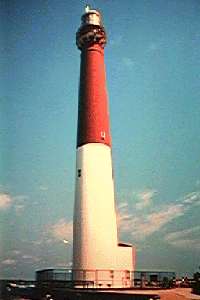
A modern lighthouse often is designed as just a single, slim column, unlike the Pharos.
Alexander died in 323 B.C. and the city was completed by Ptolemy Soter, the new ruler of Egypt. Under Ptolemy the city became rich and prosperous. However, it needed both a symbol and a mechanism to guide the many trade ships into its busy harbor. Ptolemy authorized the building of the Pharos in 290 B.C., and when it was completed some twenty years later, it was the first lighthouse in the world and the tallest building in existence, with the exception of the Great Pyramid. The construction cost was said to have been 800 talents, an amount equal today to about three million dollars.
Construction of the Lighthouse
The lighthouse's designer is believed to be Sostratus of Knidos (or Cnidus), though some sources argue he only provided the financing for the project. Proud of his work, Sostratus desired to have his name carved into the foundation. Ptolemy II, the son who ruled Egypt after his father, refused this request, wanting only his own name to be on the building. A clever man, Sostratus supposedly had the inscription:
SOSTRATUS SON OF DEXIPHANES OF KNIDOS ON BEHALF OF ALL MARINERS TO THE SAVIOR GODS
chiseled into the foundation, then covered it with plaster. Into the plaster was carved Ptolemy's name. As the years went by (and after both the death of Sostratus and Ptolemy) the plaster aged and chipped away, revealing Sostratus' dedication.
The lighthouse was built on the island of Pharos and soon the building itself acquired that name. The connection of the name with the function became so strong that the word "Pharos" became the root of the word "lighthouse" in the French, Italian, Spanish and Romanian languages.
Video: A Climb Up the Pharos Lighthouse
There are two detailed descriptions made of the lighthouse in the 10th century A.D. by Moorish travelers Idrisi and Yusuf Ibn al-Shaikh. According to their accounts, the building was 300 cubits high. Because the cubit measurement varied from place to place, however, this could mean that the Pharos stood anywhere from 450 (140m) to 600 (183m) feet in height, although the lower figure is much more likely.
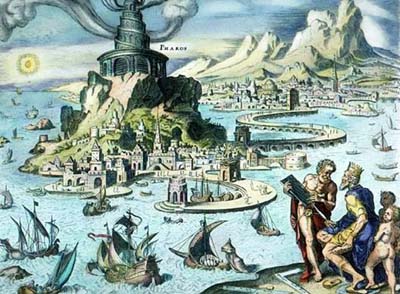
The design was unlike the slim single column of most modern lighthouses, but more like the structure of an early twentieth century skyscraper. There were three stages, each built on top of one other. The building material was stone faced with white marble blocks cemented together with lead mortar. The lowest level of the building, which sat on a 20 foot (6m) high stone platform, was probably about 240 feet (73m) in height and 100 feet (30m) square at the base, shaped like a massive box. The door to this section of the building wasn't at the bottom of the structure, but part way up and reached by a 600 foot (183m) long ramp supported by massive arches. Inside this portion of the structure was a large spiral ramp that allowed materials to be pulled to the top in animal-drawn carts.
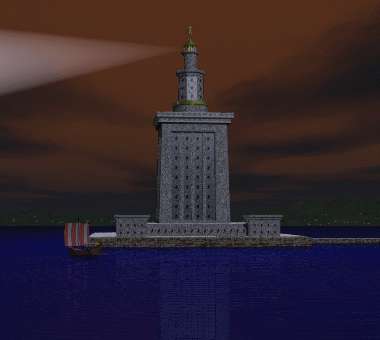
On top of that first section was an eight-sided tower which was probably about 115 feet (35m) in height. On top of the tower was a cylinder that extended up another 60 feet (18m) to an open cupola where the fire that provided the light burned. On the roof of the cupola was a large statue, probably of the god of the sea, Poseidon.
The Mirror

A depiction of the lighthouse by the 16th-century Dutch artist Maarten van Heemskerck
The interior of the upper two sections had a shaft with a dumbwaiter that was used to transport fuel up to the fire. Staircases allowed visitors and the keepers to climb to the beacon chamber. There, according to reports, a large curved mirror, perhaps made of polished bronze, was used to project the fire's light into a beam. It was said ships could detect the light from the tower at night or the smoke from the fire during the day up to one-hundred miles away.
There are stories that this mirror could be used as a weapon to concentrate the sun and set enemy ships ablaze as they approached. Another tale says that it was possible to use the mirror to magnify the image of the city of Constantinople, which was located far across the sea, and observe what was going on there. Both of these stories seem implausible, however.
The structure was said to be liberally decorated with statuary including four likenesses of the god Triton on each of the four corners of the roof of the lowest level. Materials recently salvaged from the sea by archeologists, including the stone torso of a woman, seem to support these stories.
The lighthouse was apparently a tourist attraction. Food was sold to visitors at the observation platform at the top of the first level. A smaller balcony provided an outlook from the top of the eight-sided tower for those that wanted to make the additional climb. The view from there must have been impressive as it was probably 300 feet above the sea. There were few places in the ancient world where a person could ascend a man-made tower to get such a perspective.

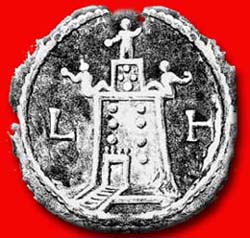
An ancient coin with the likeness of the Pharos on it.
Destruction
How then did the world's first lighthouse wind up on the floor of the Mediterranean Sea? Most accounts indicate that it, like many other ancient buildings, was the victim of earthquakes. It stood for over 1,500 years, apparently surviving a tsunami that hit eastern Mediterranean in 365 AD with minor damage. After that, however, tremors might have been responsible for cracks that appeared in the structure at the end of the10th century and required a restoration that lowered the height of the building by about 70 feet. Then in 1303 A.D., a major earthquake shook the region that put the Pharos permanently out of business. Egyptian records indicate the final collapse occurred in 1375, though ruins remained on the site for some time until 1480 when much of the building's stone was used to construct a fortress on the island that still stands today.
There is also an unlikely tale that part of the lighthouse was demolished through trickery. In 850 A.D. it is said that the Emperor of Constantinople, a rival port, devised a clever plot to get rid of the Pharos. He spread rumors that there was a fabulous teasure buried under the lighthouse. When the Caliph at Cairo, who controlled Alexandria at this time heard these rumors, he ordered that the tower be pulled down to get at the treasure. It was only after the great mirror had been destroyed and the top two portions of the tower removed that the Caliph realized he'd been deceived. He tried to rebuild the tower, but couldn't, so he turned it into a mosque instead.
As colorful as this story is there does not seem to be much truth in it. Visitors in 1115 A.D. reported the Pharos intact and still operating as a lighthouse.
The Pharos at night. Copyright Lee Krystek, 1998.
Did the divers actually find the remains of Pharos in the bottom of the harbor? Some of the larger blocks of stone found certainly seem to have come from a huge building. Statues were located that may have stood at the base of the Pharos. Interestingly enough, much of the material found seems to be from earlier eras than the lighthouse. Scientists speculate that these may have been recycled in the construction of the Pharos from an even older building.
The area is now an underwater archaeological park. Tourists with diving gear can swim about the remains of the great Pharos lighthouse while they wonder what it would have been like to climb to its ancient heights a thousand years ago.


Mexico braces for Patricia, the Western hemisphere's strongest hurricane ever


Hurricane Patricia headed toward southwestern Mexico Friday as a monster Category 5 storm, the strongest ever in the Western Hemisphere that forecasters said could make a “potentially catastrophic landfall” later in the day.
Residents of a stretch of Mexico's Pacific Coast dotted with resorts and fishing villages on Thursday boarded up homes and bought supplies ahead of Patricia's arrival.
With maximum sustained winds near 200 mph, Patricia is the strongest storm ever recorded in the eastern Pacific or in the Atlantic, said Dave Roberts, a hurricane specialist at the U.S. National Hurricane Center.
Patricia's power was comparable to that of Typhoon Haiyan, which left more than 7,300 dead or missing in the Philippines two years ago, according to the U.N.’s World Meteorological Organization.
In Mexico, officials declared a state of emergency in dozens of municipalities in Colima, Nayarit and Jalisco states that contain the bustling port of Manzanillo and the posh resort of Puerto Vallarta. The governor of Colima ordered schools closed on Friday, when the storm was forecast to make what the Hurricane Center called a “potentially catastrophic landfall.”
According to the 2010 census, there were more than 7.3 million inhabitants in Jalisco state and more than 255,000 in Puerto Vallarta municipality. There were more than 650,000 in Colima state, and more than 161,000 in Manzanillo.
Rain pounded Manzanillo late Thursday while people took last-minute measures ahead of Patricia, which quickly grew from a tropical storm into a Category 5 hurricane, leaving authorities scrambling to make people safe.
At a Wal-Mart in Manzanillo, shoppers filled carts with non-perishables as a steady rain fell outside.
Veronica Cabrera, shopping with her young son, said Manzanillo tends to flood with many small streams overflowing their banks. She said she had taped her windows at home to prevent them from shattering.
Alejandra Rodriguez, shopping with her brother and mother, was buying 10 liters of milk, a large jug of water and items like tuna and canned ham that do not require refrigeration or cooking. The family already blocked the bottoms of the doors at their home to keep water from entering.
Manzanillo's “main street really floods and cuts access to a lot of other streets. It ends up like an island,” Rodriguez said.
In Puerto Vallarta, restaurants and stores taped or boarded-up windows, and residents raced to stores for last-minute purchases ahead of the storm.
The Hurricane Center in Miami warned that preparations should be rushed to completion, saying the storm could cause coastal flooding, destructive waves and flash floods.
“This is an extremely dangerous, potentially catastrophic hurricane,” center meteorologist Dennis Feltgen said.
Feltgen said Patricia also poses problems for Texas. Forecast models indicate that after the storm breaks up over land, remnants of its tropical moisture will likely combine with and contribute to heavy rainfall that is already soaking Texas independently of the hurricane, he said.
“It's only going to make a bad situation worse,” he said.
In Colima, authorities handed out sandbags to help residents protect their homes from flooding.
By early Friday, Patricia's maximum sustained winds had increased to 200 mph  — a Category 5 storm, the highest designation on the Saffir-Simpson scale used to quantify a hurricane's wind strength.
Patricia was centered about 145 miles southwest of the Pacific resort of Manzanillo early Friday and was moving northwest at 12 mph on a projected track to come ashore between Manzanillo and Puerto Vallarta sometime Friday afternoon or evening.
Some fluctuations in intensity were forecast before then, but the Hurricane Center said it was expected to be an “extremely dangerous” Category 5 storm when it made landfall.
A hurricane warning was in effect for the Mexican coast from San Blas to Punta San Telmo, a stretch that includes Manzanillo and Puerto Vallarta. A broader area was under hurricane watch, tropical storm warning or tropical storm watch.
The Hurricane Center said Patricia was expected to bring rainfall of 6 to 12 inches, with isolated amounts of up to 20 inches in some locations. Tropical storm conditions were expected to reach land late Thursday or early Friday, complicating any remaining preparation work at that point.
“We are calm,” said Gabriel Lopez, a worker at Las Hadas Hotel in Manzanillo. “We don't know what direction (the storm) will take, but apparently it's headed this way. … If there is an emergency we will take care of the people. There are rooms that are not exposed to wind or glass.”
LATimes

Thursday, October 22, 2015

Physiologic Conditions Affect Toxicity of Ingested Industrial Fluoride


Method:
A 0.9 ppm fluoride solution in distilled water was measured for the free fluoride ion concentration over a wide concentration range of added calcium ion from aliquots of a calcium biphosphate solution. In other experiments, a 1.2 ppm fluoride concentration solution was measured for free fluoride ion level as a function of pH. Acidity was adjusted with dilute acetic acid. All readings were made at room temperature with a LaMotte Instruments fluoride ion specific electrode calibrated with a 1.00 ppm fluoride standard solution in distilled deionized water. The electrode was rinsed with the solution to be tested for each measurement. The instrument reported accurate readings for known standard solutions within ± 0.05 ppm fluoride over the temperature range 15–30 ∘C.

Conclusion:
This study indicates that industrial fluoride added to drinking water forms intact corrosive hydrofluoric acid under acidic conditions that prevail in the stomach of man (pH 1.5–3) and animals. Ingested fluoride fromwater enters the bloodstream as an artificial component, not a normal constituent, and disrupts intermolecular hydrogen bonding, forming interatomic hydrogen bonding. Fluoride influences calcium homeostasis. Accidental higher levels of fluoride known to cause acute lethality compare with calculated levels that would begin calcium precipitation at physiologic calcium concentrations in blood. The difference between the single oral acute fluoride dose of 60mg/kg body weight and the lethal bloodconcentration of 2-3 ppm, calculated here and observed clinically in blood after accidental fluoride poisonings,may be due in part to fluoride elimination by kidneys and accumulation by bone during assimilation of the ingested oral dose. It is not possible to reach an acute lethal blood level of industrial fluoride from treated water unless there were an accidental overfeed. 1 ppm water leads typically to ∼0.2 ppm blood fluoride. But only ∼1 ppm blood levels cause a chronic form of congestive heart failure (found after hemodialysis with fluoridated water) and 2-3 ppm causes acute heart failure.

The infusion of industrial fluorosilicic acid with caustic sodium hydroxide into water supplies introduces sodium, that is not a component of fresh drinking water, plus fluoride without calcium. Sodium and fluoride are the ingredients used in rodenticides and in the prescription drug Luride which is not approved by the FDA for ingestion. Ingested sodium fluoride from treated water does not reduce caries either systemically at 0.2 ppm or topically from saliva at 0.02 ppm. Instead it increases the incidence of unsightly abnormal dental fluorosis hypoplasia in all treated cities. The policy adopted by the U.S. Public Health Service in 1950 remains encouraged by the trade organization the American Dental Association, dental insurance providers, and dental officials in theOralHealthDivision. But none of these groups has authority to chemically treat public water supplies. The rationale for the infusions remains based on early observations that were not supported by careful experimentation using the scientific method. When examined in detail this proved to be an anecdotal incorrect correlation.

Federal law prohibits any requirement for substances added into water other than to sanitize water, regardless of ascribed benefit. And yet, plain water without added industrial fluoride is now scarce in U.S. public supplies. The decision to infuse industrial fluoride compounds into public water supplies to permeate the blood and organs of consumers with fluoride as an ingested dental prophylactic was an error that resulted in serious consequences including loss of life. Althoughmany believe that the infusions decrease caries without causing systemic damage, the data reported here along with other published studies do not support the policy [1, 7–12, 26, 27, 30–35, 40, 41, 52–54]. Insidious effects that can occur on musculoskeletal, neurologic, reproductive, and endocrine systems from long-term ingestion of fluoride in water [8, 9, 11] and the cardiovascular effects discussed here emphasize the seriousness of fluoridation especially in soft water regions lacking antidote calcium. Also fluoride exposure is now from diverse sources.

Adding substances in water that are unnatural, harmful, illegal, and ineffective in its stated purpose violates universally accepted consumers’ and patients’ rights of refusal. This is because fluoride at subsaturation levels is not easily filtered. A legal review described the policy as un-Constitutional (Balog [46]). Enamel hypoplasia and caries are not caused by absence of fluoride. Essentially all European countries do not fluoridate public water supplies but some do offer optional fluoridated salt that is not as extensively consumed as water. Opposition has been widely publicized in the U.S. (Abby Martin and RT News [55] and the documentary film Fluoridegate [56]), Canada, and the U.K. [52, 53, 57]. Citizens mostly vote against fluoridation but the SDWA should have been sufficient law to avoid the need for voting. The city of Portland, Oregon recently voted against fluoridation for the fourth time and remains untreated thus far. 61 cities in Nebraska voted against fluoridation over the period 2008-2009, effectively overruling a state mandate.The policy does not accommodate kidney dialysis patients and those who are normally fluoride-sensitive [12]. For all who object, the policy evades human decency.

Source:
Sauerheber, R. (2013). Physiologic Conditions Affect Toxicity of Ingested Industrial Fluoride. Journal Of Environmental & Public Health, 20131-13. doi:10.1155/2013/439490

Department of Chemistry, University of California, San Diego, La Jolla, CA 92037, USA
STAR Tutoring Center, Palomar Community College, San Marcos, CA 92069, USA