Tuesday, March 28, 2017

Soles for satan

A Dunedin satanic organisation's campaign to collect warm clothes for disadvantaged people across New Zealand is being welcomed by some and leaving others hot under the collar.
Satanic New Zealand recently launched a ''Soles for Satan'' online page, which aims to buy new socks, hats, and warm clothing for people in homeless shelters and children living in poverty.
Organisation co-founder Frankie Vegas, of Dunedin, said poverty was a major issue in New Zealand and it was important people supported the fight against it.
''We just want to use what little influence we have, to help the community around us.''
The Dunedin business personal assistant said the religious organization wanted to help in the hope of becoming an official chapter of the Satanic Temple, which was established in the United States.
''They've done a few Socks for Satan campaigns, so we decided to bring it here.''
Miss Vegas said the clothing would be distributed to those in need across the country. There had already been a lot of support from Auckland residents and Dunedin businesses.
Soles for Satan was the group's first major campaign, and it hoped it would become an annual event.
Miss Vegas was surprised at the level of support the campaign had received, given the community perceived the organization as being the opposite of Christian organizations.
She hoped the campaign would help change people's views of Satanic New Zealand.
''We're not in any way anti-Christian; we're just pro-Satan,'' she said.
''I understand and appreciate some people do feel we are anti-Christian, but if people looked up what we do and what we actually stand for, they would have a much better understanding.''
The spirit of compassion, wisdom, and justice should always prevail over the written or spoken word, she said.
''I hope people can look past the name of our group and judge us based on our actions.''
Surprisingly, the campaign is also getting support from some churches.
The Rev Frank Ritchie, of the Wesleyan Methodist Church, in Auckland, said he supported the campaign as a way of promoting public discussion.
He said Satanists often had ''humanistic'' views, and he urged people to be open-minded.
Family First director Bob McCoskrie was scathing of the idea. He said it was no different from a good cause promoted by gangs.
All clothes collected would be donated to KidsCan, Women's Refuge and homeless shelters.    ODT

Pope urges leaders to return to roots


Pope Francis speaks during the European Union summit at the Vatican March 24 (CNS photo/L'Osservatore Romano via Reuters).

Gerard O'Connell March 24, 2017
“What hope is there for the Europe of today and tomorrow?” Pope Francis asked when he addressed the leaders of 27 European Union countries this evening in the Sala Regia (Royal Hall) of the Vatican’s Apostolic Palace, on the eve of the 60th anniversary of the signing of the Treaty of Rome, March 25, 1957, that created the European Economic Community, the forerunner of today’s European Union.
He said the answer to that question is to be found in “the pillars” with which the union’s founding fathers—the leaders of Belgium, France, Germany, Holland, Italy and Luxembourg—had laid 60 years ago, namely: “the centrality of man, concrete solidarity, openness to the world, the pursuit of peace and development, openness to the future.”   
Francis believes in the E.U., and sees its importance not only for the peoples of this continent but also for peace and development in the world, but he is convinced it must be reformed. He made this clear today, and advocated that on the path to reform E.U.’s leaders should revisit the origins of the union in 1957 when its founding fathers signed the Treaty “after the dark years and bloodshed of the Second World War” because they “had faith in the possibility of a better future.”
He recalled that from the outset, the founding fathers understood that the Treaty would remain a dead letter unless they had “spirit and life” and so they agreed that “the first element of European vitality must be solidarity.” Francis emphasized that this spirit of solidarity “remains as necessary as ever today, in the face of centrifugal impulses and the temptation to reduce the founding ideals of the Union to productive, economic and financial needs.”
 

Pope Francis spends time with prison inmates


 Pope Francis greets inmates at San Vittore Prison in Milan

25/03/2017 (Vatican Radio) One of the highlights of Pope Francis’ 1-day pastoral journey to the Italian city of Milan is his visit to the city’s main detention center, the San Vittore Prison.
Shortly after midday and the recitation of the Angelus, the Pope travelled to the prison where he was welcomed by the director,Gloria Manzelli, and by the prison chaplain, don Marco Recalcati.
San Vittore currently hosts over 900 inmates – both men and women – as well as a number of infants who live with their detained mothers in a special unit. The Pope met briefly with them before exchanging greetings with a large group of the San Vittore staff and volunteers.
The building, designed by the engineer Francesco Lucca, takes inspiration from the 18th century Panopticon with 6 wings with three floors each. Moving through these wings, the Pope was given the opportunity to shake hands with some 80 people representing all the different categories of inmates, before going on to meet those who are detained in a “protected” environment.
In the third wing, Pope Francis sat down for lunch with some 100 prisoners and treated to a typically Milanese cuisine, including rice with saffron and steaks “alla Milanese” prepared by some of  the inmates themselves.
The visit concluded with an exchange of gifts and the blessing of cards with the prisoners’ names on them to be taken away by the Pope.
Throughout his pontificate Pope Francis has highlighted the predicament of prisoners and urged political leaders across the world to respect the dignity of inmates and offer them amnesty whenever possible. In many occasions he has called for a criminal justice system that is not exclusively punitive, but is open to the hope and the possibility of re-inserting the offender into society. Pope Francis has also called for a world-wide abolition of the death penalty and said he opposes life in prison without parole.
Underlining his deep concern for prisoners the Pope concluded the Holy Year of Mercy with a special Jubilee Mass for some 1,000 prisoners from 12 countries and their families, as well as prison chaplains and volunteers in St. Peter's Basilica.      RadioVaticana

The end justifies the means

Image result for jesuits
Throughout Christendom, Protestantism was menaced by formidable foes. The first triumphs of the Reformation past, Rome summoned new forces, hoping to accomplish its destruction. At this time, the order of the Jesuits was created, the most cruel, unscrupulous, and powerful of all the champions of popery. Cut off from every earthly tie and human interest, dead to the claims of natural affection, reason and conscience wholly silenced, they knew no rule, no tie, but that of their order, and no duty but to extend its power. The gospel of Christ had enabled its adherents to meet danger and endure suffering, undismayed by cold, hunger, toil, and poverty, to uphold the banner of truth in face of the rack, the dungeon, and the stake. To combat these forces, Jesuitism inspired its followers with a fanaticism that enabled them to endure like dangers, and to oppose to the power of truth all the weapons of deception. There was no crime too great for them to commit, no deception too base for them to practice, no disguise too difficult for them to assume. Vowed to perpetual poverty and humility, it was their studied aim to secure wealth and power, to be devoted to the overthrow of Protestantism, and the re-establishment of the papal supremacy.
When appearing as members of their order, they wore a garb of sanctity, visiting prisons and hospitals, ministering to the sick and the poor, professing to have renounced the world, and bearing the sacred name of Jesus, who went about doing good. But under this blameless exterior the most criminal and deadly purposes were concealed. It was a fundamental principle of the order that the end justifies the means. By this code, lying, theft, perjury, assassination, were not only pardonable but commendable, when they served the interests of the church. Under various disguises the Jesuits worked their way into offices of State, climbing up to be the counselors of kings, and shaping the policy of nations. They became servants, to act as spies upon their masters. They established colleges for the sons of princes and nobles, and schools for the common people; and the children of Protestant parents were drawn into an observance of popish rites. All the outward pomp and display of the Romish worship was brought to bear to confuse the mind, and dazzle and captivate the imagination; and thus the liberty for which the fathers had toiled and bled was betrayed by the sons. The Jesuits rapidly spread themselves over Europe, and wherever they went, there followed a revival of popery.  Great Controversy p.234

Stephen Hawking: Our future may depend on some form of world government


Professor Stephen Hawking considers himself an optimist, but you wouldn’t know it from some of the things he had to say in his latest interview.
‘Since civilization began, aggression has been useful inasmuch as it has definite survival advantages. It is hard-wired into our genes by Darwinian evolution. Now, however, technology has advanced at such a pace that this aggression may destroy us all by nuclear or biological war.’
Stephen Hawking
But despite his warnings of artificial intelligence and global warming sending us down a path toward total annihilation, Hawking maintains that he feels good about the future.
“All this may sound a bit doom-laden but I am an optimist,” he told The Times. “I think the human race will rise to meet these challenges.”
But how?
“We need to be quicker to identify such threats and act before they get out of control,” Hawking said. “This might mean some form of world government.”
That, however, could lead to global tyranny, the optimistic scientist added.
At any rate, these kinds of alarms have been raised by Hawking before. Last year, he made headlines when he spoke at Oxford University about mankind’s urgent need to explore space travel. He even offered up a timeline:
“I don’t think we will survive another 1,000 years without escaping our fragile planet,” he said.      Market Watch

Scientists ‘on the brink’ of creating complex life form


Stephen Chen Friday, 10 March, 2017, 3:02am
Chinese scientists are taking part in an immense international project that is expected to create complex artificial life in the laboratory for the first time by the end of the year.
Researchers had previously produced simple life forms such as viruses and bacteria but this time the aim is to make an “eukaryotic organism”, one with cells containing a nucleus surrounded by a membrane and with DNA held together by proteins.
A research team with more than 200 scientists from countries including the United States and China will announce on Friday that Sc2.0, the world’s first artificially designed and built eukaryotic organism, is expected to “come alive” by the end of this year.
The new organism could lead to advances in genetic therapies that could help people live longer, the scientists said.
More than a third of the work was already complete, they said, with successful laboratory synthesis of six of the 16 chromosomes that held the organism’s DNA strands. Their methodology, research observations and technological developments were detailed in seven papers in the latest issue of Science.       SCMP

Saturday, March 11, 2017

Media's Job: Control What People Think

UPDATE: Brzezinski took to Twitter to clarify her remarks, saying, “Today I said it’s the media’s job to keep President Trump from making up his own facts, NOT that it’s our job to control what people think.” She added, “Of course, that is obvious from the transcript but some people want to make up their own facts. SAD!”
On Wednesday’s broadcast of MSNBC’s “Morning Joe,” co-host Mika Brzezinski stated President Trump “could have undermined the messaging so much that he can actually control exactly what people think. And that is our job.”
Brzezinski said, “I think that the dangerous, you know, edges here are that he’s is trying to undermine the media, trying to make up his own facts. And it could be that, while unemployment and the economy worsens, he could have undermined the messaging so much that he can actually control exactly what people think. And that is our job.”     Breitbart

O foolish SDA's

I am crucified with Christ: nevertheless I live; yet not I, but Christ liveth in me: and the life which I now live in the flesh I live by the faith of the Son of God, who loved me, and gave himself for me.
I do not frustrate the grace of God: for if righteousness come by the law, then Christ is dead in vain. 
O foolish Galatians (Seventh Day Adventists), who hath bewitched you, that ye should not obey the truth, before whose eyes Jesus Christ hath been evidently set forth, crucified among you?   
This only would I learn of you, Received ye the Spirit by the works of the law, or by the hearing of faith?
Are ye so foolish? having begun in the Spirit, are ye now made perfect by the flesh?


Galatians 2:20-21 & 3:1-3 KJV

Wednesday, February 22, 2017

Over the last five years, the world trade in arms has reached a level not seen since 1990


Global weapons sales highest since end of Cold War

20 Feb, 2017 
Over the last five years, the world trade in arms has reached a level not seen since 1990. The Middle East and Asia remain the key markets for weapons, according to a report from the Stockholm International Peace Research Institute (SIPRI).
India is still the world’s largest arms buyer, accounting for 13 percent of global imports between 2012 and 2016 against 9.7 percent the previous five years. The country bought most of its arms from Russia.
“While China is increasingly able to substitute arms imports with indigenous products, India remains dependent on weapons technology from many willing suppliers, including Russia, the USA, European states, Israel and South Korea,” said Siemon Wezeman, Senior Researcher with the SIPRI’s arms and military expenditure program.
Saudi Arabia, which leads a military intervention in Yemen, became the second biggest buyer of arms, followed by the United Arab Emirates, China, and Algeria, the study said.
The kingdom’s arms imports soared 212 percent compared to the previous five years, accounting for 8.2 percent of global weapons imports. Riyadh bought weapons mostly from the US and the UK, the report said.
All in all, arms imports by countries in the Middle East increased 86 percent in the five years through 2016 with Qatar increasing purchases by 245 percent. However, Iran, being under an arms embargo, received only 1.2 percent of total arms sales to the region.    RT

Windows 10 Devices Continue to 'Collect Everything You Do, Say and Write

European Union data protection authorities have expressed fresh concerns about the privacy of Microsoft's Windows 10 operating system, despite tweaks being made to the OS after questions were raised about its treatment of personal data last year.

In a letter, the Article 29 Working Group said it still has "significant concerns" about how Microsoft collects and processes users' personal data, and whether it obtains fully informed consent from users to do so.
"There is an apparent lack of control for users to prevent collection or further processing of such data. As a result, the Working Party specifically requests further explanatory information from Microsoft, as to how the opt-outs, default settings and other available control mechanisms presented during the installation of Windows 10 operating system provide a valid legal basis for the processing of personal data under the Data Protection Directive 95/46/EC. This is especially of concern where Microsoft would rely on consent as a legal basis for the processing of personal data," the statement said.
Windows 10 launched in July 2015, and almost immediately garnered criticism for the use of default settings to harvest voluminous amounts of user data, such as web browsing history, WIFI network names and passwords, in order to display personalized adverts as users browse the web or play games. User data is also fed in to train Microsoft's Cortana digital assistant.     Sputnik

Samsung has confirmed that its "smart TV" sets are listening to customers' every word

February 9, 2015
Samsung has confirmed that its "smart TV" sets are listening to customers' every word, and the company is warning customers not to speak about personal information while near the TV sets.
The company revealed that the voice activation feature on its smart TVs will capture all nearby conversations. The TV sets can share the information, including sensitive data, with Samsung as well as third-party services.    The Week

Superbug bacteria pose an alarming threat to public and animals in the EU

FILE PHOTO: An undated image taken with electronic microscope shows EHEC bacteria (enterohaemorrhagic Escherichia coli) in Helmholtz Centre for Infection Research in Brunswick, Germany.  REUTERS/Manfred Rohde/Helmholtz-Zentrum fŸr Infektionsforschung (HZI)/File Photo
By Kate Kelland | LONDON   February 22, 2017
Superbug bacteria found in people, animals and food across the European Union pose an "alarming" threat to public and animal health having evolved to resist widely used antibiotics, disease and safety experts warned on Wednesday. A report on antimicrobial resistance in bacteria by the European Food Safety Authority (EFSA) and the European Centre for Disease Prevention and Control (ECDC) said some 25,000 people die from such superbugs in the European Union every year.
"Antimicrobial resistance is an alarming threat putting human and animal health in danger," said Vytenis Andriukaitis, the EU's health and food safety commissioner.
"We have put substantial efforts to stop its rise, but this is not enough. We must be quicker, stronger and act on several fronts."
Drug resistance is driven by the misuse and overuse of antibiotics, which encourages bacteria to evolve to survive and develop new ways of beating the medicines.
Wednesday's report highlighted that in Salmonella bacteria - which can cause the common and serious food-borne infection Salmonellosis - multi-drug resistance is high across the EU.
Mike Catchpole, the ECDC's chief scientist, said he was particularly concerned that some common types of Salmonella in humans, such as monophasic Salmonella Typhimurium, are showing extremely high multi-drug resistance.
"Prudent use of antibiotics in human and veterinary medicine is extremely important," he said. "We all have a responsibility to ensure that antibiotics keep working."
Resistance to carbapenem antibiotics - usually the last remaining treatment option for patients infected with multi-drug resistant superbugs - was detected for the first time in animals and food, albeit at low levels, as part of EU-wide annual monitoring for the report.
It said very low levels of resistance were observed in E. coli bacteria found in pigs and in meat from pigs.
Resistance to colistin, another last-resort human antibiotic - was also found at very low levels in Salmonella and E. coli in pigs and cattle, the report said.
Marta Hugas, head of EFSA's biological hazards and contaminants unit, noted geographic variations across the European Union, with countries in northern and western Europe generally having lower resistance levels than those in southern and eastern Europe and said this was most likely due to differences in the level of use and overuse of the medicines.
"In countries where actions have been taken to reduce, replace and re-think the use of antimicrobials in animals show lower levels of antimicrobial resistance and decreasing trends," she said.     Reuters

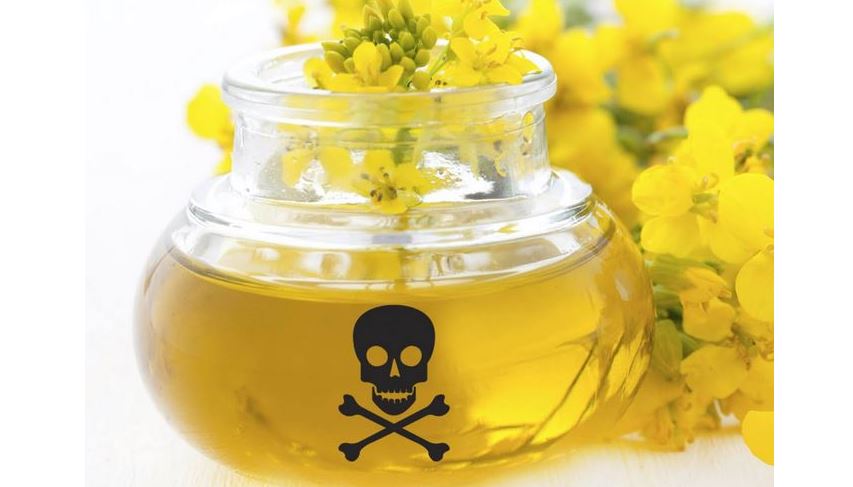
Organic Canola Oil: A Food Fallacy

By Catherine J. Frompovich
Ever since the late 1990s, when canola oil started to become a ubiquitous ingredient in food processing and restaurant fare, consumers have been ingesting it, literally, by the tons!
Canada produces 20 percent of the world’s canola oil.  The U.S. imports an average of 510,000 tons of canola oil per year!
Canola is a heated and processed oil using anywhere from 80 – 90°Celsius and even 120°Celsius temperature in the processing, or 176 – 194° Fahrenheit to 248° Fahrenheit.  That would be in addition to any additional heating a cook uses when preparing foods—something to factor in to your cooking.
Christened “Canola” from “Can” (for Canada) and “ola” (for oil low acid), canola is not, strictly speaking, rapeseed. There is a internationally regulated definition of canola that differentiates it from rapeseed, based upon its having less than two percent erucic acid and less than 30 umoles glucosinolates. Oilseed products that do not meet this standard cannot use the trademarked term “Canola.”  [1]   [CJF emphasis]
That 2 percent of erucic acid gets a lot of human digest tracts very upset, I’ve found as a nutritionist!  The Free Medical Dictionary by Farlex defines erucic acid as:
a monounsaturated fatty acid that is a major constituent of certain oils, such as rapeseed oilBecause it [erucic acid] has been linked to cardiac muscle damage, oils such as canola oil were developed that are low in erucic acid. [2].
At one time, rapeseed oil was not permitted to be sold in the USA by the U.S. FDA, because of its toxicity.
By the way, there was a petition [3] that was delivered to Whole Foods about their using canola in all the edible products they make and sell, including its fresh food and soup bars! As an aside, since the late 1990s, I was in contact with Whole Foods various VPs about using canola oil.  The letters I received from WF, in my opinion, showed shamefully woeful concerns for human health issues.  Whole Foods was more concerned about the costs of producing products.  I have refused to purchase any food products from Whole Foods since then, which contain canola oil, e.g., their “organic canola oil” is bunk, in my opinion.      Activist Post

Got Milk?


 got-milk-superman

Oh, good old dairy! I’m sure you remember being a kid and having your mother tell you, Drink your milk! You need it to grow and be strong! Or perhaps your mom was ahead of the curve and saw through the mass marketing campaign designed to convince us that we require milk to live a healthy life.
Aside from the obvious reasons why we don’t need cow’s milk — no other animal drinks the milk from another species; we no longer need milk once weaned from our  own mother’s; and cow’s milk is, well, meant for baby cows to grow into giant cows — we most certainly do not need dairy.

Got Milk?dai

This whole dairy façade began upon the premise that we need calcium, which we do, and that we can only get it through dairy products, which is false. There are a number of vegetables that contain even more calcium than milk, including broccoli, kale, cabbage, and watercress, along with a variety of nuts and seeds. But we never see ads on television telling us to eat our broccoli, even though it has many more health benefits than milk. Simply put, there is no lobbying behind broccoli.        More

Cell Phone Dangers Dr. Devra Davis


Saturday, February 18, 2017

'Outspoken' Short Film Series Celebrates Voices and Contributions of LGBT+ Adventists


Daneen Akers and Stephen Eyer today released the first installment of a new ten-part series of short documentaries called “Outspoken” that features stories of LGBT+ Adventists. This is the third major project for the husband-and-wife team dealing with the intersection of sexuality, gender and the Adventist faith.
Their first film, the feature-length documentary “Seventh-Gay Adventists” (Watchfire Films, 2012) followed the lives and spiritual journeys of three Seventh-day Adventists in same-sex relationships as they struggled with tensions between the distinct cultural markers of their faith community and their identities as lesbian or gay individuals. After screening at film festivals and in and around Adventist communities, the film was released on DVD and Blu-ray, followed by a wider online release.
Akers and Eyer followed “Seventh-Gay Adventists” in 2014 with “Enough Room at the Table,” a film intended to model for the Adventist Church a process the filmmakers called “the sacred act of listening.” “Enough Room” brought together a diverse group of Adventist pastors, thought leaders and congregants—some LGBT+, some not—to talk with one another over the course of a weekend retreat. The film that documented those conversations provided a framework for congregations that might have had preliminary talks about homosexuality and sexual identities, but that might have lacked resources for moving the conversations forward.
I spoke with Daneen Akers about this new project—how it came to be and what links it to and separates it from past projects.
“This new series is a shift for us,” Akers told me. “We’ve journeyed from thinking that we as allies are doing something helpful to realizing that we are the ones who are deeply blessed by getting to witness and share the stories of our LGBT friends.”
The “Outspoken” series of short films will be released exclusively online on the first Friday evening of each month, starting today.       More

A new children’s fairytale honours LGBT celebrities

A new children's fairytale featuring a gay relationship is dedicated to the 49 people murdered in a gay nightclub in Orlando, Florida, last year.
Bo Moore & Christine Luiten
Promised Land, released on Valentine’s Day, is the first children’s book from Wellington, New Zealand, authors Chaz Harris and Adam Reynolds. It is aimed at children aged from five to 10.
The book tells the story of Jack, a farm boy, and Leo, a prince, who meet in the enchanted forest and slowly fall in love. But their budding relationship hits a hurdle when the Queen’s evil husband, Gideon, attempts to seize the enchanted forest, which is on land belonging to Jack’s family.    BuzzFeed

The Begotten Belief


SS Lesson #4 The personality of the Holy Spirit


Wednesday, February 8, 2017

Tom Brady saved his career by changing his lifestyle


tom brady

Feb. 6, 2017, 11:25 AM
Tom Brady pulled off the greatest comeback in Super Bowl history at the age of 39.
To say what Brady is doing at his age is unprecedented is not an exaggeration.
In 2016, Brady put together one of the most efficient seasons of his career, then helped his team come back from 25-point deficit in the Super Bowl to win a historic fifth championship.
Brady's agelessness may stem from the dramatic shift in lifestyle he made during his career. Brady has a famously strict diet, consisting of plenty of all-natural and whole foods and excluding foods like tomatoes and peppers for fear of bloating. He goes to sleep by 9 p.m., doesn't drink, stays away from lifting heavy weights, and focuses on flexibility.
On Monday, while accepting his Super Bowl MVP, Brady talked about his unprecedented career and said that when he was 25 years old he didn't see it coming because he was "hurting all the time." He knew he had to make a change.
"I've tried to just take care of myself through learning through a lot of positive and negative experiences with that. When you're in a locker room for 17 years, you kinda learn what to do and what not to do and what works for you. I've found probably a unique way that's a little outside the box that's really worked.
"I try to spread that message to a lot of other players just because football is a demanding sport and it's a demanding sport on your body. And your body is your asset, and if you are hurting all the time, football is no fun. When I was 25, I was hurting all the time, and I couldn't imagine playing as long as I did, just because, you know, if your arm hurts every day when you throw, how can you keep playing? And now, at 39, my arm never hurts and my body never hurts. Even after I get banged up, I know how to take care of it and jump on it right away, so that I can feel good for a Wednesday practice."
Brady's life is micromanaged to continue playing football at an age when everyone retires. As such, as he's showed no signs of slowing.
On Sunday, it was reported that the Patriots think Brady may play for another three to five years. Brady himself has said he'd like to play well into his 40s. Declines can happen suddenly and unexpectedly, but if Brady can avoid major injury, there's no reason to think he can't keep playing.
One thing is for certain: Brady's own lifestyle will not be the cause of any future decline.     Business Insider

The British Government Colludes with Monsanto. Crimes against Humanity and “Ecocide”

monsanto_bayer_750
Colin Todhunter Global Research, January 27, 2017
“The British Government has colluded with Monsanto and should be held accountable in the International Criminal Court in The Hague for crimes against humanity and ecocide.” Dr Rosemary Mason.
The British public and the environment are being poisoned with a deadly cocktail of 320 pesticides. Moreover, Wales has become a storage dump for Monsanto’s most toxic chemicals. These are the messages conveyed by Dr Rosemary Mason in her recent open letter to Councillor Rob Stewart, the leader of Swansea City and County Council.
Dr Mason adds that Swansea has over the years been a testing ground for glyphosate with the outcome being a huge spike in illness and disease among the local population as well as ongoing environmental devastation. There has been a long-term reckless use of a glyphosate-based weedkiller in Swansea, regardless of EU recommendations.
Dr Henk Tennekes, an independent toxicologist from the Netherlands, and Dr Pierre Mineau, an expert on ecotoxicology from Canada, both prophesied environmental catastrophe from the self-regulated and unsustainable use of pesticides by the agrochemical industry.    Read more

Skipping breakfast or eating late in the day could raise the risk of heart disease, diabetes, and obesity according to a new study.

Skipping breakfast or eating late in the day could raise the risk of heart disease, diabetes, and obesity according to a new study. The study from a group of American researchers suggests that the time we eat our meal is equally as important as what we eat.
Writing in the American Heart Association journal Circulation, researchers from Columbia University said both meal timing and frequency are linked to risk factors for a variety of conditions including heart disease, strokes, high blood pressure, blood glucose levels, obesity, and reduced insulin sensitivity.
The researchers reviewed other current scientific studies concerning breakfast and heart disease and found that those who eat breakfast daily are less likely to have high cholesterol and blood pressure, while those who skip breakfast and instead snack and graze throughout the day are more likely to be obese, have poor nutrition, or be diagnosed with diabetes.
They analysed other studies that found people who skip breakfast have a 27 per cent increased risk of suffering from a heart attack, and are 18 per cent more likely to have a stroke.
Professor Marie-Pierre St-Onge, lead author of the study, said: "Meal timing may affect health due to its impact on the body's internal clock.
"In animal studies, it appears that when animals receive food while in an inactive phase, such as when they are sleeping, their internal clocks are reset in a way that can alter nutrient metabolism, resulting in greater weight gain, insulin resistance and inflammation.
"However, more research would need to be done in humans before that can be stated as a fact."    Telegraph

Chemicals that have been associated with cancer and other health problems have been found in some fast-food packaging, according to a new study.

, 2017
Chemicals that have been associated with cancer and other health problems have been found in some fast-food packaging, according to a new study. Researchers found the substances, which can leach into food, in sandwich and dessert wrappers and paperboard containers.
“We have more than one reason to try to eat more fresh food, and to reduce our consumption of fast food,” said Laurel Schaider, one of the study’s authors, and a research scientist for the Silent Spring Institute. “This is another reason.”
The chemicals, per- and polyfluoroalkyl substances (PFASs), are used in nonstick, stain-resistant and waterproof products. Fast-food packaging manufacturers might use them to keep sauces or grease from leaking through the wrapper. (Consumers are also exposed to them in other products, such as certain types of cookware, coats and carpets.) Some of the substances in this category are associated with kidney and testicular cancer, low birth weight, thyroid disease and immunotoxicity in children, among other outcomes.     Read more

A Missouri House bill would ban public health clinics from administering vaccines that contain mercury or any other metal

JEFFERSON CITY, Mo. (Jan. 31, 2017) – A Missouri House bill would ban public health clinics from administering vaccines that contain mercury or any other metal put into the vaccine for preservation purposes, contradicting approved federal policy.
House Bill 331 (HB331) was introduced by Rep. Lynn Morris (R-Nixa) to mitigate concerns regarding vaccine safety. With the exception of health emergencies determined by the Department of Health & Senior Services with concurrence from the governor, the following provision would apply:
Beginning August 28, 2018, no vaccine containing mercury or other metal for preservation or other purpose shall be administrated to a child or adult in a public health clinic in Missouri.
HB331 begins the process of nullifying potential vaccine mandates, which generally have their basis in federal recommendations or guidelines from the Centers for Disease Control and Prevention (CDC). Although these federal rules are not technically binding, they often influence policy-makers and individuals at the local and state levels to adopt coercive mandates regarding mercury-laced vaccines and other toxic substances.
By taking the rule-making power back into their own hands, the state of Missouri can disconnect from federal control and restore its sovereignty on this key issue.     Read more

Why Is Milk Consumption Associated with More Bone Fractures?

Why Is Milk Consumption Associated with More Bone Fractures?
Milk is touted to build strong bones, but a compilation of all the best studies found no association between milk consumption and hip fracture risk; so, drinking milk as an adult might not help bones, but what about in adolescence? Harvard researchers decided to put it to the test.
Studies have shown that greater milk consumption during childhood and adolescence contributes to peak bone mass, and is therefore expected to help avoid osteoporosis and bone fractures in later life. But that’s not what researchers have found (as you can see in my video Is Milk Good for Our Bones?). Milk consumption during teenage years was not associated with a lower risk of hip fracture, and if anything, milk consumption was associated with a borderline increase in fracture risk in men.
It appears that the extra boost in total body bone mineral density from getting extra calcium is lost within a few years, even if you keep the calcium supplementation up. This suggests a partial explanation for the long-standing enigma that hip fracture rates are highest in populations with the greatest milk consumption. This may be an explanation for why they’re not lower, but why would they be higher?
This enigma irked a Swedish research team, puzzled because studies again and again had shown a tendency of a higher risk of fracture with a higher intake of milk. Well, there is a rare birth defect called galactosemia, where babies are born without the enzymes needed to detoxify the galactose found in milk; so, they end up with elevated levels of galactose in their blood, which can cause bone loss even as kids. So maybe, the Swedish researchers figured, even in normal people that can detoxify the stuff, it might not be good for the bones to be drinking it every day.
And galactose doesn’t just hurt the bones. Galactose is what scientists use to cause premature aging in lab animals—it can shorten their lifespan, cause oxidative stress, inflammation, and brain degeneration—just with the equivalent of like one to two glasses of milk’s worth of galactose a day. We’re not rats, though. But given the high amount of galactose in milk, recommendations to increase milk intake for prevention of fractures could be a conceivable contradiction. So, the researchers decided to put it to the test, looking at milk intake and mortality as well as fracture risk to test their theory. 
A hundred thousand men and women were followed for up to 20 years. Researchers found that milk-drinking women had higher rates of death, more heart disease, and significantly more cancer for each glass of milk. Three glasses a day was associated with nearly twice the risk of premature death, and they had significantly more bone and hip fractures. More milk, more fractures.
Men in a separate study also had a higher rate of death with higher milk consumption, but at least they didn’t have higher fracture rates. So, the researchers found a dose dependent higher rate of both mortality and fracture in women, and a higher rate of mortality in men with milk intake, but the opposite for other dairy products like soured milk and yogurt, which would go along with the galactose theory, since bacteria can ferment away some of the lactose. To prove it though, we need a randomized controlled trial to examine the effect of milk intake on mortality and fractures. As the accompanying editorial pointed out, we better find this out soon, since milk consumption is on the rise around the world.
What can we do for our bones, then? Weight-bearing exercise such as jumping, weight-lifting, and walking with a weighted vest or backpack may help, along with getting enough calcium (Alkaline Diets, Animal Protein, & Calcium Loss) and vitamin D (Resolving the Vitamin D-Bate). Eating beans (Phytates for the Prevention of Osteoporosis) and avoiding phosphate additives (Phosphate Additives in Meat Purge and Cola) may also help.
Maybe the galactose angle can help explain the findings on prostate cancer (Prostate Cancer and Organic Milk vs. Almond Milk) and Parkinson’s disease (Preventing Parkinson’s Disease With Diet).
Galactose is a milk sugar. There’s also concern about milk proteins (see my casomorphin series) and fats (The Saturated Fat Studies: Buttering Up the Public and Trans Fat in Meat and Dairy) as well as the hormones (Dairy Estrogen and Male Fertility, Estrogen in Meat, Dairy, and Eggs and Why Do Vegan Women Have 5x Fewer Twins?).  

Hepatitis B Vaccine Triples the Risk of Autism in Infant Boys

David Kirby Nov 17, 2011 
“The science is largely complete. Ten epidemiological studies have shown MMR vaccine doesn’t cause autism; six have shown thimerosal doesn’t cause autism.”Dr. Paul Offit, “Autism’s False Prophets”
“16 studies have shown no causal association between vaccines and autism, and these studies carry weight in the scientific industry.”Dr. Nancy Snyderman, NBC Today Show Medical Editor
Conventional wisdom holds that the autism-vaccine question has been “asked and answered,” and that at least 16 large, well-constructed epidemiological studies have thoroughly addressed and debunked any hypothesis that childhood vaccination is in any way associated with an increased risk for autism spectrum disorders.
But there are several critical flaws in such an oversimplified generalization, and they are rarely given close examination by public health experts or members of the media.
To begin with, it is unscientific and perilously misleading for anyone to assert that “vaccines and autism” have been studied and that no link has been found. That’s because the 16 or so studies constantly cited by critics of the hypothesis have examined just one vaccine and one vaccine ingredient.      Read more

Study shows that moderate consumption of alcohol affects your health


Anna Hunt, Staff February 3, 2017
There’s no denying it that alcohol over-consumption, binge drinking and alcoholism can have some devastating effects. Nonetheless, alcohol has become so normalized in our society that moderate drinking is considered normal. Now, a new comparison between binge and moderate drinking has raised the question. Is moderate drinking much worse for the body than many of us think?

Drinking Guidelines

The National Institute on Alcohol Abuse and Alcoholism uses three tiers to identify the different drinking levels:
  • Moderate consumption – up to 1 drink per day for women and up to 2 drinks per day for men.
  • Binge drinking – 5 or more alcoholic drinks for males or 4 or more alcoholic drinks for females on the same occasion (i.e., at the same time or within a couple of hours of each other) on at least 1 day in the past month.
  • Heavy alcohol use – binge drinking on 5 or more days in the past month.
It is important to consider that “1 drink” equals to no more than 0.6 ounces of pure alcohol, 12 ounces of beer, or 5 ounces of wine.
Binge drinking effects over 20% of the US population, according to a recent report published by the U.S. surgeon general. The 2015 National Survey on Drug Use and Health (USDUH) estimates this to be even higher at 27%. Alcohol misuse in the U.S. contributes to over 88,000 deaths each year. Globally, deaths in 2012 attributed to alcohol consumption stacked up to 3.3 million.
The statistics are even more staggering when you consider USDUH’s estimate that 86% of people 18 or over who live in the U.S. consume alcohol. 56% of survey respondents reportedly drank within the last month.

How Harmful Is Moderate Consumption?

Statistics about alcohol misuse may be quite scary. But if you’re not a heavy or binge drinker, do you have to worry? New evidence suggests that even moderate alcohol consumption can be quite harmful.
In the BBC television segment below, doctors explored the difference between binge drinking and moderate drinking. Identical twin brothers each consumed 21 alcohol units. One brother drank 21 units in one night. The other had three drinks per day over the course of one week. The experiment continued for four weeks.
Doctors compared medical tests before and after the experiment. They discovered that moderate drinking was actually quite harmful to the body. Liver stiffness increased by about 25% for both the binge drinker and the moderate-drinking brother. This type of inflammation can lead to an irreversible condition called liver cirrhosis.
In addition to liver stiffness, the tests measured five different inflammatory markers in all. Over time, chronic inflammation can cause DNA damage and lead to cancer. Both brothers had significant increases in all markers, although the binge drinking twin had a more dramatic rise.

Effects of Alcohol on the Body

Drinking alcohol is very common, regardless of the negative effects on the body. But let’s consider the potential dangers. Mercola reports that alcohol consumption:
  • Depresses your central nervous system, including the limbic system that controls emotions, the prefrontal cortex that governs reasoning and judgment, and the cerebellum that plays a role in muscle activity and impacts balance.
  • Increases liver stiffness, which increases your risk of liver cirrhosis.
  • Diminishes the formation of memories due to ethanol buildup in the brain. Alcohol also causes your hippocampus to shrink, which affects memory and learning.
  • Promotes systemic inflammation. In other words, your body reacts to alcohol in the same way as it reacts to injury or infection.
  • Increases stress on your heart, raising your risk for cardiomyopathy, arrhythmias, high blood pressure and stroke.
  • Significantly increases endotoxin levels. In other words, alcohol causes gut damage allowing bacteria to escape from your gut into your blood stream.
  • In terms of chronic disease, studies have linked excessive alcohol consumption with an increased risk for poor immune function (which raises your risk for most diseases), pancreatitis and cancer.
A more detailed listing of how alcohol affects all of the body’s systems can be found on Healthline.

Mitigating Health Risks

The effect that alcohol will have on a person differs depending on various factors. These include body weight, amount of body fat and genetic makeup. Other important factors that can mitigate the effects of alcohol consumption are lifestyle choices such as diet and exercise.
“Exercise is a foundational aspect of good health, but may be even more important if you drink alcohol on a regular basis. According to recent research chronic drinkers who exercise five hours a week have the same rate of mortality as those who never drink alcohol, in large part by counteracting the inflammation caused by alcohol.” (source)
Furthermore, alcohol depletes the body of vital nutrients. It is important to ensure that if you drink alcohol, you eat foods rich in nutrients such as Vitamin C, Magnesium and B Vitamins, or take a supplement.
Milk thistle is another beneficial supplement. It contains antioxidants known to help protect the liver from toxins, including alcohol. Researchers found that the antioxidant silymarin found in milk thistle may help to regenerate liver cells.

Alcohol Misuse Impacts More Than the Body

In the U.S. alone, alcohol misuse and alcohol use disorders carry a significant social cost. An estimated $249 billion is spent on lost productivity, health care expenses, law enforcement, and other criminal justice costs.
In addition, there is the issue of codependency. What is codependency? It is a behavioral problem where people in the lives of those who are afflicted with alcohol or drug dependency engage in mutually destructive habits. It typically affects family members, friends or coworkers of heavy drinkers.

You Choose

Alcohol consumption is a personal choice, similar to the foods one eats and the amount of exercise one gets. It is important to understand, though, that alcohol has many negative health effects. Even though moderate alcohol use is widespread, it does not necessarily mean that it is safe for everyone. Limiting consumption or abstaining altogether is the best way to mitigate the harmful effects on the body.    Walking Times

Lifestyle Changes Now Proven to Effectively Treat Major Depression


Alex Pietrowski, February 4, 2017
More than 15 million Americans suffer from serious depression, and it is estimated that globally some 350 million people are struggling with the challenging mental disorder. While the causes of depression are varied and largely unidentifiable, since the 1950’s the pharmaceutical industry has been developing a broad range of antidepressants, and it now estimated that 8-10% of the American population is taking some type of antidepressants.
The problems with antidepressants are wide-ranging including addiction, costs, and a host of unfavorable side-effects including emotional numbness and even an increased risk of suicide. While antidepressants may very well help some people cope with the overwhelming effects of depression in the short-term, pharmaceutical treatments do not cure depression.

Pondering the reasons for such a major increase in depression in our society over the last couple of decades, many have speculated that a combination of lifestyle, social disconnectedness in a technologically advanced society, lack of exercise, environmental pollutants, and increased consumption of nutritionless and heavily processed foods are to blame. Yet, medical science has been slow to fully acknowledge and recommend lifestyle changes to patients, often preferring the recommendation of pharmaceuticals.
A world-first study, however, recently conducted by Deakin University in Australia has shown unequivocally that major depression can be conquered with the right dietary changes.
“We’ve known for some time that there is a clear association between the quality of people’s diets and their risk for depression. This is the case across countries, cultures and age groups, with healthy diets associated with reduced risk, and unhealthy diets associated with increased risk for depression. However, this is the first randomised controlled trial to directly test whether improving diet quality can actually treat clinical depression.” ~Professor Felice Jacka, Director of Deakin’s Food and Mood Centre
The study looked at adults with major depression, evaluating their progress with specific dietary changes over a three-month period, revealing the types of foods which help the most.
“The dietary group received information and assistance to improve the quality of their current diets, with a focus on increasing the consumption of vegetables, fruits, wholegrains, legumes, fish, lean red meats, olive oil and nuts, while reducing their consumption of unhealthy ‘extras’ foods, such as sweets, refined cereals, fried food, fast-food, processed meats and sugary drinks.” [Source]       Read more

The Newest Miniature Drone That Mimics Nature


By Nicholas West February 4, 2017
Micro Air Vehicles (MAV) are the official name for the growing array of tiny robots that have begun to take flight. Increasing miniaturization has led to an even smaller sub-group of drones called NAV (nano air vehicles) which have been commissioned to provide new solutions in the areas of search and rescue, hazardous exploration, military surveillance, climate mapping, and traffic monitoring – to name a few of the slated functions. Some of these NAV include mapleseed drones, sparrow drones, dragonfly drones and one called RoboBee. The reconstruction of nature is seen by researchers as the best way to introduce MAV and NAV on a wide scale.   
The latest in this developing drone menagerie appears to represent the next stage of evolution, a sophisticated miniature drone modeled after a bat that developers are simply calling Bat Bot. As featured by Popular Mechanics:
Bat Bot is nothing short of an engineering marvel. It weighs in at only 3.3 ounces—about as heavy of two golf balls. With a silicone membrane stretched over its carbon-fiber skeleton, a head crammed with an on-board computer and sensors, and five micro-sized motors strung along its backbone, Bat Bot is capable of autonomous, flapping flight. Designed by trio of roboticists led by Soon-Jo Chung at Caltech, it was unveiled today in the journal Science Robotics.       Read more

Earthworm numbers dwindle, threatening soil health


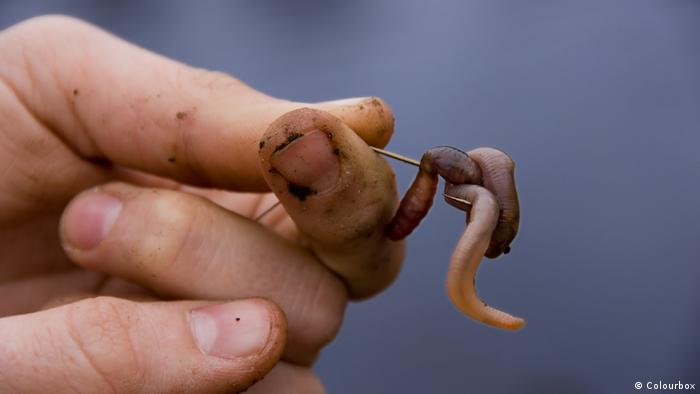
Regenwürmer (Colourbox)
Earthworms help recuperate soil and enrich it with much needed minerals. But environmentalists are concerned as earthworms have come under threat from intensive use of manure and acidic soil.
Earthworms, it seems, are the unsung heroes of our world. Labeled slimy and disgusting by many, these lowly invertebrates work unseen and underground where they till, fertilize and improve soil.
But environmentalists are concerned that industrial agricultural practices are making life difficult for this surprisingly important animal.
Intensive use of manure and acidic soil with a pH value below five harm the worm, although it remains unclear whether herbicides affect earthworm's ability to reproduce.
Still, one thing is for sure: the destruction of its habitat every few months with heavy machinery stresses the animal.
Fewer than 30 earthworms are found per square meter on intensively farmed fields. But on organic farms, where the fields are rarely ploughed, up to 450 worms live in the same area, according to the World Wide Fund for Nature (WWF).  
That's bad news according to agronomists and gardeners. A thriving earthworm population is an indication of healthy soil. And the retreat of the species is so evident the WWF has published an "Earthworm Manifesto" to publicize the faith of these dirt-dwellers.  
"If earthworms suffer, so too does our soil and thereby the basis for agriculture and food supply," said Birgit Wilhelm, a WWF expert in the farming sector. For Wilhelm, these worms are the least appreciated creatures on the planet.     DW

Thousands of dead and dying bees are washing up on a popular beach in Southern Florida.

Thousands of dead and dying bees are washing up on a popular beach in Southern Florida.
Naples beach goers had to watch where they stepped Tuesday after some people say they have been stung just along the shoreline, according to NBC affiliate WBBH-TV.
Martha Duff lives in Naples and recently had a painful encounter with the bees.
"I've been stung a couple of times and at first, I didn't know what it was and then I realized and then I had an allergic reaction," Duff said.     NBC

Ankara's outspoken mayor on Tuesday warned that outside forces could be using sophisticated technology to try to trigger a man-made earthquake


Ankara (AFP) - Ankara's outspoken mayor on Tuesday warned that outside forces could be using sophisticated technology to try to trigger a man-made earthquake in a deliberate bid to harm Turkey's fragile economy.
Melih Gokcek, who has been mayor of the Turkish capital since 1994, made the outlandish claims on Twitter where he regularly updates his more than 3.7 million followers, often writing in capital letters.
His comments were made after two quakes hit the western Canakkale province on Monday and Tuesday morning, measuring 5.3 and 5.2 magnitude respectively, the Turkish Disaster and Emergency Management Authority (AFAD) said.
In these tweets, Gokcek shared a video which claimed there were tools for causing manmade quakes, and he called all submarines and ships with large equipment to be taken under control of the authorities.
Gokcek said he had "researched" the two quakes and suggested they could have been caused by possible foreign interference.
"There was a ship conducting seismic research nearby. What this ship was researching and what country it belongs to must be solved," he wrote.
The ultimate aim, he suggested, was to trigger an earthquake near Istanbul in a bid to stage an economic "coup".
"At this moment, the coup aimed at Turkey is an earthquake near Istanbul to cause Turkey's economic collapse," he claimed.     Yahoo News

More than 4,000 children, mostly boys, were allegedly sexually abused by Catholic priests in Australia over decades

More than 4,000 children, mostly boys, were allegedly sexually abused by Catholic priests in Australia over decades, an investigation says, adding that since the 1950s some 7 percent of priests in the country were alleged perpetrators.
The report was released on Monday by the Australian Royal Commission into Institutional Responses to Child Sexual Abuse.
The commission will resume its public hearing into the current policies of the Catholic Church on Tuesday.     RT

One of the biggest makers of smart televisions has been found to be tracking users' viewing habits without them knowing.

One of the biggest makers of smart televisions has been found to be tracking users' viewing habits without them knowing. 
Vizio has been fined $2.2 million (£1.8m) after the US consumer watchdog discovered the company had been using content recognition software to track viewers without asking for permission. 
The tracking technology, called automated content recognition, can recognise what is being watched on the television at any given moment. Vizio gathered "as many as 100 billion data points a day from millions of TVs". 
Vizio, which has sold more than 11 million smart TVs since 2010, was found to have been sharing the "mountain of data" with independent companies such as advertisers and those that monitor audience engagement and habits. It does not sell its TVs in the UK.
"Consumers didn't know that while they were watching their TVs, Vizio was watching them," the US Federal Trade Commission said. "The generic way the company described that feature – for example, 'enables program offers and suggestions' – didn’t give consumers the necessary heads-up to know that Vizio was tracking their TV’s every flicker."       Telegraph