- Venezuela is rolling out a new, smart-card ID known as the "carnet de la patria," or "fatherland card," manufactured by Chinese telecom giant ZTE Corp.
- The ID transmits data about cardholders to government computer servers, and is increasingly linked to subsidized food, health, and other social programs most Venezuelans rely on to survive.
- The fatherland card, critics argue, illustrates how China, through state-linked companies like ZTE, exports technological know-how that can help like-minded governments track, reward, and punish citizens.
Showing posts with label Advanced Technology. Show all posts
Showing posts with label Advanced Technology. Show all posts
Thursday, November 29, 2018
Venezuela is rolling out a new, smart-card ID
Business Insider Nov. 18, 2018


Wednesday, November 28, 2018
China unveiled its "artificial intelligence news anchor"
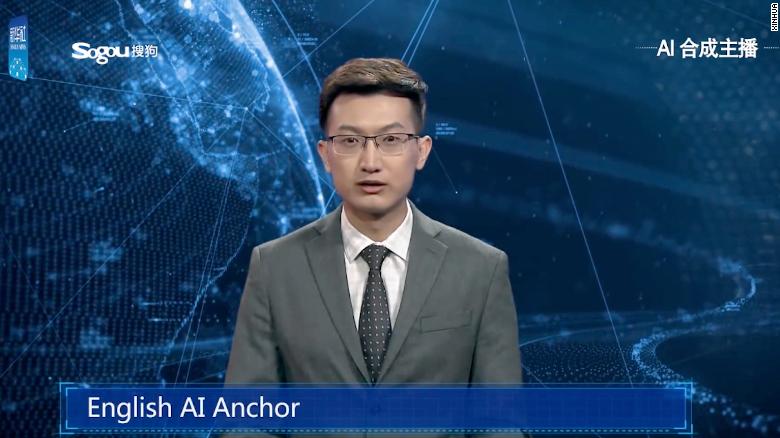
China's state news agency has debuted a virtual anchor designed to be able to deliver the news 24 hours a day.
Xinhua unveiled its "artificial intelligence news anchor" Wednesday at an internet conference in the eastern city of Wuzhen.
"Hello, you are watching English news program. I am AI news anchor in Beijing," the computer-generated host announced in a robotic voice at that start of its English-language broadcast.
Tuesday, October 24, 2017
Artificial intelligence is helping google create other AIs
Futurism October 16, 2017
Back in May, Google revealed its AutoML project; artificial intelligence (AI) designed to help them create
other AIs. Now, Google has announced that AutoML has beaten the human
AI engineers at their own game by building machine-learning software
that’s more efficient and powerful than the best human-designed systems.
An AutoML system recently broke a record for categorizing images by
their content, scoring 82 percent. While that’s a relatively simple
task, AutoML also beat the human-built system at a more complex task
integral to autonomous robots and augmented reality: marking the
location of multiple objects in an image. For that task, AutoML scored
43 percent versus the human-built system’s 39 percent.
These results are meaningful because even at Google, few people have
the requisite expertise to build next generation AI systems. It takes a
rarified skill set to automate this area, but once it is achieved, it
will change the industry. “Today these are handcrafted by machine
learning scientists and literally only a few thousands of scientists
around the world can do this,” WIRED reports Google CEO Sundar Pichai said. “We want to enable hundreds of thousands of developers to be able to do it.”
Much of metalearning is about imitating human neural networks and trying
to feed more and more data through those networks. This isn’t — to use
an old saw — rocket science. Rather, it’s a lot of plug and chug work
that machines are actually well-suited to do once they’ve been trained.
The hard part is imitating the brain structure in the first place, and
at scales appropriate to take on more complex problems.
Monday, July 31, 2017
Disease, ageing and even death are all human realities that super intelligence seek to end.
By Alexander Thomas, July 31, 2017
The rapid development of so-called NBIC technologies –
nanotechnology, biotechnology, information technology and cognitive
science – are giving rise to possibilities that have long been the
domain of science fiction. Disease, ageing and even death are all human
realities that these technologies seek to end.
They may enable us to enjoy greater “morphological freedom” – we
could take on new forms through prosthetics or genetic engineering. Or
advance our cognitive capacities. We could use brain-computer interfaces to link us to advanced artificial intelligence (AI).
Nanobots
could roam our bloodstream to monitor our health and enhance our
emotional propensities for joy, love or other emotions. Advances in one
area often raise new possibilities in others, and this “convergence” may
bring about radical changes to our world in the near-future.
“Transhumanism” is the idea that humans should transcend their
current natural state and limitations through the use of technology –
that we should embrace self-directed human evolution. If the history of
technological progress can be seen as humankind’s attempt to tame nature
to better serve its needs, transhumanism is the logical continuation:
the revision of humankind’s nature to better serve its fantasies. More
Friday, June 9, 2017
German scientists have found a way to photograph people in 3D through walls using Wi-Fi

By Dave Mosher, 22.05.2017
Wi-Fi can pass through walls.
This fact is easy to take for granted, yet it's the reason we can surf the web using a wireless router located in another room.
But not all of that microwave radiation makes it to (or from) our
phones, tablets, and laptops. Routers scatter and bounce their signal
off objects, illuminating our homes and offices like invisible light
bulbs.
Now, German scientists have found a way to exploit this property to
take holograms, or 3D photographs, of objects inside a room — from
outside it.
"It can basically scan a room with someone's Wi-Fi transmission,"
Philipp Holl, a 23-year-old undergraduate physics student at the
Technical University of Munich, told Business Insider.
Holl initially built the device as part of his bachelor thesis with
the help of his academic supervisor, Friedemann Reinhard. The two later
submitted a study about their technique to the journal Physical Review
Letters, which published their paper in early May.
Holl says the technology is only in its prototype stage and has limited resolution, but he is excited about its promise.
"If there's a cup of coffee on a table, you may see something is
there, but you couldn't see the shape," Holl says. "But you could make
out the shape of a person, or a dog on a couch. Really any object that's
more than 4 centimeters in size." Read More
JetBlue Airways Corp. and Delta Air Lines Inc. will test facial- and fingerprint-recognition technology
by Mary Schlangenstein
JetBlue Airways Corp. and Delta Air Lines Inc. will test facial- and
fingerprint-recognition technology at two U.S. airports to replace
boarding passes, building on industry efforts to increase security and
ease passage through airports.
The JetBlue program will start next
month on flights from Boston to Aruba’s Queen Beatrix International
Airport, the airline said in a statement
Wednesday. It will match passenger photos to their passport or visa
photos. Delta has been trying fingerprint identification in Washington
that may eventually replace boarding passes.
The testing
highlights efforts by carriers to speed customers through congested
airports while increasing security. Europe’s KLM airline in February
began using face-scanning technology for boarding at Amsterdam’s Schiphol Airport. Delta this month said it would attempt a self-serve process for checking bags at one airport using facial recognition.
“We hope to learn how we can further reduce friction points
in the airport experience, with the boarding process being one of the
hardest to solve,” Joanna Geraghty, JetBlue’s executive vice president
for customer experience, said in the statement.
JetBlue passengers will be able to participate without enrolling or registering in advance.
A
custom-designed camera will take a photo and transmit it to U.S.
authorities to compare against databases of passport, visa and
immigration images. A display above the camera will notify travelers
when they can board. New York-based JetBlue is working with U.S. Customs
and Border Protection and SITA, an information-technology provider for
airlines. More
Thursday, May 18, 2017
Emotion reading technology could soon be used by police
Emotion reading technology could soon be used by police after a
Russian firm created a tool that can identify people in a crowd and tell
if they are angry, stressed or nervous.
The software, created by NTechLab, can monitor citizens for suspicious behaviour by tracking identity, age, gender and current emotional state. It could be used to pre-emptively stop criminals and potential terrorists.
"The recognition gives a new level of security in the street because in a couple of seconds you can identify terrorists or criminals or killers," said Alexander Kabakov, NTechLab chief executive.
The emotion recognition tool is a new part of NTechLab's facial recognition software, which made the headlines last year when it was used to power the FindFace app that can track down anyone on Russian social network VKontakte from a photo.
The identification app claims to have reconnected long-lost friends and family members, as well as helped police solve two cold cases and identify criminals. Read More
The software, created by NTechLab, can monitor citizens for suspicious behaviour by tracking identity, age, gender and current emotional state. It could be used to pre-emptively stop criminals and potential terrorists.
"The recognition gives a new level of security in the street because in a couple of seconds you can identify terrorists or criminals or killers," said Alexander Kabakov, NTechLab chief executive.
The emotion recognition tool is a new part of NTechLab's facial recognition software, which made the headlines last year when it was used to power the FindFace app that can track down anyone on Russian social network VKontakte from a photo.
The identification app claims to have reconnected long-lost friends and family members, as well as helped police solve two cold cases and identify criminals. Read More
Wednesday, February 8, 2017
Ankara's outspoken mayor on Tuesday warned that outside forces could be using sophisticated technology to try to trigger a man-made earthquake

Ankara
(AFP) - Ankara's outspoken mayor on Tuesday warned that outside forces
could be using sophisticated technology to try to trigger a man-made
earthquake in a deliberate bid to harm Turkey's fragile economy.
Melih
Gokcek, who has been mayor of the Turkish capital since 1994, made the
outlandish claims on Twitter where he regularly updates his more than
3.7 million followers, often writing in capital letters.
His
comments were made after two quakes hit the western Canakkale province
on Monday and Tuesday morning, measuring 5.3 and 5.2 magnitude
respectively, the Turkish Disaster and Emergency Management Authority
(AFAD) said.
In
these tweets, Gokcek shared a video which claimed there were tools for
causing manmade quakes, and he called all submarines and ships with
large equipment to be taken under control of the authorities.
Gokcek said he had "researched" the two quakes and suggested they could have been caused by possible foreign interference.
"There
was a ship conducting seismic research nearby. What this ship was
researching and what country it belongs to must be solved," he wrote.
The ultimate aim, he suggested, was to trigger an earthquake near Istanbul in a bid to stage an economic "coup".
"At this moment, the coup aimed at Turkey is an earthquake near Istanbul to cause Turkey's economic collapse," he claimed. Yahoo News
Subscribe to:
Posts (Atom)