Showing posts with label Earth Changes. Show all posts

Sunday, January 31, 2021

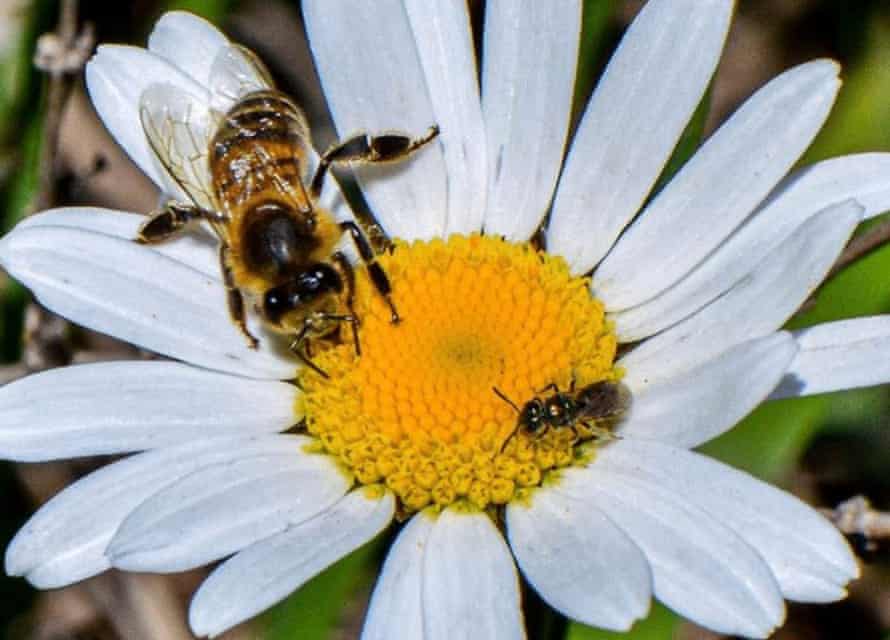
Quarter of known bee species have not been recorded since 1990

An introduced honey bee and a smaller native sweat bee share a flower in a Patagonian forest.

The Guardian 22 Jan 2021

The number of wild bee species recorded by an international database of life on Earth has declined by a quarter since 1990, according to a global analysis of bee declines.

Researchers analysed bee records from museums, universities and citizen scientists collated by the Global Biodiversity Information Facility, (GBIF) a global, government-funded network providing open-access data on biodiversity.

They found a steep decline in bee species being recorded since 1990, with approximately 25% fewer species reported between 2006 and 2015 than before the 1990s.

Although this does not mean these species are extinct, it may indicate that some have become so scarce that they are no longer regularly observed in the wild.

“With citizen science and the ability to share data, records are going up exponentially, but the number of species reported in these records is going down,” said Eduardo Zattara, the lead author and a biologist from the Universidad Nacional del Comahue and Argentina’s National Scientific and Technical Research Council (Conicet). “It’s not a bee cataclysm yet, but what we can say is that wild bees are not exactly thriving.”

Monday, November 30, 2020

The earth spinning unusually fast lately

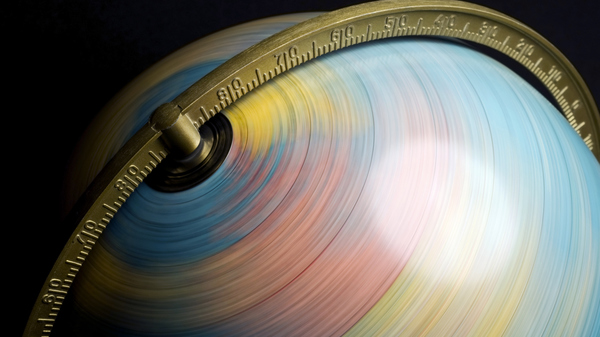
Long-exposure shot of a fast-spinning globe. 

Many of us wish we could get through this difficult year as quickly as possible. Seems the Earth feels the same way — it has been spinning unusually fast lately. 2020 included the 28 shortest days since 1960.

Atomic Clocks Expose Earth's Irregular Speed

The Earth is an excellent timekeeper: on average, with respect to the Sun, it rotates once every 86,400 seconds, which equals 24 hours, or one mean solar day.

But it is not perfect. When highly accurate atomic clocks were developed in the 1960s, they showed that the length of a mean solar day can vary by milliseconds (1 millisecond equals 0.001 seconds). These differences are obtained by measuring the Earth's rotation with respect to distant astronomical objects, and using a mathematical formula to calculate the mean solar day.

2020 Had Shortest Days on Record

Before this year began, the shortest day since 1973 was July 5, 2005, when the Earth's rotation took 1.0516 milliseconds less than 86,400 seconds.

But in the middle of 2020, the Earth beat that record no less than 28 times. The shortest day of all came on July 19, when the Earth completed its rotation in 1.4602 milliseconds less than 86,400 seconds.

The speed of the Earth's rotation varies constantly because of the complex motion of its molten core, oceans and atmosphere, plus other effects. 

2021 Is Predicted to Be Even Shorter

Scientists monitoring the Earth's rotational speed expect the trend of having shorter days to follow us into 2021 as well.

According to their calculations, an average day in 2021 will be 0.05 ms shorter than 86,400 seconds. Over the course of the entire year, atomic clocks will have accumulated a lag of about 19 ms. For comparison: in past years, they ran fast by a few hundred milliseconds per year. See yearly averages since 1973

In fact, the year 2021 is predicted to be the shortest in decades. The last time that an average day was less than 86,400 seconds across a full year was in 1937.

Monday, July 29, 2019

Thousands of bees have been shown dead on the ground after a 7.1 magnitude earthquake struck California

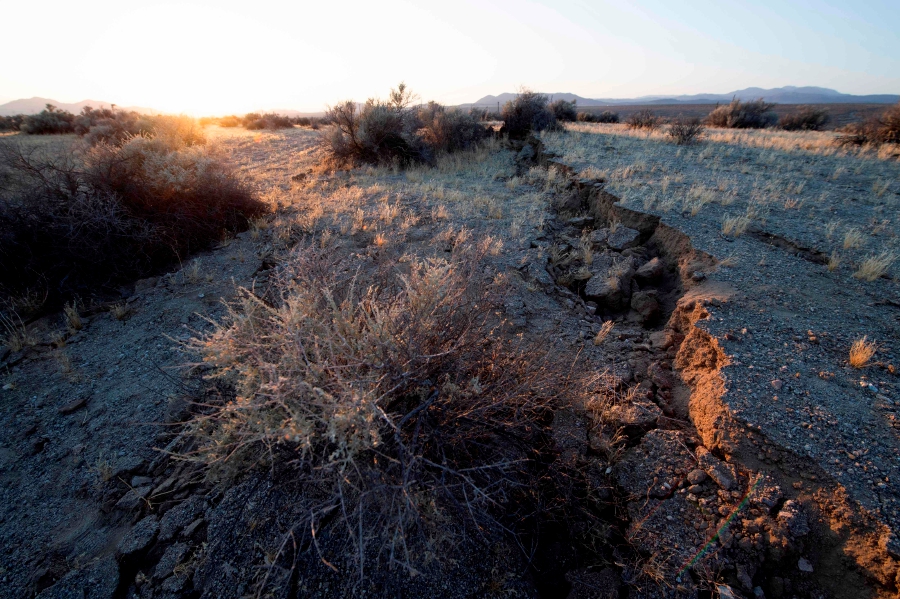
Thousands of bees have been shown dead on the ground after a 7.1 magnitude earthquake struck California on Saturday.

The shocking footage shows social media influencer Khalil Underwood outside his house, amid a mass of the dead insects on July 6.

He zooms close to the ground to reveal the plight of the bees and the masses of carcasses that cover much of the ground in front of him.

“This is crazy. I've never witnessed anything like this,' Underwood exclaims. 'Look how many f***ing bees are on the f***ing floor from the earthquake.”

He pointed to some that were still alive, appearing to shake and buzz on the ground as well as the struggle he had while moving his car.

Underwood claims the bees “vibrated, buzzed and died” as a result of the earthquakes.

Scientists have previously noted that animals and insects act strangely in the lead up to an earthquake, but do not know why, according to the US Geological Survey.

While scientists know creatures are able to recognise earthquakes before humans, the mechanisms explaining how and why they happen “still elude us” they wrote...

The unusual event occurred after a 7.1 magnitude earthquake struck southern California, the worst the state has experienced in two decades.

The second consecutive day of earthquakes caused fires to break-out in Ridgecrest.

The earthquake struck 11 miles off the north-northeast of Ridgecrest at 8.19pm PST on Friday, close to where a 6.4 earthquake had hit the morning before.

More than 250 smaller magnitude aftershocks had also hit during the 36 hours between earthquakes according to the US Geological Survey.

Tuesday, April 10, 2018

Re-creation of the mississippi river’s 500-year flood history shows the worst floods are bigger than ever

Science News  April 4, 2018
The world’s longest system of levees and floodways, meant to rein in the mighty Mississippi River, may actually make flooding worse.

Using tree rings and lake sediments, researchers re-created a history of flooding along the lower Mississippi River extending back to the 1500s. This paleoflood record suggests that the past century of river engineering — intended to minimize flood damage to people living along the river’s banks — has instead increased the magnitude of the largest floods by 20 percent, the researchers report April 5 in Nature.

Climate patterns that bring extra rainfall to the region don’t account for the dramatic increase in flood size, the team found. “The obvious culprit is that we have really modified the river itself,” says Samuel Munoz, a geoscientist at Northeastern University in Boston.

Settlers built the first levees on the Mississippi in the early 1800s. After a massive flood displaced hundreds of thousands of people in 1927, the U.S. government built the current system of spillways and levees. The engineering projects profoundly altered the river’s shape and sediment content. But how these changes affected the size of the river’s largest floods has been unclear, in part because water gauges have tracked the river’s flow for just 150 years.

Thursday, March 29, 2018

World sees rapid upsurge in extreme weather events


Phys March 21, 2018
A world addled by climate change has seen a four-fold increase in major flooding events since 1980, and a doubling of significant storms, droughts and heat waves, Europe's national science academies jointly reported Wednesday.

In Europe, where precise data reaches back decades, the number of severe floods has jumped five fold since 1995, according to the report, which updates a 2013 assessment.
"There has been, and continues to be, a significant increase in the frequency of extreme weather events," said Michael Norton, environmental programme director for the European Academies' Science Advisory Council.
"They underline the importance of avoiding greenhouse gases, which are fundamentally responsible for driving these changes," he told AFP.
For impacts that cannot be avoided, he added, "this makes climate proofing all the more urgent."
In Europe, efforts to shore up defences against river flooding have proven effective: despite an increase in frequency of such events, economic loses on the continent have remained static.
"Rather than just coping with disasters after they strike, we need to shift to proactive management of all drivers of risks," commented Munich Climate Insurance Initiative director Soenke Kreft, who did not contribute to the report.
In the United States, however, the damage wrought by storms doubled, on average, from $10 billion in 1980 to $20 billion in 2015, adjusted for inflation, according to the report, based in part on data from insurance giant Munich Re's NatCatSERVICE.
The update also assessed new findings on possible changes in the Gulf Stream, powerful ocean currents running between the Arctic region and the Caribbean that warm the air in northwestern Europe and the US eastern seaboard.

Friday, March 16, 2018

Dormant volcanos in United States

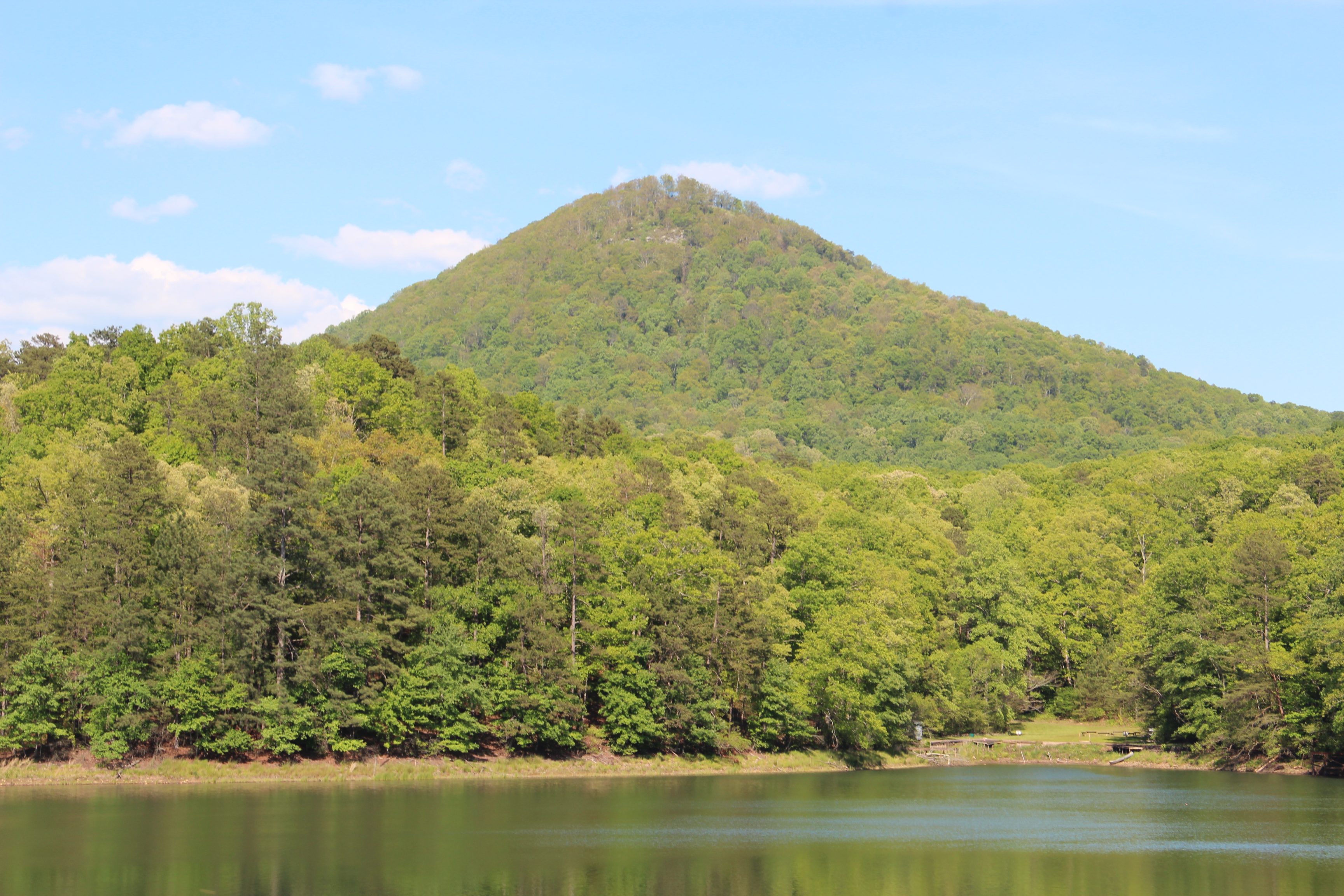
Image result for georgia mountains
USGS 
June 20, 1857 Pigeon Mountain volcano, Georgia  The New York Times
A writer in the Sentinel states that a volcano has lately made its appearance in Pigeon mountain, about ten miles from Augusta. On the 24th, ult., the mountain was violently agitated, and the citizens in the vicinity were aroused and terribly frightened by the commotion. When observing the mountain they were more than ever terrified, for a brilliant light was plainly seen issuing from the summit. The atmosphere soon became strongly impregnated with a disagreeable sulphuric odor. On the following day a thick torrent of smoke and ashes ascended from where this light was previously seen. No blaze has yet been seen to issue from the crater. It had continued up to the 29th ultimo about as above described, emitting smoke and ashes without intermission. The crater is thought to be about 100 yards in diameter. No one has yet ventured near enough to ascertain anything of its general depth. 

Several springs in the vicinity have totally disappeared. Many of the citizens are very much alarmed, and some even are moving out of the valley, through anticipation and fear of a violent eruption. The writer states that the principle of a volcano has for many years been germinating in Pigeon mountain. About ten miles south from where the present appeared, is the crater of an extinguished volcano, which appears to have been in an active state at no very distant period. 

March 18, 1874 ... (March 17) Bald Mountain, North Carolina  The New York Times
KNOXVILLE, Tenn., March 17. -- We have no positive information of the volcanic disturbance reported from Raleigh. It is reported from Ashville as being between that place and Old Fort, and not at the Bald Mountains. The rumbling sounds have been heard and tremors felt frequently during the last two or three weeks for some distance in that vicinity.  

THE REPORTS CONFIRMED.
RALEIGH, N.C., March 17. -- Passengers from the west on this morning's train confirm the reports of the rumbling noises and the general upheaving of the Bald Mountain in Western Carolina. People living on and near the mountain are moving out, and a volcanic eruption is momentarily expected.

The world needs to do more to prepare for the next huge volcanic eruption


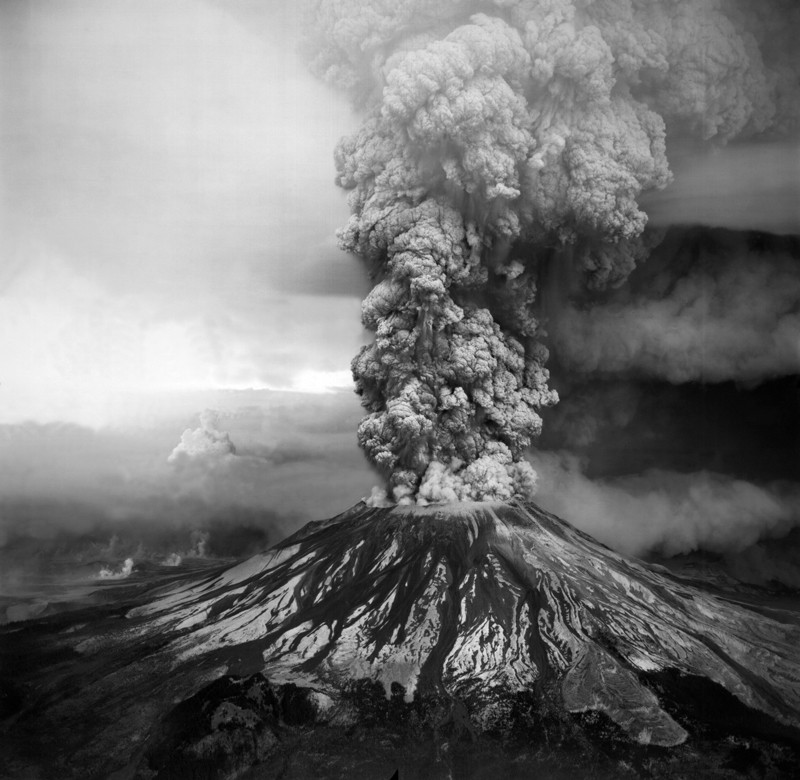
Mount St Helens volcano eruption, 19 May 1980.

Nature     March/06/2018
The world needs to do more to prepare for the next huge volcanic eruption, a team of leading scientists says.

The devastating Indian Ocean tsunami of 2004 and the Tōhoku earthquake in Japan in 2011 highlighted some of the worst-case scenarios for natural disasters. But humanity has not had to deal with a cataclysmic volcanic disaster since at least 1815, when the eruption of Tambora in Indonesia killed tens of thousands of people and led to a ‘year without a summer’ in Europe and North America. Such world-altering blasts rank at 7 or more on the Volcanic Explosivity Index (VEI) scale of eruptions, which goes to 8.

“The next VEI-7 eruption could occur within our lifetimes, or it could be hundreds of years down the road,” says Chris Newhall, a volcanologist with the Mirisbiris Garden and Nature Center in Santo Domingo, Philippines. But the time to have this discussion is now, he says, so that researchers and government officials can plan and prepare before an emergency strikes.

Sardine fishing nets will remain empty for a fourth straight year along the West Coast

SFGate    March/07/2018
Sardine fishing nets will remain empty for a fourth straight year along the West Coast, where biologists are comparing the dramatic decline of the schooling fish to the infamous collapse that led to the downfall of Monterey’s once-thriving Cannery Row.

The northern Pacific sardine population, stretching from Mexico to British Columbia, has plummeted 97 percent since 2006, according to an assessment released this week by the National Marine Fisheries Service and the Pacific Fishery Management Council.

The perilously low numbers give regulators no choice but to close fishing, which had been scheduled to start July 1, from Mexico to the Canadian border.

The 14 voting members of the fishery council, which makes policy along the coasts of California, Oregon and Washington, will meet April 8 in Portland, Ore., to discuss the results, but everyone agrees a fishing ban is inevitable. The council is required by federal law to close ocean fishing when the numbers fall this far below conservation objectives.

Thursday, January 25, 2018

“It is two minutes to midnight”

The Bulletin of the Atomic Scientists advanced the symbolic Doomsday Clock a notch closer to the end of humanity Thursday, moving it ahead by 30 seconds after what the organization called a “grim assessment” of the state of geopolitical affairs.
“As of today,” Bulletin president Rachel Bronson told reporters, “it is two minutes to midnight” — as close as the world has ever been to the hour of apocalypse.
In moving the clock forward, the group cited “the failure of President Trump and other world leaders to deal with looming threats of nuclear war and climate change.”
The organization — which has 15 Nobel Laureates on its board — now believes “the world is not only more dangerous now than it was a year ago; it is as threatening as it has been since World War II,” Bulletin officials Lawrence M. Krauss and Robert Rosner wrote in an op-ed published Thursday by The Washington Post. “In fact, the Doomsday Clock is as close to midnight today as it was in 1953, when Cold War fears perhaps reached their highest levels.”
The last time the clock advanced so far, the United States had just tested its first thermonuclear device, and the Soviet Union had tested a hydrogen bomb.
Today, Bronson said, “to call the world’s nuclear situation dire is to understate the danger and its immediacy.”

Thursday, May 18, 2017

Where have all the insects gone?

Entomologists call it the windshield phenomenon. "If you talk to people, they have a gut feeling. They remember how insects used to smash on your windscreen," says Wolfgang Wägele, director of the Leibniz Institute for Animal Biodiversity in Bonn, Germany. Today, drivers spend less time scraping and scrubbing. "I'm a very data-driven person," says Scott Black, executive director of the Xerces Society for Invertebrate Conservation in Portland, Oregon. "But it is a visceral reaction when you realize you don't see that mess anymore."
Some people argue that cars today are more aerodynamic and therefore less deadly to insects. But Black says his pride and joy as a teenager in Nebraska was his 1969 Ford Mustang Mach 1—with some pretty sleek lines. "I used to have to wash my car all the time. It was always covered with insects." Lately, Martin Sorg, an entomologist here, has seen the opposite: "I drive a Land Rover, with the aerodynamics of a refrigerator, and these days it stays clean."
Though observations about splattered bugs aren't scientific, few reliable data exist on the fate of important insect species. Scientists have tracked alarming declines in domesticated honey bees, monarch butterflies, and lightning bugs. But few have paid attention to the moths, hover flies, beetles, and countless other insects that buzz and flitter through the warm months. "We have a pretty good track record of ignoring most noncharismatic species," which most insects are, says Joe Nocera, an ecologist at the University of New Brunswick in Canada.
Of the scant records that do exist, many come from amateur naturalists, whether butterfly collectors or bird watchers. Now, a new set of long-term data is coming to light, this time from a dedicated group of mostly amateur entomologists who have tracked insect abundance at more than 100 nature reserves in western Europe since the 1980s.
Over that time the group, the Krefeld Entomological Society, has seen the yearly insect catches fluctuate, as expected. But in 2013 they spotted something alarming. When they returned to one of their earliest trapping sites from 1989, the total mass of their catch had fallen by nearly 80%. Perhaps it was a particularly bad year, they thought, so they set up the traps again in 2014. The numbers were just as low. Through more direct comparisons, the group—which had preserved thousands of samples over 3 decades—found dramatic declines across more than a dozen other sites.     More
Wednesday, February 8, 2017

Earthworm numbers dwindle, threatening soil health


Regenwürmer (Colourbox)
Earthworms help recuperate soil and enrich it with much needed minerals. But environmentalists are concerned as earthworms have come under threat from intensive use of manure and acidic soil.
Earthworms, it seems, are the unsung heroes of our world. Labeled slimy and disgusting by many, these lowly invertebrates work unseen and underground where they till, fertilize and improve soil.
But environmentalists are concerned that industrial agricultural practices are making life difficult for this surprisingly important animal.
Intensive use of manure and acidic soil with a pH value below five harm the worm, although it remains unclear whether herbicides affect earthworm's ability to reproduce.
Still, one thing is for sure: the destruction of its habitat every few months with heavy machinery stresses the animal.
Fewer than 30 earthworms are found per square meter on intensively farmed fields. But on organic farms, where the fields are rarely ploughed, up to 450 worms live in the same area, according to the World Wide Fund for Nature (WWF).  
That's bad news according to agronomists and gardeners. A thriving earthworm population is an indication of healthy soil. And the retreat of the species is so evident the WWF has published an "Earthworm Manifesto" to publicize the faith of these dirt-dwellers.  
"If earthworms suffer, so too does our soil and thereby the basis for agriculture and food supply," said Birgit Wilhelm, a WWF expert in the farming sector. For Wilhelm, these worms are the least appreciated creatures on the planet.     DW

Thousands of dead and dying bees are washing up on a popular beach in Southern Florida.

Thousands of dead and dying bees are washing up on a popular beach in Southern Florida.
Naples beach goers had to watch where they stepped Tuesday after some people say they have been stung just along the shoreline, according to NBC affiliate WBBH-TV.
Martha Duff lives in Naples and recently had a painful encounter with the bees.
"I've been stung a couple of times and at first, I didn't know what it was and then I realized and then I had an allergic reaction," Duff said.     NBC

Monday, December 12, 2016

Enormous Earthquakes Hit Both Sides Of The Pacific


ring of fire activity

Why is our planet shaking so violently all of a sudden? There have literally been dozens of significant earthquakes right along the Ring of Fire within the past 30 days, and two giant ones made headlines all over the globe on Thursday. First, a magnitude 6.5 earthquake struck off the coast of Humboldt County, California, and that was followed later in the day by a magnitude 7.8 earthquake in the Solomon Islands. But of course these latest earthquakes are just the latest examples of increased shaking along the outer perimeter of the Pacific Ocean. Experts are not quite sure what to make of all of this shaking, but they are warning that “the Big One” could strike the west coast at literally any time.
Let’s start by discussing the historic earthquake that just hit the Solomon Islands. According to the Washington Post, it was originally determined to be a magnitude 8.0 earthquake before being downgraded to a 7.8…
A massive earthquake erupted along a fault line near the Solomon Islands in the southwest Pacific Ocean on Thursday. The quake was originally detected as a magnitude-8 by the U.S. Geological Service, but has since been reduced to a 7.8 on the Moment-Magnitude scale.
It was followed by a 5.5-magnitude quake, and aftershocks continue to roll through.
Subsequently, that earthquake was followed by 20 extremely large aftershocks that all fell into a range between magnitude 4.8 and magnitude 6.5. All of this violent seismic activity seems to have shook the entire planet to at least some degree, because monitoring stations all over the world were experiencing strange “vibrations” as aftershock after aftershock shook the Solomon Islands.
Prior to all of this shaking in the Solomon Islands, a magnitude 6.5 earthquake off the coast of California rattled residents of Humboldt County.
Fortunately the quake was far enough offshore that not a lot of damage was done, but it is being reported that those living in the region could feel the ground rolling…       Activist Post