PARIS —
President Obama joined leaders from 150 nations on Monday in pledging
action against climate change, kicking off a historic two-week gathering
that Obama called a “turning point” in the battle against one of
humanity’s gravest threats.
Heads of state from industrial powers
and tiny island nations assembled in a heavily guarded conference
center north of Paris, where negotiators hope to forge a treaty to
dramatically reduce emissions of greenhouse-gas pollution blamed for
warming the planet.
Obama, speaking a few miles from the site of
the Nov. 13 terrorist attack in the French capital, called for urgent
action against a challenge that he suggested was greater even than the
fight against terrorism.
“The growing threat of climate change
could define the contours of this century more dramatically than any
other,” Obama said in a speech at the Le Bourget conference center in
Paris’s industrial outskirts. “What should give us hope that this is a
turning point, that this is the moment we finally determined we would
save our planet.”
Obama, who has staked his legacy on the fight
against climate change, struck an ominous tone in describing the ravages
of a warming planet, declaring that “no nation large or small, wealthy
or poor, is immune.” He urged the leaders to take action even if the
benefits were not evident for generations.
Citing Martin Luther King Jr., he warned that “there is such a thing as being too late.”
The remarks came during a day of ceremonial fanfare as well as
substantive progress in marshaling resources to speed the shift to
cleaner energy. U.S. officials formally announced the formation of a
20-nation initiative to spur funding on energy research, in tandem with a
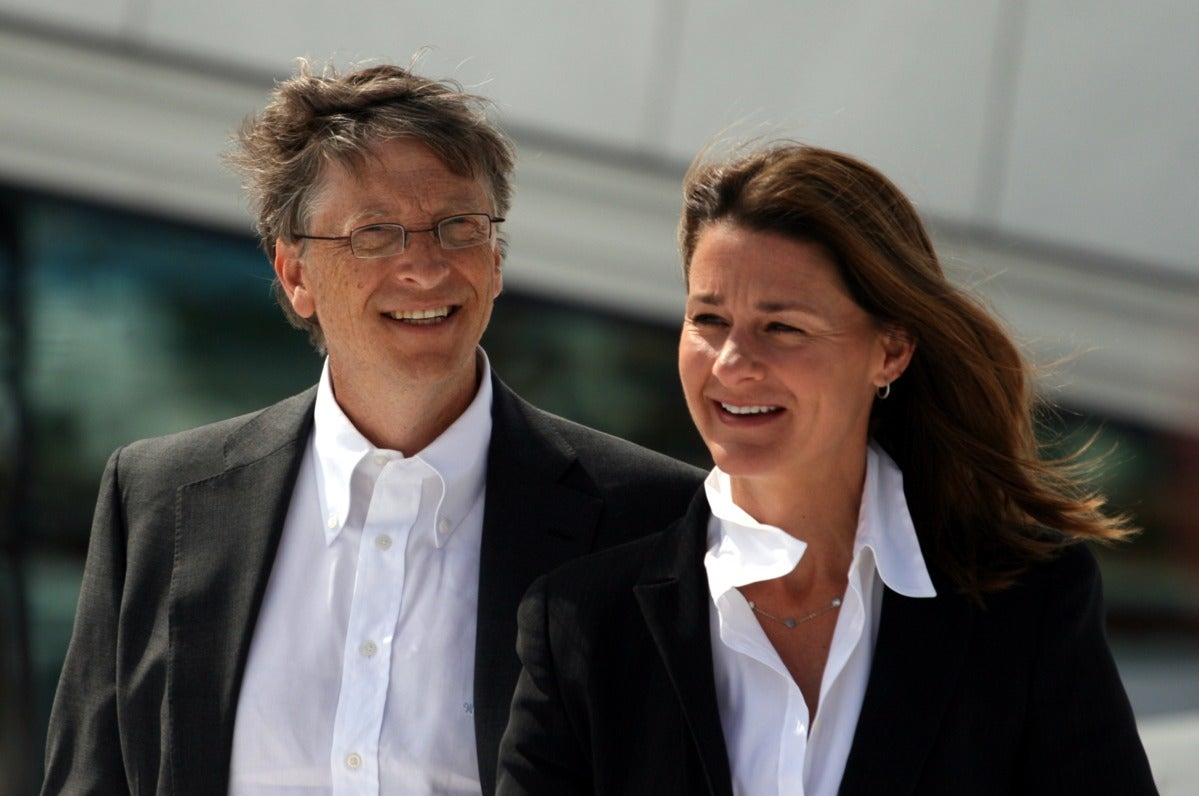
similar undertaking led by Microsoft co-founder Bill Gates and 27 of
the world’s wealthiest private investors.
But there were also
signs of discord as negotiators prepared to haggle over details of a
complex treaty that requires all nations — even the poorest ones — to
make a contribution to cutting greeenhouse-gas pollution. Some
developing countries have insisted on compensation for economic and
environmental damage stemming from decades of industrial emissions that
came mostly from Western industrial powers.
French Foreign Minister Laurent Fabius opened the conference by calling on all governments to back an ambitious treaty.
“The stakes are too high and the menace of climate change is too great
for us to be content with a minimalistic agreement,” he said.
Obama
has already aligned most of the world’s largest greenhouse gas emitters
behind substantial cuts in greenhouse gas emissions, but over the next
dozen days international climate negotiators must still nail down the
details of an agreement that would strengthen existing commitments and
introduce a way for countries to review and expand their commitments in
the near future.
The negotiations have been slowed by delegates
from developing countries who believe that, for all of Obama’s efforts,
the United States should do even more to help them grapple with the
effects of climate change and lower global emissions.
Obama
said that “the United States not only recognizes our role in creating
this problem, we embrace our responsibility to do something about it.”
But he stressed that all nations must act “right now.”
More than
two weeks after terrorist attacks rocked this city and shocked the
world, Obama described the gathering of world leaders here as “an act of
defiance” and asked: “What greater rejection of those who would tear
down our world than marshaling our best efforts to save it?”
With so many world leaders present, the summit also opened chances for top-level dialogue on other fronts.
Sideline
talks included a meeting between Obama and Russian President Vladimir
Putin to discuss Syria’s nearly five-year civil war and peace efforts in
Ukraine between the Western-supported government and Moscow-backed
rebels.
The two leaders agreed to continue talks among global
stakeholders that began this fall in Vienna to forge a political
solution to the fighting in Syria. But the two sides remain far apart on
some key issues, and no clear progress appeared to have been made in
Paris.
Russia says its military intervention in Syria seeks to
cripple the Islamic State — a mutual enemy of Washington and its allies.
But Moscow has heavily targeted rebel factions seeking to topple Syrian
President Bashar al-Assad, a key Russian partner. In Paris, Obama
repeated U.S. demands that Assad must eventually step down as part of
any political transition.
Obama kicked off his day meeting with
Chinese President Xi Jinping, hailing their mutual work on climate
change but urging greater Chinese cooperation on cybercrime and
“maritime” issues that include China’s military construction on disputed
reefs in the South China Sea.
Putting China first on the schedule was an indication of China’s central role on global issues such as climate change.
It
was just a year ago that Obama and Xi vowed to set definite limits on
greenhouse gas emissions, laying the foundation for other countries to
follow suit. On Monday, Obama said: “Our leadership on this issue has
been absolutely vital.”
Other highlights included a meeting with
Indian Prime Minister Narendra Modi, whose government has been pressing
for more financing and technology transfer. U.S. officials expressed
frustration that Modi had not pledged to do more to avoid sharp
increases in coal-fired electricity to help the 240 million Indians who
lack electricity. They hoped to make progress in the coming days.
Obama
also attended the formal unveiling of an initiative to boost research
and development spending on new technologies, led by Gates. The
Microsoft founder, in an interview with The Washington Post, warned that
the climate threat is too serious to allow technology to evolve at the
usual slow pace.
“Historically, it takes over 50 years before you
have a substantial shift in energy generation, but we need to do it
more quickly,” Gates said. “We need to move faster than the energy
sector ever has.”
Obama expressed belief that a breakthrough was
needed in addition to current technologies, something some critics say
is too optimistic. “We don’t know exactly what’s going to work best but
we know if we put our best minds behind it and put our dollars behind it
we’ll discover what works,” Obama said.
Some countries believe
solutions lie closer. A group of countries — France, Canada, Chile,
Ethiopia, Germany and Mexico — proposed putting a worldwide price on
carbon to discourage the use of carbon intensive fuels, such as coal.
The
chances of getting such a proposal through the Republican-controlled
Congress, however, are remote. It is also unclear whether Congress will
provide the additional research dollars Obama pledged as part of the
Gates “innovation” initiative.
The summit will also feature a
goal, heavily promoted by India and including 121 countries, of a
massive investment in solar power in countries with the greatest amounts
of sunlight.
“We
have broken the old arguments for inaction,” Obama said at the plenary
session Monday. “We have proved that strong economic growth and stable
investment no longer have to conflict with one another.”
Obama is
one of about 150 world leaders at the Paris summit — formally known as
the 21st Conference of Participants. Those leaders also delivered
speeches.
“A political moment like this may not come again,”
said U.N. Secretary General Ban Ki-moon. “We have never faced such a
test. But neither have we encountered such great opportunity.”
In
the wake of terrorist attacks that left 130 dead, the conference,
taking place in a center located at an old airport in Le Bourget, has
become a major security headache, and traffic has been blocked in Paris
until Tuesday.
After arriving in Paris on Sunday, Obama’s
motorcade glided along the Seine through largely deserted streets before
stopping in front of Le Bataclan, the concert hall where scores of
people were killed in the terrorist attacks.
Flanked
by French President François Hollande and Paris Mayor Anne Hidalgo,
Obama placed a white rose on the street in front of the concert hall,
making a small addition to the mound of flowers and candles there. After
standing for a minute of silence with his hands folded before him,
Obama walked away, briefly placing a hand on the shoulders of Hollande
and Hidalgo.
The United States announced that it will contribute
$51.2 million to a $248 million Least Developed Countries Fund to help
the world’s poorest countries adapt to climate change. Germany is the
largest of 11 donors to the fund.
“We know the truth — that many
nations have contributed little to climate change but will be the first
to feel its most destructive effects,” Obama said.
But U.S.
officials said they would resist calls by many small island states and
other countries vulnerable to climate-change effects that developed
nations pay reparations or damages because of their historic emissions.
Those nations also favor setting a goal of limiting climate change to
1.5 degrees Celsius instead of 2 degrees. Obama will meet with leaders
of island nations Tuesday.
Other countries used the conference
to announce new details. Norway, Germany and Britain said they would
provide $1 billion a year until 2020 in payments for verified emissions
reductions from forests and land use in other countries.