Showing posts with label Catholicism. Show all posts

Wednesday, March 31, 2021

Current Justices of the Supreme Court: All Except Two Are Roman Catholics

Jamesjpn  January 11, 2021   

Six out of nine current Supreme Court Justices were nominated by Republican Presidents! And yet Roe vs. Wade has still not been overturned. And seven out of nine are Roman Catholics who are supposed to be against abortion!
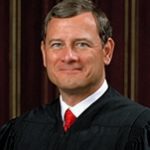
John G. Roberts, Jr.

John G. Roberts, Jr.

John G. Roberts, Jr., Chief Justice of the United States,
President George W. Bush, Republican, nominated him as Chief Justice of the United States, and he took his seat on September 29, 2005. Roberts is a devout Catholic and is married to an ardent pro-life activist. In spite of the fact he was nominated by a Republican and is supposed to hold traditional Christian values, he ruled with other Supreme Court justices in July 2020 that Nevada can impose tighter restrictions on churches than casinos to enforce social distancing guidelines. Moreover, Roberts concurred with the liberals on the court to strike down a Louisiana anti-abortion law! Why doesn’t the Pope excommunicate the guy? Something sinister is afoot. Maybe the RCC’s stance against abortion is really phony after all.

Clarence Thomas

Clarence Thomas

Clarence Thomas, Associate Justice,
President George Herbert Walker Bush, Republican, nominated him as an Associate Justice of the Supreme Court and he took his seat on October 23, 1991. Thomas was raised Catholic and attended a Catholic seminary.
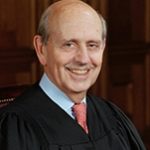
 Stephen G. Breyer

Stephen G. Breyer

Stephen G. Breyer, Associate Justice,
President Clinton, Democrat, nominated him as an Associate Justice of the Supreme Court, and he took his seat on August 3, 1994. Breyer is Jewish.
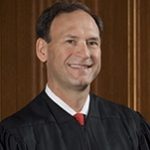
Samuel A. Alito, Jr.

Samuel A. Alito, Jr.

Samuel A. Alito, Jr., Associate Justice,
President George W. Bush, Republican, nominated him as an Associate Justice of the Supreme Court, and he took his seat on January 31, 2006. Alito is a practicing Catholic.
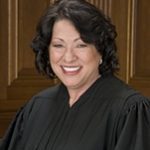
Sonia Sotomayor

Sonia Sotomayor

Sonia Sotomayor, Associate Justice,
President Barack Obama, Democrat, nominated her as an Associate Justice of the Supreme Court on May 26, 2009, and she assumed this role on August 8, 2009. Sotomayor is Catholic.
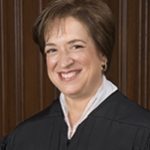
Elena Kagan

Elena Kagan

Elena Kagan, Associate Justice,
In 2009, President Obama, Democrat, nominated her as an Associate Justice of the Supreme Court on May 10, 2010. She took her seat on August 7, 2010. Kagan is Jewish.
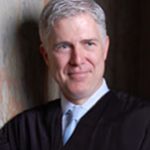
Neil M. Gorsuch

Neil M. Gorsuch

Neil M. Gorsuch, Associate Justice,
President Donald J. Trump, Republican, nominated him as an Associate Justice of the Supreme Court, and he took his seat on April 10, 2017. Episcopalian, raised Roman Catholic
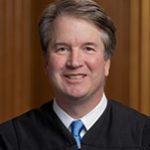
Brett M. Kavanaugh

Brett M. Kavanaugh

Brett M. Kavanaugh, Associate Justice,
President Donald J. Trump, Republican, nominated him as an Associate Justice of the Supreme Court, and he took his seat on October 6, 2018. Kavanaugh is a practicing Catholic.
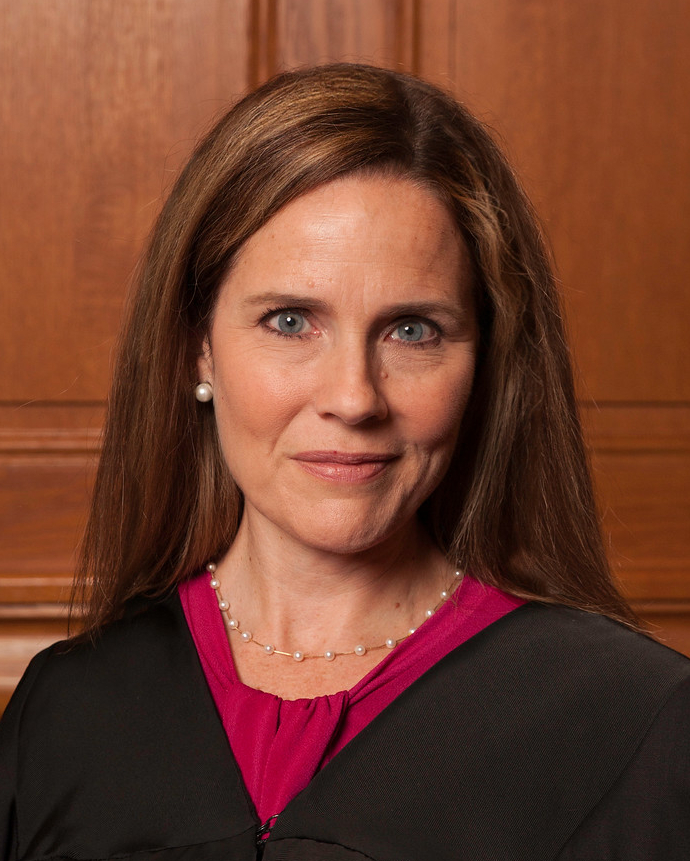
Amy Coney Barrett

Amy Coney Barrett

Amy Coney Barrett, Associate Justice,
President Donald J. Trump, Republican, nominated her as an Associate Justice of the Supreme Court, and she took her seat on October 27, 2020. Barrett is a practicing Catholic.


Sunday, January 31, 2021

In Biden’s Cabinet, Catholics and Jews dominate

The proposed Biden administration. Illustration by Kit Doyle
Religion News January 19, 2021

Joe Biden’s Cabinet is set to make history in a number of ways.

If all the nominees the president-elect has chosen are confirmed, the Cabinet — including the vice president, the heads of 15 executive departments and eight other key positions — will be the most racially and ethnically diverse ever. Among them are six African Americans, four Hispanics, three Asian Americans and one Native American. Half the nominees are women — the most ever nominated for a presidential Cabinet.

In terms of their religious backgrounds, the Cabinet nominees are also diverse. Like the president-elect, the majority — at least eight — are Catholic.  But five Jews have also been nominated, two Black Baptists and, if the surgeon general is included (often not), two Hindus. (A handful of Cabinet picks do not appear to identify with any religion.)

One group not represented? White evangelicals, the group most loyal to President Donald Trump.

Tuesday, December 31, 2019

The church fights in Europe to prohibit working on Sunday

Actualidad.  August 31, 2017
On Wednesday, August 23, 2017, Polish bishops requested a total ban on work on Sunday in a country where the law is very liberal on this particular point. Likewise, throughout Europe, several episcopal conferences are trying again to place the issue of Sunday rest at the center of political debates.
 
The president of the Episcopal Conference of Poland, Archbishop Stanislaw Gadecki, declared on Wednesday, August 23, 2017, on behalf of the bishops of Poland that "both Catholics and non-Catholics and atheists need to rest on Sunday."
 
Although it has the support of the Solidarity Labor Union party , the Church in Poland has not been able to impose its point of view.
 
In this country deeply imbued with Catholicism, civil law allows work on Sunday and holidays. However, there has been progress: the current government is in favor of the ban, and will address the issue next fall.
 
As usually happens, the declaration of the episcopal conference is only limited to defending Sunday rest, but does not mention any religious motive. Proposes ad hominem arguments, such as the need for a "better quality of life". In the same context, the Archbishop of Katowice, Monsignor Wiktor Skworc, declared that "families not only need financial support, but also free time."
 
Sunday rest has its origin in the Decalogue: "Six days you will work, and you will do all your work. But the seventh day is a day of rest, consecrated to Yahweh your God; and you will not do any work in it, neither you, nor your son, neither your daughter, nor your servant, nor your servant, nor your cattle, nor the foreigner who is within your doors "(Exodus 20: 9-10) From the Resurrection of Christ, the rest day is Sunday, the" Lord's Day "- dies Domini. Therefore, Sunday as a day of rest is a matter of positive divine law; all the Church did was explain this command of God and make it more explicit. Later, he also included it in his code of canon law and in his universal catechism.
 
When, after the Edict of Milan, the Church's relations with temporal power were normalized, the latter followed the example of ecclesiastical law in this matter. Thus, in a decree of March 7, 321, Emperor Constantine declared: "On the venerable day of the sun, may the magistrates and the people rest in the cities, and may all the workshops be closed."
  1
This practice was constant in the Church throughout the centuries, until the first attacks against Sunday, the sacred day in which the faithful fulfill their duties to render to God the worship that is due. The first attacks took place during the French Revolution, with the republican calendar imposed between 1793 and 1806; this one suppressed the week of seven days thus eliminating Sundays.
 
Currently, where atheistic and secular ideologies have failed, commercial interests succeed. For many years now, there have been new laws in favor of Sunday work. Modern Popes have tried to control these changes. On May 31, 1998, in his Apostolic Letter Dies Domini , Pope John Paul II recalled that Sunday rest "is the way man has to withdraw from the plaintiff and excessive cycle of earthly tasks to remember that God is the author of everything."
 
Also, in August 2009, the 24 Eucharistic Congress was held in Bari, Italy, on the theme: "Without Sunday, we cannot live." At the closing of the congress, Benedict XVI asked Christians to rediscover the spiritual importance of Sunday, as "an expression of the identity of the Christian community" against "unbridled consumerism" and "religious indifference."
 
Paradoxically, in Europe, a small number of highly secularized countries, such as Austria and Germany, seem to be more respectful towards Sunday rest. In an article published in La Croix , Delphine Allaire cites the German Constitution stipulated in article 139: "Sundays and holidays recognized by the state remain legally protected as days of rest and spiritual edification." In Belgium, it is only allowed to work three Sundays a year, except in the tourist cities.
 
However, in most European countries, including the United Kingdom, Holland, Sweden, Norway, Romania, Czech Republic, Ireland, Italy and Portugal, as well as in Madrid, the capital of Spain, business is open 52 Sundays at year. In highly Catholic countries such as Italy, Portugal and Spain, heated public discussions regularly erupt, La Croix adds. Therefore, in 2014, the Spanish bishop of Santander, Vicente Jiménez, called for a "united front", appealing to the authorities to resist "economic pressures" that seek to liberalize working hours.
 
In France, Sunday rest lost importance after the promulgation of the Macron Law in 2015, which created 21 international tourist areas in a country where it is allowed, through a trade agreement, to work on Sundays.
 
In Italy, Delphine Allaire explains, the Episcopal Conference prefers to stick to the protection of the rights of "workers" to spend time with their families on Sundays, supporting the country's main business association, Confesercenti.
 
It should be noted that on June 9, 1873, at the feast of the Holy Trinity, the Blessed Virgin Mary appeared in Saint-Bauzille-de-la-Sylve in the Hérault, to Auguste Arnaud, a young winemaker of 30 years old , who worked during the week, and who was working in his small vineyard, and said very seriously: "You must not work on Sunday. Blessed are those who believe; woe to those who do not believe." This Marian apparition was recognized by the authorities of the Church, and serves to demonstrate once again the importance of sanctifying the Lord's Day. The Mother of God had already reminded men of the importance of this religious obligation in La Salette.

Tuesday, April 30, 2019

Pope donated $500,000 to Mexico-based projects to help migrant communities

ABC News Apr 27, 2019
Pope Francis donated $500,000 to Mexico-based projects to help migrant communities as media attention has faded, the Vatican said Saturday. 
 The funds will be distributed between 27 projects associated with 16 Mexican dioceses and congregations, all of which asked for help to continue providing food, lodging, and basic necessities to those fleeing their home countries through Mexico.
“In recent months, thousands of migrants have arrived in Mexico, having travelled more than 4,000 kilometers on foot and with makeshift vehicles from Honduras, El Salvador and Guatemala. Men and women, often with young children, flee poverty and violence, hoping for a better future in the United States. However, the U.S. border remains closed to them,” said a press release from Peter's Pence, the organization handling the funds. 

Sunday, March 3, 2019

Protestants and Catholics are so nearly united in sentiment

Related image
"Protestants and Catholics are so nearly united in sentiment, that it is not difficult to conceive how Protestants may make an image to the Beast. The mass of Protestants believe with Catholics in the Trinity, immortality of the soul, consciousness of the dead, rewards and punishments at death, the endless torture of the wicked, inheritance of the saints beyond the skies, sprinkling for baptism, and the PAGAN SUNDAY for the Sabbath; all of which is contrary to the spirit and letter of the new testament. Surely there is between the mother and daughters, a striking family resemblance."    Merritt E. Cornell, Facts for the Times, p. 76. 1858

Thursday, September 27, 2018

Pelosi: ‘We Are, In Our View, the Eucharist, the Body of Christ’

CNS  September 17, 2018
House Minority Leader Nancy Pelosi told the nation at her press briefing on Thursday that she is a “practicing Catholic” and that Catholics understand the church to be “the body of Christ.” 

Pelosi, who (contrary to Catholic teaching) supports abortion on demand and same-sex marriage, made the remarks while responding to questions about the clergy sex scandal.

“Well, as a practicing Catholic, I feel great sadness for what has happened in the church,” Pelosi said. “I feel sadness for what it means to the church writ large, but more sad about what it means to the individuals who have been abused, and that they should be respected, protected, and that we have to get to the bottom of it.”

Saturday, September 15, 2018

Protestants not guided by scripture.

[" Doctrinal Catechism"—pp. 101, 174, 251-355.]

"Q. HAVE you any other proofs that they (Protestants) are not guided by the Scriptures?

A. Yes; so many, that we cannot admit more than a mere specimen into this small work. They reject much that is clearly contained in Scripture, and profess more that is nowhere discoverable in that Divine Book.

Q. Give some examples of both?

A. They should, if the Scripture were their only rule, wash the feet of one another, according to the command of Christ, in the 13th chap. of St. John;—they should keep, not the Sunday, but the Saturday, according to the commandment, 'Remember thou keep holy the Sabbath-day ;' for this commandment has not, in Scripture, been changed or abrogated."

" Q. Have you any other way of proving that the Church has power to institute festivals of precept?

A. Had she not such power, she could not have done that in which all modern religionists agree with her;—she could not have substituted the observance of Sunday the first day of the week, for the observance of Saturday the seventh day, a change for which there is no Scriptural authority."

" Q. Do you observe other necessary truths as taught by the Church, not clearly laid down in Scripture?

A. The doctrine of the Trinity, a doctrine the knowledge of which is certainly necessary to salvation, is not explicitly and evidently laid down in Scripture, in the Protestant sense of private interpretation.      Review & Herald, August 22, 1854.

Saturday, April 28, 2018

German Catholic bishops plan to allow some Protestants to cake Communion in their churches.


EF  19 April 2018
The German Catholic Episcopal Conference, headed by Cardinal Reinhard Marx, approved in its February gathering a proposal that has sparked a huge theological debate. 
The 62 German bishops have voted to produce a guide on how to allow Protestants married to Catholics to receive Communion. 
This non-Catholic spouses in “mixed marriages” could access the Catholic rite if they “affirm the Catholic Eucharist”. 
The Intercommunion, the bishops said, would be a solution for cases in which “the spiritual hunger to receive Communion together (…) is so strong that it could threat the marriage and the faith”. 

PROTESTANT CHURCH WELCOMES PROPOSAL 
The President of the German Protestant Church (EKD), Heinrich Bedford-Strohm, welcomed the announcement as “an important step in our ecumenical path”. 
Bedford-Strohm and his Catholic counterpart Reinhard Marx have been very proactive in sending pro-ecumenical messages during the commemoration of the 500 anniversary of the Protestant Reformation, in 2017, with calls to “heal the wounds of the past” and advance to stronger “unity” among the two Church institutions. 

STRONG CRITICISM OF SOME BISHOPS 
The open door for Protestants has been challenged by important Catholic sectors in Germany. Among them, seven German bishops that have written an open letter expressing their opposition to what they define as a “Protestantisation of the Church”. 
In interviews with the media, some of the signatories have criticised what they believe is a “banalisation” of the “holiest Sacrament” of Catholicism. 
Protestant taking part in the Communion would ‘de facto’ contradict the Protestant doctrines and its view of the Lord’s Supper. These bishops called the Vatican and Pope Francis to step into the debate. 
Catholic media have reported in the last days that the Vatican’s Congregation for the Doctrine of the Faith would have sent a letter to the German conference asking to pause the proposal. It is not expected, though, that Rome will express this position publicly. 

EVANGELICALS SEE ECUMENIAL STRATEGY 
Evangelical leaders have also reacted with surprise to the moves towards Intercommunion. In an interview with German news agency Idea, evangelical theology professor Ulrich Körtner said it would be difficult for a Protestant believer to accept the Catholic doctrine of the Eucharist, which “includes the veneration of Mary as the Mother of God, and the intercession of the Apostles, martyrs and saints”. 
The decision of the German Episcopal Conference can be understood as a strategy to attract Protestants to the Catholic liturgy. “I would not be surprised that someday other ecumenical formulas are presented to us to try to sell us that high prayers of the Catholic Eucharist are evangelical”.

Wednesday, August 30, 2017

Sunday as a rest day is slipping away across Europe

Delphine Allaire, August 28, 2017
Polish bishops cast a vote on Wednesday, 23 August, in favor of a complete ban on working on Sundays. In this fervently Catholic country legislation on Sunday work is relatively liberal.
Here is an overview of the European countries where Sunday is no longer an institutionalized rest day, despite regular pleas from religious communities.
“Catholics, non-Catholics, and atheists all need to have Sundays off," stated Stanislaw Gadecki, archbishop of Pozna (north-west Poland) and president of Poland’s Bishops’ Conference.
Even with the support of the independent Polish trade union Solidarnosc, the Polish Church hasn’t managed to instate a blanket ban on Sunday work. In this mostly Catholic country, people are allowed to work on Sundays and public holidays. 
The country’s conservative government is in favor of a ban but seems to be taking its time bringing about reforms, stating that it will address the issue in the autumn.

Religious and social interests united
Keen to avoid basing their whole position on religious arguments, Polish bishops also defend Sunday rest days by arguing for “quality of life”. “Families don’t just need financial support, they also need free time," said Wiktor Skworc, archbishop of Katowice (south-west Poland).
Legislation governing working on Sundays is constantly changing. However, across the rest of Europe, the main model remains a general ban with a range of exceptions. Christian leaders regularly reiterate the religious and social importance of this rest day.
Countries like Austria and Germany remain bastions of Sunday rest. Article 139 of the German constitution states: “Sundays and the public holidays recognized by the state remain legally protected as days of rest from work and of spiritual edification." In Belgium, only three non-rest Sundays are permitted per year, apart from in tourist cities.
However, in a number of other European countries including the UK, the Netherlands, Sweden, Norway, Hungary, Romania, the Czech Republic, Ireland, Italy, and Portugal as well as in the Spanish capital of Madrid, businesses are open 52 Sundays a year. In the strongly Catholic countries of Italy, Portugal, and Spain, heated public discussions erupt regularly.
In 2014, the Spanish bishop Vicente Jiménez called for a “united effort”, appealing to authorities to resist “economic pressures” liberalizing opening and working hours.
The Italian Bishops’ Conference has been doing a lot of background work to protect “workers’ rights to spend time with their families on Sundays”, supporting the country’s main business association, Confesercenti.

European and ecumenical support
Pitched at a pan-European scale, the “European Sunday Alliance”, was created in Brussels in 2011. This unites trade unions, social organizations, and religious communities, demonstrating the common ground between social and religious interests.
The Commission of the Bishops’ Conference of the European Community (COMECE), an affiliate of the Alliance, launched its program “for the protection of Sundays across Europe”, which was re-launched around the 2014 European elections. They stress the link between workers’ health and Sunday rest and underline the importance of Sundays for maintaining “social cohesion”. 
The European bishops argue that “a shared day of rest per week allows families to come together and means that citizens can spend time participating in cultural, spiritual and social activities".
John Paul II’s 1998 apostolic letter, Dies domini, reminds us that Sunday rest means we can “withdraw from the sometimes excessively demanding cycle of earthly tasks in order to renew our awareness that everything is the work of God".
This movement goes far beyond the Catholic community. Included in the list of organizations engaged at a European level are the German Protestant Church, the Anglican Church, the Orthodox Church of Cyprus, the Greek Orthodox Church’s representative to the European Union and the Baptist Union of Great Britain.           La Croix

Thursday, May 25, 2017

Melania Trump will be the first Catholic in the White House since President John F. Kennedy

United States First Lady Melania Trump is a practicing Catholic, her spokeswoman has confirmed.
Following speculation over Mrs Trump’s faith during her visit to the Vatican on Wednesday, her spokeswoman Stephanie Grisham confirmed to DailyMail.com that the First Lady is indeed Catholic.
Mrs Trump placed flowers at the feet of a statue of the Virgin Mary and spent time praying at the Bambino Gesù Hospital during her visit. She also presented Pope Francis with rosary beads for the Pontiff to bless.
It is unclear when Melania Trump became Catholic. She was raised in a Communist-supporting family in Slovenia and was not baptised as a child. She married Donald Trump, a life-long Presbyterian, in 2005 at an Episcopal church in Palm Beach, Florida.
Despite her husband being inaugurated US president in January, she is not due to move into the White House until the summer. When she does, she will be the first Catholic to live at 1600 Pennsylvania Avenue since President John F Kennedy and his wife Jackie in the early 1960s.    Catholic Herald

Monday, October 31, 2016

An Ecumenical Service Between Catholics and Lutherans


An ecumenical service with Pope Francis at Lund Cathedral in Sweden on Monday. Some Catholics and Lutherans hoped his visit would be a step toward the two faiths allowing members to take communion in each other’s services. Credit Emil Langvad/Agence France-Presse — Getty Images
LUND, Sweden — Almost 500 years after Martin Luther nailed his 95 theses to a church door, setting off more than a century of religious warfare and forever changing the practice of Christianity worldwide, Pope Francis on Monday urged atonement and Christian reconciliation.
Visiting the cities of Lund and Malmo in southern Sweden for a joint Catholic-Lutheran commemoration of the Reformation, the pope observed the 499th anniversary of Luther’s protest of the sale of indulgences by noting the beneficial impact it had on Catholicism.
“With gratitude we acknowledge that the Reformation helped give greater centrality to sacred Scripture in the church’s life,” the pope said in a joint declaration at Lund Cathedral with Bishop Munib A. Younan, the head of the Evangelical Lutheran Church in Jordan and the Holy Land and the president of the Lutheran World Federation.

The trip, which kicked off a year of events leading up to the 500th anniversary of the Reformation, was announced in January, but it was no less striking for those who listened to the pope. Sweden played a pivotal and troubling role in Protestant and Catholic history. From the 16th century, Catholics were persecuted and even put to death in Sweden. As recently as 1951, Catholics were barred from becoming doctors, teachers and nurses, and Catholic convents were banned until the 1970s.
Some Catholics and Lutherans, especially those whose families are intermingled, hoped that the event would produce a concrete step toward the two churches’ allowing their members to take communion in each other’s worship services. In their joint declaration, Pope Francis and Bishop Younan acknowledged the divide, but said only that they were working toward a resolution through dialogue.
“We experience the pain of those who share their whole lives, but cannot share God’s redeeming presence at the Eucharistic table,” the declaration said. “We long for this wound in the body of Christ to be healed. This is the goal of our ecumenical endeavors, which we wish to advance, also by renewing our commitment to theological dialogue.”
The Lutheran World Federation was founded in Lund in 1947, in an effort to unite churches after World War II. One of the main obstacles to relations between Lutherans and Roman Catholics was bridged in 1999, when the Vatican and the federation signed a joint declaration on the doctrine of justification, a core belief about God’s forgiveness of sins.
Francis was the first pope to visit Sweden in 27 years, and only the second pope to visit the Scandinavian country. In Lund, he met with King Carl XVI Gustaf, Queen Silvia and Prime Minister Stefan Lofven.
“We, too, must look with love and honesty at our past, recognizing error and seeking forgiveness,” Francis said.

The prayer service in Lund was watched by about 10,000 people who packed Malmo Arena, about 14 miles away, where Caritas and the Lutheran World Service, humanitarian arms of the two churches, pledged to work together for peace and justice.
Teresa Jodar, 58, who lives in Stockholm but is a native of Valencia, Spain, said she had taken the train from Stockholm to Malmo in the morning to bear witness.
“This is a historic event,” she said. “I am a Catholic. We are not celebrating the Reformation. That was a sad separation. But we are celebrating taking a step closer. It is wonderful that we can work together instead of thinking about all of the differences that separate us.”
Ms. Jodar said she planned to stay for an All Saints’ Day Mass that the pope will celebrate on Tuesday in Malmo for an estimated 19,000 people.
Her friend Luisa Hugosson, 67, a native of Colombia, chimed in. “The pope’s visit is good for Lutherans and Catholics,” Ms. Hugosson said. “We are living in a new time, and we must be open and show respect.”
Carmen Godawszky, 71, sat with three friends on a train from Stockholm to Malmo, and they reflected on the pope’s message urging countries in Europe to open their doors to migrants.
“Of course, we can’t be against that,” Mrs. Godawszky said. “My husband came to Sweden as a refugee from Hungary in 1956. Everyone has been a refugee at one point or another. Just think of all the Swedes who moved to the U.S.A. because they didn’t have food or money.”
Although Sweden is predominantly Lutheran, the Roman Catholic Diocese of Stockholm counts 113,000 members in 44 parishes throughout the country.
Anders Arborelius, who converted to Catholicism when he was 20, is the country’s first Catholic bishop of Swedish origin since the Reformation.
“We are leaving the past behind us and focusing on what we have in common, that we can together go out and help people,” he said in a telephone interview on Sunday.
Although the ecumenical service on Monday marked a reconciliation, there are still major doctrinal differences between the churches, on subjects like the role of women in the church and the Eucharist.                       NY Times

Sunday, August 28, 2016

Charles Chiniquy: The LORD's Faithful Witness to the Harlotry of Rome


Image result for charles chiniquy

By Tom Stewart
A testimony of the love of God "to save them to the uttermost that come unto God by [Christ Jesus]" (Hebrews 7:25), and a faithful warning to the Church of Jesus Christ concerning the treacheries of the Harlot Church of Rome, is the life of Charles Chiniquy. As a French Canadian youth, Chiniquy was given the gift of his love for the Word of God by his unconventionally Roman Catholic parents, even though Scripture in the common tongue had been expressly forbidden by the Council of Trent. Without his knowledge, the seeds of Protestantism had been effectively sown in him, as desired by the blessed translating efforts of both John Wycliffe and William Tyndale. "But he that received Seed into the good ground is he that heareth the Word, and understandeth it; which also beareth fruit, and bringeth forth, some an hundredfold, some sixty, some thirty" (Matthew 13:23). 

Why all the commotion about Protestants historically encouraging the reading of the Word of God, when both Catholics and Protestants may freely read-- but generally ignore-- the Scriptures today? "Faith cometh by hearing, and hearing by the Word of God" (Romans 10:17). Because the Word of God does not benefit anyone unless it is believed. "For unto us was the Gospel preached, as well as unto them: but the Word preached did not profit them, not being mixed with faith in them that heard it" (Hebrews 4:2). Worse, too many are oblivious to their false sense of security in a Deceptive Faith that has not the works of Love. "For in Jesus Christ neither circumcision availeth any thing, nor uncircumcision; but faith which worketh by Love" (Galatians 5:6). [Please read our article, "Is Faith the Only Condition for Eternal Salvation? Or, The Biblical Doctrine of Justification by Faith " -- http://Whatsaiththescripture.com/Fellowship/Is.Faith.the.Only.Conditio.html --, for an important clarification of this often misinterpreted concept.] 

Chiniquy aspired to the priesthood of Rome, but his joy of being ordained a priest of Rome became "as if a thunderbolt had fallen upon me when I pronounced the awful oath which is required from every priest: 'I will never interpret the Holy Scriptures except according to the unanimous consent of the Holy Fathers' " (excerpt from Chiniquy' s "Fifty Years in the Church of Rome"). How unlike Rome's oath is the Scripture, "20 But ye have an Unction [Greek, chrisma] from the Holy One, and ye know all things. But the Anointing [Greek, chrisma, or unction] which ye have received of Him abideth in you, and ye need not that any man teach you: but as the same A nointing teacheth you of all things, and is Truth, and is no lie, and even as it hath taught you, ye shall abide in Him" (1John 2:20,27)! 

As a proponent of total abstinence from alcoholic beverages, he was vehemently opposed by his drunken fellow priests. "For a bishop must be blameless, as the steward of God; not selfwilled, not soon angry, not given to wine, no striker, not given to filthy lucre" (Titus 1:7). He was horrified at the liberties taken by the priests of Rome, especially with their female confessors, who were required to confess their most intimate faults to the ears of a man, in the name of Auricular Confession. "For it is a shame even to speak of those things which are done of them in secret" (Ephesians 5:12). He led an effort to bring Catholicism to the United States by bringing in a large colony of French Canadian Catholics to the state of Illinois. Attacked by jealous priests, Chiniquy was compelled to require the services of Abraham Lincoln, who ably defeated the Jesuits in open court battle; however, as Chiniquy warned, the Jesuits would not forgive or forget their wound. Chiniquy later demonstrated that Lincoln's assassination in 1865 by John Wilkes Booth was carefully orchestrated by a conspiracy of Jesuit-Catholic accomplices. "Lest Satan should get an advantage of us: for we are not ignorant of his devices (2Corinthians 2:11). 

Suffice it to say that Chiniquy's breaking into the full freedom and liberty of the Gospel was aided by the whale vomiting its unwanted meal. Rome ultimately ex communicated Chiniquy, but not before he gave his resignation. The bishop "answered angrily: 'Mr. Chiniquy, I am your superior, I do not want to argue with you. You are inferior: your business is to obey me. Give me at once an act of submission, in which you will simply say that you and your people will subm it yourselves to my authority, and promise to do anything I will bid you.' I calmly answered: 'What you ask me is not an act of submission, it is an act of adoration. I do absolutely refuse to give it.' 'If it be so, sir,' he answered, 'you can no longer be a Roman Catholic priest.' I raised my hands to heaven, and cried with a loud voice: 'May God Almighty be forever blessed'" (excerpt from Chiniquy's "Fifty Years in the Church of Rome"). "So then it is not of him that willeth, nor of him that runneth, but of God that sheweth mercy" (Romans 9:16). 

Chiniquy returned to his room to contemplate the enormity of his situation. Taking his New Testament, he glanced providentially at these words, "Ye are bought with a price; be not ye the servants of men" (1Corinthians 7:23). Gospel Salvation now became very plain to this former priest. "Strange to say! Those words came to my mind, more as a light than an articulated sound. They suddenly but most beautifully and powerfully gave me, as much as a man can know it, the knowledge of the great mystery of a perfect salvation through Christ alone. They at once brought a great and delightful calm to my soul. I said to myself: 'Jesus has bought me, then I am His; for when I have bought a thing it is mine, absolutely mine! Jesus has bought me! I, then, belong to Him! He alone has a right over me. I do not belong to the bishops, to the popes, not even to the church, as I have be en told till now. I belong to Jesus and to Him alone! His Word must be my guide, and my light by day and by night. Jesus has bought me,' I said again to myself; 'then He has saved me! and if so, I am saved, perfectly saved, for ever saved! for Jesus cannot save me by half. Jesus is my God; the works of God are perfect. My salvation must, then, be a perfect salvation. But how has He saved me? What price has He paid for my poor guilty soul?' The answer came as quickly as lightning: 'He bought you with His blood shed on the cross! He saved you by dying on Calvary!'" (Chiniquy's emancipating thoughts from his "Fifty Years in the Church of Rome").        

Dedication:

TO THE BISHOPS, PRIESTS, AND PEOPLE OF ROME this book is also dedicated. In the name of your immortal souls, I ask you, Roman Catholics, to read this book. By the mercy of God, you will fine, in its pages, how you are cruelly deceived by your vain and lying traditions. You will see that is not through your ceremonies, masses, confessions, purgatory, indulgences, fastings, ect., you are saved. You have nothing to do but to believe, repent, and love. Salvation is a gift! Eternal life is a gift! Forgiveness of sin is a gift! Christ is a gift!

Fifty Years In The Church Of Rome p. 2, 3 & 6

Monday, June 27, 2016

The Two Kingdoms Emergency Update

EvenAtTheDoors

Thursday, April 28, 2016

God gave his mother cancer so that he would stop being gay


CancerGodStraight

25 Apr 2016 at 15:52 ET                   
The Church Militant  has posted a new video in which he thanks God for giving his mother stomach cancer and dying so that he would be brought back to the Catholic Church. Michael Voris, president and founder of St. Michael’s Media and producer of the website Church Militant, took to YouTube to reveal details of the sinful life he lived prior to his “reversion” to Catholicism.
He was posting the video now, he said, because there were forces seeking to “publicly discredit me, the apostalate, and my work here.” He says that he had always publicly spoken of his life prior to his reversion as a time in which he was living in “mortal sin.” He just hadn’t thought that “a full public confession of details was necessary.”
Voris is not outing himself as a gay man. He denies being gay. He does say, however, that “..most of my thirties, confused about my own sexuality, I lived a life of live-in relationships with homosexual men.” And he is aware of how that looks. “From the oustide, I lived the lifestyle and contributed to the scandal in addition to the sexual sins. On the inside, I was deeply conflicted about all of it.” He says that in his twenties, he slept with both men and women.
He now abhors all of that behavior, which he says was about “seeking solace in lust and surrendering my masculinity.” While Voris seems confused about the relationship between sexuality and gender, he is positive that it was his mother who became the instrument of God’s grace.
“As a last resort, she prayed to be given whatever suffering so that I would be granted sufficient grace to revert.” And, shortly after her prayers, she received an early diagnosis of stomach cancer, which killed her a few years later. It was while watching his mother suffer through her last year of life that Voris began to change his life, but it was her death that made the miracle happen.
“I pledged at her coffin that I would change. I said, ‘Mom, what you went through for me, you will not have gone through in vain.’ I returned fully and completely to the faith.” Two years later, he says, he founded the apostolate that he is now trying to save.
Voris has more to say, however, about how wonderful it was that his mother got cancer. “I was thrilled, over the top with gratitude, with what God had done for me through my mom and her suffering.”
How evil was Voris prior to his mother’s death? He explains a couple of times that things were so bad that if he had been killed in a car accident at the time of his co-habiting with homosexual men that he would have been damned. In fact, he “shudders” every time he thinks about just how bad he used to be.
“I gave up my self, my masculinity, my self-understanding, my identity and my own dignity as a baptized Catholic.”
Voris isn’t certain that all of his followers are going to understand about his failure to disclose the nature of his previous sins. He offers the by-now standard apology that he wants to apologize to “anyone who was wounded in any way.” But he never intended to deceive anyone. He was just so eager to “experience the joy and life-giving truth of the Catholic Church.”
Voris says that being rescued is proof that God can do all things. He can even “restore your formerly shattered confused sexuality.” Through the grace of the Church, he says, “I was given back my masculinity that I had squandered.” In fact, the Church has rescued people like Paul, Augustine, Francis, and Ignatius. So much so, he says while arguing that he himself is not a saint, that you “could almost say that the Church’s mission is to collect miserable sinners and turn them into saints.”
Voris claims that the threat to expose his past means that he is being targeted by the Diabolical (by which he means Satan). But he remains convinced that he is under the protection of St. Michael and the Virgin Mary, who will always defeat the plans made by the devil to bring men like him down.
Voris also assures those watching that there is little chance that he will engage in sexual sin with homosexual men again. Six years ago, at the Fatima’s shrine, he “consecrated my chastity to our Blessed Mother.”        Rawstory

Saturday, February 6, 2016

The Vatican is this morning facing a further crisis after routine DNA tests revealed that the communion wafers used in Sunday mass contain 0% of the body and blood of Christ.

Communion wafer DNA test
The Vatican is this morning facing a further crisis after routine DNA tests revealed that the communion wafers used in Sunday mass contain 0% of the body and blood of Christ.
The findings are sure to pile further pressure on the ailing religious organisation, just days after their Chief Executive resigned citing ‘personal reasons’ and ‘being a bit old’.
The news will concern billions of Catholic consumers, previously led to believe they were consuming Christ himself each Sunday morning during mass.
Catholic Simon Williams told us, “So what have I been eating all these years? It’s not horse again is it?”
“It’s always had a funny taste that I couldn’t quite place. But having been a choir boy in the catholic church I grew up being told by priests that putting strange things in my mouth was the done thing.”
“That said, with the amount of cash I’m encouraged to put in the collection plate on a Sunday morning I can’t believe they’re scrimping on the ingredients.”
“You’ll be telling me next that the stuff they dip the wafer in isn’t actually blood.”

Catholic crisis

A spokesperson for the Vatican explained that the DNA test results merely highlight the incompatibility of science and religion.
They told us, “Where is your faith that the wafer is the body of Christ? Science can’t tell you everything, and just as it can’t prove God doesn’t exist, it can’t prove the wafer ISN’T the body of Christ.”
“Oh, it has done exactly that? Right. Well.  There’s probably something in the Bible about that. I’ll have to go and look.”         NewsThump

Tuesday, December 22, 2015

7 evangelical Christians jailed for refusing to convert not to Islam but to Catholicism in Mexico

Seven evangelical Christians are facing a different kind of persecution—this time not by Islamic radicals but, surprisingly, by fellow Christ-believing Catholics.
In a report carried by Charisma News, the International Christian Concern (ICC) said it has learned that the seven evangelical Christians were sent to jail in Chiapas, Mexico, on Dec. 15 after they refused to convert to Catholicism.
ICC said Mexican state and federal authorities had been informed of threats to illegally expel or send to prison members of the evangelical community in the area, but they refused to intervene.
The evangelicals earlier received an ultimatum to convert to Catholicism or face expulsion and imprisonment by local officials of the place where they reside—in Leyva Velazques, a municipality of Las Margaritas, Chiapas.
Roman Catholicism is the predominant religion in Mexico where 82.7 percent of the people adhere to the faith, based on a census conducted in 2010. However, Mexico's Constitution explicitly protects the right of all citizens to profess and practice the religious belief of their choice.
Reports said the Catholics' ultimatum forced eight families in the village to sign documents indicating their willingness to convert to Catholicism.
But seven of their fellow evangelicals refused to sign the document and were sent to jail, according to Luis Herrera, Director of the Coordination of Christian Council of Churches.
Other evangelical Christians in the community are continually being pressured to renounce their faith by local officials of Leyva Velazques, according to ICC.
The Christian group said this incident shows the growing trend of religious persecution in rural areas of Mexico under the noses of state and federal government officials who refuse to do anything to protect religious minorities.
In June, ICC reported more than 70 cases of religious persecution against minority Christian communities in the states of Chiapas, Hidalgo, Oaxaca, Puebla and Guerrero. Each case involved 20 to 100 victims.
Isaac Six, ICC's Advocacy Director, has appealed to the Mexican government to stop the persecution of Christian minorities in the country's rural areas.
It is simply unconscionable for the state and federal governments of Mexico to repeatedly ignore the arbitrary arrest and expulsion of their own citizens by local governments on the basis of religious belief," he said.
"Today, hundreds of men, women, and children are homeless in Mexico because they chose to follow their beliefs, and because their government refused to act. We call on the federal government of Mexico to immediately intervene and halt the unlawful detention of members of the evangelical community in Leyva Velazques," Six said.    CT

Monday, December 14, 2015

A century ago the Menace newspaper was proclaming the truth about catholicism

December 9, 2015   By Matt Pearce
The Menace

The year was 1915, and the strange new newspaper in Aurora, Mo., had grown so quickly in its first four years that rail officials had to build extra tracks for all the paper and printing materials suddenly rolling into town.
The Aurora post office, according to one account, more than tripled its staff to handle mail to and from the publication's astonishing 1.5 million weekly subscribers — a circulation that dwarfed the largest daily newspapers in New York and Chicago.
Hatred had become big business in southwestern Missouri, and its name was the Menace, a weekly anti-Catholic newspaper whose headlines screamed to readers around the nation about predatory priests, women enslaved in convents and a dangerous Roman Catholic plot to take over America.
"The cowardice of a Roman thug has no parallel in either the human or animal kingdom," the newspaper frothed in one 1914 edition, calling for "men with red blood in their veins" to defend women and children from Catholics. "If we are compelled to live in this county with Romanists, as our weak-kneed Protestant critics say we are, the Romanists will have to be taught their place in society."
America's deep and widespread skepticism of Catholics is a faint memory in today's post-Sept. 11 world. But as some conservative politicians call for limits on Muslim immigration and raise questions about whether Muslims are more loyal to Islamic law than American law, the story of Aurora's long-ago newspaper is a reminder of a long history of American religious intolerance.

Today, there are calls for federal surveillance of mosques in the name of preventing terrorist attacks; a century ago, it was state laws that allowed the warrantless search of convents and churches in search of supposedly trapped women and purported secret Catholic weapons caches.
"I see huge parallels," said Sharon Davies, executive director of the Kirwan Institute for the Study of Race and Ethnicity at Ohio State University. "I think we haven't seen anything quite like this since the beginning of the 20th century, when we passed laws that permitted the Catholics to be treated in ways that no other religious group was treated."
Anti-Catholicism stretches back to the nation's colonial times, when some states barred Catholics from holding office, and continued through the mid-1800s, which saw the Know-Nothing party's campaign against Catholic politicians. Lynch mobs killed Italian immigrants and arsonists burned down Catholic churches.
Perhaps no publication captures the animus toward Catholicism at the start of the 20th century as vividly as the Menace, launched in an old opera house in Aurora in 1911, when the city's population was only a little over 4,000.
The Menace wasn't the country's first anti-Catholic newspaper, but it quickly became one of the biggest, eventually selling anti-Catholic books and launching a lecture series. Its editor, the Rev. Theodore C. Walker, claimed its target was not rank-and-file Catholics but the Catholic Church itself.
"It begins a kind of tidal wave, a journalistic explosion that sweeps the entire country," said Justin Nordstrom, an associate professor of history at Penn State Hazleton who has studied the Menace. "There are people paying attention to this newspaper — urban settings, rural settings — all across the country."
On its banner, the Menace sometimes bore the logo of skull and crossbones wearing a papal hat, as well as a drawing of a public school, which is described as "the antidote for papal poison."

"OPEN ROME'S PRISON HOUSES IN AMERICA!" blared one headline for a December 1911 story that claimed the church was murdering the babies of nuns and throwing the infant corpses into a pit.
In the same issue, the Menace urged its readers to vote against all Catholic political candidates regardless of party or platform, describing the church as "the most dangerous power that threatens our government today." It added ominously, "A defeat at the polls today is far better than a defeat at arms tomorrow."
"There was a widespread belief that Catholics were waiting for the day the pope would put into motion a campaign to make the country Catholic, and in the meantime amassing [stockpiles] of weaponry that would be used when that day came," Davies said.
Not everyone bought what the Menace was selling — which was a year's subscription for 50 cents.
"It is a menace to decency — a menace to peace and order — a menace to tolerance — a menace to true Americanism — a menace to the spirit of fraternity," Chicago journalist Charles A. Windle wrote in one broadside against the weekly. "It breeds bitterness and strife between neighbors and converts life-long friends into enemies. Its columns reek with slander. Every page is a seething cesspool, in which writhe and wriggle hell-born lies."
Catholic leaders also mobilized against the Menace, clipping out accounts asserting lewd behavior by priests to prompt federal prosecutors to indict the paper's editors on suspicion of mailing obscene materials, according to Nordstrom's book on the anti-Catholic press, "Danger on the Doorstep."
When the Menace won the federal obscenity trial in Joplin, Mo., in 1916, one sympathizer wrote that Aurora celebrated, with "an immense crowd comprising more than half the population gathered at the depot, headed by the band, and when the defendants stepped from the train they were royally welcomed." The Menace described its home base as "The World's Headquarters for Anti-Papal Literature."
"It was a black page in Aurora's past," said Mary Strickrodt, president of Aurora's historical society. "I wish everyone had been aghast and run them out of town, but it seems to have hired a lot of people. We have postcards [showing] a huge amount of train cars being loaded with the newspaper to be shipped out."
The paper's immense popularity Strickrodt finds baffling.
"Why did it get big?" she wondered. "Why are people so quick to find people to hate? To be bigger than?"
The paper's circulation declined as the nation turned its attention to the First World War, and soon after the newspaper's printing plant burned down in 1919, the Menace sputtered out, along with other anti-Catholic publications.
Anti-Catholicism lived on in the Ku Klux Klan, but after the country elected its first Roman Catholic president, John F. Kennedy, in 1960, the worst of the hatred seemed to fade.
Rick Hinshaw, a spokesman for the Catholic League for Religious and Civil Rights, said the group's biggest concerns today are anti-Catholic depictions on TV and in movies and the federal government's healthcare mandates.
"Today, it's more the cultural elite that we feel we run into," Hinshaw said.
Little trace remains of the Menace in Aurora, except when new homeowners tear down walls or explore attics and find copies, like the man from Rhode Island who moved to town and called local Chamber of Commerce director Shannon Walker to tell her about a strange discovery in his home.
"You'll never guess what I found," Walker recalled the man telling her.
"The Menace?" she replied. "How did you know?"    latimes

Thursday, November 19, 2015

The Terrorist Calling The Terrorist a Terrorist

By Michael W. Chapman | November 19, 2015 | 12:53 PM EST


Cardinal Kurt Koch, president of the
Pontifical Council for Promoting
Christian Unity at the Vatican. (AP)
Speaking at the International Ecumenical Congress in Schwabisch Gmund, Germany, just east of Stuttgart, Catholic Cardinal Kurt Koch said that although Christians are being persecuted in at least 25 countries, much of the media are ignoring this persecution, and he added that the Islamic State is a “satanic terrorist organization.”
As reported by the Catholic News Agency (Katholische Presseagentur) in Germany, Cardinal Koch, who is the president of the Pontifical Council for Promoting Christian Unity at the Vatican, said he believes Christianity is the most persecuted religion in the world.
“In about 25 countries Christians are under threat of life and limb,” according to the cardinal, and it is a “strange phenomenon” that this persecution does not earn much media coverage.
He also criticized the notion that attacks against Christians were largely a thing of the past, in the 20th Century, and said there are many martyrs today.
He then noted that one of the groups martyring Christians is the Islamic State, which the cardinal said is a “satanic terrorist organization.”

Comment: Islam is the antagonist of Catholicism and is being used as a front to combat Christianity. Islam attacks Christianity openly while Catholicism does it (presently) behind the scenes in a very sophisticated, and deceptive way.

The Islamic State, in addition to persecuting Christians, Yazidis, and Jews in the Middle East, also attacks Muslims who do not support its ideology. The attacks in Paris on Nov. 13, in which at least 129 people were killed and 352 wounded, were carried out by the Islamic State.
Prior to being posted to the Vatican in 2010,  Cardinal Koch was the bishop of Basel, in Switzerland.
Koch is an orthodox cardinal who has rejected the idea from some German and American bishops that divorced and remarried Catholics should be allowed to receive Communion.
In March of this year, Cardinal Koch dismissed that idea, comparing it to some of the Christians who adapted their teachings to conform with the ideology of the Nazis.
CNS