Showing posts with label Big Brother. Show all posts

Wednesday, October 30, 2019

Google’s announcement that it has achieved “quantum supremacy”

Summit  October 2019
Google’s announcement that it has achieved “quantum supremacy” with a 53-qubit quantum computer greases the skids for all cryptocurrency and military secrets protected by cryptography to be breakable in a stunning new development that will change the world.
The Big Tech corporation’s new quantum processor took a mere 200 seconds to complete a computing task that would normally require 10,000 years on a supercomputer.
The 53-qubit quantum computer can break any 53-bit cryptography in seconds, meaning Bitcoin’s 256-bit encryption is vulnerable once Google scales its quantum computing to 256 qubits, something their own scientists say will be possible by 2022.
Modern military cryptography will also eventually be rendered obsolete given that the number of qubits in Google’s quantum computers will double at least every year, according to the report, growing at “double exponential rate,” which is even faster than Moore’s Law.
At this rate, Google will be able to break all military encryption by 2024, a frightening prospect given the company’s close ties to China.
The prospects of Google controlling such vast supercomputer power when it applies to the field of surveillance is also chilling.
“Google will rapidly come to dominate the world, controlling most of the money, all speech, all politics, most science and technology, most of the news media and all public officials,” writes Mike Adams.
“Google will become the dominant controlling authoritarian force on planet Earth, and all humans will be subservient to its demands. Democracy, truth and freedom will be annihilated.”
Read Adams’ full article for a comprehensive breakdown of what this means for the future – a beast system controlled by Google that makes Skynet look amateur in comparison, controls all secrets, communications and financial transactions.
Google has come a long way from “don’t be evil” to establishing a monopoly over technology that will literally allow them to become the most dominant force on the planet.

Tuesday, October 29, 2019

Global ‘terrorist’ list provides banks with names of 3 million people to be denied service

Global ‘terrorist’ list dominated by Muslims provides banks with names of 3 MILLION people to be denied service – report
RT 23 Oct, 2019
A massive, ever-growing database used by the world’s largest banks to track terrorism financing and other crimes has compiled millions of names from unverified sources – including scandal sheets and search engine results.

The World-Check database adds 25,000 names every month to its massive risk list, used by 49 of the world’s 50 largest banks to monitor possible financial, regulatory and reputational liabilities. Over three million people are currently on the list – many not convicted of any crime, some not even aware they are suspected of one. 

Getting on the list is easy – employees scour publicly available sources, from court records to search engine results, and apparently make little effort to verify what they find. An investigation by Al Jazeera found hundreds of thousands of Muslim names, some seemingly absurd. In one example, retired Egyptian football player Mohamed Aboutrika was designated a “terrorist” after the Egyptian government added him to its domestic terrorism list for supporting the country’s first democratically elected president, Mohamed Morsi, after he was overthrown. 

Beyond the overpopulated terrorist databases, the Qatari outlet found that World-Check scours the scandal-sheets and tabloid newspapers of Israel and other countries for names, though its own website claims “research is sourced from reputable public domain sources.” Indeed, World-Check boasts that its database includes not only convictions but “person accused, investigated, arrested, charged, indicted, detained, questioned, or on trial” for a laundry list of crimes including everything from bribery and corruption to slave labor, “cheating,” or “environmental crimes.”

Thursday, November 29, 2018

Venezuela is rolling out a new, smart-card ID

Business Insider  Nov. 18, 2018
  • Venezuela is rolling out a new, smart-card ID known as the "carnet de la patria," or "fatherland card," manufactured by Chinese telecom giant ZTE Corp.
  • The ID transmits data about cardholders to government computer servers, and is increasingly linked to subsidized food, health, and other social programs most Venezuelans rely on to survive.
  • The fatherland card, critics argue, illustrates how China, through state-linked companies like ZTE, exports technological know-how that can help like-minded governments track, reward, and punish citizens.

Friday, August 17, 2018

Google tracks your location even when you ask it not to, says report


‘More data, more profit’: Google tracks your location even when you ask it not to, says report

RT. 14 Aug, 2018 
If you’ve ever suspected that Google is watching your every move even when you explicitly tell it not to, a new investigation has vindicated your suspicions by proving just that.
An investigation carried out by the Associated Press has found that Google is in fact storing Android and iPhone users’ location data even when they have chosen privacy settings to prevent the company from doing so.

Google claims that if you turn off the ‘Location History’ setting on your device, the company will not be able to store information about where you have been. The company states on its support page, that you can turn off Location History “at any time” and that, with the setting turned off, “the places you go are no longer stored.”

But that’s not true, the AP report says, because some Google apps continue to store time-stamped location data even when the ‘Location History’ setting is switched off – without asking for permission.

Some of the examples given by the AP include the Google Maps app, which takes a snapshot of your location as soon as you open it and even completely unrelated searches like “chocolate chip cookies” which “pinpoint your precise latitude and longitude” and save it to your Google account.
The AP looked into the issue after K. Shankari, a graduate researcher at UC Berkeley, blogged about how her Android device had prompted her to rate a recent shopping trip to Kohl’s even though her location history had been turned off.

Saturday, June 30, 2018

The government's obsession with your face


The Week June 18, 2018
The government is obsessed with your face. Do not be flattered. This is more of a creepy stalker fixation.
From the federal Department of Homeland Security down to local police departments, governmental use of biometric facial recognition software has gained a startling amount of traction in recent years. And these agencies are getting help from big business, to boot.
For example, DHS is reportedly developing a massive new biometric and biographic database with extensive data on citizens and foreigners alike. The Homeland Advanced Recognition Technology (HART) database will reportedly include at least seven biometric identifiers, including face and voice data, tattoos, DNA, scars, and other "physical descriptors" on as many as 500 million people. The agency has been remarkably hush-hush on how HART will be utilized — but the possibilities are frightening.
DHS expects to launch the new database next fiscal year, according to internal documents. By the following year, they anticipate having iris and facial matching capabilities, and by fiscal year 2021, the database is expected to be functioning in its full capacity. This massive and intrusive initiative will grant a whole host of federal, state, and local agencies access to intimate details about hundreds of millions of Americans and foreigners.

Sunday, April 29, 2018

Cory Gardner fears congressional hearings with Mark Zuckerberg could lead to further government regulation of the internet.

Daily Caller 04/10/2018
Republican Sen. Cory Gardner of Colorado fears congressional hearings with Facebook CEO Mark Zuckerberg could lead to further government regulation of the internet.

Gardner thinks politicians will take advantage of the Facebook situation and use it as a way of increasing their power over a free and open internet.

“I think it treads on some very tenuous ground,” Gardner said on “America’s Newsroom” Tuesday. “There may be some people who wish to look at the opportunity to have regulation of the internet. 

Regulation over speech. Regulation over content. I’m very concerned about that and I think that’s the alarming part about the direction that questions could take this afternoon.”

“Maybe they’ll want to get into campaign finance issues, maybe they’ll want to go into free speech issues,” he continued. “Are they going to try to create some kind of a government filter where it determines who can say what on what kind of a platform?”

“Let’s make sure that users’ privacy are protected. Let’s make sure Facebook is doing what they promised they would do. Let’s make sure there is room for competition against Facebook,” Gardner concluded.

“I don’t think what we want, as an outcome of this hearing, is regulation of the internet. Which has been a very incredible free and open voice of democracy around the globe.”

Friday, June 9, 2017

German scientists have found a way to photograph people in 3D through walls using Wi-Fi


amplifi meshpoint covers home in wifi

By Dave Mosher, 22.05.2017
Wi-Fi can pass through walls.
This fact is easy to take for granted, yet it's the reason we can surf the web using a wireless router located in another room.
But not all of that microwave radiation makes it to (or from) our phones, tablets, and laptops. Routers scatter and bounce their signal off objects, illuminating our homes and offices like invisible light bulbs.
Now, German scientists have found a way to exploit this property to take holograms, or 3D photographs, of objects inside a room — from outside it.
"It can basically scan a room with someone's Wi-Fi transmission," Philipp Holl, a 23-year-old undergraduate physics student at the Technical University of Munich, told Business Insider.
Holl initially built the device as part of his bachelor thesis with the help of his academic supervisor, Friedemann Reinhard. The two later submitted a study about their technique to the journal Physical Review Letters, which published their paper in early May.
Holl says the technology is only in its prototype stage and has limited resolution, but he is excited about its promise.
"If there's a cup of coffee on a table, you may see something is there, but you couldn't see the shape," Holl says. "But you could make out the shape of a person, or a dog on a couch. Really any object that's more than 4 centimeters in size."    Read More

Tuesday, May 30, 2017

Facebook founder Mark Zuckerberg stated his belief that the world is in need of a “global superstructure"

In an article titled “Can Facebook Fix It’s Own Worst Bug?” author Farhad Manjoo poses the question, “Mark Zuckerberg now acknowledges the dangerous side of the social revolution he helped start. But is the most powerful tool for connection in human history capable of adapting to the world it created?”
The author met with Zuckerberg to discuss Facebook and the many issues that the company faces. At one point, Zuckerberg discussed the need for the development of social infrastructure in order for humanity to “get to the next level.”
“There’s a social infrastructure that needs to get built for modern problems in order for humanity to get to the next level,” he stated. “Having more people oriented not just toward short-term things but toward building the long-term social infrastructure that needs to get built across all these things in order to enable people to come together is going to be a really important thing over the next decades.”
Zuckerberg highlighted Facebook’s “safety check” feature which allows users to publicly acknowledge that they’re safe during dangerous events. Zuckerberg later expanded on this, describing a “global superstructure to advance humanity.Zuckerberg stated, “we’re getting to a point where the biggest opportunities I think in the world … problems like preventing pandemics from spreading or ending terrorism, all these things, they require a level of coordination and connection that I don’t think can only be solved by the current systems that we have.”
The author of the article states, “What’s needed, he argues, is some global superstructure to advance humanity.”
Manjoo goes on to describe Zuckerberg’s idea as not a particularly controversial one, but his position as unelected CEO of a company and not an elected government official makes his proposal troubling. “This is not an especially controversial idea,” the author writes, “Zuckerberg is arguing for a kind of digital-era version of the global institution-building that the Western world engaged in after World War II. But because he is a chief executive and not an elected president, there is something frightening about his project.”
The author argues that Zuckerberg is purposefully positioning himself as a key figure in the future: “He is positioning Facebook — and, considering that he commands absolute voting control of the company, he is positioning himself — as a critical enabler of the next generation of human society. A minor problem with his mission is that it drips with megalomania, albeit of a particularly sincere sort.”
Manjoo notes that Zuckerberg acts in quite a casual manner about his plans to transition from the current infrastructure of the world into his newest vision. “Zuckerberg is often blasé about the messiness of the transition between the world we’re in and the one he wants to create through software,” he notes. “Building new ‘social infrastructure’ usually involves tearing older infrastructure down. If you manage the demolition poorly, you might undermine what comes next. In the case of the shattering media landscape, Zuckerberg seems finally to have at least noticed this problem and may yet come up with fixes for it. But in the meantime, Facebook rushes headlong into murky new areas, uncovering new dystopian possibilities at every turn.”
Given Facebook’s recent decision to hire partisan left-leaning fact checkers such as ABC News, Snopes, Politifact, and even the George Soros-funded Correctiv to police “fake news” on their platform, many would question the type of  “global superstructure” that Mark Zuckerberg wishes to architect.      Breitbart

Sunday, April 16, 2017

U.S. Navy is funding the development of a new super-surveillance system which uses robots to snoop on humans

   11th April 2017
It has handed a $1.7 million (£1.4 million) grant to researchers from Cornell University, who are working to build a system which can “conduct surveillance as a single entity with many eyes”.
The cash was handed over by the U.S. Office of Naval Research, which is dedicated to developing new forms of military and civilian technology.
Last year, we exclusively revealed that the same department discussed plans to fit humans with microchips and track their every move.
Now it wants to develop a system which lets teams of surveillance robots gather and share intelligence “at the speed of light”.
“Once you have robots that cooperate you can do all sorts of things,” said Kilian Weinberger, associate professor of computer science.
The team suggested the new technology “might help when teams of robots relieve humans of dangerous jobs like disposing of landmines, cleaning up after a nuclear meltdown or surveying the damage after a flood or hurricane”
It could also be taught to spot people behaving suspiciously, such as someone who has placed a backpack on the floor and walked away.
The Navy is likely to want to fit the technology into drones.
Of course, one of the main things this sort of system could really do is is spy on people.
The Cornell team’s technology will ultimately allow multiple robots to “identify objects and track objects and people from place to place”.
This will draw on the team’s expertise in “computer vision”, the name for a discipline dedicated to teaching camera-fitted robots to observe the world and understand what’s going on in front of them.
Facebook’s artificial intelligence chief, Yann LeCun,  is one of the world’s leading expert in this field.    The Sun

Wednesday, February 22, 2017

Samsung has confirmed that its "smart TV" sets are listening to customers' every word

February 9, 2015
Samsung has confirmed that its "smart TV" sets are listening to customers' every word, and the company is warning customers not to speak about personal information while near the TV sets.
The company revealed that the voice activation feature on its smart TVs will capture all nearby conversations. The TV sets can share the information, including sensitive data, with Samsung as well as third-party services.    The Week

Wednesday, February 8, 2017

One of the biggest makers of smart televisions has been found to be tracking users' viewing habits without them knowing.

One of the biggest makers of smart televisions has been found to be tracking users' viewing habits without them knowing. 
Vizio has been fined $2.2 million (£1.8m) after the US consumer watchdog discovered the company had been using content recognition software to track viewers without asking for permission. 
The tracking technology, called automated content recognition, can recognise what is being watched on the television at any given moment. Vizio gathered "as many as 100 billion data points a day from millions of TVs". 
Vizio, which has sold more than 11 million smart TVs since 2010, was found to have been sharing the "mountain of data" with independent companies such as advertisers and those that monitor audience engagement and habits. It does not sell its TVs in the UK.
"Consumers didn't know that while they were watching their TVs, Vizio was watching them," the US Federal Trade Commission said. "The generic way the company described that feature – for example, 'enables program offers and suggestions' – didn’t give consumers the necessary heads-up to know that Vizio was tracking their TV’s every flicker."       Telegraph

Saturday, October 29, 2016

The Little-Known Company That Enables Worldwide Mass Surveillance

, October 23 2016, 4:19 a.m.

It was a powerful piece of technology created for an important customer. The Medusa system, named after the mythical Greek monster with snakes instead of hair, had one main purpose: to vacuum up vast quantities of internet data at an astonishing speed.
The technology was designed by Endace, a little-known New Zealand company. And the important customer was the British electronic eavesdropping agency, Government Communications Headquarters, or GCHQ.
Dozens of internal documents and emails from Endace, obtained by The Intercept and reported in cooperation with Television New Zealand, reveal the firm’s key role helping governments across the world harvest vast amounts of information on people’s private emails, online chats, social media conversations, and internet browsing histories.
The leaked files, which were provided by a source through SecureDrop, show that Endace listed a Moroccan security agency implicated in torture as one of its customers. They also indicate that the company sold its surveillance gear to more than half a dozen other government agencies, including in the United States, Israel, Denmark, Australia, Canada, Spain, and India.
Some of Endace’s largest sales in recent years, however, were to the United Kingdom’s GCHQ, which purchased a variety of “data acquisition” systems and “probes” that it used to covertly monitor internet traffic.
Documents from the National Security Agency whistleblower Edward Snowden, previously disclosed by The Intercept, have shown how GCHQ dramatically expanded its online surveillance between 2009 and 2012. The newly obtained Endace documents add to those revelations, shining light for the first time on the vital role played by the private sector in enabling the spying.
Stuart Wilson, Endace’s CEO, declined to answer questions for this story. Wilson said in a statement that Endace’s technology “generates significant export revenue for New Zealand and builds important technical capability for our country.” He added: “Our commercial technology is used by customers worldwide … who rely on network recording to protect their critical infrastructure and data from cybercriminals, terrorists, and state-sponsored cybersecurity threats.”                         Read More

Wednesday, October 26, 2016

AT&T Is Spying on Americans for Profit and doing NSA-style work for law enforcement—without a warrant


Kenneth Lipp10.25.16 1:13 AM ET

On Nov. 11, 2013, Victorville, California, sheriff’s deputies and a coroner responded to a motorcyclist’s report of human remains outside of town.
They identified the partially bleached skull of a child, and later discovered the remains of the McStay family who had been missing for the past three years. Joseph, 40, his wife Summer, 43, Gianni, 4, and Joseph Jr., 3, had been bludgeoned to death and buried in shallow graves in the desert.
Investigators long suspected Charles Merritt in the family’s disappearance, interviewing him days after they went missing. Merritt was McStay’s business partner and the last person known to see him alive. Merritt had also borrowed $30,000 from McStay to cover a gambling debt, a mutual business partner told police. None of it was enough to make an arrest.
Even after the gravesite was discovered and McStay’s DNA was found inside Merritt’s vehicle, police were far from pinning the quadruple homicide on him.
Until they turned to Project Hemisphere.
Hemisphere is a secretive program run by AT&T that searches trillions of call records and analyzes cellular data to determine where a target is located, with whom he speaks, and potentially why.
“Merritt was in a position to access the cellular telephone tower northeast of the McStay family gravesite on February 6th, 2010, two days after the family disappeared,” an affidavit for his girlfriend’s call records reports Hemisphere finding (PDF). Merritt was arrested almost a year to the date after the McStay family’s remains were discovered, and is awaiting trial for the murders.
In 2013, Hemisphere was revealed by The New York Times and described only within a Powerpoint presentation made by the Drug Enforcement Administration. The Times described it as a “partnership” between AT&T and the U.S. government; the Justice Department said it was an essential, and prudently deployed, counter-narcotics tool.
However, AT&T’s own documentation—reported here by The Daily Beast for the first time—shows Hemisphere was used far beyond the war on drugs to include everything from investigations of homicide to Medicaid fraud.
Hemisphere isn’t a “partnership” but rather a product AT&T developed, marketed, and sold at a cost of millions of dollars per year to taxpayers. No warrant is required to make use of the company’s massive trove of data, according to AT&T documents, only a promise from law enforcement to not disclose Hemisphere if an investigation using it becomes public.
These new revelations come as the company seeks to acquire Time Warner in the face of vocal opposition saying the deal would be bad for consumers. Donald Trump told supporters over the weekend he would kill the acquisition if he’s elected president; Hillary Clinton has urged regulators to scrutinize the deal.
While telecommunications companies are legally obligated to hand over records, AT&T appears to have gone much further to make the enterprise profitable, according to ACLU technology policy analyst Christopher Soghoian.
“Companies have to give this data to law enforcement upon request, if they have it. AT&T doesn’t have to data-mine its database to help police come up with new numbers to investigate,” Soghoian said.
AT&T has a unique power to extract information from its metadata because it retains so much of it. The company owns more than three-quarters of U.S. landline switches, and the second largest share of the nation’s wireless infrastructure and cellphone towers, behind Verizon. AT&T retains its cell tower data going back to July 2008, longer than other providers. Verizon holds records for a year and Sprint for 18 months, according to a 2011 retention schedule obtained by The Daily Beast.         Read More

Wednesday, August 31, 2016

​Stores to customers: "Cash not welcome here"

Image result for cashless
By Aimee Picchi MoneyWatch August 12, 2016, 3:57 PM
To get a glimpse of the future of commerce in America, look no further than Sweden.
The Scandinavian country is largely a cashless society, with consumers relying on mobile phone payments or plastic. While the U.S. is still far from achieving the same level of cash-free existence, increasing numbers of restaurants and retailers are now snubbing the lowly dollar bill.
Some merchants such as SweetGreen, a salad chain, refuse to open their registers for cash, telling customers they can pay only with mobile payments or cards. With some newer vending machines, only a card or mobile wallet will get that cold Coca-Cola to roll down the chute.
The stance may appear un-American -- after all, currency is considered legal tender for all debts or dues -- but the Treasury permits private businesses to set their own policies, which means going cashless is fine with Uncle Sam.
"What we've seen is a push toward electric payments because of convenience, especially for Generations X and Y and onward," said Greg Burch, vice president of strategic initiatives as Ingenico Group, which makes payment systems for merchants. "The phone has become more personal than the wallet has."
While going cashless is still at what Burch said is an experimental level, he predicted that more stores will be adding mobile payment options or their own mobile wallets, similar to Starbucks' (SBUX) payment app. The coffee chain's mobile wallet is gaining in popularity: It now accounts for about one out of every five purchases.
Using cards or mobile apps is increasingly popular with younger generations, but stores have good reason to like the trend, as well. Moving away from cash removes the cost of storing and transporting bills and coins, which merchants like. It also reduces the potential for physical theft.
The downsides? One is a loss of anonymity because cash allows consumers to make transactions without a paper trail.
Another negative impact is stores that refuse cash may be effectively shutting out many lower-income customers. About one out of 13 U.S. households are unbanked, which means they have don't traditional banking accounts, such as checking or savings accounts. Such families tend to be lower-income and rely on cash to make their purchases.
While federal law allows merchants to set their own rules about which types of payments to accept, at least one state makes it illegal to refuse cash: Massachusetts. The issue came to a head recently after a rash of stores catering to well-heeled young professionals posted "no cash allowed" at their registers.
SweetGreen, the salad chain, changed its cashless ways in its Boston locations after learning about the rule, according to The Boston Globe. SweetGreen didn't return CBS MoneyWatch requests for comment.
"We've now adjusted plans in our five Boston test stores to be in compliance with Massachusetts retail law," SweetGreen President Karen Kelley told the publication "As we grow, we learn, and as we learn, we adjust: It's all part of our mission to do right by our customers and our employees."
Of course, the bigger hassle for consumers might be the flip side of going cashless. Many retailers and restaurants still have cash-only policies, which can prove increasingly irksome as consumers visit the ATM less frequently.
Cash isn't in any danger of disappearing, but maybe it should: The U.S. has much to gain by phasing out cash, according to researchers from Tufts University. Writing in the Harvard Business Review, they noted that the U.S. spends $200 billion each year to keep cash in circulation. (China also has high costs related to reliance on cash, they noted.)
They added: "Both the U.S. and China would do well to adopt policies in partnership with market actors to nudge their already digitally ready societies towards digital money and unlock massive savings -- in time and money -- in the process."             CBS

Sunday, June 26, 2016

Does covering his laptop camera and microphone with tape make Facebook’s boss paranoid, or are they really after him? Probably a bit of both

Wednesday 22 June 2016
Don’t worry, Mark Zuckerberg: Just because you’re paranoid doesn’t mean they aren’t after you. And as the richest millennial in the world, you can probably be confident that someone, somewhere, is after you.
Which is why it makes perfect sense that you’ve joined the growing number of people doing a little DIY hardware hacking, and disabling their computer’s webcam and microphone. Even if a sneaky hacker does manage to penetrate your security, they’re not going to be seeing you in your tighty whities.
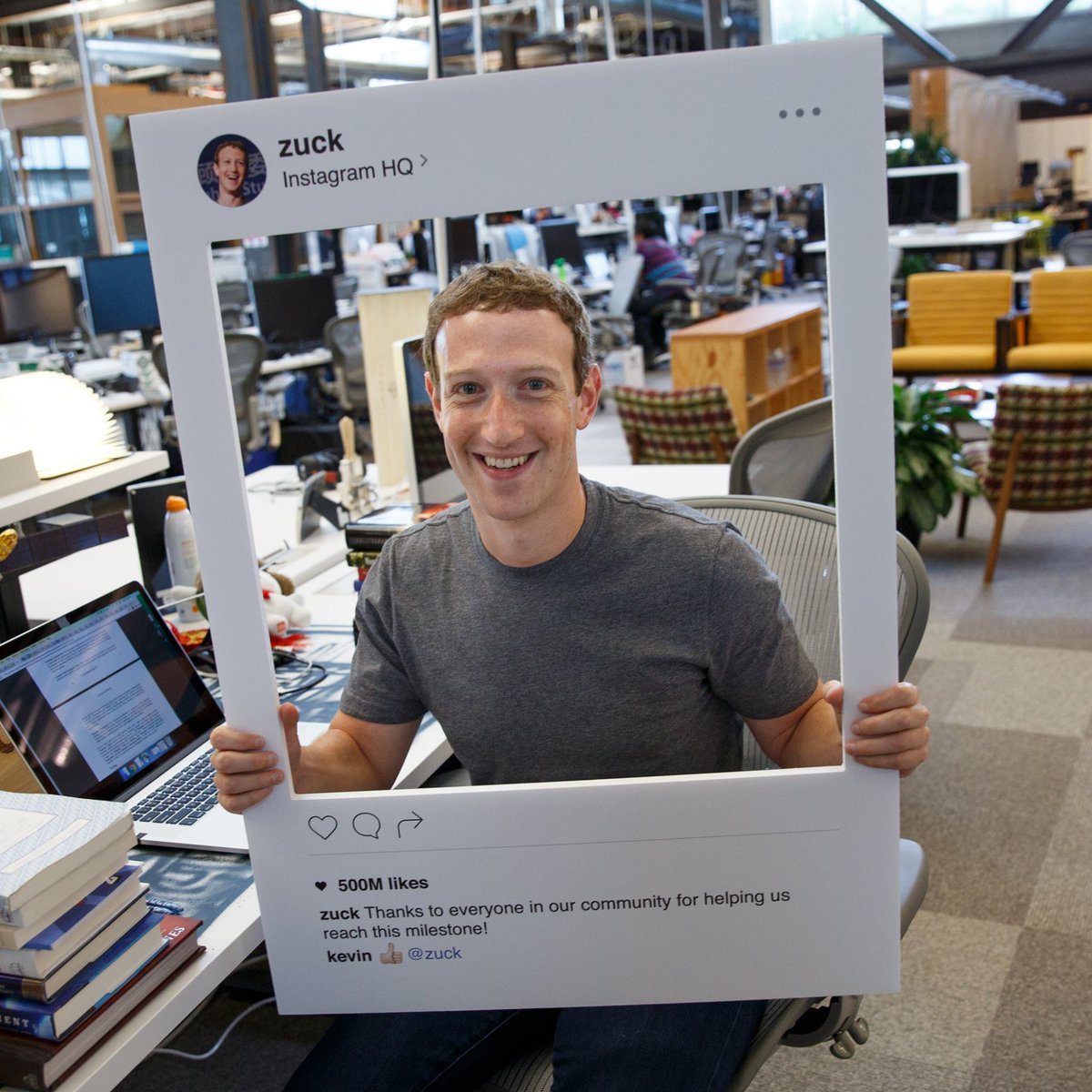
Yes folks, Zuckerberg tapes over his webcam. The billionaire made the (accidental?) revelation in a Facebook post intended to promote Instagram reaching its latest milestone of half a billion monthly active users.
In the picture Zuckerberg posted, of himself framed by a cardboard Instagram UI (cute), his laptop is visible in the background. And as Christopher Olson pointed out, that laptop has some weird accoutrements:


(And yes, that really does seem to be his laptop. Gizmodo’s William Turton notes that it’s the same desk the Face-boss gave a tour of on Facebook Live back in September.)
Thunderbird is an email client, for what it’s worth, which is made by Firefox creators Mozilla. Unlike Firefox, though, it’s never really taken off in the wider world, and development has rather stalled in the past five years. It may not even be Thunderbird that Zuckerberg has installed – others think it’s a Cisco VPN client.
Taping over the sensors and a particularly geeky mail client might seem paranoid. But to be fair to Zuckerberg, he’s not the only one taking a look at his webcam and wondering if it’s worth the risk.
Take the FBI’s director, James Comey: “I put a piece of tape over the camera because I saw somebody smarter than I am had a piece of tape over their camera.” The American digital rights group EFF sells webcam stickers, and told the Guardian’s Danny Yadron “people purchase these regularly”.
Even experts who don’t cover their cameras think they should. Why doesn’t Matthew Green, an encryption expert at Johns Hopkins University? “Because I’m an idiot,” he told Yadron.
“I have no excuse for not taking this seriously … but at the end of the day, I figure that seeing me naked would be punishment enough.”
While Zuckerberg probably does have any number of advanced persistent threats trying to break his digital security, normal people shouldn’t be too complacent either. Installing backdoors on compromised computers is a common way for some hackers to occupy their time.
According to a 2013 report in tech news site Ars Technica, sites such as Hack Forums contain threads full of people comparing and trading images of “slaves”, people whose computers they have broken into and taken control of. “One woman targeted by the California ‘sextortionist’ Luis Mijangos wouldn’t leave her dorm room for a week after Mijangos turned her laptop into a sophisticated bugging device,” Ars’ Nate Anderson wrote. “Mijangos began taunting her with information gleaned from offline conversations.”
Mac users, like Zuckerberg, can rest a bit easier: unlike most Windows laptops, the light next to a Mac’s webcam is controlled deeply in the hardware, and so it’s very hard to turn the webcam on without also turning on the warning light. Hard, but not impossible.
So should you copy Zuckerberg? Probably. It doesn’t hurt, most of the experts do it, and it could minimise damage – even if it’s just emotional – in the case of a catastrophic hack. But maybe don’t use Thunderbird. Some things are just too much hassle.        The Guardian

Wednesday, June 8, 2016

Google could have a record of everything you have said around it for years


google1.jpg
Google could have a record of everything you have said around it for years, and you can listen to it yourself.
The company quietly records many of the conversations that people have around its products.
The feature works as a way of letting people search with their voice, and storing those recordings presumably lets Google improve its language recognition tools as well as the results that it gives to people.
But it also comes with an easy way of listening to and deleting all of the information that it collects. That’s done through a special page that brings together the information that Google has on you.
The new portal was introduced in June 2015 and so has been active for the last year – meaning that it is now probably full of various things you have said, which you thought might have been in private.
The recordings can function as a kind of diary, reminding you of the various places and situations that you and your phone have been in. But it’s also a reminder of just how much information is collected about you, and how intimate that information can be.
On the page, you can listen through all of the recordings. You can also see information about how the sound was recorded – whether it was through the Google app or elsewhere – as well as any transcription of what was said if Google has turned it into text successfully.
But perhaps the most useful – and least cringe-inducing – reason to visit the page is to delete everything from there, should you so wish. That can be done either by selecting specific recordings or deleting everything in one go.
To delete particular files, you can click the check box on the left and then move back to the top of the page and select “delete”. To get rid of everything, you can press the “More” button, select “Delete options” and then “Advanced” and click through.
The easiest way to stop Google recording everything is to turn off the virtual assistant and never to use voice search. But that solution also gets at the central problem of much privacy and data use today – doing so cuts off one of the most useful things about having an Android phone or using Google search.      Independent

Wednesday, March 9, 2016

Obama Says Google, Facebook, Microsoft, And Visa Will Provide Extra Layer Of Security To Americans

President Barak Obama recently said “With the help of companies like Google GOOGL +0.15%, Facebook FB +0.20%, Microsoft MSFT +1.23%, and Visa V -1.83%, we’re going to empower Americans to be able to help themselves and make sure that they are safe online with an extra layer of security, like a fingerprint or a code sent to your cellphone.”
Sounds intriguing, but Obama failed to explain exactly what these companies are going to provide – and when. Not to mention that he snubbed Apple – which has sold a cumulative lifetime total of 821.8 million iPhones, according to The Motley Fool.
The President remarked on his new cybersecurity initiatives in the Roosevelt Room at the White House last month. ”More and more, keeping America safe is not just a matter of more tanks, more aircraft carriers; not just a matter of bolstering our security on the ground” said Obama. “It also requires us to bolster our security online. As we’ve seen in the past few years and just in the past few days, cyber threats pose a danger not only to our national security but also our financial security and the privacy of millions of Americans.”
Three major points from Obama were:
  1. His budget proposal for the next fiscal year devotes $19 billion to cybersecurity – which is up by more than one-third.
  2. Plans to update antiquated federal IT systems – some of which date back to the 1960′s – which the President says are particularly vulnerable to cyber attacks.
  3. Hiring a first-ever federal chief information security officer (CISO) position who will oversee security and upgrades across all agencies — and interact with the private sector.
  4. Recommended by Forbes
The counter points are:
  1. The U.S. government has spent $100 billion on information and cybersecurity over the past decade, and what do we have to show for it? A $14 billion budget was approved last year – when the OPM hack occurred.
  2. Some legacy mainframe systems are actually more secure than modern cloud based IT infrastructures. Nonetheless – these types of systems take years to upgrade and they must be protected in the interim.
  3. Obama is offering a woefully inadequate salary for the new Federal CISO job which is based in Washington, D.C., D.C. and offers a paltry annual salary range of $123,000+ to $185,000. The current average annual salary for a CISO in D.C. is $225,000, and tops out at $334,000, according to SilverBull, a full-service IT and cybersecurity recruiting and staffing company based in Manchester, Conn.
While Obama is still in office, perhaps he can take the first and best step forward by hiring a deeply experienced federal security chief from the commercial sector. To attract suitable candidates, he’ll have to up the pay to the top end of what more experienced CISOs earn — which means doubling the annual salary.
A new federal CISO should bring clarity to how and when Google, Facebook, Microsoft, and Visa will help protect Americans when they are online. These tech firms employ very large and experienced cybersecurity teams who are on the cutting edge of Internet privacy. If fingerprint sensors and sending codes to our cellphones are part of the online privacy plans that Obama has in mind, then he really needs to invite Apple in — otherwise the new CISO had better.       Forbes

Monday, January 18, 2016

Microsoft Windows 10 is spying on you


 Windows 10 Spying Confirmed: Microsoft Tracking Activities, Collecting Data On Windows 10 Devices
Microsoft’s latest operating system, Windows 10, is loved by Windows users. This being the fact, there has always been speculations about Windows 10 being not as good as it seems. Why? Because of speculations that Microsoft must be spying on Windows 10 users and collecting data through Windows 10 devices.
Ever since the OS has been out, Microsoft gives away figures every other day to prove how much people love Windows 10. When the figures were all about installation of Windows 10 on devices (on desktops, laptops, Xbox One or Lumia phones), things were fine. But what if I tell you Microsoft is tracking your activities and collecting personal data as well? Giving out latest details to prove how successful their OS is, Microsoft has indirectly confirmed the spying.
Yusuf Mehdi, Senior Vice President of Microsoft, recently said, “One of the ways we measure our progress with Windows 10 is looking at how people are using Windows. Recently we reached another milestone – people have spent over 11 billion hours on Windows 10 in December alone, spending more time on Windows than ever before.” Without realizing that he is confirming speculations that can go against Windows 10 and its devices, he further said, “Here are a few fun facts on what people have been doing on Windows 10” Let us have a look at the FUN FACTS, so that we know if there really is fun for us in store:
  1. In the month of December 2015, 44.5 billion minutes and more were reportedly spent in Microsoft Edge.
  2. Cortana was asked over 2.5 billion questions since the launch.
  3. Xbox One: Over 6.6 million hours of games were streamed.
  4. In the Windows 10 Photo App, over 82 billion photos were viewed.
  5. In 2015, gamers played PC games on Windows 10 devices for over 4 billion hours.
So, Microsoft is not only keeping itself updated about the installation of Windows 10 on different devices, but is also tracking every single activity of its users. Asking Cortana a question? Microsoft tracks it. Playing a game? Microsoft tracks it, too. Is this the dirty side of the free Windows 10 upgrade that everyone talks about? Is this all? Or with time, will more shocking stats and news be put forth?       Morningnewsusa

Monday, November 30, 2015

Life in the Electronic Concentration Camp: The Surveillance State Is Alive and Well


By John W. Whitehead
November 30, 2015

“Big Brother in the form of an increasingly powerful government and in an increasingly powerful private sector will pile the records high with reasons why privacy should give way to national security, to law and order [...] and the like.” ― William O. Douglas, Supreme Court Justice
Bottle up the champagne, pack away the noisemakers, and toss out the party hats.
There is no cause for celebration.
We have secured no major victories against tyranny.
We have achieved no great feat in pushing back against government overreach.
For all intents and purposes, the National Security Agency has supposedly ceased its bulk collection of metadata from Americans’ phone calls, but read the fine print: nothing is going to change.
The USA Freedom Act, which claimed to put an end to the National Security Agency’s controversial collection of metadata from Americans’ phone calls, was just a placebo pill intended to make us feel better and let the politicians take credit for reforming mass surveillance.
In other words, it was a sham, a sleight-of-hand political gag pulled on a gullible public desperate to believe that we still live in a constitutional republic rather than a down-and-out, out-of-control, corporate-controlled, economically impoverished, corrupt, warring, militarized banana republic.
You cannot restrain the NSA. The beast has outgrown its chains.
You cannot reform the NSA. A government that lies, cheats, steals, sidesteps the law, and then absolves itself of wrongdoing does not voluntarily alter its behavior.
You cannot put an end to the NSA’s “technotyranny.” Presidents, politicians, and court rulings have come and gone over the course of the NSA’s 60-year history, but none of them have managed to shut down the government’s secret surveillance of Americans’ phone calls, emails, text messages, transactions, communications and activities.
Indeed, the government has become an expert in finding ways to sidestep niggling, inconvenient laws aimed at ensuring accountability, bringing about government transparency and protecting citizen privacy.
It has mastered the art of stealth maneuvers and end-runs around the Constitution.
It knows all too well how to hide its nefarious, covert, clandestine activities behind the classified language of national security and terrorism. And when that doesn’t suffice, it obfuscates, complicates, stymies or just plain bamboozles the public into remaining in the dark.
Case in point: the so-called end of the NSA’s metadata collection of Americans’ phone calls.
This, of course, is no end at all.
On any given day, the average American going about his daily business will still be monitored, surveilled, spied on and tracked in more than 20 different ways, by both government and corporate eyes and ears.
More than a year before politicians attempted to patch up our mortally wounded privacy rights with the legislative bandaid fix that is the USA Freedom Act, researchers at Harvard and Boston University documented secret loopholes that allow the government to bypass Fourth Amendment protections to conduct massive domestic surveillance on U.S. citizens.
It’s extraordinary rendition all over again, only this time it’s surveillance instead of torture being outsourced.
In much the same way that the government moved its torture programs overseas in order to bypass legal prohibitions against doing so on American soil, it is doing the same thing for its surveillance programs. By shifting its data storage, collection and surveillance activities outside of the country, the government is able to bypass constitutional protections against unwarranted searches of Americans’ emails, documents, social networking data, and other cloud-stored data.
Heck, the government doesn’t even need to move all of its programs overseas. It just has to push the data over the border in order to “[circumvent] constitutional and statutory safeguards seeking to protect the privacy of Americans.”
Credit for this particular brainchild goes to the Obama administration, which issued Executive Order 12333 authorizing the collection of Americans’ data from surveillance conducted on foreign soil.
Using this rationale, the government was able to justify hacking into and collecting an estimated 180 million user records from Google and Yahoo data centers every month because the data travels over international fiber-optic cables. The NSA program, dubbed MUSCULAR, is carried out in concert with British intelligence.
No wonder the NSA appeared so unfazed about being forced to shut down its much-publicized metadata program. It had already figured out a way to accomplish the same results (illegally spying on Americans’ communications) without being shackled by the legislative or judicial branches of the government.
Mind you, this metadata collection now being carried out overseas is just a small piece of the surveillance pie. The government and its corporate partners have a veritable arsenal of surveillance programs that will continue to operate largely in secret, carrying out warrantless mass surveillance on hundreds of millions of Americans’ phone calls, emails, text messages and the like, beyond the scrutiny of most of Congress and the taxpayers who are forced to fund its multi-billion dollar secret black ops budget.
The surveillance state is alive and well and kicking privacy to shreds in America.
Whether you’re walking through a store, driving your car, checking email, or talking to friends and family on the phone, you can be sure that some government agency, whether the NSA or some other entity, will still be listening in and tracking your behavior. This doesn’t even begin to touch on the corporate trackers that monitor your purchases, web browsing, Facebook posts and other activities taking place in the cyber sphere.
We are now in a state of transition with the police state shifting into high-gear under the auspices of the surveillance state.
Having already transformed local police into extensions of the military, the Department of Homeland Security, the Justice Department and the FBI are preparing to turn the nation’s police officers into techno-warriors, complete with iris scanners, body scanners, thermal imaging Doppler radar devices, facial recognition programs, license plate readers, cell phone Stingray devices and so much more.
Add in the fusion centers, city-wide surveillance networks, data clouds conveniently hosted overseas by Amazon and Microsoft, drones equipped with thermal imaging cameras, and biometric databases, and you’ve got the makings of a world in which “privacy” is reserved exclusively for government agencies.
Thus, telephone surveillance by the NSA is the least of our worries.
Even with restrictions on its ability to collect mass quantities of telephone metadata, the government and its various spy agencies, from the NSA to the FBI, can still employ an endless number of methods for carrying out warrantless surveillance on Americans, all of which are far more invasive than the bulk collection program.
As I point out in my new book Battlefield America: The War on the American People, just about every branch of the government—from the Postal Service to the Treasury Department and every agency in between—now has its own surveillance sector, authorized to spy on the American people.
Then there are the fusion and counterterrorism centers that gather all of the data from the smaller government spies—the police, public health officials, transportation, etc.—and make it accessible for all those in power.
And of course that doesn’t even begin to touch on the complicity of the corporate sector, which buys and sells us from cradle to grave, until we have no more data left to mine. Indeed, Facebook, Amazon and Google are among the government’s closest competitors when it comes to carrying out surveillance on Americans, monitoring the content of your emails, tracking your purchases and exploiting your social media posts.
“Few consumers understand what data are being shared, with whom, or how the information is being used,” reports the Los Angeles Times. “Most Americans emit a stream of personal digital exhaust — what they search for, what they buy, who they communicate with, where they are — that is captured and exploited in a largely unregulated fashion.”
It’s not just what we say, where we go and what we buy that is being tracked.
We’re being surveilled right down to our genes, thanks to a potent combination of hardware, software and data collection that scans our biometrics—our faces, irises, voices, genetics, even our gait—runs them through computer programs that can break the data down into unique “identifiers,” and then offers them up to the government and its corporate allies for their respective uses.
All of those internet-connected gadgets we just have to have (Forbes refers to them as “(data) pipelines to our intimate bodily processes”)—the smart watches that can monitor our blood pressure and the smart phones that let us pay for purchases with our fingerprints and iris scans—are setting us up for a brave new world where there is nowhere to run and nowhere to hide.
For instance, imagine what the NSA could do (and is likely already doing) with voiceprint technology, which has been likened to a fingerprint. Described as “the next frontline in the battle against overweening public surveillance,” the collection of voiceprints is a booming industry for governments and businesses alike. As The Guardian reports, “voice biometrics could be used to pinpoint the location of individuals. There is already discussion about placing voice sensors in public spaces, and [Lee Tien, senior staff attorney with the Electronic Frontier Foundation] said that multiple sensors could be triangulated to identify individuals and specify their location within very small areas.”
Suddenly the NSA’s telephone metadata program seems like child’s play compared to what’s coming down the pike.
That, of course, is the point.
The NSA is merely one small part of a shadowy permanent government comprised of unelected bureaucrats who march in lockstep with profit-driven corporations that actually runs Washington, DC, and works to keep us under surveillance and, thus, under control. For example, Google openly works with the NSA, Amazon has built a massive $600 million intelligence database for CIA, and the telecommunications industry is making a fat profit by spying on us for the government.
In other words, Corporate America is making a hefty profit by aiding and abetting the government in its domestic surveillance efforts.
At every turn, we have been handicapped in our quest for transparency, accountability and a representative democracy by an establishment culture of secrecy: secret agencies, secret experiments, secret military bases, secret surveillance, secret budgets, and secret court rulings, all of which exist beyond our reach, operate outside our knowledge, and do not answer to “we the people.”
Now there are still those who insist that they have nothing to hide from the surveillance state and nothing to fear from the police state because they have done nothing wrong.
To those sanctimonious few, secure in their delusions, let this be a warning: the danger posed by the American police state applies equally to all of us—lawbreaker and law abider alike, black and white, rich and poor, liberal and conservative, blue collar and white collar, and any other distinction you’d care to trot out.
In an age of too many laws, too many prisons, too many government spies, and too many corporations eager to make a fast buck at the expense of the American taxpayer, there is no safe place and no watertight alibi. We are all guilty of some transgression or other, and eventually, we will all be made to suffer the same consequences in the electronic concentration camp that surrounds us. Source