Showing posts with label Fundamentalism. Show all posts

Tuesday, December 31, 2019

Canada minister is working with his colleagues to combat “online hate"

Breitbart.  16 Dec 2019
Canadian Prime Minister Justin Trudeau, recently made infamous over resurfaced blackface photos, has instructed his ministers to create new legislation aimed at tackling “hate speech” on social media.
The mandate letter, sent to Canada’s Minister of Heritage, calls for legislation to be drawn up imposing “significant penalties” on social media companies that do not remove so-called hate speech within 24 hours.

The letter singles out “hate speech” for special attention, before moving on to other items like child exploitation and terrorism.

Create new regulations for social media platforms, starting with a requirement that all platforms remove illegal content, including hate speech, within 24 hours or face significant penalties. This should include other online harms such as radicalization, incitement to violence, exploitation of children, or creation or distribution of terrorist propaganda.

Saturday, November 30, 2019

Religious fundamentalism is a 'plague,' pope says

Ncronline  Nov 18, 2019
Vatican City — Interreligious dialogue is an important way to counter fundamentalist groups as well as the unjust accusation that religions sow division, Pope Francis said.

Meeting with members of the Argentine Institute for Interreligious Dialogue Nov. 18, the pope said that in "today's precarious world, dialogue among religions is not a weakness. It finds its reason for being in the dialogue of God with humanity."

Recalling a scene from the 11th-century poem, "The Song of Roland," in which Christians threatened Muslims "to choose between baptism or death," the pope denounced the fundamentalist mentality which "we cannot accept nor understand and cannot function anymore."

"We must beware of fundamentalist groups; each (religion) has their own. In Argentina, there are some fundamentalist corners there," he said. "Fundamentalism is a plague and all religions have some fundamentalist first cousin," he said.

According to its website, the Institute for Interreligious Dialogue was founded in Buenos Aires in 2002 and was inspired by then-Cardinal Jorge Mario Bergoglio as a way "to promote understanding among men and women of different religious traditions in our city and the world."

Tuesday, October 29, 2019

Global ‘terrorist’ list provides banks with names of 3 million people to be denied service

Global ‘terrorist’ list dominated by Muslims provides banks with names of 3 MILLION people to be denied service – report
RT 23 Oct, 2019
A massive, ever-growing database used by the world’s largest banks to track terrorism financing and other crimes has compiled millions of names from unverified sources – including scandal sheets and search engine results.

The World-Check database adds 25,000 names every month to its massive risk list, used by 49 of the world’s 50 largest banks to monitor possible financial, regulatory and reputational liabilities. Over three million people are currently on the list – many not convicted of any crime, some not even aware they are suspected of one. 

Getting on the list is easy – employees scour publicly available sources, from court records to search engine results, and apparently make little effort to verify what they find. An investigation by Al Jazeera found hundreds of thousands of Muslim names, some seemingly absurd. In one example, retired Egyptian football player Mohamed Aboutrika was designated a “terrorist” after the Egyptian government added him to its domestic terrorism list for supporting the country’s first democratically elected president, Mohamed Morsi, after he was overthrown. 

Beyond the overpopulated terrorist databases, the Qatari outlet found that World-Check scours the scandal-sheets and tabloid newspapers of Israel and other countries for names, though its own website claims “research is sourced from reputable public domain sources.” Indeed, World-Check boasts that its database includes not only convictions but “person accused, investigated, arrested, charged, indicted, detained, questioned, or on trial” for a laundry list of crimes including everything from bribery and corruption to slave labor, “cheating,” or “environmental crimes.”

Thursday, November 29, 2018

Pope: let’s pledge to ban anti-Semitism from humanity

APNews  November 5, 2018
VATICAN CITY (AP) — Pope Francis is urging efforts to ensure that anti-Semitism is “banned from the human community.”

Francis lamented current anti-Semitic attitudes as he greeted visiting rabbis from the World Congress of Mountain Jews from the Caucasus at the Vatican Monday. He didn’t mention last month’s massacre at a synagogue in Pittsburgh. But he referred to the upcoming 80th anniversary of Kristallnacht, when German Nazis attacked Jews and their property, and the recent 75th anniversary of the roundup and deportation of Jews in Rome, when the city was under Nazi occupation.

Francis said: “Sadly, anti-Semitic attitudes are also present in our own times. As I have often repeated, a Christian cannot be an anti-Semite; we share the same roots.”

He added: “We are called to commit ourselves to ensure anti-Semitism is banned from the human community.”

Thursday, August 31, 2017

Google sets new restrictions against extremist Youtube videos

Starting on Thursday, Google will police YouTube like it never has before, adding warnings and disabling advertising on videos that the company determines crosses its new threshold for offensive content.

YouTube isn’t removing the selected videos, but is instead setting new restrictions on viewing, sharing and making money on them. A note detailing the changes will go to producers of the affected videos on Thursday, according to a spokeswoman for the Alphabet Inc. company. 

Google outlined these moves in June, but the implementation comes as debate about extremism and political speech is front-and-center in the national spotlight -- and when tech giants like Google and Facebook Inc. face deeper scrutiny over how they moderate information distributed through their digital services.

"These videos will have less engagement and be harder to find," Kent Walker, Google’s general counsel, wrote about the plans in a June blog post. "This strikes the right balance between free expression and access to information without promoting extremely offensive viewpoints." A Google spokeswoman declined to comment further on the changes.

The new restrictions, which target what Walker called "inflammatory religious or supremacist content," are expected to hit a small fraction of videos, according to person familiar with the company. YouTube says it uploads over 400 hours of video a minute. Videos tagged by its new policy won’t be able to run ads or have comments posted, and won’t appear in any recommended lists on the video site. A warning screen will also appear before the videos, which will not be able to play when embedded on external websites. YouTube will let video creators contest the restrictions through an appeals process, a spokeswoman said.

The world’s largest video service has changed its policies several times this year. In March, Google introduced new software and staffers to monitor videos after a slew of marketers pledged to pull YouTube spending over concern their ads were running alongside extremist content.

Google added new features to restrict YouTube ads the following month. Executives claimed the number of impacted videos was minute, yet stressed that neither humans nor artificial intelligence systems could ensure YouTube is entirely free of controversial videos. A recent example of the challenge: YouTube recently reinstated thousands of videos documenting violence in Syria after civic groups criticized the company for pulling them earlier, arguing the footage could be used as documentation in war crime prosecutions.

Earlier this month, YouTube said more than 75 percent of videos removed for violating its policies were flagged by its new software before human intervention. With its latest policy, YouTube is targeting trickier borderline content, such as videos that espouse Holocaust denial theories and clips from white supremacist David Duke.

"YouTube doesn’t allow hate speech or content that promotes or incites violence," the Thursday letter to YouTube creators reads, according to a copy viewed by Bloomberg News. "In some cases, flagged videos that do not clearly breach the Community Guidelines but whose content is potentially controversial or offensive may remain up, but with some features disabled."

In the wake of a white supremacist rally in Charlottesville, Virginia, earlier this month, several tech companies, including Google, Facebook and Airbnb Inc., have taken steps to cut associated people and groups off their platforms.          Bloomberg

Friday, June 9, 2017

Congressman is appealing to “Christendom” to “hunt down” and kill anyone suspected of being an "Islamic radical"


‘Kill them all’: Congressman wants ‘Christendom to hunt down radical Islamic horror’

7 Jun, 2017 
Louisiana congressman Clay Higgins is appealing to “Christendom” to “hunt down” and kill anyone suspected of being an "Islamic radical."
The Republican politician made his comments in response to Saturday’s terror attack in London which left seven people dead and another 48 injured.
“The free world... all of Christendom... is at war with Islamic horror,” Higgins, a former law enforcement officer, posted on Facebook on Sunday.
“Not a single radicalized Islamic suspect should be granted any measure of quarter. Their intended entry to the American homeland should be summarily denied,” Higgins said. "Every conceivable measure should be engaged to hunt them down. Hunt them, identify them, and kill them. Kill them all. For the sake of all that is good and righteous. Kill them all.”
The post is accompanied by a photo from the scene of the attack on London Bridge. It shows a man with canisters strapped to his body lying on the ground.
He also has a message for other nations: “Not one penny of American treasure should be granted to any nation who harbors these heathen animals.”       RT

Wednesday, June 7, 2017

Theresa May says the internet must now be regulated in the light of the London Bridge attack

New international agreements should be introduced to regulate the internet in the light of the London Bridge terror attack, Theresa May has said.
The Prime Minister said introducing new rules for cyberspace would “deprive the extremists of their safe spaces online” and that technology firms were not currently doing enough.
The Prime Minister made the comments outside Downing Street on Sunday morning in the aftermath of the van and knife attack that saw seven people killed and dozens injured. 
“We cannot allow this ideology the safe space it needs to breed – yet that is precisely what the internet, and the big companies that provide internet-based services provide,” Ms May said.
“We need to work with allied democratic governments to reach international agreements to regulate cyberspace to prevent the spread of extremist and terrorism planning.”
The call was one plank in Ms May’s speech following the attack. The Prime Minister also said Britain was too tolerant of extremism and that “pluralistic” British values had to be established as superior.
She warned there was “a new trend in the threat we face” and that while the three recent terror attacks in the UK were not linked by “common networks”, they were “bound together by the single evil ideology of Islamic extremism”.
The Conservative manifesto pledges regulation of the internet, including forcing internet providers to participate in counter-extremism drives and making it more difficult to access pornography.
Ms May’s speech is thought to be the first time she has publicly called for international cooperation in bringing forward more red tape to cyberspace, however.
The intervention comes after the introduction of the Investigatory Powers Act 2016 – dubbed the “Snooper’s Charter” – which expands the powers of spying agencies and the Government over the internet.
The Act, championed by Ms May, requires internet service providers to maintain a list of visited websites for all internet users for a year and gives intelligence agencies more powers to intercept online communications. Police can access the stored browsing history without any warrant or court order.
The PM’s comments come after the third terror attack on the UK in three months. A car and knife attack on Westminster in March left five people dead, while a bomb attack at a concert in Manchester two weeks ago killed 22.          Independent

Thursday, May 4, 2017

Pope Francis has warned against religious fanaticism and appealed for dialogue to battle violence

Pope Francis has warned against religious fanaticism and appealed for dialogue to battle violence during an open-air mass for Egypt's Catholic community.
The mass of peace on Saturday was attended by some 15,000 Egyptians and wrapped up a two-day visit by the Pope aimed at improving ties between Muslims and Christians.
"Peace be with you," the 80-year-old Francis said in Arabic as he started his homily at a heavily guarded military stadium in the capital, Cairo.
Continuing in Italian, he said: "True faith leads us to protect the rights of others with the same zeal and enthusiasm with which we defend our own."
He urged worshippers to be good and merciful to fellow Egyptians and said, "the only fanaticism believers can have is that of charity".
"Any other fanaticism does not come from God and is not pleasing to him."
Francis' visit - coming after the Islamic State of Iraq and Levant (ISIL) killed dozens of worshippers in a series of Church bombings earlier this month - gave Egypt's embattled Christian community an occasion to be joyful.
It was the first visit by Francis to Cairo but the second by a Catholic pope.
The crowds arrived early for the mass, waving Egyptian and Vatican flags and braving intense security measures to welcome the Pope, who toured the sun-drenched stadium in a golf cart to the sound of hymns performed by a choir and orchestra.
Security was tight; helicopter gunships circled the perimeter of the stadium and armoured military vehicles patrolled the streets of Cairo.
It was, said Coptic Catholic engineer Maged Francis, a "historic occasion".     Aljazeera

Wednesday, August 31, 2016

Twitter Suspends 235,000 More Accounts Over Extremism

SAN FRANCISCO — Twitter suspended 235,000 accounts that promoted terrorism over the last six months, as part of a continuing effort to keep people from using the social network for extremist causes, the company said Thursday.
“The world has witnessed a further wave of deadly, abhorrent terror attacks across the globe,” Twitter said in a statement. “We strongly condemn these acts and remain committed to eliminating the promotion of violence or terrorism on our platform.”
Twitter’s latest action brings the total number of accounts that the company has suspended to 360,000 since it began cracking down on terrorism and violent extremism in mid-2015. While Twitter has long championed free speech on the web and said that it was a “global town square,” its positioning has drawn bullies, racists and extremist groups to the service to spread their messages. That has drawn criticism from government agencies and the Democratic presidential nominee Hillary Clinton, among others.
While Twitter is trying to find a way to reconcile its free speech stance with how women and minorities can be targeted on the service, the company has been clearer about combating terrorism. Daily suspensions for violating Twitter’s prohibition on terrorism are up over 80 percent since last year, with spikes in suspensions immediately following terrorist attacks, the company said.
Twitter also said it has expanded its teams that review reported violations, and it now moves faster to suspend accounts and make it harder for suspended users to return to the platform. The company has also expanded the number of groups it works with to counter violent extremism online.
Twitter on Thursday separately introduced new features to give people more control over their interactions on the service, including adding a filter to improve the quality of the tweets someone sees by weeding out duplicate messages or automated posts.
Yet Anil Dash, a tech entrepreneur and activist, said Twitter’s actions did not solve the service’s underlying abuse issues. Even if extremist content and accounts are suspended, people on Twitter can still organize in ways that put others at risk, such as publishing and widely sharing someone’s personal information and home address.
“The news about banned accounts and new tools is really good, but Twitter has been doing those things for a long time,” Mr. Dash said. “This has more to do with Twitter’s ability to talk about abuse than it is a big change in policy.”                NYTimes

Wednesday, June 8, 2016

U.S. Internet giants Facebook Inc., Twitter Inc., Google and Microsoft Corp. pledged to tackle online hate speech

May 31, 2016   by
U.S. Internet giants Facebook Inc., Twitter Inc., Google and Microsoft Corp. pledged to tackle online hate speech in less than 24 hours as part of a joint commitment with the European Union to combat the use of social media by terrorists.
Beyond national laws that criminalize hate speech, there is a need to ensure such activity by Internet users is “expeditiously reviewed by online intermediaries and social media platforms, upon receipt of a valid notification, in an appropriate time-frame,” the companies and the European Commission said in a joint statement on Tuesday.
The code of conduct arrives as Europe comes to terms with the bloody attacks in Paris and Brussels by Islamic State, which has used the Web and social media to spread its message of hate against its enemies. The companies said it remains a “challenge” to strike the right balance between freedom of expression and hate speech in the self-generated content on online platforms.
“We remain committed to letting the Tweets flow,” said Twitter’s head of public policy for Europe, Karen White, in the statement. “However, there is a clear distinction between freedom of expression and conduct that incites violence and hate.”

Platforms Sued

A French Jewish youth group, UEJF, sued Twitter, Facebook and Google in Paris this month over how they monitor hate speech on the web. In the course of about six weeks in April and May, members of French anti-discrimination groups flagged unambiguous hate speech that they said promoted racism, homophobia or anti-Semitism. More than 90 percent of the posts pointed out to Twitter and YouTube remained online within 15 days on average following requests for removal, according to the study by UEJF, SOS Racisme and SOS Homophobie.
“With a global community of 1.6 billion people we work hard to balance giving people the power to express themselves whilst ensuring we provide a respectful environment,” said Monika Bickert, head of global policy management at Facebook, in the statement. “There’s no place for hate speech on Facebook.”          Bloomberg

Tuesday, February 16, 2016

Pope Francis is expected to make his first visit to Scotland to sign a charter against extremism.


Pope Francis is cautious on a possible split

POPE Francis is expected to make his first visit to Scotland to sign a charter against extremism.
The leader of the Catholic leader is understood to be a surprise addition to an event at St Andrews University in September.
It would be his first visit to the UK in three years.
Leaders from different religions, diplomatic and community leaders will all gather in the Fife town to sign a 10-point declaration calling on all faiths to unite against radicalsation.
It already has the support of Nobel Peace Prize winner Desmond Tutu and the Dalai Lama.
The Pope has spoken out against the terrorist groups who brainwash vulnerable young people and draw them into extremist networks.
The Vatican has yet to confirm he will attend the event, but said the visit is “under consideration”.
Professor of religion and politics at St Andrews Mario Aguilar invited the Pope to take part in raising awareness of the charter against extremism.
He has met him several times and wrote his biography in 2014.
He said: “My understanding is that Pope Francis is interested and has put the event on his agenda of activities. I have had an indication his visit is being considered.”
A visit by the Pople, however brief, would be a huge coup for Scotland’s 850,000 Catholics.
But it would not be anything like the elaborate trip made by Pope Benedict in 2010.
Pope Francis could fly in to Leuchars then return to Rome on the same day. Aguilar stressed that he would be coming in a private capacity, to attend an academic event. “It will not be a pastoral visit.”    DailyRecord

Tuesday, November 17, 2015

Definition of FUNDAMENTALISM

1 

a often capitalized :  a movement in 20th century Protestantism emphasizing the literally interpreted Bible as fundamental to Christian life and teaching

b :  the beliefs of this movement
c :  adherence to such beliefs

2
:  a movement or attitude stressing strict and literal adherence to a set of basic principles <Islamic fundamentalism> <political fundamentalism>
Webster 
 

Saturday, November 7, 2015

The Concern of Former Seventh Day Adventist for Ben Carson as a President

Friday 6 November 2015 07.30 EST
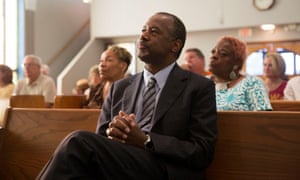
I have little doubt that Ben Carson’s fundamentalist views are ingrained in him and won’t change. This is deeply troubling in a presidential candidate
I do not think it is in our country or the world’s best interest for Ben Carson to be US president.’ Photograph: Bloomberg via Getty Images

With Ben Carson’s surge in the Republican race for the White House, the world is suddenly fascinated by Seventh-day Adventists.


A small, American-born sect of Christianity that arose in New England in the early 1800s, my former church teaches that the United States will play a key role in the earth’s final events, with its government destined to conspire with the Catholic church and other apostates to bring about the demise of the planet and the return of Jesus to set up God’s eternal kingdom here.

I am deeply concerned that allowing these religious views to lead the nation would amplify rather than ameliorate the crisis faced by our socially and economically unjust country and our ecologically fragile world.


By Carson’s own admission, he believes in much of the church’s dogma – the Genesis account of creation, for example, rather than the scientific account of human evolution. He has said that Darwin developed the theory of evolution under the influence of Satan. He doesn’t believe the scientific consensus on climate change and he apparently thinks the Egyptian pyramids were built to store grain as part of the biblical story of Joseph saving Egypt from a 14-year famine. And like much of his party, Carson apparently sees this rejection of the scientific consensus as central to his platform.

All of this is troubling. Of course, Ben Carson’s religion is his own private business. We should not require a test of faith or non-faith for elected officials. He can believe whatever he wants – in private.

Because of their minority position as observers of the Jewish Sabbath, the Adventist church has, from its beginnings, staunchly defended the wall of separation between religion and state. Though this wall has at times shown cracks, such as in 2008 when the church’s west coast religious liberty organization endorsed Proposition 8, the principle of religious freedom is central to Carson’s religious tradition. The church also has a history of pacifism and conscientious objection to war.

But as with any religious group, the Adventist church has changed drastically in the past 150 years. Its theology has grown with the times and changed to meet new challenges. There is also no monolithic Seventh-day Adventism. There are strong fundamentalists who think that no one beside Adventists are safe from the judgment. There are moderates who appear as evangelicals, concerned more for conservative values, church growth and institutional survival than hewing to 19th-century social codes and fringe end-of-the-world predictions. There is also a small group of progressives, many of whom believe in a scientific account of human evolution, inclusion of LGBT individuals in the church and inter-religious dialogue.

But nothing is more important in order to fulfill their calling as God’s remnant (read: chosen) people than warning the world of impending judgment and the soon return of Jesus. Would Carson be guided by his church’s historic support for freedom of and from religion, or would he follow the evangelistic side of the church and see his role as fulfillment of Bible prophecy? I have little doubt that the apocalyptic vision he inherited from his indoctrination as an Adventist and his view that the Bible is a higher source of truth than science and human reason are deeply ingrained in him and will not change.

Though his rise from childhood poverty and urban violence to his place in medical history is the stuff of legend – through a combination of hard work, a loving mother who refused to give up and, according to Carson, God’s providence, he overcame his past – I do not think it is in our country or the world’s best interest for Ben Carson to be president. It is difficult to separate Carson’s religion from his politics because the two are so intertwined, as they are with all fundamentalists.

And this is precisely the problem. His metaphysical views prevent him from dealing seriously with the world at it is – the only world we elect a president to serve.

Ryan Bell is a former Seventh-day Adventist and the founder, director and senior consultant at Life After God. In March 2013 he resigned his 19-year pastoral ministry and in January 2014 began a yearlong journey exploring the limits of theism and the atheist landscape in the United States called Year Without God.

The Guardian 

Saturday, October 24, 2015

Who is the Man of Sin?

Saturday, October 3, 2015

Pope Francis: We Must Combat All Types Of Religious 'Fundamentalism'

H0mkrbubtkupzxxwfxqq
AP Photo / Carolyn Kaster
The pope noted that when working to combat extremism, people must not view the conflict through a black and white lens and must protect religious freedom.
"A delicate balance is required to combat violence perpetrated in the name of a religion, an ideology or an economic system, while also safeguarding religious freedom, intellectual freedom and individual freedoms. But there is another temptation which we must especially guard against: the simplistic reductionism which sees only good or evil; or, if you will, the righteous and sinners," Pope Francis said. "The contemporary world, with its open wounds which affect so many of our brothers and sisters, demands that we confront every form of polarization which would divide it into these two camps."
He called on people not to take on the anger of extremists.
"We know that in the attempt to be freed of the enemy without, we can be tempted to feed the enemy within. To imitate the hatred and violence of tyrants and murderers is the best way to take their place. That is something which you, as a people, reject," he said.

TPM 

Saturday, July 25, 2015

New anti-terror bill could put chill on freedom of speech

'It’s really more political posturing than sound counterterrorism policy,' says legal expert

By Lucas Powers, CBC News Posted: Jan 29, 2015 5:00 AM ET Last Updated: Jan 30, 2015 3:30 PM ET
Pushing the limits of criminalized speech could stifle discussion about sensitive topics, such as extremism and radicalization, in communities where that conversation is most needed.
Pushing the limits of criminalized speech could stifle discussion about sensitive topics, such as extremism and radicalization, in communities where that conversation is most needed. (Ben Curtis/Associated Press)
Prime Minister Stephen Harper said last weekend that new anti-terror legislation to be introduced on Friday will, among other things, “criminalize the promotion of terrorism.”
Such a move, however, could have a chilling effect on freedom of expression in Canada and would not necessarily contribute to effectively fighting domestic extremism, according to legal experts.
The new bill, which could also include provisions for expanded police powers, was promised by the federal government in the weeks following the October attacks in Quebec and Ottawa that left two members of the Canadian Forces dead.
Justice Minister Peter MacKay suggested that the measures would, among a host of other consequences, allow authorities to target materials that may be contributing to the radicalization of Canadians, particularly online.
The new bill, however, is largely a knee-jerk response to October’s attacks and Canada already has the necessary laws on the books to pursue and prosecute people promoting hatred or inciting violence, says Kent Roach, a professor at the University of Toronto who specializes in constitutional and terrorism law.
“The government has the burden before they introduce new laws to demonstrate why it’s not possible to prosecute these kinds of offences under existing Canadian law,” he says.
“There’s a real danger when we make laws in reaction to events with the assumption that those laws will help prevent tragedies from happening again.”
Government officials have repeatedly stated that any new legislation would be drafted in accordance with the Charter of Rights and Freedoms and will not infringe on freedom of expression and religion.

'Glorification' offences

Similar legislation criminalizing the "glorification" of terrorist acts exists in several European countries, and MacKay said last year that the government was reviewing specific laws in the U.K. as a possible template.
Earlier this month, Roach co-authored a working paper with Craig Forcese, an associate professor of law at the University of Ottawa, that analyzed the prospect of a Canadian law targeting glorification of terrorism offences.
'Sometimes these things can become wins for extremists and terrorists. They are trying to provoke further attacks and if the response reinforces their perspective on the state of the world, then it ends up helping their cause.' - Scott Stewart, VP of tactical analysis at Stratfor
Pushing the limits on what kinds of speech are considered criminal may put a "chill" on the dialogue around terrorism, they wrote, particularly in communities where discussing the issues around radicalization and extremism is most critical.
"There are at least two concerns about speech chill: will people not talk about controversial topics because they’re worried about being charged under a new offence? And second, will it drive potentially radicalized individuals further underground?" says Roach.
When people don’t feel free to talk about the political, religious and ideological elements of extremism, Canadian society won’t be able to address the underlying forces that drive people toward radicalization and, in some cases, to acts of violence, says University of Waterloo sociology and legal studies professor Lorne Dawson.

'It's silencing'

Dawson does extensive research within communities dealing with radicalization. He says many people are already reluctant to speak openly about the subject.
"If we expand our laws, it will stoke the fear that people are susceptible to prosecution just by the suggestion that that they may empathize in part with the world view of people that are considered terrorists, but they themselves would never do anything violent or hateful," says Dawson.
 "There is already an increasing sense that it is a forbidden topic — it’s too potentially dangerous and words could be misconstrued or misunderstood. It’s silencing."
While there is no question that extremist networks use the internet to communicate and promote their causes, mounting evidence has shown online activity is not always a driving force on the path to radicalization.

RCMP Commissioner Bob Paulson in October outlined his force's plan to lead an anti-radicalization program in communities nationwide. These kinds of preventive measures are more effective than clamping down on speech, legal experts say. (Blair Gable/Reuters)
"The internet might be a facilitator, but it’s not the cause," says Forcese, who argued in his paper with Roach that contact with a charismatic thought leader is almost certainly the strongest influence on those moving toward extreme viewpoints.
The RCMP has already begun developing an anti-radicalization program in conjunction with local police forces, and if a community leader was inciting people to join extremist movements, their actions are already illegal under the Criminal Code.

Making 'martyrs' of ideas

Similarly, stifling speech plays into the narrative promoted by many extremist groups that Western societies are hypocritical to espouse free speech values while repressing contradictory views. In essence, says Forcese, these kinds of laws can make "martyrs of ideas" and speech that lie within the definition of protected speech.
The ultimate result is to provide propagandists and recruiters in foreign groups like ISIS and al-Qaeda, which are far out of reach of Canadian law, another weapon in their arsenal.
"Sometimes these things can become wins for extremists and terrorists," says Scott Stewart, vice-president of tactical analysis at Stratfor, a U.S.-based private intelligence and consulting firm.
'It seems to me that Canada’s legal house is pretty much in order. The problem in Canada is not that the laws aren’t on the books, but rather the enforcement of those laws.' - Kent Roach, U of T law professor
"They are trying to provoke further attacks and if the response reinforces their perspective on the state of the world, then it ends up helping their cause."
On the other hand, it can be helpful to provide resource-strapped counterterrorism forces with additional tools in the uphill battle against homegrown threats. That was the fundamental basis for the laws that were passed in the U.K., and Stewart says Canada’s new legislation could be sculpted in the image of those laws.
While critics of the U.K.’s approach to glorification offences argue there is room for abuses, particularly when it comes to the expression of political and religious ideologies, "the British have addressed the possibility of overstepping by surgically applying the laws," says Stewart.

Enforcement of existing laws

While the U.K.’s efforts have arguably been effective, "Canada can already accomplish what the U.K. has done in terms of most prosecutions" under laws already in place, Roach and Forcese wrote.
"It seems to me that Canada’s legal house is pretty much in order," says Roach. "The problem in Canada is not that the laws aren’t on the books, but rather the enforcement of those laws."

The U.K. enacted a series of laws that criminalized the "glorification" of terrorism following the 2005 attacks on London's public transit system that killed 52 people. (Dylan Martinez/Reuters)
For example, Canadian legislation allows for a judge to issue a warrant that would force internet service providers or individual websites to take down material if it can be shown that it falls outside of constitutionally protected speech.
The kinds of terrorist propaganda targeted by U.K. law could largely fall under this category in Canada, according to Roach.
Interestingly, there’s no publicly available evidence that the provision has ever been used by Canadian law enforcement since being enacted shortly after the attacks of Sept. 11, 2001.
He points to a history of co-operation between MI-5, the U.K.’s domestic intelligence agency, and police forces throughout the country as the primary reason for the U.K.’s ability to keep tabs on homegrown extremism.

'Political posturing'

CBC News reported earlier this month that the new anti-terror legislation will likely include provisions to allow increased information-sharing between federal agencies, currently limited by privacy laws.
Ultimately, pushing the limits of criminalized speech in the digital age "is not going to stop the spread of information and it’s not going to reduce the flow of propaganda," asserts Dawson.
Rather, it is intended to convey the message that Canada as a nation is trying to do something to combat domestic threats.
"It’s really more political posturing than sound counterterrorism policy."

Source:
CBC News

 Fundamentalists Considered Violent

Vatican City, Jun 13, 2014 / 07:00 am (CNA/EWTN News).- In an interview granted with Spanish-language magazine "La Vanguardia" on Monday, Pope Francis lauded Pius XII for his efforts in saving Jews, discussed Orthodox-Catholic relations, as well as the motivations behind his prayer meeting at the Vatican last Sunday.
Interview with Pope Francis: “One has to take the secession of a nation with grain of salt.”
“Our world economic system can’t take it anymore,” says the Bishop of Rome in an interview with La Vanguardia. “I’m no illumined one. I didn’t bring any personal projects under my arm.” “We are throwing away an entire generation to maintain a system that isn’t good,” he opines with respect to unemployed youth.
“The persecuted Christians are a concern that touches me very deeply as a pastor. I know a lot about persecutions but it doesn’t seem prudent to talk about them here so I don’t offend anyone. But in some places it is prohibited to have a Bible or teach the catechism or wear a cross… What I would like to be clear on is one thing, I am convinced that the persecution against Christians today is stronger than in the first centuries of the Church. Today there are more Christian martyrs than in that period. And, it's not because of fantasy, it’s because of the numbers."
Pope Francis received us last Monday in the Vatican - a day after the prayer for peace with the presidents of Israel and Palestine - for this exclusive interview with “La Vanguardia.” The Pope was happy to have done everything possible for understanding between Israelis and Palestinians.
Violence in the name of God dominates the Middle East.
It's a contradiction. Violence in the name of God does not correspond with our time. It's something ancient. With historical perspective, one has to say that Christians, at times, have practiced it. When I think of the Thirty Years War, there was violence in the name of God. Today it is unimaginable, right? We arrive, sometimes, by way of religion to very serious, very grave contradictions. Fundamentalism, for example. The three religions, we have our fundamentalist groups, small in relation to all the rest.
And, what do you think about fundamentalism?
A fundamentalist group, although it may not kill anyone, although it may not strike anyone, is violent. The mental structure of fundamentalists is violence in the name of God.