Showing posts with label Paganism. Show all posts
Showing posts with label Paganism. Show all posts
Wednesday, March 31, 2021


Saturday, October 31, 2020
The beginnings of paganism
“The trinity got its start in Ancient Babylon with Nimrod – Tammuz –
and Semiramis. Semiramis demanded worship for both her husband and her
son as well as herself. She claimed that her son, was both the father
and the son. Yes, he was “god the father” and “god the son” – The first divine incomprehensible trinity.” The Two Babylons p. 51
Friday, February 28, 2020
There is no union between the Prince of light and the prince of darkness
The
apostles encountered those in the church who professed godliness while
they were secretly cherishing iniquity. Ananias and Sapphira acted the
part of deceivers, pretending to make an entire sacrifice for God, when
they were covetously withholding a portion for themselves. The Spirit of
truth revealed to the apostles the real character of these pretenders,
and the judgments of God rid the church of this foul blot upon its
purity. This signal evidence of the discerning Spirit of Christ in the
church was a terror to hypocrites and evildoers. They could not long
remain in connection with those who were, in habit and disposition,
constant representatives of Christ; and as trials and persecution came
upon His followers, those only who were willing to forsake all for the
truth's sake desired to become His disciples. Thus, as long as
persecution continued, the church remained comparatively pure. But as it
ceased, converts were added who were less sincere and devoted, and the
way was open for Satan to obtain a foothold.
But
there is no union between the Prince of light and the prince of
darkness, and there can be no union between their followers. When
Christians consented to unite with those who were but half converted
from paganism, they entered upon a path which led further and further
from the truth. Satan exulted that he had succeeded in deceiving so
large a number of the followers of Christ. He then brought his power to
bear more fully upon these, and inspired them to persecute those who
remained true to God. None understood so well how to oppose the true
Christian faith as did those who had once been its defenders; and these
apostate Christians, uniting with their half-pagan companions, directed
their warfare against the most essential features of the doctrines of
Christ.
It
required a desperate struggle for those who would be faithful to stand
firm against the deceptions and abominations which were disguised in
sacerdotal garments and introduced into the church. The Bible was not
accepted as the standard of faith. The doctrine of religious freedom was
termed heresy, and its upholders were hated and proscribed.
After
a long and severe conflict, the faithful few decided to dissolve all
union with the apostate church if she still refused to free herself from
falsehood and idolatry. They saw that separation was an absolute
necessity if they would obey the word of God. They dared not tolerate
errors fatal to their own souls, and set an example which would imperil
the faith of their children and children's children. To secure peace and
unity they were ready to make any concession consistent with fidelity
to God; but they felt that even peace would be too dearly purchased at
the sacrifice of principle. If unity could be secured only by the
compromise of truth and righteousness, then let there be difference, and
even war.
Well
would it be for the church and the world if the principles that
actuated those steadfast souls were revived in the hearts of God's
professed people. Great Controversy pp. 44,45
Friday, January 25, 2019
The representative of Satan

The
apostle Paul, in his second letter to the Thessalonians, foretold the
great apostasy which would result in the establishment of the papal
power. He declared that the day of Christ should not come, “except there
come a falling away first, and that man of sin be revealed, the son of
perdition; who opposeth and exalteth himself above all that is called
God, or that is worshiped; so that he as God sitteth in the temple of
God, showing himself that he is God.” [2 Thessalonians 2:3, 4, 7.] And furthermore, the apostle warns his brethren that “the mystery of iniquity doth already work.” [2 Thessalonians 2:3, 4, 7.]
Even at that early date he saw, creeping into the church, errors that
would prepare the way for the development of the papacy.
Little
by little, at first in stealth and silence, and then more openly as it
increased in strength and gained control of the minds of men, the
mystery of iniquity carried forward its deceptive and blasphemous work.
Almost imperceptibly the customs of heathenism found their way into the
Christian church. The spirit of compromise and conformity was restrained
for a time by the fierce persecutions which the church endured under
paganism. But as persecution ceased, and Christianity entered the courts
and palaces of kings, she laid aside the humble simplicity of Christ
and his apostles for the pomp and pride of pagan priests and rulers; and
in place of the requirements of God, she substituted human theories and
traditions. The nominal conversion of Constantine, in the early part of
the fourth century, caused great rejoicing; and the world, cloaked with
a form of righteousness, walked into the church. Now the work of
corruption rapidly progressed. Paganism, while appearing to be
vanquished, became the conqueror. Her spirit controlled the church. Her
doctrines, ceremonies, and superstitions were incorporated into the
faith and worship of the professed followers of Christ.
This
compromise between paganism and Christianity resulted in the
development of the “man of sin” foretold in prophecy as opposing and
exalting himself above God. That gigantic system of false religion is a
masterpiece of Satan's power,—a monument of his efforts to seat himself
upon the throne to rule the earth according to his will.
Satan
once endeavored to form a compromise with Christ. He came to the Son of
God in the wilderness of temptation, and, showing him all the kingdoms
of the world and the glory of them, offered to give all into his hands
if he would but acknowledge the supremacy of the prince of darkness.
Christ rebuked the presumptuous tempter, and forced him to depart. But
Satan meets with greater success in presenting the same temptations to
man. To secure worldly gains and honors, the church was led to seek the
favor and support of the great men of earth, and having thus rejected
Christ, she was induced to yield allegiance to the representative of
Satan,—the bishop of Rome.
It
is one of the leading doctrines of Romanism that the pope is the
visible head of the universal church of Christ, invested with supreme
authority over bishops and pastors in all parts of the world. More than
this, the pope has arrogated the very titles of Deity. He styles himself
“Lord God the Pope,” assumes infallibility, and demands that all men
pay him homage. Thus the same claim urged by Satan in the wilderness of
temptation is still urged by him through the Church of Rome, and vast
numbers are ready to yield him homage.
But
those who fear and reverence God meet this Heaven-daring assumption as
Christ met the solicitations of the wily foe: “Thou shalt worship the
Lord thy God, and him only shalt thou serve.” [Luke 4:8.]
God has never given a hint in his Word that he has appointed any man to
be the head of the church. The doctrine of papal supremacy is directly
opposed to the teachings of the Scriptures. The pope can have no power
over Christ's church except by usurpation.
Romanists
have persisted in bringing against Protestants the charge of heresy,
and willful separation from the true church. But these accusations apply
rather to themselves. They are the ones who laid down the banner of
Christ, and departed from “the faith which was once delivered unto the
saints.” [Jude 3.] GC88 50,51.
Tuesday, October 24, 2017
Why millennials are ditching religion for witchcraft and astrology

Marketwatch Oct 22, 2017
When Coco Layne, a Brooklyn-based producer, meets someone new these
days, the first question that comes up in conversation isn’t “Where do
you live?” or “What do you do?” but “What’s your sign?”
“So many
millennials read their horoscopes every day and believe them,” Layne,
who is involved in a number of nonreligious spiritual practices, said.
“It is a good reference point to identify and place people in the
world.”
Interest in spirituality has been booming in recent years
while interest in religion plummets, especially among millennials. The
majority of Americans now believe it is not necessary to believe in God
to have good morals, a study from Pew Research Center released
Wednesday found. The percentage of people between the ages of 18 and 29
who “never doubt existence of God” fell from 81% in 2007 to 67% in 2012.
Meanwhile, more than half of young adults in the U.S. believe astrology is a science.
compared to less than 8% of the Chinese public. The psychic services
industry — which includes astrology, aura reading, mediumship,
tarot-card reading and palmistry, among other metaphysical services —
grew 2% between 2011 and 2016. It is now worth $2 billion annually,
according to industry analysis firm IBIS World.
Melissa Jayne, owner of Brooklyn-based “metaphysical boutique” Catland, said she has seen a major uptick in interest in the occult in the past five years, especially among New Yorkers in their 20s. The store offers workshops like “Witchcraft 101,” “Astrology 101,” and a “Spirit Seance.”
“Whether it be spell-casting, tarot, astrology, meditation and trance, or herbalism, these traditions offer tangible ways for people to enact change in their lives,” she said. “For a generation that grew up in a world of big industry, environmental destruction, large and oppressive governments, and toxic social structures, all of which seem too big to change, this can be incredibly attractive.”
Friday, August 4, 2017
Is there a hell?
Very few people discuss the topic of hell, because very few understand
it. Is there a hellfire that people go to at death or is that a pagan
teaching that has been incorporated into the dogma of the Church? It is
very important that we separate long held man-made traditions from
Biblical truths. It takes a lot of hard work and humility, but this
intense study will go into what is false and what is true.
Tuesday, December 20, 2016
Christmas and Its Pagan Roots
Today Christians debate over nearly EVERYTHING rather than going
directly to the word of God. What is the pre-Christian celebration
called the 'Natalie Invitus Solis', that was kept in the occult world,
which Christians have stolen and have called Christmas about? Can we
really distinguish between what is Christianity and what is paganism?
This in-depth study will settle this issue once and for all. It will
upset and agitate but the truth is meant to set us free.
Origin of Christmas

The precise origin of assigning December 25 as the birth date of Jesus is unclear. The New Testament provides no clues in this regard. December 25 was first identified as the date of Jesus’ birth by Sextus Julius Africanus
in 221 and later became the universally accepted date. One widespread
explanation of the origin of this date is that December 25 was the
Christianizing of the dies solis invicti nati (“day of the
birth of the unconquered sun”), a popular holiday in the Roman Empire
that celebrated the winter solstice as a symbol of the resurgence of the
sun, the casting away of winter and the heralding of the rebirth of
spring and summer. Indeed, after December 25 had become widely accepted
as the date of Jesus’ birth, Christian writers frequently made the
connection between the rebirth of the sun and the birth of the Son. One
of the difficulties with this view is that it suggests a nonchalant
willingness on the part of the Christian church to appropriate a pagan
festival when the early church was so intent on distinguishing itself
categorically from pagan beliefs and practices.
A second view suggests
that December 25 became the date of Jesus’ birth by a priori reasoning
that identified the spring equinox as the date of the creation of the
world and the fourth day of creation, when the light was created, as the
day of Jesus’ conception
(i.e., March 25). December 25, nine months later, then became the date
of Jesus’ birth. For a long time the celebration of Jesus’ birth was
observed in conjunction with his baptism, celebrated January 6.
Christmas
began to be widely celebrated with a specific liturgy in the 9th
century but did not attain the liturgical importance of either Good Friday or Easter, the other two major Christian holidays. Roman Catholic churches celebrate the first Christmas mass at midnight, and Protestant
churches have increasingly held Christmas candlelight services late on
the evening of December 24. A special service of “lessons and carols”
intertwines Christmas carols
with Scripture readings narrating salvation history from the Fall in
the Garden of Eden to the coming of Christ. The service, inaugurated by E.W. Benson and adopted at the University of Cambridge, has become widely popular. Brittanica
Monday, October 26, 2015
The Origins of Halloween. What is the origin behind this popular festival celebrated every October 31?
October 31 is approaching fast—a night of ghoulish costumes, haunted
houses, trick-or-treating, witches, jack-o’-lanterns, parties and
superstitions that we call Halloween. What is this festival really
about?
Celtic Origins
While the exact origin of our Halloween celebrations remains disputed by
scholars, most point back to the ancient Celtic festival Samhain
(pronounced sah-wen) as the precursor. The Celtic people of
pre-medieval Europe lived in an area encompassing Ireland, the United
Kingdom, and northern France.

Halloween greeting card from 1904, divination is depicted: the young woman looking into...
They divided their year into two halves or seasons – the “light half” (summer) and the “dark half” (winter). October 31 was the transitional time between the end of summer and the beginning of winter with its darker and shorter days that was often associated with death. Since the Celtic worldview relies on a strong sense of place and the natural world for its harvest and livelihood, there was much superstition surrounding this liminal or “in-between” night. The Celts believed the boundaries between the land of the living and the land of the dead became blurred on October 31, and the dead could cross over into this world to visit souls.
As a result, to avoid being recognized and sought by ghosts when they
left their house, the Celts would wear masks or other disguises to trick
the ghosts so they wouldn’t think they were a fellow spirit. This is
likely the origin of modern-day dressing up in costume for Halloween.
Vance Ferrell states that Celtic priests (Druids) told people to go with
one another to gather food from each other’s houses to placate the
ghosts, spirits, fairies, witches, elves, and otherworldly creatures
believed to come out on that night and harm people.i
This food often included dainty sweets and is one theory as to the
origin of trick-or-treating or ‘guising’ as it is called in Scotland and
Ireland. If the evil spirit didn’t get properly “treated” or sent off,
they would play a “trick” on people instead.ii
A symbolic, communal bonfire was held on this night to mark the end of
the “light” half of the year and protect the people from the coming
winter.
Many divination and occult
practices took place on this night. People sought out spirits of their
ancestors and other beings to tell the future about weather and crop
expectations, or even romantic interests. One tradition for women
included standing in front of a mirror with a candle in a darkened room,
where it was said that the face of their future husband would pass
before them.
God makes it clear where He stands on these sorts of practices:
There shall not be found among you any one that maketh his son or his
daughter to pass through the fire, or that useth divination, or an
observer of times, or an enchanter, or a witch. Or a charmer, or a
consulter with familiar spirits, or a wizard, or a necromancer. For all
that do these things are an abomination unto the LORD: and because of
these abominations the LORD thy God doth drive them out from before
thee. (Deuteronomy 18:10-12)
Jack-O'-Lantern
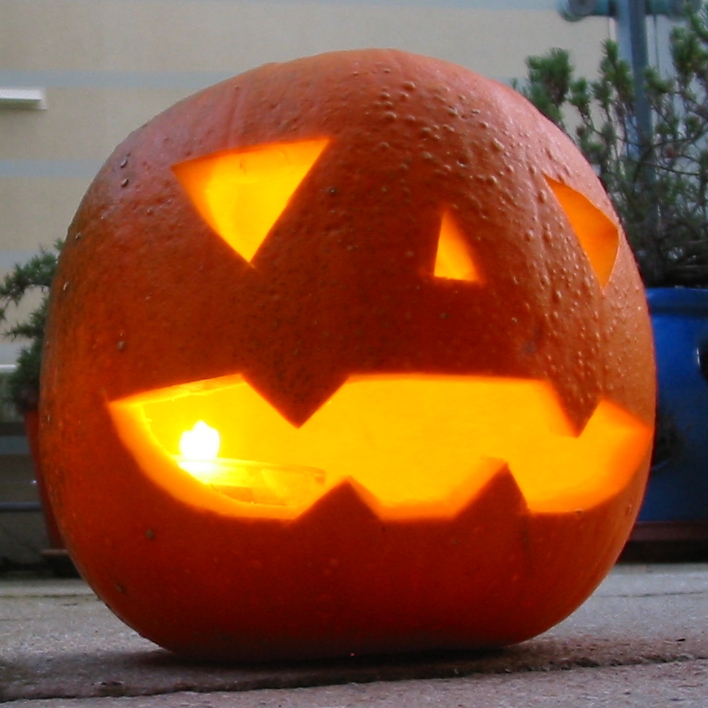
The legend of the jack-o’-lantern has a few different meanings. Some sources say the Celtic people used hollowed-out turnips to carve frightening faces and put a candle in to keep harmful spirits away from their homes.iii Other tales say it was meant to act like a lamp to guide their dead ancestors to the meal left out for them.iv The legend of “Jack of the Lantern” has it that a man named Jack tried to outsmart the devil through practical jokes. The devil punished him for it by making him carry around a lit lantern the rest of his life, meant as a warning for others not to offend the devil.v
Roman Influence
When Rome conquered Celtic territory and ruled for four centuries
(43-410 AD), aspects of Roman paganism became fused with the Celtic
tradition of Samhain. For example, the Romans had two similar festivals
themselves—Feralia, a day in late October where Romans commemorated the
passing of the dead, and Pomona, a Roman goddess of fruit and trees,
from which the Halloween tradition of bobbing for apples likely derives.ii
Etymology
So if the Celtic festival of Samhain foreshadows Halloween, how did we
come to call Halloween “Halloween”? Halloween literally means “the eve
of All Hallows’ or All Saints’, which had to do with the Christian
Church. On May 13, 609 A.D., Pope Boniface IV re-consecrated the
Pantheon in Rome and renamed it “Church of St. Mary and the Martyrs.”
This day established the anniversary of remembering the Church’s
martyrs. In the 9th century, Pope Gregory III dedicated this day to all
the saints (hence the name All-hallows or “All Saints Day”) and moved it
from May to November 1—directly after the Celtic pagan festival of
Samhain. The night before (October 31) became “All Hallow’s Eve” and
eventually “Halloween” – a contraction of the phrase.
Christian Influence
The fusing of religious celebrations that occurred between the Celtic
and Roman peoples similarly occurred between the Celts and Christians
when Christianity began spreading into Celtic lands. Travis Allen
describes why this intermixing of holidays occurred and its aftermath:
As Christianity moved through Europe it collided with indigenous pagan
cultures and confronted established customs. Pagan holidays and
festivals were so entrenched that new converts found them to be a
stumbling block to their faith. To deal with the problem, the organized
church would commonly move a Christian holiday to a spot on the calendar
that would directly challenge a pagan holiday. The intent was to
counter pagan influences and provide a Christian alternative. But most
often the church only succeeded in ‘Christianizing’ a pagan ritual—the
ritual was still pagan, but mixed with Christian symbolism. That’s what
happened to All Saints Eve—it was the original Halloween alternative!vi
In this sense, Samhain was absorbed into Halloween. The same is true of other “Christian” holidays like Christmas and Easter,
which all had pagan origins. Halloween eventually made its way to North
America around the second half of the 19th century when a flood of
Irish immigrants came to the New World after the potato famine in 1846
and brought their traditions with them. Certain Samhain festivities
prevailed like costumes, trick-or-treating, candy, and bobbing for
apples. Hollywood has added its own imagery to further enhance the scare-factor and spiritual darkness of this night.
Wiccans and Halloween

Samhain is also connected to modern-day Wicca – an old English word for
witch. This religion is an offshoot of the ancient Celtic witchcraft of
Wales, Scotland and Ireland. Samhain was one of the more important
sabbats or seasonal holidays of the year that witches held sacred.
Celtic priests believed that witches ride on broomsticks this night and
can change themselves into black cats—hence two popular symbols of
Halloween that continue today.
According to one article, “Canadian Wiccans would like to see Halloween
recognized as a day of special pagan religious significance.”vii
Many Wiccans claim this holiday as their day, taking part in activities
such as ritual purification, divination, and contact with dead
ancestors. Vampires, witches, ghosts, goblins, and other such morbid
costumes fill the streets on Halloween night. Haunted houses are
decorated with violent imagery showing blood-stained hands, faces, and
decapitated bodies. This holiday that has been around since ancient
times increasingly focuses on the perverse, the gothic, and the occult.
Reformation Day
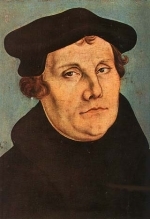
Instead
of celebrating a pagan festival shrouded in superstitions, darkness,
and occult imagery, let’s focus on the light that this day
represents—the light of God’s Word revealed to each and every person
directly through the Scriptures and not through an institution, and
let’s look for opportunities to spread this message to others on October
31 in keeping with the legacy of the Reformers.
i. Vance Ferrell, The Real Story Behind Christmas, Easter, and Halloween. (Altamont, TN: Harvestime Books, 2003): 66.
ii. Travis Allen, "Christians and Halloween.”
iii. Ellen Feldman, "Halloween." American Heritage (52.7: 2001).
iv. "The History of Halloween." Sceptic (7.3: 1999).
v. Vance Ferrell, op. cit., p. 66.
vi. Travis Allen, op. cit.
vii. Terry O'Neill, "Pagans and Pumpkins: Christians recoil at the ghoulisness of Halloween, while Wiccans work to clean it up." Report News Magazine (Oct 25, 1999): 62-63.
AD
Subscribe to:
Posts (Atom)