Showing posts with label Toxins. Show all posts

Tuesday, January 21, 2020

The Hidden Uses of 5G Technology

The Hidden Military Uses of 5G Technology
Walking Times December 23, 2019
At the London Summit, the 29 member countries of NATO agreed to “guarantee the security of our communications, including 5G”. Why is this fifth generation of mobile data transmission so important for NATO?
While the earlier technologies were perfected to create ever more advanced smartphones, 5G is designed not only to improve their performance, but mainly to link digital systems which need enormous quantities of data in order to work automatically. The most important 5G applications will not be intended for civil use, but for the military domain.

The possibilities offered by this new technology are explained by the Defense Applications of 5G Network Technology, published by the Defense Science Board, a federal committee which provides scientific advice for the Pentagon –
The emergence of 5G technology, now commercially available, offers the Department of Defense the opportunity to take advantage, at minimal cost, of the benefits of this system for its own operational requirements.
In other words, the 5G commercial network, built and activated by private companies, will be used by the US armed forces at a much lower expenditure than that necessary if the network were to be set up with an exclusively military goal. Military experts foresee that the 5G system will play an essential role for the use of hypersonic weapons – missiles, including those bearing nuclear warheads, which travel at a speed superior to Mach 5 (five times the speed of sound). In order to guide them on variable trajectories, changing direction in a fraction of a second to avoid interceptor missiles, it is necessary to gather, elaborate and transmit enormous quantities of data in a very short time. The same thing is necessary to activate defences in case of an attack with this type of weapon – since there is not enough time to take such decisions, the only possibility is to rely on 5G automatic systems.
This new technology will also play a key role in the battle network. With the capability of simultaneously linking millions of transceivers within a defined area, it will enable military personnel – departments and individuals – to transmit to one another, almost in real-time, maps, photos and other information about the operation under way.
5G will also be extremely important for the secret services and special forces. It will enable control and espionage systems which are far more efficient than those we use today. It will improve the lethality of killer drones and war robots by giving them the capacity of identifying, following and targeting people on the basis of facial recognition and other characteristics. The 5G network, as a weapon of high-tech capacity, will also become the target for cyber-attacks and war actions carried out with new generation weapons.
As well as the United States, this technology is under development by China and other countries. The international disagreement concerning 5G is therefore not only commercial. The military implications of 5G are almost entirely ignored, because the critics of this technology, including many scientists, are concentrating their attention on its toxic affects for health and the environment, due to exposure to very low-frequency electromagnetic fields. This engagement is of course of the greatest importance, but must be linked to research on the military use of this  technology, financed indirectly by ordinary users. One of its greatest attractions, which favours the dissemination of 5G smartphones, will be the possibility of participating, by subscription, in war games of impressive realism in direct contact with players from all over the world. In this way, without realising it, the players will be financing the preparation for war – but this time it will be a real war.

Saturday, January 26, 2019

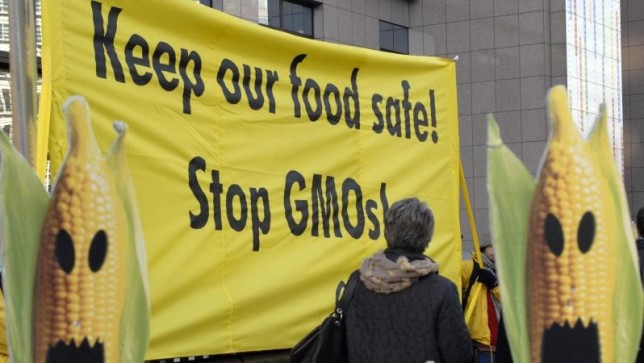
DNA from GM foods can survive harsh processing and digestive conditions according to review

Sustainable Pulse  Jan 18 2019
An international group of toxicologists from the UK, Russia, the Republic of Korea and Greece have published a review of research papers on the fate of the DNA derived from genetically modified food and feed entering the human body and animals. The article has been published in the prestigious journal Food and Chemical Toxicology.

According to the review data, the DNA from GM foods can survive harsh processing and digestive conditions. The authors stated that there is strong evidence that plant-food-miRNAs can survive digestion, enter the body and affect gene expression patterns.

They also added that there is limited evidence of food-born DNA integrating into the genome of the consumer and of horizontal transfer of GM crop DNA into gut bacteria.

“We are only talking about the limited pieces of evidence of this process, because this area has been insufficiently studied. Although we have not found evidence of any effect of DNA of GM products on the human genome, we can safely say that micro-ribonucleic acid (one of the main molecules in cells of living organisms, in addition to DNA and proteins) of the plant food treated with insecticides and antiviral sprays, enters the body of its consumers and can affect genetic processes. This needs exploring further,” commented one of the review co-authors Dr. Muhammad Amjad Nawaz, a visiting scientist at the “Nanotechnology” Research and Education Center (REC) operating at the Far Eastern Federal University (FEFU).

In the review, the scientists examined the mechanisms by which foreign DNA can survive during digestion and penetrate into the cells of the body of those who eat GM foods. In particular, the researchers are interested in the region of the gastrointestinal tract as the hot spot for horizontal gene transfer of GM food DNA into gut bacteria. Such a transfer could potentially lead to dysbiosis and ill-health, as well as subsequent mutations.

As of 2016, the global production of genetically modified crops for food and feed was 185.1 million hectares. With such production volumes, more independent research on the potential effects of genetically modified products on human and animal health is vital.

Tuesday, April 10, 2018

A California superior court judge has ruled that all coffee companies, including global giant Starbucks, must use cancer warning labels on products

Starbucks & co ordered to serve coffee in California with cancer warning
RT  31 Mar, 2018
A California superior court judge has ruled that all coffee companies, including global giant Starbucks, must use cancer warning labels on products. A discussion on fines is ongoing, but they could amount to $2,500 per customer.

Judge Elihu Berle ruled that “defendants failed to satisfy their burden of proving... that consumption of coffee confers a benefit to human health.” The Council for Education and Research on Toxics (CERT), a non-profit group, sued Starbucks and about 90 other companies under a state law that requires warnings on a wide range of chemicals that can cause cancer or birth defects.

The case has been developing for eight years and is still not over. A third phase of the trial will determine the amount of penalties that companies will have to pay. The fines may reach up to $2,500 for clients who have frequently visited Starbucks for the past eight years.

The coffee industry tried to defend its case, claiming that coffee has long been considered a healthy product. “Coffee has been shown, over and over again, to be a healthy beverage,” William Murray, president and CEO of the National Coffee Association, said.

In 2010, the California-based CERT claimed that the coffee served at Starbucks contained high levels of acrylamide. According to the group, the threat came from a chemical compound produced in the process of roasting coffee beans. That substance was said to be noxious and carcinogenic.
The coffee industry insisted its products wouldn’t have the same taste if the beans weren’t roasted at high temperatures. It said that the chemical was present at harmless levels and shouldn’t cause any concern, but failed to demonstrate compelling evidence.

“While [the] plaintiff offered evidence that consumption of coffee increases the risk of harm to the fetus, to infants, to children and to adults, defendants’ medical and epidemiology experts testified that they had no opinion on causation,” Judge Berle said.

Many coffee companies have already agreed to post warnings about acrylamide. However, many of those warnings were almost invisible to their customers due to placement below serving counters. Starbucks claimed that labelling its cups with cancer warnings would be misleading and alarming to consumers, as the beverage has always been largely considered to be a healthy product.

The Safe Drinking Water and Toxic Enforcement Act, better known as California's Proposition 65, the same provision that condemned the coffee industry, insists that signs warning residents about the risk of cancer should be placed everywhere. Even at Disneyland.

Saturday, January 20, 2018

Monsanto Poisoning Indians with Arsenic, new scientific study

Seed Freedom January 8, 2018
New Delhi, January 8, 2018: A shocking discovery from the French scientific group CRIGEN led by world renowned toxicology and biosafety scientist Dr Gilles-Eric Seralini reveals that Monsanto’s Round up (Glyphosate based herbicide) and other types of Glyphosate based herbicides(GHB) contain universally banned heavy metals like arsenic, etc., in the formulant which are a thousand times more harmful than the active compound Glyphosate(G) itself. G is a herbicide and a “green killer” which is used to extensively all over the world including India. Worldwide, 9.4 million tons of the chemical has been sprayed onto field.

Saturday, September 30, 2017

Why aluminum is a problem, biologically speaking


Below is a great lecture given by Dr. Chris Exley, who is one of the worlds’ leading experts in the subject of aluminum toxicity, and, as he points out in his lecture (2nd video below), which was spoken at a vaccine safety conference, aluminum has absolutely no place in Earth’s biota. Sure, a portion of the Earth’s crust is made from it, but it does a great job of keeping it (aluminum) completely separate from living things, it cannot penetrate up to where life thrives, until we started using it.  Aluminum has no place in the exterior world, biochemically speaking.
Since this lecture was given, multiple studies have surfaced showing that aluminum, from vaccines in particular, does not come into the same methods of excretion as it does when we ingest it from other sources. Injectable aluminum is different because it’s used as an adjuvant, which means “helper” and without it the vaccines are pretty much useless. Injectable aluminum is meant to stick around, and eventually it finds its way to the brain.
Here’s a great video of scientist Dr. Christopher Shaw from UBC explaining why aluminum is a problem, biologically speaking.
This is all information that make one wonder, what is going on here, and why are aluminum containing vaccines constantly marketed as completely safe? As we know, a causative role has already been established in patients who have a  macrophagic myofasciitis (MMF) lesion in patients who have myalgic encephalomyelitis, or brain inflammation. Myalgia, arthralgia, chronic fatigue, cognitive dysfunction, dysautonomia, and autoimmunity have been temporally linked to aluminium adjuvant-containing vaccine administration (Gherardi and Authier, 2003; Authier et al., 2003; Exley et al., 2009; Rosenblum et al., 2011; Santiago et al., 2014; Brinth et al., 2015; Palmieri et al., 2016).
Another fairly recent study (2015) points out:
“Evidence that aluminum-coated particles phagocytozed in the injected muscle and its draining lymph notes can disseminate within phagocytes throughout the body and slowly accumulate in the brain further suggests that alum safety should be evaluated in the long term.” (source)

Thursday, August 31, 2017

Defending Against the Next Generation of Bioweapons

When you or your kids are getting vaccinated, you must be pretty sure who injects what in your bloodstream and for what reason.
29.08.2017 Author: Ulson Gunnar
Chemical and biological weapons conjure in the mind terror and have been repeatedly cited as a pretext for both acts of military aggression and even entire wars. Scenes of soldiers and civilians choking on toxic chemicals or covered in boils after exposure have been the stuff of nightmares both geopolitically and in fiction.
While current chemical and biological weapons are far more limited than movies and politically-motivated narratives suggest, emerging biotechnology is making possible a new generation of biological weapons that may actually live up to the terror current weapons inspire.
A US policy think tank as early as 2000 in a publication titled, “Rebuilding America’s Defense” (PDF), a virtual blueprint of the plans and means the US sought to utilize toward achieving global hegemony, would make particular note of bioweapons and the use of genotype-specific weapons, stating:
Although it may take several decades for the process of transformation to unfold, in time, the art of warfare on air, land, and sea will be vastly different than it is today, and “combat” likely will take place in new dimensions: in space, “cyber-space,” and perhaps the world of microbes… 
…advanced forms of biological warfare that can “target” specific genotypes may transform biological warfare from the realm of terror to a politically useful tool.
In 2004, the Guardian in an article titled, “Could you make a genetically targeted weapon?,” would warn:
The prospect that rogue scientists could develop bioweapons designed to target certain ethnic groups based on their genetic differences was raised this week in a report by the British Medical Association (BMA).
The report, Biotechnology, Weapons and Humanity II, warns that construction of genetic weapons “is now approaching reality”. Such “genetic bombs” could contain anthrax or bubonic plague tailored to activate only when genes indicated the infected person was from a particular group.
The topic of genotype-specific bioweapons has held interest across the West for  decades.  The Apartheid regime in South Africa attempted to produce biological weapons to induce infertility among the nation’s black population.
PBS Frontline’s article, “What Happened in South Africa?” would recount:
In 1998 South Africa’s Truth and Reconciliation Commission held hearings investigating activities of the apartheid-era government. Toward the end of the hearings, the Commission looked into the apartheid regime’s Chemical and Biological Warfare (CBW) program and allegations that it developed a sterility vaccine to use on black South Africans, employed toxic and chemical poison weapons for political asssassination, and in the late 1970s provided anthrax and cholera to Rhodesian troops for use against guerrilla rebels in their war to overthrow Rhodesia’s white minority rule.
While South Africa’s entire CBW program was abhorrent, what is particularly frightening is the use of South Africa’s national vaccination program as a vector for infecting black women with viruses meant to sterilize them. Now that vaccination programs are being pushed globally, there lies the danger that such weapons could be used against entire regions of the planet.
PBS would elaborate further on the CBW program, stating that the South African government:
Developed lethal chemical and biological weapons that targeted ANC [African National Congress] political leaders and their supporters as well as populations living in the black townships. These weapons included an infertility toxin to secretly sterilize the black population; skin-absorbing poisons that could be applied to the clothing of targets; and poison concealed in products such as chocolates and cigarettes.   
PNAC’s dream of genotype specific bioweapons then, is not some far-off science fiction future, it is something that has been pursued in earnest for decades and apparently by interests aligned to the West, not enemies of it.           More

Monday, August 28, 2017

Research group finds 267 contaminants in tap water in the U.S.

drinking tap water Anna Hunt,  August 9, 2017


Research conducted by the Environmental Working Group (EWG) revealed that hundreds of contaminants are present in U.S. tap water. To be exact, EWG revealed that 267 out of 500 contaminants were detected during tests conducted by more than 48,000 utilities companies across 50 states. This shows that no matter where you live in the U.S., your tap water is very likely contaminated.
Of the 267 contaminants found,
  • 93 were linked to an increased risk of cancer,
  • 78 were associated with brain and nervous system damage,
  • 63 were connected to developmental harm in children or fetuses,
  • 38 were contaminants that could cause fertility issues; and
  • 45 were endocrine disruptors.
Here are a couple more important details about EWG’s findings:
  • Over 80% of water systems had known or likely carcinogens at levels that exceeded health guidelines
  • More than 19,000 public water system had lead levels considered potentially-harmful for formula-fed babies, at above 3.8 parts per billion
EWG publishes a public database where you can enter your ZIP code to see what’s in your tap water. Just follow this link. You can gather information about which contaminants were detected, which are present in levels above health guidelines, and what to do to filter them out.
In the U.S., the Safe Drinking Water Act of 1974 sets the national standards for drinking water. However, it’s been more than 20 years since the Environmental Protection Agency added any new contaminants or chemicals to the list of regulated pollutants defined under the act. Nneka Leiba, director of the Healthy Living Science Program for the EWG, stated:
“Most people turn on their tap water and think: It’s clear, I live in America, we have these laws, I’m being protected. What people don’t realize is that there have been no additions to the list of regulated chemicals for drinking water since 1996.”
The main concern isn’t so much that you’ll get sick when drinking tap water. What the EWG worries about is the effect of long-term exposure, such as drinking eight glasses per day over a lifetime.
“Legal doesn’t necessarily mean safe when it comes to drinking water,” added Leiba.

Bottled Water Is No Better Alternative

If you’re currently drinking tap water, you are most likely putting contaminants in your body.
Many people think that drinking bottled water is an acceptable alternative. The EWG doesn’t agree. The group analyzed bottled water products. It published the analysis in its Bottled Water Scorecard. It concluded the following:
The bottled water industry routinely fails to provide information to consumers about the water’s specific geographic source, purification methods and the results of purity testing.
So, it seems bottled water may be just as bad, but we won’t ever really know. Why? Because the government doesn’t require bottled water producers to disclose what toxins contaminate their products. In addition, bottles leach plastics chemicals into the water over time, especially if you store the bottles in hotter temperatures. Finally, bottled water costs up to 1,900 times more than tap water.     More

Monday, May 1, 2017

What modern wheat is doing to your body

I am sure that the majority of you are well aware that processed, white, enriched wheat products contain zero nutritional value and are actually very bad for your health. What many don’t understand, however, is that products made with or containing whole wheat are actually no better for your health. In fact, all modern wheat will compromise health… end of story.

Our hunter-gatherer ancestors collected all they could from the ground for food including insects, berries, nuts, etc. In their gathering, they found that the animals were eating grass and they became curious. They broke it down and somehow incorporated wild wheat into their diet. This grass was called Einkorn and had only 14 chromosomes.

Wheat back then was different

Plants can mate with each other and combine chromosomes. At some point in time, the wild grass Einkorn mated with another type of wild grass and the offspring Emmer ended up with 28 chromosomes — this is the wheat that is mentioned in the Bible. However, this is not the wheat of today, that is for sure.
In the Middle Ages, bread was a staple and very common food. Emmer mated with another grass which contributed more chromosomes to result in Spelt, Triticum landraces with 42 chromosomes.
In 1960, when the threat of world population explosion was imminent, there was an investment made in agricultural research where lots of money and time were devoted to new ways to increase wheat yield. At this time, different strains of wheat were crossed over and over again to select certain characteristics and to introduce unique genes.

Scientists introduce high-yield strain of wheat

The government says to eat more wheat, despite health effects.
The resulting wheat yielded up to 10 times more per acre. When this wheat was introduced to many third world countries, famine was greatly reduced within one year. Dr. Norman Borlaug received the Nobel Peace prize for his work creating this high yield strain of wheat.
Because this wheat is so prolific, it has taken over almost all of the world’s wheat supply. There are also about a million acres of what is known as Clearfield Wheat being grown in the Pacific Northwest. It is a semi-dwarf strain of wheat that has had its seed and embryos exposed to a chemical, sodium azide, which is an industrial toxin.

Toxic chemicals in wheat

In fact, in the few cases of human ingestion, the Poison Control Center has warned people not to offer CPR because the person offering the CPR may also ingest the chemical and die. In addition, if the victim vomits, people are told not to put the vomit in the sink because it might explode. That is how dangerous this chemical really is.
The makers of Clearfield wheat claim that their product is a result of “enhanced, traditional plant breeding techniques,” making a distinction between genetically modified wheat. However, although no gene splicing techniques were used, many other methods were, such as the purposeful induction of mutations using chemicals, high dose x-ray and radiation techniques to induce mutations coupled with cross breeding. These methods are far worse than genetic modification, according to Dr. William Davis, author of the book “Wheat Belly.”

The government says to eat more wheat…

The government tells us that we need to eat more grain, meaning more wheat. Over 90 percent of all grain consumed is wheat. In the food pyramid, we are advised to eat 60 percent of calories from wheat. The new food plate design also tells us to get at least 1/4 of our calories from wheat.
Here is why we need to stop listening to what our government is telling us about the food pyramid:

Modern wheat makes you hungry

Modern wheat is designed to keep you hungry.
It is estimated that up to 10 percent of the population has a sensitivity to the protein in wheat known as gluten (some estimate it may be higher, closer to 30 percent). However, the other 90 percent of people who consume wheat really should not be eating it either.
Here’s why: Gluten is a two-part protein that is comprised of gliadin plus glutenin. Glutenin has a unique elasticity that gives us the ability to stretch our pizza or bread dough — and even spin it over our heads if we are inclined to do so. Gliadin, the other part of the gluten protein, was heavily studied in the 1970s by psychiatrists. They found that if they took all of the wheat out of the diet of their patients with schizophrenia, they improved markedly.
When they put the wheat back, they found that the condition worsened. So the question asked was what was in bread that led schizophrenics to hallucinate? It was traced back to the gliadin protein which, when ingested, enters the brain and binds to opiate receptors where it stimulates appetite.
In addition, gliadin, acting like an opiate in the brain, has other disastrous effects. For example, people with ADHD become hypersensitive and have behavioral outbursts, people with schizophrenia have major hallucinations, people who are bipolar become increasingly manic and those with eating disorders, such as binge eating, will develop food obsessions.
By 1985, everything at the supermarket with wheat in it came from the prolific semi-dwarf strain or a spinoff. Interestingly enough, if you compare what happened to America’s weight prior to and after 1985 it is evident that there was an obesity explosion. It is still happening today, and it all started after the “new” wheat was introduced.
A huge increase in the number of diabetics also followed the introduction of this new wheat. Although cause and effect cannot be proven scientifically, it seems evident that we have all been fed an appetite stimulant.

Modern wheat raises blood sugar

Just two slices of whole wheat bread raises blood sugar higher than six teaspoons of table sugar. How does this happen when whole wheat is considered a complex carbohydrate that we are encouraged to eat more of? The complex carbohydrate of wheat is called amylopectin-A, which is highly sensitive to amylase, which we have in our stomach and mouth. This makes it very easy to digest and raises blood sugar rapidly. Wheat for breakfast, wheat for lunch and wheat for snacks results in visceral fat that encircles the intestines, heart, liver and kidneys. Repetitive high blood sugar results in what Dr. Davis calls a “wheat belly.”

Modern wheat causes inflammation

When bacteria or a virus enters the body our immune system responds in many ways. Plants do not have the same type of immune system, but they have lectins which are proteins that are toxic to mold, fungi and insects. Some lectins are benign to humans, like the lectin found in spinach, while some are very toxic. The lectin in wheat (wheat germ agglutinin) is a four-part complex molecule.
When this lectin is isolated and given to rats in very small amounts, it destroys the small intestine. Average Americans consume about 10 to 20 milligrams of the wheat lectin in a day — that’s enough to do significant damage.
When we consume wheat, the gliadin protein unlocks the normal intestinal barrier and allows foreign substances to enter the bloodstream, such as wheat lectin. This is why people who eat wheat have autoimmune and inflammatory distress such as joint inflammation, bowel inflammation, acid reflux, inflammation of the brain, inflammation of the airways and more. In fact, there is not one system that escapes the inflammatory assault of wheat.

Good things happen when you remove wheat

First of all, taking wheat out of the diet is not as easy as might think; it is in a lot of foods — even ones we would not associate with having wheat. For example, wheat is in Twizzlers, Campbell’s Tomato Soup, taco seasoning, frozen dinners, cereals, salad dressings, granola bars and a lot more. Why is there wheat in so many products?
In 1960, we could find wheat only in things where we would expect to find wheat, like breads, pastas and pancake mix. Today, it is an entirely different story. Wheat is in all kinds of foods where we would not expect to find it.
Is it possible that food manufacturers know a little something about wheat as an appetite stimulant (on top of the fact that is it heavily subsidized by our government and therefore artificially inexpensive)?

What happens when you stop eating wheat

Removing wheat from your diet may help you lose weight.
Dr. Davis tells us that taking wheat out of our diets will result in the following:
  • Dramatic weight loss
  • Reduced appetite
  • Lowered blood sugar
  • Reduced joint pain
  • Reduced inflammation
  • Improvement in cognitive function
  • Reduced anxiety
  • Reduced food obsessions
  • Lowered blood pressure
  • Reduced triglycerides
  • Increased energy
  • Improved sleep

What about gluten-free?

Going gluten-free is a good thing because you avoid problems with gluten and gliadin, wheat germ agglutinin and amylopectin A. However, gluten-free foods contain other things, mainly potato starch, rice starch, tapioca starch and corn starch. These are the only foods that raise blood sugar higher than the amylopectin A found in whole wheat.
Warning: If you choose to be gluten-free, avoid the commercial products. Do this at least until you educate yourself on the differences between the various gluten-free products on the market.

What can I eat?

Eat real, single-ingredient foods as much as possible. You can eat nuts, healthy fat, organic fruits and vegetables, grass-fed beef, organic chicken and turkey, wild caught salmon, cheese, organic eggs, coconuts, avocados, flaxseeds, olive and hemp oils as well as a variety of other foods that are in their natural state. The more refined a food is, the more likely it contains wheat and other byproducts of the refinement process. They are just too dangerous to your health, so choose food wisely.
— Susan Patterson                  Alternative Daily

Wednesday, March 9, 2016

7 Toxins Harming Your Brain


brain toxins

By Dr. Edward F. Group
Guest Writer for Wake Up World
Some of the most common substances found in everyday life are harming our cognitive function right now. Along with pesticides, you have substances like BPA, phthalates, mercury, lead, benzene, and flame retardants that are affecting you, even if you don’t realize it. Hidden in your home and office, you are exposed to toxic chemicals on a daily basis, and your brain is taking the brunt of it.

7 Toxins Harming Your Brain

Your brain interacts with every aspect of your body, giving directions to cells and the nervous system. It is essential for supporting good mood and clear thinking, helping to improve your overall quality of life. Here are seven of the most harmful and pervasive toxins you should look out for in order to support brain health.

1. BPA

BPA is a known endocrine disruptor that interferes with how your body regulates hormones. Not only does it affect reproductive health, but it can also affect brain function, learning abilities, and how your memory works. [1] And it’s not just plastic that contains BPA; items that are BPA free aren’t always much better. The substitutes used for BPA (Bisphenol F and S or “BPF” and “BPS”) have been linked to behavioral issues, as well. [2]

2. Phthalates

Phthalates are present in more everyday things than you might think. Similarly to BPA, phthalates are found in many products that contain plastic and things like household cleaners, cosmetics, personal hygiene products, and even food. There is a wide variety of phthalates, but the most notable versions are BBzP (butyl benzyl phthalate), DnBP (dibutyl phthalate), and DEHB (di-2-ethyl hexyl phthalate).
Phthalates have been linked to ADHD, asthma, diabetes, neurodevelopmental problems, and more. [3] California is spearheading the move against phthalates by asking that four specific types must be listed on labels (many do not have to be listed at all). Even big corporations like Target and WalMart have promised to reduce the amount of or even eradicate the use of harmful toxins like phthalates in products they stock.

3. Mercury

I’ve covered the dangers of mercury extensively in other articles. The base reason is that it has been linked to kidney problems, respiratory failure, and other neuromuscular complications; however, the elemental form of mercury is the most toxic. [4] Due to this knowledge, many people have switched off from thermometers and other products containing mercury.

4. Lead

Lead poisoning isn’t a problem of yesterday, it’s a problem today — a huge problem. The biggest issue is that lead affects so many parts of the body in such harmful ways. Not only can it affect organs and tissues, but it can affect whole systems of the body like the digestive, reproductive, and nervous systems. You absolutely need to take conscious steps to reduce your exposure to lead, including making your home safer for your children.

5. Benzene

Benzene is found in fuel and motor vehicle exhaust, but can also be found in detergents and pharmaceuticals. [5] Why is something so problematic used so frequently? Benzene is even classified as carcinogen, [6] it’s highly flammable, and benzene poisoning can pass from mother to fetus. The best way to reduce your exposure to benzene is to distance yourself from gasoline or waste plants and to avoid cigarette smoke at all costs. As quoted by the CDC, “Average smokers take in about 10 times more benzene than nonsmokers each day.” [7] Just one more reason not to smoke!

6. Flame Retardants

Normally, something that helps to quell a fire is heralded as useful and sometimes heroic. However, a disturbing discovery was made by a researcher from Texas. The discovery showed that flame retardants were found in the breast milk of American women. [8] How could this happen? It turns out that flame retardants can be found virtually anywhere in food, furniture, and building materials. We’re around these items every day and breathe in the toxins that emanate throughout the day.
Attributed to the spread of human civilization, it’s unbelievable just how widespread traces of flame retardant chemicals are. Not even bald eagles are safe. Out of 33 dead eagles tested from 2009 to 2011, every one but two had all four flame retardant components for which scientists were testing. [9] It’s important to educate yourself about flame retardant compounds and make sure they’re not abundant in your home. [10]

7. Pesticides

Mostly everyone is familiar with the negative effects of pesticides, but new developments further strengthen the argument against using pesticides on foods we consume. Perhaps the biggest and most shocking development to come to light is that pesticide exposure is now linked to Parkinson’s disease. [11] The best way to avoid undue exposure to pesticides is to choose organic food!

Protecting Your Brain

Now that you’re a bit more informed about seven toxins you might not have known about before, you can get started on protecting yourself from the harmful effects, both short term and long term. Turmeric shows powerful antioxidant protection for the brain, and it’s often advised to take this in extract form to ensure best results. Eating an organic diet, reducing the use of furniture made with flame retardants, and using glass containers instead of plastic are also helpful steps.
– Dr. Edward F. Group III, DC, NP, DACBN, DCBCN, DABFM
Article References: