Showing posts with label Pioneers. Show all posts

Monday, April 26, 2021

The doctrine contrary to reason and common sense


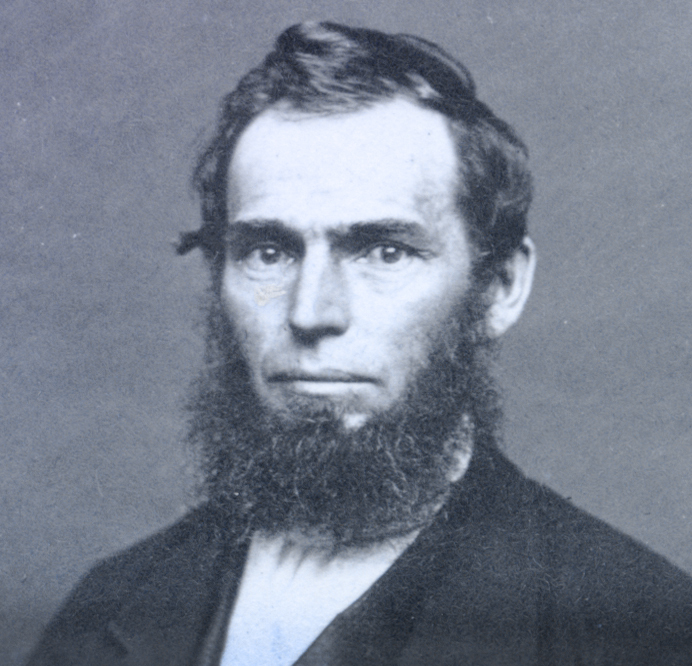
Roswell F. Cottrell - Wikipedia

“That one person is three persons, and that three persons are only one person, is the doctrine which we claim is contrary to reason and common sense. The being and attributes of God are above, beyond, out of reach of my sense and reason, yet I believe them: But the doctrine I object to is contrary, yes, that is the word, to the very sense and reason that God has himself implanted in us. Such a doctrine he does not ask us to believe. A miracle is beyond our comprehension, but we all believe in miracles who believe our own senses. What we see and hear convinces us that there is a power that effected the most wonderful miracle of creation. But our Creator has made it an absurdity to us that one person should be three persons, and three persons but one person; and in his revealed word he has never asked us to believe it. This our friend thinks objectionable.…

“But to hold the doctrine of the Trinity is not so much an evidence of evil intention as of intoxication from that wine of which all the nations have drunk. The fact that this was one of the leading doctrines, if not the very chief, upon which the bishop of Rome was exalted to popedom, does not say much in its favor. This should cause men to investigate it for themselves; as when the spirits of devils working miracles undertake the advocacy of the immortality of the soul. Had I never doubted it before, I would now probe it to the bottom, by that word which modern Spiritualism sets at nought.…

“Revelation goes beyond us; but in no instance does it go contrary to right reason and common sense. God has not claimed, as the popes have, that he could “make justice of injustice,” nor has he, after teaching us to count, told us that there is no difference between the singular and plural numbers. Let us believe all he has revealed, and add nothing to it.” —R. F. Cottrell, July 6, 1869, Review & Herald

Friday, September 11, 2020

The Letter by J. S. Washburn


"The doctrine of the Trinity is a cruel heathen monstrosity, removing Jesus from his true position of Divine Savior and Mediator. It is true we can not measure or define divinity. It is beyond our finite understanding, yet on this subject of the personality of God the Bible is very simple and plain. The Father, the Ancient of Days, is from eternity. Jesus was begotten of the Father. Jesus speaking through the Psalmist says: "The Lord (Jehovah) has said unto me, Thou art my son, this day have I begotten thee." - Psalm 2:7. Again in Proverbs (where Jesus is spoken of under the title of wisdom, See 1 Cor. 1:24), we read: "The Lord (Jehovah) possessed me in the beginning of his way". - v. 22 

"Before the mountains were settled, before the hills was I brought forth." - v. 24 


The Son says he was brought forth, begotten, born of His Father (Jehovah). … 


Satan has taken some heathen conception of a three-headed monstrosity, and with deliberate intention to cast contempt upon divinity, has woven it into Romanism as our glorious God, an impossible, absurd invention. This monstrous doctrine transplanted from heathenism into the Roman Papal Church is seeking to intrude its evil presence into the teachings of the Third Angel's Message. … And the fact that Christ is not the mediator in the Roman Church demonstrates that the Trinity destroys the truth that Christ is the one, the only mediator. The so-called Christian Church, the Papacy, that originated the doctrine of the Trinity, does not recognize him as the only mediator but substitutes a multitude of ghosts of dead men and women as mediators. If you hold the Trinity doctrine, in reality, Christ is no longer your mediator. … 


Seventh-day Adventists claim to take the word of God as supreme authority and to have "come out of Babylon", to have renounced forever the vain traditions of Rome. If we should go back to the immortality of the soul, purgatory, eternal torment and the Sunday Sabbath, would that be anything less than apostasy? If, however, we leap over all these minor, secondary doctrines and accept and teach the very central root, doctrine of Romanism, the Trinity, and teach that the son of God did not die, even though our words seem to be spiritual, is this anything else or anything less than apostasy, and the very Omega of apostasy?… 


However kindly or beautiful or apparently profound his sermons or articles may be, when a man has arrived at the place where he teaches the heathen Catholic doctrine of the Trinity, and denies that the Son of God died for us, is he a true Seventh-day Adventist? Is he even a true preacher of the Gospel? And when many regard him as a great teacher and accept his unscriptural theories, absolutely contrary to the Spirit of Prophecy, it is time that the watchmen should sound a note of warning. … [Portions of a letter written by J. S. Washburn in 1939. This letter was liked by a conference president so much that he distributed it to 32 of his ministers.]

Friday, February 28, 2020

The first step of apostasy is to get up a creed

Image result for 28 fundamentalsBRO. LOUGHBOROUGH. It may with equal propriety be said that we are patterning after the churches in building meeting-houses. We call the churches Babylon, not because they covenant together to obey God. I am still of the opinion I advanced sometime since through the Review: The first step of apostasy is to get up a creed, telling us what we shall believe. The second is, to make that creed a test of fellowship. The third is to try members by that creed. The fourth to denounce as heretics those who do not believe that creed. And, fifth, to commence persecution against such. I plead that we are not patterning after the churches in any unwarrantable sense, in the step propose.   Review & Herald, October 8, 1861 p. 149

Monday, March 11, 2019

Stand, see, and ask for the old paths

Related image
Thus saith the Lord of hosts, They shall throughly glean the remnant of Israel as a vine: turn back thine hand as a grapegatherer into the baskets.
10 To whom shall I speak, and give warning, that they may hear? behold, their ear is uncircumcised, and they cannot hearken: behold, the word of the Lord is unto them a reproach; they have no delight in it.

11 Therefore I am full of the fury of the Lord; I am weary with holding in: I will pour it out upon the children abroad, and upon the assembly of young men together: for even the husband with the wife shall be taken, the aged with him that is full of days.

12 And their houses shall be turned unto others, with their fields and wives together: for I will stretch out my hand upon the inhabitants of the land, saith the Lord.

13 For from the least of them even unto the greatest of them every one is given to covetousness; and from the prophet even unto the priest every one dealeth falsely.

14 They have healed also the hurt of the daughter of my people slightly, saying, Peace, peace; when there is no peace.

15 Were they ashamed when they had committed abomination? nay, they were not at all ashamed, neither could they blush: therefore they shall fall among them that fall: at the time that I visit them they shall be cast down, saith the Lord.

16 Thus saith the Lord, Stand ye in the ways, and see, and ask for the old paths, where is the good way, and walk therein, and ye shall find rest for your souls. But they said, We will not walk therein.

17 Also I set watchmen over you, saying, Hearken to the sound of the trumpet. But they said, We will not hearken.      Jeremiah 6:6-17

Monday, March 4, 2019

Is Christ God?

Image result for E. J. WaggonerThis name was not given to Christ in consequence of some great achievement, but it is His by right of inheritance. Speaking of the power and greatness of Christ, the writer to the Hebrews says that He is made so much better than the angels, because "He hath by inheritance obtained a more excellent name than they." Heb. 1:4. A son always rightfully takes the name of the father; and Christ, as "the only begotten Son of God," has rightfully the same name. A son, also, is, to a greater or less degree, a reproduction of the father; he has to some extent the features and personal characteristics of his father; not perfectly, because there is no perfect reproduction among mankind. But there is no imperfection in God, or in any of His works, and so Christ is the "express image" of the Father's person. Heb. 1:3. As the Son of the self- existent God, He has by nature all the attributes of Deity.
It is true that there are many sons of God, but Christ is the "only begotten Son of God," and therefore the Son of God in a sense in which no other being ever was or ever can be. The angels are sons of God, as was Adam (Job 38:7; Luke 3:38), by creation; Christians are the sons of God by adoption (Rom. 8:14, 15), but Christ is the Son of God by birth. The writer to the Hebrews further shows that the position of the Son of God is not one to which Christ has been elevated, but that it is one which He has by right.” Ellet J. Waggoner,  Christ And His Righteousness, pp. 9-10, 1890 

Sunday, March 3, 2019

Protestants and Catholics are so nearly united in sentiment

Related image
"Protestants and Catholics are so nearly united in sentiment, that it is not difficult to conceive how Protestants may make an image to the Beast. The mass of Protestants believe with Catholics in the Trinity, immortality of the soul, consciousness of the dead, rewards and punishments at death, the endless torture of the wicked, inheritance of the saints beyond the skies, sprinkling for baptism, and the PAGAN SUNDAY for the Sabbath; all of which is contrary to the spirit and letter of the new testament. Surely there is between the mother and daughters, a striking family resemblance."    Merritt E. Cornell, Facts for the Times, p. 76. 1858

The Sunday god

Image result for J. B. Frisbie
"We will make a few extracts, that the reader may see the broad contrast between the God of the Bible brought to light through Sabbath-keeping, and the god in the dark through Sunday-keeping. Catholic Catechism Abridged by the Rt. Rev. John Dubois, Bishop of New York. Page 5. Ques. Where is God? Ans. God is everywhere. Q. Does God see and know all things? A. Yes, he does know and see all things. Q. Has God any body? A. No; God has no body, he is a pure Spirit. Q. Are there more Gods than one? A. No; there is but one God. Q. Are there more persons than one in God? A. Yes; in God there are three persons. Q. Which are they? A. God the Father, God the Son and God the Holy Ghost. Q. Are there not three Gods? A. No; the Father, the Son and the Holy Ghost, are all but one and the same God.

 These ideas well accord with those heathen philosophers.... We should rather mistrust that the Sunday god came from the same source that Sunday-keeping did."   J. B. Frisbie, Review & Herald, March 7, 1854, The Sunday God, p. 50 

Christ and the Father covenanted together

Related image“The rainbow in the clouds is but a symbol of the rainbow which has encircled the throne from eternity. Back in the ages, which finite mind cannot fathom, the Father and Son were alone in the universe. Christ was the first begotten of the Father, and to Him Jehovah made known the divine plan of Creation. The plan of the creation of worlds was unfolded, together with the order of beings which should people them. Angels, as representatives of one order, would be ministers of the God of the universe. The creation of our own little world was included in the deep-laid plans. The fall of Lucifer was foreseen; likewise the possibility of the introduction of sin, which would mar the perfection of the divine handiwork. It was then, in those early councils, that Christ’s heart of love was touched; and the only begotten Son pledged His life to redeem man, should he yield and fall. Father and Son, surrounded by impenetrable glory, clasped hands. ... and the everlasting covenant was made; and henceforth Father and Son, with one mind, worked together to complete the work of creation. Sacrifice of self for the good of others was the foundation of it all.”
 
“Before the creation of our world, “there was war in heaven.” Christ and the Father covenanted together; and Lucifer, the covering cherub, grew jealous because he was not admitted into the eternal councils of the Two who sat upon the throne.” Stephen  Nelson Haskell, The Story of the Seer of Patmos, pp. 93, 94, 217, 1905

Saturday, March 2, 2019

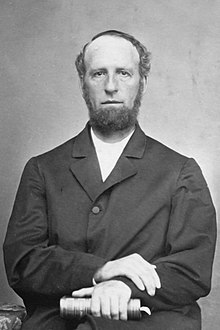
What did James White teach and believe?

Image result for James White pioneer “The greatest fault we can find in the Reformation is, the Reformers stopped reforming. Had they gone on, and onward, till they had left the last vestige of Papacy behind, such as natural immortality, sprinkling, the trinity, and Sunday-keeping, the church would now be free from her unscriptural errors.” James White, Review & Herald, February 7,1856

“Here we might mention the Trinity, which does away the personality of God, and of his Son Jesus Christ, and of sprinkling or pouring instead of being "buried with Christ in baptism," "planted in the likeness of his death:" but we pass from these fables to notice one that is held sacred by nearly all professed Christians, both Catholic and Protestant. It is, The change of the Sabbath of the fourth commandment from the seventh to the first day of the week.” James White, Review & Herald, December 11, 1855

“Beloved, when I gave all diligence to write unto you of the common salvation, it was needful for me to write unto you and exhort you that ye should earnestly contend for THE faith which was once delivered unto the saints...” (Jude 3, 4) ...The exhortation to contend for the faith delivered to the saints, is to us alone. And it is very important for us to know what for and how to contend. In the 4th verse he gives us the reason why we should contend for THE faith, a particular faith; “for there are certain men,” or a certain class who deny the only Lord God and our Lord Jesus Christ. ... The way spiritualizers have disposed of or denied the only Lord God and our Lord Jesus Christ is first using the old unscriptural Trinitarian creed, viz., that Jesus Christ is the eternal God, though they have not one passage to support it, while we have plain scripture testimony in abundance that he is the Son of the eternal God.” James White, The Day Star, January 24, 1846

“Paul affirms of the Son of God that he was in the form of God, and that he was equal with God. 'Who being in the form of God thought it not robbery to be equal with God.' Phil. 2:6. The reason why it is not robbery for the Son to be equal with the Father is the fact that he is equal... The inexplicable Trinity that makes the Godhead three in one and one in three, is bad enough; but that ultra Unitarianism that makes Christ inferior to the Father is worse. Did God say to an inferior, ‘Let us make man in our image’?” James White, Review &Herald, November 29, 1877

“Jesus prayed that his disciples might be one as he was one with his Father. This prayer did not contemplate one disciple with twelve heads, but twelve disciples, made one in object and effort in the cause of their master. Neither are the Father and the Son parts of the "three-one God." They are two distinct beings, yet one in the design and accomplishment of redemption. The redeemed, from the first who shares in the great redemption, to the last, all ascribe the honor, and glory, and praise, of their salvation, to both God and the Lamb. James White, Life incidents, p. 343. 1868

“As fundamental errors, we might class with this counterfeit sabbath other errors which Protestants have brought away from the Catholic church, such as sprinkling for baptism, the trinity, the consciousness of the dead and eternal life in misery. The mass who have held these fundamental errors, have doubtless done it ignorantly; but can it be supposed that the church of Christ will carry along with her these errors till the judgment scenes burst upon the world? We think not. "Here are they [in the period of a message given just before the Son of man takes his place upon the white cloud, Rev.xiv,14] that keep the commandments of God and the faith of Jesus." This class, who live just prior to the second advent, will not be keeping the traditions of men, neither will they be holding fundamental errors relative to the plan of salvation through Jesus Christ. And as the true light shines out upon these subjects, and is rejected by the mass, then condemnation will come upon them. ... Solemn dreadful, swiftly-approaching hour!” James White, Review & Herald, September 12, 1854

“The Father was greater than the Son in that he was First. The Son was equal with the Father in that he had received all things from the Father.” James White, Review & Herald, January 4, 1881


----Catholic Reasons for Keeping Sunday----
1. Because “it is also called Sunday from the old Roman denomination of Dies Solis, the day of the sun, to which it was sacred.” “Sunday was a name given by the heathens to the first day of the week, because it was the day on which they worshiped the sun.”
2. Because it is “in honor of the blessed Virgin Mary.” 3. Because “it is a day dedicated by the apostles to the honor of the most Holy Trinity.” James White,April 4, 1854, Review & Herald, vol. 5, no. 11, page 86.

Let the pioneers speak through the reprinting of their writings

Image result for seventh day adventist pioneers
“God has given me light regarding our periodicals. What is it?—He has said that the dead are to speak. How?—Their works shall follow them. We are to repeat the words of the pioneers in our work, who knew what it cost to search for the truth as for hidden treasure, and who labored to lay the foundation of our work. They moved forward step by step under the influence of the Spirit of God. One by one these pioneers are passing away. The word given me is, Let that which these men have written in the past be reproduced.

“A few are still alive who passed through the experience gained in the establishment of this truth. God has graciously spared their lives to repeat and repeat till the close of their lives, the experience through which they passed even as did John the apostle till the very close of his life. And the standard-bearers who have fallen in death, are to speak through the reprinting of their writings. I am instructed that thus their voices are to be heard. They are to bear their testimony as to what constitutes the truth for this time.”   Counsels to Writers and Editors pp. 28, 32.

Saturday, September 15, 2018

The nonsense Trinity

BRO. WHITE : The following questions I would like to have you give or send, to Bro. Loughborouh for, explanation.
W. W. GILES.
Toted, Ohio.

QUESTION 1.
What serious objection is there to the doctrine of the Trinity?

ANSWER.   There are many objections which we might urge, but on account of our limited space we shall reduce them to the three following :

1. It is contrary to common sense.
2. It is contrary to scripture.
3., Its origin is Pagan and fabulous,.

These positions we will remark upon briefly in their order.
 
1. It is not very consonant with common sense to talk of three being one, and one being three. Or as some express it, calling God "the Triune God," or "the three-one-God." If Father, Son, and Holy Ghost are each God, it would be three Gods ; for three times one is not one, but three. There is a sense in which they are one, but not on person, as claimed by Trinitarians.

2. It is contrary to Scripture.    Almost any portion of the New Testament we may open which has occasion to speak of the Father and Son, represents them as two distinct persons. The seventeenth chapter of John is alone sufficient to refute the doctrine of the Trinity.  Over forty times in that one chapter Christ speaks of his Father as a person distinct from himself.  His Father was in heaven and he upon earth.  The  Father had sent him.  Given to him those that believed.  He was then to go to the Father.  And in this very testimony he shows us in what consists the oneness of the Father and Son.  It is the same as the oneness of the members of Christ's church.  "That they all may be one ; as thou, Father, art in me, and I in thee, that they also may be one in us ; that the world may believe that thou halt sent me.  And the glory which thou gavest me I have given them ; that they may be one, even as we are one."   Of one heart and one mind.  Of one purpose in all the plan devised for man's salvation.  Read the seventeenth chapter of John, and see if it does not completely upset the doctrine of the Trinity.

To believe that doctrine, when reading the scripture we must believe that God sent himself into the world, died to reconcile the world to himself, raised himself from the dead, ascended to himself in heaven, pleads before himself in heaven to reconcile the world to himself, and is the only mediator between man and himself.  It will not do to substitute the human nature of  Christ (according to Trinitarians) as the Mediator; for Clarke says,  "Human blood can no more appease God than swine's blood."  Com. on 2 Sam. xxi, 10. We must believe that in the garden God prayed to himself, if it were possible, to let the cup pass from himself, and a thousand other such absurdities.

Read carefully the following texts, comparing them with the idea that Christ is the Omnipotent, Omnipres-
ant, Supreme, and only self-existent God: John xiv, 28; xvii, 3; iii, 16; v, 19, 26; xi, 15; xx, 19; viii,  50; vi, 38; Mark xiii, 32; Luke vi, 12; xxii,  69; xxiv, 29 ; Matt. iii, 17; xxvii, 46; Gal. iii, 20 ; 1 John. ii, 1 ; Rev. v, 7;  Acts xvii, 31.  Also see Matt. xi, 25, 27; Luke i, 32; xxii, 42 ; John iii, 35, 36;  v,  19, 21, 22, 28, 25, 26;
vi, 40; viii, 35, 36;  xiv, 13; 1 Cor. xv, 28, &c.

The word Trinity nowhere occurs in the Scriptures.  The principal text supposed to teach it is 1 John i, 7, which is an interpolation. Clarke says, " Out of one hundred and thirteen manuscripts, the text is wanting in one hundred and twelve.  It occurs in no MS. before the tenth century.  And the first place the text occurs in Greek, is in the Greek translation of the acts of the Council of Lateran, held A. D. 1215."—Com. on John i, and remarks at close of chap.

3. Its origin is pagan and fabulous.  Instead of pointing us to scripture for proof of the trinity, we are pointed to the trident of the Persians, with the assertion that "by this they designed to teach the idea of a trinity,  and if they had the doctrine of the trinity,  they must have received it by tradition from the people of God.  But this is all assumed, for it is certain that the Jewish church held to no such doctrine. Says Mr. Summerbell,  "A friend of mine who was present in a New York synagogue, asked the Rabbi for an explanation of the word 'elokim.'  A Trinitarian clergygyman who stood by, replied, ' Why, that has reference to the three persons in the Trinity,'-  when a Jew stepped forward and said he must not mention that word again, or they would have to compel him to leave the house; for it was not permitted to mention the name of any strange god in the synagogue."* Milman says the idea of the Trident is fabulous.

This doctrine of the trinity was brought into the church about the same time with image worship, and  keeping the day of the sun, and is but Persian doctrine remodled.  It occupied about three hundred years from its introduction to bring the doctrine to what it is now.  It was commenced about 325 A. D., and was not completed till 681.  See Milman's Gibbon's Rome, vol. iv, p, 422.  It was adopted in Spain in 589, in England in 596, in Africa in 534.—Gib. vol. iv, pp. 114, 345; Milner, vol. i, p. 519.

*Discussion between Summerbell and Flood on Trinity, p. 38. Hist. Christianity, p. 34.
J. N. LOUGHBOROUGH     J.N. Loughborouh, Review & Herald, November 5, 1861.

The intoxicated doctrines of Babylon

The cause of the fall of Babylon is thus stated: "she made all nations drink of the wine of the wrath of her fornication." Her fornication was her unlawful union with the kings of the earth. The wine of this, is that with which the church has intoxicated the nations of the earth. There is but one thing that this can refer to; viz., false doctrine. This harlot, in consequence of her unlawful union with the powers of earth, has corrupted the pure truths of the Bible, and with the wine of her false doctrine, has intoxicated the nations. A few instances of her corruption of the truths of the Bible must suffice:

1. The doctrine of the natural immortality of the soul. This was derived from the Pagan mythology, and was introduced into the church by means of distinguished converts from Paganism, who became
"fathers of the church." This doctrine makes man's last foe, death, the gate to endless joy, and leaves the resurrection as a thing of minor importance. It is the foundation of modern spiritualism.

2. The doctrine of the Trinity which was established in the church by the council of Nice, A. D. 325. This doctrine destroys the personality of God, and his Son Jesus Christ our Lord. The infamous, measures by which it was forced upon the church which appear upon the pages of ecclesiastical history might well cause every believer in that doctrine to blush.        J.N. Andrews, Review & Herald, March 6, 1855

Protestants not guided by scripture.

[" Doctrinal Catechism"—pp. 101, 174, 251-355.]

"Q. HAVE you any other proofs that they (Protestants) are not guided by the Scriptures?

A. Yes; so many, that we cannot admit more than a mere specimen into this small work. They reject much that is clearly contained in Scripture, and profess more that is nowhere discoverable in that Divine Book.

Q. Give some examples of both?

A. They should, if the Scripture were their only rule, wash the feet of one another, according to the command of Christ, in the 13th chap. of St. John;—they should keep, not the Sunday, but the Saturday, according to the commandment, 'Remember thou keep holy the Sabbath-day ;' for this commandment has not, in Scripture, been changed or abrogated."

" Q. Have you any other way of proving that the Church has power to institute festivals of precept?

A. Had she not such power, she could not have done that in which all modern religionists agree with her;—she could not have substituted the observance of Sunday the first day of the week, for the observance of Saturday the seventh day, a change for which there is no Scriptural authority."

" Q. Do you observe other necessary truths as taught by the Church, not clearly laid down in Scripture?

A. The doctrine of the Trinity, a doctrine the knowledge of which is certainly necessary to salvation, is not explicitly and evidently laid down in Scripture, in the Protestant sense of private interpretation.      Review & Herald, August 22, 1854.

Is the Holy Spirit a person?

IS THE HOLY GHOST A PERSON ?
 
J. W. W. asks : " Are we to understand that the Holy Ghost is a person, the same as the Father and
the Son ? Some claim that it is, others that it is not."
 
ANSWER.
—The terms " Holy Ghost," are a harsh and repulsive translation. It should be " Holy Spirit " (hagionpneuma) in every instance. This Spirit is the Spirit of God, and the Spirit of Christ ; the Spirit being the same whether it is spoken of as pertaining to God or Christ. But respecting this Spirit, the Bible uses expressions which cannot be harmonized with the idea that it is a person like the the Father and the Son. Rather it is shown to be a divine influence from them both, the medium which represents their presence and by which they have knowledge and power through all the universe, when not personally present. Christ is a person, now officiating as priest in the sanctuary in heaven; and yet he says that wherever two or three are gathered in his name, he is there in the midst. Matt. 18 : 20. How? —Not personally, but by his Spirit.  In one of Christ's discourses (John, chapters 14, 15, and 16) this Spirit is personified as " the Comforter," and as such has the personal and relative pronouns, " he," " him," and " whom," applied to it. But usually it is spoken of in a way to show that it cannot be a person, like the Father and the Son. For instance, it is often said to be " poured out " and " shed abroad. " But we never read about God or Christ being poured out or shed abroad. If it was a person, it would be nothing strange for it to appear in bodily shape ; and yet when it has so appeared, that fact has been noted as peculiar. Thus Luke 3 : 22 says : " And the Holy Ghost descended in a bodily shape like a dove upon him." But the shape is not always the same ; for on the day of Pentecost it assumed the form of " cloven tongues like as of fire." Acts 2 : 3, 4. Again we read of the seven Spirits of God sent forth into all the earth." Rev. 1:4 ; 3:1 ; 4:5 ; 5:6.  This is unquestionably simply a designation of the Holy Spirit, put in this form to signify its perfection and completeness. But it could hardly be so described if it was a person. We never read of the seven Gods or the seven Christs.        Uriah Smith, Review and Herald, October 28, 1890.

Sunday, January 21, 2018

Changes and Omissions to Daniel & Revelation

Image result for daniel and the revelation uriah smith 1918
Recently I was able to acquire a copy of the ‘Daniel and Revelation’ by Uriah Smith dated 1918.   Since then I have been comparing this with the modern one.  I have only read a small portion, so there may be a lot more.


There have been changes to sentence construction, and although this might make it more modern, it was not entirely unnecessary, as the wording of Brother Smith is completely understandable. Here is an example of changes to sentence construction.


Here is an example.  The original states, “Having taken the book, the Lamb proceeds at once to open the seals and the attention of the apostle is called to the scenes that transpire under each seal.  The number seven has already been noticed as denoting in the Scriptures completeness and perfection.”  p431.


The later one states, “The Lamb takes the book and proceeds at once to open the seals.  The attention of the apostle is called to the scenes that transpire under each seal.    The number seven has already been noticed as denoting completeness and perfection in the Scriptures.”   p425.
But the main difference is the omission of everything relating to Christ being the literal Son of God.  On page 422 and 423 of the new edition, relating to ‘A Clean Universe (Revelation 4:13.14), a large amount has been omitted, half of which is shown below.  This is the part that refers to Christ.


Commencing with a sentence in both books, the old version says, “To the Lamb, equally with the Father who sits upon the throne, praise is ascribed in this song of adoration.


‘Blessing, and honor, and glory, and power, be unto Him that sitteth upon the throne, and unto the Lamb forever and ever.’  Revelation 5:13.”


Many read these words and see a Trinity, but Brother Smith tried to avoid this conclusion by his words.  “Commentators, with great unanimity, have seized upon this as proof that Christ must be coeval (same age) with the Father; for otherwise, say they, here would be worship paid to the creature which belongs only to the Creator.  But this does not seem to be a necessary conclusion.  The Scriptures nowhere speak of Christ as a created being, but on the contrary plainly state that he was begotten of the Father. [See remarks on Rev 3:13, where it is shown that Christ is not a created being] 


The remarks on Rev 3:13 on page 400 are as follows, “Some attempt by this language to uphold the error that Christ was a created being, dating his existence anterior to that of any other created being or thing, next to the self-existent and eternal God.  But the language does not necessarily imply that he was created;  the word, ‘the beginning of the creation’, may simply signify that the work of creation, strictly speaking, was begun by him…. Christ is the agent through whom God created all things, but that the Son came into existence in a different manner, as he is called ‘the only begotten’ of the Father. It would seem utterly inappropriate to apply this expression to any being created in the ordinary sense of that term.”


Continuing the original section on p430,  “But, while as the Son he does not possess a co-eternity of past existence with the Father, the beginning of his existence, as the begotten of the Father, antedates the entire work of creation, in relation to which he stands as joint creator with God.  John 1:3; Heb 1:2.   
Could not the Father ordain that to such a being worship should be rendered equally with himself, without it’s being idolatry on the part of the worshipper?    He has raised him to positions which make it proper that he should be worshipped, and has even commanded that worship should be rendered him, which would not have been necessary had he been equal with the Father in eternity of existence.  Christ himself declares that ‘as the Father hath life in himself, so hath he given to the Son to have life in himself.’  John 5:26.  The Father has ‘highly exalted him, and given him a name which is above every name.’  Phil 2:9.   And the Father himself says, ‘Let all the angels of God worship him’. Heb 1:6.   These testimonies show that Christ is now an object of worship equally with the Father;  but they do not prove that with him he holds an eternity of past existence.”   Daniel and the Revelation p430. 1918 edition. Uriah Smith
 

There may be other references to Christ as God’s Son that are specific, however, I have not compared the whole book.   I feel this is enough to see that the work was done with a purpose.    Our Prophet Said

The deity of Christ

"Of Jesus Christ, the Son of God, it is said in the  Scriptures, "He is the only Begotten of the Father." The Son of God was not created like other creatures are brought into existence. He is not a created but a Begotten Being, enjoying all the attributes of His Father. Christ Himself explains His own  relationship to the Father as follows: "As the Father had life in Himself," unborrowed, underived, original, independent, and immortal, "so hath He given to the Son to have life in Himself." John 5:26.  And God gave Christ "authority to execute judgment, also, because He is the Son of man." John 5:27. If He had been God in His own right, the Father could not have delegated to Christ authority in the execution of judgment but it was delegated to Him "because He is the Son of man." “I can of my own self do nothing." John 5:30. ...

If there is one truth that the Bible teaches, it is that there is only one absolute God and none beside Him who is an absolute God. In the 15th chapter of First Corinthians, Paul teaches this doctrine so there can be no doubt as to Christ's subordination and submission to the Father. Paul says: "Then cometh the end, when He (Christ) shall have delivered up the kingdom to God, even the Father; ... For He (the Father) hath put all things under His (Christ's) feet. But that He (God) is excepted, which did put all things under Him (Christ). And when all things shall be subdued unto Him (Christ), then shall the Son also Himself be subject unto Him (God) that put all things under Him (Christ), that God may be all in all." 1 Cor. 15:24-28.

Here Paul clearly teaches that God is not subject to Christ, but that Christ is subject to the Father, who gave all authority to Him. Whatever Christ is, whatever authority He has, whatever attributes He possesses, may be all in all and above all. Paul says, “Ye are Christ's; and Christ is God's." 1 Cor. 3:23. Again says Paul: "But I would have you know, that the head of every man is Christ ... and the head of Christ is God." 1 Cor. 11:3. Christ Himself said: "I go unto the Father; for my Father is greater than I.” John 14:28." The Deity of Christ p. 3,4. Charles Longacre.

They who have read our remarks on the death of the Son of God know that we firmly believe in the divinity of Christ

"Many theologians really think that the Atonement, in respect to its dignity and efficacy, rests upon the doctrine of a trinity. But we fail to see any connection between the two.
 
To the contrary, the advocates of that doctrine really fall into the difficulty which they seem anxious to avoid.
 
Their difficulty consists in this: They take the denial of a trinity to be equivalent to a denial of the divinity of Christ. Were that the case, we should cling to the doctrine of a trinity as tenaciously as any can; but it is not the case. 

They who have read our remarks on the death of the Son of God know that we firmly believe in the divinity of Christ; but we cannot accept the idea of a trinity, as it is held by Trinitarians, without giving up our claim on the dignity of the sacrifice made for our redemption."    

Tuesday, May 16, 2017

Jesus, the foundation of our faith

In Romans 6:23, the Bible tells us: "For the wages of sin is death; but the gift of God is eternal life  through Jesus Christ our Lord."

We only have eternal life through Jesus Christ. That means our eternal life is not dependent  on  us belonging to a certain denomination or any kind of membership. Our eternal life depends only on Jesus Christ our Lord.

In John 17:3, Jesus is praying to His Father, and says: "And this is life eternal, that they might know thee the only true God, and Jesus Christ, whom thou hast sent."

So, eternal life is: 1) knowing the Father, the only true God, and 2) knowing Jesus His son.

So, who is Jesus? We will take a look at the bible  because our eternal life depends on knowing who He is.

In John 10:36, Jesus says to the Pharisees: "Say ye of him, whom the Father hath sanctified, and sent into the world, Thou blasphemest; because I said, I am the Son of God?"

So from Christ's own words we know He is the Son of God.

John  5:18 tells us: "'Therefore the Jews sought the more to kill him, because he not only had broken the Sabbath, but said also that God was his Father, making himself equal with God."

In this verse Christ is making himself equal with His Father based on his Sonship.

Now, if  Jesus claims Sonship from the Father, are there other son's of God?

Luke 3:38 tells us that Adam was called the son of God by creation (Genesis 5): "Which was the son of Enos, which was the son of Seth, which was the son of Adam, which was the son of God."

1 John 3: 1 tells us that we become son's of God by redemption or adoption: "Behold, what manner of love the Father hath bestowed upon us, that we should called the sons of God:  therefore the world knoweth us now, because it knew him not.

But John 3:16 tells us that Christ is the only begotten of the Father: "For God so loved the world that he gave his only begotten son, that whosoever believeth in him should not perish but have everlasting life."

Who is He begotten of? John 1:14 gives us the answer: "And the Word was made flesh, and dwelt among us, (and we beheld his glory, the glory as of the only begotten of the Father,) full of grace and truth."

Did Christ come out from God? Jesus himself tell us in John 16:27: "For the Father himself loveth you, because ye have loved me, and have believed that I came out from God."

If Christ was begotten, when was He begotten? Micah 5: 2 refers about Christ in prophecy and tell us: "But thou, Bethlehem Ephratah, though thou be little among the thousands of Judah, yet out  of thee shall he come forth unto me that is to be ruler in Israel;  whose goings forth have  been from of old, from everlasting."

Proverbs 8:22-30 clarifies this text: "The Lord possessed me in the beginning of his way, before his works of old. I was set up from everlasting, from the beginning, or ever the earth was.
When there were no depths, I was brought forth; when there were no fountains abounding with water.
Before the mountains were settled, before the hills was I brought forth;
While as yet he had not made the earth, nor the fields, nor the highest part of the dust of the world.
When he prepared the heavens, I was there: when he set a compass upon the face of the depth.
When he established the clouds above:  when he strengthened the fountains of the deep: When he gave to the sea his decree, that the waters should not pass his commandment; when he appointed the foundations of the earth;
Then I was by him, as one brought up with him; and I was daily his delight, rejoicing always before him.'

Proverbs 8 is talking about wisdom. Who is the wisdom of God?  In 1 Corinthians 1:24 the Bible tells us: "But unto them which are called, both Jews and Greeks, Christ the power of God, and the wisdom of God."

So, Christ is the wisdom of God, in other words it is He who is speaking in Proverbs 8.

What about Proverbs 30:4.  In Proverbs 30:4 the Bible tells us: "Who hath ascended up into heaven, or descended? who hath gathered the wind in his fists? who hath bound the waters in a garment? who hath established all the ends of the earth? What is his name, and what is his son's name, if thou canst tell?'

Solomon identifies the relationship between a Father and a Son at the creation.

So, Christ here has confirmed that by the time creation took place, He was already a Son, He was already begotten of His Father.

Now, one of the many things that Christ inherited was His Father's name. Hebrews 1:4 says: "Being made so much better than the angels, as he hath by inheritance obtained a more excellent name than they."

Christ inherited the character and authority of His Father.

In John 5:26 Christ tells us there: "For as the Father hath life in himself; so hath he given to the Son to have life in himself."

So, the same eternal life the Father has, He has given to His Son because He is the only begotten of His Father and therefore Christ is equal in divine nature with the Father.

Colossians 2:9 says, speaking of Christ: "For in him dwelleth all the fullness of the Godhead bodily."

In Christ dwells all the divinity and equality of His Father based on His Sonship. That makes Him the only Being in the whole universe who is fully equal to His Father in nature.

Now, we have a testimony from the Father himself in Matthew 3:17 at the baptism of Christ: "And lo a voice from heaven, saying, This is my beloved Son, in whom I am well pleased."

And a second testimony from the Father himself In Matthew 17:5 this time on the  Mount of Transfiguration: "While he yet spake, behold, a bright cloud overshadowed them;  and behold a voice out of  the cloud, which said, This is my beloved Son, in whom I am well pleased;  hear ye him."

And what was the Father revelation? That Jesus is His beloved Son. Why was important to repeat it? Because only through His Son there is eternal life.

Now, do you think satan would stay idle with the truth that the Father said twice regarding His Son? Of course not.

In Matthew 4:3 says: "And when the tempter came to him, he said, If thou be the Son of God, command that these stones be made bread."

In Matthew 4:6 he says the same thing again: "And saith unto him, If thou be the Son of God, cast thyself down; for it is written, He shall give his angels charge concerning thee; and in their hands they shall bear thee up, lest at  any time thou dash thy foot against a stone.'

Here the tempter is trying to persuade Jesus to unbelief (doubt) by questioning His Sonship. He contradicts twice what the Father said about His Son. So, the devil's theology is to deny the fact that Jesus is the Son of God.

In the book This Day with God, p. 128 we read: "Angels were expelled from heaven because they would not work in harmony with God.   They fell from their high estate because they wanted to be exalted. They had come to exalt themselves and they forgot that their beauty of person and of character came from the Lord Jesus. This fact the [fallen] angels would obscure, that Christ was the only begotten Son of God, and they came to consider that they were not to consult Christ.'

Satan has always tried to obscure and hide the fact that Jesus Christ is the only begotten Son of God.

So, what does the Koran say about the Son of God? Let's take a look:

“1  Say: He is Allah, the One and Only; 2 Allah, the Eternal, Absolute;
3    He begetteth not, nor is He begotten;
4    And there is none like unto Him.”  Sura 112

Those who follow the Koran don't believe the fact that Jesus is the only begotten Son of God.

What about the New Age theology? The book "The new age movement and the biblical worldview" p. 60 states: "The worldview of new agers compels them to say that Jesus is no more God than anyone else."

In other words, Jesus is not the real Son of God. He is God in the same way that you are god. Just as the serpent told Eve in the garden: "you shall be as gods", that same lie keep resonating to this day. So, new age philosophy is the antagonist of Islam regarding the fact that Jesus is the only begotten Son of God.

What about closer to home? In the book 'Understanding the Trinity' p. 97 we find the following statement: “The Father–Son relationship in the Godhead should be understood in a metaphorical sense, not in a literal sense”. 

This quote is basically saying: God does not have a real Son. Jesus, the only begotten of the Father, is just a metaphor. The Father-Son relationship is not real.

Satan is definitely busy trying to obscure and hide God's truth for this day!

What about a quote from the Adventist Review of Seventh day Adventist church, October 31,1996 p.12.  It says the following: "A plan of salvation was encompassed in the covenant made by the Three Persons of the Godhead, who possessed the attributes of Deity equally. In order to eradicate sin and  rebellion from the universe and to restore harmony and peace, one of the divine Beings accepted, and entered into the role of the Father, another the role of the Son. The remaining divine Being, the Holy Spirit, was also to participate in effecting the plan of salvation."

Jesus taking the role of a Son?  What about the bible saying that Jesus is the only begotten Son of God? Was He lying when He said that? Was Jesus only pretending to be a Son? Is satan trying to hide the truth that Jesus is the only begotten Son of God by clever and sophisticated ways? Certainly!

Now, take this next bible verse into your heart because sadly prophecy is being fulfilled right now just like Paul said to young Timothy in 1 Timothy 4:1: "Now the Spirit speaketh expressly, that in the latter times some shall depart from the faith, giving heed to seducing spirits, and doctrines of devils."

What a worse scenario than to think that we are in the faith, when in reality we have departed from it when we accept the doctrines of devils. In other words we are deceiving ourselves.

And this is from the SOP in Signs of the Times, May 30, 1895 part 3 : "God so loved the world, that he gave his only-begotten Son," not a son by creation, as were the angels, nor a son by adoption, as is the forgiven sinner, but a Son begotten in the express image of the Father's person

Does this quote sound like bible truth  or role playing? Also, in Adventist Review, Jan. 6, 1994 we find the following statement: "Adventist beliefs have changed over the years under the impact of ‘present truth’. Most startling is the teaching regarding Jesus Christ, our Saviour and Lord...... Likewise, the Trinitarian understanding of God, now part of our fundamental beliefs, was not generally  held by the early Adventists."

Have we departed from the faith? Indeed, we have!

Ministry magazine, October 1993 says: “Most of the founders of Seventh-day Adventism would not be able to join the church today if they had to subscribe to the denomination's fundamental beliefs.”

In other words, the SDA's pioneers would be denied membership if they were alive today!

But, what about independent ministries? We quote from Vance Ferrell's book entitle "Defending the Godhead" p. 17: “Christ has always been the Son of God; and there never was a time when He emerged from the Father. That statement appears to solve all the problems about Christ’s Sonship.”

Is this statement biblical? Certainly not as we already saw it plainly in the bible. If Christ is not a begotten Son, then how can He be a Son?

 We conclude with the words of Christ in Matthew 16:15-18. Please, pay close attention to the words and meditate on them:  "He said to them, “But who do you say that I am?” Simon Peter answered and said, “You are the Christ, the Son of the living God.” Jesus answered and said to him, “Blessed are you, Simon Bar-Jonah, for flesh and blood has not revealed this to you, but My Father who is in heaven. And I also say to you that you are Peter, and on this rock I will build My church, and the gates of Hades shall not prevail against it."

Was Peter referring to Jesus being the Son of God metaphorically or literally? Literally, because we confirmed it in John 16 when Jesus said: "They have  believed that I came out from Thee (His Father)."

So, as we can see, satan will pervert and attack the foundation of our faith which is Jesus Christ to take away from us His life. But if we stand on the promise of Jesus, "the gates of hell shall not prevail agains it".

What decision are we going to make today? Are we going to believe what He said in His word or are we going to mock Him like the leaders of Israel when He was hanging on the cross (Matthew 27:40)? Are we going to speak the same language of satan himself when he was tempting Christ in the wilderness: "If you are the Son of God…."?

May God help us to share this evidence with others so Christ can come soon and finish the misery in this world.  Luis