Showing posts with label Mark of the Beast. Show all posts

Sunday, March 3, 2019

The Sunday god

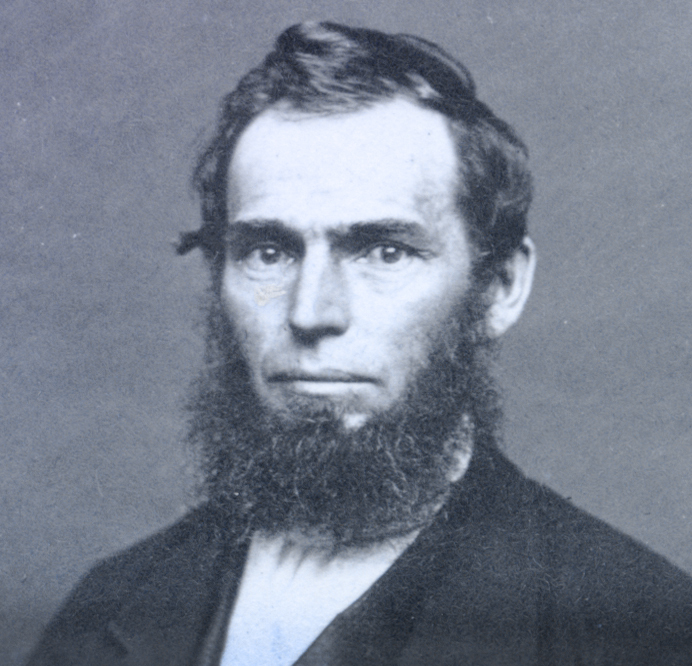
Image result for J. B. Frisbie
"We will make a few extracts, that the reader may see the broad contrast between the God of the Bible brought to light through Sabbath-keeping, and the god in the dark through Sunday-keeping. Catholic Catechism Abridged by the Rt. Rev. John Dubois, Bishop of New York. Page 5. Ques. Where is God? Ans. God is everywhere. Q. Does God see and know all things? A. Yes, he does know and see all things. Q. Has God any body? A. No; God has no body, he is a pure Spirit. Q. Are there more Gods than one? A. No; there is but one God. Q. Are there more persons than one in God? A. Yes; in God there are three persons. Q. Which are they? A. God the Father, God the Son and God the Holy Ghost. Q. Are there not three Gods? A. No; the Father, the Son and the Holy Ghost, are all but one and the same God.

 These ideas well accord with those heathen philosophers.... We should rather mistrust that the Sunday god came from the same source that Sunday-keeping did."   J. B. Frisbie, Review & Herald, March 7, 1854, The Sunday God, p. 50 

Saturday, January 26, 2019

Sunday, one of God’s best ideas

Nujournal Jan 3, 2019
When I was a kid on the farm, we had cows, pigs, and chickens. The animals didn’t take days off. Neither did my dad and mom, Sylvester and Alyce. A wedding dance or graduation party was the nearest thing to a vacation we had. But there were Sundays.
That meant church, but also a dialing back of work. Chores went on, but field work was to be avoided if possible. If it was summer with its long, relaxed evenings, my parents would load my brother Dean and me into the back seat of the car after late milking. We drove around to look at the crops. That would end with a trip to town and a root beer at Leo Hengel’s Drive-In or a cone at Reuben Schneider’s Dairy Queen.
The World That I Grew Up In is a distant land, living in the shadows of my memory. Some things remain. One of those is Sunday as a day set apart. Other days of the week have given attributes: Monday, back to work; Wednesday, church night; Friday, beginning of the weekend. But Sunday still stands out.
It is the Sabbath or church day. As a Catholic, it is Mass day. But Sunday has other roles: family day, visiting day, a day of rest, even perchance a nap day.
This goes back a long way, a really long way. From the Book of Genesis, “On the seventh day God had completed the work he had been doing. He rested after all the work he had done. God blessed the seventh day and made it holy, because on that day he rested after all his work of creating.” God deserved a break. I might be tired after a long week of farm work. That’s nothing compared to creating Earth and the firmament.
Then God instructed in the Ten Commandments, “Remember the Sabbath day, to keep it holy. Six days you shall labor, but the seventh day is a Sabbath to the Lord your God.” Genesis goes on to say you shall not do any work, or your son, your daughter, your male servant, your female servant, your livestock, or the sojourner who is within your gates.
Not a lot of us have livestock. Less of us have servants. But God’s admonition remains. It’s clear that the call to rest and worship is important.
Ancient people carved out time in ways that could be measured. The Babylonians quartered the 28-day lunar cycle into weeks. The word “shabbath” is a Hebrew word for rest, and there it is at the beginning of our Judeo-Christian tradition.
I have seen Sunday called the beginning of the week even though I more think of it as the end. The poet Henry Longfellow wrote, “Sunday is the golden clasp that binds together the volume of the week.” It seems right to begin or end my week in church. The rest of the week revolves around it. It is one hour where the busyness is set aside, I am stilled, there is time to reflect. I might or might not pray well, but at least I will shut up. There’s value in that.
Church attendance has declined. Sunday is still a day off work for most. It does not include attending services for as many. I guess I will never know what that feels like. Sunday and church can’t be separated in my 62-year old head.

Friday, August 31, 2018

Chase ATMs go cardless

Fox  August 02, 2018
Forgot your bank card? No worries. Chase has you covered.
The New York City-based bank announced that it has expanded its cardless access to nearly all of its 16,000 ATMs nationwide.
The new technology will allow customers to get cash through their phone’s mobile wallet without needing a physical debit card or an access code for authentication.
Users can simple “tap” their smartphone on the ATM to “easily and securely access money on the go.”
“Cardless no longer means cashless,” Sol Gindi, chief administrative officer of consumer banking at Chase, said in a statement. “As more of our customers are using digital wallets to pay, we’re pleased to be able to provide them with the same experience at the ATM.”

Wednesday, November 30, 2016

The Chapter Ninth of Ezequiel Will Be Literally Fulfilled

Image result for ezekiel 9
Slaughter of the Idolaters

1He cried also in mine ears with a loud voice, saying, Cause them that have charge over the city to draw near, even every man with his destroying weapon in his hand. 2And, behold, six men came from the way of the higher gate, which lieth toward the north, and every man a slaughter weapon in his hand; and one man among them was clothed with linen, with a writer's inkhorn by his side: and they went in, and stood beside the brasen altar.
3And the glory of the God of Israel was gone up from the cherub, whereupon he was, to the threshold of the house. And he called to the man clothed with linen, which had the writer's inkhorn by his side; 4And the LORD said unto him, Go through the midst of the city, through the midst of Jerusalem, and set a mark upon the foreheads of the men that sigh and that cry for all the abominations that be done in the midst thereof. 5And to the others he said in mine hearing, Go ye after him through the city, and smite: let not your eye spare, neither have ye pity: 6Slay utterly old and young, both maids, and little children, and women: but come not near any man upon whom is the mark; and begin at my sanctuary. Then they began at the ancient men which were before the house. 7And he said unto them, Defile the house, and fill the courts with the slain: go ye forth. And they went forth, and slew in the city. 8And it came to pass, while they were slaying them, and I was left, that I fell upon my face, and cried, and said, Ah Lord GOD! wilt thou destroy all the residue of Israel in thy pouring out of thy fury upon Jerusalem?
9Then said he unto me, The iniquity of the house of Israel and Judah is exceeding great, and the land is full of blood, and the city full of perverseness: for they say, The LORD hath forsaken the earth, and the LORD seeth not. 10And as for me also, mine eye shall not spare, neither will I have pity, but I will recompense their way upon their head.
11And, behold, the man clothed with linen, which had the inkhorn by his side, reported the matter, saying, I have done as thou hast commanded me.                Ezekiel 9 KJV

"Study the ninth chapter of Ezekiel. These words will be literally fulfilled; yet the time is passing, and the people are sleep. They refuse to humble their souls and to be converted. Not a great while longer will the Lord bear with the people who have such great and important truths revealed to them but who refuse to bring these truths into their individual experience."  Manuscript Releases, Volume 18, p. 236 (Letter 106, 1909)

Sunday, April 17, 2016

Sunday as a Mark of Christian Unity

Rev. Dr. Demetrios Tonias
“Sunday as a Mark of Christian Unity”
by Rev. Dr. Demetrios E. Tonias – Dean, Annunciation Greek Orthodox Cathedral of New England
The Christian Church, from its very beginning, has struggled with the concept of unity. Indeed, within the Pauline corpus we see the many ways in which the Apostle to the Gentiles struggled to keep together his young and fragile network of communities. As the church grew, there arose a variety of challenges, large and small, to threaten its unity. The Orthodox Christian Divine Liturgy bears witness to these challenges in the petitions and prayers, which are offered in the Eucharistic rite. We pray for “the unity of all,” “the unity of the faith,” for Christ to “reunite those separated” and to “unite us all to one another who become partakers of the one Bread and the Cup in the communion of the one Holy Spirit.”  We recite the Nicene Creed with its portentous closing phrases stating belief in “One Holy Catholic and Apostolic Church,” its sacred claim to “confess one Baptism for the forgiveness of sins”, and its exultation of Sunday as the Lord’s Day and the gift of resurrection with the statement “I look for the resurrection of the dead and the life of the ages to come.”
The Divine Liturgy is, most certainly, a fitting place to offer such prayers and confessions of faith, for the preeminent celebration of the Liturgy takes place on Sunday. From the moment the myrrh bearers found Christ’s empty tomb, Sunday was known as ἡ Κυριακή ἡμέρα—the Lord’s Day. By definition, each and every Sunday is a call to Christian unity since it is on this day that we are called to communion with the Lord, by the Lord. In spite of all of the challenges that have tugged at the threads of Christian unity, the Lord’s Day remains the one, unassailable marker of Christian unity since it is on this day that all of us, despite our many differences, gather together as believers in Christ.
There were always differences about days and dates in the Christian world. There were divisions surrounding the dating of Pascha from the earliest years of Christianity. The Puritans rejected the commemoration of the birth of Christ on December 25 as unscriptural. The Lord’s Day, however, as a time of communal, Christian gathering has never been in question. The commemoration of the Lord’s Day is an historical reality that bears witness to the centrality of the Resurrection and all that this event meant and signifies for the cosmos. Therefore, what better marker of Christian unity can we have? Indeed, what stronger case can one make for the significance of Sunday as a hallmark of Christian unity than the understanding that Christians throughout the centuries have conceived of this day as a day of new creation, an eighth day set apart from all others.
For the Orthodox Christian mind, this historical relationship is critical to our understanding of Christian unity. For the Orthodox Christian, unity implies a transcendent ecumenicity—an ecumenicity that exists throughout time and space. It is a communion of all believers, at all times. Put simply, nothing in the calendar unites us like Sunday. It is a day that changed the world on the very first Sunday and, I would argue, every Sunday after the first. The world was transfigured through a myriad of Sunday’s when Christians gathered in communion and heard the Gospel message. It was on Sunday when Christians learned to love their enemies and care for those in need. It was on Sunday when Christians first met to share a meal of love they called by the Greek word ἀγάπη. It was, is, and shall always be on Sunday when the best hope for humanity shines forth from churches large and small and the “Eucharist after the Eucharist” travels forth from the four walls of the church and into the home and homeless shelter, the playground and the hospital, the wedding feast and the wake.
It is human nature to think parochially—in terms of our own family, our own exclusive church, our own unique religious entity. In this historical light, however, Sunday takes on a new meaning. Sunday worship is something more than simply what our parents and grandparents did. Sunday worship is even more than what our local faith community has done. Sunday worship is something that all Christians, at all times have celebrated. When we gather on Sunday the unity we achieve takes us back in time, across the ages to the earliest believer; it also moves us forward in time to embrace generations not yet born. In this way, the spiritual unity we have thus achieved possesses an eschatological character. The unity to which we bear witness and which we embody is a manifestation of the kingdom to which we all aspire.
In order to fully appreciate Sunday as a mark of Christian unity we must expand our definition of unity. We must all strive for a Christian community—one throughout the ages—for such a transcendent unity yields many fruits. If we are in union with the earliest Christians then we will share in their zeal. If we are in unity with the martyrs then we partake of their devotion. If we are in unity with those compassionate Christians then we feel and can bestow their healing touch. When we assemble in faith on Sundays, we gather not simply with other parishioners in a local place of worship, but with Christians throughout every land and all the ages—and there is no greater evidence of unity than this. In our century, as with its predecessors, challenges large and small threaten Sunday. However, when we stand in faith, as members of a Church beyond all churches, we reclaim Sunday for the God who gave it to us.     LDAUSA

Friday, March 18, 2016

A Mark Upon The Forehead

1He cried also in mine ears with a loud voice, saying, Cause them that have charge over the city to draw near, even every man with his destroying weapon in his hand. 2And, behold, six men came from the way of the higher gate, which lieth toward the north, and every man a slaughter weapon in his hand; and one man among them was clothed with linen, with a writer's inkhorn by his side: and they went in, and stood beside the brasen altar.
3And the glory of the God of Israel was gone up from the cherub, whereupon he was, to the threshold of the house. And he called to the man clothed with linen, which had the writer's inkhorn by his side; 4And the LORD said unto him, Go through the midst of the city, through the midst of Jerusalem, and set a mark upon the foreheads of the men that sigh and that cry for all the abominations that be done in the midst thereof. 5And to the others he said in mine hearing, Go ye after him through the city, and smite: let not your eye spare, neither have ye pity: 6Slay utterly old and young, both maids, and little children, and women: but come not near any man upon whom is the mark; and begin at my sanctuary. Then they began at the ancient men which were before the house. 7And he said unto them, Defile the house, and fill the courts with the slain: go ye forth. And they went forth, and slew in the city. 8And it came to pass, while they were slaying them, and I was left, that I fell upon my face, and cried, and said, Ah Lord GOD! wilt thou destroy all the residue of Israel in thy pouring out of thy fury upon Jerusalem?
9Then said he unto me, The iniquity of the house of Israel and Judah is exceeding great, and the land is full of blood, and the city full of perverseness: for they say, The LORD hath forsaken the earth, and the LORD seeth not. 10And as for me also, mine eye shall not spare, neither will I have pity, but I will recompense their way upon their head.
11And, behold, the man clothed with linen, which had the inkhorn by his side, reported the matter, saying, I have done as thou hast commanded me.   

Saturday, March 5, 2016

Pope Francis Moving Swiftly to Establish Mark Of The Beast

Sunday, November 22, 2015

Those who honor the Bible Sabbath will be denounced as enemies of law and order, as breaking down the moral restraints of society, causing anarchy and corruption, and calling down the judgments of God upon the earth

Tuesday, November 17, 2015

Anonymous closes more than 5500 isis twitter accounts

© Peter Nicholls
Hacktivist group Anonymous has reported that more than 5,500 Twitter accounts belonging to Islamic State have been taken down. It comes after the collective declared a “total war” on the militant group following the Paris attacks. 
Tweeting from its #OpParis account, Anonymous stated: “We report that more than 5500 Twitter account (sic) of #ISIS are now #down! #OpParis #Anonymous #ExpectUS.”

“Our capability to take down ISIS is a direct result of our collective's sophisticated hackers, data miners, and spies that we have all around the world. We have people very, very close to ISIS on the ground, which makes gathering intel about ISIS and related activities very easy for us, Alex Poucher, a spokesman for Anonymous, told RT.
He added that the collective has built tools that “might be better than any world government's tools to combat ISIS online.”
Aware that ISIS has its own hackers, Poucher expressed confidence that the militant group “does not have hackers like we have hackers.”
“They picked a fight with Anonymous when they attacked Paris, and now they should expect us,” he said, adding that the collective “will not sit by and watch these terror attacks unfold around the world.”
Anonymous released a video on Monday stating that the collective would “launch the biggest operation ever” against Islamic State (formerly ISIS/ISIL), following the Friday attacks in Paris that left 129 people dead and 352 injured.

The group vowed to use their skills to “unite humanity,” and warned terrorists to “expect massive cyber-attacks.”
“Anonymous from all over the world will hunt you down,” the spokesman in the video said. “You should know that we will find you and we will not let you go.”
ISIS responded to Anonymous' video on Monday, calling the hacktivist group “idiots” and offering guidance of ISIS supporters to protect against cyber-attacks.
However, as of Monday, 900 ISIS-related Twitter accounts had already been suspended after Anonymous posted a list of them online.
On Monday, Anonymous said in its video that “the French people are strong than you and will come out of this atrocity even stronger.”
This is not the first time Anonymous has used its skills against ISIS. This year, the group has dismantled some 149 ISIS-linked websites, according to a recent report in Foreign Policy.
RT 

Monday, November 9, 2015

Pope emphasizes importance of rest

November 09, 2015

The sanctification of Sunday rest, the right to a pension in retirement, and dignified work are all intertwined, Pope Francis said in an address in St. Peter’s Square on November 7.
The “principle, subject, and end” of the economy and of all social institutions is the human person, the Pope told 23,000 employees of the Italian National Social Security Institute. “His dignity cannot ever be compromised, even when he ceases to be economically productive.”

Sunday, October 18, 2015

Many Gainesville businesses still observe the Sabbath. Sunday store closings reflect wider community values


Many Gainesville businesses still observe the Sabbath
SCOTT ROGERS/The Times

The Little Ladybug owner Carole Hudgins helps Sally Williams try on a pair of boots at the Thompson Bridge Road gift shop. With many area businesses keep their doors open seven days a week, Hudgins chooses to close on Sundays.


Closing business doors on Sundays may seem anachronistic in the 21st century, but in Gainesville it’s simply a reflection of the wider community’s values.

And so despite the potential financial hit, many places, including restaurants, gift shops and barbershops follow the Sabbath.

“I just think Gainesville is small-town oriented,” said Erin Allison, manager of the Little Ladybug gift shop on Thompson Bridge Road. “It seems like most people treat Sunday as a time to spend with family. It’s just important for this whole town. It’s just what we do.”

Governments in many Western European countries still impose some restrictions on Sunday trading, though they have begun to wither under the wave of free-market capitalism and customer demand.

In Norway, however, only gas stations, grocery stores and flower shops are free to open Sundays. In the United States, Bergen County, N.J., still prohibits any Sunday shopping.

And in some states, Sunday blue laws regulating the sale of alcohol remain in place. Georgia only began allowing cities and counties to scrap those bans in 2011.

Though corporate chains like Chick-fil-A and Hobby Lobby may be better positioned to manage Sunday closings in the highly competitive market of service and retail sales, local businesses have more considerations to weigh.

Indeed, there are also very practical business concerns in play.
Carole Hudgins, owner of The Little Ladybug, said that she opened on Sundays a few times during the holiday shopping season in recent years, but “it did not prove beneficial” for her bottom line.

“There are no other businesses around here that are open on Sunday that would draw in the customers for me,” Hudgins said. “I’m all about shopping local, but I don’t necessarily think it’s necessary on Sunday.”

However, Hudgins said that were she located in downtown Dahlonega, for instance, customer demand would compel her to open on Sundays.

Hudgins, who opened her store 21 years ago, said she’s happy with her decision to remain closed on Sundays. It gives her the chance to spend more time with her children and attend church.

“I already work six days a week,” she added. “I didn’t want to work on Sundays.”

Customer demand is something Danny Pridgen, owner of the Hairshack in the downtown square, has also identified as a reason for closing on the Sabbath.

In the haircutting and salon business, Sundays tend to be slow anyway, he said. Most people need to get a fresh cut during the week for work, or on Fridays and Saturdays before hitting the town to socialize.

And his clientele are churchgoing, too, something he recognized when first moving here.
Pridgen’s son is a pastor, and so having time to attend church every week “means a whole lot” to him, as well.

“It has a little bit to do with both,” he said about why he closes on Sundays.

Tim Bunch, owner of the Longstreet Café on Riverside Terrace, said he recalls growing up when Sunday closings were the norm.
Bunch used to open his restaurant on Sundays to serve the churchgoing crowd, but stopped doing so about 10 years ago.
Bunch said his customers would frequently lament that he and his staff had to work while they spent time with their families and congregations.

And so despite the fact that closing on the Sabbath meant losing about 20 percent of his weekly business, Bunch said it’s a sacrifice he’s glad he made.

After all, he said, doing so has proven to be a morale boost for his employees, and there may be no quantifying the financial benefit that can have on a business.

“It gives them a chance to be with their families,” he said.
Gainesville Times 

Friday, September 25, 2015

Character and Aim of the Papacy


If we desire to understand the determined cruelty of Satan, manifested for hundreds of years, not among those who never heard of God, but in the very heart and throughout the extent of Christendom, we have only to look at the history of Romanism. Through this mammoth system of deception the prince of evil achieves his purpose of bringing dishonor to God and wretchedness to man. And as we see how he succeeds in disguising himself, and accomplishing his work through the leaders of the church, we may better understand why he has so great antipathy to the Bible. If that book is read, the mercy and love of God will be revealed; it will be seen that he lays upon men none of these heavy burdens. All that he asks is a broken and contrite heart, a humble, obedient spirit.  
     Christ gives no example in his life for men and women to shut themselves in monasteries in order to become fitted for Heaven. He has never taught that love and sympathy must be repressed. The Saviour's heart overflowed with love. The nearer man approaches to moral perfection, the keener are his sensibilities, the more acute is his perception of sin, and the deeper his sympathy for the afflicted. The pope claims to be the vicar of Christ; but how does his character bear comparison with that of our Saviour? Was Christ ever known to consign men to the prison or the rack because they did not pay him homage as the King of Heaven? Was his voice heard condemning to death those who did not accept him? When he was slighted by the people of a Samaritan village, the apostle John was filled with indignation, and inquired, “Lord, wilt thou that we command fire to come down from heaven, and consume them, even as Elias did?” Jesus looked with pity upon his disciple, and rebuked his harsh spirit, saying, “The Son of man is not come to destroy men's lives, but to save them.” [Luke 9:54, 56.] How different from the spirit manifested by Christ is that of his professed vicar.  
     The Romish Church now presents a fair front to the world, covering with apologies her record of horrible cruelties. She has clothed herself in Christ-like garments; but she is unchanged. Every principle of popery that existed in past ages exists today. The doctrines devised in the darkest ages are still held. Let none deceive themselves. The popery that Protestants are now so ready to honor is the same that ruled the world in the days of the Reformation, when men of God stood up, at the peril of their lives, to expose her iniquity. She possesses the same pride and arrogant assumption that lorded it over kings and princes, and claimed the prerogatives of God. Her spirit is no less cruel and despotic now than when she crushed out human liberty, and slew the saints of the Most High.  
     Popery is just what prophecy declared that she would be, the apostasy of the latter times. [2 Thessalonians 2:3, 4.] It is a part of her policy to assume the character which will best accomplish her purpose; but beneath the variable appearance of the chameleon, she conceals the invariable venom of the serpent. “We are not bound to keep faith and promises to heretics,” She declares. Shall this power, whose record for a thousand years is written in the blood of the saints, be now acknowledged as a part of the church of Christ?  
     It is not without reason that the claim has been put forth in Protestant countries, that Catholicism differs less widely from Protestantism than in former times. There has been a change; but the change is not in the papacy. Catholicism indeed resembles much of the Protestantism that now exists, because Protestantism has so greatly degenerated since the days of the reformers.  
     As the Protestant churches have been seeking the favor of the world, false charity has blinded their eyes. They do not see but that it is right to believe good of all evil; and as the inevitable result, they will finally believe evil of all good. Instead of standing in defense of the faith once delivered to the saints, they are now, as it were, apologizing to Rome for their uncharitable opinion of her, begging pardon for their bigotry.  
     A large class, even of those who look upon Romanism with no favor, apprehend little danger from her power and influence. Many urge that the intellectual and moral darkness prevailing during the Middle Ages favored the spread of her dogmas, superstitions, and oppression, and that the greater intelligence of modern times, the general diffusion of knowledge, and the increasing liberality in matters of religion, forbid a revival of intolerance and tyranny. The very thought that such a state of things will exist in this enlightened age is ridiculed. It is true that great light, intellectual, moral, and religious, is shining upon this generation. In the open pages of God's holy Word, light from Heaven has been shed upon the world. But it should be remembered that the greater the light bestowed, the greater the darkness of those who pervert or reject it.  
     A prayerful study of the Bible would show Protestants the real character of the papacy, and would cause them to abhor and to shun it; but many are so wise in their own conceit that they feel no need of humbly seeking God that they may be led into the truth. Although priding themselves on their enlightenment, they are ignorant both of the Scriptures and of the power of God. They must have some means of quieting their consciences; and they seek that which is least spiritual and humiliating. What they desire is a method of forgetting God which shall pass as a method of remembering him. The papacy is well adapted to meet the wants of all these. It is prepared for two classes of mankind, embracing nearly the whole world,—those who would be saved by their merits, and those who would be saved in their sins. Here is the secret of its power.  
     A day of great intellectual darkness has been shown to be favorable to the success of popery. It will yet be demonstrated that a day of great intellectual light is equally favorable for its success. In past ages, when men were without God's Word, and without the knowledge of the truth, their eyes were blindfolded, and thousands were ensnared, not seeing the net spread for their feet. In this generation there are many whose eyes become dazzled by the glare of human speculations, “science falsely so-called;” they discern not the net, and walk into it as readily as if blindfolded. God designed that man's intellectual powers should be held as a gift from his Maker, and should be employed in the service of truth and righteousness; but when pride and ambition are cherished, and men exalt their own theories above the Word of God, then intelligence can accomplish greater harm than ignorance. Thus the false science of the nineteenth century, which undermines faith in the Bible, will prove as successful in preparing the way for the acceptance of the papacy, with its pleasing forms, as did the withholding of knowledge in opening the way for its aggrandizement in the Dark Ages.  
     In the movements now in progress in the United States to secure for the institutions and usages of the church the support of the State, Protestants are following in the steps of papists. [SEE APPENDIX, NOTE 11.] Nay, more, they are opening the door for popery to regain in Protestant America the supremacy which she has lost in the Old World. And that which gives greater significance to this movement is the fact that the principal object contemplated is the enforcement of Sunday observance,—a custom which originated with Rome, and which she claims as the sign of her authority. It is the spirit of the papacy,—the spirit of conformity to worldly customs, the veneration for human traditions above the commandments of God,—that is permeating the Protestant churches, and leading them on to do the same work of Sunday exaltation which the papacy has done before them.  
     If the reader would understand the agencies to be employed in the soon-coming contest, he has but to trace the record of the means which Rome employed for the same object in ages past. If he would know how papists and Protestants united will deal with those who reject their dogmas, let him see the spirit which Rome manifested toward the Sabbath and its defenders.  
     Royal edicts, general councils, and church ordinances sustained by secular power, were the steps by which the pagan festival attained its position of honor in the Christian world. The first public measure enforcing Sunday observance was the law enacted by Constantine. [A. D. 321.] This edict required townspeople to rest on “the venerable day of the sun,” but permitted countrymen to continue their agricultural pursuits. Though virtually a heathen statute, it was enforced by the emperor after his nominal acceptance of Christianity.  
     The royal mandate not proving a sufficient substitute for divine authority, Eusebius, a bishop who sought the favor of princes, and who was the special friend and flatterer of Constantine, advanced the claim that Christ had transferred the Sabbath to Sunday. Not a single testimony of the Scriptures was produced in proof of the new doctrine. Eusebius himself unwittingly acknowledges its falsity, and points to the real authors of the change. “All things,” he says, “whatsoever that it was duty to do on the Sabbath, these we have transferred to the Lord's day.” But the Sunday argument, groundless as it was, served to embolden men in trampling upon the Sabbath of the Lord. All who desired to be honored by the world accepted the popular festival.  
     As the papacy became firmly established, the work of Sunday exaltation was continued. For a time the people engaged in agricultural labor when not attending church, and the seventh day was still regarded as the Sabbath. But steadily a change was effected. Those in holy office were forbidden to pass judgment in any civil controversy on the Sunday. Soon after, all persons, of whatever rank, were commanded to refrain from common labor, on pain of a fine for freemen, and stripes in the case of servants. Later it was decreed, that rich men should be punished with the loss of half of their estates; and finally, that if still obstinate they should be made slaves. The lower classes were to suffer perpetual banishment.  
     Miracles also were called into requisition. Among other wonders it was reported that as a husbandman who was about to plow his field on Sunday, cleaned his plow with an iron, the iron stuck fast in his hand, and for two years he carried it about with him, “to his exceeding great pain and shame.”  
     Later, the pope gave directions that the parish priest should admonish the violators of Sunday, and wish them to go to church and say their prayers, lest they bring some great calamity on themselves and neighbors. An ecclesiastical council brought forward the argument, since so widely employed, even by Protestants, that because persons had been struck by lightning while laboring on Sunday, it must be the Sabbath. “It is apparent,” said the prelates, “how high the displeasure of God was upon their neglect of this day.” An appeal was then made that priests and ministers, kings and princes, and all faithful people, “use their utmost endeavors and care that the day be restored to its honor, and, for the credit of Christianity, more devoutly observed for time to come.”
     The decrees of councils proving insufficient, the secular authorities were besought to issue an edict that would strike terror to the hearts of the people, and force them to refrain from labor on the Sunday. At a synod held in Rome, all previous decisions were reaffirmed with greater force and solemnity. They were also incorporated into the ecclesiastical law, and enforced by the civil authorities throughout nearly all Christendom.  
     Still the absence of scriptural authority for Sunday-keeping occasioned no little embarrassment. The people questioned the right of their teachers to set aside the positive declaration of Jehovah, “The seventh day is the Sabbath of the Lord thy God,” in order to honor the day of the sun. To supply the lack of Bible testimony, other expedients were necessary. A zealous advocate of Sunday, who about the close of the twelfth century visited the churches of England, was resisted by faithful witnesses for the truth; and so fruitless were his efforts that he departed from the country for a season, and cast about him for some means to enforce his teachings. When he returned, the lack was supplied, and in his after-labors he met with greater success. He brought with him a roll purporting to be from God himself, which contained the needed command for Sunday observance, with awful threats to terrify the disobedient. This precious document—as base a counterfeit as the institution it supported— was said to have fallen from Heaven, and to have been found in Jerusalem, upon the altar of St. Simeon, in Golgotha. But in fact, the pontifical palace at Rome was the source whence it proceeded. Frauds and forgeries to advance the power and prosperity of the church have in all ages been esteemed lawful by the papal hierarchy.  
     The roll forbade labor from the ninth hour, three o'clock, on Saturday afternoon, till sunrise on Monday; and its authority was declared to be confirmed by many miracles. It was reported that persons laboring beyond the appointed hour were stricken with paralysis. A miller who attempted to grind his corn, saw, instead of flour, a torrent of blood come forth, and the mill-wheel stood still, notwithstanding the strong rush of the water. A woman who placed dough in the oven, found it raw when taken out, though the oven was very hot. Another who had dough prepared for baking at the ninth hour, but determined to set it aside till Monday, found, the next day, that it had been made into loaves and baked by divine power. A man who baked bread after the ninth hour on Saturday, found, when he broke it the next morning, that blood started therefrom. By such absurd and superstitious fabrications did the advocates of Sunday endeavor to establish its sacredness. 
     In Scotland, as in England, a greater regard for Sunday was secured by uniting with it a portion of the ancient Sabbath. But the time required to be kept holy varied. An edict from the king of Scotland declared that Saturday from twelve at noon ought to be accounted holy, and that no man, from that time till Monday morning, should engage in worldly business.   
     But notwithstanding all the efforts to establish Sunday sacredness, papists themselves publicly confessed the divine authority of the Sabbath, and the human origin of the institution by which it had been supplanted. In the sixteenth century a papal council plainly declared: “Let all Christians remember that the seventh day was consecrated by God, and hath been received and observed, not only by the Jews, but by all others who pretend to worship God; though we Christians have changed their Sabbath into the Lord's day.” Those who were tampering with the divine law were not ignorant of the character of their work. They were deliberately setting themselves above God. 

     A striking illustration of Rome's policy toward those who disagree with her was given in the long and bloody persecution of the Waldenses, some of whom were observers of the Sabbath. Others suffered in a similar manner for their fidelity to the fourth commandment. The history of the churches of Ethiopia and Abyssinia is especially significant. Amid the gloom of the Dark Ages, the Christians of Central Africa were lost sight of and forgotten by the world, and for many centuries they enjoyed freedom in the exercise of their faith. But at last Rome learned of their existence, and the emperor of Abyssinia was soon beguiled into an acknowledgment of the pope as the vicar of Christ. Other concessions followed. An edict was issued forbidding the observance of the Sabbath under the severest penalties. But papal tyranny soon became a yoke so galling that the Abyssinians determined to break it from their necks. After a terrible struggle, the Romanists were banished from their dominions, and the ancient faith was restored. The churches rejoiced in their freedom, and they never forgot the lesson they had learned concerning the deception, the fanaticism, and the despotic power of Rome. Within their solitary realm they were content to remain, unknown to the rest of Christendom.  
     The churches of Africa held the Sabbath as it was held by the papal church before her complete apostasy. While they kept the seventh day in obedience to the commandment of God, they abstained from labor on the Sunday in conformity to the custom of the church. Upon obtaining supreme power, Rome had trampled upon the Sabbath of God to exalt her own; but the churches of Africa, hidden for nearly a thousand years, did not share in this apostasy. When brought under the sway of Rome, they were forced to set aside the true and exalt the false Sabbath; but no sooner had they regained their independence than they returned to obedience to the fourth commandment. [SEE APPENDIX, NOTE 12.]  
     These records of the past clearly reveal the enmity of Rome toward the true Sabbath and its defenders, and the means which she employs to honor the institution of her creating. The Word of God teaches that these scenes are to be repeated as papists and Protestants shall unite for the exaltation of the Sunday.  
     The prophecy of Revelation 13 declares that the power represented by the beast with lamb-like horns shall cause “the earth and them which dwell therein” to worship the papacy—there symbolized by the beast “like unto a leopard.” The beast with two horns is also to say “to them that dwell on the earth, that they should make an image to the beast;” and, furthermore, it is to command all, “both small and great, rich and poor, free and bond,” to receive “the mark of the beast.” [Revelation 13:11-16.] It has been shown that the United States is the power represented by the beast with lamb-like horns, and that this prophecy will be fulfilled when the United States shall enforce Sunday observance, which Rome claims as the special acknowledgment of her supremacy. But in this homage to papacy the United States will not be alone. The influence of Rome in the countries that once acknowledged her dominion, is still far from being destroyed. And prophecy foretells a restoration of her power. “I saw one of his heads as it were wounded to death; and his deadly wound was healed; and all the world wondered after the beast.” [Revelation 13:3.] The infliction of the deadly wound points to the abolition of the papacy in 1798. After this, says the prophet, “His deadly wound was healed; and all the world wondered after the beast.” Paul states plainly that the man of sin will continue until the second advent. [2 Thessalonians 2:8.] To the very close of time he will carry forward his work of deception. And the Revelator declares, also referring to the papacy, “All that dwell upon the earth shall worship him, whose names are not written in the book of life.” [Revelation 13:8.] In both the Old and the New World, papacy will receive homage in the honor paid to the Sunday institution, that rests solely upon the authority of the Romish Church.  
     For about forty years, students of prophecy in the United States have presented this testimony to the world. In the events now taking place is seen a rapid advance toward the fulfillment of the prediction. With Protestant teachers there is the same claim of divine authority for Sunday-keeping, and the same lack of scriptural evidence, as with the papist leaders who fabricated miracles to supply the place of a command from God. The assertion that God's judgments are visited upon men for their violation of the Sunday-sabbath, will be repeated; already it is beginning to be urged. And a movement to enforce Sunday observance is fast gaining ground.
     Marvelous in her shrewdness and cunning is the Romish Church. She can read what is to be. She bides her time, seeing that the Protestant churches are paying her homage in their acceptance of the false Sabbath, and that they are preparing to enforce it by the very means which she herself employed in by-gone days. Those who reject the light of truth will yet seek the aid of this self-styled infallible power to exalt an institution that originated with her. How readily she will come to the help of Protestants in this work, it is not difficult to conjecture. Who understands better than the papal leaders how to deal with those who are disobedient to the church?
     The Roman Church, with all its ramifications throughout the world, forms one vast organization, under the control, and designed to serve the interests, of the papal see. Its millions of communicants, in every country on the globe, are instructed to hold themselves as bound in allegiance to the pope. Whatever their nationality or their government, they are to regard the authority of the church as above all other. Though they may take the oath pledging their loyalty to the State, yet back of this lies the vow of obedience to Rome, absolving them from every pledge inimical to her interests. 
     Protestants little know what they are doing when they propose to accept the aid of Rome in the work of Sunday exaltation. While they are bent upon the accomplishment of their purpose, Rome is aiming to re-establish her power, to recover her lost supremacy. Let history testify of her artful and persistent efforts to insinuate herself into the affairs of nations; and having gained a foothold, to further her own aims, even at the ruin of princes and people. Romanism openly puts forth the claim that the pope “can pronounce sentences and judgments in contradiction to the right of nations, to the law of God and man.” [THE “DECRETALIA."]  

     And let it be remembered, it is the boast of Rome that she never changes. The principles of Gregory VII. and Innocent III. are still the principles of the Romish Church. And had she but the power, she would put them in practice with as much vigor now as in past centuries. Let the principle once be established in the United States, that the church may employ or control the power of the State; that religious observances may be enforced by secular laws; in short, that the authority of church and State is to dominate the conscience, and the triumph of Rome in this country is assured.  
     God's Word has given warning of the impending danger; let this be unheeded, and the Protestant world will learn what the purposes of Rome really are, only when it is too late to escape the snare. She is silently growing into power. Her doctrines are exerting their influence in legislative halls, in the churches, and in the hearts of men. She is piling up her lofty and massive structures, in the secret recesses of which her former persecutions will be repeated. Stealthily and unsuspectedly she is strengthening her forces to further her own ends when the time shall come for her to strike. All that she desires is vantage-ground, and this is already being given her. We shall soon see and shall feel what the purpose of the Roman element is. Whoever shall believe and obey the Word of God will thereby incur reproach and persecution. 

The Great Controversy P. 570-581

Saturday, August 22, 2015

Italian bishop urges CEO: respect Sunday rest

Catholic World News - August 20, 2015
An Italian bishop has written an open letter to the CEO of Fiat Chrysler Automobiles calling for the closing of its plant in Melfi from 10:00 PM on Saturdays to 10:00 PM on Sundays.
Rejoicing that more fathers are able to provide for their families because of an improving economy, Bishop Gianfranco Todisco of Melfi-Rapolla-Venosa said that respecting Sunday rest “not only promotes the welfare of the family, but also becomes the best investment a company can make … because it gives top priority to the dignity of the human person, with his legitimate needs and aspirations that cannot be put to death by the law of profit.” 

Catholic Culture 

Chick-fil-A remains closed on Sundays at MSP airport, despite rule

Usually, retailers and restaurant operators must stay open 365 days a year to win a coveted airport spot. But there is one big exception 

 
MAC officials thought Chick-fil-A — famous for its chicken sandwiches and waffle fries — would succeed. And despite being closed one day a week it is "outselling nearly all other quick-service restaurants at [the airport] that are open 365 days a year,” airport spokesman Patrick Hogan said.
Usually, retailers and restaurant operators must stay open 365 days a year to win a coveted spot at the Minneapolis-St. Paul International Airport. Except one — Chick-fil-A, the popular (and profitable) fast-food outlet on Terminal 1’s C Concourse.
The Atlanta-based restaurant chain has remained closed on Sunday for nearly 70 years, a testament to founder Truett Cathy’s “faith in God,” according to the company’s website. That’s been the case at the Twin Cities airport for the past three years, as well, despite written rules to the contrary.
Some competing eateries, which do open every day, privately grumble that Chick-fil-A gets to play by different rules in the high-stakes airport concession game.
The rules for winning space at the airport were made clear at a Metropolitan Airports Commission (MAC) meeting this week as retail and restaurant companies vied for 50 concession slots.
The request for proposals, issued by the MAC in March, states plainly that vendors must remain open 365 days a year to accommodate the 33 million travelers who use the airport annually.
Chick-fil-A was not among those competing for a spot on Monday — but its lease and others will be up for grabs in 2017.
The $6 billion restaurant chain was brought into the C Concourse food court in 2012 by concessionaire HMSHost to replace an underperforming A&W/Godfather’s Pizza outlet. The move came after McDonald’s was booted from the G Concourse by Delta Air Lines in late 2011, causing an uproar among travelers. (McDonald’s reopened on the D Concourse in late 2013.)
MAC officials thought Chick-fil-A — famous for its chicken sandwiches, waffle fries and frozen lemonade — would be a good grab-and-go substitute.
Since then, said MAC spokesman Patrick Hogan, Chick-fil-A grossed $2.2 million in sales at the airport last year, “making it the third-highest-grossing quick-service unit at the airport, behind only McDonald’s and Subway.
“So essentially, Chick-fil-A with a six-day-a-week operation is outselling nearly all other quick-service restaurants at [the airport] that are open 365 days a year,” Hogan added. “It is very popular, underpinning why it’s important to have national as well as local brands at the airport.”
‘I have to let go’
The MAC was aware of Chick-fil-A’s “national prohibition” against Sunday sales when it was first proposed, Hogan added.
“Do I particularly care about their religious philosophy [about being closed on Sunday]? It bugs me, but I have to let go of that stuff,” said MAC Chairman Dan Boivin. “The reality is, if they can generate the kind of revenue for an airport comparable to other destinations, then that’s fine with me.
“Their numbers are such that, in six days a week, they make the numbers of other concessions that are open for seven,” he added.
The late Cathy said Chick-fil-A’s closed-on-Sunday policy was “one of the best business decisions he has ever made,” according to the company. The billionaire traced his decision back to his first restaurant, the Dwarf Grill in Hapeville, Ga., where he “would not deal with money on the Lord’s Day.”
Chick-fil-A spokeswoman Brenda Morrow said that closing on Sunday is a matter of “valuing a work-life balance. Truett believed that Chick-fil-A operators and their restaurant employees should have an opportunity to rest, spend time with family and friends, and really just have a day to take care of themselves.”
Three years ago, Cathy’s son, Dan — now the company’s chairman, CEO and president — ran afoul of gay rights groups and others when he backed the “biblical definition of family” when asked about marriage equality. This prompted boycotts, and the Jim Henson Co. withdrew from a partnership to supply toys to the chain.
25 airports by 2016
Meanwhile, Chick-fil-A has grown rapidly, opening 96 restaurants nationwide last year and bringing its total store count to about 1,900. Beyond the airport location, Chick-fil-A has five other outlets in the Twin Cities area. Morrow noted that Chick-fil-A will be located in approximately 25 airports by mid-2016 and that all of those locations are closed on Sundays.
It’s unclear how the MAC will handle the Sunday issue when Chick-fil-A’s lease is up in 2017. Generally, retail and restaurant space in the airport is bid on in groups that combine strong and weak locations.
No other vendors have asked to shorten their hours at the airport, Boivin said, noting that there are plenty of other places to eat in the airport on a Sunday.
“The reality is that Chick-fil-A is a destination restaurant,” Boivin said. “People who travel ask for it.
“Personally, to me, their sandwich is a piece of chicken with a pickle on it,” he said.

Startribune 
Wednesday, August 19, 2015

Pope Francis: Sundays are a gift from God – don't ruin it

by Elise Harris
.- Moments of rest and celebration were the focal point of Pope Francis’ Wednesday general audience, during which he spoke out against a profit-centered mentality and encouraged families to live life at a more human pace.

“Celebration is a precious gift from God. It's a precious gift God has made for the human family. Let's not ruin it,” the Pope said Aug. 12.

He spoke to pilgrims gathered in the Vatican’s Paul VI audience hall for his second general audience after taking a break for the month of July.

As part of his continued series of catecheses on the family, Francis announced he would shift focus to the different rhythms of family life, such as celebration, work and prayer.

Beginning with celebration, the Pope noted that it is God’s own invention, as can be seen in the biblical account of creation when God himself rested from his work on the seventh day.


God teaches us the importance “of dedicating time to contemplating and enjoying the fruits of our labors, not only in our employment or profession, but through every action by which we as men and women cooperate in God’s creative work,” he said.

Francis emphasized that to celebrate doesn't mean “to escape or be overcome by laziness,” but rather involves returning our gaze to the fruits of our labor with both gratitude and benevolence.

Celebration, he said, “is above all a loving and grateful look at work well done,” and means taking time to pause and be with friends and loved ones. He added that celebration is a time to watch our children grow, to look at the home we have built, and think: “how beautiful!”

The Pope observed that it is also possible to celebrate in times of difficulty, even if it means celebrating “with a lump in the throat.”

Pope Francis turned to the workplace, explaining that – without interrupting our work – celebrations can “infiltrate” the environment when we honor events such as a birthday, a marriage, a new baby, a farewell or a welcome.

Such moments of familiarity put a brief stop to “the gear of the production machine: they do us good!” he said.

True moments of celebration make us take a break from the daily grind and remind us that we have been created in the image and likeness of God, who is not a slave of work, but the Lord of work, the Pope observed.

“We must never be slaves to work but rather its master,” he stressed, and lamented how millions of men, women and children are exploited and forced to work as slaves due to an obsession with economic profit.

This over-emphasis on gain and technical efficiency “attacks human rhythms of life and denies man the time for what's really important,” he said, explaining that God wants to set us free from these vices.

“Life has human rhythms,” the Pope added. “Let us banish this idea of a celebration centered on consumption and on debauchery and let us regain its sacred value, seeing it as a privileged time in which we can encounter God and others.”

Francis pointed to Sundays as a particularly important time for rest, because “in them we find God.”

Going to Mass brings the grace of Jesus Christ to each of our celebrations, he said, since it is in the Eucharist that we encounter his presence, love and sacrifice. The Eucharistic celebration, he said, is Jesus’ way of being with us and forming us into a community.

“Everything is transfigured by his grace: work, family, the joys and trials of each day, even our sufferings and death.”

Pope Francis cautioned that the ideologies of profit and consumption want to “eat up” the celebration, and turn it into another way to make and spend money.

“But is this why we work? The greed of consuming, which leads to waste, it's a bad virus which, among other things, in the end makes us more tired than before,” he said.

Francis concluded by praying that the family always be recognized as a privileged place where the gifts that come from our celebrations are understood, guided and sustained, particularly Sunday Mass.

”May the Lord allows us to live the time of rest, celebrations, the Sunday feast, with the eyes of faith, as a precious gift which illuminates family life,” he said.

Source:
Catholic News 

Monday, July 27, 2015

Pope Francis’s 10 secrets to happiness

1. “Live and let live.” Everyone should be guided by this principle, he said, which has a similar expression in Rome with the saying, “Move forward and let others do the same.”
2. “Be giving of yourself to others.” People need to be open and generous toward others, he said, because “if you withdraw into yourself, you run the risk of becoming egocentric. And stagnant water becomes putrid.”
3. “Proceed calmly” in life. The pope, who used to teach high school literature, used an image from an Argentine novel by Ricardo Guiraldes, in which the protagonist — gaucho Don Segundo Sombra — looks back on how he lived his life.
4. A healthy sense of leisure. The Pope said “consumerism has brought us anxiety”, and told parents to set aside time to play with their children and turn of the TV when they sit down to eat.
5. Sundays should be holidays. Workers should have Sundays off because “Sunday is for family,” he said.
6. Find innovative ways to create dignified jobs for young people. “We need to be creative with young people. If they have no opportunities they will get into drugs” and be more vulnerable to suicide, he said.
7. Respect and take care of nature. Environmental degradation “is one of the biggest challenges we have,” he said. “I think a question that we're not asking ourselves is: 'Isn't humanity committing suicide with this indiscriminate and tyrannical use of nature?'”
8. Stop being negative. “Needing to talk badly about others indicates low self-esteem. That means, 'I feel so low that instead of picking myself up I have to cut others down,'” the Pope said. “Letting go of negative things quickly is healthy.”
9. Don't proselytise; respect others' beliefs. “We can inspire others through witness so that one grows together in communicating. But the worst thing of all is religious proselytism, which paralyses: 'I am talking with you in order to persuade you,' No. Each person dialogues, starting with his and her own identity. The church grows by attraction, not proselytising,” the Pope said.
10. Work for peace. “We are living in a time of many wars,” he said, and “the call for peace must be shouted. Peace sometimes gives the impression of being quiet, but it is never quiet, peace is always proactive” and dynamic.
The Independent

Saturday, July 25, 2015

Sunday as a Mark of Christian Unity

By Rev. Dr. Demetrios E. Tonias – Dean, Annunciation Greek Orthodox Cathedral of New England
The Christian Church, from its very beginning, has struggled with the concept of unity. Indeed, within the Pauline corpus we see the many ways in which the Apostle to the Gentiles struggled to keep together his young and fragile network of communities. As the church grew, there arose a variety of challenges, large and small, to threaten its unity. The Orthodox Christian Divine Liturgy bears witness to these challenges in the petitions and prayers, which are offered in the Eucharistic rite. We pray for “the unity of all,” “the unity of the faith,” for Christ to “reunite those separated” and to “unite us all to one another who become partakers of the one Bread and the Cup in the communion of the one Holy Spirit.”  We recite the Nicene Creed with its portentous closing phrases stating belief in “One Holy Catholic and Apostolic Church,” its sacred claim to “confess one Baptism for the forgiveness of sins”, and its exultation of Sunday as the Lord’s Day and the gift of resurrection with the statement “I look for the resurrection of the dead and the life of the ages to come.”
The Divine Liturgy is, most certainly, a fitting place to offer such prayers and confessions of faith, for the preeminent celebration of the Liturgy takes place on Sunday. From the moment the myrrh bearers found Christ’s empty tomb, Sunday was known as ἡ Κυριακή ἡμέρα—the Lord’s Day. By definition, each and every Sunday is a call to Christian unity since it is on this day that we are called to communion with the Lord, by the Lord. In spite of all of the challenges that have tugged at the threads of Christian unity, the Lord’s Day remains the one, unassailable marker of Christian unity since it is on this day that all of us, despite our many differences, gather together as believers in Christ.
There were always differences about days and dates in the Christian world. There were divisions surrounding the dating of Pascha from the earliest years of Christianity. The Puritans rejected the commemoration of the birth of Christ on December 25 as unscriptural. The Lord’s Day, however, as a time of communal, Christian gathering has never been in question. The commemoration of the Lord’s Day is an historical reality that bears witness to the centrality of the Resurrection and all that this event meant and signifies for the cosmos. Therefore, what better marker of Christian unity can we have? Indeed, what stronger case can one make for the significance of Sunday as a hallmark of Christian unity than the understanding that Christians throughout the centuries have conceived of this day as a day of new creation, an eighth day set apart from all others.
For the Orthodox Christian mind, this historical relationship is critical to our understanding of Christian unity. For the Orthodox Christian, unity implies a transcendent ecumenicity—an ecumenicity that exists throughout time and space. It is a communion of all believers, at all times. Put simply, nothing in the calendar unites us like Sunday. It is a day that changed the world on the very first Sunday and, I would argue, every Sunday after the first. The world was transfigured through a myriad of Sunday’s when Christians gathered in communion and heard the Gospel message. It was on Sunday when Christians learned to love their enemies and care for those in need. It was on Sunday when Christians first met to share a meal of love they called by the Greek word ἀγάπη. It was, is, and shall always be on Sunday when the best hope for humanity shines forth from churches large and small and the “Eucharist after the Eucharist” travels forth from the four walls of the church and into the home and homeless shelter, the playground and the hospital, the wedding feast and the wake.
It is human nature to think parochially—in terms of our own family, our own exclusive church, our own unique religious entity. In this historical light, however, Sunday takes on a new meaning. Sunday worship is something more than simply what our parents and grandparents did. Sunday worship is even more than what our local faith community has done. Sunday worship is something that all Christians, at all times have celebrated. When we gather on Sunday the unity we achieve takes us back in time, across the ages to the earliest believer; it also moves us forward in time to embrace generations not yet born. In this way, the spiritual unity we have thus achieved possesses an eschatological character. The unity to which we bear witness and which we embody is a manifestation of the kingdom to which we all aspire.
In order to fully appreciate Sunday as a mark of Christian unity we must expand our definition of unity. We must all strive for a Christian community—one throughout the ages—for such a transcendent unity yields many fruits. If we are in union with the earliest Christians then we will share in their zeal. If we are in unity with the martyrs then we partake of their devotion. If we are in unity with those compassionate Christians then we feel and can bestow their healing touch. When we assemble in faith on Sundays, we gather not simply with other parishioners in a local place of worship, but with Christians throughout every land and all the ages—and there is no greater evidence of unity than this. In our century, as with its predecessors, challenges large and small threaten Sunday. However, when we stand in faith, as members of a Church beyond all churches, we reclaim Sunday for the God who gave it to us.

The Lords Day Alliance
 Sunday Law Aprroaching

The European Sunday Alliance is a network of national Sunday Alliances, trade unions, civil society organizations and religious communities committed to raise awareness of the unique value of synchronised free time for our European societies.
Sunday and, more general, decent working hours, are the focus of our campaigns. In our Founding Statement, we draw attention to aspects of life/work-balance and social cohesion that depend on a vast majority of people to have their lawful free time at the same time.

Founding Statement: 
 A work-free Sunday and decent working hours are of paramount importance for citizens throughout Europe. We, the undersigned, believe that all citizens of the European Union are entitled to benefit from decent working hours that, as a matter of principle, exclude working late evenings, nights, bank holidays and Sundays. We believe that today, legislation and practices in place at EU and Member States levels need to be more protective of the health, safety, dignity of everyone and should more attentively promote the reconciliation of professional and family life. We believe that social cohesion in the European citizenship should be reinforced.
European Sunday Alliance