Showing posts with label England. Show all posts

Wednesday, March 31, 2021

It is only a matter of time before we turn on the unvaccinated

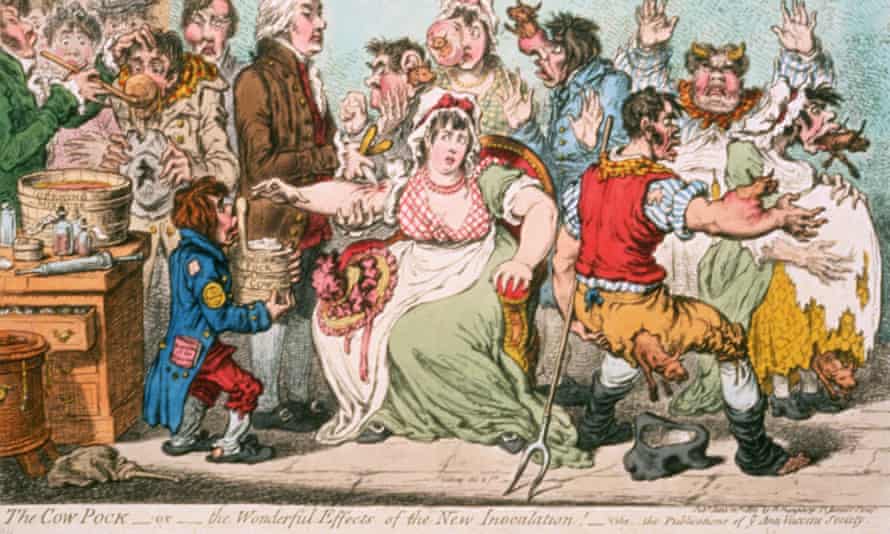
The Cow Pock – or The Wonderful Effects of the New Inoculation by James Gillray in 1802.

The Guardian  27 Feb 2021

 It is easy to see how the pandemic could lead to class and racial strife by imagining how the UK will stand in six months’ time. The vindictive will start to describe Covid as a sickness of choice. Its victims will be victims of their own stupidity. They might have accepted vaccination. They might have protected themselves and others if, as seems likely, vaccines limit infections.

Rational people will ask why they should continue to accept restrictions on their freedoms because of ignorant delusions. Employers will demand to know what possible argument there is against allowing the owners of pubs, airlines, restaurants, hotels or holiday homes to demand proof of protection when immunity passports might save their business. To make it personal, how would you feel come the autumn if someone you love contracted cancer and the NHS delayed treatment because it had to look after needlessly ill Covid patients?

The poor suffer disproportionately from Covid as they suffer disproportionately from everything else. But it could soon be a sickness of poverty. In Birmingham – the only city to have produced detailed statistics – just 60% of people over 80 accepted the jab in Alum Rock, a deprived and racially mixed part of the inner city, while 95% accepted it in Sutton Four Oaks, an overwhelmingly white commuter suburb. Public health workers told me of their fears, but said they could never speak their minds in public. So let me spit it out for them. If good citizens who have taken their jabs, see poor white people, ultra-orthodox Haredi Jews, black or south Asian men and women, they may remember the stories about anti-vax illusions and cross the road or move down the bus to avoid them, or refuse to hire them or provide them with services.

Friday, July 31, 2020

A bishop has urged Christians to speak out against plans to relax Sunday trading laws in the UK

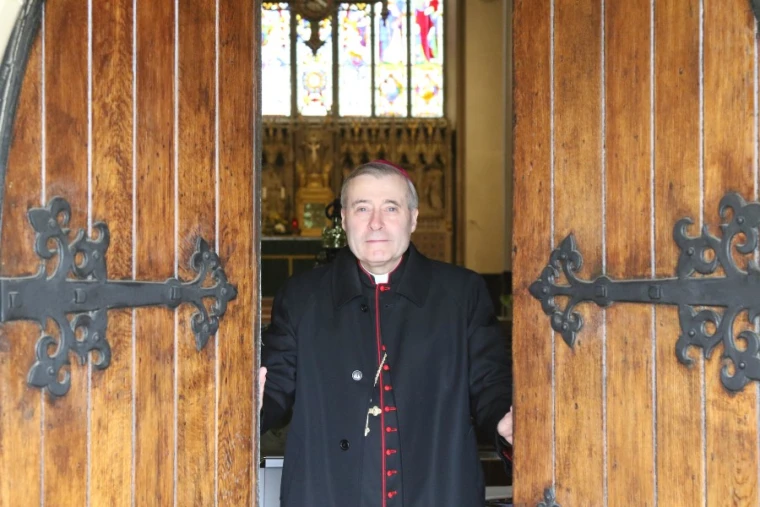
Bishop Mark Davies reopens Shrewsbury Cathedral to the public after 86 days of lockdown June 15, 2020. Credit: Shrewsbury diocese
A bishop has urged Christians to speak out against plans to relax Sunday trading laws in the United Kingdom as the economy reels from the effects of the coronavirus pandemic. 

In a June 21 homily at Shrewsbury Cathedral, Bishop Mark Davies criticized the government’s intention to lift the current six-hour limit on Sunday trading. 

“As we emerge from lockdown, it is regrettable that the government is considering removing the remaining legal protections of Sunday in order to make it a full trading day,” the bishop of Shrewbury said. 

“Proposals for unrestricted Sunday trading may be included within plans to revive economic activity and so place new demands upon the very shop workers and their families who have supported us throughout this crisis.” 

“Whatever economic advantages the government may calculate, the human loss will surely be greater if Sunday becomes just another working day.”

Monday, November 18, 2019

The Royal Bank of Scotland will open Britain’s first cashless bank

The Royal Bank of Scotland will open what is believed to be Britain’s first cashless bank branch next month in as the move towards online banking continues at pace.

The bank is to open at 49 Bishopsgate, London on November 20, replacing the branch at 62-63 Threadneedle Street, London, which is being closed on December 20.

The “digital bank” will remove the frontline cashier services in the store and will not have an ATM fitted, meaning customers will not be able to pay in and take cash out.

Instead, the branch will be used for other banking needs, including appointments to open Isas and other savings accounts as well as applying for mortgages.

Video banking, where people can book appointments to talk to bankers via video chat will be available, as well as staff to assist with online banking and “presentation space” for anyone to attend sessions on protecting against scammers and managing their finances.

Sunday, March 31, 2019

Goverment urged to defeat hate speech and offensive content.

Dailyecho 12th March
Sir Tim Berners-Lee, the inventor of the world wide web, has called on the public and politicians to "come together" to end its misuse in a letter to mark the technology's 30th anniversary.
The founder of the World Wide Web Foundation said the internet had created opportunities for good but had also become a space used by "scammers" and "given a voice to those who spread hatred, and made all kinds of crime easier to commit".
First proposed by Sir Tim as an information management system in 1989 while he was working for the European Organisation for Nuclear Research (CERN), around half of the world's population is now online.
Many of the world's largest web-based companies, such as Facebook, Twitter and Google, have come under scrutiny in recent years over data privacy issues and the rising spread of malicious and offensive content.
In his letter, Sir Tim said it would be "defeatist and unimaginative" to assume that the web could not be changed for the better given how far it has come in its first 30 years, but urged governments, organisations and the public to work together to improve the current system and make it available to everyone.

Friday, January 25, 2019

The world's richest 26 people own the same amount as half the global population


Mirror 21 Jan 2019
The world's richest 26 people own the same amount as half the global population, a shocking new report has revealed.
The startling gap between the rich and poor was highlighted in Oxfam's Public Good or Private Wealth? study.
It showed that billionaires saw their wealth rocket by £700bn in 2018 while 3.8 billion people were forced to survive on less £4.27 a day each.
The world’s richest man, Amazon founder Jeff Bezos, could fund Ethiopia’s health budget with 1% of his estimated £108.7billion fortune.
The increased fortunes of the wealthy is underlined by the fact in 2017 the world's richest 43 earned the same amount as the poorest half - it is now just 26.
In the UK the study added that the poorest 10% of people in Britain now pay a higher proportion of their income in tax than the richest 10%.

Wednesday, November 28, 2018

Diabetes UK’s tie-up with sugar giant

The Times  November 24 2018
The country’s leading charity for people with diabetes has been criticised over a £500,000 partnership with the soft drinks giant Britvic, which sells brands such as Tango and Pepsi.

Diabetes UK said it has agreed the three-year deal with the beverage producer despite the link between consuming too many sugary soft drinks and the life-threatening disease.

There are 3.8m people in England with type 2 diabetes, with about 200,000 new diagnoses every year. About 90 per cent of people with the disease are obese or overweight and consuming sugary drinks can increase the risk. The disease is associated with heart disease, amputation and blindness.

Thursday, October 26, 2017

Pollution is killing millions of people a year and the world is reaching 'crisis point', experts warn

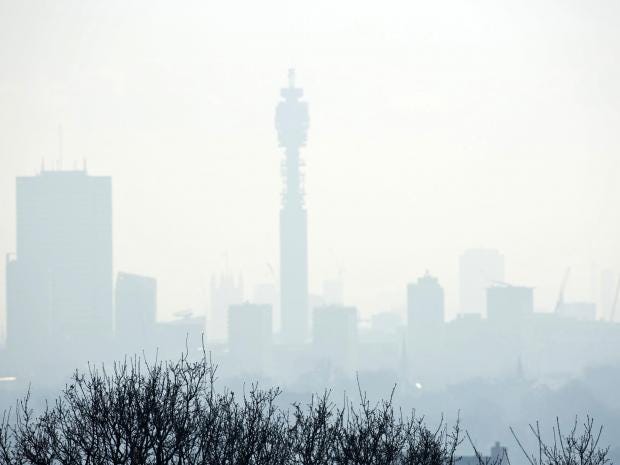
london-pollution.jpg
Independent   19 October 2017
Pollution is killing 50,000 people a year in the UK, according to a damning new report, which lays bare the toxic danger posed by contaminated air and water. 
The problem is responsible for more deaths in Britain than almost all of its Western European neighbours, the study says, and suggests a higher death toll in the UK from pollution than had been feared.
Experts had previously estimated that 40,000 people were dying in the UK from air pollution, which itself had led to calls for immediate action from the Government. The new findings, from a two-year project involving more than 40 international researchers, show the world’s air quality is reaching “crisis point” and must be dealt with urgently. 
Globally, nine million people died in 2015 as a result of air pollution. Many of those deaths occur in the developing world – but even among rich countries, a huge number of people are dying as a result of unclean air and other pollution.
The new research shows that people are in the grip of a “profound and pervasive threat” that is damaging human health and well-being, according to the scientists behind it. Not enough is done to halt one of the biggest killers of people in the world, they said.
The obvious solutions are available to governments in the UK and across the world, said campaigners. But they are failing to confront the challenge and further deaths will come, they warned.
The UK has repeatedly suggested that it will work on a new clean air act, but has been criticised for delaying many of the most important measures to tackle pollution. A tax on diesel fuel, for instance, would help bring cleaner air, the campaigners said.
Others urged the Government to work quickly to establish clean air zones and encourage people to use more environmentally friendly forms of transport.

England’s chief medical officer has warned of a “post-antibiotic apocalypse"


World must act or risk ‘post-antibiotic apocalypse’ – top doctor

RT   14 Oct, 2017
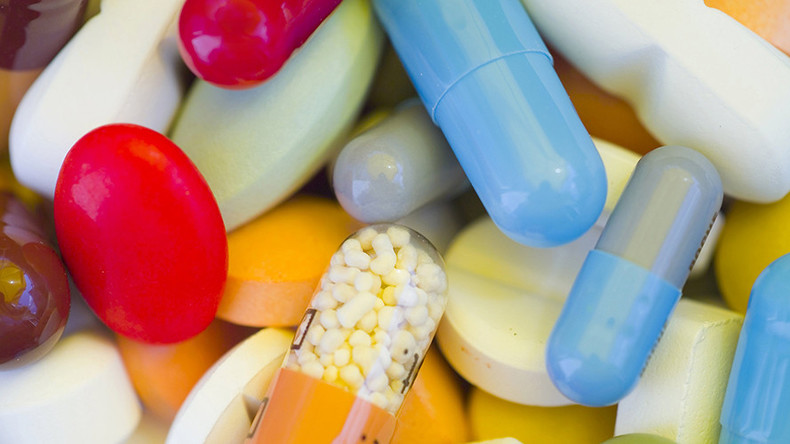
 England’s chief medical officer has warned of a “post-antibiotic apocalypse,” calling on world leaders to address the growing threat of drug-resistant infections.

Ahead of a global conference in Berlin organized by the UK government to map out the threat of drug resistance, Professor Dame Sally Davies cautioned against giving patients antibiotics they “don’t need,” as the drugs will lose their effectiveness and “spell the end of modern medicine.”

She warned that the threat of infections posed by antimicrobial resistance (AMR) heightens the risk of carrying out operations such as caesarean sections and hip replacements.

“We really are facing, if we don’t take action now, a dreadful post-antibiotic apocalypse,” she said.

“I don’t want to say to my children that I didn’t do my best to protect them and their children.”

Around 700,000 people around the world die annually due to drug-resistant infections including tuberculosis (TB), HIV and malaria.

If no action is taken, it has been estimated that drug-resistant infections will kill 10 million people per year by 2050.

“This is a serious issue that is with us now, causing deaths.

“If it was anything else people would be up in arms about it. But because it is hidden they just let it pass.

“It does not really have a ‘face’ because most people who die of drug resistant infections, their families just think they died of an uncontrolled infection.

“It will only get worse unless we take strong action everywhere across the globe.

“We need some real work on the ground to make a difference or we risk the end of modern medicine,” Davies added.

She also debunked the assumption held by patients that GPs will not prescribe antibiotics because they are “mean.” They are in fact “trying to save the drugs, so that they work when they are actually needed.”

While in the UK, one in four antibiotic prescriptions is not needed, Davis said “other countries use vastly more antibiotics in the community and they need to start doing as we are, which is reducing usage,” she said.

“Our latest data shows that we have reduced human consumption by 4.3 percent in 2014-15 from the year before.”

The new project which will map the spread of superbugs is a collaboration between the UK Government, Wellcome Trust, Bill and Melinda Gates Foundation, the University of Oxford, and Institute for Health Metrics and Evaluation.

Saturday, September 30, 2017

UK Supermarket Becomes World’s First to Offer Cashless Checkout with Finger Vein Scan


The march toward a cashless society has now moved from the theoretical to the phase of widespread adoption. This is primarily due to developments in the tech sector that now enable the easy use of biometric recognition systems, as well as the increasing acceptance from a public who is becoming familiar with turning themselves into a password for their personal devices.
Behind the scenes, governments and corporations have been building the political and economic enticements via the Better Than Cash Alliance to ensure that the world eventually gets “de-cashed.” We’re now witnessing the full roll-out of an architecture that has been in development for many years.
China’s high-tech KFC recently made headlines when it began testing facial recognition payments in its KPRO store. Cashless agenda denialists, however, could readily point to China’s authoritarian government to ease any fears about an impending technocratic takeover occurring in the (supposedly) more democratic West.
Well, today’s cashless agenda news does come from the West, and it’s a world’s first.  As reported by The Telegraph, London’s Costcutter supermarket has announced that its shoppers can now pay by finger vein scan.
It works by using infrared to scan people’s finger veins and then links this unique biometric map to their bank cards. Customers’ bank details are then stored with payment provider Worldpay, in the same way you can store your card details when shopping online. Shoppers can then turn up to the supermarket with nothing on them but their own hands and use it to make payments in just three seconds.
Nice and convenient, of course.
Longtime readers of Activist Post might remember an article by Brandon Turbeville written in 2011 warning that this was being tested as a future payment system. Remarking at the time about how smartphone payments would eventually seem outdated, he explained:
Taking the cashless control grid one step further, an article published on August 8, 2011 in Technology Review, entitled “Beyond Cell Phone Wallets, Biometrics Promise Truly Wallet-Free Future,” explains that major corporations are not even waiting for the “digital wallet” to catch on. They are actually moving forward with a system that will allow for an individual to swipe their palm, not their phone, in front of a digital recognition device in order to gain access to various buildings, pay for merchandise, or otherwise identify oneself.
[…]
Indeed, this new type of technology, even this specific product, is already being introduced all over the United States.
For instance, New York University’s Langone Medical Center has already implemented the vein scanners in some of its medical facilities. Manufactured by Fujitsu, the scanners are being placed in the hospital under the guise of greater convenience (the marketing gift that keeps on giving) and faster access to medical records. Health histories, insurance forms, and other documents are all handled electronically and at a much faster pace with the help of the new vein scanners.
[…]
Schools, too, have begun to implement the Fujitsu systems. For instance, the Pinellas County School District in Florida recently announced that it was introducing the system in order “to identify students and thereby reduce waste and the threat of impersonation.”
With the new scanners, the students are able to have their meals deducted from their account, upon scanning their palms, as they march single file in the feeding lines during lunch time. Of course, this type of technology is not new to Pinellas County. The students have been finger scanning in order to gain access to their lunch for years.
Naturally, these days not everyone is worried only about the intrusive nature of turning one’s body into a password to be mined by algorithms for corporations and governments, but just as legitimately about having their financial data hacked.
No worries, says the developer of the newest form of vein scanning, Sthaler. Although company director, Simon Binns, manages to sound creepy and objectifying even while trying to reassure the vein-scanning public:
This is the safest form of biometrics. There are no known incidences where this security has been breached.
“When you put your finger in the scanner it checks you are alive, it checks for a pulse, it checks for haemoglobin. ‘Your vein pattern is secure because it is kept on a database in an encrypted form, as binary numbers. No card details are stored with the retailer or ourselves, it is held with Worldpay, in the same way it is when you buy online.”
System developers are projecting that adoption of the technology will be rapid, with perhaps thousands of stores, nightclubs and membership services getting on board in the near future. The question is: Will it be optional? And if so, for how long?
As Brandon Turbeville concluded more than 6 years ago:
It should be noted that almost every element of any control grid begins by being optional when it is first introduced to the target population. But, as more and more individuals acquiesce to the system, the more inconvenient and, subsequently, the harder it will become for the rest of us to opt out. Eventually, the ability to opt out will be removed altogether.        Activist Post

Thursday, May 18, 2017

Britain has reached new heights of secularization, with almost half of Britons now identifying as non-religious, a new study reveals.


Losing my religion? Secular Brits now outnumber Christians, but Islam & Hinduism growing

17 May, 2017
Britain has reached new heights of secularization, with almost half of Britons now identifying as non-religious, a new study reveals.
According to ‘The “No Religion” Population of Britain’ report by Stephen Bullivant, professor of theology and the sociology of religion at St Mary’s University, Twickenham, non-religious people, known as ‘nones’, account for 48.6 percent of Britain’s population.
Although there has been an overall trend towards secularization in Britain, the figures also show record numbers of people from non-Christian faiths, such as Islam and Hinduism.
The number of British people identifying as Christian dropped from 55 percent to 43 percent between 1983 and 2015. By contrast, non-Christian believers such as Muslims and Hindus quadrupled.
“The rise of the non-religious is arguably the story of British religious history over the past half-century or so,” Bullivant said.
“Looking at the long-term pattern, the non-religious share of the population has shown strong growth over our whole period,” the report states.
“The year 2009 was the first in which nones outnumbered all Christians put together.
“With the single exception of 2011, this pattern has held ever after. In two years, 2009 and 2013, nones formed a majority of the adult British population.”
However, the research, carried out with data from the annual British Social Attitudes survey and the biennial European Social Survey, also highlights how the falling number of worshipers with the Church of England seems to have stabilized.
Bullivant said patriotism might be driving this trend, as Christianity and Englishness tend to be conflated.
“People see Christianity as an expression of Englishness. There has been more rhetoric around Britain being a Christian nation,” he said, according to the Times.
“I suspect a larger proportion of people who do say they are Anglican tend to be patriotic.”
In 1983, the number of Anglicans accounted for 40 percent of Britain’s population. This dropped to 16.3 percent in 2009 before it slid back up to 17.1 in 2015.
The research also shows a spike in the number of ‘nonverts’, namely people who have been brought up believing in a certain religion, but who have turned to be non-religious.
Most ‘nonverts’ – more than six in 10 – are Christians, mainly Anglican and Catholic.
According to the report, most ‘nones’ have been brought up in Christian households; overall, a mere 2 percent of ‘nones’ have been raised in non-Christian homes.
The rate of people converting to non-religion was recorded as 14 percent for Jews, 10 percent for Muslims and Sikhs, and 6 percent for Hindus.
Bullivant pointed out how non-religion has stopped being an exclusive middle-class feature.
“It used to be middle-class people, who had gone to university, who were more likely to step out of their parents’ religiosity,” he said, as cited in the Guardian.
“As having no religion has become the norm, vast swaths of working-class people are now also identifying as nones.”     RT

Despite the lowest unemployment rate in more than four decades, real wages in the UK fell at their fastest rate in the first quarter of the year since 2014.

17 May, 2017 by RT
Despite the lowest unemployment rate in more than four decades, real wages in the UK fell at their fastest rate in the first quarter of the year since 2014.
According to the Office for National Statistics, wages excluding bonuses rose by 2.1 percent year-on-year which was the weakest increase since July 2016 and below analyst expectations.
Salaries were not keeping pace with inflation which was 2.3 percent in February and March, and 2.7 percent in April. Inflation was driven higher by the falling value of the pound since the Brexit vote.
“If the disparity between pay and price growth continues to increase as we predict, household spending is likely to slow further, weakening overall economic activity,” Suren Thiru, head of economics at the British Chambers of Commerce was cited as saying by the Guardian.
Despite the weak wage growth, there are signs of continued strength in the UK labor market.     More

Wednesday, February 8, 2017

The British Government Colludes with Monsanto. Crimes against Humanity and “Ecocide”

monsanto_bayer_750
Colin Todhunter Global Research, January 27, 2017
“The British Government has colluded with Monsanto and should be held accountable in the International Criminal Court in The Hague for crimes against humanity and ecocide.” Dr Rosemary Mason.
The British public and the environment are being poisoned with a deadly cocktail of 320 pesticides. Moreover, Wales has become a storage dump for Monsanto’s most toxic chemicals. These are the messages conveyed by Dr Rosemary Mason in her recent open letter to Councillor Rob Stewart, the leader of Swansea City and County Council.
Dr Mason adds that Swansea has over the years been a testing ground for glyphosate with the outcome being a huge spike in illness and disease among the local population as well as ongoing environmental devastation. There has been a long-term reckless use of a glyphosate-based weedkiller in Swansea, regardless of EU recommendations.
Dr Henk Tennekes, an independent toxicologist from the Netherlands, and Dr Pierre Mineau, an expert on ecotoxicology from Canada, both prophesied environmental catastrophe from the self-regulated and unsustainable use of pesticides by the agrochemical industry.    Read more

Monday, October 31, 2016

Conspiracy Theorist’ Max Spiers Found Dead Days After Texting His Mother to Investigate if Anything ‘Happened to Him’

Max Spiers died in Warsaw in June this year. 
Max Spiers, a British Ufologist and conspiracy theorist, sent his mother a text message days before his death earlier this year saying: “If anything happens to me, investigate.”
Spiers, 39, originally from Canterbury, was found dead in Warsaw in June.
We all want answers to this and I will continue to fight to get to the truthVanessa Bates, Max Spiers' mother
Local authorities say he died from natural causes – but his mother has told reporters she has doubts over the verdict.
Vanessa Bates, an English teacher, said: "He was making a name for himself in the world of conspiracy theorists and had been invited to speak at a conference in Poland in July.
"He was staying with a woman who he had not known for long and she told me how she found him dead on the sofa.
"But I think Max had been digging in some dark places and I fear that somebody wanted him dead."
Ms Bates remarks have prompted fevered online speculation among conspiracy theorists. Scott C Waring of UFO Sightings Daily told Metro: “This is really strange. It does seem that UFO researchers are now being targeted, probably to slow the rate of information being leaked to the public.”
However, author and journalist Nick Pope, who investigated the UFO phenomenon for the Ministry of Defence in the early Nineties, said on Twitter: “The death of Max Spiers was a tragedy, but having run the UK Government's UFO project I promise we don't go around killing UFO researchers.”
Ms Bates described her son as a “very fit man who was in good health", adding: "All I have is a death certificate from the Polish authorities that it was from natural causes, but no post-mortem was done so how can they tell that?
"They are also refusing to release any paperwork about it to me because, absurdly, I don't have his written permission.
"He has a brother, Josh, and sister, Becky, who are both devastated, as are his two boys. We all want answers to this and I will continue to fight to get to the truth."
North East Kent coroner's office said that an investigation into Mr Spiers’ death was in its “very early" stages.                          Telegraph

Tuesday, April 26, 2016

It's nearly May but it's Snowing in London


Snow and sleet has fallen in many parts of the UK as temperatures struggle to get into double figures with the prospect of a Spring-like May a long way off. 
Despite the time of year, forecasters are warning the unsettled picture will continue for much of the week with freezing conditions in many parts.
Thunder, lightning and sleet showers are expected with some in northern areas witnessing heavy snowfall, including on the North Yorkshire Moors and parts of Scotland.
The blizzard seen all over the UK were reminiscent of the bizarre scenes on the very same day 35 years ago, when snowstorms hit the British spring.
Cars were buried on the roads as the nation was blanketed in a thick layer of snow on April 26 1981, which saw the worst blizzards for that time of year in a century. 
Forecasters think parts of Britain will be colder than Siberia and Greenland this week. There is a strong risk of hail showers throughout the country, with a chance of snow settling down to 200 metres.
Tonight will see wintry showers along the coast, with icy patches developing in Scotland and eastern England. Temperatures will be down to freezing in some places.  

HOW COMMON IS SNOW THIS LATE IN THE YEAR? 

It is rare to see snow past mid-April, however it has occurred this late in the year a number of times over the past few decades. 
May 6 1997: 209 weather stations across the UK (88 in England, 36 in Wales, 62 in Scotland and 23 in Northern Ireland) recorded a day of snow falling
April 26 1987: Appearances of snowflakes falling out of showers in Wiltshire and Berkshire   
April 27 1985: Hampstead reported snow and quite a lot of other stations in London reported sleet   
April 29-30 1979: Showers of sleet and snow reported across the country
April 23 1975: A little sleet and snow reported across eastern and southern England 
April 18-19 1969: Sleet and snow showers reported in East Anglia 
April 21 1967: Widespread snow, mainly in the higher peaks of Scotland and northern England 
April 14-15 1966: Widespread snow reported in parts of southern England - of up to 8.89cm  
April 19 1965: The ground was covered in snow in parts of the north east of England and the Midlands 
The sight of snow in London has prompted a flurry of bets at Ladbrokes on April being the coldest month on record at 5/1. 
Another bet being taken on at 4/5 is that snow will fall in the UK every day until Sunday May 1. 
Nicky Maxey, a spokeswoman for the MetOffice, said: 'It's continuing to look unsettled tomorrow and there's still a chance of more hail and thunder. 
'More snow will be at higher levels, over 500 metres and further north there will be a chance of some thunder with some hail anywhere in the country. 
'Tomorrow the eastern side will have more chances of snowy conditions, less chance in the west
'That unsettled picture continues for the rest of the week, as we go on wind more from the Atlantic, westerly direction and low pressure will influence weather. 
'Temperatures will be in double figures again by the weekend. London on Saturday and Sunday will be 14-15C [57.2F-59F], back to more of what you expect for the time of year.'
There is a severe weather warning in place for northern Scotland warning of snow and ice.
The unsettled conditions could also cause problems for Monday's Bank Holiday, forecasters say.
On this day last year temperatures peaked in London at 11.3C [52F] - with the hottest part in Sutton Bonington near Nottingham which reached 13.3C [56F].  
Mrs Maxey added: 'Today is looking like most places will be struggling to see double figures. 
'As you would expect further north is colder - in Scotland, Aberdeen and Glasgow looking at 7-8C [44-46F]. In London it will be nearer 10-11C [50-52F] and for the south east today. 
'That's per normal and is a few degrees difference between north and the rest of UK.' 
Spring snowfall will allow the ski resort in the Cairngorms to remain open into May.
Heavy snow and freezing temperatures on Tuesday morning mean more than half of the 11 lifts in the Aviemore area are open for skiers and snowboarders.
In 2010, CairnGorm Mountain remained open until June for the first time with hundreds of skiers trekking to the snow.
This year, the resort will be open until at least May 2, when staff will review the conditions.
Snow is expected to continue in higher parts of the north east of Scotland until the weekend.209 weather stations across the UK (88 in England, 36 in Wales, 62 in Scotland and 23 in Northern Ireland) recorded a day of snow falling
A man sledges in a field near the A93 as the snow gates on the road at Spittal of Glenshee, Scotland, are closed due to the weather
CairnGorm Mountain general manager Janette Jansson said: 'We are absolutely delighted to continue offering great snowsports at CairnGorm at the moment.
'It was a particularly late start to the season this year, but we are certainly making up for it now with plenty of snow still on the slopes.' 
Tomorrow will see a mix of sunshine and wintry showers, with hail, snow and sleet across the UK.
Showers could be heavy at times and accompanied by thunder. Temperatures will be between 7-9C [44F-48F] in the north and 9-12C [44F-53F] in the south.
There will be more heavy wintry showers on Thursday, particularly along the east coast, with a chance of snow settling above 500 metres.
The wintry showers will continue on Friday, with a risk of hail and snow on the hills in the north.
The weekend is also expected to be unsettled, with rain showers across the country, which could turn heavy in places with hail and thunder. There may be snow in the Scottish highlands.      DailyMail
Monday, February 1, 2016

Paramedics called to secondary school as pupils fall ill and collapse after being given their vaccinations

  • Pupils in Year 10 reportedly fainted after being given their jabs
  • Paramedics were called but all have reportedly now recovered
  • School is investigating whether faulty vaccines were to blame 
Paramedics had to be called to a secondary school when pupils fell ill and fainted after being given their vaccinations.
Around 10 to 15 students from Year 10 reportedly keeled over after getting their jabs at Northampton School for Boys on Tuesday.
One parent, whose son saw the drama unfold, said children were seen 'on their backs on the floor with their legs up on chairs'.
Pupils in Year 10 of a school in Northampton reportedly fainted after receiving vaccinations. File photo
The woman, who didn't want to be named, added: 'Several different vaccines were being administered, and around 10 to 15 pupils keeled over and paramedics were called.
'The rest of the jabs were cancelled and a letter was sent home to the parents of pupils who had been given the jabs about what to do if they felt nauseous. Rumours say there may have been a duff batch of vaccines.'
The teenagers were later said to be 'well' but the school sent a letter home to parents warning them to seek medical advice if their sons started to feel ill.
In the note, the school said it is not known what caused the pupils to fall ill but said the vaccine was withdrawn 'as a precaution'.
The letter, sent by the nursing team, reads: 'Dear Parent/Carer, please be advised that the immunisation session your child attended today was suspended due to unforseen circumstances.
'Some of the vaccinated children have become unwell shortly after vaccination.'
The school later sent out letters telling parents the batch of vaccines had been withdrawn as a precaution
The note continued: 'Your child has received their scheduled vaccination and, whilst we are not expecting him to become unwell, we are advising that if he experiences sensations of dizziness. nausea, skin rash or breathing difficulties to seek the appropriate medical advice.
'At present we are unclear regarding the reasons for the reaction to the vaccination and are completing an investigation with our immunisation colleagues.
'We can provide reassurance that the small number of children involved are currently well.
'However, as a precaution, we have withdrawn the batch of vaccine that they had received. If you wish to discuss this further please contact the School Nursing team.'
An investigation has now been launched by the Northampton School Nursing Team at Northants Healthcare NHS Foundation Trust.         DailyMail