Wednesday, March 9, 2016

7 Toxins Harming Your Brain


brain toxins

By Dr. Edward F. Group
Guest Writer for Wake Up World
Some of the most common substances found in everyday life are harming our cognitive function right now. Along with pesticides, you have substances like BPA, phthalates, mercury, lead, benzene, and flame retardants that are affecting you, even if you don’t realize it. Hidden in your home and office, you are exposed to toxic chemicals on a daily basis, and your brain is taking the brunt of it.

7 Toxins Harming Your Brain

Your brain interacts with every aspect of your body, giving directions to cells and the nervous system. It is essential for supporting good mood and clear thinking, helping to improve your overall quality of life. Here are seven of the most harmful and pervasive toxins you should look out for in order to support brain health.

1. BPA

BPA is a known endocrine disruptor that interferes with how your body regulates hormones. Not only does it affect reproductive health, but it can also affect brain function, learning abilities, and how your memory works. [1] And it’s not just plastic that contains BPA; items that are BPA free aren’t always much better. The substitutes used for BPA (Bisphenol F and S or “BPF” and “BPS”) have been linked to behavioral issues, as well. [2]

2. Phthalates

Phthalates are present in more everyday things than you might think. Similarly to BPA, phthalates are found in many products that contain plastic and things like household cleaners, cosmetics, personal hygiene products, and even food. There is a wide variety of phthalates, but the most notable versions are BBzP (butyl benzyl phthalate), DnBP (dibutyl phthalate), and DEHB (di-2-ethyl hexyl phthalate).
Phthalates have been linked to ADHD, asthma, diabetes, neurodevelopmental problems, and more. [3] California is spearheading the move against phthalates by asking that four specific types must be listed on labels (many do not have to be listed at all). Even big corporations like Target and WalMart have promised to reduce the amount of or even eradicate the use of harmful toxins like phthalates in products they stock.

3. Mercury

I’ve covered the dangers of mercury extensively in other articles. The base reason is that it has been linked to kidney problems, respiratory failure, and other neuromuscular complications; however, the elemental form of mercury is the most toxic. [4] Due to this knowledge, many people have switched off from thermometers and other products containing mercury.

4. Lead

Lead poisoning isn’t a problem of yesterday, it’s a problem today — a huge problem. The biggest issue is that lead affects so many parts of the body in such harmful ways. Not only can it affect organs and tissues, but it can affect whole systems of the body like the digestive, reproductive, and nervous systems. You absolutely need to take conscious steps to reduce your exposure to lead, including making your home safer for your children.

5. Benzene

Benzene is found in fuel and motor vehicle exhaust, but can also be found in detergents and pharmaceuticals. [5] Why is something so problematic used so frequently? Benzene is even classified as carcinogen, [6] it’s highly flammable, and benzene poisoning can pass from mother to fetus. The best way to reduce your exposure to benzene is to distance yourself from gasoline or waste plants and to avoid cigarette smoke at all costs. As quoted by the CDC, “Average smokers take in about 10 times more benzene than nonsmokers each day.” [7] Just one more reason not to smoke!

6. Flame Retardants

Normally, something that helps to quell a fire is heralded as useful and sometimes heroic. However, a disturbing discovery was made by a researcher from Texas. The discovery showed that flame retardants were found in the breast milk of American women. [8] How could this happen? It turns out that flame retardants can be found virtually anywhere in food, furniture, and building materials. We’re around these items every day and breathe in the toxins that emanate throughout the day.
Attributed to the spread of human civilization, it’s unbelievable just how widespread traces of flame retardant chemicals are. Not even bald eagles are safe. Out of 33 dead eagles tested from 2009 to 2011, every one but two had all four flame retardant components for which scientists were testing. [9] It’s important to educate yourself about flame retardant compounds and make sure they’re not abundant in your home. [10]

7. Pesticides

Mostly everyone is familiar with the negative effects of pesticides, but new developments further strengthen the argument against using pesticides on foods we consume. Perhaps the biggest and most shocking development to come to light is that pesticide exposure is now linked to Parkinson’s disease. [11] The best way to avoid undue exposure to pesticides is to choose organic food!

Protecting Your Brain

Now that you’re a bit more informed about seven toxins you might not have known about before, you can get started on protecting yourself from the harmful effects, both short term and long term. Turmeric shows powerful antioxidant protection for the brain, and it’s often advised to take this in extract form to ensure best results. Eating an organic diet, reducing the use of furniture made with flame retardants, and using glass containers instead of plastic are also helpful steps.
– Dr. Edward F. Group III, DC, NP, DACBN, DCBCN, DABFM
Article References:

New Age Order

Similarities of Pope Francis and the antichrist

The end of all things is at hand

New Workshop Tool Helps Congregations Open Conversation with LGBT Adventists


Covers
From News Release, March 9, 2016:    Can Adventist congregations create safe spaces for positive, healing, informed and authentic conversation on a topic often ignored? A Sanctuary for Conversation: Listening, Loving, and Learning is a three-hour workshop that helps to answer that question. Through this workshop, congregations will be introduced to a model for engaging in conversations that lead to clarity, hope, and healing.
This workshop responds to the Statement on Human Sexuality, from the denomination’s North American Division (NAD). The NAD stated, “The vital and opportune role of the Adventist Church is to educate its members about sexuality and purity within the context of grace.”
A Sanctuary for Conversation also addresses the Call for Peace, from the General Conference (GC). The GC stated, “There needs to be dialogue and discussion in place of diatribe. In particular, Christians should always be ready to ‘reason together,’ as the Bible says.”
The workshop opens with active learning activities and includes interviews with lesbian, gay, bisexual and transgender (LGBT) people and parents of LGBT children. Also, a professional psychologist defines terms and answers questions about orientation and gender. Participants will learn better listening skills, statistics about LGBT youth, the difference between acceptance and agreement, and signs of safe and unsafe churches. At the end of the workshop participants brainstorm practical ways to transform their church into a sanctuary for Jesus and for God’s Holy Spirit.
For more information or to purchase copies of the leader’s guide and workbook, visit OpenDialogueResources.org or email OpenDialogueResources@gmail.com.
A Sanctuary for Conversation has been tested with pastors, youth ministries leaders and local churches. Here is some of the feedback from people who were part of the workshop:
“I have grown because of the time I spent listening to the presentations, discussions, and panel. As a result of this workshop, I have taken away an understanding of how to become a better minister to all.”
“The spirit of loving, humble discussion was filled with opportunities to sense and share God’s Holy Spirit.”
“We asked [those who attended] to become more empathetic, not to change their beliefs.” (a presenter)
“During my 27 years in Adventism, I have never seen such a spirit of humility expressed from the leaders of the church. No one came to prove ‘I’m right, you’re wrong,’ or to ‘school’ someone else on their theology. Instead, we all came to learn, be honest, and work together to improve the lives of our LGBT youth.”
“If you want your church to be a true community that is loving and compassionate, then do this workshop—it will make everyone more aware of their humanity.”     AToday

New King James Version –– A New Age Bible Version

“And if any man shall take away from the words of the book of this prophecy, God shall take away his part out of the book of life, and out of the holy city, and from the things which are written in this book.” (Revelation 22:19 KJV)
Bar
The New Age movement’s expressed goal of infiltrating the evangelical church and gradually changing the Bible to conform to it’s One World Religion is evident in the current new age bible versions. Their words and doctrines prepare the apostate church of these last days to accept the Antichrist, his mark, image, and religion – Lucifer worship. The emerging 'new' Christianity – with its substitution of riches for righteousness, a crown for a cross, and an imitation for a new creation – is shown to be a direct result of the wording in new versions. The Greek manuscripts, critical editions, lexicons and dictionaries behind the new versions are occult in origin, content, and yet unreleased material -- a blueprint for the Antichrist's One World Religion and government.
One of these new age bible versions – the "New King James Bible" (NKJB) – is promoted by the Thomas Nelson publishers as an "update" to the original “1611 Authorized Version” [the “King James Version” (KJV)] having ‘only’ replaced the ‘obsolete’ English words with equivalent ‘modern’ English words. In support of this new age bible version, a prominent fundamentalist, Dr. Jerry Falwell of Lynchburg, Virginia, has had the following to say about the NKJV: "This new edition preserves all of the truth and authority of the original [KJV], but makes it much easier to read and understand. It protects every thought, every idea, every word, just as it was intended to be understood by the original scholars."
However, what ‘they’ claim about the NKJV is far from the truth! The word ‘changes’ in the NKJV have brought about an entirely new meaning to the original KJV text, with the added footnotes – based upon the corrupt manuscripts – encouraging the reader to question the authenticity of the original KJV text, the Word of God. The following is only a very small portion of the Thomas Nelson Publishers’ description of ‘the changes’ made to the original KJV in order to produce their 1982 edition of the NKJV:
The Old Testament Text – For the New King James Version the text used was the 1967/1977 Stuttgart edition of the Biblia Hebraica, with frequent comparisons being made with the Bomberg edition of 1524-25. The Septuagint (Greek) Version of the Old Testament and the Latin Vulgate also were consulted. In addition to referring to a variety of ancient versions of the Hebrew Scriptures, the NKJV draws on the resources of relevant manuscripts from the Dead Sea caves. In a few places where the Hebrew was so obscure that the 1611 King James was compelled to follow one of the versions, but where information is now available to resolve the problems, the NKJV follows the Hebrew text. Significant variations are recorded in the center reference column. The New Testament – The King James New Testament was based on the traditional text of the Greek-speaking churches, first published in 1516, and later called the ‘Textus Receptus’ or ‘Received Text’. Although based on the relatively few available manuscripts, these were representative of many more which existed at the time but only became known later. In the late nineteenth century, B. Wescott and F. Hort taught that this text had been officially edited by the fourth-century church, but a total lack of historical evidence for this event has forced a revision of the theory. It is now widely held that the Byzantine Text that largely supports the Texus Receptus has as much right as the Alexandrian or any other tradition to be weighed in determining the text of the New Testament.
The following are only a few of the many examples of this New Age Religion corruption in the ‘New King James Version’:
Psalms 109:5-6
King James Version: “And they have rewarded me evil for good, and hatred for my love. Set thou a wicked man over him: and let Satan stand at his right hand.”
New King James Version: “Thus they have rewarded me evil for good, And hatred for my love. Set a wicked man over him, And let an *accuser stand at his right hand. (*Note: Hebrew satan)”
Ephesians 3:9
King James Version: “And to make all men see what is the fellowship of the mystery, which from the beginning of the world hath been hid in God, who created all things by Jesus Christ:”
New King James Version: “and to make all see what is the fellowship of the mystery, which from the beginning of the ages has been hidden in God who created all things *through Jesus Christ; (*Note: NU-Text omits through Jesus Christ..)”
1 John 5:6-8
King James Version: “This is he that came by water and blood, even Jesus Christ; not by water only, but by water and blood. And it is the Spirit that beareth witness, because the Spirit is truth. For there are three that bear record in heaven, the Father, the Word, and the Holy Ghost: and these three are one. And there are three that bear witness in earth, the Spirit, and the water, and the blood: and these three agree in one.”
New King James Version: “This is He who came by water and blood--Jesus Christ; not only by water, but by water and blood. And it is the Spirit who bears witness, because the Spirit is truth. For there are three that bear witness in heaven: *the Father, the Word, and the Holy Spirit; and these three are one. And there are three that bear witness on earth: the Spirit, the water, and the blood; and these three agree as one. (*Note: NU-Text and M-Text omit the words from in heaven [1 John 5:7] through on earth [1 John 5:8]. Only four or five very late manuscripts contain these words in Greek.)”
Mark 16:15-18
King James Version: “And he said unto them, Go ye into all the world, and preach the gospel to every creature. He that believeth and is baptized shall be saved; but he that believeth not shall be damned. And these signs shall follow them that believe; In my name shall they cast out devils; they shall speak with new tongues; They shall take up serpents; and if they drink any deadly thing, it shall not hurt them; they shall lay hands on the sick, and they shall recover.
New King James Version: “*And He said to them, "Go into all the world and preach the gospel to every creature. He who believes and is baptized will be saved; but he who does not believe will be condemned. And these signs will follow those who believe: In My name they will cast out demons; they will speak with new tongues; they will take up serpents; and if they drink anything deadly, it will by no means hurt them; they will lay hands on the sick, and they will recover." (*Note: Mark 16:9-20 is bracketed in NU-Text as not original. It is lacking in Codex Sinaiticus and Codex Vaticanus, although nearly all other manuscripts of Mark contain it.)”  Source

The internet: The new mind control

Header essay 42 70635245
by Robert Epstein

Over the past century, more than a few great writers have expressed concern about humanity’s future. In The Iron Heel (1908), the American writer Jack London pictured a world in which a handful of wealthy corporate titans – the ‘oligarchs’ – kept the masses at bay with a brutal combination of rewards and punishments. Much of humanity lived in virtual slavery, while the fortunate ones were bought off with decent wages that allowed them to live comfortably – but without any real control over their lives.
In We (1924), the brilliant Russian writer Yevgeny Zamyatin, anticipating the excesses of the emerging Soviet Union, envisioned a world in which people were kept in check through pervasive monitoring. The walls of their homes were made of clear glass, so everything they did could be observed. They were allowed to lower their shades an hour a day to have sex, but both the rendezvous time and the lover had to be registered first with the state.
In Brave New World (1932), the British author Aldous Huxley pictured a near-perfect society in which unhappiness and aggression had been engineered out of humanity through a combination of genetic engineering and psychological conditioning. And in the much darker novel 1984 (1949), Huxley’s compatriot George Orwell described a society in which thought itself was controlled; in Orwell’s world, children were taught to use a simplified form of English called Newspeak in order to assure that they could never express ideas that were dangerous to society.
These are all fictional tales, to be sure, and in each the leaders who held the power used conspicuous forms of control that at least a few people actively resisted and occasionally overcame. But in the non-fiction bestseller The Hidden Persuaders (1957) – recently released in a 50th-anniversary edition – the American journalist Vance Packard described a ‘strange and rather exotic’ type of influence that was rapidly emerging in the United States and that was, in a way, more threatening than the fictional types of control pictured in the novels. According to Packard, US corporate executives and politicians were beginning to use subtle and, in many cases, completely undetectable methods to change people’s thinking, emotions and behaviour based on insights from psychiatry and the social sciences.
Most of us have heard of at least one of these methods: subliminal stimulation, or what Packard called ‘subthreshold effects’ – the presentation of short messages that tell us what to do but that are flashed so briefly we aren’t aware we have seen them. In 1958, propelled by public concern about a theatre in New Jersey that had supposedly hidden messages in a movie to increase ice cream sales, the National Association of Broadcasters – the association that set standards for US television – amended its code to prohibit the use of subliminal messages in broadcasting. In 1974, the Federal Communications Commission opined that the use of such messages was ‘contrary to the public interest’. Legislation to prohibit subliminal messaging was also introduced in the US Congress but never enacted. Both the UK and Australia have strict laws prohibiting it.
Subliminal stimulation is probably still in wide use in the US – it’s hard to detect, after all, and no one is keeping track of it – but it’s probably not worth worrying about. Research suggests that it has only a small impact, and that it mainly influences people who are already motivated to follow its dictates; subliminal directives to drink affect people only if they’re already thirsty.
Packard had uncovered a much bigger problem, however – namely that powerful corporations were constantly looking for, and in many cases already applying, a wide variety of techniques for controlling people without their knowledge. He described a kind of cabal in which marketers worked closely with social scientists to determine, among other things, how to get people to buy things they didn’t need and how to condition young children to be good consumers – inclinations that were explicitly nurtured and trained in Huxley’s Brave New World. Guided by social science, marketers were quickly learning how to play upon people’s insecurities, frailties, unconscious fears, aggressive feelings and sexual desires to alter their thinking, emotions and behaviour without any awareness that they were being manipulated.
By the early 1950s, Packard said, politicians had got the message and were beginning to merchandise themselves using the same subtle forces being used to sell soap. Packard prefaced his chapter on politics with an unsettling quote from the British economist Kenneth Boulding: ‘A world of unseen dictatorship is conceivable, still using the forms of democratic government.’ Could this really happen, and, if so, how would it work?

The forces that Packard described have become more pervasive over the decades. The soothing music we all hear overhead in supermarkets causes us to walk more slowly and buy more food, whether we need it or not. Most of the vacuous thoughts and intense feelings our teenagers experience from morning till night are carefully orchestrated by highly skilled marketing professionals working in our fashion and entertainment industries. Politicians work with a wide range of consultants who test every aspect of what the politicians do in order to sway voters: clothing, intonations, facial expressions, makeup, hairstyles and speeches are all optimised, just like the packaging of a breakfast cereal.
Fortunately, all of these sources of influence operate competitively. Some of the persuaders want us to buy or believe one thing, others to buy or believe something else. It is the competitive nature of our society that keeps us, on balance, relatively free.
But what would happen if new sources of control began to emerge that had little or no competition? And what if new means of control were developed that were far more powerful – and far more invisible – than any that have existed in the past? And what if new types of control allowed a handful of people to exert enormous influence not just over the citizens of the US but over most of the people on Earth?
It might surprise you to hear this, but these things have already happened.
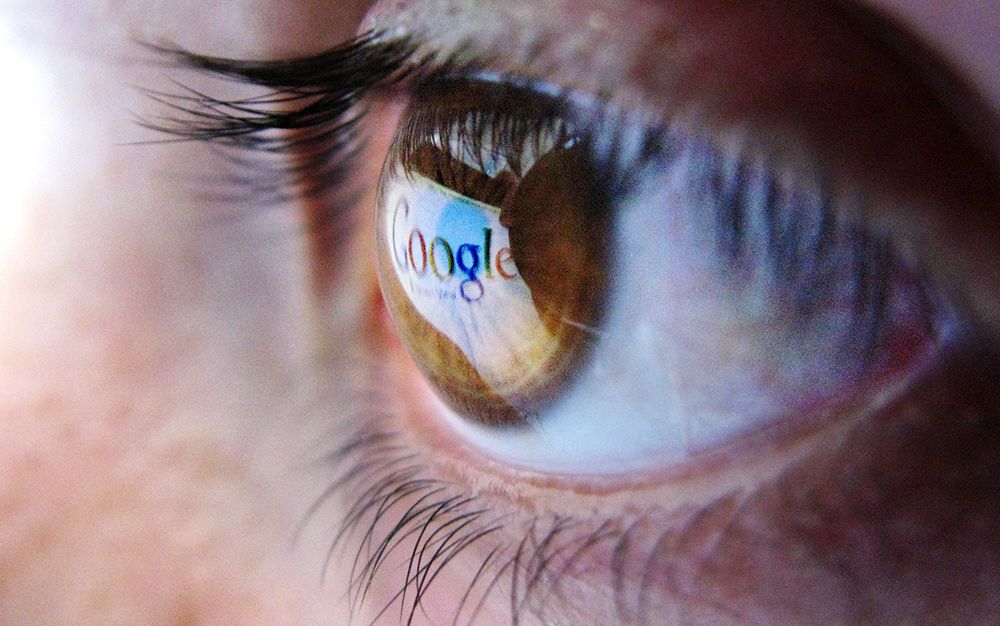
Google decides which web pages to include in search results, and how to rank them. How it does so is one of the best-kept secrets in the world, like the formula for Coca-Cola
To understand how the new forms of mind control work, we need to start by looking at the search engine – one in particular: the biggest and best of them all, namely Google. The Google search engine is so good and so popular that the company’s name is now a commonly used verb in languages around the world. To ‘Google’ something is to look it up on the Google search engine, and that, in fact, is how most computer users worldwide get most of their information about just about everything these days. They Google it. Google has become the main gateway to virtually all knowledge, mainly because the search engine is so good at giving us exactly the information we are looking for, almost instantly and almost always in the first position of the list it shows us after we launch our search – the list of ‘search results’.
That ordered list is so good, in fact, that about 50 per cent of our clicks go to the top two items, and more than 90 per cent of our clicks go to the 10 items listed on the first page of results; few people look at other results pages, even though they often number in the thousands, which means they probably contain lots of good information. Google decides which of the billions of web pages it is going to include in our search results, and it also decides how to rank them. How it decides these things is a deep, dark secret – one of the best-kept secrets in the world, like the formula for Coca-Cola.
Because people are far more likely to read and click on higher-ranked items, companies now spend billions of dollars every year trying to trick Google’s search algorithm – the computer program that does the selecting and ranking – into boosting them another notch or two. Moving up a notch can mean the difference between success and failure for a business, and moving into the top slots can be the key to fat profits.
Late in 2012, I began to wonder whether highly ranked search results could be impacting more than consumer choices. Perhaps, I speculated, a top search result could have a small impact on people’s opinions about things. Early in 2013, with my associate Ronald E Robertson of the American Institute for Behavioral Research and Technology in Vista, California, I put this idea to a test by conducting an experiment in which 102 people from the San Diego area were randomly assigned to one of three groups. In one group, people saw search results that favoured one political candidate – that is, results that linked to web pages that made this candidate look better than his or her opponent. In a second group, people saw search rankings that favoured the opposing candidate, and in the third group – the control group – people saw a mix of rankings that favoured neither candidate. The same search results and web pages were used in each group; the only thing that differed for the three groups was the ordering of the search results.
To make our experiment realistic, we used real search results that linked to real web pages. We also used a real election – the 2010 election for the prime minister of Australia. We used a foreign election to make sure that our participants were ‘undecided’. Their lack of familiarity with the candidates assured this. Through advertisements, we also recruited an ethnically diverse group of registered voters over a wide age range in order to match key demographic characteristics of the US voting population.
All participants were first given brief descriptions of the candidates and then asked to rate them in various ways, as well as to indicate which candidate they would vote for; as you might expect, participants initially favoured neither candidate on any of the five measures we used, and the vote was evenly split in all three groups. Then the participants were given up to 15 minutes in which to conduct an online search using ‘Kadoodle’, our mock search engine, which gave them access to five pages of search results that linked to web pages. People could move freely between search results and web pages, just as we do when using Google. When participants completed their search, we asked them to rate the candidates again, and we also asked them again who they would vote for.
We predicted that the opinions and voting preferences of 2 or 3 per cent of the people in the two bias groups – the groups in which people were seeing rankings favouring one candidate – would shift toward that candidate. What we actually found was astonishing. The proportion of people favouring the search engine’s top-ranked candidate increased by 48.4 per cent, and all five of our measures shifted toward that candidate. What’s more, 75 per cent of the people in the bias groups seemed to have been completely unaware that they were viewing biased search rankings. In the control group, opinions did not shift significantly.
This seemed to be a major discovery. The shift we had produced, which we called the Search Engine Manipulation Effect (or SEME, pronounced ‘seem’), appeared to be one of the largest behavioural effects ever discovered. We did not immediately uncork the Champagne bottle, however. For one thing, we had tested only a small number of people, and they were all from the San Diego area.
Over the next year or so, we replicated our findings three more times, and the third time was with a sample of more than 2,000 people from all 50 US states. In that experiment, the shift in voting preferences was 37.1 per cent and even higher in some demographic groups – as high as 80 per cent, in fact.
We also learned in this series of experiments that by reducing the bias just slightly on the first page of search results – specifically, by including one search item that favoured the other candidate in the third or fourth position of the results – we could mask our manipulation so that few or even no people were aware that they were seeing biased rankings. We could still produce dramatic shifts in voting preferences, but we could do so invisibly.
Still no Champagne, though. Our results were strong and consistent, but our experiments all involved a foreign election – that 2010 election in Australia. Could voting preferences be shifted with real voters in the middle of a real campaign? We were skeptical. In real elections, people are bombarded with multiple sources of information, and they also know a lot about the candidates. It seemed unlikely that a single experience on a search engine would have much impact on their voting preferences.
To find out, in early 2014, we went to India just before voting began in the largest democratic election in the world – the Lok Sabha election for prime minister. The three main candidates were Rahul Gandhi, Arvind Kejriwal, and Narendra Modi. Making use of online subject pools and both online and print advertisements, we recruited 2,150 people from 27 of India’s 35 states and territories to participate in our experiment. To take part, they had to be registered voters who had not yet voted and who were still undecided about how they would vote.
unlike subliminal stimuli, SEME has an enormous impact – like Casper the ghost pushing you down a flight of stairs
Participants were randomly assigned to three search-engine groups, favouring, respectively, Gandhi, Kejriwal or Modi. As one might expect, familiarity levels with the candidates was high – between 7.7 and 8.5 on a scale of 10. We predicted that our manipulation would produce a very small effect, if any, but that’s not what we found. On average, we were able to shift the proportion of people favouring any given candidate by more than 20 per cent overall and more than 60 per cent in some demographic groups. Even more disturbing, 99.5 per cent of our participants showed no awareness that they were viewing biased search rankings – in other words, that they were being manipulated.
SEME’s near-invisibility is curious indeed. It means that when people – including you and me – are looking at biased search rankings, they look just fine. So if right now you Google ‘US presidential candidates’, the search results you see will probably look fairly random, even if they happen to favour one candidate. Even I have trouble detecting bias in search rankings that I know to be biased (because they were prepared by my staff). Yet our randomised, controlled experiments tell us over and over again that when higher-ranked items connect with web pages that favour one candidate, this has a dramatic impact on the opinions of undecided voters, in large part for the simple reason that people tend to click only on higher-ranked items. This is truly scary: like subliminal stimuli, SEME is a force you can’t see; but unlike subliminal stimuli, it has an enormous impact – like Casper the ghost pushing you down a flight of stairs.
We published a detailed report about our first five experiments on SEME in the prestigious Proceedings of the National Academy of Sciences (PNAS) in August 2015. We had indeed found something important, especially given Google’s dominance over search. Google has a near-monopoly on internet searches in the US, with 83 per cent of Americans specifying Google as the search engine they use most often, according to the Pew Research Center. So if Google favours one candidate in an election, its impact on undecided voters could easily decide the election’s outcome.
Keep in mind that we had had only one shot at our participants. What would be the impact of favouring one candidate in searches people are conducting over a period of weeks or months before an election? It would almost certainly be much larger than what we were seeing in our experiments.
Other types of influence during an election campaign are balanced by competing sources of influence – a wide variety of newspapers, radio shows and television networks, for example – but Google, for all intents and purposes, has no competition, and people trust its search results implicitly, assuming that the company’s mysterious search algorithm is entirely objective and unbiased. This high level of trust, combined with the lack of competition, puts Google in a unique position to impact elections. Even more disturbing, the search-ranking business is entirely unregulated, so Google could favour any candidate it likes without violating any laws. Some courts have even ruled that Google’s right to rank-order search results as it pleases is protected as a form of free speech.
Does the company ever favour particular candidates? In the 2012 US presidential election, Google and its top executives donated more than $800,000 to President Barack Obama and just $37,000 to his opponent, Mitt Romney. And in 2015, a team of researchers from the University of Maryland and elsewhere showed that Google’s search results routinely favoured Democratic candidates. Are Google’s search rankings really biased? An internal report issued by the US Federal Trade Commission in 2012 concluded that Google’s search rankings routinely put Google’s financial interests ahead of those of their competitors, and anti-trust actions currently under way against Google in both the European Union and India are based on similar findings.
In most countries, 90 per cent of online search is conducted on Google, which gives the company even more power to flip elections than it has in the US and, with internet penetration increasing rapidly worldwide, this power is growing. In our PNAS article, Robertson and I calculated that Google now has the power to flip upwards of 25 per cent of the national elections in the world with no one knowing this is occurring. In fact, we estimate that, with or without deliberate planning on the part of company executives, Google’s search rankings have been impacting elections for years, with growing impact each year. And because search rankings are ephemeral, they leave no paper trail, which gives the company complete deniability.
Power on this scale and with this level of invisibility is unprecedented in human history. But it turns out that our discovery about SEME was just the tip of a very large iceberg.
Recent reports suggest that the Democratic presidential candidate Hillary Clinton is making heavy use of social media to try to generate support – Twitter, Instagram, Pinterest, Snapchat and Facebook, for starters. At this writing, she has 5.4 million followers on Twitter, and her staff is tweeting several times an hour during waking hours. The Republican frontrunner, Donald Trump, has 5.9 million Twitter followers and is tweeting just as frequently.
Is social media as big a threat to democracy as search rankings appear to be? Not necessarily. When new technologies are used competitively, they present no threat. Even through the platforms are new, they are generally being used the same way as billboards and television commercials have been used for decades: you put a billboard on one side of the street; I put one on the other. I might have the money to erect more billboards than you, but the process is still competitive.
What happens, though, if such technologies are misused by the companies that own them? A study by Robert M Bond, now a political science professor at Ohio State University, and others published in Nature in 2012 described an ethically questionable experiment in which, on election day in 2010, Facebook sent ‘go out and vote’ reminders to more than 60 million of its users. The reminders caused about 340,000 people to vote who otherwise would not have. Writing in the New Republic in 2014, Jonathan Zittrain, professor of international law at Harvard University, pointed out that, given the massive amount of information it has collected about its users, Facebook could easily send such messages only to people who support one particular party or candidate, and that doing so could easily flip a close election – with no one knowing that this has occurred. And because advertisements, like search rankings, are ephemeral, manipulating an election in this way would leave no paper trail.
Are there laws prohibiting Facebook from sending out ads selectively to certain users? Absolutely not; in fact, targeted advertising is how Facebook makes its money. Is Facebook currently manipulating elections in this way? No one knows, but in my view it would be foolish and possibly even improper for Facebook not to do so. Some candidates are better for a company than others, and Facebook’s executives have a fiduciary responsibility to the company’s stockholders to promote the company’s interests.
The Bond study was largely ignored, but another Facebook experiment, published in 2014 in PNAS, prompted protests around the world. In this study, for a period of a week, 689,000 Facebook users were sent news feeds that contained either an excess of positive terms, an excess of negative terms, or neither. Those in the first group subsequently used slightly more positive terms in their communications, while those in the second group used slightly more negative terms in their communications. This was said to show that people’s ‘emotional states’ could be deliberately manipulated on a massive scale by a social media company, an idea that many people found disturbing. People were also upset that a large-scale experiment on emotion had been conducted without the explicit consent of any of the participants.
Facebook’s consumer profiles are undoubtedly massive, but they pale in comparison with those maintained by Google, which is collecting information about people 24/7, using more than 60 different observation platforms – the search engine, of course, but also Google Wallet, Google Maps, Google Adwords, Google Analytics, Chrome, Google Docs, Android, YouTube, and on and on. Gmail users are generally oblivious to the fact that Google stores and analyses every email they write, even the drafts they never send – as well as all the incoming email they receive from both Gmail and non-Gmail users.
if Google set about to fix an election, it could identify just those voters who are undecided. Then it could send customised rankings favouring one candidate to just those people
According to Google’s privacy policy – to which one assents whenever one uses a Google product, even when one has not been informed that he or she is using a Google product – Google can share the information it collects about you with almost anyone, including government agencies. But never with you. Google’s privacy is sacrosanct; yours is nonexistent.
Could Google and ‘those we work with’ (language from the privacy policy) use the information they are amassing about you for nefarious purposes – to manipulate or coerce, for example? Could inaccurate information in people’s profiles (which people have no way to correct) limit their opportunities or ruin their reputations?
Certainly, if Google set about to fix an election, it could first dip into its massive database of personal information to identify just those voters who are undecided. Then it could, day after day, send customised rankings favouring one candidate to just those people. One advantage of this approach is that it would make Google’s manipulation extremely difficult for investigators to detect.
Extreme forms of monitoring, whether by the KGB in the Soviet Union, the Stasi in East Germany, or Big Brother in 1984, are essential elements of all tyrannies, and technology is making both monitoring and the consolidation of surveillance data easier than ever. By 2020, China will have put in place the most ambitious government monitoring system ever created – a single database called the Social Credit System, in which multiple ratings and records for all of its 1.3 billion citizens are recorded for easy access by officials and bureaucrats. At a glance, they will know whether someone has plagiarised schoolwork, was tardy in paying bills, urinated in public, or blogged inappropriately online.
As Edward Snowden’s revelations made clear, we are rapidly moving toward a world in which both governments and corporations – sometimes working together – are collecting massive amounts of data about every one of us every day, with few or no laws in place that restrict how those data can be used. When you combine the data collection with the desire to control or manipulate, the possibilities are endless, but perhaps the most frightening possibility is the one expressed in Boulding’s assertion that an ‘unseen dictatorship’ was possible ‘using the forms of democratic government’.
Since Robertson and I submitted our initial report on SEME to PNAS early in 2015, we have completed a sophisticated series of experiments that have greatly enhanced our understanding of this phenomenon, and other experiments will be completed in the coming months. We have a much better sense now of why SEME is so powerful and how, to some extent, it can be suppressed.
We have also learned something very disturbing – that search engines are influencing far more than what people buy and whom they vote for. We now have evidence suggesting that on virtually all issues where people are initially undecided, search rankings are impacting almost every decision that people make. They are having an impact on the opinions, beliefs, attitudes and behaviours of internet users worldwide – entirely without people’s knowledge that this is occurring. This is happening with or without deliberate intervention by company officials; even so-called ‘organic’ search processes regularly generate search results that favour one point of view, and that in turn has the potential to tip the opinions of millions of people who are undecided on an issue. In one of our recent experiments, biased search results shifted people’s opinions about the value of fracking by 33.9 per cent.
Perhaps even more disturbing is that the handful of people who do show awareness that they are viewing biased search rankings shift even further in the predicted direction; simply knowing that a list is biased doesn’t necessarily protect you from SEME’s power.
Remember what the search algorithm is doing: in response to your query, it is selecting a handful of webpages from among the billions that are available, and it is ordering those webpages using secret criteria. Seconds later, the decision you make or the opinion you form – about the best toothpaste to use, whether fracking is safe, where you should go on your next vacation, who would make the best president, or whether global warming is real – is determined by that short list you are shown, even though you have no idea how the list was generated.
The technology has made possible undetectable and untraceable manipulations of entire populations that are beyond the scope of existing regulations and laws
Meanwhile, behind the scenes, a consolidation of search engines has been quietly taking place, so that more people are using the dominant search engine even when they think they are not. Because Google is the best search engine, and because crawling the rapidly expanding internet has become prohibitively expensive, more and more search engines are drawing their information from the leader rather than generating it themselves. The most recent deal, revealed in a Securities and Exchange Commission filing in October 2015, was between Google and Yahoo! Inc.
Looking ahead to the November 2016 US presidential election, I see clear signs that Google is backing Hillary Clinton. In April 2015, Clinton hired Stephanie Hannon away from Google to be her chief technology officer and, a few months ago, Eric Schmidt, chairman of the holding company that controls Google, set up a semi-secret company – The Groundwork – for the specific purpose of putting Clinton in office. The formation of The Groundwork prompted Julian Assange, founder of Wikileaks, to dub Google Clinton’s ‘secret weapon’ in her quest for the US presidency.
We now estimate that Hannon’s old friends have the power to drive between 2.6 and 10.4 million votes to Clinton on election day with no one knowing that this is occurring and without leaving a paper trail. They can also help her win the nomination, of course, by influencing undecided voters during the primaries. Swing voters have always been the key to winning elections, and there has never been a more powerful, efficient or inexpensive way to sway them than SEME.
We are living in a world in which a handful of high-tech companies, sometimes working hand-in-hand with governments, are not only monitoring much of our activity, but are also invisibly controlling more and more of what we think, feel, do and say. The technology that now surrounds us is not just a harmless toy; it has also made possible undetectable and untraceable manipulations of entire populations – manipulations that have no precedent in human history and that are currently well beyond the scope of existing regulations and laws. The new hidden persuaders are bigger, bolder and badder than anything Vance Packard ever envisioned. If we choose to ignore this, we do so at our peril.            Aeon

Obedience Training: The Truth about the Pledge of Allegiance

TRUTHstreammedia

Ancient Rome

2,500-year-old seal from First Temple period unearthed in Jerusalem


Who was Elihana bat Gael? An exceptional woman during Jerusalem’s First Temple period some 2,500 years ago, according to the Antiquities Authority.

A rare seal bearing her name was recently unearthed in a large ancient building during excavations carried out in the Givati parking lot at the City of David in the Jerusalem Walls National Park, the authority announced on Monday.

Inscribed in ancient Hebrew letters on the seal, made of semiprecious stone, appears the mirror-writing of “to Elihana bat Gael,” along with the name of her father.


Another seal, belonging to a man named “Sa’aryahu ben Shabenyahu,” was found nearby.

The second seal was also in mirror-writing, and bears the inscription “to Sa’aryahu ben Shabenyahu.” The name Sa’aryahu appears on a sherd from Arad, and apparently means “The Lord, which was revealed in a storm” (Job 38).

“Finding seals that bear names from the time of the First Temple is hardly a commonplace occurrence, and finding a seal that belonged to a woman is an even rarer phenomenon,” the authority said.

Indeed, according to the authority’s excavation directors, “The owner of the seal was notable compared to other women of the First Temple period: She had legal status, which allowed her to conduct business and possess property.”

The rare bounty was discovered inside a structure built of well-preserved ashlars following nine years of excavation at the site outside the Old City’s walls by the authority, in cooperation with the Israel Nature and Parks Authority and the City of David Foundation.

The authority’s excavation directors, Dr. Doron Ben- Ami, Yana Tchekhanovets and Salome Cohen, said they believe the ancient building once served as an administrative center.

“Personal seals, such as those of Elihana and Sa’aryahu, were used for signing documents, and were frequently inlaid as part of a ring that was worn by the owner,” the archeologists said in a joint statement.

“In antiquity, they designated the identity, genealogy and status of the owner of the seal.”

According to Dr. Haggai Misgav of the Hebrew University in Jerusalem, seals that belonged to women represent a very small proportion of all the seals that have been discovered to date.

“This is because of the generally inferior economic status of women, apart from extraordinary instances such as this,” Misgav said. “Indeed, the name Elihana does not appear in the Bible, and there is no other information regarding the identity of the woman, but the fact that she possessed a seal demonstrates her high social status.”

Most of the women’s seals known from this period, Misgav said, bear the names of their fathers, rather than that of their husbands.

“Here, as in other cases, this might indicate the relatively elevated status of Elihana, which depended on her original family, and not on her husband’s family,” the researcher stated. “It seems that Elihana maintained her right to property and financial independence even after her marriage, and, therefore, her father’s name was retained. However, we do not have sufficient information about the law in Judah during this period.”

He said the name Eliha is known from a contemporary Ammonite seal, and is the feminine form of the biblical name Eli.

“The script appearing on the seal is remarkably similar to the script on Ammonite seals, and this might indicate the foreign origin of the artisan who carved the seal, and possibly the foreign origin of Elihana, who apparently came from east of the Jordan River,” he said.

Misgav added that the Book of Proverbs (31:13-23) states that an ideal wife is responsible for providing for the needs of her household when her husband is engaged in public and legal affairs at the city gate.

“She seeks wool and flax, and works with willing hands...,” it says. “Her husband is known in the gates, when he sits among the elders of the land.”

“An archive of documents preserved in the Judean Desert from the time of the Second Temple indicates, among other things, the business of Babatha bat Shimon, a female land owner who had legal status,” Misgav said. “But, generally speaking, evidence of legal and financial independence in the Bible and archeology are rare, and it seems that the exception to the rule indeed sheds light on the rule itself.”                Jerusalem Post

Second Sunday will be ‘rest day’ for TV industry in India

| TNN |
The television industry is known for toiling relentlessly to give us our daily dose of entertainment.

Due to the frenetic pace, actors and technicians are hardly left with any time to unwind. However, there is some respite in sight for them as the Federation of Western India Cine Employees (FWICE) has decided to make every second Sunday a mandatory holiday for the TV industry from April 1. While artistes have welcomed the move, producers are worried about its adverse effects on the telecast of their shows.
Dilip Pithva, Honorary General Secretary, FWICE, reasons, "We have decided to take a holiday on every second Sunday. The producers aren't supportive as they don't want to shell out extra money for a holiday that will be considered paid leave. Do they realize the rising frustration levels of the workers working in the same environment day-in and day-out? What they don't know is that the worker pays another member to fill in for him on a particular day from his own pocket. They may be hired on the basis of salary, but they are actually paid for the number of days they shoot; they don't even get overtime." He adds this issue can be addressed if enough planning is done in advance and explains, "If a producer can holiday abroad without worrying about the telecast of their shows, why can't they manage it by making second Sunday a mandatory off? They can work towards getting scripts in advance, so that they can keep a bank of episodes ready."
 
ACTORS GLAD TO GET A DAY OFF
Gautam Rode, currently seen in 'Suryaputra Karn', says, "The mandatory off will make an actor's life much easier, especially when you are shooting away from the city. Many actors shoot for 30 days, which has an adverse effect on their health and performance. Should a situation arise, I'm sure producers can manage without shooting for two days in a month."
Ssharad Malhotra, the male lead in 'Kasam', seconds the actor, "It's a viable idea if executed well. We slog daily and need an off to replenish our energy. But when telecast issues crop up, we don't mind shooting an extra day as we understand that TV is a deadline-driven medium. Contrary to the general perception, an actor doesn't get time for his personal life. Better time and resource management would surely help at all levels."

Actress Meghna Malik calls the current TV scenario a 'war zone' rather than a 'work zone'. "The TV industry isn't equipped to give technicians, actors or producers even the fixed calendar holidays as telecast deadlines have to be met. It's a work-till-you-drop-dead policy. It is high time that things change."
However, some actors feel they should get an off on weekdays. Actress Arti Singh says, "The industry should be more organized. Ideally, we need four holidays in a month. We should get a weekly holiday on a working day as we don't face gruelling traffic on Sunday."
Sana Amin Sheikh adds, "We also have important chores to run, which can't happen on Sundays. But if shows are aired seven days a week, it will be difficult to get a holiday, especially for lead actors. I am used to this, so I don't mind."

WHY IT CAN'T BE ACHIEVED
The producers have been averse to the proposed idea as they believe it would result in confusion on set and hamper the telecast. They suggest that everyone can take a weekly off after coming to a consensus.
Producer Rahul Kumar Tewary says, "We haven't been informed about the development as yet. It should be a unanimous decision. No individual or association can take a stand, which impacts the entire industry. Meeting the deadline for delivering content in shows, which air six days a week, is a difficult feat in itself. We also incur late delivery charges if an episode is sent to the channel beyond the decided hours. Our team is working round-the-clock to meet the telecast demands as well address various issues at the shoot. The weekly/monthly-offs without implementing the required procedures will affect shows and deliveries."

Producer Rajan Shahi asserts that it's a misconception that the television industry works without a break. He elaborates, "There are some who deviate, and that issue needs to be addressed immediately. The unit gets breaks at regular intervals (usually four days off in a month ) to rest and improve its efficiency. I myself give breaks according to the unit's convenience." He adds that fixing a day off isn't a feasible option as people might prefer to take a holiday on another day. "A holiday is necessary and mandatory, but those working should get to decide when they want to take an off," says Rajan.
Producer Sumeet Mittal emphasises, "We are in favour of granting an off to the entire cast and crew as they are overworked, but it's not feasible to commit a particular day for it. With all daily soaps airing seven days a week, it's impossible to do so. What if the telecast is stuck or an emergency situation crops up?"

NO CONSENSUS YET
Amit Behl, joint secretary of CINTAA (Cine and Television Artistes' Association), member of the dispute committee and Senior Vice President of FWICE, feels that both the parties have a valid point. He says, "A second Sunday off was a valid rule in the early '90s, when the deliverables weren't that high. Soon, a day-and-a-half shift (12 hours) became a regular feature. In the current scenario, where we are prone to casualties and other issues hampering the telecast, the broadcasters (before the October 2015 strike) passed a ruling that all producers will keep a bank of at least 10 episodes for their shows. Unfortunately, not many follow the rule. It's primarily because the scripts don't come in advance." However, he adds that it won't be right to blame anyone as everyone is fighting the ratings war. He explains, "I am fine with the idea of making second Sundays a mandatory holiday, provided producers are also given leeway to shoot on that particular day if the situation demands so. They do seek permission when they do a 2 pm to 2 am odd shift. I also second the producers, who propose that taking a holiday should be mutually decided upon, as we are not in a government job. We at CINTAA are still not clear till we have a detailed discussion with the producers' association and the broadcasters."

Director Ismail Umarr Khan feels, "We can easily handle the pressure on an odd day with the second unit filling in for the first, which was a norm earlier. A unit can easily take the pressure of one episode. Every technician wants a holiday. I don't think anyone is against taking an off on Sundays. The bottom line is, workers will have a life."           Indian Times

Obama Says Google, Facebook, Microsoft, And Visa Will Provide Extra Layer Of Security To Americans

President Barak Obama recently said “With the help of companies like Google GOOGL +0.15%, Facebook FB +0.20%, Microsoft MSFT +1.23%, and Visa V -1.83%, we’re going to empower Americans to be able to help themselves and make sure that they are safe online with an extra layer of security, like a fingerprint or a code sent to your cellphone.”
Sounds intriguing, but Obama failed to explain exactly what these companies are going to provide – and when. Not to mention that he snubbed Apple – which has sold a cumulative lifetime total of 821.8 million iPhones, according to The Motley Fool.
The President remarked on his new cybersecurity initiatives in the Roosevelt Room at the White House last month. ”More and more, keeping America safe is not just a matter of more tanks, more aircraft carriers; not just a matter of bolstering our security on the ground” said Obama. “It also requires us to bolster our security online. As we’ve seen in the past few years and just in the past few days, cyber threats pose a danger not only to our national security but also our financial security and the privacy of millions of Americans.”
Three major points from Obama were:
  1. His budget proposal for the next fiscal year devotes $19 billion to cybersecurity – which is up by more than one-third.
  2. Plans to update antiquated federal IT systems – some of which date back to the 1960′s – which the President says are particularly vulnerable to cyber attacks.
  3. Hiring a first-ever federal chief information security officer (CISO) position who will oversee security and upgrades across all agencies — and interact with the private sector.
  4. Recommended by Forbes
The counter points are:
  1. The U.S. government has spent $100 billion on information and cybersecurity over the past decade, and what do we have to show for it? A $14 billion budget was approved last year – when the OPM hack occurred.
  2. Some legacy mainframe systems are actually more secure than modern cloud based IT infrastructures. Nonetheless – these types of systems take years to upgrade and they must be protected in the interim.
  3. Obama is offering a woefully inadequate salary for the new Federal CISO job which is based in Washington, D.C., D.C. and offers a paltry annual salary range of $123,000+ to $185,000. The current average annual salary for a CISO in D.C. is $225,000, and tops out at $334,000, according to SilverBull, a full-service IT and cybersecurity recruiting and staffing company based in Manchester, Conn.
While Obama is still in office, perhaps he can take the first and best step forward by hiring a deeply experienced federal security chief from the commercial sector. To attract suitable candidates, he’ll have to up the pay to the top end of what more experienced CISOs earn — which means doubling the annual salary.
A new federal CISO should bring clarity to how and when Google, Facebook, Microsoft, and Visa will help protect Americans when they are online. These tech firms employ very large and experienced cybersecurity teams who are on the cutting edge of Internet privacy. If fingerprint sensors and sending codes to our cellphones are part of the online privacy plans that Obama has in mind, then he really needs to invite Apple in — otherwise the new CISO had better.       Forbes

Saturday, March 5, 2016

Signs Of Change 2016

Pope Francis Moving Swiftly to Establish Mark Of The Beast

Thursday, March 3, 2016

The Time of the End

We are living in the time of the end. The fast-fulfilling signs of the times declare that the coming of Christ is near at hand. The days in which we live are solemn and important. The Spirit of God is gradually but surely being withdrawn from the earth. Plagues and judgments are already falling upon the despisers of the grace of God. The calamities by land and sea, the unsettled state of society, the alarms of war, are portentous. They forecast approaching events of the greatest magnitude. 

The agencies of evil are combining their forces and consolidating. They are strengthening for the last great crisis. Great changes are soon to take place in our world, and the final movements will be rapid ones. 

The condition of things in the world shows that troublous times are right upon us. The daily papers are full of indications of a terrible conflict in the near future. Bold robberies are of frequent occurrence. Strikes are common. Thefts and murders are committed on every hand. Men possessed of demons are taking the lives of men, women, and little children. Men have become infatuated with vice, and every species of evil prevails. The enemy has succeeded in perverting justice and in filling men's hearts with the desire for selfish gain. "Justice standeth afar off: for truth is fallen in the street, and equity cannot enter." Isaiah 59:14. In the great cities there are multitudes living in poverty and wretchedness, well-nigh destitute of food, shelter, and clothing; while in the same cities are those who have more than heart could wish, who live luxuriously, spending their money on richly furnished houses, on personal adornment, or worse still, upon the gratification of sensual appetites, upon liquor, tobacco, and other things that destroy the powers of the brain, unbalance the mind, and debase the soul. The cries of starving humanity are coming up before God, while by every species of oppression and extortion men are piling up colossal fortunes. 

I was in the night season called upon to behold buildings rising story after story toward heaven. These buildings were warranted to be fireproof, and they were erected to glorify the owners and builders. Higher and still higher these buildings rose, and in them the most costly material was used. Those to whom these buildings belonged were not asking themselves: "How can we best glorify God?" The Lord was not in their thoughts. 

As these lofty buildings went up, the owners rejoiced with ambitious pride that they had money to use in gratifying self and provoking the envy of their neighbors. Much of the money that they thus invested had been obtained through exaction, through grinding down the poor. They forgot that in heaven an account of every business transaction is kept; every unjust deal, every fraudulent act, is there recorded. The time is coming when in their fraud and insolence men will reach a point that the Lord will not permit them to pass, and they will learn that there is a limit to the forbearance of Jehovah. 

The scene that next passed before me was an alarm of fire. Men looked at the lofty and supposedly fireproof buildings and said: "They are perfectly safe." But these buildings were consumed as if made of pitch. The fire engines could do nothing to stay the destruction. The firemen were unable to operate the engines. 

I am instructed that when the Lord's time comes, should no change have taken place in the hearts of proud, ambitious human beings, men will find that the hand that had been strong to save will be strong to destroy. No earthly power can stay the hand of God. No material can be used in the erection of buildings that will preserve them from destruction when God's appointed time comes to send retribution on men for their disregard of His law and for their selfish ambition. 

There are not many, even among educators and statesmen, who comprehend the causes that underlie the present state of society. Those who hold the reins of government are not able to solve the problem of moral corruption, poverty, pauperism, and increasing crime. They are struggling in vain to place business operations on a more secure basis. If men would give more heed to the teaching of God's word, they would find a solution of the problems that perplex them. 

The Scriptures describe the condition of the world just before Christ's second coming. Of the men who by robbery and extortion are amassing great riches, it is written: "Ye have heaped treasure together for the last days. Behold, the hire of the laborers who have reaped down your fields, which is of you kept back by fraud, crieth: and the cries of them which have reaped are entered into the ears of the Lord of Sabaoth. Ye have lived in pleasure on the earth, and been wanton; ye have nourished your hearts, as in a day of slaughter. Ye have condemned and killed the just; and he doth not resist you." James 5:3-6. 

But who reads the warnings given by the fast-fulfilling signs of the times? What impression is made upon worldlings? What change is seen in their attitude? No more than was seen in the attitude of the inhabitants of the Noachian world. Absorbed in worldly business and pleasure, the antediluvians "knew not until the Flood came, and took them all away." Matthew 24:39. They had heaven-sent warnings, but they refused to listen. And today the world, utterly regardless of the warning voice of God, is hurrying on to eternal ruin. 

The world is stirred with the spirit of war. The prophecy of the eleventh chapter of Daniel has nearly reached its complete fulfillment. Soon the scenes of trouble spoken of in the prophecies will take place.
"Behold, the Lord maketh the earth empty, and maketh it waste, and turneth it upside down, and scattereth abroad the inhabitants thereof. . . . Because they have transgressed the laws, changed the ordinance, broken the everlasting covenant. Therefore hath the curse devoured the earth, and they that dwell therein are desolate. . . . The mirth of tabrets ceaseth, the noise of them that rejoice endeth, the joy of the harp ceaseth." Isaiah 24:1-8. 

"Alas for the day! for the day of the Lord is at hand, and as a destruction from the Almighty shall it come. . . ." Joel 1:15.
"I beheld the earth, and, lo, it was without form, and void; and the heavens, and they had no light. I beheld the mountains, and, lo, they trembled, and all the hills moved lightly. I beheld, and, lo, there was no man, and all the birds of the heavens were fled. I beheld, and, lo, the fruitful place was a wilderness, and all the cities thereof were broken down." Jeremiah 4:23-26. 

"Alas! for that day is great, so that none is like it: it is even the time of Jacob's trouble; but he shall be saved out of it." Jeremiah 30:7. 

Not all in this world have taken sides with the enemy against God. Not all have become disloyal. There are a faithful few who are true to God; for John writes: "Here are they that keep the commandments of God, and the faith of Jesus." Revelation 14:12. Soon the battle will be waged fiercely between those who serve God and those who serve Him not. Soon everything that can be shaken will be shaken, that those things that cannot be shaken may remain. 

Satan is a diligent Bible student. He knows that his time is short, and he seeks at every point to counterwork the work of the Lord upon this earth. It is impossible to give any idea of the experience of the people of God who shall be alive upon the earth when celestial glory and a repetition of the persecutions of the past are blended. They will walk in the light proceeding from the throne of God. By means of the angels there will be constant communication between heaven and earth. And Satan, surrounded by evil angels, and claiming to be God, will work miracles of all kinds, to deceive, if possible, the very elect. God's people will not find their safety in working miracles, for Satan will counterfeit the miracles that will be wrought. God's tried and tested people will find their power in the sign spoken of in Exodus 31:12-18. They are to take their stand on the living word: "It is written." This is the only foundation upon which they can stand securely. Those who have broken their covenant with God will in that day be without God and without hope. 

The worshipers of God will be especially distinguished by their regard for the fourth commandment, since this is the sign of God's creative power and the witness to His claim upon man's reverence and homage. The wicked will be distinguished by their efforts to tear down the Creator's memorial and to exalt the institution of Rome. In the issue of the conflict all Christendom will be divided into two great classes, those who keep the commandments of God and the faith of Jesus, and those who worship the beast and his image, and receive his mark. Although church and state will unite their power to compel all, "both  small and great, rich and poor, free and bond," to receive the mark of the beast, yet the people of God will not receive it. Revelation 13:16. The prophet of Patmos beholds "them that had gotten the victory over the beast, and over his image, and over his mark, and over the number of his name, stand on the sea of glass, having the harps of God," and singing the song of Moses and the Lamb. Revelation 15:2. 

Fearful tests and trials await the people of God. The spirit of war is stirring the nations from one end of the earth to the other. But in the midst of the time of trouble that is coming,—a time of trouble such as has not been since there was a nation—God's chosen people will stand unmoved. Satan and his host cannot destroy them, for angels that excel in strength will protect them.  Counsels for the Church p. 37-40