Showing posts with label Biometrics. Show all posts

Wednesday, September 30, 2020

The European Union is planning to establish an EU-wide digital ID system

Biometric Update Sep 10, 2020

The European Union is planning to establish an EU-wide digital ID system, with a proposal due by the middle of 2021, and leaders will seek to fund it with resources from its economic recovery fund, according to Euractiv.

EU leaders will request the European Commission to develop the service to support continued integration of digital services and economies in the region. EU rules have evolved over the past several years to make national digital identity systems more interoperable through eIDAS regulation.

Leaders are expected to call for “EU-wide secure public electronic identification (e-ID) to provide people with control over their online identity and data as well as to enable access to cross-border digital services,” a draft document seen by Euractiv reads.

EC Vice-President for Digital Margarethe Vestager launched public consultations over the summer to consider revisions to eIDAS. That consultation closes on October 2. The Commission is also expected to publish its Digital Services Act by the end of the year, which will include some details on how the EU will extend its digital identification framework.

Sunday, May 31, 2020

Biometric payment cards are expected to play a major role in the aftermath of COVID19

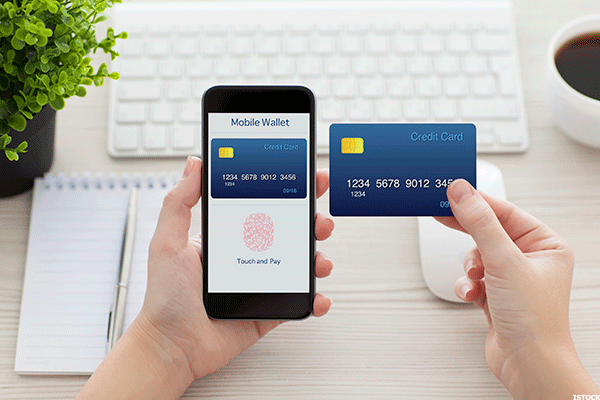
Biometric payment cards to ride contactless wave, market producing extra 110M units in 2020

Biometric Update 

Biometric payment cards are expected to play a major role in a trend towards the use of multi-factor contactless transactions in the aftermath of COVID-19, ABI Research forecasts based on new research.

Contactless payment card issuances are expected to increase by 110 million more than previously expected to more than 2 billion in 2020, driven by demand for touchless interactions due to the pandemic. The new numbers mean that issuance estimates are up 6 to 8 percent from estimates made prior to the pandemic, for total year-over-year growth of 14 percent. Nearly two out of three new cards this year are expected to be contactless.

“Although the overarching trend toward contactless was well in place prior, COVID-19 will further increase the speed of contactless adoption, particularly within countries and economies where cash remains king, and usage not only being encouraged by payment ecosystem players and suppliers but also by governments and health organizations including the WHO,” explains Phil Sealy, Research Director at ABI Research.

“The way people pay for things is rapidly evolving and changing. COVID-19 has driven a significant shift in consumer spending habits spurred by economic uncertainly and a push toward the purchase of mainly essential items. There is also a surge in e-commerce whereby consumers are becoming even more heavily reliant on online retail channels to avoid crowded places to limit social interactions,” Sealy points out in the press release.

Friday, February 28, 2020

EU poised to create massive transatlantic facial-recognition database, link with US

RT 22 Feb, 2020
The EU is laying the groundwork for a massive international facial recognition database that may someday hook into the one maintained by the US, according to leaked internal documents.
National police forces of 10 EU member states are calling for a legal framework to create a massive system of interlinked facial recognition databases “as quickly as possible,” a report leaked to the Intercept on Friday reveals. Austria is leading the way on the project, which was still in its early phases as of November, when the report initially circulated among EU officials.
Produced as part of a project to expand Prüm, the EU-wide database-cross-referencing system that already allows for all-at-once scanning of individual DNA, fingerprint, and vehicle registration databases, the report calls for EU legislation that would create and connect country-level facial recognition databases, potentially all the way to the US. Because the US already has a Prüm-like exchange in place with countries that are part of the Visa Waiver Program, including most EU member states, some – including the alarmed EU official who allegedly leaked the report to the Intercept – believe any future facial recognition database network would include the US by default.

Tuesday, December 31, 2019

A simple face scan will allow the system to retrieve the necessary billing information for a given transaction

Denmark is once again the site of a pioneering trial of a biometric payments system, this time thanks to Nets, a European digital payments services provider.

The companies’ new pilot program will see participants making payments at a cafeteria via facial recognition. The trial will be undertaken at the Vibenshuset office complex in Copenhagen, and is open to up to a thousand participants who wish to make biometric payments at the Kokkenes Køkken’s cafeteria.

As with other so-called “naked payments” systems, the idea is to link customers’ payment accounts directly to their biometric identifiers. In this case, that means that a simple face scan will allow the system to retrieve the necessary billing information for a given transaction, and to process it, bypassing the need for the customer to present a physical payment card or any other hardware.

In a statement announcing the pilot program, Nets Head of Creation Labs Jesper Kildegaard Poulsen explained that its main aim is to gauge consumer sentiment about biometric payments. “Today, we have the technology to use faces as identification and validation when making a payment,” he said. “However, how people feel about having their faces scanned is still under question. This trial will help us to learn more about consumer attitudes to facial recognition payments.”

The trial will follow in the footsteps of a different naked payments program recently conducted by Nets in collaboration with Sthaler, whose Fingopay system was implemented at the Copenhagen Business School. That system, which is based on the scanning of finger vein patterns, saw an enthusiastic response from participants, prompting Nets and Sthaler to expand the deployment about a year ago.

Saturday, June 30, 2018

The government's obsession with your face


The Week June 18, 2018
The government is obsessed with your face. Do not be flattered. This is more of a creepy stalker fixation.
From the federal Department of Homeland Security down to local police departments, governmental use of biometric facial recognition software has gained a startling amount of traction in recent years. And these agencies are getting help from big business, to boot.
For example, DHS is reportedly developing a massive new biometric and biographic database with extensive data on citizens and foreigners alike. The Homeland Advanced Recognition Technology (HART) database will reportedly include at least seven biometric identifiers, including face and voice data, tattoos, DNA, scars, and other "physical descriptors" on as many as 500 million people. The agency has been remarkably hush-hush on how HART will be utilized — but the possibilities are frightening.
DHS expects to launch the new database next fiscal year, according to internal documents. By the following year, they anticipate having iris and facial matching capabilities, and by fiscal year 2021, the database is expected to be functioning in its full capacity. This massive and intrusive initiative will grant a whole host of federal, state, and local agencies access to intimate details about hundreds of millions of Americans and foreigners.

Saturday, September 30, 2017

UK Supermarket Becomes World’s First to Offer Cashless Checkout with Finger Vein Scan


The march toward a cashless society has now moved from the theoretical to the phase of widespread adoption. This is primarily due to developments in the tech sector that now enable the easy use of biometric recognition systems, as well as the increasing acceptance from a public who is becoming familiar with turning themselves into a password for their personal devices.
Behind the scenes, governments and corporations have been building the political and economic enticements via the Better Than Cash Alliance to ensure that the world eventually gets “de-cashed.” We’re now witnessing the full roll-out of an architecture that has been in development for many years.
China’s high-tech KFC recently made headlines when it began testing facial recognition payments in its KPRO store. Cashless agenda denialists, however, could readily point to China’s authoritarian government to ease any fears about an impending technocratic takeover occurring in the (supposedly) more democratic West.
Well, today’s cashless agenda news does come from the West, and it’s a world’s first.  As reported by The Telegraph, London’s Costcutter supermarket has announced that its shoppers can now pay by finger vein scan.
It works by using infrared to scan people’s finger veins and then links this unique biometric map to their bank cards. Customers’ bank details are then stored with payment provider Worldpay, in the same way you can store your card details when shopping online. Shoppers can then turn up to the supermarket with nothing on them but their own hands and use it to make payments in just three seconds.
Nice and convenient, of course.
Longtime readers of Activist Post might remember an article by Brandon Turbeville written in 2011 warning that this was being tested as a future payment system. Remarking at the time about how smartphone payments would eventually seem outdated, he explained:
Taking the cashless control grid one step further, an article published on August 8, 2011 in Technology Review, entitled “Beyond Cell Phone Wallets, Biometrics Promise Truly Wallet-Free Future,” explains that major corporations are not even waiting for the “digital wallet” to catch on. They are actually moving forward with a system that will allow for an individual to swipe their palm, not their phone, in front of a digital recognition device in order to gain access to various buildings, pay for merchandise, or otherwise identify oneself.
[…]
Indeed, this new type of technology, even this specific product, is already being introduced all over the United States.
For instance, New York University’s Langone Medical Center has already implemented the vein scanners in some of its medical facilities. Manufactured by Fujitsu, the scanners are being placed in the hospital under the guise of greater convenience (the marketing gift that keeps on giving) and faster access to medical records. Health histories, insurance forms, and other documents are all handled electronically and at a much faster pace with the help of the new vein scanners.
[…]
Schools, too, have begun to implement the Fujitsu systems. For instance, the Pinellas County School District in Florida recently announced that it was introducing the system in order “to identify students and thereby reduce waste and the threat of impersonation.”
With the new scanners, the students are able to have their meals deducted from their account, upon scanning their palms, as they march single file in the feeding lines during lunch time. Of course, this type of technology is not new to Pinellas County. The students have been finger scanning in order to gain access to their lunch for years.
Naturally, these days not everyone is worried only about the intrusive nature of turning one’s body into a password to be mined by algorithms for corporations and governments, but just as legitimately about having their financial data hacked.
No worries, says the developer of the newest form of vein scanning, Sthaler. Although company director, Simon Binns, manages to sound creepy and objectifying even while trying to reassure the vein-scanning public:
This is the safest form of biometrics. There are no known incidences where this security has been breached.
“When you put your finger in the scanner it checks you are alive, it checks for a pulse, it checks for haemoglobin. ‘Your vein pattern is secure because it is kept on a database in an encrypted form, as binary numbers. No card details are stored with the retailer or ourselves, it is held with Worldpay, in the same way it is when you buy online.”
System developers are projecting that adoption of the technology will be rapid, with perhaps thousands of stores, nightclubs and membership services getting on board in the near future. The question is: Will it be optional? And if so, for how long?
As Brandon Turbeville concluded more than 6 years ago:
It should be noted that almost every element of any control grid begins by being optional when it is first introduced to the target population. But, as more and more individuals acquiesce to the system, the more inconvenient and, subsequently, the harder it will become for the rest of us to opt out. Eventually, the ability to opt out will be removed altogether.        Activist Post

Friday, June 9, 2017

JetBlue Airways Corp. and Delta Air Lines Inc. will test facial- and fingerprint-recognition technology

by Mary Schlangenstein 
JetBlue Airways Corp. and Delta Air Lines Inc. will test facial- and fingerprint-recognition technology at two U.S. airports to replace boarding passes, building on industry efforts to increase security and ease passage through airports.
The JetBlue program will start next month on flights from Boston to Aruba’s Queen Beatrix International Airport, the airline said in a statement Wednesday. It will match passenger photos to their passport or visa photos. Delta has been trying fingerprint identification in Washington that may eventually replace boarding passes.
The testing highlights efforts by carriers to speed customers through congested airports while increasing security. Europe’s KLM airline in February began using face-scanning technology for boarding at Amsterdam’s Schiphol Airport. Delta this month said it would attempt a self-serve process for checking bags at one airport using facial recognition.
“We hope to learn how we can further reduce friction points in the airport experience, with the boarding process being one of the hardest to solve,” Joanna Geraghty, JetBlue’s executive vice president for customer experience, said in the statement.
JetBlue passengers will be able to participate without enrolling or registering in advance.
A custom-designed camera will take a photo and transmit it to U.S. authorities to compare against databases of passport, visa and immigration images. A display above the camera will notify travelers when they can board. New York-based JetBlue is working with U.S. Customs and Border Protection and SITA, an information-technology provider for airlines.    More


Wednesday, August 31, 2016

How Close Are We to Biometric Credit Cards? Closer Than You Think, Whether You Want Them or Not

Monday, February 1, 2016

No card required: Eye scanners coming soon to your ATM