Showing posts with label Collapse. Show all posts

Sunday, January 31, 2021

Italy Government on Verge of Collapse as Renzi Party Quits

Former Prime Minister Matteo Renzi  

Bloomberg January 13, 2021

 Italy’s government led by Prime Minister Giuseppe Conte risks collapsing in the middle of the Covid-19 pandemic after a junior coalition partner pulled out.

Former Premier Matteo Renzi said his Italy Alive party is quitting the coalition, attacking Conte for failing to do enough to tackle the country’s problems. Though the party is tiny, Conte relies on it to maintain his majority in parliament.

Renzi’s decision sparks a government crisis which could last days or even weeks, and has no clear solution in sight.

After accepting the ministers’ resignation, Conte could step down himself. That would likely trigger a new round of talks among parties and lead to another Conte government, a new premier or a technocratic administration. Snap elections, although a risk, appear unlikely for now.

Wednesday, October 30, 2019

Crop losses all across the U.S. heartland will be “as devastating as we’ve ever seen”

EOTAD   October 14, 2019
An unprecedented October blizzard that hit just before harvest time has absolutely devastated farms all across the U.S. heartland.  As you will see below, one state lawmaker in North Dakota is saying that the crop losses will be “as devastating as we’ve ever seen”.  This is the exact scenario that I have been warning about for months, and now it has materialized.  Due to endless rain and horrific flooding early in the year, many farmers in the middle of the country faced very serious delays in getting their crops planted.  So we really needed good weather at the end of the season so that the crops could mature and be harvested in time, and that did not happen.  Instead, the historic blizzard that we just witnessed dumped up to 2 feet of snow from Colorado to Minnesota.  In fact, one city in North Dakota actually got 30 inches of snow.  In the end, this is going to go down as one of the worst crop disasters that the Midwest has ever seen, and ultimately this crisis is going to affect all of us.
 
According to the USDA, only 15 percent of all U.S. corn and only 14 percent of all U.S. soybeans had been harvested as of October 6th…
Only 58% of U.S. corn was mature as of Oct. 6 and just 15% was harvested, according to the latest data from U.S. Department of Agriculture (USDA). North Dakota’s crop was furthest behind, with just 22% of corn mature and none harvested as of Sunday, while South Dakota’s corn was 36% mature with 2% harvested.
U.S. soybeans were only 14% harvested as of Sunday, 20 percentage points behind the average pace, USDA data showed. North Dakota and Minnesota beans were just 8% gathered while Iowa’s and South Dakota’s crop was only 5% harvested.
So that means that the vast majority of our corn and the vast majority of our soybeans were exposed to this giant storm, and the losses are going to be off the charts.
I want you to consider the next quote very carefully.  According to North Dakota state lawmaker Jon Nelson, we should expect “massive crop losses – as devastating as we’ve ever seen”…
The early season snowstorm showed no mercy to some farmers and ranchers, especially in North Dakota.
“I’m expecting massive crop losses – as devastating as we’ve ever seen,” said Jon Nelson, a state lawmaker who farms several hundred acres near Rugby in north-central North Dakota.
Unharvested wheat in the region probably will be a total loss, he told the Associated Press.

Saturday, March 9, 2019

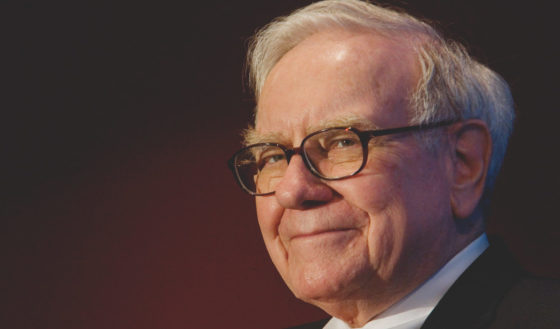
Billionaire Warren Buffet has issued a warning that there is an upcoming “megacatastrope” on the horizon.


SHTFPlan February 25th, 2019
Billionaire Warren Buffet has issued a warning that there is an upcoming “megacatastrope” on the horizon.  Buffet says that when this apocalyptic scenario plays out, our losses will be immeasurable.

In his annual letter, Buffet warned of a “megacatastrophe,” which he said will cause unprecedented havoc not just to victims but to the financial world as well. “A major catastrophe that will dwarf hurricanes Katrina and Michael will occur – perhaps tomorrow, perhaps many decades from now,” the Berkshire Hathaway CEO wrote. “‘The Big One’ may come from a traditional source, such as a hurricane or earthquake, or it may be a total surprise involving, say, a cyber attack having disastrous consequences beyond anything insurers now contemplate.”

The financial world is being propped up by central banks and the debt-based monetary system that far too many trust will eventually meet its demise.  This could cause a worldwide societal collapse of epic proportions.

 It could all begin with a disastrous financial crisis.  One which we are close to, regardless of what is being said in mainstream media. Economic numbers all over the world continue to get worse, and even New York Times columnist Paul Krugman is now warning of “an unavoidable global recession”. Unfortunately, most Americans still have absolutely no idea that this is happening right underneath their noses. Most ordinary citizens are still under the impression that everything is going to be just fine, but the numbers suggest otherwise. 78% of Americans live paycheck to paycheck while 40% don’t have enough money to cover a $400 emergency.  Americans carry record levels of consumer debt and student loan debt while borrowing further with their use of credit cards.

18 Really Big Numbers That Show That The U.S. Economy Is Starting To Fall Apart Very Rapidly

The Economic Collapse 
#1 Farm loan delinquencies just hit the highest level that we have seen in 9 years.
#2 We just learned that U.S. exports declined by 4 billion dollars during the month of December.
#3 J.C. Penney just announced that they will be closing another 24 stores.
#4 Victoria’s Secret has just announced plans to close 53 stores.
#5 On Thursday, Gap announced that it will be closing 230 stores over the next two years.
#6 Payless ShoeSource has declared bankruptcy and is closing all 2,100 stores.
#7 Tesla is also closing all of their physical sales locations and will now only sell vehicles online.
#8 PepsiCo has started laying off workers and has committed to “millions of dollars in severance pay”.
#9 The Baltic Dry Index has dropped to the lowest level in more than two years.
#10 This is the worst slump for core U.S. factory orders in three years.
#11 We just witnessed the largest decline in the Philly Fed Business Index in more than 7 years.
#12 In January, sales of existing homes fell 8.9 percent from a year earlier.  That was the third month in a row that we have seen a decline of at least 8 percent.  This is an absolutely catastrophic trend for the real estate industry.
#13 U.S. housing starts were down 11.2 percent in December compared to the previous month.
#14 Compared to a year earlier, home sales in southern California were down 17 percent in January.
#15 In December, home sales in Sacramento County fell a whopping 22.5 percent compared to a year earlier.
#16 Pending home sales in the United States have now fallen on a year over year basis for 13 months in a row.
#17 More than 166 billion dollars in student loan debt is now “seriously delinquent”.  That is an all-time record.
#18 More than 7 million Americans are behind on their auto loan payments.  That is also a new all-time record, and it is far higher than anything that we witnessed during the last recession.

Relying on monetary policy to prop up asset prices and smooth out global volatility is a recipe for disaster.

Easy money has become a big problem. 
Bloomberg February 23, 2019
Just since December 2018, central banks have collectively injected as much as $500 billion of liquidity to stabilize economic conditions. The U.S. Federal Reserve has put interest rate increases on hold and is contemplating a halt to its balance-sheet reduction plan. Other central banks have taken similar actions, fueling a new phase of the “everything bubble” as markets careen from December’s indiscriminate selling to January’s indiscriminate buying.

The monetary onslaught appears a reaction to financial factors -- falling equity markets, rising credit spreads, increased volatility -- and a perceived weakening of economic activity, primarily in Europe and China. If they heeded Walter Bagehot’s oft-cited rule, central banks would act only as lenders of last resort in times of financial crisis, lending without limit to solvent firms against good collateral at high rates. Instead, they’ve become lenders of first resort, expected to step in at any sign of problems. U.S. central bankers are currently debating whether quantitative-easing programs should be used purely in emergency situations or more routinely.

Since 2008, the global economy has grown far too dependent on huge central bank balance sheets and accommodative monetary policy. The U.S. economic boom President Donald Trump loves to tout is largely fake, engineered by artificial policy settings. Such dependence is dangerous and, for various reasons, could well backfire.

For one thing, central banks are poor forecasters. GDP growth, inflation and labor markets may prove more resilient than feared, remaining at or above trend. Key risks, such as the trade dispute between the U.S. and China, may recede. Financial markets and asset prices have already recovered substantially. It’s possible that central banks may be forced to make another U-turn to reduce the risk of reflating asset price bubbles and overheating economies. This flip-flop would be destabilizing and affect decisionmakers’ credibility.  

Friday, June 9, 2017

12 signs the economic slowdown that the experts have been warning about is now here


By Michael Snyder, on June 1st, 2017 
Since the election there has been this perception among the American public that the economy is improving, but that has not been the case at all.  U.S. GDP growth for the first quarter was just revised up to 1.2 percent, but that is even lower than the average growth of just 1.33 percent that we saw over the previous ten years.  But when you look even deeper into the numbers a much more alarming picture emerges.  Commercial and industrial loan growth is declining, auto loan defaults are rising, bankruptcies are absolutely surging and we are on pace to break the all-time record for most store closings in a single year in the United States by more than 20 percent.  All of these are points that I have covered before, but today I have 12 new facts to share with you.  The following are 12 signs that the economic slowdown that the experts have been warning about is now here…

#1 According to Challenger, the number of job cuts in May was 71 percent higher than it was in May 2016.
#2 We just witnessed the third worst drop in U.S. construction spending in the last six years.
#3 U.S. manufacturing PMI fell to an 8 month low in May.
#4 Financial stocks have lost all of their gains for the year, and some analysts are saying that this is “a terrible sign”.
#5 One new survey has found that 39 percent of all millionaires “plan to avoid investing in the coming month”.  That is the highest that figure has been since December 2013.
#6 Jobless claims just shot up to a five week high of 248,000.
#7 General Motors just reported another sales decline in May, and it is being reported that the company may be preparing for “more job cuts at its American factories”.
#8 After an initial bump after Donald Trump’s surprise election victory, U.S. consumer confidence is starting to fall.
#9 Since Memorial Day, Radio Shack has officially shut down more than 1,000 stores.
#10 Payless has just increased the number of stores that it plans to close to about 800.
#11 According to the Los Angeles Times, it is being projected that 25 percent of all shopping malls in the United States may close within the next five years.
#12 Over the past 12 months, the number of homeless people living in Los Angeles County has risen by a  staggering 23 percent.

And in case those numbers have not persuaded you that the U.S. economy is heading for rough times, I would encourage you to go check out my previous article entitled “11 Facts That Prove That The U.S. Economy In 2017 Is In Far Worse Shape Than It Was In 2016” for even more eye-popping statistics.
During a bubble, it can feel like the good times are just going to keep rolling forever.
But that never actually happens in reality.
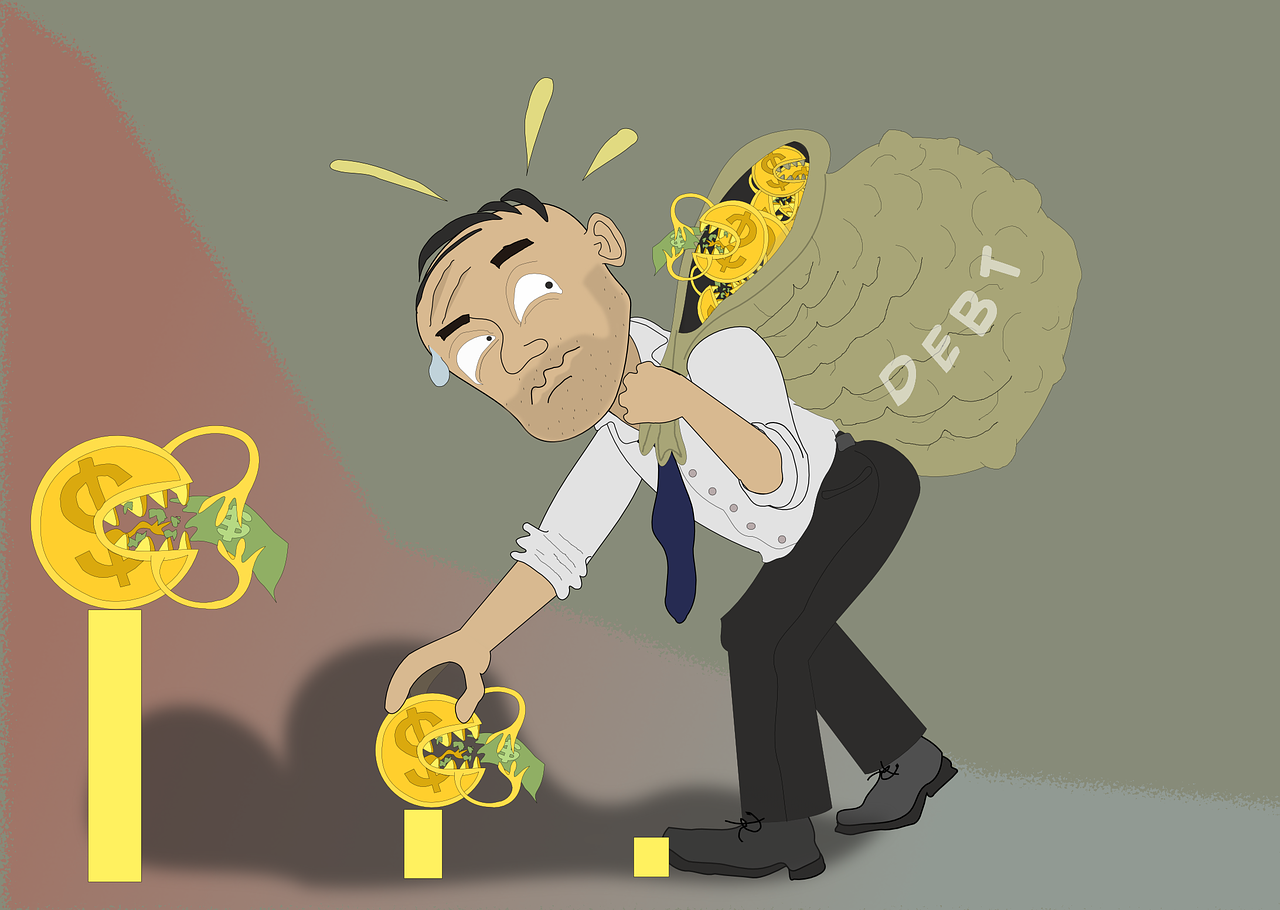
The truth is that we are in the terminal phase of the greatest debt bubble of all time, and the evidence is starting to mount that this debt bubble has just about run its course.  The following comes from Zero Hedge…
A recurring theme on this website has been to periodically highlight the tremendous build up in US corporate debt, most recently in April when we showed that “Corporate Debt To EBITDA Hits All Time High.” The relentless debt build up is something which even the IMF recently noted, when in April it released a special report on financial stability, according to which 20% of US corporations were at risk of default should rates rise. It is also the topic of the latest piece by SocGen’s strategist Andrew Lapthorne who uses even more colorful adjectives to describe what has happened since the financial crisis, noting that “the debt build-up during this cycle has been incredible, particularly when compared to the stagnant progression of EBITDA.”
Lapthorne calculates that S&P1500 ex financial net debt has risen by almost $2 trillion in five years, a 150% increase, but this mild in comparison to the tripling of the debt pile in the Russell 2000 in six years. He also notes, as shown he previously, that as a result of this debt surge, interest payments cost the smallest 50% of stocks in the US fully 30% of their EBIT compared with just 10% of profits for the largest 10% and states that “clearly the sensitivity to higher interest rates is then going to be with this smallest 50%, while the dominance and financial strength of the largest 10% disguises this problem in the aggregate index measures.”
The same report noted that net debt growth in the U.S. is quickly headed toward negative territory, and the last time that happened was during the last recession.
We see similar things when we look at the 2nd largest economy on the entire planet.  According to Jim Rickards, China “has multiple bubbles, and they’re all getting ready to burst”…
China is in the greatest financial bubble in history. Yet, calling China a bubble does not do justice to the situation. This story has been touched on periodically over the last year.
China has multiple bubbles, and they’re all getting ready to burst. If you make the right moves now, you could be well positioned even as Chinese credit and currency crash and burn.
The first and most obvious bubble is credit. The combined Chinese government and corporate debt-to-equity ratio is over 300-to-1 after hidden liabilities, such as provincial guarantees and shadow banking system liabilities, are taken into account.
We just got the worst Chinese manufacturing number in about a year, and it looks like economic conditions over there are really starting to slow down as well.
Just like 2008, the coming crisis is going to be truly global in scope.
It is funny how our perspective colors our reality.  Just like in 2007, many are mocking those that are warning that a crisis is coming, but just like in 2009, after the crisis strikes many will be complaining that nobody warned them in advance about what was ahead.
And at this moment it may seem like we have all the time in the world to get prepared for the approaching storm, but once it is here people will be talking about how it seemed to hit us so quickly.
My hope is that many Americans will finally be fed up with our fundamentally flawed financial system once they realize that we are facing another horrendous economic crisis, and that in the aftermath they will finally be ready for the dramatic solutions that are necessary in order to permanently fix things.        The economic collapse