Showing posts with label Vitamin D. Show all posts

Wednesday, March 31, 2021

Sunlight and Vitamin D: They’re Not the Same Thing

Sunlight and Vitamin D: They’re Not the Same Thing

Westonaprice   April 20, 2020

ARTICLE SUMMARY
• Sulfate synthesis in the skin captures the sun’s energy. Adequate sunlight exposure to both the skin and the eyes is vital to our long-term health.
• Among other functions, sulfate supports blood vessel health, the body’s electrical supply and the delivery system for important molecules such as cholesterol, vitamin D, dopamine and melatonin.
• Evidence indicates that sunlight protects against cancer, heart disease, hypertension and bone fractures.
• The benefits of sunlight exposure are about much more than vitamin D.

• Many studies show that vitamin D supplementation cannot reproduce sunlight’s health benefits. Moreover, excessive vitamin D supplementation can aggravate systemic sulfate deficiency, which will drive calcium buildup in the arteries.

• Both sunscreen and glyphosate interfere with synthesis and production of melanin—the body’s natural mechanism of sun protection. Aluminum in sunscreen disrupts sulfate synthesis. These disruptions may explain why melanoma prevalence has steadily risen in tandem with the increased use of higher sun-protection-factor sunscreens over the past two decades.


We have been brainwashed into believing that the sun is toxic, whereas in fact it is life-giving. I am a great fan of sunlight exposure to both the skin and the eyes. The sun has been a resource for Planet Earth since the beginning of time, and biological organisms evolved with a constant supply of energy they could count on every day with the rising sun. Plants use the energy of sunlight to convert inorganic carbon into organic matter, with the help of chlorophyll. Why would animals ignore such an obvious energy source? Just as plants need sun­light to grow, sunlight plays an essential role in energizing animals, including humans.

I believe that the mechanism with which we safely exploit the sun’s energy is through the oxidation of sulfur to sulfate, with the help of choles­terol. This reaction takes place in the skin—catalyzed by sunlight—and it is vital to our long-term health.

PROTECTIVE SUNLIGHT

People who live in places with little sun have statistically higher risk for many chronic conditions, including multiple sclerosis, diabe­tes, cardiovascular disease, autism, Alzheimer’s disease and age-related macular degeneration.1 On the other hand, a great deal of epidemio­logical evidence suggests that sunlight exposure protects from many different types of cancer. Ultraviolet (UV) radiation is recommended in treating different skin conditions, including pso­riasis, eczema, jaundice and acne. Sunlight may also be beneficial in healing various autoim­mune diseases, including rheumatoid arthritis, systemic lupus erythematosus, inflammatory bowel disease and thyroiditis.

Yet chances are that your dermatologist has told you to “stay out of the sun and take a vitamin D supplement every day.” For some, this has seemed like good advice because we have been taught to believe that the sun causes skin cancer and that the only reason to get out in the sunlight at all is to boost vitamin D levels through its UV-stimulated synthesis in the skin. Driven by the belief that the benefits of sunlight exposure are mainly due to vitamin D synthesis, the natural conclusion is that vitamin D supple­ments would achieve the same goal.

The story is not that simple, however. When placebo-controlled studies are conducted on vi­tamin D supplementation, they usually produce disappointing results. I believe the reason is that sunlight exposure is about a whole lot more than vitamin D synthesis in the skin. In a paper published in 2016, Richard Weller wrote: “A substantial body of evidence shows that sunlight has health benefits and that these are independent of vitamin D and thus cannot be reproduced by oral supplementation.”2

Sunday, May 31, 2020

The growing evidence on vitamin D and Covid

Spectator 18 May 2020
The argument that vitamin D deficiency may contribute to more severe cases of Covid is gaining ground. It is now reaching the point where it is surprising that we are not hearing from leading medical officials and politicians that people should consider taking supplements to ensure they have sufficient vitamin D.

This is not the same as arguing that vitamin D is a magic bullet that will cure the disease. Vitamins are not medication, the taking of which will have positive effects on everybody. They are top-ups: things that hurt you when you don't have enough of them in your system but do no extra good when you have enough. Indeed, with many vitamins, including D, taking too much can be toxic.

However, it is true that many people are deficient in vitamin D, especially at the end of winter. That is because, uniquely, vitamin D is a substance manufactured by ultraviolet light falling on your skin. You can get some from fish and other foods, but not usually enough. So most people's vitamin D levels fall to a low point in February or March when the sun has been weak and its UV output especially so. Public health bodies have long advised people to supplement vitamin D in winter anyway.

The level falls especially low in people who stay indoors a lot, including the elderly, and in those who have darker skin. Whereas the safe level of vitamin D is generally agreed to be above 10 nanograms per millilitre, one recent study of South Asians living in Manchester found average levels of 5.8 in winter and 9 in summer: too low at all times of the year. Darker skin reduces the impact of sunlight; so does the cultural habit of veiling; and so does a reluctance among some Muslims to take supplements that might have pork-derived gelatin in them.

Tuesday, April 10, 2018

Very common vitamin deficiency linked to higher levels of depression


Vitamin Deficiency
Spring 
Almost half of young women have insufficient vitamin D levels, which is linked to depression.
The new study also found that over one-third of young women had signs of clinical depression.
Dr David Kerr, the psychologist who led the study, said:
“Depression has multiple, powerful causes and if vitamin D is part of the picture, it is just a small part.
But given how many people are affected by depression, any little inroad we can find could have an important impact on public health.”
While many suspect a link between the vitamin deficiency and depression, studies have not often confirmed it.
Dr Kerr continued:
“The new study was prompted in part because there is a widely held belief that vitamin D and depression are connected, but there is not actually much scientific research out there to support the belief.
I think people hear that vitamin D and depression can change with the seasons, so it is natural for them to assume the two are connected.”

Friday, March 16, 2018

Vitamin D can't be metabolized without sufficient magnesium levels

Image result for magnesium
ScienceDaily    02/26/2018
A review published in The Journal of the American Osteopathic Association found Vitamin D can't be metabolized without sufficient magnesium levels, meaning Vitamin D remains stored and inactive for as many as 50 percent of Americans.

"People are taking Vitamin D supplements but don't realize how it gets metabolized. Without magnesium, Vitamin D is not really useful or safe," says study co-author Mohammed S. Razzaque, MBBS, PhD, a professor of pathology at Lake Erie College of Osteopathic Medicine.

Razzaque explains that consumption of Vitamin D supplements can increase a person's calcium and phosphate levels even if they remain Vitamin D deficient. The problem is people may suffer from vascular calcification if their magnesium levels aren't high enough to prevent the complication.

Patients with optimum magnesium levels require less Vitamin D supplementation to achieve sufficient Vitamin D levels. Magnesium also reduces osteoporosis, helping to mitigate the risk of bone fracture that can be attributed to low levels of Vitamin D, Razzaque noted.

Deficiency in either of these nutrients is reported to be associated with various disorders, including skeletal deformities, cardiovascular diseases, and metabolic syndrome.

While the recommended daily allowance for magnesium is 420 mg for males and 320 mg for females, the standard diet in the United States contains only about 50 percent of that amount. As much as half of the total population is estimated to be consuming a magnesium-deficient diet.

Researchers say the magnesium consumption from natural foods has decreased in the past few decades, owing to industrialized agriculture and changes in dietary habits. Magnesium status is low in populations who consume processed foods that are high in refined grains, fat, phosphate, and sugar.

"By consuming an optimal amount of magnesium, one may be able to lower the risks of Vitamin D deficiency, and reduce the dependency on Vitamin D supplements," says Razzaque.

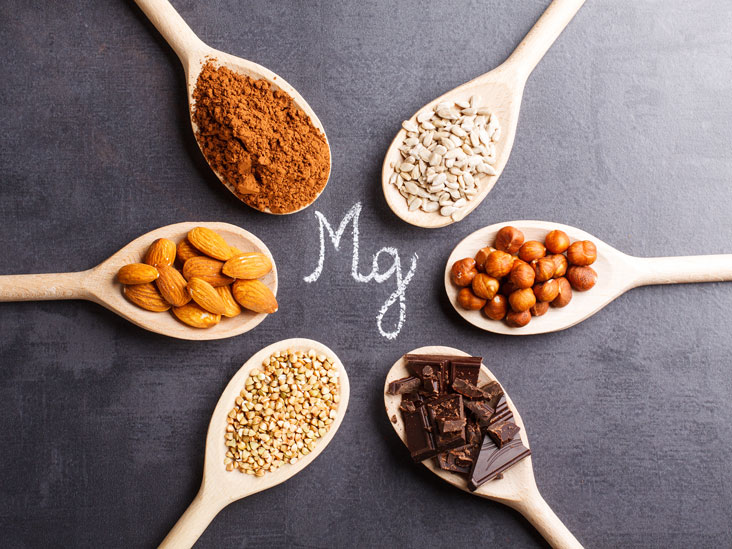
Magnesium is the fourth most abundant mineral in the human body after calcium, potassium, and sodium. Foods high in magnesium include almonds, bananas, beans, broccoli, brown rice, cashews, egg yolk, fish oil, flaxseed, green vegetables, milk, mushrooms, other nuts, oatmeal, pumpkin seeds, sesame seeds, soybeans, sunflower seeds, sweet corn, tofu, and whole grains.

Saturday, May 20, 2017

Are you deficient in vitamin D?

Image result for Dermatologists Hate the Sun
By Dr. Mark Sircus, Ac., OMD April 20, 2017
Are you deficient in vitamin D? For most people today the answer is yes, you are not getting enough vitamin D. If you are listening to your dermatologist, you definitely are because he or she has a problem with the sun.
You do not want to be like them—you want to love the sun. More than three-fourths of people with a variety of cancers have low levels of vitamin D, and the lowest levels are associated with more advanced cancers so you really want to make friends with the sun.
A study has found that the number of people being diagnosed with vitamin D deficiency has tripled from 2008 to 2010 in the United States. Some researchers believe that up to 75% of the United States population may not be getting enough vitamin D (levels below 30 ng/ml).[1]
Essential for brain health, a strong immune system and weight management, Vitamin D3 is a fat-soluble vitamin that your body can get through sun exposure, food or supplements. However, nearly 50 percent of the population worldwide suffers from vitamin D3 deficiency.
Much of this problem is create by dermatologists. God forbid one of their patients steps outside on a sunny or a cloudy day, they had better cover their skin with sunscreen and do it right so the minimum amount of sunrays actually touches the skin. Did you know that 90% of Alzheimer’s disease patients have low levels of vitamin D?

Respect the Sun

Dermatologists are not the only ones that hate the sun but at least they do not pretend it does not exist like global warming fake scientists and governmental officials do. It is very important that we get into a correct relationship with the sun because without it we would die. The sun gives life to our earth and everything on it. The sun gives health for we need different wavelengths of its splendor. The sun is a primal medicine as is water. We do need to treat the sun with respect, as the dermatologists insist.
Learn a system of medicine that is safe, simple and affordable! Discover Dr Sircus Natural Allopathic Medicine »
Health professionals recommend getting at least 5-30 minutes of sun exposure daily—no sunscreen invited. Sound easy? Well, for those living too far from the equator, getting that daily sunshine fix can be tricky. Even short periods of direct peak sun exposure — 15 minutes 3 times a week, for example — can give you some of the recommended daily amount of vitamin D if you live in the lower latitudes. It is impossible to overdose on vitamin D from the sun though of course one can burn.      More