Showing posts with label China. Show all posts

Wednesday, March 31, 2021

China’s ‘Sharp Eyes’ Program Aims to Surveil 100% of Public Space


Medium  March 2, 2021

One of China’s largest and most pervasive surveillance networks got its start in a small county about seven hours north of Shanghai.

Monday, November 30, 2020

A huge ball of fire was spotted falling from the sky and crashing into north-western China’s

 Huge 'Fireball' Falls Out of the Sky and Crashes into Horizon in China, Watch Viral Video

MSN 24-12-2020

A huge ball of fire was spotted falling from the sky and crashing into north-western China’s Yushu city on Wednesday. In a footage of the incident shared on YouTube, a giant fireball can be spotted flashing across the sky, lighting the dark sky over southern China. In multiple footages captured by locals, a ball of fire, suspected as a meteor, lights up the sky and plummets into the county of Nanggian in north-western China’s Qinghai province. Locals have reported to have heard loud bangs and the incident is said to have occurred at 7 am on December 23.

According to a report by Daily Mail, it is not yet clear what the burning sphere is but the local media is suggesting that the unidentified object could be a bright meteor. It is also suggested by some experts that the object was a bolide, an extremely bright meteor. Chief writer of Chinese science website Guokr, Yu Jun while talking to media said that it looked like a bolide. It might also have dropped several meteorite fragments somewhere around the area. Thankfully, no causalities have been reported.

Monday, August 31, 2020

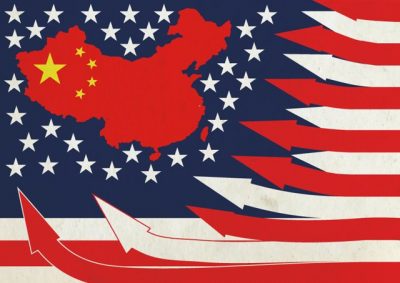
Towards a US-China War? The Creation of a Global Totalitarian System, A “One World Government”?


 Global Research, August 23, 2020

If we step back from the details of daily headlines around the world and try to make sense of larger patterns, the dominant dynamic defining world geopolitics in the past three years or more is the appearance of a genuine irregular conflict between the two most formidable powers on the planet—The Peoples’ Republic of China and the United States of America. Increasingly it’s beginning to look as if some very dark global networks are orchestrating what looks to be an updated rerun of their 1939-1945 World War.   The powers that be periodically use war to gain major policy shifts.

On behalf of the Powers That Be (PTB), World War II was orchestrated by the circles of the City of London and of Wall Street to maneuver two great obstacles—Russia and Germany—to wage a war to the death against each other, in order that those Anglo-Saxon PTB could reorganize the world geopolitical chess board to their advantage. It largely succeeded, but for the small detail that after 1945, Wall Street and the Rockefeller brothers were determined that England play the junior partner to Washington. London and Washington then entered the period of their global domination known as the Cold War.

That Anglo-American global condominium ended, by design, in 1989 with the collapse of the Berlin Wall and the disintegration of the Soviet Union by 1991.

Around this time, with the onset of the Bill Clinton presidency in 1992, the next phase– financial and industrial globalization– was inaugurated. With that, began the hollowing out of the industrial base of not only the United States, but also of Germany and the EU. The cheap labor outsourcing enabled by the new WTO drove wages down and destroyed one industry after the next in the industrial West after the 1990s. It was a necessary step on the path to what G.H.W. Bush in 1990 called the New World Order. The next step would be destruction of national sovereignty everywhere. Here the USA was the major obstacle.

Friday, July 31, 2020

Premonitions Of War

Split societies, global chaos and World War Three: We could be in for the most tumultuous era in modern history

RT  20 Jul, 2020

In 2014, I wrote an essay about the possibility of World War III around 2030, arising out of a clash between the U.S. and China. Six years later I would make two corrections to that article. First, a Sino-American war now looks not just possible, but almost inevitable. Second, the situation preceding the US-China clash will not resemble the world of the early twentieth century, pre-WWI, with its rapidly growing prosperity due to what is now considered the first era of globalization. Rather, the atmosphere of the 2020s will be more akin to that of the 1930s, with the global economy in the doldrums and the rise of authoritarian and neo-totalitarian regimes. The most important question, though, is whether the US-China war will be a relatively limited one. If not, could it lead to a global conflagration, drawing in other players such as Russia, India, Japan and Europe?

The history of mankind has never lacked in conflicts over values and power, both within societies and among them. Yet the present moment is rather unique because of the convergence at one point in time of several profound and explosive societal contradictions, with the threat of pandemics and climate change as the background. China is perhaps the only major island of relative stability in the global tempest, which, incidentally, amplifies the fears that Beijing would try to reach for the scepter of global power.

In due time, the current contradictions and conflicts will run their course and be resolved. A new equilibrium will set in. Until it does, however, we will be living in very interesting times. Perhaps, not angst but, rather, excitement should be the main mood of our era.

Monday, March 23, 2020

The China That Emerges After Coronavirus Will Be A Cashless Society

Freezing cross-province transfers and replacing $86 billion in paper yuan is only consolidating a process of surveillance where Beijing can monitor all transactions.
It’s still getting bad in China, where reported coronavirus cases are doubling every 7-10 days. Until that exponential contagion curve flattens out, we just don’t know how far the outbreak spreads or how fast the government will ultimately be able to contain it.
The society that emerges is going to play by different rules. And it starts with Beijing locking down even more of the second-biggest economy in history. 
Cash was already going away in China. Now it turns out that the virus shows up on old paper money and can live there for days.
Every time every one of those infected yuan notes moves from hand to hand, it’s another infection vector. If you handle the wrong money, you’re literally carrying the plague.
Naturally that makes people much less eager to accept cash. Luckily there are payment apps to keep everything clean and digital.
But coincidentally enough, the big apps from Alibaba and We Chat already work hand in glove with the central bank. There’s no privacy there. The transactions are open to surveillance.
And with true crypto driven deep underground, cash was the best way left to operate in the country without leaving a transparent digital trail. 
Is it any wonder Beijing has started impounding yuan notes in the quarantine zone while stopping transfers between provinces? 
Old currency just isn’t getting replaced. Instead it’s being withdrawn from circulation so it can be sterilized. In theory, new money will take its place.

Tuesday, December 3, 2019

China’s African Swine Fever Now Global Threat

ASF32452
Neo  30.11.2019
The worst outbreak of fatal African Swine Fever disease ever has devastated the world’s largest pig population, that of China, over the past months. Now it is spreading to neighboring states and even threatens the United States pig herds. The political and human impact could be far worse than imagined as a de facto pandemic disease situation spreads. Globalization of agribusiness is not helping matters.

On August 3, 2018 a case of African Swine Fever (ASF) was confirmed in China’s Liaoning Province. Since then despite various measures to contain the deadly disease it has spread across China where as of November, 2019 in little more than a year, nearly half of China’s huge pig population has either died or been eliminated in a desperate effort to contain the disease. ASF is not deadly to humans but is 100% fatal to any pig that is infected. There is no known treatment to cure it. It can be spread by direct contact with an infected pig, body fluids, contact with equipment or clothing and via certain tick species.

The China Agriculture Ministry issued a report in August that the size of China’s live pig herd had declined by a very precise 38.7% from August 2018. Industry sources suspect underreporting and put the actual number at more like 50%. In any event it is huge, and has impacted the politically sensitive measure of China food price inflation over the past year. Pork is a mainstay of the Chinese diet for meat protein and considered a national security issue. Most pigs in China are raised by small-scale farmers who face ruin now. According to reports inside China this has led many desperate small farmers to try to hide the presence of ASF in their herds, to slaughter and sell, to avoid financial ruin.

The disease is especially dangerous. According to experts it’s hard to kill. One report notes, “It lives in feces for 11 days and blood for 15 weeks. It lives in salted meat for 182 days, dried meat for almost a year, and frozen meat for three years. The Chinese love to take meat snacks with them when they travel. Rules can be bent in Asia.”

Friday, May 31, 2019

The lack of pollinating insects in some areas of fruit production in China has forced producers to pollinate their fruit trees by hand.

Fresh Plaza   5/24/2019
The lack of pollinating insects in some areas of fruit production in China has forced producers to pollinate their fruit trees by hand.

In these areas, the excessive use of pesticides and the lack of a natural habitat put an end to all the pollinators that inhabited the ecosystem.

There is increasing awareness of insects and other pollinating animals for agriculture worldwide; In fact, in the long term, they are basically the only ones responsible when it comes to growing food and without them agriculture could collapse.

There are simple solutions to avoid their collapse. Studies in Europe and North America have found that it is possible to increase the population of pollinating insects by planting strips of wild flowers near crops and leaving patches of natural vegetation, such as trees and forests. These practices can also increase the population of natural predators, decreasing the need to use pesticides.
With a little effort, it is perfectly possible to grow food and at the same time take care of the environment.

In an attempt to control and transform nature to our advantage, Mao Tse Tung had the incredible idea that certain animals  (sparrows, mosquitoes, flies and mice) were harmful to the performance of agriculture, so he decided to declare war on them, beginning what was called the campaign against the four plagues, with which he intended to exterminate these four species.
The sparrow owed its persecution to the eating of stored grain, causing problems for agriculture. As a result, it was placed in the list of dangerous animals. In the words of Mao Tse Tung, "Sparrows are one of the worst plagues in China." In 1960, alerted by the increase of insects, which were the basis of the diet of the sparrows, that plan was abandoned.

Saturday, January 26, 2019

Tech revolution may cause World War III, warns Alibaba billionaire Jack Ma

RT24 Jan, 2019
Chinese entrepreneur Jack Ma says the spate of technological advances around the world could lead to a new global conflict between major powers looking to assert their dominance.
“The First World War was because of the first technology revolution. The second technology revolution caused World War II,” he told the audience during a discussion at the World Economic Forum in Davos.
“This is the third technology revolution – we’re coming.”
The Alibaba founder’s comments echoed those he made two years ago, when he said that automation and the rise of artificial intelligence would create internal social upheaval and a geopolitical redistribution of power between the leaders and those left behind.
Though elsewhere in his speech, he wryly remarked that “today, there’s no expert of tomorrow, there’s only experts of yesterday.”

Xi Jinping calls on China's army to be battle-ready


Image result for Xi Jinping
Asiaone   Jan 05, 2019 
SHANGHAI - China's armed forces must strengthen their sense of urgency and do everything they can to prepare for battle, President Xi Jinping told a meeting of top brass on Friday (Jan 4).
China is keen to beef up its armed forces amid territorial disputes in the South China Sea and escalating tension with the United States over issues ranging from trade to the status of Taiwan.
The official Xinhua news agency said Xi told a meeting of the top military authority that China faced increasing risks and challenges, and the armed forces must work to secure its security and development needs.
Xi, who is also chairman of the Central Military Commission, said the armed forces must devise strategies for the new era and take on responsibilities for preparing and waging war.
"The world is facing a period of major changes never seen in a century, and China is still in an important period of strategic opportunity for development," he was quoted as saying.
He said the armed forces needed to be able to respond quickly to emergencies, needed to upgrade their joint operations capabilities and nurture new types of combat forces.
Xi's comments followed his remarks on Wednesday that China still reserved the right to use force to achieve "reunification" with Taiwan and prevent the island's independence.
Xi's Taiwan speech came just days after US President Donald Trump signed the Asia Reassurance Initiative Act into law, reaffirming the US commitment to the island's security.

Wednesday, November 28, 2018

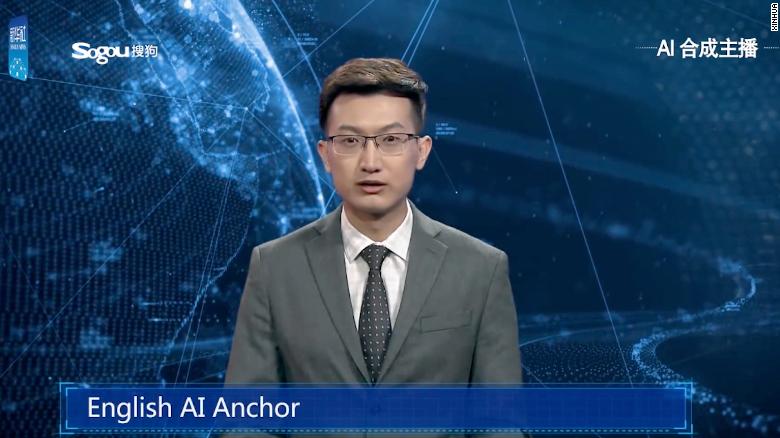
China unveiled its "artificial intelligence news anchor"

CNN November 9, 2018
Hong Kong. News anchors, beware. The robots are coming for your jobs, too.
China's state news agency has debuted a virtual anchor designed to be able to deliver the news 24 hours a day.
 
Xinhua unveiled its "artificial intelligence news anchor" Wednesday at an internet conference in the eastern city of Wuzhen.
 
"Hello, you are watching English news program. I am AI news anchor in Beijing," the computer-generated host announced in a robotic voice at that start of its English-language broadcast.

Friday, August 17, 2018

The Secret Battle for Africa

Corbett Report 08/12/2018
In October 2017 United States African Command confirmed that three Green Berets had been killed and two more had been wounded when their patrol was ambushed in Niger. Reaction to this news from the non-Corbett Report audience was: “What? There’s a United States African Command?” followed swiftly by “What are Green Berets doing conducting patrols in Niger, anyway?”

First things first: As my long-time viewers will be aware, there is indeed a United States African Command (AFRICOM). It was established in 2007 and has been the spearhead of Uncle Sam’s attempts to gain a military foothold on the African continent. My viewers will likewise be aware that the whole Kony 2012 psyop was similarly used as a cynical ploy to increase American military intervention in Africa.

But the extent of US Special Forces penetration in Africa (also reported on in these pages in recent years) is a reality that is still only gradually being revealed to the public. A recent congressional review of the incident in Niger has again cast a spotlight on the use of Special Forces around the world, with the Pentagon now floating the possibility that they will cut back on commandos in Africa to concentrate on the “real” enemies: Russia and China.

Monday, June 25, 2018

Escalating trade wars continue between America and China


Escalating trade war between US & China sends shock waves through markets

RT 19 Jun, 2018
Global stocks crashed on Tuesday after US President Donald Trump threatened another 10-percent tariff on $200 billion of Chinese imports in response to Beijing’s retaliation for the previous package of levies imposed by the US.

China vowed to protect its interests, countering any US tariffs imposed on its goods with a mirror response.

“This practice of extreme pressure and blackmail” will be met with other comprehensive quantitative and qualitative measures, the country’s Commerce Ministry warned.

“The United States has initiated a trade war that violates market laws and is not in accordance with current global development trends,” it added.

Last week, Washington announced tariffs on 1,102 separate categories of Chinese products, to come into effect on July 6. Beijing immediately retaliated with a 25-percent tariff on 545 American products worth $50 billion, which will come into force on the same day. Chinese authorities also pledged to add another 114 product categories to the existing list.

The growing trade spat between Beijing and Washington has dragged global markets down as investors opt to get rid of riskier assets. China’s stock market dropped 2.7 percent, while Japan’s Nikkei ended down by 1.7 percent.

Tuesday, April 10, 2018

China appears to have banned the Bible as Beijing and the Vatican negotiate a historic agreement

Sales of the Bible appear to be banned in China
Independent April 6 2018
China appears to have banned the 'Bible' from being sold online or in large book stores, as Beijing and the Vatican negotiate a historic agreement.

Searches for the book on e-commerce platforms JD.com and Taobao brought up no results, while staff at one of Beijing's biggest book stores said they no longer sell it.
There are currently tensions between China and Rome over a landmark deal that observers believe is close to being signed.

It would give the Vatican more control over the appointment of bishops in China but has sparked concern among some Chinese Catholics who believe recognising Beijing's role in the Church would represent a betrayal of their faith.

China's ruling Communist Party is officially atheist, but the Chinese government recognises Buddhism, Taoism, Islam, Protestantism and Catholicism.

Chinese leaders have called for increased efforts to "Sinocise" religion in comments seen as being part of a wider clampdown on Western ideas.

Tuesday, February 13, 2018

Vatican: China best example of church's social doctrine


china-flag

WND  February 12, 2018
WASHINGTON – Conservative Catholics are expressing shock at Pope Francis’ zeal in embracing the totalitarian government of China by first agreeing to replace underground church leaders with state-chosen hacks and now with a top Vatican official saying “those who best realize the social doctrine of the church are the Chinese.”

Bishop Marcelo Sanchez Sorondo, an Argentinian, is Pope Francis’ chancellor of the Pontifical Academy of Sciences and the Pontifical Academy of Social Sciences told Vatican Insider that China is exercising global moral leadership in the defense of human dignity.

On a recent trip, Sorondo said: “I found an extraordinary China; what people do not know is that the central Chinese principle is ‘work, work, work.’ … As Paul said: ‘He who does not work does not eat.’ You do not have shantytowns; you do not have drugs; young people do not have drugs. There is a positive national consciousness — they want to show that they have changed; they already accept private property.”

Continuing in his lavish praise of Chinese-style Communism, Sorondo said “they [the Chinese] seek the common good, subordinate things to the general good.” China, he added, has “defended the dignity of the human person” and, in the area of climate change, is “assuming a moral leadership that others have abandoned.”

First GMO rice from china just approved by FDA

As we reported last summer, Big Agri pulled some maneuvers and made major inroads in China despite major opposition from China’s people. Readers may be surprised to learn that Chinese citizens reject the notion of GMOs but they do. In fact, there is such a demand for organic there, that China is buying up arable land in other countries and trumpeting health campaigns to discourage meat and dairy consumption. Not only has this demand for better food caused food shortages there because of their issues with pollution, but it has also created a bevy of “fake organics” and questionable foods flooding other countries. Are we about to receive a flood of GM rice, too?

Now the FDA has essentially approved a product based on some data turned in by Chinese researchers. It did not conduct its own experiments. Although cultivation of this GM rice is not officially legal, the FDA stamp of approval was meant to set the ball rolling, and garner approval from other markets.

GlobalTimes.CN reports:
A genetically modified (GM) rice product developed by a group of Chinese scientists has acquired the US Food and Drug Administration (FDA) approval, the first such Chinese product allowed to enter the US market.
However, neither China nor the US has approved mass cultivation of the rice amid low acceptance from the Chinese public for GM food.
Huahui No.1 rice, developed by the Huazhong Agricultural University, is genetically engineered to resist a wide range of insects, thus reducing the use of pesticides.

Monday, August 28, 2017

Influential Chinese economist warns country's debt becoming problem

Prominent Chinese economist warns country's debt becoming problem
18 August 2017
China’s growing debt is affecting the country and the global economy, according to Charlene Chu, an influential China analyst. 
Everyone knows there’s a credit problem in China, but I find that people often forget about the scale. It’s important in global terms," Chu said in an interview with the Financial Times.
Chu, who made her name warning of the risks from China’s credit binge, has predicted that by the end of the year, the country will accumulate $7.6 trillion worth of the so-called "bad" debt.
The comment came the day after the International Monetary Fund (IMF) warned that Chinese debt could be the reason for the next financial crisis as borrowing becomes unsustainable.
"International experience suggests that China’s credit growth is on a dangerous trajectory, with increasing risks of a disruptive adjustment or a marked growth slowdown," the IMF report said.
The IMF said China needed three times as much credit last year to achieve the same amount of growth as in 2008.
A report in June by the Institute of International Finance (IIF) said China's total debt was over 304 percent of GDP as of May this year.
Moreover, “the household debt-to-GDP ratio hit an all-time high of over 45 percent in the first quarter of 2017 —well above the Emerging Market average of around 35 percent,” the IIF said.
Since the 2008 financial crisis, China has become the growth engine of the global economy. The country has contributed to more than half the increase in world's GDP in recent years.   RT

Thursday, May 18, 2017

The One Belt-One Road initiative may shift the global balance of power once and for all

Adam Garrie
World leaders, including Russia’s President Putin have been attending meetings in Beijing as part of the ‘One Belt–One Road’ initiatives launched by China in 2013.
The ambitious project aims to set up transport and trade corridors that will help connect East-Asia, Eurasia and Europe, using both rail and maritime links.
China’s goals represent the most ambitious project to re-define the logistical and financial nature of world-trade since the creation of the World Trade Organisation (WTO) in 1995.
Chinese President Xi Jinping opened the meetings saying,
“Spanning thousands of miles and years, the ancient silk routes embody the spirit of peace and cooperation, openness and inclusiveness, mutual learning and mutual benefit.
The Silk Road spirit has become a great heritage of human civilisation”.
Russia is keenly interested in using this project to facilitate energy trade between Russia and its eastern partners including China, Mongolia, Japan and Korea.
President Putin called One Belt-One Road, named for China’s ancient silk road, a “Civilization project for the future”.
He went on to state,
“We cannot resolve modern challenges by using old approaches. We need new ideas. We need to abandon all stereotypes.
We should set a role model for the global community of how we can work together, develop together, based on equality and respect for national sovereignty based on international law and the United Nations principles”.
Turkey’s President Erdogan meanwhile said that the project would “pave the way in a new era”.
The projects logistics are immense and any project of this size will not come to fruition in a day. This is especially true as the countries leading the project seek cooperation and consent. Intimation and domination, hallmarks of western economic imperialism, are off the table.
President Xi made this abundantly clear. The Chinese President said,
“We have no intentions to meddle in the internal affairs of other countries via bringing our social system and the development model, or by imposing our will (on other states)”.
However, the political implications are clear. While the leaders of China, Russia, India, Turkey, Pakistan, Philippines, Indonesia,Vietnam, Myanmar and others gathered in Beijing, the leaders of the United States and Europe’s largest economies were notably absent. Instead, these countries sent minor officials.          More

Saturday, January 30, 2016

Is China the Last Superpower