Showing posts with label WiFi. Show all posts

Sunday, March 31, 2019

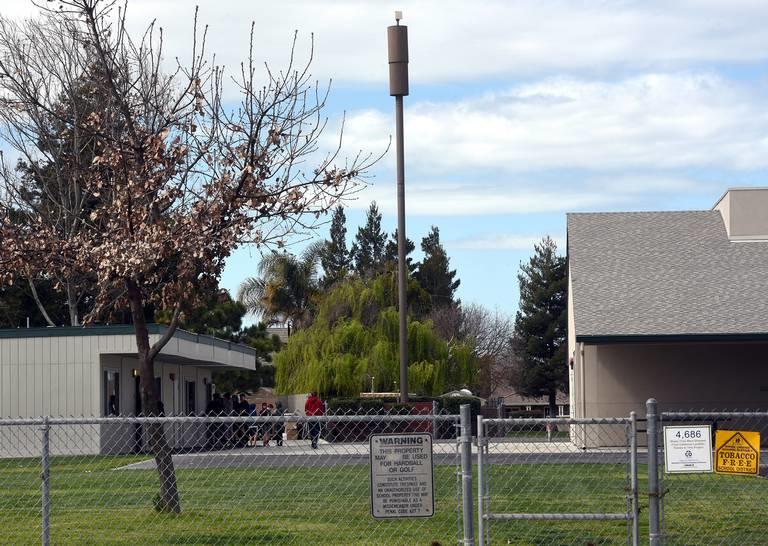
Cancer Cluster At California Elementary School Results In Removal Of Sprint Cell Phone Tower

Zerohedge 03/26/2019
Weston Elementary School in Ripon, CA went on high alert after the controversy erupted two years ago - with some parents even pulling their children from school over the tower which Sprint has been paying the school $2,000 per month to place on its property.
The Ripon Unified School District initially defended the cell phone tower earlier this month, with board president Kit Oase saying tests done on the tower had found it was operating within safety standards. 
Monica Ferrulli, whose son was treated for brain cancer in 2017, said RUSD has cited an obsolete American Cancer Society study in keeping the tower in place since the controversy erupted two years ago. “It is just denial,” Ferrulli told the board. She vowed that parents will continue to fight and keep their children out of the school. -Modesto Bee
Around 200 parents attended a meeting after a fourth student was diagnosed with cancer on March 8. 
Richard Rex, whose family lives across the street from Weston School, said a bump appeared on his 11-year-old son’s abdomen a month ago. He said his son’s classroom is near the tower.
The parents first thought it was a skating injury. Instead of going to science camp, 11-year-old Brad was taken to doctors for examinations and tests that found a tumor wrapped around his liver. The boy now has a portal for starting cancer treatment, the parents said.
Richard Rex said he’s hearing different options for treating the cancer. “They said they can shrink it and cut it out. They’re also talking liver transplant. It is very scary,” Rex said. -Modesto Bee
Sprint representative Adrienne Norton said that the company has been "working with the community in Ripon to address their concerns." 
The potential negative health effects from electromagnetic fields (EMFs) emitted by cell towers or transmission lines have been long debated. While the National Cancer Institute cites studies which conclude that EMFs are a possible human carcinogen based on research which focused on childhood leukemia. The institute's website says there are no increased risks from brain tumors or other cancers based on European epidemiological studies.
According to notices posted by RUSD, the school district hired engineers for an evaluation in 2018 on the cell tower’s compliance with guidelines for limiting human exposure to electromagnetic radiation. The testing found exposure levels for people nearby were below the federal standard, the notices says.  -Modesto Bee
So while parents are blaming the Sprint cell phone tower is responsible for the cancer cluster at Weston Elementary School - it's entirely possible that other environmental factors are at play. 

Thursday, September 27, 2018

Cancer Link Confirmed in Largest Ever Cell Tower Radiation Study

Walking Times August 21, 2018
As the rollout of the nationwide 5G cell network moves forward, many concerned scientists and public health experts are raising the alarm about the potential harms of bathing the environment in high frequency electromagnetic energy. This new technology would add another layer of electromagnetic radiation to an already dangerously inundated environment.
Cell phone manufacturers downplay the potential risks as well as studies that link them to the formation of brain cancer, and in 2017, the California Department of Public Health (CDPH) issued new guidelines aiming to help people reduce their exposure to the risks involved in using cell phones.
5G is already known to cause unused health disturbances and while many are working to derail this massive project, new research gives us extraordinary insight into the effects that cell tower radiation is already having on our health. This technology is far from benign, and while scientists from both sides debate the potential for harm, more evidence continues to mount, suggesting we would be wise to reconsider our dependence on cell technology and upcoming 5G.

Saturday, June 30, 2018

Could wifi be giving our children cancer?


wifi
Dailymail 
Plenty of children these days are so obsessed with having internet access that they will virtually refuse to go on holiday unless the hotel or villa has wifi.

They're certainly used to being fully 'connected' at school, where millions of youngsters who were once taught with chalk on a blackboard now sit in circles on the floor surfing the web on their tablets or phones.

The trouble is that though smartphones are used as educational tools in some lessons, they can also be a dangerous distraction during the day for pupils. In fact, youngsters taking phones into schools has become such a contentious issue that now a minister has called for them to be banned.

Tuesday, April 10, 2018

Most people today live in a sea of radiofrequencies emitted from wireless technologies

Mercola  March 31, 2018
Most people today live in a sea of radiofrequencies (RF), emitted from wireless technologies of all kinds, from routers to smartphones, tablets, baby monitors, TVs, appliances, smart meters and more. In the featured ABC program “Wi-Fried,” originally aired in 2016, Maryanne Demasi, Ph.D., investigates the alleged safety of mobile devices.

According to many experts, chronic, heavy exposure could be having severe repercussions for our health, especially that of children, who are now being exposed even before birth.
As noted by Devra Davis, Ph.D., an epidemiologist and author of the book, “Disconnect: The Truth About Cell Phone Radiation,” children have never before been exposed to this level of pulsed radiation, and it’s still too early to determine the exact extent of the harm. Still, mounting evidence suggests harm is indeed occurring, so it would be foolish to wait until we’re in the midst of a global catastrophe. 

Thursday, March 29, 2018

The adverse biological effects of 5G radiation


5G Radiation Dangers

Electric Sense May 12, 2017
The USA is currently leading the way on 5G. At the June 2016 press conference where the Federal Communications Commission’s (FCC) head Tom Wheeler announced the opening up of low, mid and high spectrum’s. There was no mention of health effects whatsoever. But the dangers are real.
Thousands of studies link low-level wireless radio frequency radiation exposures to a long list of adverse biological effects, including:
  • DNA single and double strand breaks
  • oxidative damage
  • disruption of cell metabolism
  • increased blood brain barrier permeability
  • melatonin reduction
  • disruption to brain glucose metabolism
  • generation of stress proteins
Let’s not also forget that in 2011 the World Health Organization (WHO) classified radio frequency radiation as a possible 2B carcinogen.
More recently the $25 million National Toxicology Program concluded that radio frequency radiation of the type currently used by cell phones can cause cancer.
But where does 5G fit into all this? Given that 5G is set to utilize frequencies above and below existing frequency bands 5G sits in the middle of all this. But the tendency (it varies from country to country) is for 5G to utilize the higher frequency bands. Which brings it’s own particular concerns.

Saturday, January 20, 2018

The negative effects of electromagnetic fields

Dr. Mercola January 08, 2018
The negative effects of electromagnetic fields (EMFs) continue to ignite conversations and controversy worldwide. The most dangerous pollution affecting you is the invisible sea of EMFs your body swims in daily. You are exposed to EMFs all day long, not only in public but inside your home, too. Most of the radiation emits from cellphones, cell towers, computers, smart meters and Wi-Fi, to name just a few of the culprits.
While it’s nearly impossible to avoid EMF exposure completely, there are practical ways to limit it. Given the number of EMFs that bombard you all day long, getting educated about the negative effects of EMFs is imperative to your well-being. Particularly if you are dealing with a serious illness, it is well worth your time to reduce your EMF exposure as much as possible. If you have been told EMFs are safe and not a danger to humans, you may want to consider:
  • The telecommunication industry has manipulated federal regulatory agencies, public health authorities and professionals through powerful and sophisticated lobbying efforts leaving consumers confused and unaware of the health risks associated with EMFs
  • Any negative health effects from EMFs, similar to smoking, may not be immediately noticeable, but will likely develop gradually over time. Cell phones indeed are the cigarette public health threat of the 21st century.

  • Exposure to microwave radiation from baby monitors, cellphones, cordless phones, Wi-Fi routers, smart meters and other wireless devices causes serious mitochondrial dysfunction due to free radical damage.
  • Excessive free radicals triggered by microwave exposure from wireless technologies have been linked to anxiety, Alzheimer’s disease, autism, cardiac arrhythmias, depression and infertility
  • The negative effects of EMFs are particularly harmful to pregnant women, putting their child at risk for ADHD and autism, as well as behavioral, emotional and social issues.
  • In addition to using wired connections for your phone and computer, strategies that may help reduce the harmful effects of EMFs include optimizing your magnesium level and eating Nrf2-boosting foods.

This Is What Microwave Technologies Are Doing To Your Child’s Brain

Parents are overjoyed when their two-year-olds ‘master’ computer games and cell phones.  They interpret that as “look how smart my kid is!”  Well, that’s really not the take-away message parents should be coming up with.  Maybe their youngsters inadvertently are becoming addicted to a tech-meme and device, which will damage them down the road, and very dramatically: dumb and cancer?

The WHO/International Agency for Research on Cancer (IARC) has classified radiofrequency electromagnetic fields as possibly carcinogenic to humans (Group 2B), based on an increased risk for glioma, a malignant type of brain cancer1, associated with wireless phone use.

Friday, June 9, 2017

German scientists have found a way to photograph people in 3D through walls using Wi-Fi


amplifi meshpoint covers home in wifi

By Dave Mosher, 22.05.2017
Wi-Fi can pass through walls.
This fact is easy to take for granted, yet it's the reason we can surf the web using a wireless router located in another room.
But not all of that microwave radiation makes it to (or from) our phones, tablets, and laptops. Routers scatter and bounce their signal off objects, illuminating our homes and offices like invisible light bulbs.
Now, German scientists have found a way to exploit this property to take holograms, or 3D photographs, of objects inside a room — from outside it.
"It can basically scan a room with someone's Wi-Fi transmission," Philipp Holl, a 23-year-old undergraduate physics student at the Technical University of Munich, told Business Insider.
Holl initially built the device as part of his bachelor thesis with the help of his academic supervisor, Friedemann Reinhard. The two later submitted a study about their technique to the journal Physical Review Letters, which published their paper in early May.
Holl says the technology is only in its prototype stage and has limited resolution, but he is excited about its promise.
"If there's a cup of coffee on a table, you may see something is there, but you couldn't see the shape," Holl says. "But you could make out the shape of a person, or a dog on a couch. Really any object that's more than 4 centimeters in size."    Read More

Monday, April 24, 2017

How do WiFi frequencies look like and affect us?

Do you ever wonder what the electromangetic fields (EMFs) that surround virtually every person carrying a mobile device with WiFi or data capability looks like? Well now, thanks to visual artist Luis Hernan, you can see this field — and it’s electrically terrifying!

Every single day over 3.2 billion people access the internet to connect with others around the world or to find information, listen to music, watch videos, read books — you name it, and it’s on the internet and everyone wants access to it. WiFi technology has certainly enhanced our lives in many ways, but has this access to instant information and connection come at a cost?
Because we can’t see the frequencies of our WiFi devices, it’s easy to overlook the potential harm they might be causing. If we could see them, would it make us think twice about how often we are using them? Using an Android app and long exposure photography designer, Luis Hernan was able to depict what this actually looks like.
Titled Digital Ethereal, his work offers an amazing glimpse into the movement of the WiFI signals that follow us around virtually everywhere we go.
The colourful movements remind the artist of ghosts, he wrote on his website:
I believe our interaction with this landscape of electromagnetic signals, described by Antony Dunne as Hertzian Space, can be characterised in the same terms as that with ghosts and spectra. They both are paradoxical entities, whose untypical substance allows them to be an invisible presence. In the same way, they undergo a process of gradual substantiation to become temporarily available to perception. Finally, they both haunt us. Ghosts, as Derrida would have it, with the secrets of past generations. Hertzian space, with the frustration of interference and slowness.

Have a look at these incredible images below.
wifi4  
wifi1
wifi2

How Do WiFi Frequencies Actually Affect Us?
Multiple studies have revealed that cell phone radiation can cause cancer. Did you know that the International Agency for Research on Cancer (IARC) classified radio frequency fields (including those from cell phones) as a possible carcinogen in 2011?  The dangers of cell phone use gained a lot of mainstream credibility in 2011 when the World Health Organization (WHO) admitted that cell phone radiation may cause cancer. The statement was based off of a cumulative decision made by a team of 31 scientists from 14 different countries after careful review. You can read more about that here. It’s pretty startling news, especially given the fact that a child’s brain absorbs much more radiation than an adult’s.
Dr. Martin Blank, Ph.D., from the Department of Physiology and Cellular Biophysics at Colombia University, has joined a group of scientists from around the world who are making an international appeal to the United Nations regarding the dangers of various electromagnetic emitting devices, like cells phones and WiFi.
Hopefully the above images inspire you to take a break, disconnect, and unplug from your cellular and mobile devices. Give your body some freedom from the constant bombardment of these frequencies. Simply put, they haven’t been around long enough to determine the long term effects of constant exposure.                    Collective Evolution

Tuesday, December 27, 2016

Social-media may put you at increased risk of depression and anxiety.

Jason Zook started every morning by scrolling through Twitter, Instagram, Vine, his blog and Facebook. It started to have an effect on the 33-year-old entrepreneur’s mental health. The San Diego resident was stressed, distracted and feeling like he could never fulfill the expectations he created in his digital world, where he amassed more than 33,000 followers.
“You start your day looking at yourself compared to other people,” he says. “You feel behind, and you have other people’s opinions pressed upon you before you have a chance to have your own.”
So he went cold turkey, going on a 30-day social-media detox. It was a smart move: A recent study from the University of Pittsburgh’s Center for Research on Media, Technology, and Health found that using multiple social-media platforms may put you at increased risk of depression and anxiety.
‘People compare themselves to the posts they see, and then feel inadequate.’
The study found that people who use anywhere from seven to 10 social-media platforms are three times more likely to be depressed or anxious, compared to those using no more than two. Those who reported such symptoms were overwhelmed by the multitasking needed to manage their profiles — and the more profiles they had, the more the pressure added up.
Though it’s on the high end, maintaining seven social-media profiles is possible with the bevy of options available to users today.
“People compare themselves to the posts they see, and then feel inadequate,” says Nicole Amesbury, head of clinical development at online-therapy company Talkspace. “Another reason is biology-based. Each time they open [a social media app] and see a positive response, they get a small amount of dopamine released in the brain . . . When someone doesn’t get enough ‘likes’ or dopamine hits, they feel the loss.”
Social-media consultant and Queens resident Josh Springer, 35, recommends limiting usage to three platforms.
Still, for Zook, the break was much needed.
“[After 30 days], my head felt like it just cleared, like the fog lifted,” he says. “I had all this mental space back.”          NY Post

Thursday, September 15, 2016

The implication of 5G Telecomm Radiation on the Brain


Electromagnetic Radiation

Dr. Ellis Evans, Contributor Waking Times

On 14 July 2016 the FCC (Federal Communications Commission) of the USA made space available in the radio spectrum for consumer devices to operate within the 25 GHz to 100 GHz of the electromagnetic spectrum.
It went on to say:
“The Commission has struck a balance between new wireless services, current and future fixed satellite service operations, and federal uses. The item adopts effective sharing schemes to ensure that diverse users – including federal and non-federal, satellite and terrestrial, and fixed and mobile – can co-exist and expand.”
Nowhere in its document is mention made of consumer safety or well-being. I guess that is fair of the FCC because historically, it is not interested in matters of microwave radiation and consequent thermal and non-thermal effects on the population. Let’s face it, and most people find this hard to believe, the FCC works purely on behalf of the telecoms industries in granting them access to the airwaves, no more and no less.
Industry was very happy to hear the FCC announcement on granting access of large portions of the radio spectrum for yet more of its toys and other consumer devices. Qualcomm for example talks much about ‘the massive internet of things’, yet nowhere on its 5G musings is mention made of consumer safety or well-being.
That ‘pink elephant’ in the living room regarding safety brings me to the point of this article. The FCC and the telecomms industry rub their hands with glee because lots of money is going to be made as 5G devices rollout yet no recent safety studies have been carried out on consumer safety. No doubt both the FCC and industry will point regulators to the old, out-dated and one-dimensional so-called ‘safety studies’ (thermal effects) produced by the ICNIRP. This private organisation is comprised of people and individuals who work in the telecommunications industries with no background in epidemiology, toxicology, radio frequency safety or medical practice.
The implications of 5G on consumer well-being and safety do not look good for one reason: devices that will operate within the 5G electromagnetic spectrum will use antennas that are physically small i.e. from a few millimetres to a centimetre in length. This means that industry will produce a variety of different antenna systems to do different things. The weird fact of operating within this very high frequency range is that signals are mostly line of sight or they are easily reflected, refracted or ‘lost’ within the differing build composition of urban environment structures. In other words, without careful antenna design and recognition of many of the pitfalls trying to propagate microwave signals within urban environments, the signal can be easily degraded or completely lost. In response to these challenges, the advantages in using very small physical size antennas in the millimetre wavelength is you can feed many antennas in various configuration arrays e.g. vertical or horizontal arays, waveguide, coned or highly directional beam type designs. These types of antenna designs focus most of the transmitted power into specified directions. This is bad news for consumers because these very small physical size antennas will pack a mighty punch to our biological systems if we step into them.
Getting back to consumer safety and well-being and all things microwave, it is clear that the latency period for adverse biological effects from devices using microwave frequencies from say 1 GHz to 5 Ghz is approximately 10 – 20 years. In 2016 there are now many thousands of peer-reviewed medical and epidemiological studies that show, illustrate or correlate, adverse biological effects with use of mobile phone technology or WIFI. Using frequencies even higher than 5 GHz (and up to 100 GHz) will compress the timeframe in which cancers and other biological effects show themselves within society. It is anyone’s guess on what might happen in terms of biological safety yet it is clear to see that the pulsed nature of these high frequency, high signal intensity signals do not harbour good news for humanity, particularly in relation to the functioning of our DNA.
Nowadays, exposure to microwave radiation or frequencies used by WIFI, mobile phones, smart phones, smart meters, WIFI-enabled audio devices, WIFI-enabled fridges, most baby monitors and a whole host of other ‘esoteric’ electrical devices were recently classed as Class 2B carcinogens. Point of sale literature excludes this fact on any advertising blurb and it is also fascinating that the small print embedded deep within mobile phone product literature say that you should not put these devices directly to your skin, body or face. If you do, you exceed the so-called ‘safe’ exposure thresholds put in place for these devices.
Getting back to the very small physical length of the antennas that will be used for 5G devices, it is very clear to surmise that if these devices talk to each other using highly efficient, directional antennas, the ERP (effective radiated power) will be huge. If you happen to walk into this intensely focused beam of microwave radiation, what will this level of signal intensity do to your biology? Yet again, time will tell unless we get our arses into gear and demand proper safety studies from industry and independent academia that focus on thermal and non-thermal effects on our biology.
Just like the advent of modern mobile phone technology, it is us, the consumers, who provide the guinea pig role in terms of safety. Sufferers of EHS (electro-hyper-sensitivity) will need to be aware of any 5G device simply because the electron volt assault on their compromised bodies will be easily and instantly felt. It is they who will suffer first and in time, everyone will be affected because one other fact the telecoms industries have not mentioned is that in order to develop an efficient network of signals within an urban environment, many thousands of new transmitter sites will need to be installed. The physical small size of these antennas means they can be covertly installed into all sorts of urban structures which suggest that for urban dwellers at least, there will be no escape from exposure to these highly damaging microwave frequencies. I also feel that when these antennas are in place, it will be relatively easy to alter and manipulate brain wave function of its users and others close by.
The amount of ancillary information that can be piped or attached to the main carrier frequency of such a telecommunications network system is potentially, huge. Police forces the world over use ‘Tetra’ as a systems of communication. This system also includes a sub-carrier frequency of about 16 Hz which is very close to our natural brainwave patterns. Could this 16 Hz ancillary pulsed ELF (extremely low-frequency) be responsible for instilling aggressive behaviours in our police force personnel? The ‘zombie apocalypse’ might just be around the corner unless of course, we refuse to comply. That is our choice.                  Walking Times
Thursday, May 12, 2016

Are our smartphones afflicting us all with symptoms of ADHD?

Image result for smartphone people
When was the last time you opened your laptop midconversation or brought your desktop computer to the dinner table? Ridiculous, right? But if you are like a large number of Americans, you have done both with your smartphone.
Less than a decade after the introduction of the first iPhone, more people reach for their smartphones first thing in the morning than reach for coffee, a toothbrush or even the partner lying next to them in bed. During the day, with a smartphone in our pocket, we can check our email while spending time with our children just as easily as we can text a friend while at work. And regardless of what we are doing, many of us are bombarded by notifications of new messages, social media posts, breaking news, app updates and more.
Anecdotal evidence suggests that this pervasiveness of smartphones is making us increasingly distracted and hyperactive. These presumed symptoms of constant digital stimulation also happen to characterize a well-known neurodevelopmental disorder: Attention Deficit Hyperactivity Disorder, or ADHD. Could the pinging and dinging of our smartphones be afflicting even those of us not suffering from ADHD with some of that condition’s symptoms? As a behavioral scientist, I set out to test this idea in a well-controlled experiment.

Studying digital interruption

My colleagues and I recruited 221 millennials – students at the University of British Columbia – to participate in a two-week study. Importantly, these participants were recruited from the university’s general participant pool, rather than from a population of students diagnosed with ADHD.
During the first week, we asked half the participants to minimize phone interruptions by activating the “do-not-disturb” settings and keeping their phones out of sight and far from reach. We instructed the other half to keep their phone alerts on and their phones nearby whenever possible.
In the second week, we reversed the instructions: Participants who had used their phones’ “do-not-disturb” settings switched on phone alerts, and vice versa. The order in which we gave the instructions to each participant was randomly determined by a flip of a coin. This study design ensured that everything was kept constant, except for how frequently people were interrupted by their phones. We confirmed that people felt more interrupted by their phones when they had their phone alerts on, as opposed to having them off.

Measuring inattentiveness and hyperactivity

We measured inattentiveness and hyperactivity by asking participants to identify how frequently they had experienced 18 symptoms of ADHD over each of the two weeks. These items were based on the criteria for diagnosing ADHD in adults as specified by the American Psychiatric Association’s Diagnostic and Statistical Manual (DSM-V).
The inattentiveness questions covered a wide range of potential problems, such as making careless mistakes, forgetting to pay a bill and having difficulty sustaining attention or listening to others. The hyperactivity questions were similarly broad, assessing things like fidgeting, feeling restless, excessive talking and interrupting others.
The results were clear: more frequent phone interruptions made people less attentive and more hyperactive.
Because ADHD is a neurodevelopmental disorder with complex neurological and developmental causes, these findings in no way suggest that smartphones can cause ADHD. And our research certainly does not show that reducing phone interruptions can treat ADHD. But our findings do have implications for all of us who feel interrupted by our phones.

Smartphone ubiquity poses risks

These findings should concern us. Smartphones are the fastest-selling electronic gadget in history – in the 22 seconds it took to type this sentence, 1,000 smartphones were shipped to their new owners. Even if one of those 1,000 users became more likely to make a careless mistake, ignore a friend in the middle of a conversation or space out during a meeting, smartphones could be harming the productivity, relationships and well-being of millions.
As with all disorders, symptoms of ADHD form a continuum from the normal to the pathological. Our findings suggest that our incessant digital stimulation is contributing to an increasingly problematic deficit of attention in modern society. So consider silencing your phone – even when you are not in the movie theater. Your brain will thank you.        The Conversation

Studies link cell phones to a slew of health issues in children

BALTIMORE (WJZ) — For years, we’ve heard of a possible link between cell phone use and cancer. Now, this week, researchers in Baltimore say the evidence is clear, and children are more at risk.
WJZ’s Amy Yensi with more on the disturbing findings.
The studies link cell phones to a slew of health issues in children. That’s why experts say parents and expecting mothers need to be extra careful.
Cell phones are a part of our every day lives and a cause for concern for researchers who see them as a health risk — especially for infants and children.
“The weight of the evidence is clear: cell phones do cause brain cancer,” said Dr. Devras Davis, president, Environmental Health Trust.
Dr. Davis says the young brain absorbs twice as much radiation as an adult.
Doctors and scientists from across the country took on the issue during a pediatric conference at the Baltimore Convention Center. Panelists also found a connection between exposure to cell phone radiation and other health issues.
“There’s a correlation between cell phone use in pregnancy and behavioral problems in their children,” said Dr. Hugh Taylor, Yale School of Medicine.
“These devices are really stressing and straining our family relationships because the average mom or dad will check their phones 60 to 110 times a day,” said Dr. Catherine Steiner-Adair, clinical psychologist.
Doctors say the infant brain — even while in the womb — is especially vulnerable.
“Keep the phone away from the abdomen — especially toward the end of pregnancy,” said Dr. Davis.
Experts say holding your phone even a few inches away can lower the risk. They recommend using headsets, and when you’re not on your phone, to keep it as far away from you as possible.
“So we’re getting like a triple, quadruple whammy between the biological effect, the psychological effects and the brain waves effects,” said Dr. Martha Herbert, pediatric neurologist.
Effects may not be completely avoidable in a high-tech world.
Some researchers say the U.S. is lagging behind other countries when it comes to radiation research and prevention.
The Environmental Health Trust is calling on cell phone manufacturers and wireless providers to help fund research on how to treat and prevent exposure to radiation.        CBS

Tuesday, February 23, 2016

5 Tips to Reduce Radiation Exposure


(PyvovarPavlo/iStock)

By | February 23, 2016
Electronic media (i.e., smart phones, televisions, or other electronic devices) has offered us unprecedented access to music, entertainment, information, and to each other. Internet access and electronic devices have offered so much value, however, that those 8 to 18 years old spend approximately 9.5 hours per day with electronic devices, according to a national study published in 2010 by the Kaiser Family Foundation. 
Too much of a good thing has consequences. For example, researchers studying health effects found that blue light from technology screens can disrupt sleep, and electromagnetic fields from electronics may contribute to various adverse health effects (including DNA damage, reproductive issues, and neurotoxicity). Furthermore, all that exposure to electronic media can contribute to obesity, negatively influence your brain (which is still developing until age 20), and develop unhealthy habits that are hard to break.
To create healthier balance, consider the tips below.

1. Detox Your Bedroom.

Electronics—even cordless phones and electric alarm clocks—emit electromagnetic fields (or EMFs) that may burden your health. Since EMFs are relatively new and diseases take decades to manifest, conclusions need more time. Meanwhile, governments are recognizing that vulnerabilities vary and some—such as those in France, Canada, and Australia—have taken measures to limit children’s EMF exposures. In your bedroom, minimize the electronics, especially near your bed. Turn WiFi and other devices off at night. If you can’t, then create as much distance as possible from WiFi routers and those sleeping, and turn WiFi devices to airplane mode.

2. Create Mini Detoxes.

Increased screen time can decrease human connections, disrupt sleep, weaken memory, reduce empathy, worsen posture, deteriorate eye health, and impair cardiac and nervous systems. Take mini detoxes for an hour or more each day. During this time, move your body in fresh air: bike, walk, jog, or play a sport. Even better, walk barefoot on grass or the beach: Electrons from the Earth may help boost immunity and fight inflammation.

3. Create More Distance.  

(Thomas_Zsebok_Images/iStock)

EMF exposure decreases with distance from the emitting source. So reduce your exposures by creating distance between you and the source.
  • From cell phones, text is best (don’t text while driving, though!) When you must speak, use speakerphone or headphones with built-in microphones to create distance from your brain (Bluetooth can emit EMFs too). Keep phone calls short. And avoid keeping cellphones in your pockets since they emit EMFs even when not in use. 
  • While using a laptop, avoid having it on your lap, and remember that EMFs will be much higher if it is plugged into an electrical outlet.

4. Practice Mindfulness.

Using electronics, and especially social media, can increase anxiety, loneliness, and depression. While a trained medical professional is sometimes needed, electronics and social media can make you feel worse. So limit your exposure, and notice how you feel after you’ve spent more time enjoying the offline world. Consider when being on your electronics is truly necessary: While electronics are sometimes necessary for work and productivity, we can limit usage for when we are bored, or because it’s habit.

5. Give Technology a Bedtime That’s at Least an Hour Before Yours.  

Blue light from electronic screens can hinder sleep by disrupting circadian rhythms, and suppressing melatonin. The Division of Sleep Medicine at Harvard Medical school has linked insufficient sleep with poor memory, poor judgment, and higher risk of chronic disease. Other experts linked poor sleep with cancer, diabetes, and obesity. Conversely, more sleep can help your academic scores (including SAT scores) and decrease driving accidents!           Thepochtimes

Saturday, January 2, 2016

NYC Plans to Turn 7,500 Payphones Into WiFi Hot Spots Despite Health and Privacy Risks


LinkNYC_accessforall

By Kevin Samson
Awareness continues to increase surrounding the health dangers of Electromagnetic Fields (EMFs) emanating from our daily gadgets, as well as from the rise of the Smart Grid.  For example, a prominent neuroscientist went on record in a lecture to the medical community itself where he exposed the many health risks as well as an industry-wide attempt by telecom to cover up the negative consequences. A world-renown biochemist is seeking to abolish WiFi in schools. And a British ER physician has made it her mission to educate people about what steps they can take to minimize exposure and damage to WiFi. A slew of peer-review scientific studies support the warnings of these experts.
So what happens when your entire city becomes one giant WiFi signal? Major cities have been planning to do just that, and their plans are now ready to become reality.

Telecom giant Virgin Media announced a pilot program in October to implement “discreet street furniture” and the “UK’s first Smart Pavement” in Chesham, a city of 21,000 people. They stated that their plans were ultimately far more ambitious, seeking “to build more networks like this across the UK.”
But when New York City signs on to pervasive WiFi, we really should pay attention.
The city already has erected one 9-foot-tall structure that is an indication of the rollout of 7,500 WiFi hot spots, which are slated to go online early in 2016. It is part of the LinkNYC program (“Faster Than a New York Minute,” har har) which proclaims to become “the fastest and largest municipal WiFi network in the world.”
Even if you don’t believe having a permanent WiFi signal radiating across the city is a danger to your health, another aspect of pervasive WiFi may be of concern: privacy and surveillance. Naturally, the city has ensured people that the public network will be encrypted. However, there also was an admission that information will be harvested for advertising, albeit anonymized. It’s a familiar refrain from officials, but one that has been proved many times over to be an empty assurance.
For example, it was a major news story when Seattle was discovered to have put in a secret WiFi mesh network funded by Homeland Security.  The discovery led the ACLU to document the ways that residents and visitors could be spied upon while having their movements fully tracked. Although most of the outrage was directed at the secretive nature of the plan, the surveillance component is clearly present as a justified concern. Should one feel comfortable that NYC, which already has a massive surveillance apparatus known as the Ring of Steel, wouldn’t be mainlined into federal databases?
As a side note, there is also new WiFi tracking technology being developed that does not even need a connected device to home in on individuals or groups of people. You can read the chronicle of those developments HERE.
When one considers that more than 3 million people pass through Manhattan alone – daily – the implications of pervasive WiFi are staggering. Moreover, the LinkNYC plan is not a public one; it is being funded by private corporations such as Qualcomm which will alleviate the $200 million dollar cost of implementation. The city of New York will receive half of all profits, however, making the city assuredly reluctant to properly oversee citizen data protection. What was that about the merger of state and corporate power? Oh, yeah: Fascism.

This little device delivers turnkey Internet privacy and security (Ad)

New York is not alone as a major U.S. city with such plans. According to The Associated Press:
Many U.S. cities strove to cover themselves in Wi-Fi in the early 2000s. But a number of the plans foundered as home access proliferated, usage and ad revenues disappointed and some Internet service providers complained the city networks were unfair competitors.
But some cities have recently recast and reinvigorated their efforts. Boston is working to expand a “Wicked Free WiFi” network with over 170 hot spots, and Los Angeles is encouraging private companies to provide free basic wireless to all homes and businesses, with outdoor coverage as a goal. (emphasis added)
But, in reality, this is about more than having super-fast Internet to download your favorite movie in seconds while you wait for the bus, or to boost your business capabilities.  It’s about the rise of fully connected Smart Cities that are multi-use, imposed without debate, and are very easily warped for less than noble purposes. It’s about merging the domestic “Internet of Things” with an industrial smart grid that is part of a technocracy endgame as defined by the UN’s Agenda 21. It is an all-encompassing agenda that has political support and the investment of every major tech company on the planet.
It is imperative that we learn and share what this overall agenda entails, and reveal each piece of the superstructure that is being built in front of us.            Activist Post

Monday, December 7, 2015

France wants to ban internet encryption & free Wi-Fi after terror attacks

France wants to introduce security measures which could outlaw the use of encrypting software for anonymous connections and public Wi-Fi but critics say authorities are using the November 13 Paris attacks to clamp down on internet freedom.
The French government is pondering whether to introduce measures which could make the use of Tor, the free anonymizing software, illegal and to make it harder for terrorists to contact one another over the internet, according to an internal document from the Ministry of the Interior, as seen by Le Monde. However, the software is also used by journalists and whistleblowers as a safe way to correspond to avoid government surveillance.
Paris is thinking of moving to outlaw the use of public Wi-Fi during a state of emergency, however, it also wants “to block or forbid communications of the Tor network,” a step which Le Monde says could be introduced by January.
To encrypt communications, Tor uses Onion Routing, a software system that allows users to browse the web anonymously by preventing website and network operators from knowing a person’s location and the websites the person has been viewing. It does this by passing the connection between thousands of relay points to make it impossible to pinpoint where it came from.
The right to use encrypted software has even been defended by the UN.
"Encryption and anonymity, separately or together, create a zone of privacy to protect opinion and belief," a written report by David Kaye, a special rapporteur in the UN's Office of the High Commissioner for Human Rights, said in May.
Last week, the French government said it wanted to change its constitution to allow a state of emergency to last for six months. The country has been in a state of emergency since the multiple terror attacks in Paris which killed 130 people last month.
The news came after Prime Minister Manuel Valls said the current state of emergency could be extended beyond its scheduled conclusion on February 26.
"Obviously, we can't rule out that possibility, depending on the level of danger, and we have to act with a great deal of responsibility," Valls told Europe 1 radio.
Created during the Algerian war in 1955, France's state of emergency law allows the government to conduct warrantless searches, put people under house arrest, seal the country's borders, and ban demonstrations.
The protest ban has been met with fierce opposition from those who say they have the fundamental right to demonstrate.
“This state of emergency grants the forces of order like the police and the army exceptional powers that put people’s liberties at risk – whether it’s night-time raids on their homes, house arrests, or the ban on demonstrations," lawyer Patrick Baudouin, Honorary President of the International Federation for Human Rights (FIDH), told The Local.
This is not the first time the French government has tried to introduce surveillance legislation. In the wake of January’s Charlie Hebdo attacks, parliament approved new snooping rules which would allow the government to spy on the emails and phone calls of anyone linked to terror suspects, without authorization from a judge.
However, the move led to protests, with hundreds rallying in Paris against the government’s plans, while the co-founder of an internet surveillance watchdog slammed the move.
“It’s not just about terrorism; it allows the intelligence agencies to resort to surveillance for a broad range of motives: scientific, economic espionage or monitoring social movements,” said Felix Treguer, co-founder of La Quadrature du Net.
“So it’s really not just about terrorism and some of the measures really come down to legalizing mass surveillance. This is of course a very dangerous path,” he added.   RT

Saturday, October 31, 2015

Computer scientists have developed a device using wifi that can map a nearby room in 3D while scanning for human bodies.

Mac Slavo
October 29th, 2015
Surveillance Expansion Across America and the World

The implications for privacy under a big brother police state are obvious.
Researchers at MIT have come up with a way to use WiFi signals to see behind walls, and map a room in 3-D. By reflecting the signal, it can also locate the movements of people or objects in the room. The Daily Mail reports:
Using a wireless transmitter fitted behind a wall, computer scientists have developed a device that can map a nearby room in 3D while scanning for human bodies.
Using the signals that bounce and reflect off these people, the device creates an accurate silhouette and can even use this silhouette to identify who that person is.
The device is called RF Capture and it was developed by researchers at MIT’s Computer Science and Artificial Intelligence Lab (CSAIL). 
The RF Capture device transmits wireless signals that travel through a wall and reflect off a person’s body back to the device.
[…]
Since only a small number of body parts reflect the signal back at any given point in time, the device monitors how these reflections vary as someone moves and walks.
Not even your four walls and a roof are to be private if this technology is used for surveillance purposes. And make no mistake, it will be. There are clearly privacy implications to this, but chances are that objections will be kept to a dull roar, with so many other tracking and surveillance activities descending upon society. There are many other related and overlapping technologies, like the radar sweep devices some police are now using to look through walls and locate suspects before going inside. However, the use of WiFi to achieve this make it even easier.
As SHTF previously reported, a new application of WiFi known as Wi-Vi could take surveillance to the next level:
MIT tech geeks have found a way to pinpoint location and track complex movement patterns with far greater accuracy – and what’s more, it can track people’s steps through walls, and the individuals or groups don’t even need to carry a cell phone! MIT professor Dina Katabi and graduate student Fadel Adib:
“Show that Wi-Fi can also extend our senses, enabling us to see moving objects through walls and behind closed doors. In particular, we can use such signals to identify the number of people in a closed room and their relative locations. We can also identify simple gestures made behind a wall, and combine a sequence of gestures to communicate messages to a wireless receiver without carrying any transmitting device. […] It shows how one can track a human by treating the motion of a human body as an antenna array and tracking the resulting RF beam.
The system is interested furthering its control, and fishing for pretexts to cite infractions, collect revenue and play nanny over the lives of the population.
Judging from the comments, many people are at least aware of this. Here are just a few:
BadSull: “The government already has it.”
Greg: “Drones, smart tvs watching you, laptops listening to you, traffic lights tracking your last 10,000 locations and now we look through walls. Gonna have to spend a lot more resources on mental health in the future.”
James Rustles: “So, how do you defeat it to maintain your privacy? That’s the question that needs to be asked.”
JaneDoeRKBA: “Mylar faced foam house insulation , Mylar lined draperies, Mylar under a metal roof….all should work in largely defeating this technology.”
Jeffrey S.Gee: “Using a faraday cage!”
James OD: “For a multitude of reasons, it’s starting to seem like a good idea to add a layer of aluminum foil under the drywall when building a house. What’s the world coming to when the disheveled guy living out of the shopping cart under a bridge starts to make sense?”
Technology is changing the tone of reference to tin foil from one of ridicule to one of acknowledgement that these forms of spying are real science, and applicable to the methods used by various agencies and organizations who are investigating, instigating or intimidating.
Many are taking notice of the extreme intrusion the technology represents.
Hanni Fakhoury, an attorney for the Electronic Frontier Foundation said “Your location is something that’s worthy of privacy. We know that, even within your house, where you go can reveal a lot about yourself.”
Is there anywhere left just to be left alone?
Source

Friday, October 30, 2015

Parents filed a lawsuit claiming the school’s strong Wi-Fi signal caused the boy to become ill.

WORCESTER – The family of a student at the Fay School in Southboro has filed a lawsuit claiming the school’s strong Wi-Fi signal caused the boy to become ill.
The unidentified plaintiffs, referred to as “Mother” and “Father” in the complaint, said their 12-year-old son, “G,” suffers from Electromagnetic Hypersensitivity Syndrome, a condition that is aggravated by electromagnetic radiation. The boy was diagnosed after he frequently experienced headaches, nosebleeds, nausea, and other symptoms while sitting in class after the school installed a new, more powerful wireless Internet system in 2013, the suit says.
The school has said in response that its Wi-Fi signals were found in a recent investigation to be well below the levels required by federal safety standards.
The family is asking for an injunction from U.S. District Court that would require the Fay School to either switch to Ethernet cable Internet, turn down the Wi-Fi signal in G’s classroom, or make some other accommodation, which they say the school has refused to do to date. The suit also seeks $250,000 in damages, court records show.
G’s family’s lawyer, John J.E. Markham, II, of Boston law firm Markham & Read, on Monday said their top priority is to have the boy, a day student at the school, be able to attend Fay once classes resume Sept. 9. The judge overseeing the case, District Judge Timothy S. Hillman, last Friday scheduled a hearing for Sept. 4 in Worcester for their motion for a preliminary injunction and request for an expedited hearing.
“We’re trying to work with the school,” said Mr. Markham, who declined to reveal any personal details about his clients for privacy reasons. “We’re still hoping to reach a resolution that will allow him to safely be in those classrooms.”
The family says in the lawsuit they would have to withdraw G if the school does not provide their requested accommodations, however – something they don’t want to do, given that G is in the middle of a nine-year plan at Fay that would be interrupted as a result.
Mr. Markham said he wasn't sure if G would suffer long-term damage if he continued to sit in the school's Wi-Fi-equipped classrooms, but said the effects of his EHS are already a painful distraction that "has affected his ability to do well in class."
Along with the complaint, the plaintiffs submitted to the court several letters from doctors confirming the adverse health effects the school’s Wi-Fi, which the family says “emits substantially greater radiofrequency/microwave emissions than … more low-grade systems used in most homes,” could be causing illness in a sufferer of EHS.
But whether EHS is a real condition is debatable in the wider medical community; the World Health Organization, for instance, acknowledges the existence of EHS, but clarifies it “is not a medical diagnosis, nor is it clear that it represents a single medical problem.”
In a statement released Monday, the Fay School said after hearing the family’s concerns about its Wi-Fi, it hired a company called Isotrope, LLC, which specializes in measurement and analysis of radio communication signals and evaluation of emissions safety compliance, to perform an analysis in January.
“Isotrope found that the combined levels of access point emissions, broadcast radio and television signals, and other RFE emissions on campus ‘were substantially less than one ten-thousandth (1/10,000th) of the applicable (FCC) safety limits,’” the statement says.
The school declined to comment directly on the family’s subsequent lawsuit, citing its policy “to not offer public comment on pending litigation.”
Dr. Jeanne Hubbuch, the Watertown physician who diagnosed G with electromagnetic hypersensitivity, wrote in a letter to the Fay School last August that there was no other medical explanation for his symptoms.
“It is know(n) that exposure to WIFI can have cellular effects. The complete extent of these effects on people is still unknown,” Dr. Hubbuch wrote. “But it is clear that children and pregnant women are at the highest risk. This is due to the brain tissue being more absorbent, their skulls are thinner and their relative size is small.”
She went on to say that “due to biochemical individuality some people are more susceptible to these effects than others,” and advised precautions be taken in the case of G.
But G’s family says in their complaint the Fay School and its head of school, Robert Gustavson, refused their offer to meet and devise a plan to accommodate the boy’s condition. They also say officials at the school threatened to no longer enroll G, who has attended Fay since 2009, if his parents talked about the issue to anyone else at the school.
The family was also unhappy after officials at Fay asked them to have G see another physician, who after speaking to G for 10 minutes and not conducting any tests “pronounced that in his view there was not enough study yet done to link Wi-Fi emissions to symptoms such as those G is experiencing at Fay School,” they say in the complaint.
“This doctor stated in essence that he does not believe in EHS,” the lawsuit says. “Yet he made no alternate diagnosis.”
The family argues the school is in violation of the Americans with Disabilities Act, as well as its own handbook, which they say promises reasonable accommodations for students’ disabilities.
The Fay School is being represented in the case by lawyers Jaimie A. McKean and Sara G. Schwartz from the law firm of Schwartz Hannum PC in Andover. The oldest junior boarding school in the country, it enrolls 475 residential and day students at its 48 Main St. campus, according to the school's website.
Telegram