Showing posts with label Economic Crisis. Show all posts

Sunday, January 31, 2021

The Stock Market, Fatally Wounded by the Truth, Will Stumble and Crash

Charles Hugh January 30, 2021

It didn't have to be this way, but this is the reality we must now face: truth is fatal to fraud, and our entire financial-political system is a fraud.

The stock market has just been punctured by the thin blades of truth. It is fatally wounded but nobody dares notice. The wounds are barely visible, but the internal damage is mortal. The stock market is already stumbling and will soon crash.

The banquet's participants ignore the faltering market because the rules are we never reveal the truth, or acknowledge it, or discuss it, no matter how obvious, because truth is fatal to fraud. So the stock market's vital signs are in freefall but the conversation remains upbeat and light: stimulus, rapid growth in the second half, etc., all the patter of a carefully constructed illusion that fraud is forever as long as the truth never comes out.

Alas, the truth has emerged from the shadows, despite the silence of the insiders and the financial media. Here are the truths that have emerged like karmic genies:

1. The stock market is nothing but one giant fraud. The entire market is corrupt and rigged from the ground up. The fraud is systemic, designed into every tendril of the market. It was a useful deception to blame it all on "bad players," but now the truth has been revealed: the market is nothing but a rigged game enriching insiders.

2. The Fed is a fraud. All the Federal Reserve has accomplished in 13 years of goosing the stock market is unprecedented wealth and income inequality as the fraud of the Fed has boosted the fraud of the market, which has fatally undermined America's social and economic orders. Please read this short paragraph and let it sink in. Monopoly Versus Democracy (Foreign Affairs):

Ten percent of Americans now control 97 percent of all capital income in the country. Nearly half of the new income generated since the global financial crisis of 2008 has gone to the wealthiest one percent of U.S. citizens. The richest three Americans collectively have more wealth than the poorest 160 million Americans.

Is the covid ‘pandemic’ merely economic theatre?

Bringing together the US emergency bank lending crisis and the now massive Covid response, I’ve concluded that one of the main reasons it is happening, apart from the corporate looting, is because of a historic event, the USA’s economic collapse and the dollar’s demise, which started just weeks before this Covid operation kicked off, and has been put on hold by a world wide manufactured economic ‘freeze’.

The end of ‘Extend and Pretend’

A few months before Covid appeared, the Fed were busy pouring literally trillions of dollars into the US banks, to prevent inter-lending bank-runs which were starting to develop. These were the same tectonic fissures that developed prior to the 2008 crisis, where the banks became so distrustful of each other’s solvency, that they massively increased interest rates to each other to factor in the risk. If unsuppressed the lending rates would continue to rise, laying a path to bank failures and a contagion which would eventually derail the economy and undermine the dollar itself.

In September 2019 the Fed intervened in the repo. markets for four consecutive days, pumping $75 billion per day into the banks, as the inter-banking interest rate – the repo rate – peaked at a terrifying 10% [1]. If this level were allowed to contaminate regular highstreet lending, it would cause widespread debt defaults & insolvencies.

The dangers are far greater today because, unlike in 2008, Quantitive Easing (QE) has pushed the Fed to the limits of its credibility, and are forcing them into causing some serious currency debasement. If they continue with the forms of QE they are shackled to, then dollar debasement becomes a certainty in a US economy that is far more fragile & indebted generally and less able to cope.

The Fed must have known for a few years that QE was not returning the economy to economic normality, and that they were still trapped in the solvency crisis of 2008. Knowing this, the Fed were prepared for the latest crisis. They had made it possible to inject hundreds of billions of dollars into the banking system discreetly, unlike in 2008, without any additional Congressional fanfare, via the Financial Stability Oversight Council, formed in 2010.

They had given themselves almost unlimited funds and the resources of the entire government if necessary, to reassure the banks that collapse was impossible. This ‘rescue operation’ was being played out, relatively unreported except in the financial press, only weeks prior to the Covid flu appearing on the world stage. Issuing…

….. cumulative repo loans totalling more than $9 trillion to the trading houses on Wall Street that the Fed had been making from September 17 of 2019 – months before the onset of COVID-19 anywhere in the world…

Are pandemic relief checks making universal basic income inevitable?

MSN 12/31/2020

Major crises can effect rapid changes in public opinion that otherwise would have required years or even decades to develop. Among the permanent opinion shifts of the COVID-19 pandemic, I expect to see a new — and perhaps even bipartisan — move toward universal basic income (UBI) or something like it, an evolution influenced by Americans' experience with pandemic relief checks, both the fact of them and the drawn-out political fights surrounding their passage.

UBI is exactly what it sounds like: a government income program which is not tied to recipients' employment (like unemployment insurance), age (like Social Security), income (like TANF), medical care (like Medicare or Medicaid), or food purchases (like SNAP). It's simply a monthly cash stipend that goes to everyone. The stipend could be big enough to cover all basic expenses (this is called a full UBI) or it could merely supplement other income (former Democratic presidential candidate Andrew Yang's proposal of a $1,000 per month "Freedom Dividend" is an example of this sort of partial UBI).

A year ago, when Yang was promoting his dividend, he was a clear outlier in mainstream politics — maybe not entirely outside the Overton Window, but perched precariously on the sill. Surveys in 2017 and 2019 showed a consistent minority of 43 percent were supportive of the idea.

Monday, November 30, 2020

America says banks can now transact using so-called digital dollars


The US Treasury Department's Office of the Comptroller of the Currency (OCC) on Monday published a letter clarifying how federally chartered banking groups can use cryptocurrency and associated technology to manage financial transactions.

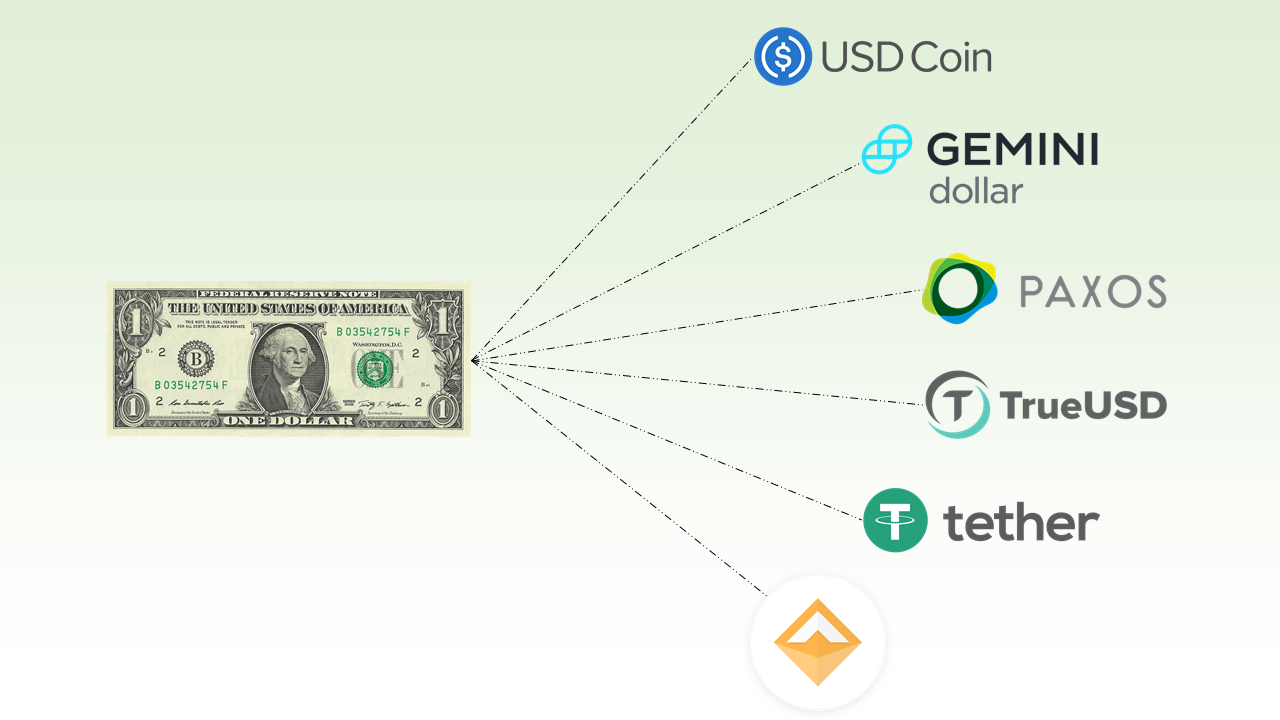
The letter endorses the use of independent node verification networks (INVN), such as blockchain distributed ledgers, and stablecoins – cryptocurrencies tied to fiat currencies, like Ethereum-based USD Coin (USDC) – as a means to settle customer transactions.

"Our letter removes any legal uncertainty about the authority of banks to connect to blockchains as validator nodes and thereby transact stablecoin payments on behalf of customers who are increasingly demanding the speed, efficiency, interoperability, and low cost associated with these products," said Acting Comptroller of the Currency Brian Brooks in a statement.

The agency letter blesses the use of independent node verification network (INVN) systems to validate, store, and record payment transactions, and lets banks use INVNs and associated stablecoins (those pegged to a physical currency) for other lawful payments, per existing banking laws.

In an email to The Register, David Yermack, a professor of finance at the New York University Stern School of Business and adjunct professor of law at New York University School of Law, said that this looks like a big deal.

"It indirectly encourages banks to explore using FinTech platforms, and it seems to open the door for them to transact in instruments such as Tether, Diem (Libra), and other so-called stablecoins that are pegged to the US dollar," said Yermack.

Wednesday, September 30, 2020

Paper bank notes are being upgraded for a digital future around the world

Market Watch Sept. 21, 2019

The Federal Reserve has never been more famous than it is today. It drew praise, and ire, for its handling of the financial crisis a decade ago, and the extraordinary measures it took subsequently to stimulate the U.S. economy have made it an important driver of financial markets. Meanwhile, President Trump has made its chairman, Jerome Powell, a household name by frequently criticizing the central bank’s policies on Twitter and to the press.

A movement, meanwhile, has been brewing among economists, financial-services professionals and central bankers to encourage a rethinking of the technology of currency — those paper notes we carry in our wallets — with an eye toward issuing a digital currency. Some argue that could give central banks the tools necessary to break free of chronic disinflation and persistently low or negative interest rates, while providing Americans a risk-free means to transact in a world where digital commerce constitutes a growing share of the economy. 

“The debate isn’t about whether we need [a digital currency],” Michael Bordo, an economist at Rutgers University and a fellow at the Hoover Institution, the public-policy think tank at Stanford University, told MarketWatch. “It’s about how you do it.”

Monday, March 23, 2020

Bill Gates always seems to know when it’s time to go


bill and melinda gates edited

Computer World  
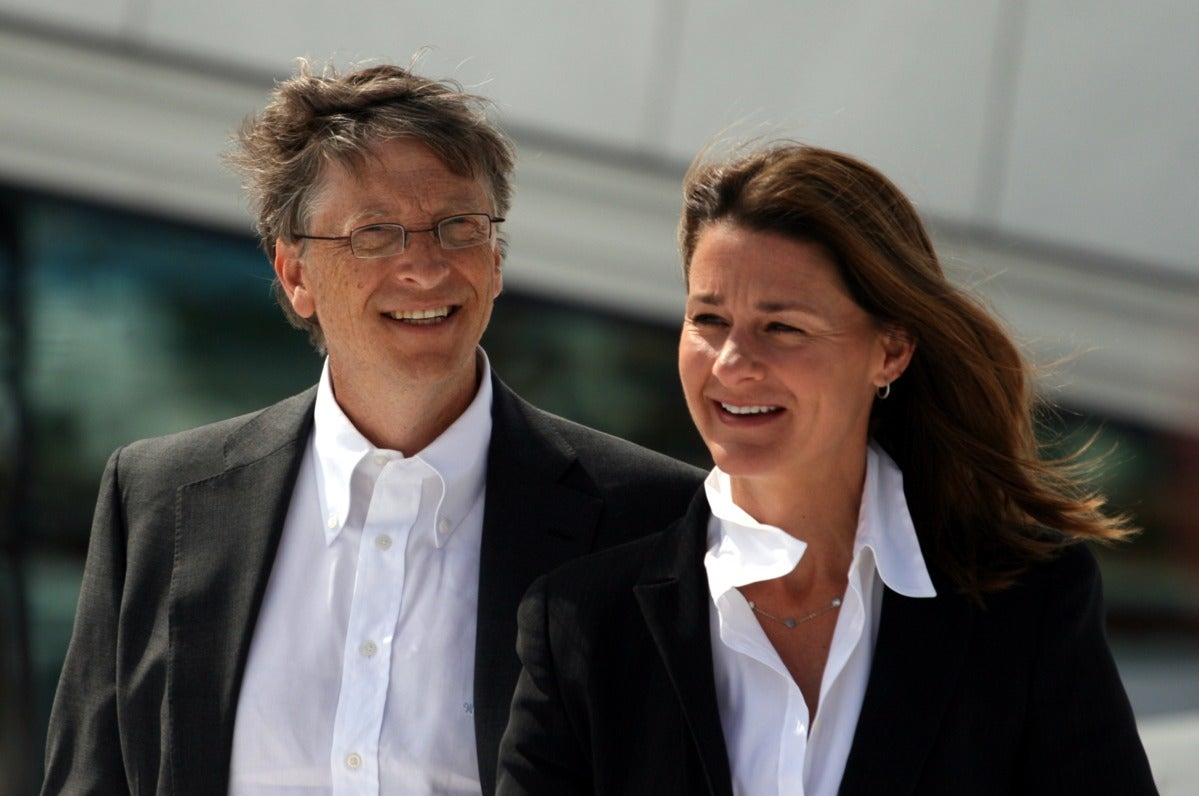
Bill Gates resigned from Microsoft’s board of directors last week, pretty much ending his official ties to the company he co-founded. He says he’s still available as a technology adviser to CEO Satya Nadella and other Microsoft leaders, but otherwise he’s devoting himself completely to his other pursuits, like philanthropy.
Gates and the company he started very nearly 45 years ago with Paul Allen transformed the computing landscape. Throughout the period of Microsoft’s early growth and maturation, Gates was at the helm as CEO, demonstrating business leadership and competitiveness that, even more than technology, were keys to the company’s success.
The competitiveness eventually led to Microsoft’s antitrust issues. The technology world was changing (I’ll go through some of that history in a bit), and the leader who had made Microsoft a tech giant was perhaps no longer tuned in to the changes as he once had been. That happens a lot with founders. What rarely happens is that the founder sees the writing on the wall and takes a step back. But Gates did. He resigned as CEO, staying on as chairman of the board.
Not everything Gates did was brilliant. By the time the internet had become a force in the tech world, Gates and Microsoft had made a series of missteps that almost made the company irrelevant. And in resigning as CEO, Gates left Steve Ballmer in charge. Ballmer clearly had earned the right to lead Microsoft as CEO, but he wasn’t right for the job, and Gates eventually had to remove him. The men had always been close, and it couldn’t have been easy to do it, but he did.

Founder power

This is the third step back from Microsoft that Gates has taken. He dropped his day-to-day duties as CEO in 2006, and gave up ultimate oversight as chairman of the board in 2014. Now he has relinquished his seat on the board.
This is actually a remarkable record. Founders have extraordinary power at a company, and they often don’t know when to step down, sometimes doing the company so much harm in their later years that the firm doesn’t recover. Even if they step away from day-to-day activity, they often step in and exert their influence at critical times, undermining the sitting CEO and setting the company up for failure. As chairman, Gates seemed to have refrained from that sort of thing, until the day came when Ballmer had to go.

Tuesday, October 29, 2019

Half the world's banks are too weak to survive downturn - McKinsey

Half the world's banks are too weak to survive downturn - McKinsey
RT 22 Oct, 2019
A new survey from consultancy McKinsey & Co has found that a majority of banks globally may not be economically viable because their returns on equity aren’t keeping pace with costs.

The study looked at 1,000 banks in developed and emerging countries and found that just over a third had made a return on capital of just 1.6 percent over the past three years. This compares to returns of just over 17 percent for top banks over the same period.

"Nearly 35 percent of banks globally are both sub-scale and suffer from operating in unfavorable markets", as well as having flawed business models, said McKinsey.

It added that "to survive a downturn, merging with similar banks may be the only option, if a full reinvention is not feasible."

According to the report, banks are not as well-prepared for a downturn as they were when the global financial crisis erupted in 2007 in terms of profitability.

"While the jury is still out on whether the current market uncertainty will result in an imminent recession or a prolonged period of slow growth, the fact is that growth has slowed," McKinsey said.

Policymakers may not be able to reverse the next global recession

NBC  Oct/16/2019
There’s an “uncomfortably high” chance that a recession could hit the global economy in the next 12-18 months — and policymakers may not be able to reverse that course, an economist said on Wednesday.
“I think risks are awfully high that if something doesn’t stick to script then we do have a recession,” said Mark Zandi, chief economist of Moody’s Analytics. “I’ll say this also: Even if we don’t have a recession over the next 12-18 months, I think it’s pretty clear that we’re going to have a much weaker economy.”
Avoiding a slowdown in economic activity requires many factors to “stick to script” at the same time, he said. That includes U.S. President Donald Trump not escalating the tariff war with China, the U.K. finding a resolution to Brexit and central banks continuing their monetary stimulus, Zandi explained.

Saturday, August 31, 2019

Forget Great Depression, the Greatest Ever is Coming


The U.S. government is working hard to destabilize the nation.

August 21, 2019 Rutherford
“The most dangerous man to any government is the man who is able to think things out ... without regard to the prevailing superstitions and taboos. Almost inevitably he comes to the conclusion that the government he lives under is dishonest, insane, intolerable.” — H. L. Mencken
The U.S. government is working hard to destabilize the nation.
No, this is not another conspiracy theory.
Although it is certainly not far-fetched to suggest that the government might be engaged in nefarious activities that run counter to the best interests of the American people, doing so will likely brand me a domestic terrorist under the FBI’s new classification system.
Observe for yourself what is happening right before our eyes.
Domestic terrorism fueled by government entrapment schemes. Civil unrest stoked to dangerous levels by polarizing political rhetoric. A growing intolerance for dissent that challenges the government’s power grabs. Police brutality tacitly encouraged by the executive branch, conveniently overlooked by the legislatures, and granted qualified immunity by the courts. A weakening economy exacerbated by government schemes that favor none but a select few. An overt embrace of domestic surveillance tactics if Congress goes along with the Trump Administration’s request to permanently re-authorize the NSA’s de-activated call records program. Heightened foreign tensions and blowback due to the military industrial complex’s profit-driven quest to police and occupy the globe.
The seeds of chaos are being sown, and it’s the U.S. government that will reap the harvest.
Mark my words, there’s trouble brewing.
The training video is only five minutes long, but it says a lot about the government’s mindset, the way its views the citizenry, and the so-called “problems” that the government must be prepared to address in the near future through the use of martial law.
Even more troubling, however, is what this military video doesn’t say about the Constitution, about the rights of the citizenry, and about the dangers of locking down the nation and using the military to address political and social problems.
The training video anticipates that all hell will break loose by 2030—that’s barely ten short years away—but the future is here ahead of schedule.
We’re already witnessing a breakdown of society on virtually every front.
By waging endless wars abroad, by bringing the instruments of war home, by transforming police into extensions of the military, by turning a free society into a suspect society, by treating American citizens like enemy combatants, by discouraging and criminalizing a free exchange of ideas, by making violence its calling card through SWAT team raids and militarized police, by fomenting division and strife among the citizenry, by acclimating the citizenry to the sights and sounds of war, and by generally making peaceful revolution all but impossible, the government has engineered an environment in which domestic violence is becoming almost inevitable.    More

Monday, July 29, 2019

A Bank With 49 Trillion Dollars In Exposure To Derivatives Is Melting Down Right In Front Of Our Eyes


TECB
Could it be possible that we are on the verge of the next “Lehman Brothers moment”?  Deutsche Bank is the most important bank in all of Europe, it has 49 trillion dollars in exposure to derivatives, and most of the largest “too big to fail banks” in the United States have very deep financial connections to the bank.  In other words, the global financial system simply cannot afford for Deutsche Bank to fail, and right now it is literally melting down right in front of our eyes.  For years I have been warning that this day would come, and even though it has been hit by scandal after scandal, somehow Deutsche Bank was able to survive until now.  But after what we have witnessed in recent days, many now believe that the end is near for Deutsche Bank.  On July 7th, they really shook up investors all over the globe when they laid off 18,000 employees and announced that they would be completely exiting their global equities trading business…
It takes a lot to rattle Wall Street.
But Deutsche Bank managed to. The beleaguered German giant announced on July 7 that it is laying off 18,000 employees—roughly one-fifth of its global workforce—and pursuing a vast restructuring plan that most notably includes shutting down its global equities trading business.
Though Deutsche’s Bloody Sunday seemed to come out of the blue, it’s actually the culmination of a years-long—some would say decades-long—descent into unprofitability and scandal for the bank, which in the early 1990s set out to make itself into a universal banking powerhouse to rival the behemoths of Wall Street.
These moves may delay Deutsche Bank’s inexorable march into oblivion, but not by much.
And as Deutsche Bank collapses, it could take a whole lot of others down with it at the same time.  According to Wall Street On Parade, the bank had 49 trillion dollars in exposure to derivatives as of the end of last year…
During 2018, the serially troubled Deutsche Bank – which still has a vast derivatives footprint in the U.S. as counterparty to some of the largest banks on Wall Street – trimmed its exposure to derivatives from a notional €48.266 trillion to a notional €43.459 trillion (49 trillion U.S. dollars) according to its 2018 annual report. A derivatives book of $49 trillion notional puts Deutsche Bank in the same league as the bank holding companies of U.S. juggernauts JPMorgan Chase, Citigroup and Goldman Sachs, which logged in at $48 trillion, $47 trillion and $42 trillion, respectively, at the end of December 2018 according to the Office of the Comptroller of the Currency (OCC). (See Table 2 in the Appendix at this link.)
Yes, the actual credit risk to Deutsche Bank is much, much lower than the notional value of its derivatives contracts, but we are still talking about an obscene amount of exposure.
And this is especially true when we consider the state of Deutsche Bank’s balance sheet.  According to Nasdaq.com, as of the end of last year the bank had total assets of 1.541 trillion dollars and total liabilities of 1.469 trillion dollars.
In other words, there wasn’t much equity there at the end of December, and things have deteriorated rapidly since that time.  In fact, it is being reported that a billion dollars a day is being pulled out of the bank at this point.
I know that most Americans don’t really care if Deutsche Bank lives or dies, but as the New York Post has pointed out, the failure of Deutsche Bank could quickly become a major crisis for the entire global financial system…

Friday, May 31, 2019

Nearly 25% of Americans Are Using Debt To Pay For Necessities Like Food


SHTFPlan   May 30th, 2019
Even though we are told the economy is doing great, all the evidence shows that main street Americans are struggling more and more every day. A recent report claimed that the costs of goods have risen to the point that 25% must use debt to pay for necessities, such as food.

According to a new Experian report that came out last week, Americans have an average of $6,506 in credit card debt. But some expenses are weighing much more heavily on the credit cards of the average American…

Necessities, like food and rent, are being put on credit cards. A full 23% of Americans say that paying for basic necessities such as rent, utilities, and food contributes the most to their credit card debt, according to a new survey of approximately 2,200 U.S. adults that CNBC Make It performed in conjunction with Morning Consult. Another 12% say medical bills are the biggest portion of their debt.  Medical bills additionally likely contribute to the purchases of food on a credit card.

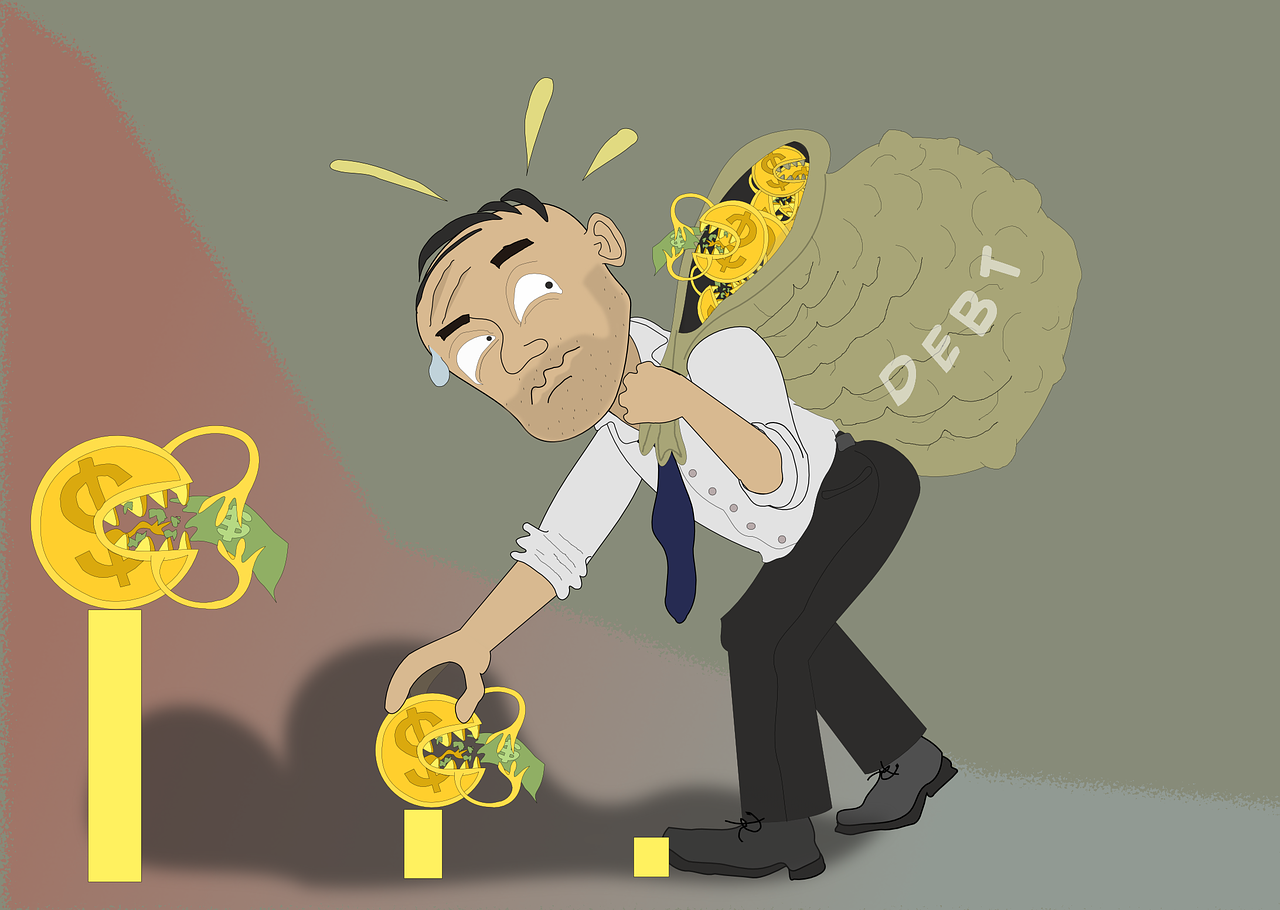
This news isn’t shocking unless you believe the mainstream media’s glorification of the false “recovery” we’ve experienced since the Great Recession of a decade ago.  American households have taken on historic levels of debt, which will crush them in the next economic downturn.

Tuesday, April 30, 2019

Nearly 102 Million Americans Do Not Have A Job Right Now


TECB  April 25, 2019
Wouldn’t it be horrible if the number of Americans without a job was higher today than it was during the Great Recession of 2008 and 2009?  Well, that is actually true.  As you will see below, nearly 102 million Americans do not have a job right now, and at no point during the last recession did that number ever surpass the 100 million mark.  Of course the U.S. population has grown a bit over the last decade, but as you will see below, the percentage of the population that is engaged in the labor force is only slightly above the depressingly low levels from the last recession.  Sadly, the truth is that the rosy employment statistics that you are getting from the mainstream media are manufactured using smoke and mirrors, and by the time you are done reading this article you will understand what is really going on.
Before we dig into the long-term trends, let’s talk about what we just learned.
According to CNBC, initial claims for unemployment benefits just rose by the most that we have seen in 19 months…
Initial claims for state unemployment benefits jumped 37,000 to a seasonally adjusted 230,000 for the week ended April 20, the Labor Department said on Thursday. The increase was the largest since early September 2017.
And considering all of the other troubling economic signs that we have been witnessing lately, this makes perfect sense.
In addition, we need to remember that over the last decade lawmakers across the country have made it more difficult to apply for unemployment benefits and have reduced the amount of time that unemployed workers can receive them.  In reality, the unemployment situation in this nation is far worse than the mainstream media is telling us.
When a working age American does not have a job, the federal number crunchers put them into one of two different categories.  Either they are categorized as “unemployed” or they are categorized as “not in the labor force”.
But you have to add both of those categories together to get the total number of Americans that are not working.

America's crippling debt: Every man, woman & child owes Uncle Sam $220,000

Image result for US debtRT  26 Apr, 2019
The spiraling US government debt is apparently much higher than the official figure of $22 trillion. The indebtedness of the American financial system has now reached $72 trillion, according to the numbers compiled by the US Fed.
The higher debt estimate includes corporate borrowings, consumer loans along with debts being added by state and local governments.
Over the past 40 years, the US Treasury has been borrowing at a rocketing rate with the state debt soaring from less than five trillion dollars during Ronald Reagan’s presidency, to $29 trillion when George W. Bush took the helm. The figure nearly doubled prior to the last financial crisis, having reached $54 trillion. Since then, the sovereign debt of the world’s biggest economy has increased by another $18 trillion.
The current US population stands at 328,675,066 according to the World Population Review. Simple calculations show that an average American owes some $220,000, while the share of a family of four is fluctuating around $880,000.
Last month, the US officially hit the debt ceiling with its limit expired on March 1. The Treasury Department will now have to take extraordinary steps to prevent the country from breaching the next debt ceiling by late September or early October.

More than half a million Americans will sleep on the streets of our cities tonight

TECB  April 28, 2019
The elite are very “tolerant” of the homeless until they start showing up in their own neighborhoods.  Even though the mainstream media keeps telling us that the U.S. economy is “booming”, the number of Americans living on the streets continues to grow very rapidly, and this is particularly true in our major west coast cities.  More than half a million Americans will sleep on the streets of our cities tonight, and they need help, care and shelter.  Sadly, as economic conditions deteriorate that number is likely to double or even triple.  Of course many among the elite are all in favor of doing something for the homeless, as long as they don’t have to be anywhere around them.
For example, let’s talk about what is going on in Los Angeles.  No city on the west coast has a bigger problem with homelessness than L.A. does, and many in the homeless population enjoy camping out on the beautiful beaches in the L.A. area at night.
But of course many of the elite that paid millions of dollars for beachfront property are not too thrilled about this.  Sex Pistols frontman Johnny Rotten was a key symbol of anti-establishment rebellion in the 1970s, but now he is freaking out because homeless people are making life very difficult for him and his wife in Venice Beach, and what he recently told Newsweek’s Paula Froelich is making headlines all over the nation…

Sunday, March 31, 2019

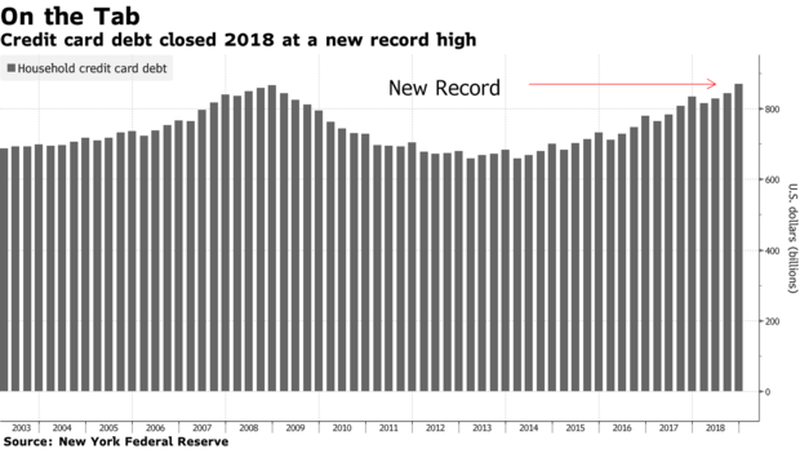
70% Of Consumers With Credit Cards Say They Can't Pay It Off This Year

Zerohedge 03/29/2019
Zerohedge readers who follow our monthly consumer credit updates already knew, aggregate household debt balances jumped in 4Q18. As of late December, total household indebtedness was at a staggering $13.54 trillion, $32 billion higher than 3Q18.
More troubling is that 37 million Americans had a 90-day delinquent strike added to their credit report last quarter, an increase of two million from the fourth quarter of 2017. These 37 million delinquent accounts held roughly $68 billion in debt, or roughly the market cap of BlackRock, Inc.
* * *
New evidence this week points to a further deterioration in consumer creditworthiness.
To understand the American credit card debt crisis, real estate data company Clever surveyed 1,000 credit card users earlier this month.
Using Consumer Financial Protection credit card complaint data and other forms of consumer metrics, the company was able to gain tremendous insight into the average American’s purchasing habits, dependence on credit cards, and feelings about their debt situation.
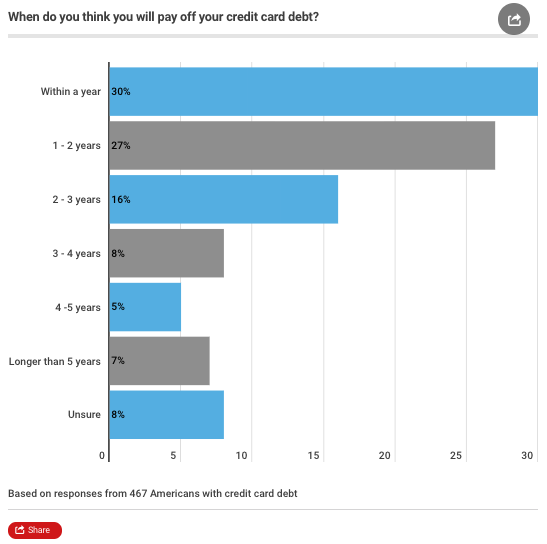
The survey found that 47% of Americans have a monthly balance on their credit card. About 30% of respondents with credit card debt believe they'll extinguish the debt this year, leading many of the respondents stuck in an endless debt cycle.
Fifty-six percent of the respondents say they've had credit card debt for more than a year. About 20% estimate their debt will be paid off by 2022, while 8% were unsure about a timeline.
“It’s a big issue,” Ted Rossman, credit industry expert for CreditCards.com, tells CNBC. With credit card APR soaring to about 17.64%, a new high, the interest accrued on monthly balances can quickly add up and trap unsuspecting consumers with insurmountable debt.

Saturday, March 9, 2019

Billionaire Warren Buffet has issued a warning that there is an upcoming “megacatastrope” on the horizon.


SHTFPlan February 25th, 2019
Billionaire Warren Buffet has issued a warning that there is an upcoming “megacatastrope” on the horizon.  Buffet says that when this apocalyptic scenario plays out, our losses will be immeasurable.

In his annual letter, Buffet warned of a “megacatastrophe,” which he said will cause unprecedented havoc not just to victims but to the financial world as well. “A major catastrophe that will dwarf hurricanes Katrina and Michael will occur – perhaps tomorrow, perhaps many decades from now,” the Berkshire Hathaway CEO wrote. “‘The Big One’ may come from a traditional source, such as a hurricane or earthquake, or it may be a total surprise involving, say, a cyber attack having disastrous consequences beyond anything insurers now contemplate.”

The financial world is being propped up by central banks and the debt-based monetary system that far too many trust will eventually meet its demise.  This could cause a worldwide societal collapse of epic proportions.

 It could all begin with a disastrous financial crisis.  One which we are close to, regardless of what is being said in mainstream media. Economic numbers all over the world continue to get worse, and even New York Times columnist Paul Krugman is now warning of “an unavoidable global recession”. Unfortunately, most Americans still have absolutely no idea that this is happening right underneath their noses. Most ordinary citizens are still under the impression that everything is going to be just fine, but the numbers suggest otherwise. 78% of Americans live paycheck to paycheck while 40% don’t have enough money to cover a $400 emergency.  Americans carry record levels of consumer debt and student loan debt while borrowing further with their use of credit cards.

18 Really Big Numbers That Show That The U.S. Economy Is Starting To Fall Apart Very Rapidly

The Economic Collapse 
#1 Farm loan delinquencies just hit the highest level that we have seen in 9 years.
#2 We just learned that U.S. exports declined by 4 billion dollars during the month of December.
#3 J.C. Penney just announced that they will be closing another 24 stores.
#4 Victoria’s Secret has just announced plans to close 53 stores.
#5 On Thursday, Gap announced that it will be closing 230 stores over the next two years.
#6 Payless ShoeSource has declared bankruptcy and is closing all 2,100 stores.
#7 Tesla is also closing all of their physical sales locations and will now only sell vehicles online.
#8 PepsiCo has started laying off workers and has committed to “millions of dollars in severance pay”.
#9 The Baltic Dry Index has dropped to the lowest level in more than two years.
#10 This is the worst slump for core U.S. factory orders in three years.
#11 We just witnessed the largest decline in the Philly Fed Business Index in more than 7 years.
#12 In January, sales of existing homes fell 8.9 percent from a year earlier.  That was the third month in a row that we have seen a decline of at least 8 percent.  This is an absolutely catastrophic trend for the real estate industry.
#13 U.S. housing starts were down 11.2 percent in December compared to the previous month.
#14 Compared to a year earlier, home sales in southern California were down 17 percent in January.
#15 In December, home sales in Sacramento County fell a whopping 22.5 percent compared to a year earlier.
#16 Pending home sales in the United States have now fallen on a year over year basis for 13 months in a row.
#17 More than 166 billion dollars in student loan debt is now “seriously delinquent”.  That is an all-time record.
#18 More than 7 million Americans are behind on their auto loan payments.  That is also a new all-time record, and it is far higher than anything that we witnessed during the last recession.

Relying on monetary policy to prop up asset prices and smooth out global volatility is a recipe for disaster.

Easy money has become a big problem. 
Bloomberg February 23, 2019
Just since December 2018, central banks have collectively injected as much as $500 billion of liquidity to stabilize economic conditions. The U.S. Federal Reserve has put interest rate increases on hold and is contemplating a halt to its balance-sheet reduction plan. Other central banks have taken similar actions, fueling a new phase of the “everything bubble” as markets careen from December’s indiscriminate selling to January’s indiscriminate buying.

The monetary onslaught appears a reaction to financial factors -- falling equity markets, rising credit spreads, increased volatility -- and a perceived weakening of economic activity, primarily in Europe and China. If they heeded Walter Bagehot’s oft-cited rule, central banks would act only as lenders of last resort in times of financial crisis, lending without limit to solvent firms against good collateral at high rates. Instead, they’ve become lenders of first resort, expected to step in at any sign of problems. U.S. central bankers are currently debating whether quantitative-easing programs should be used purely in emergency situations or more routinely.

Since 2008, the global economy has grown far too dependent on huge central bank balance sheets and accommodative monetary policy. The U.S. economic boom President Donald Trump loves to tout is largely fake, engineered by artificial policy settings. Such dependence is dangerous and, for various reasons, could well backfire.

For one thing, central banks are poor forecasters. GDP growth, inflation and labor markets may prove more resilient than feared, remaining at or above trend. Key risks, such as the trade dispute between the U.S. and China, may recede. Financial markets and asset prices have already recovered substantially. It’s possible that central banks may be forced to make another U-turn to reduce the risk of reflating asset price bubbles and overheating economies. This flip-flop would be destabilizing and affect decisionmakers’ credibility.  

Friday, January 25, 2019

The world's richest 26 people own the same amount as half the global population


Mirror 21 Jan 2019
The world's richest 26 people own the same amount as half the global population, a shocking new report has revealed.
The startling gap between the rich and poor was highlighted in Oxfam's Public Good or Private Wealth? study.
It showed that billionaires saw their wealth rocket by £700bn in 2018 while 3.8 billion people were forced to survive on less £4.27 a day each.
The world’s richest man, Amazon founder Jeff Bezos, could fund Ethiopia’s health budget with 1% of his estimated £108.7billion fortune.
The increased fortunes of the wealthy is underlined by the fact in 2017 the world's richest 43 earned the same amount as the poorest half - it is now just 26.
In the UK the study added that the poorest 10% of people in Britain now pay a higher proportion of their income in tax than the richest 10%.