Junk food is a multibillion-dollar
industry. In his book, “Fast Food Nation,” Eric Schlosser,
investigative journalist and best-selling author, describes how nearly
90 percent of America's budget is spent on junk food.1 What is more appalling is that nearly 60 percent of food eaten in America are ultra-processed,2
convenience foods that can be purchased at your local gas station.
These processed foods also account for nearly 90 percent of the
consumption of added sugar in the U.S.
The industry doesn't depend upon fate to drive sales. They use
several tricks to paint their products in a better light. Since people
eventually start questioning the decision to eat foods based solely on
taste, especially with the increasing attention on healthy eating, the
industry funds research to justify your cravings for their products.
Thus, when a study revealed that children who ate candy bars were 22 percent less likely to be overweight,3
it came as no surprise the research was funded by a trade association
representing some of the country's top candy makers. Marion Nestle,
Ph.D., professor of nutrition at New York University, acknowledges that
"The only thing that moves sales is health claims."4
Nestle formerly served as nutrition policy adviser in the U.S.
Department of Health and Human Services and editor of the Surgeon
General's Report on Nutrition and Health.5
Reliance on these ultra-processed foods is undoubtedly one of the primary factors driving skyrocketing rates of obesity
and disease. Consumers may "know better," but it is difficult to steer
clear of foods that may be more addictive than cocaine for some.6
A recent report from the U.S. Centers for Disease Control and
Prevention (CDC) reveals only 10 percent of Americans are getting
enough fruit and vegetables in their daily diet.7
The primary-care physician suggested a different kind of angiogram,
one that did not require a catheter but instead used multiple x-rays to
image arteries. That test revealed an artery that was partially blocked
by plaque, and though the man’s heart was pumping blood normally, the
test was incapable of determining whether the blockage was dangerous.
Still, his primary-care doctor, like the cardiologist at the emergency
room, suggested that the executive have an angiogram with a catheter,
likely followed by a procedure to implant a stent. The man set up an
appointment with the cardiologist he was referred to for the
catheterization, but when he tried to contact that doctor directly ahead
of time, he was told the doctor wouldn’t be available prior to the
procedure. And so the executive sought yet another opinion. That’s when
he found Dr. David L. Brown, a professor in the cardiovascular division
of the Washington University School of Medicine in St. Louis. The
executive told Brown that he’d felt pressured by the previous doctors
and wanted more information. He was willing to try all manner of
noninvasive treatments — from a strict diet to retiring from his
stressful job — before having a stent implanted.
The executive had been very smart to seek more information, and now,
by coming to Brown, he was very lucky, too. Brown is part of the
RightCare Alliance, a collaboration between health-care professionals
and community groups that seeks to counter a trend: increasing medical
costs without increasing patient benefits. As Brown put it, RightCare is
“bringing medicine back into balance, where everybody gets the
treatment they need, and nobody gets the treatment they don’t need.” And
the stent procedure was a classic example of the latter. In 2012, Brown
had coauthored a paper that examined every randomized clinical trial
that compared stent implantation with more conservative forms of
treatment, and he found that stents for stable patients prevent zero
heart attacks and extend the lives of patients a grand total of not at
all. In general, Brown says, “nobody that’s not having a heart attack
needs a stent.” (Brown added that stents may improve chest pain in some
patients, albeit fleetingly.) Nonetheless, hundreds of thousands of
stable patients receive stents annually, and one in 50 will suffer a serious complication or die as a result of the implantation procedure. Read More
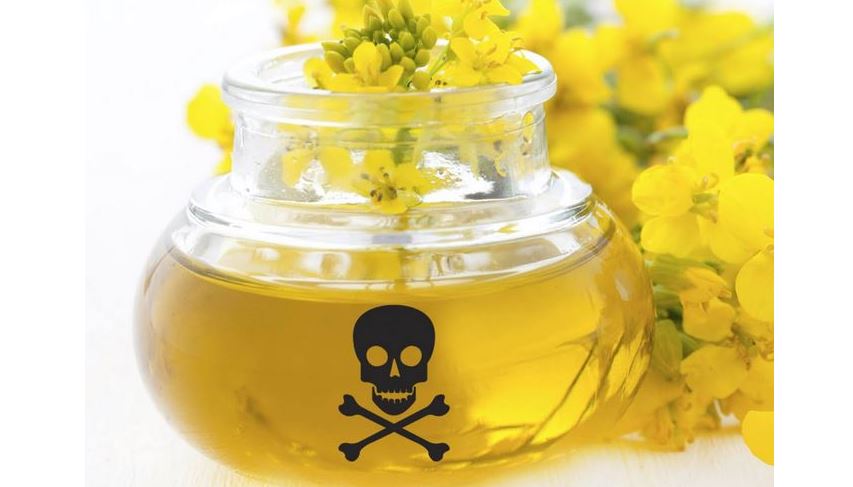
Ever since the late 1990s, when canola oil started to become a ubiquitous ingredient in food processing and restaurant fare, consumers have been ingesting it, literally, by the tons!
Canada produces 20 percent of the world’s canola oil. The U.S. imports an average of 510,000 tons of canola oil per year!
Canola is a heated and processed oil using anywhere from 80 –
90°Celsius and even 120°Celsius temperature in the processing, or 176 –
194° Fahrenheit to 248° Fahrenheit. That would be in addition to any
additional heating a cook uses when preparing foods—something to factor
in to your cooking.
Christened “Canola” from “Can” (for Canada) and “ola”
(for oil low acid), canola is not, strictly speaking, rapeseed. There is
a internationally regulated definition of canola that differentiates it
from rapeseed, based upon its having less than two percent erucic acid and less than 30 umoles glucosinolates. Oilseed products that do not meet this standard cannot use the trademarked term “Canola.” [1] [CJF emphasis]
That 2 percent of erucic acid gets a lot of human digest tracts very upset, I’ve found as a nutritionist! The Free Medical Dictionary by Farlex defines erucic acid as:
a monounsaturated fatty acid that is a major constituent of certain oils, such as rapeseed oil. Because it [erucic acid] has been linked to cardiac muscle damage, oils such as canola oil were developed that are low in erucic acid. [2].
At one time, rapeseed oil was not permitted to be sold in the USA by the U.S. FDA, because of its toxicity.
By the way, there was a petition [3] that was delivered to Whole
Foods about their using canola in all the edible products they make and
sell, including its fresh food and soup bars! As an aside, since the
late 1990s, I was in contact with Whole Foods various VPs about using
canola oil. The letters I received from WF, in my opinion, showed
shamefully woeful concerns for human health issues. Whole Foods was
more concerned about the costs of producing products. I have refused to
purchase any food products from Whole Foods since then, which contain
canola oil, e.g., their “organic canola oil” is bunk, in my opinion. Activist Post
http://articles.mercola.com/sites/cur...
Natural health expert and Mercola.com founder Dr. Joseph Mercola
interviews Dr. Aseem Malhotra, an interventional cardiologist consultant
in London, U.K., who gained quite a bit of publicity after the
publication of his peer-reviewed editorial about the conventional view
on saturated fats.
We physicians with all our training, knowledge and authority often acquire a rather large ego that tends to make it difficult to admit we are wrong. So, here it is. I freely admit to being wrong.. As a heart surgeon with 25 years experience, having performed over 5,000 open-heart surgeries,today is my day to right the wrong with medical and scientific fact.
I trained for many years with other prominent physicians labelled “opinion makers.” Bombarded with scientific literature, continually attending education seminars, we opinion makers insisted heart disease resulted from the simple fact of elevated blood cholesterol.
The only accepted therapy was prescribing medications to lower cholesterol and a diet that severely restricted fat intake. The latter of course we insisted would lower cholesterol and heart disease. Deviations from these recommendations were considered heresy and could quite possibly result in malpractice.
It Is Not Working!
These recommendations are no longer scientifically or morally defensible. The discovery a few years ago that inflammation in the artery wall is the real cause of heart disease is slowly leading to a paradigm shift in how heart disease and other chronic ailments will be treated.
The long-established dietary recommendations have created epidemics of obesity and diabetes, the consequences of which dwarf any historical plague in terms of mortality, human suffering and dire economic consequences.
Despite the fact that 25% of the population takes expensive statin medications and despite the fact we have reduced the fat content of our diets, more Americans will die this year of heart disease than ever before.
Statistics from the American Heart Association show that 75 million Americans currently suffer from heart disease, 20 million have diabetes and 57 million have pre-diabetes. These disorders are affecting younger and younger people in greater numbers every year.
Simply stated, without inflammation being present in the body, there is no way that cholesterol would accumulate in the wall of the blood vessel and cause heart disease and strokes. Without inflammation, cholesterol would move freely throughout the body as nature intended. It is inflammation that causes cholesterol to become trapped.
Inflammation is not complicated -- it is quite simply your body's natural defence to a foreign invader such as a bacteria, toxin or virus. The cycle of inflammation is perfect in how it protects your body from these bacterial and viral invaders. However, if we chronically expose the body to injury by toxins or foods the human body was never designed to process,a condition occurs called chronic inflammation. Chronic inflammation is just as harmful as acute inflammation is beneficial.
What thoughtful person would willfully expose himself repeatedly to foods or other substances that are known to cause injury to the body? Well,smokers perhaps, but at least they made that choice willfully.
The rest of us have simply followed the recommended mainstream dietthat is low in fat and high in polyunsaturated fats and carbohydrates, not knowing we were causing repeated injury to our blood vessels. Thisrepeated injury creates chronic inflammation leading to heart disease, stroke, diabetes and obesity.
Let me repeat that: The injury and inflammation in our blood vessels is caused by the low fat diet recommended for years by mainstream medicine. What are the biggest culprits of chronic inflammation? Quite simply, they are the overload of simple, highly processed carbohydrates (sugar, flour and all the products made from them) and the excess consumption of omega-6 vegetable oils like soybean, corn and sunflower that are found in many processed foods.
Take a moment to visualize rubbing a stiff brush repeatedly over soft skin until it becomes quite red and nearly bleeding. you kept this up several times a day, every day for five years. If you could tolerate this painful brushing, you would have a bleeding, swollen infected area that became worse with each repeated injury. This is a good way to visualize the inflammatory process that could be going on in your body right now.
Regardless of where the inflammatory process occurs, externally or internally, it is the same. I have peered inside thousands upon thousands of arteries. A diseased artery looks as if someone took a brush and scrubbed repeatedly against its wall. Several times a day, every day, the foods we eat create small injuries compounding into more injuries, causing the body to respond continuously and appropriately with inflammation.
While we savor the tantalizing taste of a sweet roll, our bodies respond alarmingly as if a foreign invader arrived declaring war. Foods loaded with sugars and simple carbohydrates, or processed withomega-6 oils for long shelf lifehave been the mainstay of the American diet for six decades. These foods have been slowly poisoning everyone.
How does eating a simple sweet roll create a cascade of inflammation to make you sick?
Imagine spilling syrup on your keyboard and you have a visual of what occurs inside the cell. When we consume simple carbohydrates such as sugar, blood sugar rises rapidly. In response, your pancreas secretes insulin whose primary purpose is to drive sugar into each cell where it is stored for energy. If the cell is full and does not need glucose, it is rejected to avoid extra sugar gumming up the works.
When your full cells reject the extra glucose, blood sugar rises producing more insulin and the glucose converts to stored fat.
What does all this have to do with inflammation? Blood sugar is controlled in a very narrow range. Extra sugar molecules attach to a variety of proteins that in turn injure the blood vessel wall. This repeated injury to the blood vessel wall sets off inflammation. When you spike your blood sugar level several times a day, every day, it is exactly like taking sandpaper to the inside of your delicate blood vessels.
While you may not be able to see it, rest assured it is there. I saw it in over 5,000 surgical patients spanning 25 years who all shared one common denominator -- inflammation in their arteries.
Let’s get back to the sweet roll. That innocent looking goody not only contains sugars, it is baked in one of many omega-6 oils such as soybean. Chips and fries are soaked in soybean oil; processed foods are manufactured with omega-6 oils for longer shelf life. While omega-6’s are essential -they are part of every cell membrane controlling what goes in and out of the cell -- they must be in the correct balance with omega-3’s. If the balance shifts by consuming excessive omega-6, the cell membrane produces chemicals called cytokines that directly cause inflammation.
Today’s mainstream American diet has produced an extreme imbalance of these two fats. The ratio of imbalance ranges from 15:1 to as high as 30:1 in favor of omega-6. That’s a tremendous amount of cytokines causing inflammation. In today’s food environment, a 3:1 ratio would be optimal and healthy.
To make matters worse, the excess weight you are carrying from eating these foods creates overloaded fat cells that pour out large quantities of pro-inflammatory chemicals that add to the injury caused by having high blood sugar. The process that began with a sweet roll turns into a vicious cycle over time that creates heart disease, high blood pressure, diabetes and finally, Alzheimer’s disease, as the inflammatory process continues unabated. There is no escaping the fact that the more we consume prepared and processed foods, the more we trip the inflammation switch little by little each day. The human body cannot process, nor was it designed to consume, foods packed with sugars and soaked in omega-6 oils.
There is but one answer to quieting inflammation, and that is returning to foods closer to their natural state. To build muscle, eat more protein. Choose carbohydrates that are very complex such as colorful fruits and vegetables. Cut down on or eliminate inflammation- causing omega-6 fats like corn and soybean oil and the processed foods that are made from them.
One tablespoon of corn oil contains 7,280 mg of omega-6; soybean contains 6,940 mg. Instead, use olive oil or butter from grass-fed beef.
Animal fats contain less than 20% omega-6 and are much less likely to cause inflammation than the supposedly healthy oils labelled polyunsaturated. Forget the “science” that has been drummed into your head for decades. The science that saturated fat alone causes heart disease is non-existent. The science that saturated fat raises blood cholesterol is also very weak. Since we now know that cholesterol is not the cause of heart disease, the concern about saturated fat is even more absurd today.
The cholesterol theory led to the no-fat, low-fat recommendations that in turn created the very foods now causing an epidemic of inflammation. Mainstream medicine made a terrible mistake when it advised people to avoid saturated fat in favor of foods high in omega-6 fats. We now have an epidemic of arterial inflammation leading to heart disease and other silent killers.
What you can do is choose whole foods your grandmother served and not those your mom turned to as grocery store aisles filled with manufactured foods. By eliminating inflammatory foods and adding essential nutrients from fresh unprocessed food, you will reverse years of damage in your arteries and throughout your body from consuming the typical American diet.
Dr. Dwight Lundell is the past Chief of Staff and Chief of Surgery at Banner Heart Hospital , Mesa , AZ. His private practice, Cardiac Care Center was in Mesa, AZ. Recently Dr. Lundell left surgery to focus on the nutritional treatment of heart disease. He is the founder of Healthy Humans Foundation that promotes human health with a focus on helping large corporations promote wellness. He is also the author of The Cure for Heart Disease and The Great Cholesterol Lie. Source