Showing posts with label Pollution. Show all posts

Saturday, January 20, 2018

The negative effects of electromagnetic fields

Dr. Mercola January 08, 2018
The negative effects of electromagnetic fields (EMFs) continue to ignite conversations and controversy worldwide. The most dangerous pollution affecting you is the invisible sea of EMFs your body swims in daily. You are exposed to EMFs all day long, not only in public but inside your home, too. Most of the radiation emits from cellphones, cell towers, computers, smart meters and Wi-Fi, to name just a few of the culprits.
While it’s nearly impossible to avoid EMF exposure completely, there are practical ways to limit it. Given the number of EMFs that bombard you all day long, getting educated about the negative effects of EMFs is imperative to your well-being. Particularly if you are dealing with a serious illness, it is well worth your time to reduce your EMF exposure as much as possible. If you have been told EMFs are safe and not a danger to humans, you may want to consider:
  • The telecommunication industry has manipulated federal regulatory agencies, public health authorities and professionals through powerful and sophisticated lobbying efforts leaving consumers confused and unaware of the health risks associated with EMFs
  • Any negative health effects from EMFs, similar to smoking, may not be immediately noticeable, but will likely develop gradually over time. Cell phones indeed are the cigarette public health threat of the 21st century.

  • Exposure to microwave radiation from baby monitors, cellphones, cordless phones, Wi-Fi routers, smart meters and other wireless devices causes serious mitochondrial dysfunction due to free radical damage.
  • Excessive free radicals triggered by microwave exposure from wireless technologies have been linked to anxiety, Alzheimer’s disease, autism, cardiac arrhythmias, depression and infertility
  • The negative effects of EMFs are particularly harmful to pregnant women, putting their child at risk for ADHD and autism, as well as behavioral, emotional and social issues.
  • In addition to using wired connections for your phone and computer, strategies that may help reduce the harmful effects of EMFs include optimizing your magnesium level and eating Nrf2-boosting foods.

Thursday, October 26, 2017

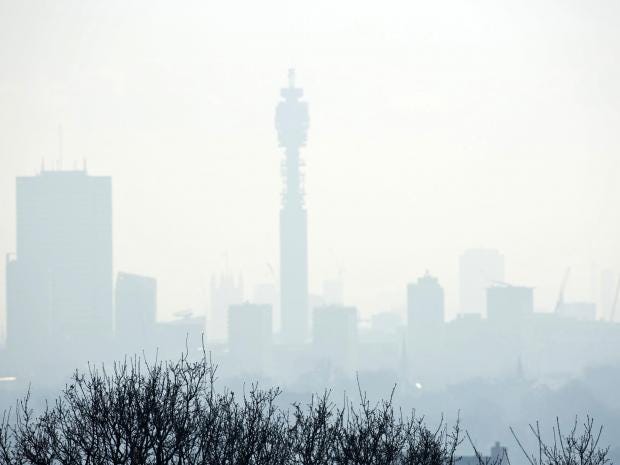
Pollution is killing millions of people a year and the world is reaching 'crisis point', experts warn

london-pollution.jpg
Independent   19 October 2017
Pollution is killing 50,000 people a year in the UK, according to a damning new report, which lays bare the toxic danger posed by contaminated air and water. 
The problem is responsible for more deaths in Britain than almost all of its Western European neighbours, the study says, and suggests a higher death toll in the UK from pollution than had been feared.
Experts had previously estimated that 40,000 people were dying in the UK from air pollution, which itself had led to calls for immediate action from the Government. The new findings, from a two-year project involving more than 40 international researchers, show the world’s air quality is reaching “crisis point” and must be dealt with urgently. 
Globally, nine million people died in 2015 as a result of air pollution. Many of those deaths occur in the developing world – but even among rich countries, a huge number of people are dying as a result of unclean air and other pollution.
The new research shows that people are in the grip of a “profound and pervasive threat” that is damaging human health and well-being, according to the scientists behind it. Not enough is done to halt one of the biggest killers of people in the world, they said.
The obvious solutions are available to governments in the UK and across the world, said campaigners. But they are failing to confront the challenge and further deaths will come, they warned.
The UK has repeatedly suggested that it will work on a new clean air act, but has been criticised for delaying many of the most important measures to tackle pollution. A tax on diesel fuel, for instance, would help bring cleaner air, the campaigners said.
Others urged the Government to work quickly to establish clean air zones and encourage people to use more environmentally friendly forms of transport.

Monday, February 1, 2016

fracking fluid samples have same chemicals that are going down drains at home


Fracking chemicals

(NaturalNews) Most people take measures to ensure that the items they use in their homes on a daily basis are not on par with things that are considered unsafe for their bodies or the environment.

However, researchers from the University of Colorado Boulder have discovered that the toxic substances in fracking fluid, which are going down wells, are essentially the same as what's going down the drain in people's households. Their findings, which are published in the journal Analytical Chemistry, show that the same toxic substances exist in fracking fluid samples that are also in many of the everyday items that individuals use, from toothpaste and detergent to ice cream and laxatives.

The findings reinforce what many people have thought all along: that contamination of ground and surface water supplies may be traceable to the chemicals used in the fracking (hydraulic fracturing) process.

Expert: fracking fluid samples have same chemicals that are going down drains at home

"This is the first published paper that identifies some of the organic fracking chemicals going down the well that companies use," says the paper's lead author and a co-founder of the Laboratory for Environmental Mass Spectrometry in CU-Boulder's College of Engineering and Applied Science, Michael Thurman. "We found chemicals in the samples we were running that most of us are putting down our drains at home."

The paper, titled "Analysis of Hydraulic Fracturing Flowback and Produced Waters Using Accurate Mass: Identification of Ethoxylated Surfactants," notes the specific surfactants found. It states, "Two series of ethylene oxide (EO) surfactants, polyethylene glycols (PEGs from EO3 to EO33) and linear alkyl ethoxylates (LAEs C-9 to C-15 with EO3-EO28), were identified in hydraulic fracturing flowback and produced water . . . " According to the Occupational Safety & Health Administration (OSHA), ethylene oxide is present in a range of commonly-used household products ranging from detergents and antifreeze to cosmetics and spices. They also note that it's linked to a host of problems including dizziness, spontaneous abortion, nerve damage and impaired memory.

To conduct the study, researchers obtained fracking fluid samples from five states -- Colorado, Louisiana, Nevada, Pennsylvania and Texas -- then analyzed the surfactants in these fluids at a mass spectrometry laboratory sponsored by Agilent Technologies, Inc., where state-of-the art instrumentation was provided.

Additional studies needed to consider variables in fracking process and address other concerns

Because the chemicals in fracking fluid are considered to be proprietary mixtures designed to extract as much oil and gas as possible, hesitancy to reveal chemicals remain due to fracking industry competition. While state and federal regulations do require disclosure regarding the chemicals used, only broad chemical categories are typically provided. Furthermore, variations in the fluid mixtures also exist due to the differing geology surrounding different well sites, and as such, researchers involved with this study note that their findings are not necessarily applicable to all existing wells. Researchers in this study, however, say that they are moving forward with plans to conduct a larger study that will look into samples from other wells in an effort to address these matters further.

Additionally, Thurman expressed concern about other fracking-related issues that he says warrant investigation such as air pollution, the quantity of water used and earthquakes occurring from wastewater disposal.

Air pollution as it pertains to fracking is a very real concern.

In fact, recent findings in a study led by Dr. David Carpenter, director of the Institute for Health and the Environment at the University at Albany-State University of New York, show that air samples near fracking wells contain hydrogen sulfide levels that exceed federal standards by 90 to 60,000 times. Researchers also found there to be very high levels of benzene and formaldehyde around these areas. Formaldehyde is a known carcinogen linked to leukemia and nasopharyngeal cancer, while hydrogen sulfide has been associated with health hazards such as eye irritation and asthma.

Sources for this article include:

(1) http://www.colorado.edu

(2) http://pubs.acs.org/doi/pdf/10.1021/ac502163k

(3) www.osha.gov

(4) http://www.naturalnews.com
Natural News