Showing posts with label Research. Show all posts

Wednesday, March 31, 2021

“Biggest Health Scam of the 21st Century.” Report by 1500 Health Professionals


Global Research   February 25, 2021

“We are health professionals of the international collective : United Health Professionals, composed of more than 1,500 members (including professors of medicine, intensive care physicians and infectious disease specialists) from different countries of Europe, Africa, America, Asia and Oceania and, on August 26, 2020, we addressed to governments and citizens of countries around the world an alert message regarding the COVID outbreak.

We say : STOP to all crazy and disproportionate measures that have been taken since the beginning to fight SARS-CoV-2 (lockdown, blocking the economy and education, social distancing, wearing of masks for all, etc.) because they are totally unjustified, are not based on any scientific evidence and violate the basic principles of evidence-based medicine.

On February 4, 2021, United Health Professionals sent a followup report to national governments entitled:

International Alert Message about COVID-19. United Health Professionals  

Neither the August report nor the more recent February report have been the object of media coverage.  

The earlier UHP August 28, 2020 report (which was also submitted to national governments) laid the groundwork for the February 2021 report. 

***

The August 2020 report is entitled:

STOP the Terror, Madness, Manipulation, Dictatorship, Lies and the Biggest Health Scam of the 21 st Century, 

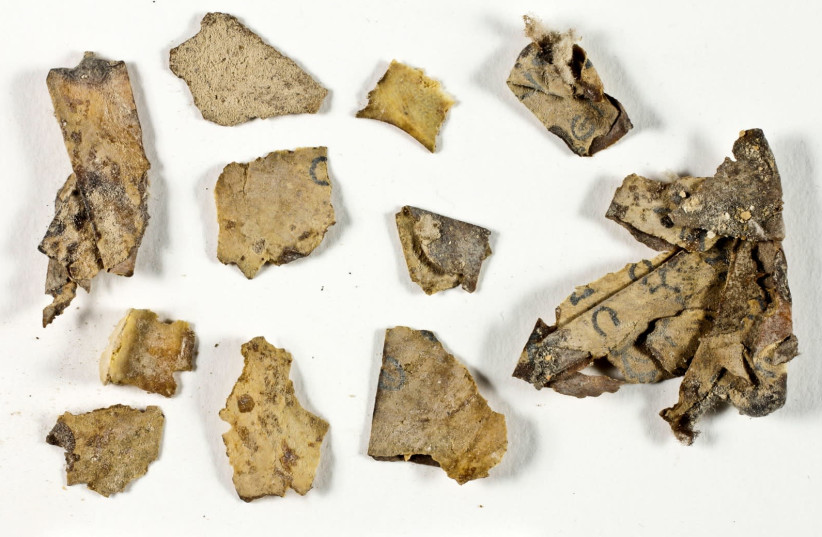
New Dead Sea Scroll fragments, world's oldest basket found in desert cave

Sections of the Book of the Twelve Minor Prophets scroll discovered in the Judean Desert expedition prior to their conservation. (photo credit: SHAI HALEVI / ISRAEL ANTIQUITIES AUTHORITY)

Jpost MARCH 17, 2021

Some 1,900 years ago, Jewish refugees fleeing the Romans made their way to the Judean Desert. Among the belongings they carried with them were scrolls featuring the biblical books of Zechariah and Nahum. Two millennia later, fragments of those texts have reemerged, the Antiquities Authority (IAA) announced Tuesday.

It is the first such discovery since the Dead Sea Scrolls were found in 1947 and the early Fifties.

The inhospitable environment was considered a safe haven as the war between the Roman Empire and the Judean rebels led by Shimon Bar Kokhba raged around 130 CE. Jews found shelter in the caves and brought what they thought they needed for their new life.
In recent decades, the caves have been targeted by looters eager to find artifacts to sell on the private market. For this reason, a few years ago, the IAA, in cooperation with the Civil Administration’s Archaeology Department, launched a rescue operation to survey all the caves in the area.


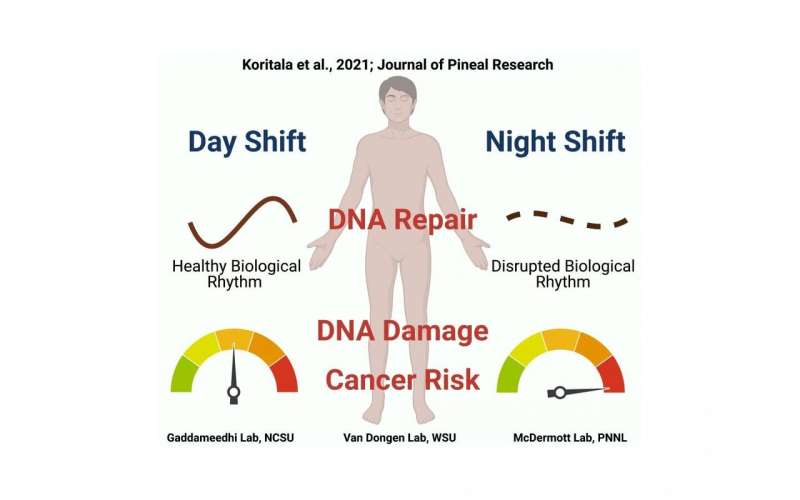
A night shift schedule is associated with increased DNA damage

Research offers insights on how night shift work increases cancer risk

Medical Xpress March 8, 2021

New clues as to why night shift workers are at increased risk of developing certain types of cancer are presented in a new study conducted at Washington State University Health Sciences Spokane.

Published online in the Journal of Pineal Research, the study involved a controlled laboratory experiment that used healthy volunteers who were on simulated night shift or day shift schedules. Findings from the study suggest that night shifts disrupt natural 24-hour rhythms in the activity of certain cancer-related genes, making night shift workers more vulnerable to damage to their DNA while at the same time causing the body's DNA repair mechanisms to be mistimed to deal with that damage.

Though more research still needs to be done, these discoveries could someday be used to help prevent and treat cancer in night shift workers.

"There has been mounting evidence that cancer is more prevalent in , which led the World Health Organization's International Agency for Research on Cancer to classify night shift work as a probable carcinogenic," said co-corresponding author Shobhan Gaddameedhi, an associate professor formerly with the WSU College of Pharmacy and Pharmaceutical Sciences and now with North Carolina State University's Biological Sciences Department and Center for Human Health and the Environment. "However, it has been unclear why night shift work elevates cancer risk, which our study sought to address."

Monday, November 30, 2020

Here's How to Think About the Danish Mask Study

 Medpage 

I was drawn to science and medicine because of all human endeavors, ours is one where smart people can say, "I don't know." We don't stop there. We run a study or experiment that helps us know more. That is what makes what we do different than other human endeavors.

I start then with a humility as I take on the Danish Mask Study, published on Wednesday in the Annals of Internal Medicine. This is a 4,800-person randomized trial that took place in the spring and early summer in Denmark. The trial was run at a time where most Danes did not wear masks when they left their house. It told participants to practice social distancing and randomly assigned them with the advice to wear a mask (and even gave them 50 surgical masks), advising them to change it after every 8 hours of use, or gave them no advice to wear mask, and followed them to see how many acquired SARS-CoV-2 by PCR or antibody testing. The answer was a nearly identical proportion -- 42 of 2,393 people (1.8%) in the mask group and 53 of 2,470 (2.1%) in the no-mask group. The difference was not statistically significant.

The earth spinning unusually fast lately

Long-exposure shot of a fast-spinning globe. 

Many of us wish we could get through this difficult year as quickly as possible. Seems the Earth feels the same way — it has been spinning unusually fast lately. 2020 included the 28 shortest days since 1960.

Atomic Clocks Expose Earth's Irregular Speed

The Earth is an excellent timekeeper: on average, with respect to the Sun, it rotates once every 86,400 seconds, which equals 24 hours, or one mean solar day.

But it is not perfect. When highly accurate atomic clocks were developed in the 1960s, they showed that the length of a mean solar day can vary by milliseconds (1 millisecond equals 0.001 seconds). These differences are obtained by measuring the Earth's rotation with respect to distant astronomical objects, and using a mathematical formula to calculate the mean solar day.

2020 Had Shortest Days on Record

Before this year began, the shortest day since 1973 was July 5, 2005, when the Earth's rotation took 1.0516 milliseconds less than 86,400 seconds.

But in the middle of 2020, the Earth beat that record no less than 28 times. The shortest day of all came on July 19, when the Earth completed its rotation in 1.4602 milliseconds less than 86,400 seconds.

The speed of the Earth's rotation varies constantly because of the complex motion of its molten core, oceans and atmosphere, plus other effects. 

2021 Is Predicted to Be Even Shorter

Scientists monitoring the Earth's rotational speed expect the trend of having shorter days to follow us into 2021 as well.

According to their calculations, an average day in 2021 will be 0.05 ms shorter than 86,400 seconds. Over the course of the entire year, atomic clocks will have accumulated a lag of about 19 ms. For comparison: in past years, they ran fast by a few hundred milliseconds per year. See yearly averages since 1973

In fact, the year 2021 is predicted to be the shortest in decades. The last time that an average day was less than 86,400 seconds across a full year was in 1937.

An in depth look at the beer bug


Sunday, May 31, 2020

Meet Bill Gates


DTP Vaccine Associated with Increased Rate of Total Mortality in Low-Income Countries


Biospace Aug 16, 2019
SHERIDAN, Wyo., Aug. 16, 2019 /PRNewswire/ -- DTP is one of the most common vaccines used in the world.  In 2012, SAGE requested that the WHO review the evidence concerning the possible effects of DTP vaccines on mortality1. In a new expert report, Peter C. Gøtzsche, Professor, DrMedSci, MSc analyzed the WHO systematic review as well as any studies published after the WHO report that assessed the effect of DTP vaccine on total mortality. This new expert report concludes that the "evidence tells us that it is likely that the DTP vaccine increases total mortality in low-income countries." 2

This echoes the conclusion by Peter Aaby – a highly acclaimed scientist renowned for studying and promoting vaccines in Africa - that "all currently available evidence suggests that DTP vaccine may kill more children from other causes than it saves from diphtheria, tetanus or pertussis. Though a vaccine protects children against the target disease it may simultaneously increase susceptibility to unrelated infections." 3 Dr. Aaby's recent study, the first ever naturally randomized comparison of mortality between children receiving DTP and those that are unvaccinated, found that children vaccinated with DTP were 10 times more likely to die in the first 6 months of life than the unvaccinated.3 

One of the five goals of the WHO's Global Vaccine Action Plan (GVAP) is to exceed the UN Millennium Development Goal 4 target of reducing child mortality.4 A strategy for achieving this goal is to reach 90% national vaccination coverage on DTP containing vaccines worldwide.4 According to Gøtzsche's conclusions, this strategy would be counterproductive toward the goal of reducing child mortality.

Gøtzsche offers several suggestions for potential next steps. As stated by UNICEF, "the percentage of children receiving the diphtheria, tetanus and pertussis vaccine (DTP) is often used as an indicator of how well countries are providing routine immunization services" 5. Gøtzsche recommends that the indicator be changed to something that is "known to be positively associated with better child survival."2 Gøtzsche then explains that "it is the duty of a manufacturer of a drug or vaccine to demonstrate in randomized trials that it works and has a positive benefit to harm balance. This has not been done for the DTP vaccine." 2 As such, he advocates for the initiation of randomized trials and considers the need for them "an urgent ethical imperative."2

Gøtzsche concludes with a call for the re-evaluation of current DTP vaccination practices. "No one should be offered this vaccine without full informed consent that includes information that the vaccine is likely to increase total mortality. I also believe that the vaccine should not be recommended and that, if anyone wants to use it, it must be as part of a large randomized trial."2

References:
1. https://www.who.int/immunization/sage/sage_wg_non_specific_effects_vaccines_march2013/en/
2.  https://vaccinescience.org/expert-report-effect-of-dtp-vaccines-on-mortality-in-children-in-low-income-countries/
3.  https://www.ncbi.nlm.nih.gov/pmc/articles/PMC5360569/
4.  https://www.who.int/immunization/global_vaccine_action_plan/GVAP_doc_2011_2020/en/
5.  https://data.unicef.org/topic/child-health/immunization/

Tuesday, March 31, 2020

Where on earth were all the penguins?


Science Magazine Mar. 19, 2020
Where on Earth, wondered Henri Weimerskirch, were all the penguins? It was early 2017. Colleagues had sent the seabird ecologist aerial photos of Île aux Cochons, a barren volcanic island halfway between Madagascar and Antarctica that humans rarely visit. The images revealed vast areas of bare rock that, just a few decades before, had been crowded with some 500,000 pairs of nesting king penguins and their chicks. It appeared that the colony—the world’s largest king penguin aggregation and the second biggest colony of any of the 18 penguin species—had shrunk by 90%. Nearly 900,000 of the regal, meter-high, black, white, and orange birds had disappeared without a trace. “It was really incredible, completely unexpected,” recalls Weimerskirch, who works at the French national research agency CNRS.

Soon, he and other scientists were planning an expedition to the island—the first in 37 years, and only the third ever—to search for explanations. “We had to go see for ourselves,” says CNRS ecologist Charles Bost.

As the researchers prepared for the journey, they had to grapple with the logistical, political, and scientific challenges that have long bedeviled biologists trying to understand Antarctica’s remote ecosystems. The vast distances, rough weather, and rugged terrain make travel difficult and expensive. They needed a ship—and a helicopter, because frigid seas and rocky shores make for perilous boat landings on Antarctic islands. Complying with the tough permitting and biosecurity rules governing the French-controlled island—meant to prevent researchers from disturbing fragile ecosystems—required careful planning and paperwork that took months to complete. And once they arrived, they would have precious little time: just 5 days to investigate a multitude of suspects in the disappearance, including disease, predators, and a warming Southern Ocean.

Friday, February 28, 2020

Ancient Biblical era temple discovered in Israel


Aerial view of the ancient Canaanite temple.
Fox February 17
An international team of archaeologists has uncovered an ancient Biblical era temple in Israel.
The ruins of the Canaanite temple were discovered within a large Bronze Age settlement in what is now National Park Tel Lachish. The temple, which dates back to the 12th century B.C., was once part of the ancient Canaanite city of Lachish.

Professor Yosef Garfinkel of the Hebrew University of Jerusalem and Professor Michael Hasel of Southern Adventist University in Tennessee led a team of researchers that uncovered the temple.

Lachish was built around 1800 B.C., destroyed and rebuilt on a number of occasions over the following centuries, according to Hebrew University.

“The settlement is mentioned in both the Bible and in various Egyptian sources and was one of the few Canaanite cities to survive into the 12th century BCE,” it explained in a statement.

The city’s deliverance "into Israel's hands," for example, is described in the Book of Joshua.

The ancient Canaanite civilization, which created the first alphabet and is mentioned frequently in the Bible, has long fascinated historians.

Saturday, December 14, 2019

“Born That Way” No More

John Peck   November, 2019
A new study adds to a growing body of evidence demonstrating that the dominant narrative about sexual orientation—that it is genetically determined—simply cannot be true. Instead, the science shows that a person’s sexual orientation and choice of partners depends heavily on the development and expression of personal autonomy regarding one’s own sexual possibilities. People with same-sex attractions should be legally and culturally free not to identify with or act on them.

Late last month, a team of MIT and Harvard scientists published a landmark study of the genetic basis for sexual orientation in the journal Science. The study, which was based on an examination of the genetic material of almost half a million individuals, definitively refutes the idea that being gay is an innate condition that is controlled or largely compelled by one’s genetic makeup.

The study contained two key findings. First, it found that the effect of the genes we inherit from our parents (known as “heritability”) on same-sex orientation was very weak, at only .32 on a scale from 0 (none) to 1 (total) heritability. This means that a person’s developmental environment—which includes diet, family, friends, neighborhood, religion, and a host of other life conditions—is twice as influential on the probability of developing same-sex behavior or orientation as a person’s genes are. More

Thursday, October 31, 2019

GMO Avocados in Development


       Mercola   October 15, 2019
  • A group of U.S. and Mexican scientists have sequenced the genomes of Mexican and well-known Hass avocados
  • Researchers stated that their research to sequence the avocado genome was necessary in order to make the plants “accessible to modern genomic-assisted breeding efforts”
  • Genetic engineering (GE) could be used to fight avocado diseases and optimize growth in changing climates
  • It will likely be years before a GE avocado is created, as the plant takes years to mature, but this is where the research is headed in creating “avocados for the future”
  • Choosing organic will be the best way to avoid GE avocado, which may not be labeled as such.

Thursday, November 29, 2018

Research: humans and animals sprang from single pair

Dailymail  
All modern humans descended from a solitary pair who lived 100,000 to 200,000 years ago, scientists say.
Scientists surveyed the genetic 'bar codes' of five million animals - including humans - from 100,000 different species and deduced that we sprang from a single pair of adults after a catastrophic event almost wiped out the human race. 
These bar codes, or snippets of DNA that reside outside the nuclei of living cells, suggest that it's not just people who came from a single pair of beings, but nine out of every 10 animal species, too.

Wednesday, November 28, 2018

Study: Facebook Can Cause Depression

https://www.zerohedge.com/sites/default/files/inline-images/not%20funny.jpg?itok=q_Xj-S-g
Zerohedge 11/16/2018
A new report conducted by psychologists at the University of Pennsylvania have determined that an excessive amount of time on “social media” sites like Facebook, Instagram, and Snapchat are making millennials depressed.
“It was striking,” said Melissa Hunt, a psychology professor at the University of Pennsylvania, who led the study. “What we found over the course of three weeks was that rates of depression and loneliness went down significantly for people who limited their (social media) use.”
The study, “No More FOMO: Limiting Social Media Decreases Loneliness and Depression," is being published in December’s Journal of Social and Clinical Psychology.

Researchers recruited 143 students for two different trials, one in the spring semester and one in the fall semester. Each subject was required to have a Facebook, Instagram, and Snapchat account, plus an Apple iPhone. They collected data on the students for about a week to get a baseline reading of their social media usage, and also had them submit questionnaires that assessed their mental health according to seven different factors: social support, fear of missing out, loneliness, autonomy, and self-acceptance, anxiety, depression, and self-esteem.
“Here’s the bottom line,” Hunt explained to Science Daily. “Using less social media than you normally would leads to significant decreases in both depression and loneliness. These effects are particularly pronounced for folks who were more depressed when they came into the study.”

Americans find more meaning in money than friends or religion

BBC  22 November 2018
As Americans gather with their family and friends for Thanksgiving dinner, they're being fed some grim home truths from the Pew Research Centre.

Asked to rate what gave their life meaning, researchers found more people mentioned career and money, than friends or religion.

Two-thirds of those surveyed said family was a source of satisfaction.
But close to a third also cited work, while 23% said their finances made their lives meaningful.

Researchers conducted the survey late last year, asking nearly 5,000 Americans an open-ended question about what parts of their lives gave them satisfaction and fulfilment. Answers included pets, hobbies, grandchildren and travel.

Friday, August 17, 2018

MIT computer model predicts end date for civilisation by 2040

computer

Express  Aug 13, 2018

A COMPUTER MODEL developed in 1973 by a team of MIT researchers has predicted the "end of civilised life as we know it" by 2040, with a major change coming in 2020 - just two years away from now.

An apocalyptic computer model, processed by one of the world's largest computers in 1973, has predicted the end of civilization  by 2040.

The prediction came from a programme nicknamed World One, which was developed by a team of MIT researchers and processed by Australia's largest computer. 

It was originally devised by computer pioneer Jay Forrester, after he was tasked by the Club of Rome to develop a model of global sustainability.

However, the shocking result of the computer calculations showed that the level of pollution and population would cause a global collapse by 2040.

This shows that the world cannot sustain the current level of population and industrial growth for more than two decades.

Australian broadcaster ABC has republished its original report from the 1970s, since there is just two years until a major change is expected according to the computer model.

The model based its predictions on trends such as pollution levels, population growth, availability of natural resources and quality of life on earth.

The eerie calculation has been remarkably accurate in certain predictions, such as a stagnated quality of life and diminishing pool of natural resources.

Tuesday, April 10, 2018

Ginger May Be Stronger than Chemo for Fighting Cancer

ginger-stronger-chemo-fighting-cancer-study
Natural Blaze
We all know that ginger is a healthy addition to any meal, and that it can reduce nausea and inflammation in the human body. It’s a food with curative powers that have been highly regarded for centuries, though science is still unlocking its secrets. Coincidentally, three researchers from the Rajiv Gandhi Centre for Biotechnology in India may have just stumbled upon one of those secrets, and it will likely have far-reaching implications for the cancer treatment field.

They’ve found that there is a chemical in ginger called 6-shogaol, which has an impressive effect against breast cancer cells. It also targets cancer stem cells in particular, which are largely responsible for spreading cancer throughout the body, as well spurring the growth of tumors that have been previously treated with chemo or surgery. And best of all, it is effective at doses that aren’t harmful to noncancerous cells, unlike chemotherapy.

In fact, the researchers decided to see how 6-shogaol would stack up against a traditional chemotherapy drug known as taxol. While taxol is known to inhibit ordinary cancer cells (and cause a host of awful side effects) it still struggles to eliminate cancer stem cells. The researchers tested the taxol at a concentration that was 10,000 times higher than their 6-shogaol samples, and it still wasn’t as effective at destroying cancer stem cells as the ginger chemical.

As for how 6-shogaol works in the human body, the researchers found 6 different ways that it can inhibit cancer growth.
  • It reduces the expression of CD44/CD24 cancer stem cell surface markers in breast cancer spheroids (3-dimensional cultures of cells modeling stem cell like cancer)
  • It significantly affects the cell cycle, resulting in increased cancer cell death
  • It induces programmed cell death primarily through the induction of autophagy, with apoptosis a secondary inducer
  • It inhibits breast cancer spheroid formation by altering Notch signaling pathway through γ-secretase inhibition.
  • It exhibits cytotoxicity (cell killing properties) against monolayer (1-dimensional cancer model) and spheroid cells (3-dimensional cancer model)