Showing posts with label Water. Show all posts

Friday, February 28, 2020

Water, The Essential Nutrient

Water is a basic necessity, needed to maintain a healthy body, a clear mind, and a good balance within your tissues. About 60 percent of your body is water, and you must constantly replenish the supply, as it’s used continuously in the processes of life. Many people fail to drink enough of it. The standard recommendation is to drink at least eight 8-ounce glasses a day. I’m not sure you need to force that much down, but do try to drink as much as you can, and more than you think you need. While you’re doing all this drinking, however, make sure you’re not adding new toxins to your body.

Drinking Water

I have always recommended drinking high-quality bottled water or, if possible, getting a water-purification system for your home. However, before you spend any money on a filtration system, find out what’s in your water – have your tap water tested for contaminants such as fecal-coliform bacteria, lead, fluoride, chlorine, arsenic and nitrates, as well as parasites, other microorganisms, sulfates, herbicides, and pesticides. (Don’t rely on the free testing offered by companies selling water purifiers – they’re not thorough enough. Instead, use an independent lab – you may find you don’t need a home purifying system). State and local health departments often do free tests for bacterial contamination, but to find out about toxic substances, you’ll need the services of a private testing lab. Testing for a range of common contaminants can cost more than $100, but the investment is certainly worthwhile it if saves you the cost of a purifying system.
Chlorine and lead are two of the most common contaminants in water. Chlorine is a strong oxidizing agent that may increase the risk of heart disease and is linked to certain types of cancer. Water containing more than 10 parts per billion of lead is a health risk, especially for infants, children and pregnant women – and probably for everyone else, as well. Even small amounts may result in organ damage and stunt the nervous system. If you are using tap water for drinking or cooking, I suggest that you get in the habit of flushing your kitchen faucet daily by letting water run for three to five minutes in the morning (or after periods of disuse).

Saturday, January 20, 2018

Are You One Of The 170 Million Americans Drinking Radioactive Tap Water?

ZeroHedge 01/15/2018 
According to a new bombshell report from the Environmental Working Group (EWG), tap water for more than 170 million Americans contains radioactive elements that may increase the risk of cancer. The group examined 50,000 public water systems throughout the United States and found from 2010 to 2015, more than 22,000 water utilities reported radium in treated water.
Radiation in tap water poses serious health threats, particularly for children, and women during pregnancy.
The most common radioactive element the EWG found was radium. Studies show that radium above the EPA legal limit may cause depression of the immune system, anemia, cataracts, fractured teeth, and of course cancer.
Radium is a naturally occurring radioactive element that resides on the earth’s crust. The EWG emphasizes that higher radium levels in tap water occur when uranium mining or oil and gas drilling exploration companies disturb the earth’s geology. The process triggers radiation called “ionizing because it can release electrons from atoms and molecules, and turn them into ions,” explained the EWG. The EPA warns that all ionizing radiation is carcinogenic, implying that radium above the EPA limit is all too prevalent in America and it could be causing lots of cancer.

Monday, August 28, 2017

Research group finds 267 contaminants in tap water in the U.S.

drinking tap water Anna Hunt,  August 9, 2017


Research conducted by the Environmental Working Group (EWG) revealed that hundreds of contaminants are present in U.S. tap water. To be exact, EWG revealed that 267 out of 500 contaminants were detected during tests conducted by more than 48,000 utilities companies across 50 states. This shows that no matter where you live in the U.S., your tap water is very likely contaminated.
Of the 267 contaminants found,
  • 93 were linked to an increased risk of cancer,
  • 78 were associated with brain and nervous system damage,
  • 63 were connected to developmental harm in children or fetuses,
  • 38 were contaminants that could cause fertility issues; and
  • 45 were endocrine disruptors.
Here are a couple more important details about EWG’s findings:
  • Over 80% of water systems had known or likely carcinogens at levels that exceeded health guidelines
  • More than 19,000 public water system had lead levels considered potentially-harmful for formula-fed babies, at above 3.8 parts per billion
EWG publishes a public database where you can enter your ZIP code to see what’s in your tap water. Just follow this link. You can gather information about which contaminants were detected, which are present in levels above health guidelines, and what to do to filter them out.
In the U.S., the Safe Drinking Water Act of 1974 sets the national standards for drinking water. However, it’s been more than 20 years since the Environmental Protection Agency added any new contaminants or chemicals to the list of regulated pollutants defined under the act. Nneka Leiba, director of the Healthy Living Science Program for the EWG, stated:
“Most people turn on their tap water and think: It’s clear, I live in America, we have these laws, I’m being protected. What people don’t realize is that there have been no additions to the list of regulated chemicals for drinking water since 1996.”
The main concern isn’t so much that you’ll get sick when drinking tap water. What the EWG worries about is the effect of long-term exposure, such as drinking eight glasses per day over a lifetime.
“Legal doesn’t necessarily mean safe when it comes to drinking water,” added Leiba.

Bottled Water Is No Better Alternative

If you’re currently drinking tap water, you are most likely putting contaminants in your body.
Many people think that drinking bottled water is an acceptable alternative. The EWG doesn’t agree. The group analyzed bottled water products. It published the analysis in its Bottled Water Scorecard. It concluded the following:
The bottled water industry routinely fails to provide information to consumers about the water’s specific geographic source, purification methods and the results of purity testing.
So, it seems bottled water may be just as bad, but we won’t ever really know. Why? Because the government doesn’t require bottled water producers to disclose what toxins contaminate their products. In addition, bottles leach plastics chemicals into the water over time, especially if you store the bottles in hotter temperatures. Finally, bottled water costs up to 1,900 times more than tap water.     More

Sunday, April 16, 2017

Scientists Have Created a Device That Sucks Water Out of Thin Air

FIONA MACDONALD 13 APR 2017 
When it comes to future challenges, one of the biggest will be water scarcity - on a warming planet we're going to have plenty of seawater, but not enough fresh, clean water in the right places for everybody to drink.
And while a lot of research has focussed on desalination, a team of scientists have now come up with another possible solution - a device that pulls fresh water out of thin air, even in places with humidity as low as 20 percent. All it needs is sunlight.
It might sound too good to be true, but so far the research is solid. Called the 'solar-powered harvester', the device was created by teams from MIT and the University of California, Berkeley, using a special type of material known as a metal-organic framework (MOF).
To be clear, it's only in the prototype phase right now and has been tested in pretty limited situations, but the results so far have just been published in Science.
"This is a major breakthrough in the long-standing challenge of harvesting water from the air at low humidity," said one of the researchers, Omar Yaghi from UC Berkeley.
"There is no other way to do that right now, except by using extra energy. Your electric dehumidifier at home 'produces' very expensive water."
Two-thirds of the world's population is currently experiencing a shortage of clean water, but it's estimated that there's about 13,000 trillion litres of water worldwide present in the air all around us.
So far the prototype device has been tested under conditions of 20 to 30 percent humidity, and was able to pull 2.8 litres (3 quarts) of water from the air over a 12- hour period, using 1 kilogram (2.2 pounds) of MOF.
Successful tests have also been conducted on the rooftop at MIT, showing that it works in real-world conditions.
The team says that the device could easily be scaled up to provide a family with their freshwater needs for the day.        Read More

Thursday, November 17, 2016

Water is the essence of life


Water is the essence of life. The human body cannot survive without water because it is so critical for all bodily functions. In fact, on average, the body of an adult human being contains 60 percent of water.1 Not drinking adequate amounts of water can have such a detrimental effect on overall health that a reduction in 10 percent of your normal body water percentage can lead to a medical emergency.2 
Despite water’s important role, many people do not consume enough of this liquid. While many people believe they are consuming enough water, they may not realize that they are indeed dehydrated. Consuming soda, sugary drinks, juice, sports drinks and other beverages does not replace the body’s need for plain water. According to research, 75 percent of Americans are in a chronic state of dehydration.3 
Dehydration affects the body in a plethora of ways ranging from mild effects such as dry skin and constipation to moderate effects such as headaches and fatigue to severe effects such as low blood pressure, organ failure and shock.4  However, dehydration is also one of the easiest conditions to reverse that tends to be overlooked by medical professionals.3 

The Benefits of Water in Strengthening the Immune System

The immune system is our body’s physical, chemical and cellular defense against invasion by pathogens. It is primarily designed to protect us from disease but a weakened immune system can no doubt lead us to fall sick.5  Nevertheless, there are several ways to strengthen your immune system—adequate water in-take being one of the simplest ways to ensure healthy functioning of the body. Outlined below are a few of a numerous ways in which water is beneficial to your immune function.
Excretes Toxins and Waste
Water plays a key role in the excretory system. It allows your kidneys to filter toxins, remove waste, and transport nutrients to other parts of the body. By not drinking the right amount of water, toxins accumulate throughout the body thus compromising your immune system.6  The same concept applies to the digestive system. Water assists in softening your stool to promote bowel movements to eliminate waste material. Lack of water will result in a dry colon and accumulation of waste thus leading to constipation.6 
Oxygenates Blood
Drinking enough water on a daily basis is very important for oxygenation of the blood and for transporting blood and other bodily fluids throughout the body.7  In a well-hydrated body, oxygen-rich blood circulates optimally delivering essential nutrients to all tissues. Without adequate water, all bodily functions become ineffective leading to symptoms such as fatigue.7 
Assists in the Production of Lymph
The lymphatic system plays a key role in reaching for optimal immune function. It protects the body from outside threats and disease-causing inflammation.8  Lymph is a fluid that is part of the lymphatic systems and contains infection-fighting white blood cells. Lymph fluid is 95 percent water; therefore, water is essential for the production of lymph.9 Not drinking enough water compromises the production of lymph, thus increasing your susceptibility to infection.9 

How Much Water Do We Need?

The question is how much water should you be drinking everyday to maintain optimal health? While this is a simple question, the answer is not as straight forward. For several years, we have heard the repeated guideline of drinking eight 8 oz. glasses per day.10  According to some experts, this one-size fits all guideline may not necessarily be accurate since every individual is unique in terms of their weight, height, activity level, etc.10  Environmental factors such as weather conditions will also factor in how much water you should be consuming.10 
Joseph Mercola, DO outlines the following guidelines to determine whether you are drinking enough water per day:
  • The color of your urine is perhaps the best indicator of how much water you should be consuming. Dark colored urine indicates that your kidneys are retaining fluid, which means you need to drink more water. Ideally, you need to drink enough water to turn your urine into a light yellow color.10
  • Use thirst as a guide to determine how much water you need to drink per day. Once the body loses 1-2 percent of water, you will begin to feel thirsty. Note that at this point your body is already in its dehydration stage; therefore, do not ignore this signal.10
  • Frequency of urination is another indicator of whether you are drinking adequate amount of water. Urinating 7 to 8 times a day is considered healthy. If you haven’t urinated in hours or if your urine is scant, this is a good indication that you need more water.10
Replacing other beverages with pure water is the first step to living a healthy lifestyle. Your body will thank you for it.

References:
1 U.S. Department of Interior. The Water in You. The U.S Geological Survey May. 2, 2016.
2 Jha S. World Water Day 2014: 5 Reasons You Can’t Survive Without Water. The Health Site Mar. 21, 2014.
3 Chronic Dehydration More Common Than You Think. CBS Miami July 2, 2013.
4 Dehydration: A Major Concern. Water Industry News.
5 Harvard Health Publications. How To Boost Your Immune System. Harvard Medical School June 15, 2016.
6 Fact or Myth: Drinking Water Flushes Out Toxins From Your Body. Underground Health Reporter.
7 Hearn N. Oxygenate Your Body: How To Restore Oxygen Balance and Help Prevent Disease Natural News Apr. 16, 2011.
8 Zimmerman KA. Lymphatic System: Facts, Functions and Diseases. LiveScience.com Mar. 11, 2016.
9 Proulx G. Water: The Universal Healer. Booktango Oct. 1, 2012.
10 Mercola J. Studies on Hydration Suggest Dehydrated Drivers May Pose Hazard on the Road, and Majority of Children Don’t Drink Enough Water. Mercola.com June 29, 2015.                     

Vaccine Reaction 

Friday, December 4, 2015

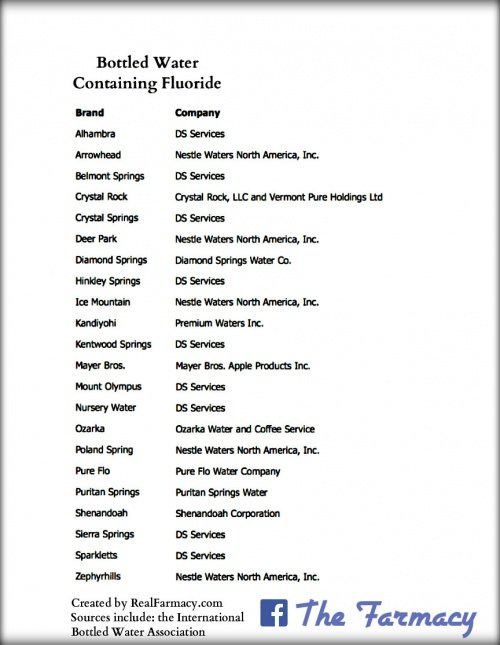
List of bottled water containing fluoride


The world is slowly waking up to the fact that fluoride, a by-product of the phosphate fertilizer industry, wreaks havoc on the brain and body. Despite peer-reviewed scientific evidence against it, fluoride is still added to 70 percent of U.S. public drinking water supplies.

What’s more is that processed beverages and food, tea, and even bottled water contain fluoride. That’s right, many popular brands of bottled water have a known neurotoxin added to them.
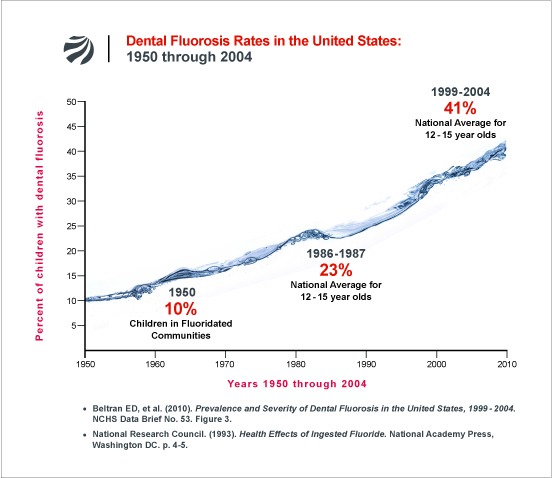
It’s no wonder that dental fluorosis has skyrocketed in the U.S. over the past 60 years (image right). Dental fluorosis is a side effect of fluoride ingestion that typically effects children. And it’s awful. Click HERE to see what it looks like, but you might want to take my word for it because it’s not a pretty sight.

Additionally, the aforementioned peer-reviewed evidence against fluoride includes a recent publication in the world renowned, weekly peer-reviewed Medical Journal, the Lancet. This report classifies fluoride as a neurotoxin and concludes that it notably decreases the IQ of children.

Fluoride is a toxic waste from the phosphate fertilizer industry

In the 1950’s it was determined that phosphate factories emitted toxic gases that were destroying the environment. Crops were scorched, destroyed, and cattle became crippled. Chemical and environmental engineers were employed with the task of filtering this toxic waste so that it would not escape into the atmosphere.

My former chemistry professor was once one of these engineers and would often reminisce of his days developing and designing what the industry later referred to as scrubbers. Scrubbers were installed to filter out this toxic waste thus protecting communities from harmful gases that when leached into the atmosphere would destroy their health and ecosystem. But were citizens ultimately being protected?

Chances are that you are currently a victim of the industry’s fluoride emissions although you may not live anywhere near a phosphate plant. For you see, when the scrubbers clean these emissions, hydrofluorosilicic acid, a classified hazardous waste is collected and barreled up. It is then sold to communities across America to be added to the public water supply as the primary fluoride chemical for water fluoridation.

Of course many people know this disturbing fact and avoid drinking from the tap. But what if I told you that the very water you’re spending a pretty penny on to avoid fluoridation, is too fluoridated. You might be surprised which brands contain fluoride, but when you see who owns them it will all make sense.

The list below contains data provided by the International Bottled Water Association that you can use to make sure you’re not feeding fluoride to yourself and your family.
If you would like a copy of this list for future reference click the letter sized image above then either right click and save the file or select “print” in your browser menu.


References:
International Bottled Water Association
fluoridealert.org
Real Farmacy

Monday, November 9, 2015

15 Facts People Should Know About the Fluoride


By Dr. Marianna Pochelli

Advocates of fluoride say its use in municipal water systems poses no adverse health concerns, however results from investigations clearly state the opposite. There has been considerable research done on fluoride regarding cancer, birth defects, and risks to the respiratory, gastrointestinal, and urinary systems, however, very little has been done on its neurological effects.
There are now serious facts about the health risks regarding fluoridation which can no longer be ignored, and as a result, the practice itself is being questioned by most of the world.

1. Fluoride Is A Carcinogen

Fluoride was found to be an equivocal carcinogen by the National Cancer Institute Toxicological Program.[1]
Further studies by the New Jersey Department of Health have now confirmed a 6.9 fold increase in bone cancer in young males.[2]
Earlier studies had found a 5% increase in all types of cancers in fluoridated communities.[3]
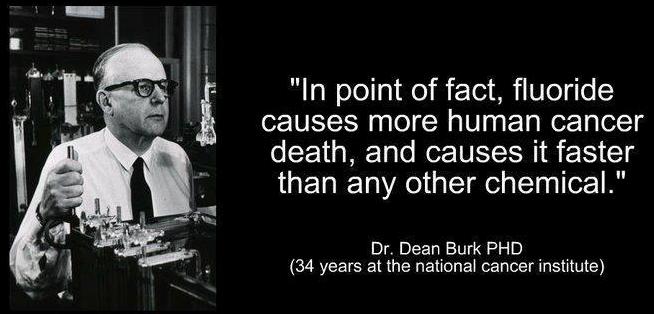
“In point of fact, fluoride causes more human cancer death, and causes it faster than any other chemical,” stated Dr. Dean Burk PhD who spent over three decades with the national cancer institute.
Researchers suspect a connection to cancer because half of ingested fluoride is deposited in bones, and fluoride stimulates growth in the end of bones, where osteosarcoma occurs.

2. Most Developed Countries Do Not Fluoridate Their Water

Most developed nations do not fluoridate their water. In western Europe, for example, only 3% of the population consumes fluoridated water. Only 11 countries in the world have more than 50% of their population drinking fluoridated water: Australia (80%), Brunei (95%); Chile (70%), Guyana (62%), Hong Kong (100%), the Irish Republic (73%), Israel (70%), Malaysia (75%), New Zealand (62%), Singapore (100%), and the United States (64%). In total, 377,655,000 million people worldwide drink artificially fluoridated water. This represents 5% of the world’s population.

3. Fluoride Increases Hip Fractures

Drinking fluoridated water will double the number of hip fractures for both older men and women.[4, 5]
Extremely low levels of water fluoridation 0.1 ppm still produced statistically significant increased hip fractures. (Bordeaux Study JAMA 1994)

4. Fluoridated Countries Do Not Have Less Tooth Decay Than Non-Fluoridated Countries

According to the World Health Organization (WHO), there is no discernible difference in tooth decay between developed countries that fluoridate their water and those that do not. The decline in tooth decay the US has experienced over the last 60 years, which is often attributed to fluoridated water, has likewise occurred in all developed countries (most of which do not fluoridate their water). What the CDC always fails to mention is that tooth decay rates have “precipitously declined” in all western countries, irrespective of whether the country ever fluoridated its water. Indeed, most western countries do not fluoridate their water and yet their tooth decay rates have declined at the same rate as the U.S. and other fluoridated countries.
No correlation was found between the level of fluoride in water and dental caries.[7, 8, 9, 10, 11] There also appears to be a genetically related increase in tooth decay for Hispanics, Indians, Native Americans and Asians. Decay is largely related to the educational and economic level of the parents. [12]
“Fluoridation is no longer effective,” contends Hardy Limeback, head of the preventive dentistry program at the University of Toronto, who says adding the chemical to water is “more harmful than beneficial.”

5. Fluoridated Water Affects IQ and Neurobehavioral Development in Children

Although fluoride has been proven to cause neurotoxicity in animal models, very little published research has elaborated on acute fluoride poisoning and neurotoxicity in adults and children. A report in a peer-reviewed open access journal published by the National Institute of Environmental Health Sciences performed a systematic review and meta-analysis of published studies to investigate the effects of increased fluoride exposure and delayed neurobehavioral development.
A study published in Neurologia showed “the prolonged ingestion of fluoride may cause significant damage to health and particularly to the nervous system.” That was the conclusion by a review of studies by researchers Valdez-Jimenez, et al.
Researchers Anna L. Choi, Guifan Sun, Ying Zhang and Philippe Grandjean researched the MEDLINE, EMBASE, Water Resources Abstracts, and TOXNET databases through 2011 for eligible studies.
The standardized weighted mean difference in IQ score between exposed and reference populations showed that populations in high fluoride areas had significantly lower IQ scores than those who lived in low fluoride areas.

6. Fluoride Increases Infertility

Infertility in women was found to increase with water fluoridation. Food and Drug Administration (FDA) scientists reported a close correlation between decreasing total fertility rates in women between ages of 10 and 49, and increasing fluoride levels.
They also reported that a review of all of the animal studies done to date shows that fluoride adversely affects fertility in most animal species.[6]

7. Fluoridation is Not a “Natural” Process and Fluoride is NOT A NUTRIENT

Fluoride is naturally occurring in some areas, leading to high levels in certain water supplies “naturally.” Fluoridation advocates often use this to support its safety, however naturally occurring substances are not automatically safe (think of arsenic, for instance).
Further, the fluoride added to most water supplies is not the naturally occurring variety but rather fluorosilicic acid, which is captured in air pollution control devices of the phosphate fertilizer industry. As FAN reported:
This captured fluoride acid is the most contaminated chemical added to public water supplies, and may impose additional risks to those presented by natural fluorides. These risks include a possible cancer hazard from the acid’s elevated arsenic content, and a possible neurotoxic hazard from the acid’s ability–under some conditions–to increase the erosion of lead from old pipes.
The term “fluoride supplement” is a misnomer as it implies that the product is a dietary supplement, like calcium and other nutrients. Fluoride, however, is not a nutrient. A nutrient is something the body has a physiological demand for–they’re not optional; we need them.
The term “fluoride supplement” is also a misnomer because most dietary supplements can be purchased over the counter (i.e., without a prescription). Fluoride supplements, however, cannot be purchased over the counter; they are only available by prescription from either a licensed dentist or doctor.

8. Fluoride Increases Fluorosis

Fluorosis is a defect of tooth enamel caused by too much fluoride intake during the first 8 years of life. Opaque white spots and brown ugly teeth are caused by fluoride. Fluorosis currently affects one out of five or more children in this nation although it is rarely seen in California.
California is the least fluoridated state with less than 16% of the population drinking artificially fluoridated water.
Common causes of fluorosis include: fluoridated drinking water (particularly during infancy), ingestion of fluoride toothpaste, use of fluoride tablets, and consumption of processed foods made with fluoridated water.

9. Fluoride Calcifies The Pineal Gland

A British researcher found that the cells in the pineal gland (a gland that contains calcified deposits that accumulate fluoride) were just as susceptible to fluoride-induced toxicity as the tooth-forming cells. Unlike the teeth, however, the pineal gland cannot be seen by the naked eye. As noted by the researcher, “The safety of the use of fluorides ultimately rests on the assumption that the developing enamel organ is most sensitive to the toxic effects of fluoride. The results from this study suggest that-the pinealocytes may be as susceptible to fluoride as the developing enamel organ.” The pineal controls your inner clock, provides good sleep, works with your adrenal glands to handle stress, keeps the thymus gland fed and cared for, and communicates 24/7 with the rest of the endocrine system about how things are going.

10. Fluoride Is NOT APPROVED By The FDA

As the FDA has long recognized, fluoride is not necessary to human health or development. When used to prevent disease, therefore, the FDA considers fluoride to be a drug.
  1. FDA has never approved a fluoride supplement as safe and effective.
  2. FDA has rejected two fluoride supplements (Enziflur & prenatal fluoride)
  3. FDA gave false information to Congress in 2000 by stating FDA “never rejected” a fluoride supplement.

11. Fluoride Is Highly Toxic, Yet It is The Drug Added To Public Water

Fluoride is added to drinking water to prevent a disease (tooth decay), and as such becomes a medicine by FDA definition. While proponents claim this is no different than adding vitamin D to milk, fluoride is not an essential nutrient. Many European nations have rejected fluoride for the very reason that delivering medication via the water supply would be inappropriate. Water fluoridation is a form of mass medication that denies you the right to informed consent.
The International Academy of Oral Medicine and Toxicology has classified Fluoride as an unapproved dental medicament due to its high toxicity.

12. Most people are overexposed to fluoride due to the pesticide cryolite found in consumption of grape products, particularly white grapes, grown in the U.S

Many juice drinks that are not labeled as “grape juice” use grape juice as a filler ingredient. The use of cryolite thus contaminates many juices with fluoride.
Cryolite is also allowed to be added to the following products (although it is unclear how many producers actually do so, and what the resulting fluoride levels are):
Apricot, Broccoli, Brussels Sprout, Cabbage, Cauliflower, Citrus fruit, Collards, Eggplant, Kale, Kiwifruit, Kohlrabi, Lettuce, Melon, Nectarine, Peach, Pepper, Plum, Pumpkin, Squash (summer & winter), Tomato, and a number of Berries (Blackberry, Blueberry (huckleberry) Boysenberry, Cranberry, Dewberry, Loganberry, Raspberry, Strawberry, Youngberry).
The key way to avoid exposure to fluoride from cryolite is to avoid buying non-organic grape products, particularly beverages made out of white grapes.

13. USDA Organic Has Allowed Fluoride To Contaminate The Organic Label

Fluoride is a persistent and non-degradable poison that accumulates in soil, plants, wildlife, and humans. Many organic farmers may be unaware that this highly toxic substance has been allowed for use in the National Organic Standards (NOS) program, because its presence is hidden. However, it is allowed as Sodium Fluoride tucked away in the US EPA List 4 Inerts (“Inerts which have sufficient data to substantiate they can be used safely in pesticide products, according to EPA.”), which are allowed for use in the NOS. It is also allowed in Bone Meal (which can contain 1000 ppm – or more- fluoride), also included in US EPA List 4 Inerts (“Inerts generally regarded as safe, i.e., corn cobs and cookie crumbs,” according to EPA).

14. Fluoride Is Linked To The Leading Cause of Death

Depending on the country, cardiovascular disease is typically either the number one or two cause of death. A study published in Nuclear Medicine Communications Journal has concluded that increased uptake of fluoride in arteries may be associated with an increased cardiovascular risk.

15. Most Teas At Grocery Retailers Contain Toxic Levels of Fluoride

Drinking cheaper tea blends found at major grocery retailers can increase the level of people’s fluoride intake to toxic levels and put them at increased risk of skeletal and dental illnesses, a University of Derby found. The study is published in journal Food Research International.


Academic Sources:
1. Bucher, et. al., Results and conclusions of the National Toxicology Program’s rodent carcinogenicity studies with sodium fluoride, Int J Cancer, 1991 Jul 9;48(5):733-7.
2. Cohn, Perry D. Ph.D. An Epidemiological Report on Drinking Water Fluoridation and Osteosarcoma in Young Males New Jersey Department of Health, Environmental Health Service, Trenton NJ November 8, 1992
3 . Yiamouyiannis, J.A. and Dean Burk, “Fluoridation and Cancer: Age Dependence of Cancer Mortality Related to Artificial Fluoridation,” Fluoride, Vol. 10 #3 (102-123) 1977
4. Hip Fracture rates related to Fluoridated water Journal of the American Medical Association 264(4):500-502 1990
5. J. C. Robins and J. L. Ambrus, “Studies on Osteoporosis IX. Effect of Fluoride on Steroid Induced Osteoporosis,” Research Communications in Chemical Pathology and Pharmacology, Volume 37, No. 3, pp. 453-461 (1982)
6. Freni SC, Journal of Toxicology and Environmental Health, 42:109-121, 1994
7. Diesendorf M. Tooth Decay not related to fluoride intake from water Nature Vol. 322 10 July 1986
8. Colquhoun J. Tooth Decay related to economics of family American Laboratory 17:98-109 1985
9. Colquhoun J. Community Dentistry and Oral Epidemiology 13:37-41 1985
10. Dr. John Yiamouyiannis statement both in his book (Fluoride the Aging Factor” pub Health Action Press 2nd ed. 1986 )and during debates has not been challenged by the ADA or others.
11. Ziegelbecker D. Fluoride 14; 123-128 1981
12. Steelink and Jones Fluoride in the Municipal Water of Tucson related to diet and ethnic origin International Academy of Oral Medicine and Toxicology March 95
13. Colquhoun J. Fluoride Vol. 23 #3 July 90
14. Colquhoun J. Community Health Studies 11:85-90 1987