Showing posts with label Plastics. Show all posts

Thursday, September 27, 2018

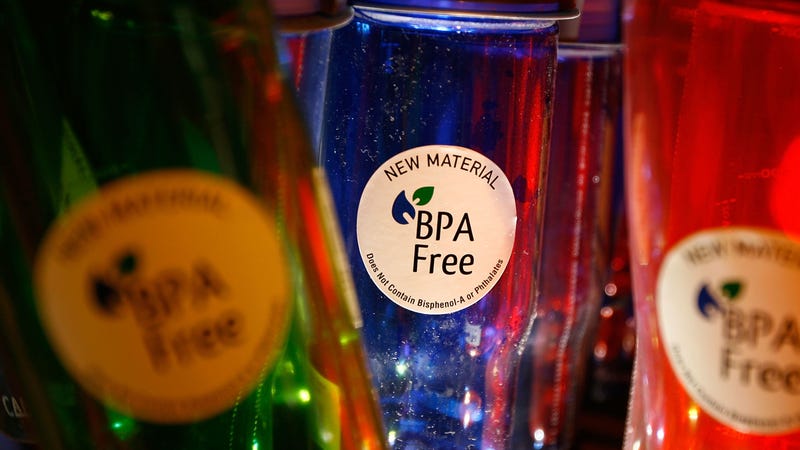
Plastic products that boast of being “BPA-free” aren’t necessarily any safer for us


Plastic products that boast of being “BPA-free” aren’t necessarily any safer for us, suggests a new mouse study published Thursday in Current Biology. The chemicals used to replace BPA in these plastics can still leak out and affect the sperm and eggs of both male and female mice, it found. And these same effects could be happening in people.

Bisphenol A, or BPA, is a chemical commonly used to create polycarbonate plastics and epoxy resins. These clear white plastics are themselves used in food and drink packaging, as well as consumer products and medical devices, while resins are used to coat metal products like canned foods. When these products degrade or are otherwise damaged (from being repeatedly heated in a microwave, for example), they can leach out BPA, exposing us to it. As a result, it’s estimated that 93 percent of Americans have some level of BPA in their system.

That’s troubling, because there’s growing research showing BPA exposure can have subtle but real effects on our health. It’s one of many chemicals thought to interfere with our endocrine system, which regulates how hormones affect everything from our fertility to brain development. BPA in particular has been implicated as a possible cause of genital deformities in men, early puberty in women, and developmental problems in the very young; it might also contribute to metabolic disorders like obesity as well as certain cancers.

Tuesday, December 20, 2016

Are Any Plastics Safe? Industry Tries to Hide New Evidence on BPA-Free Containers

The Scary New Evidence on BPA-Free Plastics

Photographs by Evan Kafka
Each night at dinnertime, a familiar ritual played out in Michael Green's home: He'd slide a stainless steel sippy cup across the table to his two-year-old daughter, Juliette, and she'd howl for the pink plastic one. Often, Green gave in. But he had a nagging feeling. As an environmental-health advocate, he had fought to rid sippy cups and baby bottles of the common plastic additive bisphenol A (BPA), which mimics the hormone estrogen and has been linked to a long list of serious health problems. Juliette's sippy cup was made from a new generation of BPA-free plastics, but Green, who runs the Oakland, California-based Center for Environmental Health, had come across research suggesting some of these contained synthetic estrogens, too.

He pondered these findings as the center prepared for its anniversary celebration in October 2011. That evening, Green, a slight man with scruffy blond hair and pale-blue eyes, took the stage and set Juliette's sippy cups on the podium. He recounted their nightly standoffs. "When she wins…every time I worry about what are the health impacts of the chemicals leaching out of that sippy cup," he said, before listing some of the problems linked to those chemicals—cancer, diabetes, obesity. To help solve the riddle, he said, his organization planned to test BPA-free sippy cups for estrogenlike chemicals.

The center shipped Juliette's plastic cup, along with 17 others purchased from Target, Walmart, and Babies R Us, to CertiChem, a lab in Austin, Texas. More than a quarter—including Juliette's—came back positive for estrogenic activity. These results mirrored the lab's findings in its broader National Institutes of Health-funded research on BPA-free plastics. CertiChem and its founder, George Bittner, who is also a professor of neurobiology at the University of Texas-Austin, had recently coauthored a paper in the NIH journal Environmental Health Perspectives. It reported that "almost all" commercially available plastics that were tested leached synthetic estrogens—even when they weren't exposed to conditions known to unlock potentially harmful chemicals, such as the heat of a microwave, the steam of a dishwasher, or the sun's ultraviolet rays. According to Bittner's research, some BPA-free products actually released synthetic estrogens that were more potent than BPA.

Estrogen plays a key role in everything from bone growth to ovulation to heart function. Too much or too little, particularly in utero or during early childhood, can alter brain and organ development, leading to disease later in life. Elevated estrogen levels generally increase a woman's risk of breast cancer.

Estrogenic chemicals found in many common products have been linked to a litany of problems in humans and animals. According to one study, the pesticide atrazine can turn male frogs female. DES, which was once prescribed to prevent miscarriages, caused obesity, rare vaginal tumors, infertility, and testicular growths among those exposed in utero. Scientists have tied BPA to ailments including asthma, cancer, infertility, low sperm count, genital deformity, heart disease, liver problems, and ADHD. "Pick a disease, literally pick a disease," says Frederick vom Saal, a biology professor at the University of Missouri-Columbia who studies BPA.

BPA exploded into the headlines in 2008, when stories about "toxic baby bottles" and "poison" packaging became ubiquitous. Good Morning America issued a "consumer alert." The New York Times urged Congress to ban BPA in baby products. Sen. Dianne Feinstein (D-Calif.) warned in the Huffington Post that "millions of infants are exposed to dangerous chemicals hiding in plain view." Concerned parents purged their pantries of plastic containers, and retailers such as Walmart and Babies R Us started pulling bottles and sippy cups from shelves. Bills banning BPA in infant care items began to crop up in states around the country.

Today many plastic products, from sippy cups and blenders to Tupperware containers, are marketed as BPA-free. But Bittner's findings—some of which have been confirmed by other scientists—suggest that many of these alternatives share the qualities that make BPA so potentially harmful.

Those startling results set off a bitter fight with the $375-billion-a-year plastics industry. The American Chemistry Council, which lobbies for plastics makers and has sought to refute the science linking BPA to health problems, has teamed up with Tennessee-based Eastman Chemical—the maker of Tritan, a widely used plastic marketed as being free of estrogenic activity—in a campaign to discredit Bittner and his research. The company has gone so far as to tell corporate customers that the Environmental Protection Agency (EPA) rejected Bittner's testing methods. (It hasn't.) Eastman also sued CertiChem and its sister company, PlastiPure, to prevent them from publicizing their findings that Tritan is estrogenic, convincing a jury that its product displayed no estrogenic activity. And it launched a PR blitz touting Tritan's safety, targeting the group most vulnerable to synthetic estrogens: families with young children. "It can be difficult for consumers to tell what is really safe," the vice president of Eastman's specialty plastics division, Lucian Boldea, said in one web video, before an image of a pregnant woman flickered across the screen. With Tritan, he added, "consumers can feel confident that the material used in their products is free of estrogenic activity."      Read more
Tuesday, April 26, 2016

Whales Found Dead In Germany With Stomachs Full Of Plastic


In January, 29 sperm whales were found stranded on shores around the North Sea, an area that is too shallow for the marine wildlife. Only recently were details of the animals’ necropsy released. However, scientists were deeply disturbed by what they found in the animals’ stomachs.
According to a press release from Wadden Sea National Park in Schleswig-Holstein, many of the whales had stomachs FULL of plastic debris, including a 13-meter-long fishing net, a 70 cm piece of plastic from a car and other pieces of plastic litter.
Some suggest that the animals thought the items were food, such as squid, which is their main staple. Others, however, believe that the travesty is largely a result of humanity’s shocking disregard for marine life, which has resulted in an overabundance of plastic in the oceans.
Said Robert Habeck, environment minister for the state of Schleswig-Holstein:
“These findings show us the results of our plastic-oriented society. Animals inadvertently consume plastic and plastic waste, which causes them to suffer, and at worst, causes them to starve with full stomachs.”
Nicola Hodgkins of Whale and Dolphin Conservation echoed that statement. She stated:
“Although the large pieces will cause obvious problems and block the gut, we shouldn’t dismiss the smaller bits that could cause a more chronic problem for all species of cetacean – not just those who suction feed.”
This isn’t the first time a sperm whale has been found dead with innards full of inedible contents. In 2011, a young whale was found floating dead off the Greek island of Mykonos. Its stomach was so distended, biologists thought the animal swallowed a giant squid. However, when its four stomachs were dissected, nearly 100 plastic bags and other pieces of debris were found.
It should be noted that the plastic is not what killed the young male sperm whales. According to National Geographic, they died of heart failure. This was a result of mistakenly swimming into the North Sea, likely in search of squid, and then not being able to support their own body weights in the shallow water. As a result, their internal organs collapsed.
Regardless, the fact that many of their stomachs were full of pollution is a horrible indictment of humans. As has been reported in the past, 80% of the plastic which is discarded on land ends up in the oceans, where it is consumed by wildlife or swirls for years in great garbage patches. The fact that mankind – a species with a smaller brain than a whale – is responsible for such a travesty is ironic and saddening.
Until humans learn the value of living sustainably while respecting all life forms, travesties such as this one will continue to take place.    TrueActivist

The packaging used for certain food products can impact hormones.


By April M. Short / AlterNet April 23, 2016

As if it weren’t already enough of a headache to find non-toxic, safe and healthy food to eat, a recent study published in the journal Environmental Health Perspective reveals that the packaging used for certain food products can impact hormones. Researchers for the study found that people who eat more fast food have significantly increased rates of phthalates—industrial chemicals used to make plastics—in their systems. The study authors attribute the trend to chemicals seeping from plastic packaging into foods.
The study asked 8,877 participants in the National Health and Nutrition Examinations Surveys between 2003 and 2010 to report all the food they had eaten within last 24 hours. Participants also donated a urine sample to the study. Researchers tested each urine sample for the industrial chemicals di(2-ethylhexyl) phthalate (DEHP), diisononyl phthalate (DiNP) and bisphenol A (BPA)—all of which are suspected to impact health and hormones.
The results showed people for whom fast food made up 35% or more of their daily food consumption had higher rates of DEHP (24%) and DiNP (40%), compared to those who did not eat fast food. There was no significant correlation between BPA and fast food.
Fast foods often comes in packaging that contains phthalates, as do a number of processed grocery store items, according to the American Chemistry Council.
While the study did not show a correlation between BPA in the blood and fast-food consumption, researchers concluded in 2008 that plastics containing BPA can and do seep into foods, and then into the bloodstream. Since then, BPA has been banned by many food packaging manufacturers, which could potentially explain its absence in the recent study.
A Time article on April 13 discussed the recent study results in detail, and spoke with study author Ami Zota, an assistant professor of environmental and occupational health at the George Washington University Milken Institute School of Public Health. Zota told Time,"The same range of concentrations measured in this [group] overlaps with the range of concentrations that have been measured in some of epidemiological studies that find adverse health effects.”
Thanks to efforts to educate the public that date back to the '50s, most people now know chemicals are entering our food supply in a number of ways. Studies continue to link chemicals with common cancers, like breast cancers, as well as other health issues like reproductive abnormalities in men and women. Despite mass efforts to rein in the big companies like Monsanto that are responsible for the creation of many chemical poisons, toxins continue to make their way into our food supply all the time via packaging, pesticides sprayed on crops, and antibiotics and hormones given to poultry, pigs and cattle in industrial factory farm operations.
Many people are generally aware that fast food is unhealthy (toxic chemicals aside, fast food contributes to high rates of diabetes, heart disease and obesity), and it’s likely the average person has heard that processed foods contain cancer-causing carcinogens. Still, Americans continue to consume these foods at perversely high rates. According to the United States Healthful Food Council, the average American adult buys a meal or snack from a restaurant 5.8 times a week and more than 30 percent of children eat fast food on any given day. Americans spend an average of $100 billion on fast food each year. 
Ami Zota spoke to this piece of the puzzle in the Time interview, which points out that “about a third of all the people in the study had eaten fast food in the prior day.”
“That’s a lot,” Zota said. “That alone tells you the public health impact of this type of food preparation.”
Zota also told Time that in addition to chemicals leaching into food through packaging, “plastic gloves and conveyer belts could also be sources.”
The study concludes that, “Fast food may be a source of exposure to DEHP and DiNP. These results, if confirmed, could inform individual and regulatory exposure reduction strategies.”     Alternet