Showing posts with label World Council of Churches. Show all posts

Friday, October 30, 2020

Annual Conference of the Secretaries of the Christian World Communions 2020

CU. 23 Oct 2020
More than thirty participants attended the annual Conference of the Secretaries of Christian World Communions (CS/CWC) that took place online from 20–22 October 2020. The Catholic Church was represented by Bishop Brian Farrell, Secretary of the Pontifical Council for Promoting Christian Unity, assisted by Reverend Andrzej Choromanski, staff responsible for the multilateral relations.

The meeting was chaired by Reverend Gretchen Castle (Friends World Committee for Consultation), with Reverend Dr Ganoune Diop (General Conference of Seventh-day Adventists), acting as secretary. The conference opened with a prayer led by former Chair Reverend Dr Martin Junge (Lutheran World Federation), followed by a time of sharing from the participants on the impact of the coronavirus pandemic on the life of churches. It was underlined that the anti-COVID-19 measures had created an unprecedented challenge for Christian communions worldwide, limiting the access of the faithful to the usual pastoral care and restraining ecumenical relations. At the same time, the crisis had necessitated the use of modern technologies, with churches developing new and enduring forms of pastoral ministry and ecumenical life.

Time was dedicated to reflection on the nature and identity of the CS/CWC. It was underlined that the Conference is not an organisation with programmatic aims and determined agenda but a fraternal forum of secretaries from diverse Christian communions as well as representatives of some global ecumenical organisations who meet annually to exchange information, learn from each other and nurture fraternal relationships among their churches.

The recent encyclical of Pope Francis Fratelli tutti was acknowledged as an important encouragement to all Christian communions to unite efforts in building a culture of e
ncounter, solidarity and universal fraternity across political, social, and religious borders

Monday, August 31, 2020

Christians: Let's unite in pandemic to fight injustices

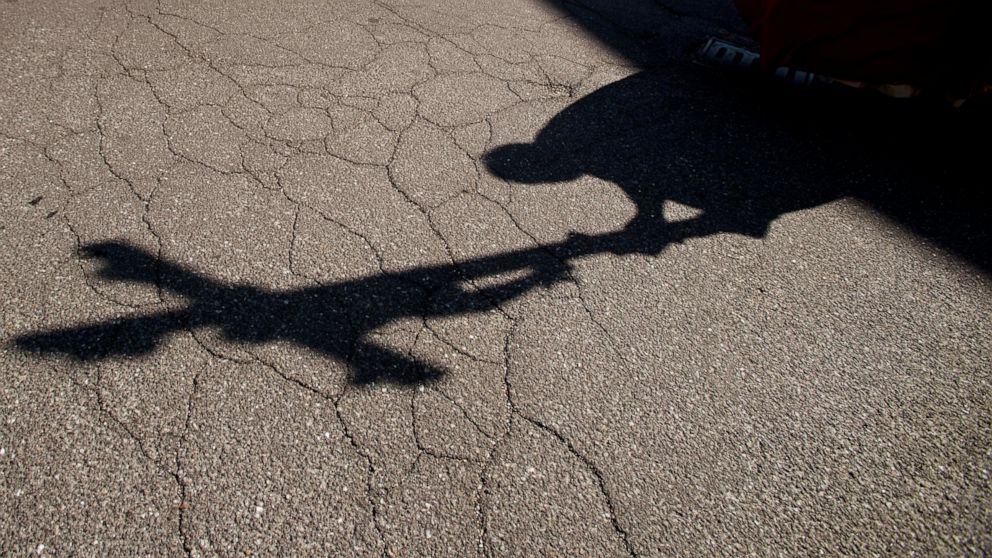
FILE - In this Friday, April 10, 2020. file photo, the shadow of a priest holding a crucifix is cast on the ground as he leads the Via Crucis, or Way of the Cross ceremony, at the Ospedale di Circolo in Varese, Italy. Two authoritative religious bodi

ABC August 27, 2020

VATICAN CITY -- Two authoritative religious bodies on Thursday called on Christians to band together to fight “sins” laid bare or aggravated by the pandemic, including racism and economic injustice.

The Vatican and the World Council of Churches, which is based in Switzerland, issued a joint document noting that the COVID-19 outbreak has drawn attention to "the scandalous gap between the rich and the poor.” The document declared that Christians are compelled to work to heal inequalities, including between men and women.

Christians must “own up to our own complicity and guilt in many systems of oppression” and resist the “temptation” to blame the poor for their poverty, it said.

The inter-religious appeal encourages reflection during the pandemic about the “scourge of religious intolerance, discrimination, racism, economic and ecological injustice and many other sins.”

Preparing the document for the Vatican was the Pontifical Council for Inter-religious Dialogue. The effort reflects Pope Francis' push for Christians to stress their common values in working to combat environmental degradation and to help those on life's margins, such as migrants.

The World Council of Churches brings together churches, denominations and church fellowships in more than 110 countries and territories, representing more than a half-billion Christians.

The document cites the New Testament parable of the Good Samaritan as inspiration to “overcome religious prejudice and cultural biases in relation both to those whom we serve, and to those with whom we serve, as we strive to alleviate suffering and to restore healing and wholeness in a pluralistic world.”

Citing the gap between rich and poor, the appeal said the pandemic has “exacerbated racial prejudices and led to increased violence against those who have for long been considered a threat to the dominant body politic that is structured and sustained” by systems of inequality, discrimination and domination. The document named no country, society or political system.

Now is the “time for discovering new forms of solidarity for rethinking the post-COVID-19 world,” the document said. Religions, it said, can contribute to reawakening and guiding humanity “in building a new social order at the local, regional, national and international levels.”

That vision can draw on “a heritage of moral values common to all human beings.” And, the document's authors contended, such a reawakening would benefit from young people, “whose idealism and energy can be an antidote to the temptation of cynicism, in the endeavor to heal the wounded world of which we are part.”


Sunday, March 31, 2019

Peace is common denominator of all major religions

Peace is common denominator of all major religions
Oikumene  March 2019
The Christian Conference of Asia gathered over 100 participants representing seven religions including Christian, Buddhist, Islamic, Jewish, Bahai, Hindu and Sikh to meet with the participants of the World Council of Churches (WCC) Pilgrimage of Justice and Peace Reference Group to discuss relevant issues about religion and their implications to the Asian society.
“Continuous interfaith dialogue is key to better mutual understanding, tolerance and respect and long term-peace and stability” said Dr Mathews George Chunakara, representing Christianity, general secretary of the Christian Conference of Asia, at the Inter-Religious Fellowship and Dinner Reception in Chiang Mai, Thailand, on 4 March. “In several situations in Asia, although the churches and Christians are small in number, and the Christians are small in number, and the Christians are only a microscopic minority, they are directly involved in peace building in various ways. They are upholding the dignity and rights of people and communities irrespective of their religious and faith identities. Peacefulness is a common denominator of all major religions”.

Thursday, February 28, 2019

WCC, UN and GC united in ecumenism.


4th Annual Symposium on the Role of Religion and Faith Based Organizations in International Affairs

The Symposium is jointly organized by the World Council of Churches, the General Board of Church and Society of the United Methodist Church, ACT Alliance, and the General Conference of the Seventh-day Adventist, in partnership with the Parliament of the World’s Religions, the Adventist Development and Relief Agency, and the United Nations Office on Genocide Prevention and the Responsibility to Protect on behalf of the United Nations Inter-Agency Task Force on Engagement with Faith-based Organizations.


Monday, June 25, 2018

Pope Francis calls for Christian unity


America Magazine June 21, 2018
“The Lord asks us for unity; our world, torn apart by all too many divisions that affect the most vulnerable, begs for unity,” Pope Francis told top representatives of the World Council of Churches during a prayer service at its headquarters in Geneva soon after his arrival on June 21.

This push for unity was the leitmotif of his visit for the 70th anniversary of the founding of the largest ecumenical movement in the world that today represents 348 churches and 560 million Christians from 110 countries. The Catholic Church works with the council in several ways, though not yet as a full member.

On the plane from Rome to Geneva, Francis told reporters that this “was a journey to unity” and “a desire for unity.” On arrival in this country of eight million people, Francis was given a particularly warm welcome by the president of the Swiss Federation and those gathered for a prayer service with which he began his visit.

Tuesday, December 22, 2015

WCC leader says faith groups must follow up on climate deal


Rev Olav Fykse Tveit, general secretary of the World Council of Churches shares views on the Paris climate summit, the role of faith groups in welcoming refugees and the ecumenical challenge of the Jubilee Year of Mercy
(Vatican Radio) World leaders have hailed the climate change agreement they struck in Paris at the weekend as historic, while some environmentalists have warned the deal does not go far enough to curb the effects of global warming on our planet. Financial analysts meanwhile have described the summit’s outcome as the most important climate agreement since the 1997 Kyoto Protocol, saying it will boost the world's low carbon-emissions economy.
Leaders of the Christian Churches and other faith communities also played a vital role in Paris, representing the voice of the poorest communities who are worst effected by climate change.
Pope Francis on Sunday urged the international community to urgently follow up on the path set by the agreement, paying special attention “for the most vulnerable populations”.
Among the Christian leaders addressing the talks in Paris was the General Secretary of the World Council of Churches, Rev Dr Olav Fykse Tveit. He was in Rome this week for talks with Cardinal Peter Turkson of the Pontifical Justice and Peace Council and members of the St Egidio community. Rev Fykse Tveit spoke to Philippa Hitchen about his hopes and his expectations following the historic agreement…
Listen: 
Rev Fykse Tveit says he told the politicians in Paris that all people – but especially the most vulnerable – have a right to hope that the world leaders would show responsibility towards all of humanity and not just the interests of their own countries.
He says the agreement is an important symbol of this and that politicians, business leaders, researchers, the civil sector and the religious communities now need to “speak the same language” to press for monitoring and implementation.
Faith leaders, he says, need to be “both strong in the conviction that (implementation) is possible” and hold the world leaders accountable to the commitments they have made. In Paris, he says, there was an interaction between civil society, the most vulnerable communities and politicians, “working together in ways we haven’t seen before”.
The religious discourse – especially Pope Francis’ encyclical – he says, has had an impact and “now it’s time to follow up”.
Regarding the recent refugee crisis that has caused tensions in many European countries, including his own nation, Norway, Rev Fykse Tveit praises the Norwegian Council of Churches for calling for the legal rights of refugees to be respected. He says there is a growing ecumenical and interfaith movement opposing the skepticism and proposing a more hospitable approach
There is a strong role for the Churches, he says, to combat the current fears and show that “our own security and wellbeing is not only defined by protecting our resources, but by making sure we live in a world of peace and justice, dealing with each other in a decent way”.
Rev Fykse Tveit also speaks about the Jubilee Year, inaugurated by Pope Francis earlier this month, saying it offers an ecumenical challenge, as well as opportunity for the “worldwide fellowship of humanity” to see that we need mercy “to be able to find a way forward”.
Finally the WCC leaders shares some of the priorities of the ecumenical body for the coming year: firstly, to look at what Christians can say together to combat the use of religion to justify violence; secondly to follow up on the climate change achievements; and thirdly to pursue the search for justice and peace, especially in the Middle East.    Radio Vaticana