Showing posts with label Technology. Show all posts

Wednesday, March 31, 2021

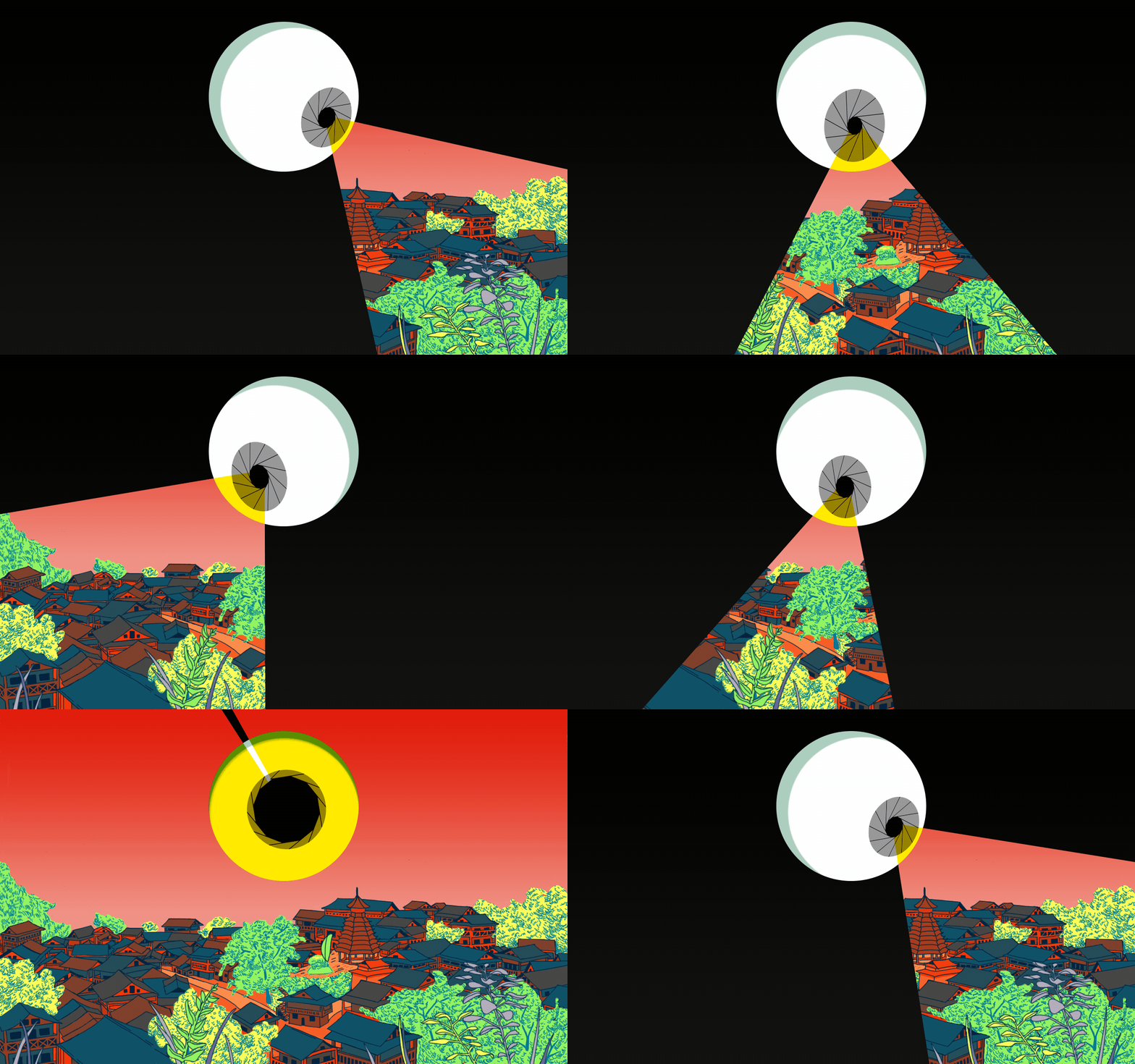
Toyota is building a ‘city of the future’ powered by robots and AI for 2,000 staff and families

MSN  26/02/2021

Toyota has started constructing a 175-acre smart city in Japan that will work on artificial intelligence and futuristic technologies and serve as a “living laboratory”, the company has announced.

Construction began this week on the project dubbed “Woven City”, at a site at the base of Japan’s Mount Fuji, about 62 miles from Tokyo.

The city is being designed as a testing ground for technologies that could be rolled out across urban environments, including robotics, interconnected smart homes and artificial intelligence.

The company’s president Akio Toyoda broke ground at the site on Tuesday in a ceremony involving local officials of Shizuoka Prefecture, where the new city is located.

Toyota, which first announced the project at CES 2020 in January last year, says the city will have three types of roads which are all linked to each other at the ground level – one thoroughfare for pedestrians, one for pedestrians using personal mobility vehicles like e-scooters, and one dedicated solely to self-driving vehicles. The company said there would be one conventional road running underneath the city to provide goods transportation.

Toyota launched its own self-driving vehicle, the e-Palette, in 2018, and it is expected that they will make up the bulk of the Woven City project’s transport infrastructure. The company has previously described them as “scalable and customisable” for a range of functions include ride-sharing, delivery services and even mobile offices and hotels.

China’s ‘Sharp Eyes’ Program Aims to Surveil 100% of Public Space


Medium  March 2, 2021

One of China’s largest and most pervasive surveillance networks got its start in a small county about seven hours north of Shanghai.

Technology and media entities join forces to create standards group aimed at building trust in online content

Microsoft February 22, 2021

SAN JOSE, Calif., and REDMOND, Wash. — Feb. 22, 2021 — A group of influential technology and media companies has partnered to form the Coalition for Content Provenance and Authenticity (C2PA), a Joint Development Foundation project established to address the prevalence of disinformation, misinformation and online content fraud through developing technical standards for certifying the source and history or provenance of media content.  Founding members Adobe, Arm, BBC, Intel, Microsoft and Truepic seek to establish a standardized provenance solution with the goal of combating misleading content.

C2PA member organizations will work together to develop content provenance specifications for common asset types and formats to enable publishers, creators and consumers to trace the origin and evolution of a piece of media, including images, videos, audio and documents. These technical specifications will include defining what information is associated with each type of asset, how that information is presented and stored, and how evidence of tampering can be identified.

The C2PA’s open standard will give platforms a method to preserve and read provenance-based digital content. Because an open standard can be adopted by any online platform, it is critical to scaling trust across the internet. In addition to the inclusion of varied media types at scale, C2PA is driving an end-to-end provenance experience from the capturing device to the information consumer. Collaboration with chipmakers, news organizations, and software and platform companies is critical to facilitate a comprehensive provenance standard and drive broad adoption across the content ecosystem.

Sunday, January 31, 2021

5G may not be completely safe, according to a new paper

5G may not be completely safe, according to a new paper, so why in this health-conscious era are all concerns around it dismissed?

RT 19 Jan, 2021 06:59 

An eminent academic has written an essay urging governments to stop rolling out 5G networks based on the ‘precautionary principle.’ Given that the West stopped the world over Covid19, why is any hesitance around 5G dismissed?

An astonishing paper, published in the Journal of Epidemiology & Community Health, claims that there is not sufficient proof that 5G is safe, and that the only reason the rollout is going ahead regardless is because there is so much money to be made. Its author is Professor John William Frank, a professor of evidence-based medicine at the University of Edinburgh and fellow of the Royal Society.

Regular readers of mine will know that I have become somewhat disillusioned with the qualifications and ‘letters after the name’ of our new public health overlords, but nevertheless Professor Frank’s credentials are impeccable if that is your thing. For a person of this stature in the field of public health to take it upon himself to demand a stop to 5G is no small matter. It will be interesting to see what waves his paper makes in the mainstream media.


Your face could be set to replace your bank card

Sara Stewart

BBC 24 January

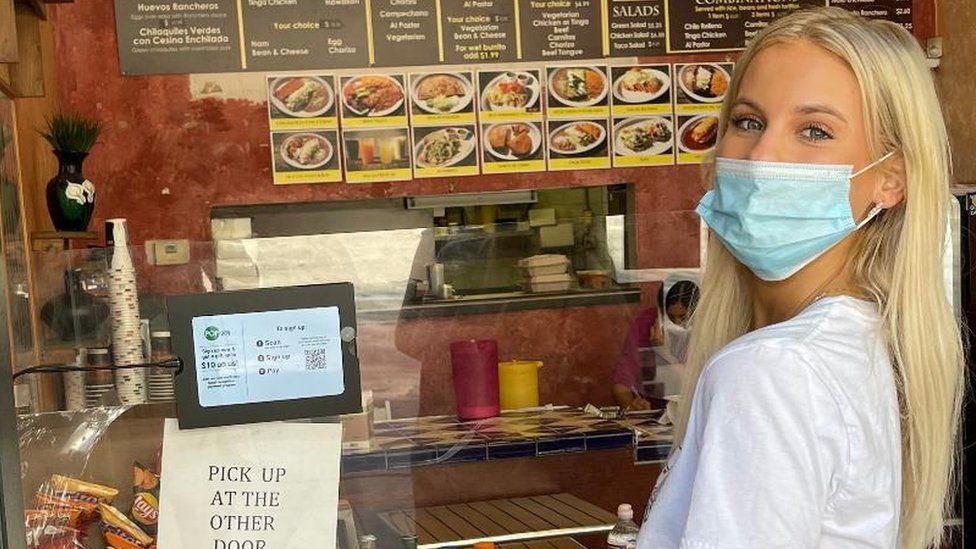
To pay she simply looks at her reflection in a small LCD screen attached to the cashier's counter. Then to add her preferred amount of tip she flashes a quick peace sign at the monitor.

The entire process takes less than five seconds, and is entirely contactless. Moreover, Ms Stewart doesn't need to carry her mobile phone or bank card with her, or show any form of identification, or even enter a pin number.

Welcome to the futuristic world of facial recognition payment. It might sound like something from a science fiction movie, but this kind of transaction is already happening millions of times a day across China's major cities.

With the technology now being introduced in the US, and other countries such as Denmark and Nigeria, are we all going to be using it within a few years' time? And, are there data security and privacy issues that we should worry about?

Ms Stewart, an 18-year-old university student, says she has no such concerns. "I feel like technology is moving so fast that people don't even think twice about using something like this.

Monday, November 30, 2020

Capella Space launched a satellite capable of taking clear radar images of anywhere in the world

X-ray vision. | Landmarks, Louvre, World

FuturismDecember 16th 2020

A few months ago, a company called Capella Space launched a satellite capable of taking clear radar images of anywhere in the world, with incredible resolution. It can even see inside some buildings, including spotting airplanes inside hangars — though only in the case of lightweight structures, the company clarified, and not dense ones like high rises or residential homes.

And unlike most of the huge array of surveillance and observational satellites orbiting the Earth, its satellite Capella 2 can snap a clear picture during night or day, rain or shine.

“It turns out that half of the world is in nighttime, and half of the world, on average, is cloudy,” CEO Payam Banazadeh, a former system engineer at the NASA Jet Propulsion Laboratory, told Futurism. “When you combine those two together, about 75 percent of Earth, at any given time, is going to be cloudy, nighttime, or it’s going to be both. It’s invisible to you, and that portion is moving around.”

On Wednesday, Capella launched a platform allowing governmental or private customers to request images of anything in the world — a capability that will only get more powerful with the deployment of six additional satellites next year. Is that creepy from a privacy point of view? Sure. But Banazadeh says that it also plugs numerous holes in the ways scientists and government agencies are currently able to monitor the planet.


Wednesday, September 30, 2020

The European Union is planning to establish an EU-wide digital ID system

Biometric Update Sep 10, 2020

The European Union is planning to establish an EU-wide digital ID system, with a proposal due by the middle of 2021, and leaders will seek to fund it with resources from its economic recovery fund, according to Euractiv.

EU leaders will request the European Commission to develop the service to support continued integration of digital services and economies in the region. EU rules have evolved over the past several years to make national digital identity systems more interoperable through eIDAS regulation.

Leaders are expected to call for “EU-wide secure public electronic identification (e-ID) to provide people with control over their online identity and data as well as to enable access to cross-border digital services,” a draft document seen by Euractiv reads.

EC Vice-President for Digital Margarethe Vestager launched public consultations over the summer to consider revisions to eIDAS. That consultation closes on October 2. The Commission is also expected to publish its Digital Services Act by the end of the year, which will include some details on how the EU will extend its digital identification framework.

Monday, August 31, 2020

Google working on smart tattoos that turn skin into living touchpad


Telangana. 27th Jul 2020 

“Through a vastly reduced tattoo thickness and increased stretchability, a ‘SkinMark’ is sufficiently thin and flexible to conform to irregular geometry, like flexure lines and protruding bones.”
 
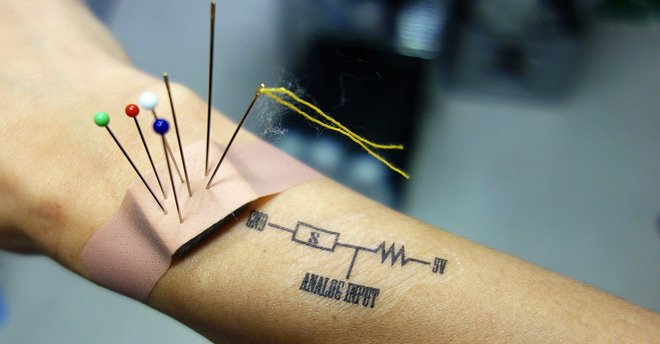
New Delhi: Google is working on smart tattoos that, when applied to skin, will transform the human body into a living touchpad via embedded sensors.
Part of Google Research, the wearable project is called “SkinMarks” that uses rub-on tattoos.
The project is an effort to create the next generation of wearable technology devices, the CNET reported citing white papers and demo videos.
Here’s how the technology works.
The sensor-driven tattoos are applied to a part of the body.
The sensors can then be triggered by traditional touch or swipe gestures, like we perform on smartphones.
There are a few gestures that are more specific to working on the skin’s surface.
“You could squeeze the area around the tattoo or bend your fingers or limbs to activate the sensors”.
The researchers at Saarland University in Germany wrote in a white paper that the benefit of using skin as an interface “is tapping into the fine motor skills that human beings naturally have”.
The project is partly funded through Google Faculty Research Awards.

Monday, March 23, 2020

Bill Gates always seems to know when it’s time to go


bill and melinda gates edited

Computer World  
Bill Gates resigned from Microsoft’s board of directors last week, pretty much ending his official ties to the company he co-founded. He says he’s still available as a technology adviser to CEO Satya Nadella and other Microsoft leaders, but otherwise he’s devoting himself completely to his other pursuits, like philanthropy.
Gates and the company he started very nearly 45 years ago with Paul Allen transformed the computing landscape. Throughout the period of Microsoft’s early growth and maturation, Gates was at the helm as CEO, demonstrating business leadership and competitiveness that, even more than technology, were keys to the company’s success.
The competitiveness eventually led to Microsoft’s antitrust issues. The technology world was changing (I’ll go through some of that history in a bit), and the leader who had made Microsoft a tech giant was perhaps no longer tuned in to the changes as he once had been. That happens a lot with founders. What rarely happens is that the founder sees the writing on the wall and takes a step back. But Gates did. He resigned as CEO, staying on as chairman of the board.
Not everything Gates did was brilliant. By the time the internet had become a force in the tech world, Gates and Microsoft had made a series of missteps that almost made the company irrelevant. And in resigning as CEO, Gates left Steve Ballmer in charge. Ballmer clearly had earned the right to lead Microsoft as CEO, but he wasn’t right for the job, and Gates eventually had to remove him. The men had always been close, and it couldn’t have been easy to do it, but he did.

Founder power

This is the third step back from Microsoft that Gates has taken. He dropped his day-to-day duties as CEO in 2006, and gave up ultimate oversight as chairman of the board in 2014. Now he has relinquished his seat on the board.
This is actually a remarkable record. Founders have extraordinary power at a company, and they often don’t know when to step down, sometimes doing the company so much harm in their later years that the firm doesn’t recover. Even if they step away from day-to-day activity, they often step in and exert their influence at critical times, undermining the sitting CEO and setting the company up for failure. As chairman, Gates seemed to have refrained from that sort of thing, until the day came when Ballmer had to go.

Tuesday, January 21, 2020

What could go wrong with military robots?

RT 5 Jan, 2020
 When human troops are replaced by robots on the battlefield, it won’t be because the Pentagon's had some revelation about the value of human life – it’ll be an effort to defuse anti-war protests by minimizing visible casualties.
US military commanders are itching to get their hands on some killer robots after an Army war game saw a human-robot coalition repeatedly rout an all-human company three times its size. The technology used in the computer-simulated clashes doesn’t exist quite yet – the concept was only devised a few months ago – but it’s in the pipeline, and that should concern anyone who prefers peace to war.     More

The Hidden Uses of 5G Technology

The Hidden Military Uses of 5G Technology
Walking Times December 23, 2019
At the London Summit, the 29 member countries of NATO agreed to “guarantee the security of our communications, including 5G”. Why is this fifth generation of mobile data transmission so important for NATO?
While the earlier technologies were perfected to create ever more advanced smartphones, 5G is designed not only to improve their performance, but mainly to link digital systems which need enormous quantities of data in order to work automatically. The most important 5G applications will not be intended for civil use, but for the military domain.

The possibilities offered by this new technology are explained by the Defense Applications of 5G Network Technology, published by the Defense Science Board, a federal committee which provides scientific advice for the Pentagon –
The emergence of 5G technology, now commercially available, offers the Department of Defense the opportunity to take advantage, at minimal cost, of the benefits of this system for its own operational requirements.
In other words, the 5G commercial network, built and activated by private companies, will be used by the US armed forces at a much lower expenditure than that necessary if the network were to be set up with an exclusively military goal. Military experts foresee that the 5G system will play an essential role for the use of hypersonic weapons – missiles, including those bearing nuclear warheads, which travel at a speed superior to Mach 5 (five times the speed of sound). In order to guide them on variable trajectories, changing direction in a fraction of a second to avoid interceptor missiles, it is necessary to gather, elaborate and transmit enormous quantities of data in a very short time. The same thing is necessary to activate defences in case of an attack with this type of weapon – since there is not enough time to take such decisions, the only possibility is to rely on 5G automatic systems.
This new technology will also play a key role in the battle network. With the capability of simultaneously linking millions of transceivers within a defined area, it will enable military personnel – departments and individuals – to transmit to one another, almost in real-time, maps, photos and other information about the operation under way.
5G will also be extremely important for the secret services and special forces. It will enable control and espionage systems which are far more efficient than those we use today. It will improve the lethality of killer drones and war robots by giving them the capacity of identifying, following and targeting people on the basis of facial recognition and other characteristics. The 5G network, as a weapon of high-tech capacity, will also become the target for cyber-attacks and war actions carried out with new generation weapons.
As well as the United States, this technology is under development by China and other countries. The international disagreement concerning 5G is therefore not only commercial. The military implications of 5G are almost entirely ignored, because the critics of this technology, including many scientists, are concentrating their attention on its toxic affects for health and the environment, due to exposure to very low-frequency electromagnetic fields. This engagement is of course of the greatest importance, but must be linked to research on the military use of this  technology, financed indirectly by ordinary users. One of its greatest attractions, which favours the dissemination of 5G smartphones, will be the possibility of participating, by subscription, in war games of impressive realism in direct contact with players from all over the world. In this way, without realising it, the players will be financing the preparation for war – but this time it will be a real war.

Tuesday, December 31, 2019

A simple face scan will allow the system to retrieve the necessary billing information for a given transaction

Denmark is once again the site of a pioneering trial of a biometric payments system, this time thanks to Nets, a European digital payments services provider.

The companies’ new pilot program will see participants making payments at a cafeteria via facial recognition. The trial will be undertaken at the Vibenshuset office complex in Copenhagen, and is open to up to a thousand participants who wish to make biometric payments at the Kokkenes Køkken’s cafeteria.

As with other so-called “naked payments” systems, the idea is to link customers’ payment accounts directly to their biometric identifiers. In this case, that means that a simple face scan will allow the system to retrieve the necessary billing information for a given transaction, and to process it, bypassing the need for the customer to present a physical payment card or any other hardware.

In a statement announcing the pilot program, Nets Head of Creation Labs Jesper Kildegaard Poulsen explained that its main aim is to gauge consumer sentiment about biometric payments. “Today, we have the technology to use faces as identification and validation when making a payment,” he said. “However, how people feel about having their faces scanned is still under question. This trial will help us to learn more about consumer attitudes to facial recognition payments.”

The trial will follow in the footsteps of a different naked payments program recently conducted by Nets in collaboration with Sthaler, whose Fingopay system was implemented at the Copenhagen Business School. That system, which is based on the scanning of finger vein patterns, saw an enthusiastic response from participants, prompting Nets and Sthaler to expand the deployment about a year ago.

Wednesday, October 30, 2019

Why the Swiss are rebelling against 5G rollout


The Local   18 September 2019 
Switzerland was among the first countries to begin deploying 5G, but health fears over radiation from the antennas that carry the next-generation mobile technology have sparked a nationwide revolt.

Demonstrators against the technology are due to fill the streets of Bern later this month, but already a number of cantons have been pressured to put planned constructions of 5G-compatible antennae on ice.

The technology has been swept up in the deepening trade war between China and the United States, which has tried to rein in Chinese giant Huawei – the world's leader in superfast 5G equipment – over fears it will allow Beijing to spy on communications from countries that use its products and services.

But far from the clash of the titans, a growing number of Swiss are voicing alarm at possible health effects from exposure to the electromagnetic rays radiating from the new antennae, and are threatening to put the issue to a referendum in the country famous for its direct democratic system.
It wasn't supposed to be this way.

In February, Switzerland took a big step towards deployment when it attributed 5G frequencies to three major operators, Swisscom, Sunrise and Salt, allowing the country to rake in revenues of nearly 380 million Swiss
francs (€350 million).

High on their success, the operators raced to trumpet on television advertisements and billboards that the cutting-edge technology would be available this year in cities, in the countryside and even in mountainous
regions.

By early July, 334 antennae stations for 5G were operational across the country, authorities told the AFP news agency.

Monday, July 29, 2019

YouTube ad policy bans keyword ‘Christian’


View image on Twitter

RT26 Jul, 2019
When the founder of a Christian veterans group tried to upload a YouTube ad for his organization, he received an odd rejection, informing him the keyword “Christian” was no longer acceptable under the site’s ad targeting policy.
Chad Robichaux, founder of the Mighty Oaks Foundation, a charitable group that helps veterans overcome wartime trauma, took to Twitter with a screenshot detailing his encounter with the tech giant.

“This is the first time we'd seen this,” Robichaux told Faithwire in an interview. Within hours of Robichaux’s post, YouTube attempted to explain the situation in a tweet of its own.
“We know that religious beliefs are personal, so we don’t allow advertisers to target users on the basis of religion,” the Google-owned platform said. “Beyond that, we don’t have policies against advertising that includes religious terms like ‘Christian.’”
The veteran fired back, arguing the company’s statement was demonstrably false and that he had used the same keyword in previous ads without problems “for years.” Moreover, he claims when he tried running the same ad but with the keyword “Muslim” instead, there was no issue.

Saturday, January 26, 2019

Tech revolution may cause World War III, warns Alibaba billionaire Jack Ma

RT24 Jan, 2019
Chinese entrepreneur Jack Ma says the spate of technological advances around the world could lead to a new global conflict between major powers looking to assert their dominance.
“The First World War was because of the first technology revolution. The second technology revolution caused World War II,” he told the audience during a discussion at the World Economic Forum in Davos.
“This is the third technology revolution – we’re coming.”
The Alibaba founder’s comments echoed those he made two years ago, when he said that automation and the rise of artificial intelligence would create internal social upheaval and a geopolitical redistribution of power between the leaders and those left behind.
Though elsewhere in his speech, he wryly remarked that “today, there’s no expert of tomorrow, there’s only experts of yesterday.”

Why We Must Stop the 5G Network

The global deployment of the fifth-generation wireless network,(5G) constitutes an experiment on humanity and the environment that is nothing less than a crime under international law.
Yet the subject of the the enormous dangers of the imminent and rapid deployment of 5G technology was not mentioned when world leaders gathered earlier this month in Poland for the UN ‘Earth’ conference.
An inconvenient truth perhaps that our leaders could argue was not part of the overall subject in Poland of the well being of the Earth and all its inhabitants. Give me a break.
In Poland details of an important scientific report, commissioned by the UN, were released that stated the world has under 12 years to drastically cut emissions to avert catastrophe – that appeared to create a sense of urgency causing this closing statement. “To waste this opportunity in [Poland] would compromise our last best chance to stop runaway climate change,” UN Secretary General Antonio Guterres said. “It would not only be immoral, it will be suicidal.”
What is more suicidal, insane is a more appropriate word, is not to address the terrible impact on the Earth of the introduction of 5G.
Some of the world’s largest companies, with the support of their governments, are poised, over the next two years, to roll out 5G. This is set to deliver what is acknowledged to be “unprecedented societal change” on a global scale.

Friday, January 25, 2019

Facebook 10 year challenge, the perfect opportunity for machine learning

CBS  01/17/2019
It's the simple meme that's taking over your social media feeds: the "10 Year Challenge," where users upload side-by-side photos of themselves from a decade ago and now.
But it might not be so simple.
Facebook on Wednesday distanced itself from the "10 Year Challenge" after an article set off speculation that the social media giant could be secretly mining data from the photos to improve its facial recognition algorithms. It's a scenario that those who have studied social media companies don't rule out, despite Facebook's denials.
The photo challenge gives Facebook "a perfect storm for machine learning," said Amy Webb, a professor at NYU Stern School of Business with an upcoming book about how artificial intelligence can manipulate humans.
"It presented Facebook with a terrified opportunity to learn, to train their systems to better recognize small changes" in users' appearances, she told CBS News.

Friday, August 31, 2018

Chase ATMs go cardless

Fox  August 02, 2018
Forgot your bank card? No worries. Chase has you covered.
The New York City-based bank announced that it has expanded its cardless access to nearly all of its 16,000 ATMs nationwide.
The new technology will allow customers to get cash through their phone’s mobile wallet without needing a physical debit card or an access code for authentication.
Users can simple “tap” their smartphone on the ATM to “easily and securely access money on the go.”
“Cardless no longer means cashless,” Sol Gindi, chief administrative officer of consumer banking at Chase, said in a statement. “As more of our customers are using digital wallets to pay, we’re pleased to be able to provide them with the same experience at the ATM.”

Friday, August 17, 2018

The deformed corporeality by algorithms in an artificial intelligence society.

Utopia
The backlash against the high tech mob is so obvious that no sane person can deny that their version of acceptable thinking requires banning Free Speech. The genie is out of the lamp and the only way to prevent these demons from repeating their censorship is to cork the bottle of any product offered by these companies. Utopia for the authoritarian collectivists necessitates that they conjure up twisted and absurd content targets as hate speech in a desperate attempt to rationalize the purging of counter opinions to their orthodox "PC" Communist Manifesto. In essence, the "so called" left has become the model of fascism by and under Silicon Valley's techno plutocrats. Merging Fabian ideals with state/corporatist absolutism produces a deformed corporeality by algorithms in an artificial intelligence society.

Algorithms function as filters to identify dangerous voices of reason and common sense. Eradicating any kind of dissent or historic cultural viewpoints is automated in the digital cloud of approved thinking. The canard that the masters of artificial truth are private companies and are not subject to Bill of Right protections is an insult to anyone who is committed to the building of a free society. Google, YouTube, Twitter, Facebook and Instagram have emerged as monopolies that restrict speech and excel at censorship.

Saturday, January 20, 2018

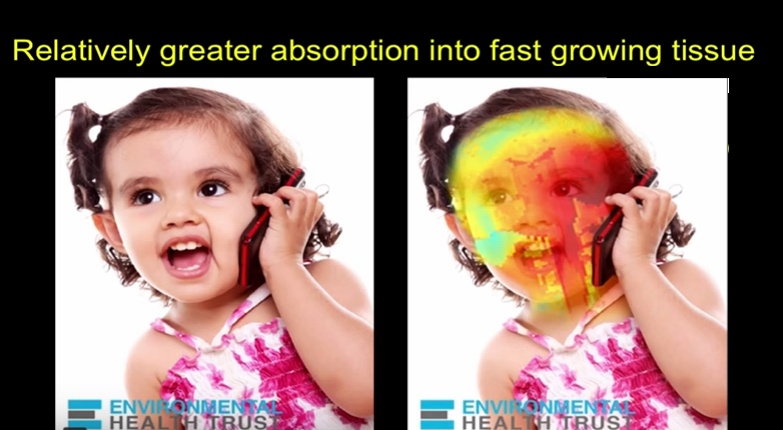
This Is What Microwave Technologies Are Doing To Your Child’s Brain

Parents are overjoyed when their two-year-olds ‘master’ computer games and cell phones.  They interpret that as “look how smart my kid is!”  Well, that’s really not the take-away message parents should be coming up with.  Maybe their youngsters inadvertently are becoming addicted to a tech-meme and device, which will damage them down the road, and very dramatically: dumb and cancer?

The WHO/International Agency for Research on Cancer (IARC) has classified radiofrequency electromagnetic fields as possibly carcinogenic to humans (Group 2B), based on an increased risk for glioma, a malignant type of brain cancer1, associated with wireless phone use.