Showing posts with label Federal Reserve. Show all posts

Sunday, January 31, 2021

The Stock Market, Fatally Wounded by the Truth, Will Stumble and Crash

Charles Hugh January 30, 2021

It didn't have to be this way, but this is the reality we must now face: truth is fatal to fraud, and our entire financial-political system is a fraud.

The stock market has just been punctured by the thin blades of truth. It is fatally wounded but nobody dares notice. The wounds are barely visible, but the internal damage is mortal. The stock market is already stumbling and will soon crash.

The banquet's participants ignore the faltering market because the rules are we never reveal the truth, or acknowledge it, or discuss it, no matter how obvious, because truth is fatal to fraud. So the stock market's vital signs are in freefall but the conversation remains upbeat and light: stimulus, rapid growth in the second half, etc., all the patter of a carefully constructed illusion that fraud is forever as long as the truth never comes out.

Alas, the truth has emerged from the shadows, despite the silence of the insiders and the financial media. Here are the truths that have emerged like karmic genies:

1. The stock market is nothing but one giant fraud. The entire market is corrupt and rigged from the ground up. The fraud is systemic, designed into every tendril of the market. It was a useful deception to blame it all on "bad players," but now the truth has been revealed: the market is nothing but a rigged game enriching insiders.

2. The Fed is a fraud. All the Federal Reserve has accomplished in 13 years of goosing the stock market is unprecedented wealth and income inequality as the fraud of the Fed has boosted the fraud of the market, which has fatally undermined America's social and economic orders. Please read this short paragraph and let it sink in. Monopoly Versus Democracy (Foreign Affairs):

Ten percent of Americans now control 97 percent of all capital income in the country. Nearly half of the new income generated since the global financial crisis of 2008 has gone to the wealthiest one percent of U.S. citizens. The richest three Americans collectively have more wealth than the poorest 160 million Americans.

Is the covid ‘pandemic’ merely economic theatre?

Bringing together the US emergency bank lending crisis and the now massive Covid response, I’ve concluded that one of the main reasons it is happening, apart from the corporate looting, is because of a historic event, the USA’s economic collapse and the dollar’s demise, which started just weeks before this Covid operation kicked off, and has been put on hold by a world wide manufactured economic ‘freeze’.

The end of ‘Extend and Pretend’

A few months before Covid appeared, the Fed were busy pouring literally trillions of dollars into the US banks, to prevent inter-lending bank-runs which were starting to develop. These were the same tectonic fissures that developed prior to the 2008 crisis, where the banks became so distrustful of each other’s solvency, that they massively increased interest rates to each other to factor in the risk. If unsuppressed the lending rates would continue to rise, laying a path to bank failures and a contagion which would eventually derail the economy and undermine the dollar itself.

In September 2019 the Fed intervened in the repo. markets for four consecutive days, pumping $75 billion per day into the banks, as the inter-banking interest rate – the repo rate – peaked at a terrifying 10% [1]. If this level were allowed to contaminate regular highstreet lending, it would cause widespread debt defaults & insolvencies.

The dangers are far greater today because, unlike in 2008, Quantitive Easing (QE) has pushed the Fed to the limits of its credibility, and are forcing them into causing some serious currency debasement. If they continue with the forms of QE they are shackled to, then dollar debasement becomes a certainty in a US economy that is far more fragile & indebted generally and less able to cope.

The Fed must have known for a few years that QE was not returning the economy to economic normality, and that they were still trapped in the solvency crisis of 2008. Knowing this, the Fed were prepared for the latest crisis. They had made it possible to inject hundreds of billions of dollars into the banking system discreetly, unlike in 2008, without any additional Congressional fanfare, via the Financial Stability Oversight Council, formed in 2010.

They had given themselves almost unlimited funds and the resources of the entire government if necessary, to reassure the banks that collapse was impossible. This ‘rescue operation’ was being played out, relatively unreported except in the financial press, only weeks prior to the Covid flu appearing on the world stage. Issuing…

….. cumulative repo loans totalling more than $9 trillion to the trading houses on Wall Street that the Fed had been making from September 17 of 2019 – months before the onset of COVID-19 anywhere in the world…

Monday, November 30, 2020

America says banks can now transact using so-called digital dollars


The US Treasury Department's Office of the Comptroller of the Currency (OCC) on Monday published a letter clarifying how federally chartered banking groups can use cryptocurrency and associated technology to manage financial transactions.

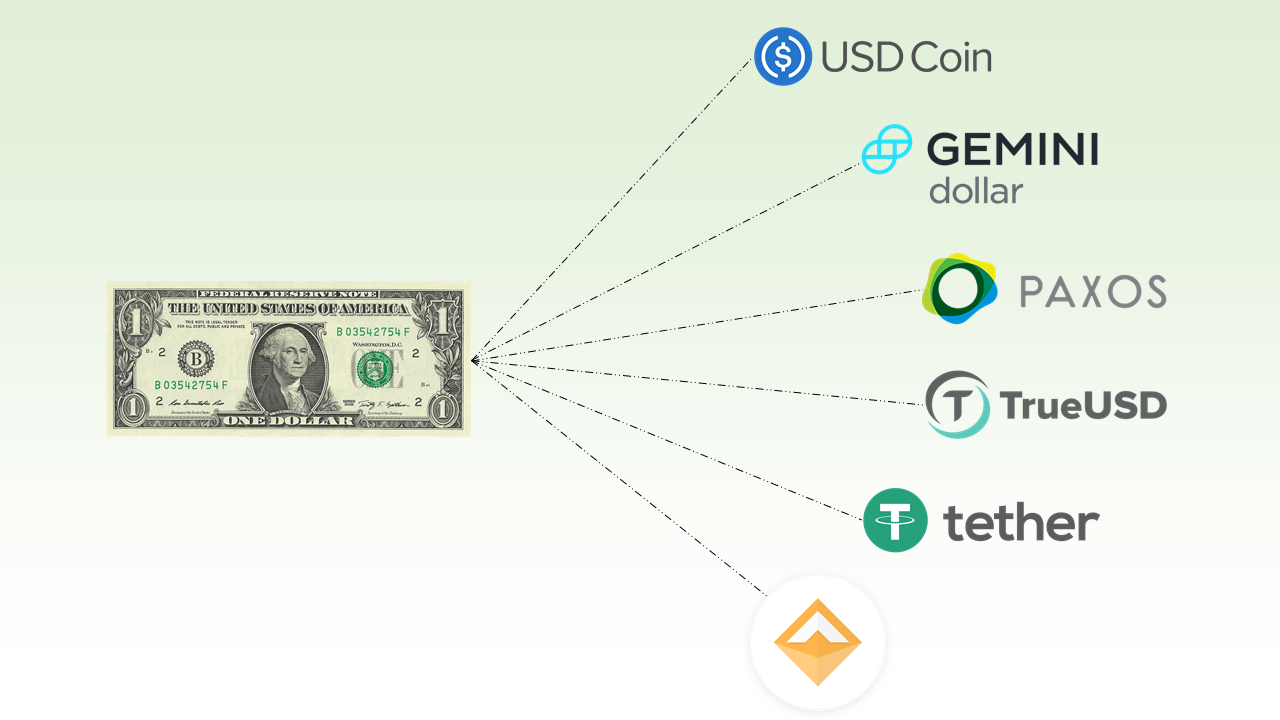
The letter endorses the use of independent node verification networks (INVN), such as blockchain distributed ledgers, and stablecoins – cryptocurrencies tied to fiat currencies, like Ethereum-based USD Coin (USDC) – as a means to settle customer transactions.

"Our letter removes any legal uncertainty about the authority of banks to connect to blockchains as validator nodes and thereby transact stablecoin payments on behalf of customers who are increasingly demanding the speed, efficiency, interoperability, and low cost associated with these products," said Acting Comptroller of the Currency Brian Brooks in a statement.

The agency letter blesses the use of independent node verification network (INVN) systems to validate, store, and record payment transactions, and lets banks use INVNs and associated stablecoins (those pegged to a physical currency) for other lawful payments, per existing banking laws.

In an email to The Register, David Yermack, a professor of finance at the New York University Stern School of Business and adjunct professor of law at New York University School of Law, said that this looks like a big deal.

"It indirectly encourages banks to explore using FinTech platforms, and it seems to open the door for them to transact in instruments such as Tether, Diem (Libra), and other so-called stablecoins that are pegged to the US dollar," said Yermack.

Wednesday, September 30, 2020

Paper bank notes are being upgraded for a digital future around the world

Market Watch Sept. 21, 2019

The Federal Reserve has never been more famous than it is today. It drew praise, and ire, for its handling of the financial crisis a decade ago, and the extraordinary measures it took subsequently to stimulate the U.S. economy have made it an important driver of financial markets. Meanwhile, President Trump has made its chairman, Jerome Powell, a household name by frequently criticizing the central bank’s policies on Twitter and to the press.

A movement, meanwhile, has been brewing among economists, financial-services professionals and central bankers to encourage a rethinking of the technology of currency — those paper notes we carry in our wallets — with an eye toward issuing a digital currency. Some argue that could give central banks the tools necessary to break free of chronic disinflation and persistently low or negative interest rates, while providing Americans a risk-free means to transact in a world where digital commerce constitutes a growing share of the economy. 

“The debate isn’t about whether we need [a digital currency],” Michael Bordo, an economist at Rutgers University and a fellow at the Hoover Institution, the public-policy think tank at Stanford University, told MarketWatch. “It’s about how you do it.”

Sunday, May 31, 2020

Coronavirus speeds up the move to cashless society

Boston Herald May 9, 2020

Last year seems a lifetime ago, but even then, cash was no longer king. The greenback had already lost its premier role as Americans’ medium of exchange in dollar terms. Plastic card and digital transactions had taken over. And that’s how stores, restaurants and other businesses seemed to want it.

COVID-19 has accelerated this process for several reasons. Cash cannot change hands at a distance of six feet, and besides, who wants to grab that dirty bill? Sheltering at home means more purchases are being done over the internet.

The move away from legal tender was well on its way pre-virus. Some stores and eateries had stopped accepting cash altogether. If you’re a sandwich shop doing a brisk lunch business, processing plastic takes less time than waiting for someone to fish 55 cents out of their pocket. The restaurant chain Sweetgreen ran a stopwatch and found that cashless payments could be completed up to 15% faster than ones using paper money. That would enable businesses to hire fewer of what we used to call “cashiers.”

The Federal Reserve reports that debit cards are the most frequently used means of paying. Cash is employed in 26% of all transactions and 49% of those under $10. But every age group up through the baby boomers is doing more of them using digital means and plastic than cash. Not surprisingly, millennials lead the pack.

Saturday, March 9, 2019

Relying on monetary policy to prop up asset prices and smooth out global volatility is a recipe for disaster.

Easy money has become a big problem. 
Bloomberg February 23, 2019
Just since December 2018, central banks have collectively injected as much as $500 billion of liquidity to stabilize economic conditions. The U.S. Federal Reserve has put interest rate increases on hold and is contemplating a halt to its balance-sheet reduction plan. Other central banks have taken similar actions, fueling a new phase of the “everything bubble” as markets careen from December’s indiscriminate selling to January’s indiscriminate buying.

The monetary onslaught appears a reaction to financial factors -- falling equity markets, rising credit spreads, increased volatility -- and a perceived weakening of economic activity, primarily in Europe and China. If they heeded Walter Bagehot’s oft-cited rule, central banks would act only as lenders of last resort in times of financial crisis, lending without limit to solvent firms against good collateral at high rates. Instead, they’ve become lenders of first resort, expected to step in at any sign of problems. U.S. central bankers are currently debating whether quantitative-easing programs should be used purely in emergency situations or more routinely.

Since 2008, the global economy has grown far too dependent on huge central bank balance sheets and accommodative monetary policy. The U.S. economic boom President Donald Trump loves to tout is largely fake, engineered by artificial policy settings. Such dependence is dangerous and, for various reasons, could well backfire.

For one thing, central banks are poor forecasters. GDP growth, inflation and labor markets may prove more resilient than feared, remaining at or above trend. Key risks, such as the trade dispute between the U.S. and China, may recede. Financial markets and asset prices have already recovered substantially. It’s possible that central banks may be forced to make another U-turn to reduce the risk of reflating asset price bubbles and overheating economies. This flip-flop would be destabilizing and affect decisionmakers’ credibility.  

Friday, August 17, 2018

10 numbers that prove America’s current financial condition


Related image

America’s long-term “balance sheet numbers” just continue to get progressively worse.  Unfortunately, since the stock market has been soaring and the GDP numbers look okay, most Americans assume that the U.S. economy is doing just fine.  But the stock market was soaring and the GDP numbers looked okay just prior to the great financial crisis of 2008 as well, and we saw how that turned out.  The truth is that GDP is not the best measure for the health of the economy.  Judging the U.S. economy by GDP is basically like measuring the financial health of an individual by how much money he or she spends, and I will attempt to illustrate that in this article.

#1 U.S. consumer credit just hit another all-time record high.  In the second quarter of 2008, total consumer credit reached a grand total of 2.63 trillion dollars, and now ten years later that number has soared to 3.87 trillion dollars.  That is an increase of 48 percent in just one decade.

#2 Student loan debt has surpassed 1.5 trillion dollars for the first time ever.  Over the last 8 years, the total amount of student loan debt has shot up 79 percent in the United States.

#3 According to the Federal Reserve, the credit card default rate in the U.S. has risen for 7 quarters in a row.

#4 One recent survey found that 42 percent of American consumers paid their credit card bill late “at least once in the last year”, and 24 percent of Americans consumers paid their credit card bills late “more than once in the last year”.

#5 Real wage growth in the United States just declined by the most that we have seen in 6 years.

#6 According to one recent study, the “rate of people 65 and older filing for bankruptcy is three times what it was in 1991”.

#7 We are in the midst of the greatest “retail apocalypse” in American history.  At this point, 57 major retailers have announced store closings so far in 2018.

#8 The size of the official U.S. budget deficit is up 21 percent under President Trump.

#9 It is being projected that interest on the national debt will surpass half a trillion dollars for the first time ever this year.

#10 Goldman Sachs is projecting that the yearly U.S. budget deficit will surpass 2 trillion dollars by 2028.

Wednesday, February 8, 2017

Debtpocalypse: U.S. consumer bankruptcies do something that they haven’t done in nearly 7 years.


Bankrupt - Public Domain

Michael Snyder, on February 5th, 2017 
When debt grows much faster than GDP for an extended period of time, it is inevitable that a good portion of that debt will start to go bad at some point.  We witnessed a perfect example of this in 2008, and now it is starting to happen again.  Commercial bankruptcies have been rising on a year-over-year basis since late 2015, and this is something that I have written about previously, but now consumer bankruptcies are also increasing.  In fact, we have just witnessed U.S. consumer bankruptcies do something that they haven’t done in nearly 7 years.  The following comes from Wolf Richter…
US bankruptcy filings by consumers rose 5.4% in January, compared to January last year, to 52,421 according to the American Bankruptcy Institute. In December, they’d already risen 4.5% from a year earlier. This was the first time that consumer bankruptcies increased back-to-back since 2010.
However, business bankruptcies began to surge in November 2015 and continued surging on a year-over-year basis in 2016, to reach a full-year total of 37,823 filings, up 26% from the prior year and the highest since 2014.
Of course consumer bankruptcies are still much lower than they were during the last financial crisis, but what this could mean is that we have reached a turning point.
For years, the Federal Reserve has been encouraging reckless borrowing and spending by pushing interest rates to ultra-low levels.  Unfortunately, this created an absolutely enormous debt bubble, and now that debt bubble is beginning to burst.  Here is more from Wolf Richter…     Read more

Sunday, November 1, 2015

San Francisco Federal Reserve President John Williams said that low neutral interest rates are a warning sign of possible changes in the U.S. economy

San Francisco Federal Reserve President John Williams said on Friday that low neutral interest rates are a warning sign of possible changes in the U.S. economy that the central bank does not fully understand."I see this as more of a warning, a red flag that there's something going on here that isn't in the models, that we maybe don't understand as well as we think, and we should dig down deep deeper and try to figure this out better," he said during a panel discussion at the Brookings Institute in Washington.
Williams, who is a voting member of the Fed's policy-setting panel through the end of the year, has said the central bank should begin to raise interest rates soon but thereafter go at a gradual pace.
He added that the low neutral interest rate had "pretty significant" implications for monetary policy, and put more focus on fiscal policy as a response.
"If we could come up with better fiscal policy, find a way to have the economy grow faster or have a stronger natural rate of interest, then that takes the pressure off of us to try to come up with other ways to do it, like through a large balance sheet or having a higher inflation target," Williams said. "It also means we don't have to turn to quantitative easing and other policies as much."
On Wednesday, the Fed held interest rates near zero but signaled that a December rate rise remains firmly in play.
Reuters