Showing posts with label Diabetes. Show all posts

Saturday, November 30, 2019

What if your doctor failed to talk to you about the most important threat to your health?

What if your doctor failed to talk to you about the most important threat to your health? Wouldn’t you worry about the quality of your health care? Poor quality diet is a leading cause of death in the United States, but it is unlikely that your doctor has the knowledge to even begin a meaningful conversation about your nutrition or to make an appropriate dietary referral.  

Most doctors lack the knowledge necessary to offer nutrition advice to patients; indeed, fewer than 14 percent of physicians report feeling equipped to advise on diet or the connection between food and health. This is unsurprising given that, for example, 90 percent of cardiologists in a recent survey reported receiving minimal or no instruction on nutrition during medical training. 

Yet it is also concerning. Obesity, type-2 diabetes, heart disease, cancer, and stroke, which are leading causes of death in the United States, all are closely linked to diet and nutrition. 

Nearly 40 percent of adults and 18 percent of children are obese, and these numbers are increasing; almost 10 percent of Americans suffer from diabetes, compared with less than 1 percent just 50 years ago. Even more concerning, more than one-third of Americans have pre-diabetes. 

A focus on treatment rather than prevention has led to medical education that ignores the central role that food plays in health. The average U.S. medical school devotes less than 1 percent of total lecture hours to nutrition. Accreditation requirements for medical residencies and fellowships do not include nutrition. 

The standardized exams that medical students must pass to become board certified lack questions that test the ability to advise patients on diet. And to date, no state requires continuing medical education in nutrition or diet-related disease as part of the ongoing education for physicians to maintain licensure. 

This dangerous gap in their education means that doctors do not learn the basic guidance in the U.S. Dietary Guidelines for Americans, or stay apprised of the latest nutrition science. Accordingly, they fail to recognize, and are unable to convey to patients, the importance of diet to health. This means fewer referrals to nutritionists, even when diet plays a vital role in their patient’s health.

The lack of nutrition education during medical training is also a costly mistake. Health-care spending has skyrocketed — Medicare benefit payments exceeded $730 billion in 2018 and account for nearly 15 percent of all federal spending.

Friday, May 31, 2019

Sodas and energy drinks in California could soon come with a warning about increased risks for diabetes and tooth decay

Washington Times  May 23, 2019
Sodas and energy drinks in California could soon come with a warning about increased risks for diabetes and tooth decay under a bill that has narrowly cleared the state Senate.
The Senate voted 21-11 on Thursday to require warning labels on sugar-sweetened drinks that contain 75 calories or more per 12 fluid ounces. The label would be on the front of the container, in bold type and separate from all other information.
The bill passed despite significant opposition from the beverage industry. Records show the American Beverage Association spent more than $273,000 since January lobbying against the bill and others.
Other proposals that would have taxed soda and banned “Big Gulp” style drinks were shelved earlier this year.

Wednesday, November 28, 2018

Diabetes UK’s tie-up with sugar giant

The Times  November 24 2018
The country’s leading charity for people with diabetes has been criticised over a £500,000 partnership with the soft drinks giant Britvic, which sells brands such as Tango and Pepsi.

Diabetes UK said it has agreed the three-year deal with the beverage producer despite the link between consuming too many sugary soft drinks and the life-threatening disease.

There are 3.8m people in England with type 2 diabetes, with about 200,000 new diagnoses every year. About 90 per cent of people with the disease are obese or overweight and consuming sugary drinks can increase the risk. The disease is associated with heart disease, amputation and blindness.

Saturday, January 20, 2018

Health Benefits of Time-Restricted Eating


Restricting Eating Times Boosts Quality of Life in Neurodegenerative Disease

Neurodegenerative diseases affect millions of Americans, especially those who are elderly or approaching old age. These diseases can cause rapid decline and loss of both one’s well-being and one’s ability to care for oneself. Although there are several treatments that can improve or extend the lives of people living with neurodegenerative disease, there currently are no cures. As a result, most treatments are focused on slowing disease progression and improving quality of life in the meantime. New studies have found that restricting eating times may be an effective way to improve quality of life for those who suffer from these diseases.

This is hardly the first study to find benefits for people and animals who restrict their eating times. People who have restricted eating times are less likely to be obese, to have diabetes and other metabolic issues, and to develop cardiovascular disease. Although time-restricted eating has been shown to reduce caloric intake, these benefits have been shown to occur when test subjects eat the same number of calories overall.

How can timing matter so much? There appear to be several factors. First, eating affects the circadian rhythm, serving as a cue to the time of day. When people eat late in the evening or at night, it can cause delays in melatonin release and other biochemical changes that are not conducive to a good night of sleep. Second, eating can cause direct metabolic changes which, while necessary to digest and metabolize food, are not positive for long periods of time. When we eat, liver cells stop basic repair and maintenance activities, to instead, focus on storing fat and producing glucose. High glucose over long periods of time can lead to diabetes and metabolic disease, while excessive fat storage can obviously lead to weight gain.

Monday, August 28, 2017

Four lethal connections between Big Pharma and some of our most popular consumer products

Cameron S. Bigger, August 15, 2017
Listed below are four lethal connections between Big Pharma and some of our most popular consumer products, of which all consumers deserve to be made aware.


Nestlé and Prometheus Therapeutics & Diagnostics

Nestlé is the world’s largest food & beverage corporation, owning more than 2,000 brands in 191 countries. The vast majority of Nestlé’s profits come from dairy-centric products. Some of their most popular brands include Gerber Baby, Nesquik Chocolate Milk, Toll House, Kit Kat, Crunch Bar, Hot Pockets, DiGiorno, Lean Cuisine, and Dreyer’s Ice Cream.
Nestlé also owns the pharmaceutical company Prometheus Therapeutics and Diagnostics, whose message to doctors is: “Prometheus is your partner in helping patients with chronic digestive disorders live active, healthy lives.”
Celiac disease is one of today’s most prevalent and lucrative digestive disorders, estimated to affect 1 in 100 people worldwide. Prometheus has its very own celiac disease website, which heavily warns against gluten intake, but doesn’t mention that a patient’s symptomatology could be caused by lactose intolerance, even though the symptoms of the two diseases are very similar, and it’s well recognized that celiac patients have a proven high chance of lactose intolerance. In fact, regarding the global rise in celiac disease prevalence, prominent celiac researcher Dr. Detlef Schuppan declared: “The amount of gluten ingested does not explain it.”
When a corporation so heavily profits from the commercial use of dairy, a well-known digestive irritant, while also profiting from prescribing treatments for the side effects of improper digestion, that is a major conflict of interest. If we continue to pay Nestlé $92.3B per year, watch celiac cases continue to skyrocket—even amidst all the new gluten-free options.


Johnson & Johnson and Janssen Pharmaceuticals

The main ingredient of Johnson & Johnson’s (JNJ) baby powder is talcum powder, or talc. Several studies have linked frequent usage of talc in the genital region to pelvic inflammation and an increased risk of ovarian cancer.
JNJ also owns Janssen Pharmaceuticals, who manufactures one of the top ovarian cancer chemotherapy drugs: Doxil. Doxil costs $2,758 per every 25ml. Ovarian cancer patients are recommended to have 50ml injected once a month for at least 4 monthly cycles. So, 50ml of Doxil, the monthly dosage, costs $5,516, and if repeated for 4 monthly cycles, as recommended, the total cost of Doxil treatment is $22,064.
In 2017, about 22,000 women in the U.S. will receive a new diagnosis of ovarian cancer, and about 14,000 U.S. women will die from ovarian cancer. Ovarian cancer is ranked 5th among all cancer deaths in women, making it the most lethal form of cancer of the female reproductive system. Today, an American woman’s risk of developing ovarian cancer during her lifetime is around 1 in 75, and her chances of dying from ovarian cancer is around 1 in 100.
When we multiply the 22,000 thousand new U.S. cases of ovarian cancer per year by the $22,000 cost of a round of Doxil chemo, this comes out to a $484 million per year opportunity for JNJ. It should now be evident why Johnson & Johnson shouldn’t be allowed to sell talcum-laced baby powder while also selling ovarian cancer chemo treatments.


Merisant Sweeteners and vTv Therapeutics

Merisant is a top global manufacturer of artificial sweetener brands whose products are currently being sold in over 90 countries. Equal Zero Calorie Sweetener is Merisant’s flagship product, which produced sales of $36.2 million in 2014.
Merisant is owned by MacAndrews and Forbes, who also own vTv Therapeutics. vTv Therapeutics is a biopharmaceutical company engaged in the clinical-stage discovery and invention of treatments, primarily for Alzheimer’s disease and Type 2 Diabetes, as well as central nervous system diseases, metabolic disorders, inflammation, and cancer.
Now, one of Equal Sweetener’s main ingredients is aspartame. Human research has already proven aspartame’s connection to memory loss and learning impairment, and there is promising animal research indicating both aspartame’s role in promoting obesity by blocking gut enzyme activity and that aspartame induces significant increases in lymphomas and leukaemias at doses very near to those at which humans can be exposed.
Should we really continue to allow the people who so massively profit from selling aspartame-laced Equal Sweetener the opportunity to also own and sell the pharmaceuticals that deal with the side-effects of aspartame consumption?


Hearthside Food Solutions and 21st Century Oncology

Hearthside Food Solutions is the United States’ largest independent bakery, and the global food industry’s leader in the full-service contract manufacturing of processed grain-based foods and snacks, including baked goods, granola bars, snack bars, energy bars, cookies, crackers, pretzels, croutons, and breadcrumbs.
Hearthside is owned by Vestar Capital Partners, who also own 21st Century Oncology.
21st Century Oncology is a leading cancer-care service provider across multiple modalities, including colorectal, breast, uterine, and testicular cancers, and was also named the world’s largest radiation oncology provider, operating 179 global radiation centers, including 143 locations in 17 U.S. states.
While most people already know that eating processed grains is unhealthy, some might not be aware of the high correlation between the consumption of processed, simple carbs with certain types of cancer development, such as prostate, colorectal and uterine cancers, while on the contrary, choosing healthy, complex carbs like legumes and leafy greens is correlated with a significant reduction in the risk for breast, colorectal, and prostate cancers.
Even the ultra-conservative American Cancer Society states on its website that “Food processing may alter foods in ways that might affect cancer risk. An example is the refining of grains, which greatly lowers the amount of fiber and other compounds that may reduce cancer risk.”
Should we really continue to allow the global leaders of processed grain-based foods and snacks the ability to also own the world’s largest tumor radiation company?       Walking Times

Wednesday, February 8, 2017

Skipping breakfast or eating late in the day could raise the risk of heart disease, diabetes, and obesity according to a new study.

Skipping breakfast or eating late in the day could raise the risk of heart disease, diabetes, and obesity according to a new study. The study from a group of American researchers suggests that the time we eat our meal is equally as important as what we eat.
Writing in the American Heart Association journal Circulation, researchers from Columbia University said both meal timing and frequency are linked to risk factors for a variety of conditions including heart disease, strokes, high blood pressure, blood glucose levels, obesity, and reduced insulin sensitivity.
The researchers reviewed other current scientific studies concerning breakfast and heart disease and found that those who eat breakfast daily are less likely to have high cholesterol and blood pressure, while those who skip breakfast and instead snack and graze throughout the day are more likely to be obese, have poor nutrition, or be diagnosed with diabetes.
They analysed other studies that found people who skip breakfast have a 27 per cent increased risk of suffering from a heart attack, and are 18 per cent more likely to have a stroke.
Professor Marie-Pierre St-Onge, lead author of the study, said: "Meal timing may affect health due to its impact on the body's internal clock.
"In animal studies, it appears that when animals receive food while in an inactive phase, such as when they are sleeping, their internal clocks are reset in a way that can alter nutrient metabolism, resulting in greater weight gain, insulin resistance and inflammation.
"However, more research would need to be done in humans before that can be stated as a fact."    Telegraph

Tuesday, November 3, 2015

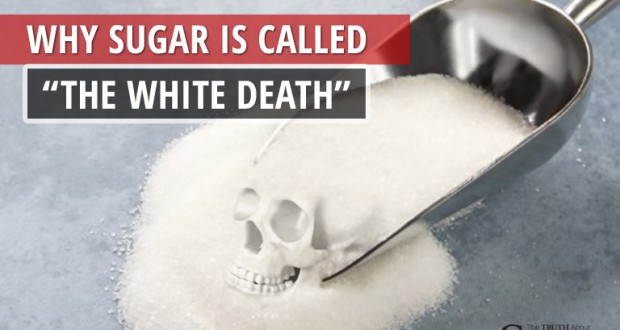
Why Sugar Is Called “The White Death”


Why-sugar-called-whiteDeath
As good as it may taste, sugar is NOT your friend. It may “feel” like your friend when it comforts you (due to the beta-endorphin rush in your brain), but sugar is really your ENEMY. Truth be told, regular consumption of sugary foods is one of the worst things that you can do for your health. Modern scientific research has shown us, beyond a shadow of a doubt, that sugar in your food (in all its myriad forms) is taking a devastating toll on your health.
Take a look at the sugar consumption trends over the past 300 years:
  • In 1700, the average person consumed about 4 pounds of sugar per year.
  • In 1800, the average person consumed about 18 pounds of sugar per year.
  • In 1900, individual consumption had risen to 90 pounds of sugar per year.
  • In 2012, more than 50% of all Americans consume 1/2 pound of sugar per day — translating to a whopping 180 pounds of sugar per year!
In 1890, only 3 people out of 100,000 had diabetes. In 2012, almost 8,000 out of every 100,000 people was diagnosed with diabetes!
The “sugar rush” has been targeted at our children. American children are consuming about 10 times as much sugar as they were in 1900, especially in the form of high fructose corn syrup (HFCS), which is the average American’s greatest source of calories! Highly addictive HFCS contains fructose and glucose, but they are NOT bound together (as they are in table sugar) so the body doesn’t need to break it down. Therefore, the fructose is absorbed immediately, going straight to the liver, which turns it into fat (VLDL and triglycerides).
According to Dr. Joseph Mercola:
“Fructose also tricks the body into gaining weight by fooling your metabolism (it turns off the appetite-control system). Fructose does not appropriately stimulate insulin, which in turn does not suppress ghrelin (the “hunger hormone”) and doesn’t stimulate leptin (the “satiety hormone”), which together result in your eating more and developing insulin resistance.” This process also suppresses the immune system.
But just because you avoid HFCS doesn’t mean that you’re in the clear. Excess intake of ALL processed sugars results in compromised immune function (decreasing the white blood cells’ ability to destroy bacteria), obesity, and diabetes.
And if that’s not enough, keep in mind that sugar is HIGHLY addictive! That’s right! Dr. Serge Ahmed of Bordeaux, France, has been working with rats and giving them the choice between cocaine and sugar. Guess which one wins, time and again?
That’s right … sugar!
It turns out that the sweet taste of sugar is more rewarding than the high of cocaine.
You see, sugar produces dopamine – a happy, feel-good chemical –  in the brain. People get addicted to eating sugar, whereby they need it to feel “normal” and they undergo “withdrawal” if they cut sugar from their diets. If they go “cold turkey” for a few days, their brain will begin to produce dopamine on its own, but the discomfort of the withdrawal process keeps many “sugar addicts” trapped in their addiction.
What is The Sugar Cancer Connection?
Due to the anaerobic respiratory mechanism exhibited by ALL cancer cell, sugar is cancer’s favorite food! And since half of the white sugar in the USA comes from sugar beets, you should remember that most beets are now genetically modified.  This is another reason to stay away from the “White Death” isn’t it?
I personally recommend that you avoid white sugar, brown sugar, agave, and all artificial sweeteners such as aspartame/AminoSweet, sucralose, and saccharin. If you have a sweet tooth, it’s best to stick with 100% pure stevia, xylitol, raw honey, pure maple syrup, molasses, and coconut sugar. The bottom line: if you want to be and stay healthy, you MUST take control of your sugar intake so that it doesn’t take control over you.
Ending the Sugar Confusion
It is easy to become confused by the various sugars and sweeteners, so here is a basic overview:
  • Saccharide = sugar
  • Glucose (aka “dextrose” or “grape sugar”), galactose (“milk sugar”), and fructose (“fruit sugar”) are all “monosaccharides” (i.e. single sugar molecules), known as “simple sugars.” The primary difference between them is the way your body metabolizes them.
  • Glucose is the form of energy you were designed to run on. Every cell in your body uses glucose for energy.
  • High amounts of fructose are very damaging to the body if it isn’t burned immediately for energy because it travels directly to the liver where it’s converted to triglycerides (fats). Excess triglycerides increase insulin resistance (and insulin production), thus contributing to diabetes in a “back door” fashion.
  • The simple sugars can combine to form more complex sugars, like sucrose (“table sugar”) which is a “disaccharide” comprised of 50% glucose and 50% fructose.
  • “Refined” white sugar (pure sucrose) is washed with a syrup solution, then with hot water, clarified (usually chemically) to remove impurities, decolorized, concentrated, evaporated, re-boiled until crystals form, centrifuged again to separate, then dried. By this point, any remnants of “natural goodness” and “nutritional value” have completely disappeared! Quite frankly, white sugar should be considered an “industrial product” rather than “food.”
  • “Brown sugar” is white sugar mixed with molasses.
  • “Raw” sugar is not really raw—it has been cooked, and most of the minerals and vitamins are gone. But it’s probably a little better than refined white sugar because it has a little of the molasses remaining.
  • Aspartame or AminoSweet is a neurotoxic rat poison … need I say more?
  • Splenda (sucralose) is NOT a sugar, despite its deceptive marketing slogan, “made from sugar.” It’s a chlorinated artificial sweetener in line with aspartame, though not quite as harmful.
  • Honey is approximately 50% fructose, but in natural (raw and unpasteurized) form contains many health benefits. Buying honey that is local and unpasteurized is best.
  • Stevia is an extremely sweet herb derived from the leaf of the South American stevia plant, which is completely safe (in its natural form.) Green stevia is the whole plant, while white stevia is processed and can often contain other ingredients like natural flavors or dextrose – a form of sugar. 100% green stevia in its natural state is what you want.
  • Agave nectar is made from the agave plant, which is a cactus. Sounds natural, right? Like maple syrup from a tree, or honey from a beehive. Only it isn’t. Agave is HIGHLY processed while the end product does not even remotely resemble the original agave plant. Furthermore, agave is approximately 80% fructose (much higher than honey and maple syrup).
  • HFCS – high fructose corn syrup –  is 55% fructose and 45% glucose. It is mostly genetically modified. Stay away!
  • Rapadura is the pure juice extracted from the sugar cane (using a press), which is then evaporated over low heat, whilst being stirred with paddles, then sieve ground to produce a grainy sugar. It has not been cooked at high heats or spun to change it into crystals, and the molasses is maintained in the sugar. “Sucanat” is the USA trade name for Rapadura.
  • Coconut sugar is made from the sweet watery sap that drips from the cut flower buds of the coconut palm. It has a low glycemic index (GI) and is rich in amino acids. It is typically less than 10% fructose, with sucrose being the primary component.
  • Xylitol is a sweetener known as a “sugar alcohol” (or polyol). Sugar alcohols are neither sugars nor alcohols – they are carbohydrates (with structures that happen to resemble sugar and alcohol). Xylitol is extracted from birch cellulose. Unlike sugar, Xylitol is slowly absorbed, does not cause a rapid blood sugar increase, and does not require an immediate insulin response from the body to be metabolized.  Moreover,  many studies have shown that it actually helps prevent dental cavities, ear infections and some evidence suggests that it helps prevent gum disease because Xylitol is an anti-bacterial.
Source