Showing posts with label Disasters. Show all posts

Friday, April 30, 2021

Satan has studied the secrets of the laboratories of nature, and he uses all his power to control the elements as far as God allows.

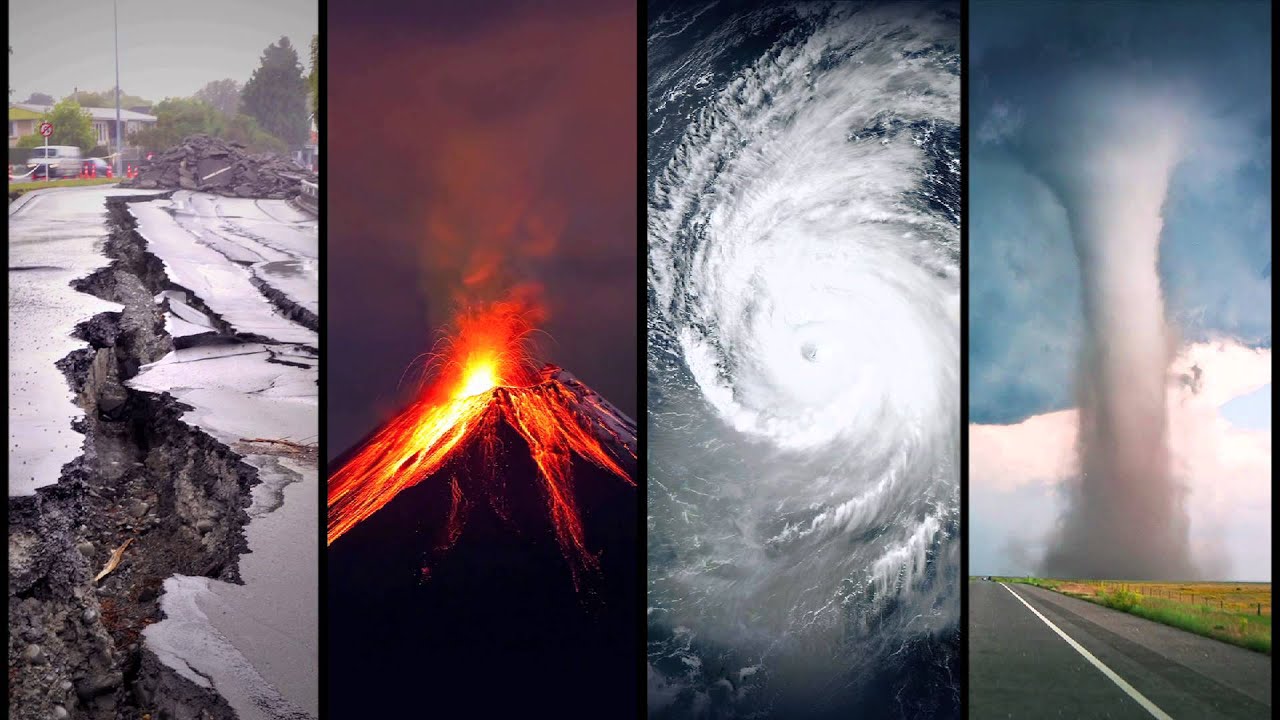
Nature's Fury: The Science of Natural Disasters - YouTube

Satan works through the elements also to garner his harvest of unprepared souls. He has studied the secrets of the laboratories of nature, and he uses all his power to control the elements as far as God allows. When he was suffered to afflict Job, how quickly flocks and herds, servants, houses, children, were swept away, one trouble succeeding another as in a moment. It is God that shields His creatures and hedges them in from the power of the destroyer. But the Christian world have shown contempt for the law of Jehovah; and the Lord will do just what He has declared that He would—He will withdraw His blessings from the earth and remove His protecting care from those who are rebelling against His law and teaching and forcing others to do the same. Satan has control of all whom God does not especially guard. He will favor and prosper some in order to further his own designs, and he will bring trouble upon others and lead men to believe that it is God who is afflicting them.  

While appearing to the children of men as a great physician who can heal all their maladies, he  will bring disease and disaster, until populous cities are reduced to ruin and desolation. Even now he is at work. In accidents and calamities by sea and by land, in great conflagrations, in fierce tornadoes and terrific hailstorms, in tempests, floods, cyclones, tidal waves, and earthquakes, in every place and in a thousand forms, Satan is exercising his power. He sweeps away the ripening harvest, and famine and distress follow. He imparts to the air a deadly taint, and thousands perish by the pestilence. These visitations are to become more and more frequent and disastrous. Destruction will be upon both man and beast. “The earth mourneth and fadeth away,” “the haughty people ... do languish. The earth also is defiled under the inhabitants thereof; because they have transgressed the laws, changed the ordinance, broken the everlasting covenant.” Isaiah 24:4, 5               The Great Controversy pp. 589-590

Antony Blinken: Addressing Climate Change a ‘Powerful Tool’ Against ‘Systemic Racism’

FILE - In this Nov. 24, 2020, file photo, Tony Blinken, President Joe Biden’s nominee for Secretary of State, speaks at The Queen theater in Wilmington, Del. The Senate has confirmed Antony Blinken as America’s top diplomat, tasked with carrying out President Joe Biden’s commitment to reverse the Trump administration’s …

Breitbart 20/04/2021

While delivering a speech on the “climate crisis” from the Chesapeake Bay in Maryland, Blinken said:

I spend a great deal of my time focused on threats to America’s security and interests – aggressive actions by Russia or China, the spread of COVID-19 [coronavirus disease], the challenges facing democracies. But an equally grave threat to the American people – and an existential one over the long term – can be seen right here, on the Chesapeake Bay, where the costs of climate change are already manifesting themselves.

Climate change would hit poor minority communities “the hardest,” Blinken proposed, adding that addressing the issue “offers one of the most powerful tools we have to fight inequity and systemic racism.”

The top U.S. diplomat predicted:

More frequent and more intense storms; longer dry spells; bigger floods; more extreme heat and more extreme cold; faster sea level rise; more people displaced; more pollution; more asthma. Higher health costs; less predictable seasons for farmers. And all of that will hit low-income, black and brown communities the hardest.

Meanwhile, Blinken admitted some American workers “would be hit hard” by the Biden administration’s response to the “climate crisis.”

However, he promised, “We won’t leave those Americans behind. We’ll provide our fellow Americans with pathways to new, sustainable livelihoods and support as they navigate this transition.”

Blinken warned the United States is “falling behind” China as the global leader of the renewable energy industry, adding climate change could serve as an economic “opportunity” for America.

Sunday, January 31, 2021

It is 100 seconds until “midnight"

The Doomsday Clock remains set at 100 seconds until “midnight."

NY Post January 27, 2021

The symbolic Doomsday Clock — designed by scientists to measure how close humanity is to an apocalypse — remains set dangerously close to disaster at 100 seconds until “midnight,” it was revealed Wednesday.

The annual end-of-days prediction remains the closest the clock has ever ticked toward catastrophe, based on threats including the coronavirus, climate change and nuclear catastrophe, the Bulletin of the Atomic Scientists announced.

Marking “a historic wakeup call,” its hands have remained in the same place since January 2020, the first time it ever moved closer than two minutes to midnight.

“[This year] revealed just how unprepared and unwilling countries and the international system are to handle global emergencies properly,” the group said in a press release.

“We are now expressing how close the world is to catastrophe in seconds — not hours, or even minutes. It is the closest to Doomsday we have ever been in the history of the Doomsday Clock. We now face a true emergency — an absolutely unacceptable state of world affairs that has eliminated any margin for error or further delay,” added Rachel Bronson, president and CEO of the group.

Quarter of known bee species have not been recorded since 1990

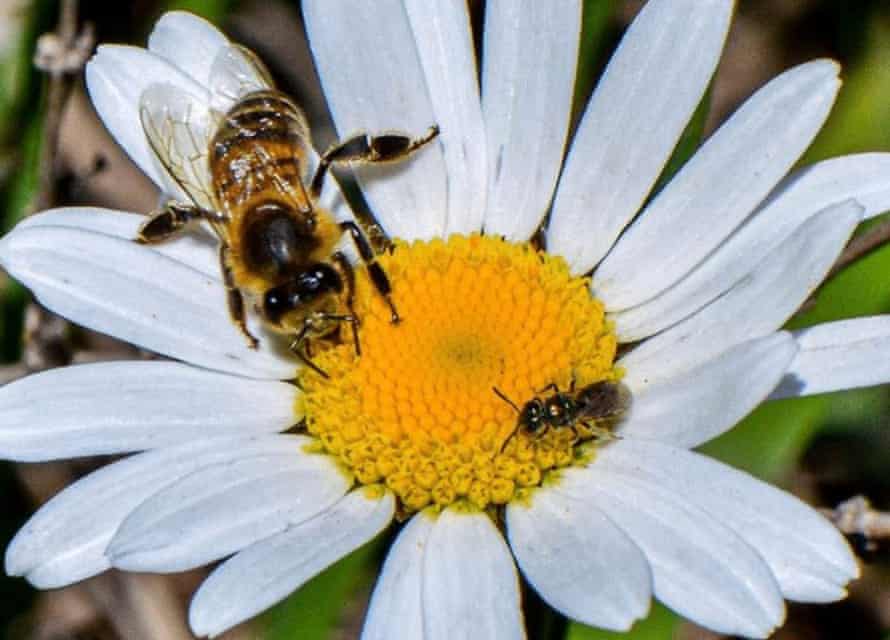
An introduced honey bee and a smaller native sweat bee share a flower in a Patagonian forest.

The Guardian 22 Jan 2021

The number of wild bee species recorded by an international database of life on Earth has declined by a quarter since 1990, according to a global analysis of bee declines.

Researchers analysed bee records from museums, universities and citizen scientists collated by the Global Biodiversity Information Facility, (GBIF) a global, government-funded network providing open-access data on biodiversity.

They found a steep decline in bee species being recorded since 1990, with approximately 25% fewer species reported between 2006 and 2015 than before the 1990s.

Although this does not mean these species are extinct, it may indicate that some have become so scarce that they are no longer regularly observed in the wild.

“With citizen science and the ability to share data, records are going up exponentially, but the number of species reported in these records is going down,” said Eduardo Zattara, the lead author and a biologist from the Universidad Nacional del Comahue and Argentina’s National Scientific and Technical Research Council (Conicet). “It’s not a bee cataclysm yet, but what we can say is that wild bees are not exactly thriving.”

Massive power outage in Pakistan plunges whole country into darkness

Euronews 10/01/2021 

A major technical fault in Pakistan's power generation and distribution system caused a massive power outage that plunged the country into darkness overnight, the energy minister said.

The blackout affected all the country's major cities on Saturday, including its capital Islamabad, its major economic hub Karachi, and the second-largest city, Lahore.

Hours after the late outage, Energy Minister Omar Ayub Khan said on Twitter that power was being restored in phases, starting with Islamabad. He said later on Sunday that power had been brought back to much of the country.

Wednesday, September 30, 2020

10 million acres of corn, soybeans flattened; farmers 'have never seen anything like this

Desmoines August, 2020 

In less than an hour, the nearly 2,000 acres of corn and soybeans that Corey Hillebo and his family farm near Slater were flattened.

"Nothing in the path of the storm was unscathed," said Hillebo, who lives near where Monday's derecho, packing hurricane-force winds, left Heartland Cooperative's massive grain storage bins twisted and crumpled.

"You drive around, there's nothing that's not leaning or flat," he said.

Across Iowa, the storm hit about 10 million acres of crops, Gov. Kim Reynolds said Tuesday during a news conference. The Iowa Department of Agriculture said the storm affected roughly a third of the state, which grows about 32 million acres of corn, soybeans and other crops.

Reynolds said farmers have told her the damage "has just been devastating ... they have never seen anything like this."

The storm, with straight-line winds nearing 100 mph, pummeled homes, farms and businesses across dozens of counties in central Iowa. In addition to crops, it destroyed grain bins, machine sheds, barns and livestock buildings.

South Sudan Flooding Plunges 700,000 Into Hunger, Livelihood Crisis

VOA September 29, 2020

GENEVA - The World Food Program reports unprecedented flooding in South Sudan has plunged some 700,000 people into a hunger and livelihoods crisis, made worse by ongoing violence and economic shocks due to COVID-19.

Nearly half of South Sudan is under water.  The World Food Program reports entire villages, homes, and farmlands in 36 counties are submerged.  It says the situation is particularly dire in Jonglei State, where one-third of the country’s 700,000 flood victims live.

WFP Country Director in South Sudan, Matthew Hollingworth says 85,000 people have been displaced by the flooding, which has disrupted trade routes, damaged crops, killed livestock and submerged houses.

“This flooding crisis is coming on top of a very grim hunger situation in Jonglei where already this year 1.4 million people were suffering from acute and severe hunger in addition to over 300,000 children under five who are acutely malnourished,” Hollingworth said.

Californians awake to apocalyptic skies as wildfires rage

The Guardian 9 September 2020

People in the San Francisco Bay Area and across California awoke on Wednesday morning to an eerie scene of darkened, orange-hued skies and ash raining down as historic wildfires rage across the state. 

The apocalyptic skies are due to light being filtered through smoke from California’s worst fire season on record, according to a regional air pollution control organization the Bay Area Air District.

“These smoke particles scatter blue light and only allow yellow-orange-red light to reach the surface, causing skies to look orange,” the Bay Area Air District said on Twitter.

Residents of the Bay Area reported oversleeping because the sky was so dark. Local police forces recommended drivers keep headlights on all day and bridges and street lights remained alight as the sun failed to appear this morning.

Surreal images of blood orange skyline flooded social media on Wednesday.

Monday, August 31, 2020

More than 2.5 million acres have been burned across the Pacific Northwest

Katu September, 2020

PORTLAND, Ore. – Strong wind and hot, dry conditions are making for critical fire conditions across the Pacific Northwest.

The Oregon Office of Emergency Management says there are more than 480 active fires across the state, adding that more than 2.5 million acres have been burned. Governor Kate Brown invoked the Emergency Conflagration Act Tuesday afternoon.

Several fast-moving fires prompted evacuation orders in communities across Oregon and Southwest Washington overnight Monday and into Tuesday.

Sunday, May 31, 2020

Is the Lockdown the Greatest Policy Disaster in U.S. History?


Donald Trump calls the media “the enemy of the people”, but it’s much worse than that. The media is a national security threat. Just look at the way they’ve handled the coronavirus. The hysterical 24-7 coverage has people so terrified they’ve locked themselves in their homes inflicting catastrophic damage on the economy. That disaster never would’ve taken place if the media hadn’t focused all their energy on scaring people to death. Now the damage is done, millions of people have lost their jobs, tens of thousands of small and mid-sized businesses are facing bankruptcy, and the world’s biggest economy has been reduced to a smoldering wastelands. And what was gained? Nothing.

Tuesday, March 31, 2020

Where on earth were all the penguins?


Science Magazine Mar. 19, 2020
Where on Earth, wondered Henri Weimerskirch, were all the penguins? It was early 2017. Colleagues had sent the seabird ecologist aerial photos of Île aux Cochons, a barren volcanic island halfway between Madagascar and Antarctica that humans rarely visit. The images revealed vast areas of bare rock that, just a few decades before, had been crowded with some 500,000 pairs of nesting king penguins and their chicks. It appeared that the colony—the world’s largest king penguin aggregation and the second biggest colony of any of the 18 penguin species—had shrunk by 90%. Nearly 900,000 of the regal, meter-high, black, white, and orange birds had disappeared without a trace. “It was really incredible, completely unexpected,” recalls Weimerskirch, who works at the French national research agency CNRS.

Soon, he and other scientists were planning an expedition to the island—the first in 37 years, and only the third ever—to search for explanations. “We had to go see for ourselves,” says CNRS ecologist Charles Bost.

As the researchers prepared for the journey, they had to grapple with the logistical, political, and scientific challenges that have long bedeviled biologists trying to understand Antarctica’s remote ecosystems. The vast distances, rough weather, and rugged terrain make travel difficult and expensive. They needed a ship—and a helicopter, because frigid seas and rocky shores make for perilous boat landings on Antarctic islands. Complying with the tough permitting and biosecurity rules governing the French-controlled island—meant to prevent researchers from disturbing fragile ecosystems—required careful planning and paperwork that took months to complete. And once they arrived, they would have precious little time: just 5 days to investigate a multitude of suspects in the disappearance, including disease, predators, and a warming Southern Ocean.

Friday, May 31, 2019

Crop Catastrophe In The Midwest

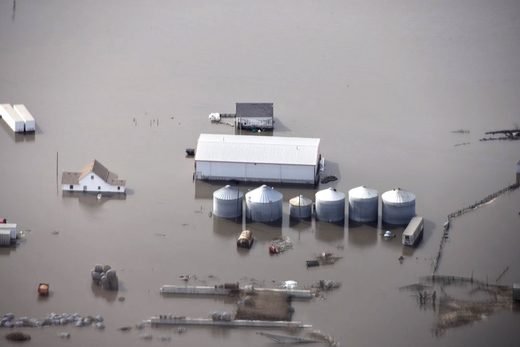
fooding nebraska crops
TECB. May 26, 2019
The last 12 months have been the wettest in all of U.S. history, and this has created absolutely horrific conditions for U.S. farmers.  Thanks to endless rain and historic flooding that has stretched on for months, many farmers have not been able to plant crops at all, and a lot of the crops that have actually been planted are deeply struggling.  What this means is that U.S. agricultural production is going to be way, way down this year.  The numbers that I am about to share with you are deeply alarming, and they should serve as a wake up call for all of us.  The food that each one of us eats every day is produced by our farmers, and right now our farmers are truly facing a nightmare scenario.
You can view the latest USDA crop progress report right here.  According to that report, corn and soybean production is way behind expectations.
Last year, 78 percent of all corn acreage had been planted by now.  This year, that number is sitting at just 49 percent.
And the percentage of corn that has emerged from the ground is at a paltry 19 percent compared to 47 percent at this time last year.
We see similar numbers when we look at soybeans.
Last year, 53 percent of all soybean acreage had been planted by now.  This year, that number has fallen to 19 percent.
And the percentage of soybeans that have emerged from the ground is just 5 percent compared to 24 percent at this time last year.
In other words, we are going to have a whole lot less corn and soybeans this year.
Farmers in the middle of the country desperately need conditions to dry out for an extended period of time, but so far that has not happened.
In fact, last week the heartland was hit by yet another string of devastating storms.  The following comes from CNN…
Ten people are dead and a 4 year-old boy remains missing after more than a week of severe weather across the central US that put tens of millions of people at risk.
The deadly spring storm system ravaged several states, unleashing more than 170 reported tornadoes, fierce winds, drenching rain, flash flooding and hail.
One of the tornadoes that was spawned absolutely devastated the capital city of Missouri.  It was reportedly a mile wide, and it stayed on the ground for almost 20 miles…
A clearer picture emerged Friday of the size and scope of the powerful tornadoes that tore across Missouri on Wednesday night, leaving a trail of destruction in their paths. The state’s capital, Jefferson City, was among the hardest-hit places, struck overnight by a tornado with a peak wind speed of 160 mph that has been given preliminary rating of EF3.
The monstrous nighttime tornado that struck Jefferson City, a city with a population of about 42,000, was almost a mile wide and was on the ground for nearly 20 miles, toppling homes, ripping roofs off homes and business below.
What we are witnessing is definitely not “normal”, and I have had a number of readers write to me about this recently.  The other day one of my readers in Montana sent me a photograph of a freak May snowstorm that had just hit his area, and another one of my readers in Missouri explained that his boss is freaking out because they haven’t been able to get soybeans in the ground.  All over the country people want answers, and they are frustrated with the lack of information that they are getting from the mainstream media.
Unfortunately, the truth is that things are going to get worse.  Global weather patterns are dramatically shifting, and there is nothing that the authorities will be able to do to stop it from happening.

Tuesday, April 10, 2018

Re-creation of the mississippi river’s 500-year flood history shows the worst floods are bigger than ever

Science News  April 4, 2018
The world’s longest system of levees and floodways, meant to rein in the mighty Mississippi River, may actually make flooding worse.

Using tree rings and lake sediments, researchers re-created a history of flooding along the lower Mississippi River extending back to the 1500s. This paleoflood record suggests that the past century of river engineering — intended to minimize flood damage to people living along the river’s banks — has instead increased the magnitude of the largest floods by 20 percent, the researchers report April 5 in Nature.

Climate patterns that bring extra rainfall to the region don’t account for the dramatic increase in flood size, the team found. “The obvious culprit is that we have really modified the river itself,” says Samuel Munoz, a geoscientist at Northeastern University in Boston.

Settlers built the first levees on the Mississippi in the early 1800s. After a massive flood displaced hundreds of thousands of people in 1927, the U.S. government built the current system of spillways and levees. The engineering projects profoundly altered the river’s shape and sediment content. But how these changes affected the size of the river’s largest floods has been unclear, in part because water gauges have tracked the river’s flow for just 150 years.

Friday, March 16, 2018

The world needs to do more to prepare for the next huge volcanic eruption


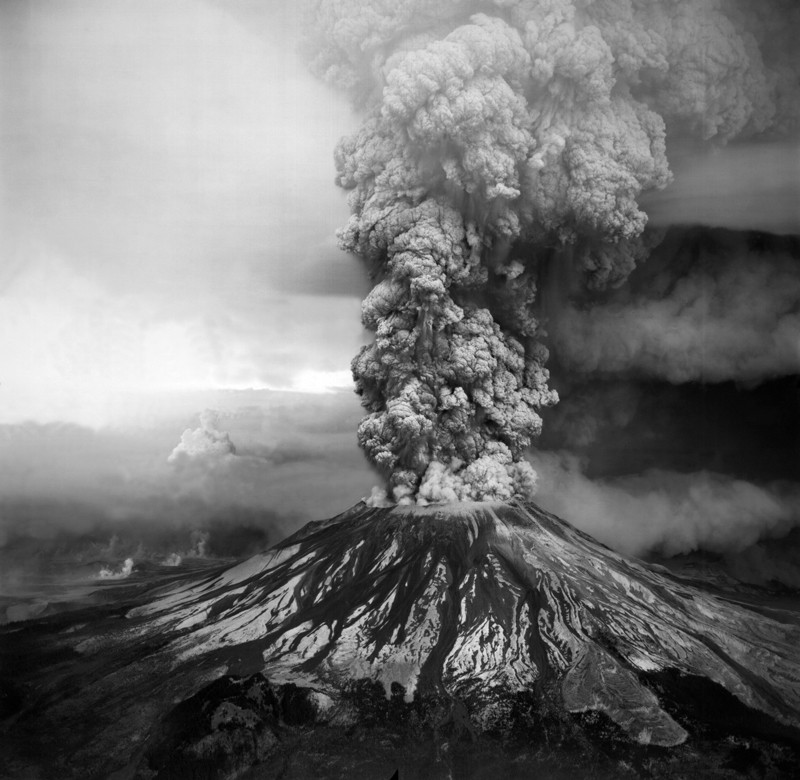
Mount St Helens volcano eruption, 19 May 1980.

Nature     March/06/2018
The world needs to do more to prepare for the next huge volcanic eruption, a team of leading scientists says.

The devastating Indian Ocean tsunami of 2004 and the Tōhoku earthquake in Japan in 2011 highlighted some of the worst-case scenarios for natural disasters. But humanity has not had to deal with a cataclysmic volcanic disaster since at least 1815, when the eruption of Tambora in Indonesia killed tens of thousands of people and led to a ‘year without a summer’ in Europe and North America. Such world-altering blasts rank at 7 or more on the Volcanic Explosivity Index (VEI) scale of eruptions, which goes to 8.

“The next VEI-7 eruption could occur within our lifetimes, or it could be hundreds of years down the road,” says Chris Newhall, a volcanologist with the Mirisbiris Garden and Nature Center in Santo Domingo, Philippines. But the time to have this discussion is now, he says, so that researchers and government officials can plan and prepare before an emergency strikes.

Thursday, October 26, 2017

England’s chief medical officer has warned of a “post-antibiotic apocalypse"


World must act or risk ‘post-antibiotic apocalypse’ – top doctor

RT   14 Oct, 2017
 England’s chief medical officer has warned of a “post-antibiotic apocalypse,” calling on world leaders to address the growing threat of drug-resistant infections.

Ahead of a global conference in Berlin organized by the UK government to map out the threat of drug resistance, Professor Dame Sally Davies cautioned against giving patients antibiotics they “don’t need,” as the drugs will lose their effectiveness and “spell the end of modern medicine.”

She warned that the threat of infections posed by antimicrobial resistance (AMR) heightens the risk of carrying out operations such as caesarean sections and hip replacements.

“We really are facing, if we don’t take action now, a dreadful post-antibiotic apocalypse,” she said.

“I don’t want to say to my children that I didn’t do my best to protect them and their children.”

Around 700,000 people around the world die annually due to drug-resistant infections including tuberculosis (TB), HIV and malaria.

If no action is taken, it has been estimated that drug-resistant infections will kill 10 million people per year by 2050.

“This is a serious issue that is with us now, causing deaths.

“If it was anything else people would be up in arms about it. But because it is hidden they just let it pass.

“It does not really have a ‘face’ because most people who die of drug resistant infections, their families just think they died of an uncontrolled infection.

“It will only get worse unless we take strong action everywhere across the globe.

“We need some real work on the ground to make a difference or we risk the end of modern medicine,” Davies added.

She also debunked the assumption held by patients that GPs will not prescribe antibiotics because they are “mean.” They are in fact “trying to save the drugs, so that they work when they are actually needed.”

While in the UK, one in four antibiotic prescriptions is not needed, Davis said “other countries use vastly more antibiotics in the community and they need to start doing as we are, which is reducing usage,” she said.

“Our latest data shows that we have reduced human consumption by 4.3 percent in 2014-15 from the year before.”

The new project which will map the spread of superbugs is a collaboration between the UK Government, Wellcome Trust, Bill and Melinda Gates Foundation, the University of Oxford, and Institute for Health Metrics and Evaluation.

Saturday, September 30, 2017

2017 Is Strange


Puerto Rico Could Face 6 Months Without Power

After Puerto Rico was pummeled by Hurricane Maria last week, a Category 4 hurricane with 150 mph winds, the island has been left in shambles. After suffering widespread power outages thanks to Irma, 1 million Puerto Ricans were left without electricity. 60,000 still hadn’t gotten power when Maria brought a total, island-wide power outage and severe shortages in food, water, and other supplies.
As of today there’s still no power on the island except for a handful of generators powering high-priority buildings like select hospitals, and the island likely won’t return to full power for another half a year. This also means that there are next to zero working cell phone towers and no reception anywhere on the island.
Due to the blackout, many residents are relying on small gas-fed generators, and fuel is running out (though authorities in Puerto Rico insist that it’s a distribution problem, not a shortage). Puerto Ricans are waiting in six-hour lines for fuel, while many stations have run completely dry. In most of Puerto Rico there’s no water either - that means no showers, no flushable toilets, and no drinkable water that’s not out of a bottle. In some of the remoter parts of the island, rescue workers are just barely beginning to arrive.

Puerto Rico is experiencing all of the normal catastrophes brought on by a major hurricane - and then some. In Houston after Harvey and Florida after Irma, wastewater pumping systems failed, causing significant sewage spillage. The same is almost guaranteed to happen in Puerto Rico thanks to the sustained power outages, but will be greatly exacerbated by the fact that the island’s electrical system was already “degraded and unsafe”.
In fact, nearly every problem typically faced in the wake of natural disaster will be amplified and accelerated in Puerto Rico thanks to long-existing financial and environmental problems and far fewer rescue and relief workers. Florida and Texas also dealt with contamination from Superfund sites, but Puerto Rico has a whopping 23 in its relatively tiny area.
According to the U.S. Department of Health and Public Services, a superfund site is “any land in the United States that has been contaminated by hazardous waste and identified by the EPA as a candidate for cleanup because it poses a risk to human health and/or the environment.” These sites are put on the National Priorities List (NPL), a list of the most dire cases of environmental contamination in the U.S. and its territories. These are places where a person can’t even walk on the ground and breathe the air without seriously endangering their health.
Even within the designation of Superfund, sites can be ranked in their level of catastrophism, and Puerto Rico is home to one of the very worst. For sixty years the U.S. military used Vieques, an outlying island, for extensive bomb testing. Two thirds of the island now have extreme levels of contamination which have been related to disproportionately high cancer rates among the 9,000 residents. Even today Vieques remains blanketed with unexploded bombs, bullets, and projectiles.

Puerto Rico also has more contaminants to worry about thanks to the coal industry, which has been stockpiling coal ash in southern Puerto Rico. According to Adriana Gonzales of the Sierra Club, an uncovered five-story pile of coal ash situated next to a low-income and minority community in the town of Guayama threatens to toxify the entire area thanks to its content of heavy metals like arsenic, mercury, and chromium that will be released when the rain liquefies the ash.
The coal industry also dumped thousands of tons of coal ash in Puerto Rican landfills for years, a common practice that has recently mushroomed into a disaster as local landfills overflow thanks to the territory’s financial crisis. While the ash is not Puerto Rico’s (it’s owned by Pennsylvania-based Applied Energy Systems) they are now faced with its toxic burden, despite the fact that the Puerto Rican government ordered the company to cover and secure the pile under the threat of Hurricane Irma, weeks before Maria hit.
Puerto Rico’s fallout of Maria will result in a long, long road to recovery. Even though the island is home to 3.5 million U.S. citizens, help is few and far between compared to response in the U.S., and the island’s pre-existing poverty and environmentally dangerous Superfund Sites will make rebuilding a tricky and toxic business, costing in the billions of dollars.       OilPrice

Wednesday, August 30, 2017

Houston under water

Published on Aug 29, 2017
Tens of thousands of people have had to flee their homes in Houston, Texas, as a result of flooding caused by Tropical Storm Harvey. Sky News Correspondent Ashish Joshi reports.