Showing posts with label Facebook. Show all posts

Monday, August 31, 2020

Mark Zuckerberg finally promises action on hate speech

mark-zuckerberg-facebook-begins-purge-christian-conservative-posts-now-hate-speech-black-lives-matter-marxist-agenda

Daily Mail July, 2020

Facebook shares have dropped a staggering $56 billion after major companies including Unilever and Coca-Cola pulled their advertisements from the social media giant, despite CEO Mark Zuckerberg promising action on hate speech and putting a warning label on a Republican National Committee (RNC) video. 

Shares in the platform went crashing 8.3 percent to $216.08 by the closing bell Friday - its lowest in three months - after more than 100 advertisers boycotted the firm for its failure to stop hate speech and misinformation being posted on its platform.

This wiped $56 billion off Facebook’s market value and dealt a hefty $7.2 billion blow to Zuckerberg's personal fortune, pushing him down from third to fourth place on Bloomberg Billionaires Index and leaving him with a new net worth of $82.3 billion.

Friday, July 31, 2020

Facebook censors almost 90 percent of ‘hate speech’ before it’s allowed to circulate

RT 29 Jul, 2020
Facebook censors almost 90 percent of ‘hate speech’ before it’s allowed to circulate, CEO Mark Zuckerberg told Congress at Wednesday’s Big Tech hearing, responding to pressure from Democrats to submit to the advertiser boycott.

“We’re able to proactively identify 89 percent of the hate speech that we take down before, I think, it’s even seen by other people,” Zuckerberg told the Antitrust Subcommittee of the US House of Representatives on Wednesday.

The statement was in response to Rep. Jamie Raskin (D-Maryland) pressuring Facebook to “join the civil rights movement” by submitting to the demands of the Stop Hate For Profit campaign, an advertising boycott accusing Facebook of tolerating “widespread hate” on the platform.

Sunday, March 31, 2019

Goverment urged to defeat hate speech and offensive content.

Dailyecho 12th March
Sir Tim Berners-Lee, the inventor of the world wide web, has called on the public and politicians to "come together" to end its misuse in a letter to mark the technology's 30th anniversary.
The founder of the World Wide Web Foundation said the internet had created opportunities for good but had also become a space used by "scammers" and "given a voice to those who spread hatred, and made all kinds of crime easier to commit".
First proposed by Sir Tim as an information management system in 1989 while he was working for the European Organisation for Nuclear Research (CERN), around half of the world's population is now online.
Many of the world's largest web-based companies, such as Facebook, Twitter and Google, have come under scrutiny in recent years over data privacy issues and the rising spread of malicious and offensive content.
In his letter, Sir Tim said it would be "defeatist and unimaginative" to assume that the web could not be changed for the better given how far it has come in its first 30 years, but urged governments, organisations and the public to work together to improve the current system and make it available to everyone.

Friday, January 25, 2019

Facebook 10 year challenge, the perfect opportunity for machine learning

CBS  01/17/2019
It's the simple meme that's taking over your social media feeds: the "10 Year Challenge," where users upload side-by-side photos of themselves from a decade ago and now.
But it might not be so simple.
Facebook on Wednesday distanced itself from the "10 Year Challenge" after an article set off speculation that the social media giant could be secretly mining data from the photos to improve its facial recognition algorithms. It's a scenario that those who have studied social media companies don't rule out, despite Facebook's denials.
The photo challenge gives Facebook "a perfect storm for machine learning," said Amy Webb, a professor at NYU Stern School of Business with an upcoming book about how artificial intelligence can manipulate humans.
"It presented Facebook with a terrified opportunity to learn, to train their systems to better recognize small changes" in users' appearances, she told CBS News.

Wednesday, November 28, 2018

Study: Facebook Can Cause Depression

https://www.zerohedge.com/sites/default/files/inline-images/not%20funny.jpg?itok=q_Xj-S-g
Zerohedge 11/16/2018
A new report conducted by psychologists at the University of Pennsylvania have determined that an excessive amount of time on “social media” sites like Facebook, Instagram, and Snapchat are making millennials depressed.
“It was striking,” said Melissa Hunt, a psychology professor at the University of Pennsylvania, who led the study. “What we found over the course of three weeks was that rates of depression and loneliness went down significantly for people who limited their (social media) use.”
The study, “No More FOMO: Limiting Social Media Decreases Loneliness and Depression," is being published in December’s Journal of Social and Clinical Psychology.

Researchers recruited 143 students for two different trials, one in the spring semester and one in the fall semester. Each subject was required to have a Facebook, Instagram, and Snapchat account, plus an Apple iPhone. They collected data on the students for about a week to get a baseline reading of their social media usage, and also had them submit questionnaires that assessed their mental health according to seven different factors: social support, fear of missing out, loneliness, autonomy, and self-acceptance, anxiety, depression, and self-esteem.
“Here’s the bottom line,” Hunt explained to Science Daily. “Using less social media than you normally would leads to significant decreases in both depression and loneliness. These effects are particularly pronounced for folks who were more depressed when they came into the study.”

Sunday, April 29, 2018

Cory Gardner fears congressional hearings with Mark Zuckerberg could lead to further government regulation of the internet.

Daily Caller 04/10/2018
Republican Sen. Cory Gardner of Colorado fears congressional hearings with Facebook CEO Mark Zuckerberg could lead to further government regulation of the internet.

Gardner thinks politicians will take advantage of the Facebook situation and use it as a way of increasing their power over a free and open internet.

“I think it treads on some very tenuous ground,” Gardner said on “America’s Newsroom” Tuesday. “There may be some people who wish to look at the opportunity to have regulation of the internet. 

Regulation over speech. Regulation over content. I’m very concerned about that and I think that’s the alarming part about the direction that questions could take this afternoon.”

“Maybe they’ll want to get into campaign finance issues, maybe they’ll want to go into free speech issues,” he continued. “Are they going to try to create some kind of a government filter where it determines who can say what on what kind of a platform?”

“Let’s make sure that users’ privacy are protected. Let’s make sure Facebook is doing what they promised they would do. Let’s make sure there is room for competition against Facebook,” Gardner concluded.

“I don’t think what we want, as an outcome of this hearing, is regulation of the internet. Which has been a very incredible free and open voice of democracy around the globe.”

Saturday, January 20, 2018

Social media companies have built up a massive censorship apparatus capable of seamlessly monitoring, tracking, and blocking millions of pieces of content.

WSWS 18 January 2018
Behind the backs of the US and world populations, social media companies have built up a massive censorship apparatus staffed by an army of “content reviewers” capable of seamlessly monitoring, tracking, and blocking millions of pieces of content.
Armed with increasingly powerful artificial intelligence systems, these technology companies are free to remove and block the communications of their users at the behest of the government, in a seamless alliance between Silicon Valley and the major US spy agencies.

Tuesday, May 30, 2017

Facebook founder Mark Zuckerberg stated his belief that the world is in need of a “global superstructure"

In an article titled “Can Facebook Fix It’s Own Worst Bug?” author Farhad Manjoo poses the question, “Mark Zuckerberg now acknowledges the dangerous side of the social revolution he helped start. But is the most powerful tool for connection in human history capable of adapting to the world it created?”
The author met with Zuckerberg to discuss Facebook and the many issues that the company faces. At one point, Zuckerberg discussed the need for the development of social infrastructure in order for humanity to “get to the next level.”
“There’s a social infrastructure that needs to get built for modern problems in order for humanity to get to the next level,” he stated. “Having more people oriented not just toward short-term things but toward building the long-term social infrastructure that needs to get built across all these things in order to enable people to come together is going to be a really important thing over the next decades.”
Zuckerberg highlighted Facebook’s “safety check” feature which allows users to publicly acknowledge that they’re safe during dangerous events. Zuckerberg later expanded on this, describing a “global superstructure to advance humanity.” Zuckerberg stated, “we’re getting to a point where the biggest opportunities I think in the world … problems like preventing pandemics from spreading or ending terrorism, all these things, they require a level of coordination and connection that I don’t think can only be solved by the current systems that we have.”
The author of the article states, “What’s needed, he argues, is some global superstructure to advance humanity.”
Manjoo goes on to describe Zuckerberg’s idea as not a particularly controversial one, but his position as unelected CEO of a company and not an elected government official makes his proposal troubling. “This is not an especially controversial idea,” the author writes, “Zuckerberg is arguing for a kind of digital-era version of the global institution-building that the Western world engaged in after World War II. But because he is a chief executive and not an elected president, there is something frightening about his project.”
The author argues that Zuckerberg is purposefully positioning himself as a key figure in the future: “He is positioning Facebook — and, considering that he commands absolute voting control of the company, he is positioning himself — as a critical enabler of the next generation of human society. A minor problem with his mission is that it drips with megalomania, albeit of a particularly sincere sort.”
Manjoo notes that Zuckerberg acts in quite a casual manner about his plans to transition from the current infrastructure of the world into his newest vision. “Zuckerberg is often blasé about the messiness of the transition between the world we’re in and the one he wants to create through software,” he notes. “Building new ‘social infrastructure’ usually involves tearing older infrastructure down. If you manage the demolition poorly, you might undermine what comes next. In the case of the shattering media landscape, Zuckerberg seems finally to have at least noticed this problem and may yet come up with fixes for it. But in the meantime, Facebook rushes headlong into murky new areas, uncovering new dystopian possibilities at every turn.”
Given Facebook’s recent decision to hire partisan left-leaning fact checkers such as ABC News, Snopes, Politifact, and even the George Soros-funded Correctiv to police “fake news” on their platform, many would question the type of  “global superstructure” that Mark Zuckerberg wishes to architect.      Breitbart

Wednesday, April 26, 2017

The social panic and media hysteria over fake news continues unabated


By Edward Morrissey    April 25, 2017
The social panic and media hysteria over fake news continues unabated. And once again, Facebook's reaction is all wrong.
The left's intense focus on false news stories exploded in the wake of what seemed like an inexplicable Republican victory in the 2016 election, with Donald Trump beating Hillary Clinton despite an avalanche of bad press directed at the former, especially in the final weeks of the campaign. The GOP also unexpectedly retained control of the Senate, winning surprise victories in Wisconsin and Indiana to confound the Democratic Party's advantage in incumbent seats and normal presidential-cycle turnout models.
Attention quickly focused on a BuzzFeed story about traffic generated by stories on Facebook, and how much more popular fake news was over real news. The analysis had significant flaws, however, beginning with the fact that there was no evidence of correlation between Facebook traffic and voting behavior, let alone causation. Furthermore, the top five "real news" articles in the analysis turned out to be four opinion essays opposing Trump and the New York Post's story on Melania Trump's suggestive modeling pictures from two decades earlier.
Nonetheless, much of the left and the mainstream media stuck with the fake news narrative to explain the election outcome, and have continued to pressure Facebook to take action against it.     Read More

Tuesday, December 27, 2016

The dark side of virtual reality

Image result for virtual reality
December 23 2016,

Why do I look like Justin Timberlake?”
Facebook CEO Mark Zuckerberg was on stage wearing a virtual reality headset, feigning surprise at an expressive cartoon simulacrum that seemed to perfectly follow his every gesture.
The audience laughed. Zuckerberg was in the middle of what he described as the first live demo inside VR, manipulating his digital avatar to show off the new social features of the Rift headset from Facebook subsidiary Oculus. The venue was an Oculus developer conference convened earlier this fall in San Jose. Moments later, Zuckerberg and two Oculus employees were transported to his glass-enclosed office at Facebook, and then to his infamously sequestered home in Palo Alto. Using the Rift and its newly revealed Touch hand controllers, their avatars gestured and emoted in real time, waving to Zuckerberg’s Puli sheepdog, dynamically changing facial expressions to match their owner’s voice, and taking photos with a virtual selfie stick — to post on Facebook, of course.
The demo encapsulated Facebook’s utopian vision for social VR, first hinted at two years ago when the company acquired Oculus and its crowd-funded Rift headset for $2 billion. And just as in 2014, Zuckerberg confidently declared that VR would be “the next major computing platform,” changing the way we connect, work, and socialize.
“Avatars are going to form the foundation of your identity in VR,” said Oculus platform product manager Lauren Vegter after the demo. “This is the very first time that technology has made this level of presence possible.”
But as the tech industry continues to build VR’s social future, the very systems that enable immersive experiences are already establishing new forms of shockingly intimate surveillance. Once they are in place, researchers warn, the psychological aspects of digital embodiment — combined with the troves of data that consumer VR products can freely mine from our bodies, like head movements and facial expressions — will give corporations and governments unprecedented insight and power over our emotions and physical behavior.

Virtual reality as a medium is still in its infancy, but the kinds of behaviors it captures have long been a holy grail for marketers and data-monetizing companies like Facebook. Using cookies, beacons, and other ubiquitous tracking code, online advertisers already record the habits of web surfers using a wide range of metrics, from what sites they visit to how long they spend scrolling, highlighting, or hovering over certain parts of a page. Data behemoths like Google also scan emails and private chats for any information that might help “personalize” a user’s web experience — most importantly, by targeting the user with ads.
But those metrics are primitive compared to the rich portraits of physical user behavior that can be constructed using data harvested from immersive environments, using surveillance sensors and techniques that have already been controversially deployed in the real world.
“The information that current marketers can use in order to generate targeted advertising is limited to the input devices that we use: keyboard, mouse, touch screen,” says Michael Madary, a researcher at Johannes Gutenberg University who co-authored the first VR code of ethics with Thomas Metzinger earlier this year. “VR analytics offers a way to capture much more information about the interests and habits of users, information that may reveal a great deal more about what is going on in [their] minds.”
The value of collecting physiological and behavioral data is all too obvious for Silicon Valley firms like Facebook, whose data scientists in 2012 conducted an infamous study titled “Experimental evidence of massive-scale emotional contagion through social networks,” in which they secretly modified users’ news feeds to include positive or negative content and thus affected the emotional state of their posts. As one chief data scientist at an unnamed Silicon Valley company told Harvard business professor Shoshanna Zuboff: “The goal of everything we do is to change people’s actual behavior at scale. … We can capture their behaviors, identify good and bad behaviors, and develop ways to reward the good and punish the bad.”      The Intercept

Monday, December 12, 2016

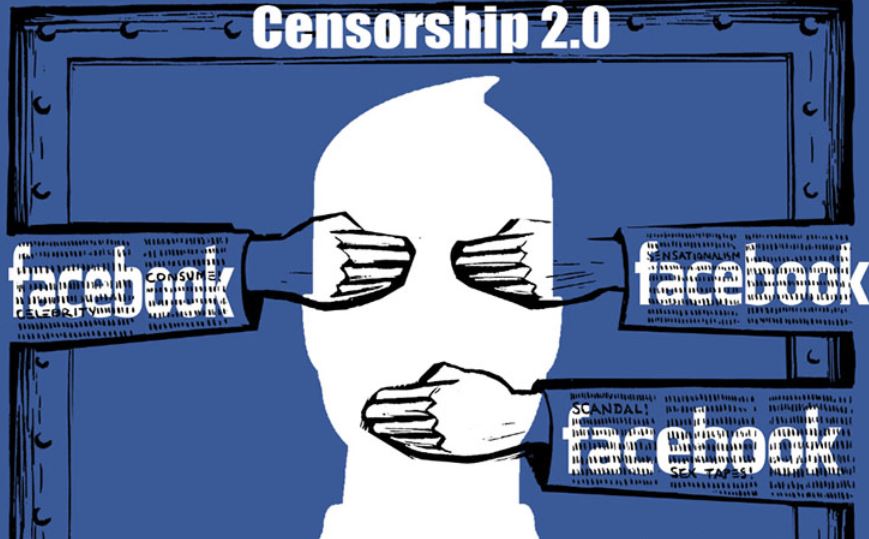
Facebook began testing new tools to carry out its "censorship plan" with the convenient name of "tackling fake news"

Image result for facebook censorship

One of the tools being tested will enable users to inform Facebook if certain news stories are using “misleading language”. Some users posted images of a Facebook survey asking them the following question: “To what extent do you think that this link’s title withholds key details of the story?”.
It is still unclear what kind of actions will be carried out after this additional user data is collected, but it is likely that some sort of a database, containing the list of “misleading” news websites, will be generated.
In a not so distant past, content curators from Facebook confirmed that they received direct orders from the company to decrease the relevance or even hide from the newsfeed stories and content with conservative language. While this happened in the US, similar stories have been reported in Brazil, the United Kingdom around the time of the Brexit, and in other countries.
Recently, there were other reports that Facebook developed a special software for the Chinese market, that would enable “third parties” to authorize the contents before posting it to the users’ timelines. The initiative would aim to lift the current ban of the social network in the country.
The main difference between this new software and the current content restrictions in some countries is that instead of reacting to a government request to hide some specific content, Facebook would be giving the option to some parties to censor and take down content before it is even posted on the network.
It is true that when you create a profile on Facebook or any other social network, you have to accept their terms and conditions in exchange of the “non-paid” use of their platforms. Most of these terms and conditions allow the social networks to analyze the information you are publishing and reading for several proposes, including targeted advertisements and many others, but is it ethical to take advantage of this information in order to define what content you should or should not see?
Since Snowden’s NSA information leak we know that we can be monitored at any given time by government agencies. The realization of this fact, however, didn’t stop us from using the same networks, nor did it prompt the closure of the NSA or other agencies involved in the perpetual recording and storage of our data.
But now we are entering a whole new level in which companies and governments will attempt to define what is right and wrong for us to see, read and talk about. What’s even more bizarre is that the CEO of Facebook could potentially run for office, while retaining control over one of the most popular social networks in the world, with the capability of retrieving and accessing anyone’s data without any sort of legal process or request.
This Orwellian trend is truly scary and we should really start questioning ourselves about the extent to which we are willing to continue handing out personal data and information to these networks.    The Duran

Sunday, June 26, 2016

Does covering his laptop camera and microphone with tape make Facebook’s boss paranoid, or are they really after him? Probably a bit of both

Wednesday 22 June 2016
Don’t worry, Mark Zuckerberg: Just because you’re paranoid doesn’t mean they aren’t after you. And as the richest millennial in the world, you can probably be confident that someone, somewhere, is after you.
Which is why it makes perfect sense that you’ve joined the growing number of people doing a little DIY hardware hacking, and disabling their computer’s webcam and microphone. Even if a sneaky hacker does manage to penetrate your security, they’re not going to be seeing you in your tighty whities.
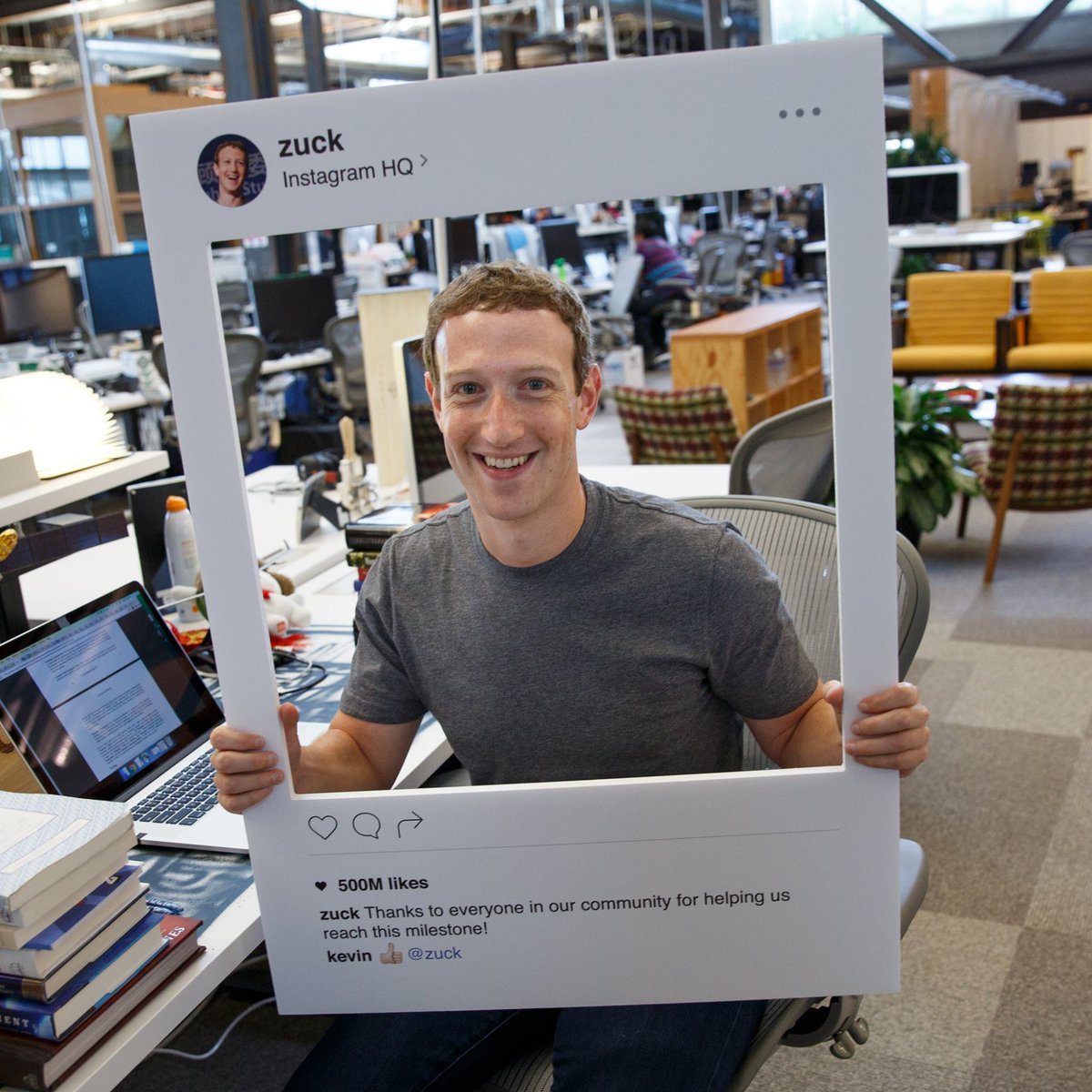
Yes folks, Zuckerberg tapes over his webcam. The billionaire made the (accidental?) revelation in a Facebook post intended to promote Instagram reaching its latest milestone of half a billion monthly active users.
In the picture Zuckerberg posted, of himself framed by a cardboard Instagram UI (cute), his laptop is visible in the background. And as Christopher Olson pointed out, that laptop has some weird accoutrements:


(And yes, that really does seem to be his laptop. Gizmodo’s William Turton notes that it’s the same desk the Face-boss gave a tour of on Facebook Live back in September.)
Thunderbird is an email client, for what it’s worth, which is made by Firefox creators Mozilla. Unlike Firefox, though, it’s never really taken off in the wider world, and development has rather stalled in the past five years. It may not even be Thunderbird that Zuckerberg has installed – others think it’s a Cisco VPN client.
Taping over the sensors and a particularly geeky mail client might seem paranoid. But to be fair to Zuckerberg, he’s not the only one taking a look at his webcam and wondering if it’s worth the risk.
Take the FBI’s director, James Comey: “I put a piece of tape over the camera because I saw somebody smarter than I am had a piece of tape over their camera.” The American digital rights group EFF sells webcam stickers, and told the Guardian’s Danny Yadron “people purchase these regularly”.
Even experts who don’t cover their cameras think they should. Why doesn’t Matthew Green, an encryption expert at Johns Hopkins University? “Because I’m an idiot,” he told Yadron.
“I have no excuse for not taking this seriously … but at the end of the day, I figure that seeing me naked would be punishment enough.”
While Zuckerberg probably does have any number of advanced persistent threats trying to break his digital security, normal people shouldn’t be too complacent either. Installing backdoors on compromised computers is a common way for some hackers to occupy their time.
According to a 2013 report in tech news site Ars Technica, sites such as Hack Forums contain threads full of people comparing and trading images of “slaves”, people whose computers they have broken into and taken control of. “One woman targeted by the California ‘sextortionist’ Luis Mijangos wouldn’t leave her dorm room for a week after Mijangos turned her laptop into a sophisticated bugging device,” Ars’ Nate Anderson wrote. “Mijangos began taunting her with information gleaned from offline conversations.”
Mac users, like Zuckerberg, can rest a bit easier: unlike most Windows laptops, the light next to a Mac’s webcam is controlled deeply in the hardware, and so it’s very hard to turn the webcam on without also turning on the warning light. Hard, but not impossible.
So should you copy Zuckerberg? Probably. It doesn’t hurt, most of the experts do it, and it could minimise damage – even if it’s just emotional – in the case of a catastrophic hack. But maybe don’t use Thunderbird. Some things are just too much hassle.        The Guardian