Showing posts with label Sunday Rest. Show all posts

Wednesday, March 31, 2021

EU Bishops call for nations to protect work-free Sunday

People enjoy Sunday leisure time near the Pantheon in Rome, Italy

Vatican News  04 March 2021

The Bishops of the European Union and the European Sunday Alliance are urging EU leaders to protect synchronized free-time, which most nations traditionally observe on Sunday.

Synchronised free time should be a priority in the EU social-policy agenda, according to European Bishops and other organizations.

In a joint statement published Wedneday, on the occasion of the International Day for a work-free Sunday, the Commission of the Bishops' Conferences of the EU (COMECE) and the European Sunday Alliance urged political leaders in Europe to protect synchronised free time  - in most European countries traditionally on Sundays.

"This," they say, "is especially relevant in times where the Covid-19 pandemic has accelerated existing challenges of digitalisation by intensifying work and extending working hours, thus putting a healthy work-life balance at risk for more people."

Non-stop work

The statement notes that one of the major impacts of the pandemic lockdowns has been an acceleration of previous trends towards increasing levels of mobile and home working.

“With the rise of digital working, the fragmentation and de-limitation of working time has further proceeded. Working in the evenings and during weekends is increasingly common and indeed expected by many employers.”

The Alliance says this increases stress on workers and "affects their work-life balance” and “compromises the health and wellbeing of workers, making them not only sick in the long run but also causing increasingly more often their absence from work due to psychosocial illness for sustained periods of time.”

Day of rest

According to the network - which includes more than 100 national Sunday alliances, trade unions, employers' organisations, civil society associations, churches and religious communities in the European Union - a full day of rest per week is indispensable to recover.

“Indeed," they say, "a common day of rest truly increases wellbeing and brings a positive effect on health.”

“Only during a common day of rest is it possible to pursue volunteer work, civic engagement, joint social, sports or faith-related activities, family time and, more generally, to spend time together,” the statement explains.

EU Bishops also recall that “humans are social beings, and for many of them their health requires more than individual time off at scattered, random moments of the week to spend alone. A day free of work recognised by tradition or custom is therefore 'essential to disconnect, literally and figuratively'."

Give us back our Sunday.


As a Baptist university, our education is founded on biblical principles, one of which being the concept of the Sabbath on Sunday. One of the very first lessons we glean from the Bible is that God needed one day of uninterrupted rest to recover from the fatigue of creating the universe. Baylor students may not be designing creation throughout their week, but that doesn’t mean we need Sunday as a day of rest and rejuvenation any less.

Genesis 2:3 says “So God blessed the seventh day and made it holy, because on it God rested from all his work that he had done in creation.”

Online learning has been a blessing and a curse, and this has never been more evident than in the last year. Although online learning comes with the convenience of doing classes from the comfort of your couch, it also comes with unprecedented 24-hour access between professors and students. This access has come with the invasive idea that it is okay to interrupt a key time in the week with additional work.

While many of our professors remember the times when assignment deadlines were 5 p.m. during weekdays, online learning has allowed present students to work up to the all too familiar 11:59 p.m. deadline (guilty). Not only are these deadlines getting pushed later into the day, but they are also getting pushed farther into the week — into the coveted weekends.

If there’s one thing many of us have learned this year, it’s that there is a certain level of exhaustion that comes with staring at a computer screen for hours on end (the dreaded Zoom fatigue), and for most of us, weekends are a time to unplug, get outside and enjoy the activities that allow us to destress. There might be the occasional unavoidable Saturday quiz or exam, but the one day that should be an assignment, quiz, essay and exam-free day is Sunday.

In a semester with no large breaks and very few intended university-wide holidays in sight, students, faculty, staff and administration need to treat the precious time we have on Sunday with care and not impose work on others so needlessly, especially when the deadline could have waited another 12 hours. The Sabbath is not intended as an obstacle for professors but a necessary gift from God in recognition that our energies and spirits are exhaustive. As such, stop taking away our gift, stop assigning work to be done on the Sabbath and give us back our Sunday.

Monday, November 30, 2020

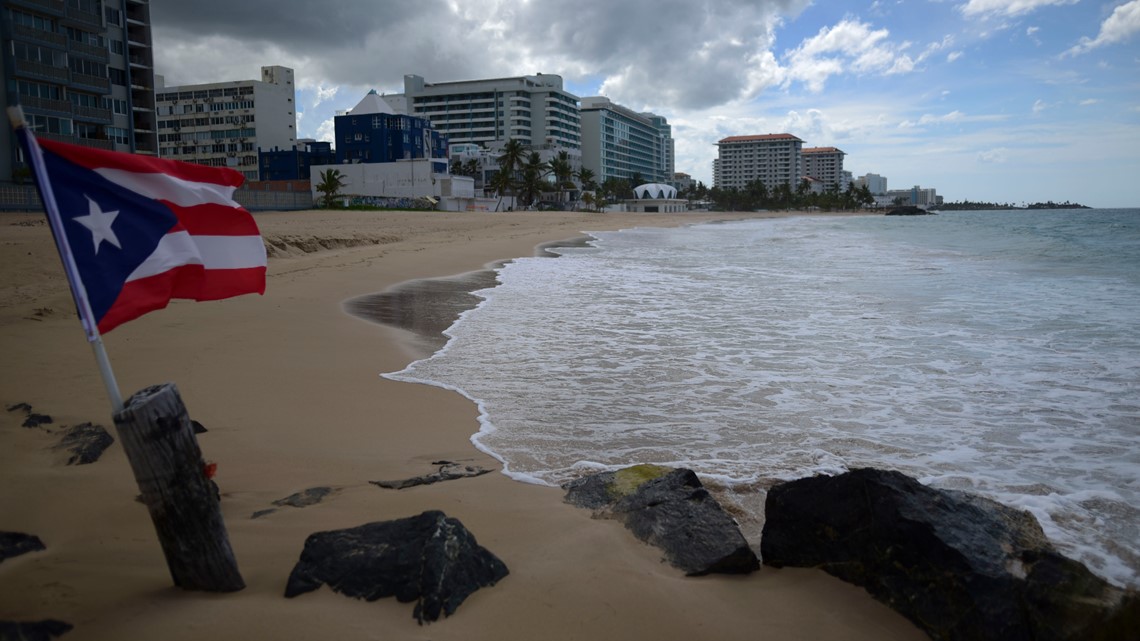
Puerto Rico to lock down Sundays, close marinas for holidays

KSDK  December 3, 2020

SAN JUAN, Puerto Rico — Puerto Rico’s governor on Thursday announced stricter measures to fight COVID-19, including a lockdown on Sundays and the closure of all marinas as the U.S. territory grapples with an increase in cases and deaths.

Gov. Wanda Vázquez also tightened an ongoing curfew, with businesses now ordered closed at 8:30 p.m. and no one allowed on streets from 9 p.m. to 5 a.m. except for essential workers and those delivering food until 11 p.m.

 Only gas stations, pharmacies, grocery stores and hardware stores will be allowed to open on Sundays, though restaurants can offer delivery or carry-out. In addition, alcohol sales will be banned from Saturdays at 5 a.m. until Mondays at 5 a.m.

The new measures run from Dec. 7 to Jan. 7, the height of the island’s holiday and tourism season. Beaches also will remain closed except to those doing exercise.

“We have to pause to save the lives of our old people mainly,” Vázquez said after she read the names and ages of those reported dead on Thursday.

Friday, October 30, 2020

Croatia is heading towards a work-free Sunday

Croatia Week Sep 21, 2020

Croatia is heading towards a work-free Sunday, in the direction of half of EU countries where Sunday working in shops is restricted, with the exception of newsstands, bakeries, petrol station convenience shops, and shops at bus and railways stations, the Vecernji List daily said on Monday.

Government spokesman Marko Milic confirmed that a law to regulate Sunday working was in preparation, taking into account the balance between work, rest, and spending time with family.

“The final proposal and determining the concrete number of non-working Sundays is still being defined and the government will discuss this with social partners,” Milic was quoted as saying, adding that Labour Minister Josip Aladrovic and Economy Minister Tomislav Coric will meet this week with union representatives to discuss this topic.

“And we will also maintain a dialogue with employers,” Milic said, adding that the political position of the HDZ government had not changed with regards to work-free Sunday and that they still wanted it to be work-free. They have analysed European practice and the best solution will be found.

Regulating and restricting Sunday working is also in line with the Directive of Work-Life Balance, adopted by the European Parliament last year, which has to be incorporated into the national legislation of EU countries by 2022.

Wednesday, September 30, 2020

Pope: Use pandemic to give the environment a vital “rest”

AP September 1, 2020

The COVID-19 pandemic has shown how the Earth can recover “if we allow it to rest” and must spur people to adopt simpler lifestyles to help a planet “groaning” under the constant demand for economic growth, Pope Francis said Tuesday.  

In his latest urgent appeal to help a fragile environment, Francis also renewed his call for the cancellation of the debts of the most vulnerable countries. Such action would be just, he said, since rich countries have exploited poorer nations’ natural resources. 

“In some ways, the current pandemic has led us to rediscover simpler and sustainable lifestyles,” Francis said in a written message. 

“Already we can see how the Earth can recover if we allow it to rest: the air becomes cleaner, the waters clearer, and animals have returned to many places from where they had previously disappeared,” he wrote. 

“The pandemic has brought us to a crossroads.”
The pontiff urged people to seize the opportunity to reflect on their habits of energy usage, consumption, transportation and diet.  

Until now, “constant demand for growth and an endless cycle of production and consumption are exhausting the natural world,” the pope said, adding, “Creation is groaning.”  

People must be aware of their rightful place in nature, never thinking themselves masters of what Francis described as the “interconnected web of life.” 

Disintegrating biodiversity, climate disasters and the “unjust impact of the current pandemic on the poor and the vulnerable” amount to a “wakeup call in the face of our rampant greed and consumption,” the pope wrote.

Monday, August 31, 2020

Peru President Reimpose Sunday Curfew to Curb COVID-19 Spike

A woman walks near a sign that reads in Spanish "I made holes for burials," near a cemetery in Ventanilla, on the outskirts of…

VOA  August 13, 2020

Peru is reimposing Sunday curfews and banning family gatherings in response to a new surge in coronavirus infections.

In announcing the return of a curfew first introduced in April, President Martin Vizcarra blamed the spike in COVID-19 cases on large social gatherings.

The curfew prohibits people from leaving home on Sundays unless they have special passes given to essential professionals such as medical workers.

The president said his administration believes it is better to go back one step so that citizens are all responsible again for “recovering the conditions that we would all like to have."

Vizcarra also said a COVID-19 vaccine is expected to be available in the first months of next year.

Peru, which trails only Brazil and Mexico in coronavirus cases in Latin America, has confirmed more than 590,000 cases and more than 21,700 deaths.

Friday, July 31, 2020

America, for the sake of its own sanity needs to restore the blue laws.

Crisis Magazine   June 2020

America, for the sake of its own emotional and spiritual welfare—for the sake of its own sanity—needs to restore the blue laws.

There was a time, surprising as it may be, when Amazon did not deliver on Sunday, and Americans somehow survived. There was a time when citizens had to do their shopping at the hardware store on a weekday, or early Saturday morning, in order to complete their home projects.

To preempt accusations of “theocracy,” I am not advocating mandatory church-going (though it wouldn’t be the worst idea), but rather simple restrictions on which businesses remain open on Sunday. Political and cultural leaders could “opt-out” of things like social media: as de Tocqueville rightly notes, leaders who set the standard should “act every day as if they believed in it themselves.”

Blue laws may limit “freedom,” but only the freedom to limitless consumption. If promulgated in a prudent and focused way, they can cultivate virtue, strengthen neighborliness, and protect small businesses. Most importantly, they can help promote prayer and peace—now, when America needs them most.

French archbishop calls for monthly 'lockdown Sunday'

French archbishop calls for monthly 'lockdown Sunday'

The Tablet June 2020

People work out at a fitness center in Lille, northern France, June 15, 2020. In a televised address to the nation on Sunday, French President Emmanuel Macron declared 'a first victory' over the pandemic, announcing a return to normalcy.
Sebastien Courdji/Xinhua/PA

French bishops conference head Archbishop Éric de Moulins-Beaufort has said the recent pandemic shutdown had shown both the planet and its people needed "a real day of Sunday rest" and suggested France designate one Sunday a month as a locked-down day.

Responding to President Emmanuel Macron’s call for the faiths to share their post-lockdown reflections, he said the 10 weeks of “suspended time” had made people realise how modern life had led to "the constant acceleration of time”.

He said in his written reply: "Many have heard the birds again and have been able to observe the arrival of spring like never before in their lifetime.” Admitting it was probably “a waking dream”, he suggested a monthly “real Sunday rest … for people, but also for cities (and) the Earth.”

Friday, February 28, 2020

Majority of Germans say shops should be closed on Sundays


Evangelical Focus. 13 FEBRUARY 2020 
A survey published by news agency Idea in Germany concludes that most agree that businesses should remain closed on Sundays. 61% of the respondents said they agree with the view that, as a general rule, shops should remain closed on Sundays. Only 28% were against and 11% did not know or did not respond. According to the survey conducted by INSA-Consulere, the highest percentage support for closed shops on Sunday was found among women (64% vs 57% of men). All age groups seemed to agree on this issue except those between 18 and 29 years old: 54% prefer businesses to work on Sundays. 

CONTRAST BETWEEN CHRISTIANS AND MUSLIMS 
The survey also showed a different approach to the issue depending on the religion of the respondents. Protestants (66%), Catholics (67%) and members of free churches-evangelicals (62%) were in favour of shops closed on Sundays. In contrast, Muslims did disagree, with only 37% saying businesses should remain closed. 

POLAND AND THE UK 
The trend in European countries in the last years has been to allow businesses to extend the trading hours, including Sundays. But social initiatives have also called to “Keep Sunday Special”, as a campaign led by Christians in the UK has been asking for decades. In Poland, the calls to allow time “for family, rest and social relations” led the parliament to restrict the number of working Sundays. From 2020 on, businesses will be able to open only eight Sundays a year.

Saturday, October 13, 2018

Religious “blue laws” that sanctifies life outside of work

Vox 
During a recent cross-country road trip this summer, my wife and I were driving around Little Rock, Arkansas, looking for a place to eat lunch. We had a hard time finding any place that was open. Then we realized it was Sunday.

It’s not too surprising that in conservative-leaning Arkansas, certain blue laws — or laws that restrict commerce on Sundays for religious reasons — remain in force in many parts of the state. Arkansas banned most businesses from opening on Sunday until 1982. Until 2009, it banned all Sunday liquor sales, which, in practice, shut down many establishments that served alcohol. Not until July of this year did the town of Fort Smith repeal a law banning dancing on Sundays. Many towns in Arkansas, including more left-leaning college towns, still maintain a wide array of local blue laws, especially regarding liquor.

While I’m not aware of a specific law that led to my difficulty finding a place to eat in Little Rock, the cultural tradition of blue laws was strong enough that restaurants offering Sunday brunch appeared far less common than in more secularized places where I’ve lived.

And in an era with increasingly fewer protections for workers, progressives and religious conservatives alike should unite to push for more blue laws that protect the sanctity of life outside of of work.

Saturday, September 30, 2017

Polish bishops favour outright ban on Sunday shopping

"Free Sundays is what all Catholics, non-Catholics and non-believers need,” Archbishop Stanisław Gądecki, head of the Polish Episcopate, has said, as quoted by IAR.
He was speaking ahead of a meeting of Poland’s diocesan bishops during which they plan to discuss issues including a proposal to ban shopping on Sundays.
In July, a Polish trade union leader rejected calls to relax a proposal -- filed by his union and several other organisations in parliament last year -- to ban shopping throughout the country on Sundays and urged its passage through parliament, according to IAR.
Piotr Duda, leader of the Solidarity trade union, told IAR at the time that his union did not agree to "any further concessions” amid a push to restrict trade on Sundays in Poland.
"Four free Sundays [a month], period, end of story," Duda said, as quoted by IAR.
He made the comment after an organisation representing some of Poland’s retailers suggested that grocery stores across the country should be allowed to keep their doors open every Sunday, while employees could be provided with guarantees of at least two free Sundays a month.    Polan Radio

Wednesday, August 30, 2017

Sunday as a rest day is slipping away across Europe

Delphine Allaire, August 28, 2017
Polish bishops cast a vote on Wednesday, 23 August, in favor of a complete ban on working on Sundays. In this fervently Catholic country legislation on Sunday work is relatively liberal.
Here is an overview of the European countries where Sunday is no longer an institutionalized rest day, despite regular pleas from religious communities.
“Catholics, non-Catholics, and atheists all need to have Sundays off," stated Stanislaw Gadecki, archbishop of Pozna (north-west Poland) and president of Poland’s Bishops’ Conference.
Even with the support of the independent Polish trade union Solidarnosc, the Polish Church hasn’t managed to instate a blanket ban on Sunday work. In this mostly Catholic country, people are allowed to work on Sundays and public holidays. 
The country’s conservative government is in favor of a ban but seems to be taking its time bringing about reforms, stating that it will address the issue in the autumn.

Religious and social interests united
Keen to avoid basing their whole position on religious arguments, Polish bishops also defend Sunday rest days by arguing for “quality of life”. “Families don’t just need financial support, they also need free time," said Wiktor Skworc, archbishop of Katowice (south-west Poland).
Legislation governing working on Sundays is constantly changing. However, across the rest of Europe, the main model remains a general ban with a range of exceptions. Christian leaders regularly reiterate the religious and social importance of this rest day.
Countries like Austria and Germany remain bastions of Sunday rest. Article 139 of the German constitution states: “Sundays and the public holidays recognized by the state remain legally protected as days of rest from work and of spiritual edification." In Belgium, only three non-rest Sundays are permitted per year, apart from in tourist cities.
However, in a number of other European countries including the UK, the Netherlands, Sweden, Norway, Hungary, Romania, the Czech Republic, Ireland, Italy, and Portugal as well as in the Spanish capital of Madrid, businesses are open 52 Sundays a year. In the strongly Catholic countries of Italy, Portugal, and Spain, heated public discussions erupt regularly.
In 2014, the Spanish bishop Vicente Jiménez called for a “united effort”, appealing to authorities to resist “economic pressures” liberalizing opening and working hours.
The Italian Bishops’ Conference has been doing a lot of background work to protect “workers’ rights to spend time with their families on Sundays”, supporting the country’s main business association, Confesercenti.

European and ecumenical support
Pitched at a pan-European scale, the “European Sunday Alliance”, was created in Brussels in 2011. This unites trade unions, social organizations, and religious communities, demonstrating the common ground between social and religious interests.
The Commission of the Bishops’ Conference of the European Community (COMECE), an affiliate of the Alliance, launched its program “for the protection of Sundays across Europe”, which was re-launched around the 2014 European elections. They stress the link between workers’ health and Sunday rest and underline the importance of Sundays for maintaining “social cohesion”. 
The European bishops argue that “a shared day of rest per week allows families to come together and means that citizens can spend time participating in cultural, spiritual and social activities".
John Paul II’s 1998 apostolic letter, Dies domini, reminds us that Sunday rest means we can “withdraw from the sometimes excessively demanding cycle of earthly tasks in order to renew our awareness that everything is the work of God".
This movement goes far beyond the Catholic community. Included in the list of organizations engaged at a European level are the German Protestant Church, the Anglican Church, the Orthodox Church of Cyprus, the Greek Orthodox Church’s representative to the European Union and the Baptist Union of Great Britain.           La Croix

Monday, July 31, 2017

What happened to a day of rest?

Driving on Cuming Street this past Sunday, I observed hundreds of lightbulbs brightly burning on various levels of the new Creighton University College of Dentistry, under construction.
About noon, I passed by again, returning home from Holy Family Catholic Church. Men were working high on the north façade of the Creighton structure. As on the east exterior wall, where their work is done, their attention now is focused on the details of the large ‘IHS’ on the northern exterior.
It might appear somewhat of an irony that even on “the Lord’s Day,” work is nonstop, even on the symbol “IHS,” letters representing (from the Greek) the name of Jesus.
Jews have for centuries kept holy the Sabbath, and Christians have been more or less keen on keeping Sunday holy, in part by abstaining from unnecessary work.
Apparently, those operating Creighton University and thereby the soon-to-open dentistry school have decided that work cannot stop on this new building, even on “the Lord’s Day.”
It’s commonplace for workers to break “the Sunday rest.” It would appear even Jesuits — or their surrogates — have joined in these “necessary” pursuits.
The Rev. Don Stortz, Omaha                                                      Omaha Herald

Thursday, May 4, 2017

The largest megachurch in the world

If the building didn’t have a giant cross out front, it could easily be mistaken for a sports arena.

But this is Yoido Full Gospel Church, a Pentecostal congregation belonging to the Korean Assemblies of God — a household name in South Korea. The institution is also known as the largest megachurch in the world, with a congregation approaching 800,000 people, according to church officials. 

Protestant megachurches, defined as those with at least 2,000 people in attendance every week, don't just operate all across the United States. This is a global phenomenon. 

Successful megachurches are operating in South America, Africa and Asia as well. And yet, no city has more of them than Seoul. The South Korean capital has 17 megachurches in all. 

Still, Protestant evangelical leaders in South Korea are facing a new challenge. Their public image has taken a hit in recent years due to a series of scandals, and the era of boundless growth for their congregations appears to have come to an end. 

Sunday services at Yoido Full Gospel Church start at 7 a.m. and run the whole day, until 7 p.m. They’re not in the same building at the same time, but officials say nearly 200,000 people attend worship services every week at the main church in Yeouido, an island in central Seoul that sits in the Han River. 

Yeouido Island is also where the South Korean National Assembly building is located, along with several big media companies. 

The scene inside the main sanctuary of the Full Gospel Church is impressive. There are seats for about 15,000 worshippers. Giant video screens carry simultaneous translations of parts of the service in Chinese, Japanese and English. Audio headsets are available with translations from the original Korean into numerous other languages. The choir has about 120 vocalists decked out in white robes and backed up by a full orchestra. 

Talking with members of the congregation on the main steps outside of the church, several people echo a sense of awe. They say they can feel the presence of the Holy Spirit at Full Gospel Church, and that’s what keeps them coming back.

At certain times during the service, people in the pews close their eyes, raise up their hands and even speak in tongues, creating a real revival atmosphere.

“When I was in my 20s, I went to another church. But it was kind of superficial,” says Lee Chong-sook, a 55-year-old attending Sunday morning service with her husband, their two young-adult children, and Lee’s sister-in-law.

“When I first walked past this church and I heard the preaching, I started to cry. It touched my soul. I felt joy and I felt healed from pain and sorrow,” Lee says.

The message from the pulpit would sound familiar to a lot of Christian evangelicals in the US. It’s about a strict interpretation of the Bible, with a focus on the power of prayer and positive thinking.    More

Sunday, April 17, 2016

Sunday as a Mark of Christian Unity

Rev. Dr. Demetrios Tonias
“Sunday as a Mark of Christian Unity”
by Rev. Dr. Demetrios E. Tonias – Dean, Annunciation Greek Orthodox Cathedral of New England
The Christian Church, from its very beginning, has struggled with the concept of unity. Indeed, within the Pauline corpus we see the many ways in which the Apostle to the Gentiles struggled to keep together his young and fragile network of communities. As the church grew, there arose a variety of challenges, large and small, to threaten its unity. The Orthodox Christian Divine Liturgy bears witness to these challenges in the petitions and prayers, which are offered in the Eucharistic rite. We pray for “the unity of all,” “the unity of the faith,” for Christ to “reunite those separated” and to “unite us all to one another who become partakers of the one Bread and the Cup in the communion of the one Holy Spirit.”  We recite the Nicene Creed with its portentous closing phrases stating belief in “One Holy Catholic and Apostolic Church,” its sacred claim to “confess one Baptism for the forgiveness of sins”, and its exultation of Sunday as the Lord’s Day and the gift of resurrection with the statement “I look for the resurrection of the dead and the life of the ages to come.”
The Divine Liturgy is, most certainly, a fitting place to offer such prayers and confessions of faith, for the preeminent celebration of the Liturgy takes place on Sunday. From the moment the myrrh bearers found Christ’s empty tomb, Sunday was known as ἡ Κυριακή ἡμέρα—the Lord’s Day. By definition, each and every Sunday is a call to Christian unity since it is on this day that we are called to communion with the Lord, by the Lord. In spite of all of the challenges that have tugged at the threads of Christian unity, the Lord’s Day remains the one, unassailable marker of Christian unity since it is on this day that all of us, despite our many differences, gather together as believers in Christ.
There were always differences about days and dates in the Christian world. There were divisions surrounding the dating of Pascha from the earliest years of Christianity. The Puritans rejected the commemoration of the birth of Christ on December 25 as unscriptural. The Lord’s Day, however, as a time of communal, Christian gathering has never been in question. The commemoration of the Lord’s Day is an historical reality that bears witness to the centrality of the Resurrection and all that this event meant and signifies for the cosmos. Therefore, what better marker of Christian unity can we have? Indeed, what stronger case can one make for the significance of Sunday as a hallmark of Christian unity than the understanding that Christians throughout the centuries have conceived of this day as a day of new creation, an eighth day set apart from all others.
For the Orthodox Christian mind, this historical relationship is critical to our understanding of Christian unity. For the Orthodox Christian, unity implies a transcendent ecumenicity—an ecumenicity that exists throughout time and space. It is a communion of all believers, at all times. Put simply, nothing in the calendar unites us like Sunday. It is a day that changed the world on the very first Sunday and, I would argue, every Sunday after the first. The world was transfigured through a myriad of Sunday’s when Christians gathered in communion and heard the Gospel message. It was on Sunday when Christians learned to love their enemies and care for those in need. It was on Sunday when Christians first met to share a meal of love they called by the Greek word ἀγάπη. It was, is, and shall always be on Sunday when the best hope for humanity shines forth from churches large and small and the “Eucharist after the Eucharist” travels forth from the four walls of the church and into the home and homeless shelter, the playground and the hospital, the wedding feast and the wake.
It is human nature to think parochially—in terms of our own family, our own exclusive church, our own unique religious entity. In this historical light, however, Sunday takes on a new meaning. Sunday worship is something more than simply what our parents and grandparents did. Sunday worship is even more than what our local faith community has done. Sunday worship is something that all Christians, at all times have celebrated. When we gather on Sunday the unity we achieve takes us back in time, across the ages to the earliest believer; it also moves us forward in time to embrace generations not yet born. In this way, the spiritual unity we have thus achieved possesses an eschatological character. The unity to which we bear witness and which we embody is a manifestation of the kingdom to which we all aspire.
In order to fully appreciate Sunday as a mark of Christian unity we must expand our definition of unity. We must all strive for a Christian community—one throughout the ages—for such a transcendent unity yields many fruits. If we are in union with the earliest Christians then we will share in their zeal. If we are in unity with the martyrs then we partake of their devotion. If we are in unity with those compassionate Christians then we feel and can bestow their healing touch. When we assemble in faith on Sundays, we gather not simply with other parishioners in a local place of worship, but with Christians throughout every land and all the ages—and there is no greater evidence of unity than this. In our century, as with its predecessors, challenges large and small threaten Sunday. However, when we stand in faith, as members of a Church beyond all churches, we reclaim Sunday for the God who gave it to us.     LDAUSA

Tuesday, December 29, 2015

Our Congress should revisit and our candidates for president should consider advocating the restoration of Sunday as a day of rest


Odds-makers out of Las Vegas have Sen. Marco Rubio winning the Republican nomination and Hillary Clinton winning the general election. We need the right leader for our times. The world is in turmoil in its struggle with the Islamic State group. On the home front, we have security, economic and social issues.
There is no argument or question that our country was founded on Christian values that have eroded over the years. A Dec. 20, Post-Gazette article is illustrative — “Church Fading Away After More Than a Century of Worship.” The subhead said the First Presbyterian Church in struggling Clairton will close with a Dec. 27 service.
Another article about the merit of religion appeared in the Dec. 20 Forum section: “Religion Is Good for Families and Kids.”
Our Congress should revisit and our candidates for president should consider advocating the restoration of Sunday as a day of rest, a paid day of rest, a required day of rest. Now we have the distraction of unnecessary shopping; in the not-too-distant past, nonessential business establishments were required to be closed on Sundays.
Americans deserve a day of rest, a day to be with families, attend church and interact with people on an interpersonal level. Imagine shutting down the Internet or cellphones for a day. How peaceful that day would be!
We have made a truly negative rat race, with limited time availability or potential for good interactions with one another.
We need to restore one takeaway from our past: Sunday as a day of rest, a day of worship, of prayer that was invaluable to our family values and individual well-being.
The odds are, regretfully, that our Sunday traditions of the past are gone forever just as are the odds that presidential candidates would even think of Sunday as an essential need. Merry CHRISTmas!  Post Gazette

Chick-fil-A makes rare Sunday exception


Unlike many restaurants, Chick-fil-A is known for more than just food: it's also famous for being closed on Sundays.
But in the name of a good cause, some locations in Texas northeast of Dallas turned the lights on Sunday after tornadoes ripped through the state and killed 11 people.


"The locations were not open to the public, but team members from various restaurants in the area did volunteer to prepare and distribute free food to responders and others affected by the tornadoes—serving those in need during this tragic event," said Amanda Hannah, a spokeswoman for the chain, in an email.
Chick-fil-A has maintained its rare Sunday closure policy since the chicken chain opened. The weekly day off is meant to encourage employees to rest, spend time with family and worship if they choose.      CNBC