Showing posts with label Genetics. Show all posts

Tuesday, January 21, 2020

What You Need to Know About Gene-Edited Farm Animals

black and brown pigs in a pasture pen on a farm
Organic Consumer January 8, 2020
For decades, the biotech industry has spun a narrative around genetically engineered crops that could be summed up very simply as “jam tomorrow, instead of bread and butter today.”
Sustained—and financed—largely on the promise of spectacular success at some unidentified point in the future, the research and development of new types of GMO foods, made with a whole host of new genetic engineering technologies, has gathered pace in recent years.
These days, without most people being aware of it, genetic engineering is spreading from the crops in the field to the animals in the barn.
Using new genome editing (sometimes referred to as “gene editing”) techniques like CRISPR, biotech breeders are proposing to breed a brave new world of farm animals that don’t get sick, don’t feel pain and produce more meat, milk and eggs at a lower cost than ever before.
Not many NGOs are currently working on this issue and it can be hard to find good information to help make sense of it all. But two recent reports provide in-depth information on the mechanics as well as the ethical issues around gene-edited farm animals.
One, from Friends of the Earth, entitled “Genetically Engineered Animals: From Lab to Factory Farm,” is an extensively referenced report that provides key background information and highlights the urgent need for safety assessments of genome-edited animals.
The other, “Gene-edited Animals in Agriculture,” is a report from a day-long roundtable in June 2019, co-hosted by my organization, Beyond GM, and Compassion in World Farming in the UK. The roundtable involved individuals representing a wide range of perspectives. What emerged was a fascinating glimpse into not only the technology, but also the ethics and values systems that underpin that technology.
If you are new to the subject of genetically engineering farm animals for food, if it concerns you or if you just want to know more in order to be an informed consumer, these two reports provide an important starting point

Monday, July 29, 2019

The battle over heritable genome editing


Evolution NewsJuly 23, 2019
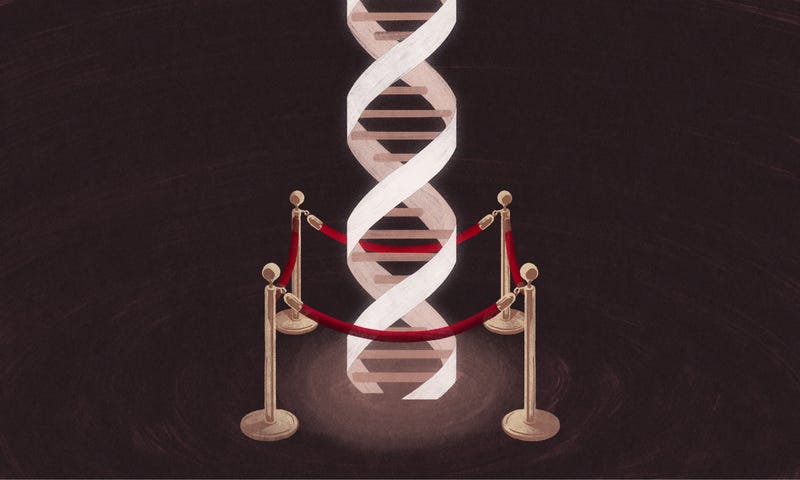
Genetic engineering is among the most powerful human technologies ever invented. It holds great hope for everything from medical uses to cleaning up the environment. But it could also unleash a deadly pandemic or lead to a “new eugenics” with very sharp teeth.
The last time we witnessed something like this was the splitting of the atom. At that time, we had a sufficiently cohesive and responsible world community to enact meaningful legal and regulatory restrictions to govern the technology’s development, which have been generally successful — with some obvious exceptions. Imagine where we would be if atomic energy had developed under an “anything goes” paradigm.

Anything Goes?   

We are apparently no longer sufficiently cohesive or responsible to similarly come to grips with the vast power of biotechnology. As a consequence, experiments are going forward that are both unwise and potentially unsafe. For example, even though the biotech world was in a supposed uproar about the birth of the first germ-line genetically engineered babies (meaning the changes will flow down the generations), nothing has been done to stifle supposedly rogue scientists from continuing to pursue such unethical human experimentation.

And now, two influential bioethicists take to the venerable Journal of the American Medical Association to ask: “Heritable Genome Editing: Is a Moratorium Needed?” You can guess what their answer is: no.

No Principled Opposition
Indeed, the Brave New Worlders candidly reveal that within the biotech/bioethics community, there is essentially no moral or principled opposition to engaging in germ-line human engineering:
The battle lines over heritable genome editing currently pit those who choose to ask “whether” to proceed against those who ask “how” to press on.
The latter hold that the collective ethical good is best served by a “responsible path” toward the prevention of crippling monogenic disorders; they are willing to trust that regulatory agencies such as the U.S. Food and Drug Administration will hold applications for heritable genome editing to rigorous demonstrations of safety and efficacy before they garner agency approval.
The “latter” approach is rank subterfuge. Without an enforceable, international legal ban on these experiments in humans to allow the regulations to catch up with the technology — which these authors and many other heavy hitters in the sector oppose — experimenters will simply do what they want. If U.S. agencies won’t give the green light, some will simply resort to “outsourcing ethics” (a term coined by my friend, the Stanford bioethicist, William Hurlbut) and conduct research in other countries, particularly China or Africa. I suspect that is already going on.

Thursday, May 18, 2017

Do We Need an International Body to Regulate Genetic Engineering?


Kristen V. Brown  1/18/17
Imagine a scenario, perhaps a few years from now, in which Canada decides to release thousands of mosquitoes genetically modified to fight the spread of a devastating mosquito-borne illness. While Canada has deemed these lab-made mosquitoes ethical, legal and safe for both humans and the environment, the US has not. Months later, by accident and circumstance, the engineered skeeters show up across the border. The laws of one land, suddenly, have become the rule of another.
If modern science can can defy the boundaries of borders, who exactly should be charged with deciding what science to unleash upon the world?
A version of this hypothetical scenario is already unfolding in the UK. Last year, the British government gave scientists the green light to genetically engineer human embryos. But in the US and most other nations, this possibility is still both illegal and morally fraught. Opponents to the practice argue that it risks opening up a Pandora’s Box of designer babies and genetically engineered super-humans. Even many more neutral voices argue that the technology demands further scrutiny.
And yet, the UK, at the vanguard of genetic engineering human beings, has already opened that box. In 2015, the British government approved the use of a controversial gene-editing technology to stop devastating mitochondrial diseases from being passed on from mothers to their future children. And last February, the UK granted the first license in the world to edit healthy human embryos for research. Recently, a Newsweek headline asked whether the scientists of this small island nation are in fact deciding the fate of all of humanity. It is a pretty good question.

This alarming ethical conundrum has not escaped the notice of global governments. A National Intelligence Council report released this month concluded that “genome editing and human enhancement” are “likely to pose some of the most contentious values questions in the coming decades.” Advancements in these arenas, the report said, “will affect relations between states.”    More