Showing posts with label Compromising Truth. Show all posts

Sunday, January 31, 2021

The Spirit and power of God will be poured out upon His children.

Image result for godliness

Popular revivals are too often carried by appeals to the imagination, by exciting the emotions, by gratifying the love for what is new and startling. Converts thus gained have little desire to listen to Bible truth, little interest in the testimony of prophets and apostles. Unless a religious service has something of a sensational character, it has no attractions for them. A message which appeals to unimpassioned reason awakens no response. The plain warnings of God's word, relating directly to their eternal interests, are unheeded.  

With every truly converted soul the relation to God and to eternal things will be the great topic of life. But where, in the popular churches of today, is the spirit of consecration to God? The converts do not renounce their pride and love of the world. They are no more willing to deny self, to take up the cross, and follow the meek and lowly Jesus, than before their conversion. Religion has become the sport of infidels and skeptics because so many who bear its name are ignorant of its principles. The power of godliness has well-nigh departed from many of the churches. Picnics, church theatricals, church fairs, fine houses, personal display, have banished thoughts of God. Lands and goods and worldly occupations engross the mind, and things of eternal interest receive hardly a passing notice.

Notwithstanding the widespread declension of faith and piety, there are true followers of Christ in these churches. Before the final visitation of God's judgments upon the earth there will be among the people of the Lord such a revival of primitive godliness as has not been witnessed since apostolic times. The Spirit and power of God will be poured out upon His children. At that time many will separate themselves from those churches in which the love of this world has supplanted love for God and His word. Many, both of ministers and people, will gladly accept those great truths which God has caused to be proclaimed at this time to prepare a people for the Lord's second coming. The enemy of souls desires to hinder this work; and before the time for such a movement shall come, he will endeavor to prevent it by introducing a counterfeit. In those churches which he can bring under his deceptive power he will make it appear that God's special blessing is poured out; there will be manifest what is thought to be great religious interest. Multitudes will exult that God is working marvelously for them, when the work is that of another spirit. Under a religious guise, Satan will seek to extend his influence over the Christian world.  

In many of the revivals which have occurred during the last half century, the same influences have been at work, to a greater or less degree, that will be manifest in the more extensive movements of the future. There is an emotional excitement, a mingling of the true with the false, that is well adapted to mislead. Yet none need be deceived. In the light of God's word it is not difficult to determine the nature of these movements. Wherever men neglect the testimony of the Bible, turning away from those plain, soul-testing truths which require self-denial and renunciation of the world, there we may be sure that God's blessing is not bestowed. And by the rule which Christ Himself has given, “Ye shall know them by their fruits” (Matthew 7:16), it is evident that these movements are not the work of the Spirit of God.     Great Controversy p. 464

Wednesday, September 30, 2020

We do not consider that our dangers are any less than those of the Hebrews, but greater

The apostle Paul plainly states that the experience of the Israelites in their travels has been recorded for the benefit of those living in this age of the world, those upon whom the ends of the world are come. We do not consider that our dangers are any less than those of the Hebrews, but greater. There will be temptations to jealousies and murmurings, and there will be outspoken rebellion, as are recorded of ancient Israel. There will ever be a spirit to rise up against the reproof of sins and wrongs. But shall the voice of reproof be hushed because of this? If so, we shall be in no better situation than are the various denominations in our land who are afraid to touch the errors and prevailing sins of the people.     Testimonies Vol 3 p. 358

Monday, August 31, 2020

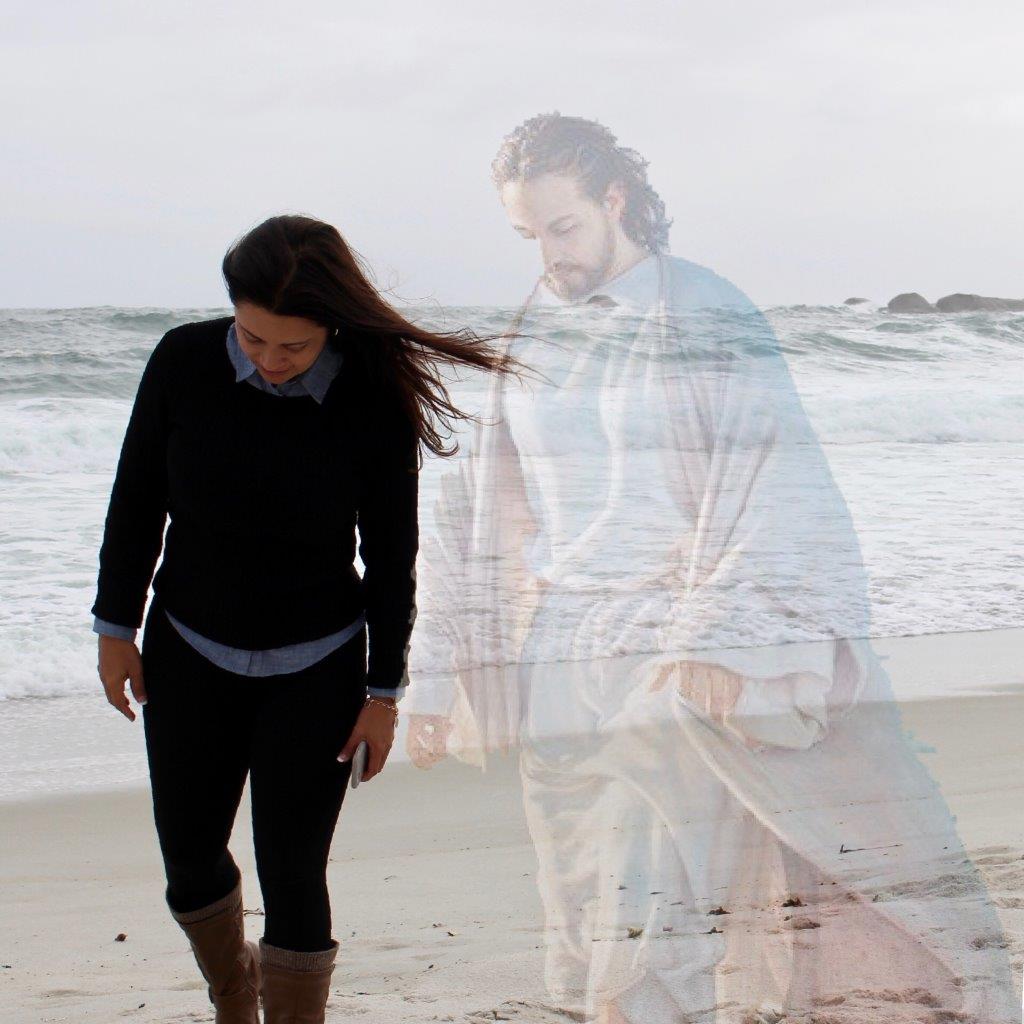
Who is the unseen person walking, hearing and knowing every thought of the mind?

 Alpha + Omega

Many make reference that this next quote is talking about another person separate from Christ called the "holy spirit":

“We need to realize that the Holy Spirit, who is as much a person as God is a person, is walking through these grounds, unseen by human eyes; ... He hears every word we utter and knows every thought of the mind.” Evangelism p. 616 

But, who is this unseen person walking, hearing and knowing every thought of the mind?

"Christ walks unseen through our streets. With messages of mercy He comes to our homes.”  Ministry of Healing, p. 107

“How few realize that Jesus, unseen, is walking by their side! How ashamed many would be to hear His voice speaking to them, and to know that He heard all their foolish, common talk!"  Manuscript Releases, Vol. 14, p. 125 

“I have been instructed that we should lead the sick in our institutions to expect large things because of the faith of the physician in the Great Healer who, in the years of His earthly ministry, went through the towns and villages of the land, and healed all who came to Him. None were turned empty away; He healed them all. Let the sick realize that, although unseen, Christ is present to bring relief and healing.” — Letter 82, 1908 

“Jesus desires to make celestial harmony in your soul. Read His words, not with discouragement, but with confidence and hope. Listen to the blessed words which God speaks to you. Walking with Christ means to believe that, though unseen, Christ is walking with you." — Letter 104, August 4, 1901  

“Remember that Jesus is beside you wherever you go, noting your actions and listening to your words."  The Youth Instructor, Feb. 4, 1897 

“Go forth in the name of Christ, remembering, that he is your companion, that every prayer, every word, every song is heard by him. The message of the soon coming of the Lord with power and great glory will bring conviction to many hearts.” RH, February 4, 1904 

“The Lord Jesus standing by the side of the canvasser walking with them, is the chief worker. If we recognize Christ as the One who is with us to prepare the way, The holy spirit by our side will make impressions in just the lines needed. " Colporteur Ministry, p. 107

 “The human agent, the seen instrument, is to preach the Word, and the Lord Jesus, the unseen agency, by His holy spirit is to make the Word efficacious and powerful." Letter 105, 1900

If Jesus is in heaven, how then does He walk with you?     “By the Spirit the Father and the Son will come and make their abode with you.” Bible Echo and Signs of the Times, January 15, 1893

Saturday, April 25, 2020

BRI: The term “Son” is used metaphorically

BRI 
Fifth, the father-son image cannot be literally applied to the divine Father-Son relationship within the Godhead. The Son is not the natural, literal Son of the Father. A natural child has a beginning, while within the Godhead the Son is eternal. The term “Son” is used metaphorically when applied to the Godhead. It conveys the ideas of distinction of persons within the Godhead and the equality of nature in the context of an eternal, loving relationship.

Wednesday, January 11, 2017

Dr. Herold Weiss: "You Can Be a Christian Without Being a Fundamentalist."

As a student at Andrews University at the end of the 1970s, I heard the names Vick, Weiss, and Hilgert mentioned, almost in a whisper, but they had been so effectively airbrushed out of the institutional history that I never learned why they were no longer there. Then Spectrum went online with its blog, and there was Dr. Herold Weiss, first in Spanish, then in English. I began reading his essays and studies in 2008 out of curiosity, and I was immediately fascinated by his ability to drill down to the exegetical bedrock of the biblical texts so that they could speak freely, unconstrained by the fundamentalist mandate that they speak with one voice in support of creed and tradition.

In an essay that I wrote some time back for Spectrum ("Tell Me Why I Should Become a Christian"), I asked the readers if it is possible to come up with a contemporary restatement of Christianity that might resonate with people searching for a meaningful faith, a faith that goes beyond the known facts without requiring you to believe against established facts. Dr. Weiss comes as close to doing that as I think anybody could. Faith to him is a way of living in obedience to the call of God in Christ, not a treasure chest of doctrines.
....

You grew up in a Catholic country, and you spent the greater part of your academic career teaching at Saint Mary’s College, Notre Dame, Indiana. What are the greatest misunderstandings about Catholicism that you encounter among Protestants in general and Adventists in particular?

As a young person in Uruguay and Argentina, I grew up with the notion that we Adventists were firmly established on a moral platform high above what any Catholic could ever attain. Catholics, by definition, were people without morals. Since they lived in open depravity, there was no way they could be saved by God. Besides they were superstitious and idolaters. This was surely due to their dependence on the Catechism, where the day of Rest has been changed, rather than the Bible. Obviously, they were in great need to be redeemed from their sins. This view of Catholics was challenged by my friendship with a fellow student on my second year of secondary school. He had transferred to the public school from the Catholic seminary. Our fellow students decided that he and I should have an open debate for their benefit. Our debate proved my self-confidence and sense of superiority totally wrong.

In the USA, I was somewhat astonished to find out two things: One, that Catholics were the largest single denomination in the country and, two, that Catholic bashing was the most popular sport among Adventists and Evangelicals in general. There is a difference between prejudice and bashing. The prevalence of a conspiracy mentality among Adventists in the USA is a lamentable flaw. Few mental disorders are more pernicious than the conspiracy syndrome. That the Bible’s prophesies support or demand Catholic bashing can only be claimed by those who are controlled by a sick ideology rather than the love of Christ (2 Cor. 5: 14). Unfortunately, it is a recurring phenomenon in Adventist pulpits that are open to television audiences, not only the one occupied by Doug Bachelor but even the one commanded by Dwight Nelson. One does not have to be Catholic to abhor such prejudicial preaching. Obviously, we have forgotten that for some time we were just as good at Turkey bashing.     Spectrum Magazine

Monday, May 16, 2016

Look What's Missing In The Great Hope


http://www.greatcontroversyad.com/greathope2.jpg 

Published by both Seventh-day Adventist denominational presses, Pacific Press and Review and Herald Publishing Association, The Great Hope lists as its author “E. G. White.” But would the prophet support an “adapted version” of her classical book The Great Controversy that does not include:

 (1) the cleansing of the heavenly sanctuary message
(2) the second angel's call to come out of Babylon
(3) the third angel's message exposing Sunday as the Mark of the Beast
(4) 1844 as the hour of God's judgment [part of the first angel's message]
(5) the investigative judgment [part of the first angel's message]
(6) the identification of who and what is Babylon, the harlot woman, and her daughters
(7) the identification of the beast of Revelation 13 and 17
(8) the little horn who persecuted the true church from 538-1798 and will be the chief instigator in these last days  
(9) Luther and all the reformers and their trials and persecution which will again be repeated
(10) the rise of the Advent awakening of the 1840s culminating in formation of the Remnant church and the seed of the woman, who keep the commandments of God and have the testimony of Jesus.
 Notice what the prophet wrote: “I am more anxious to see a wide circulation for this book than for any others I have written; for in The Great Controversy, the last message of warning to the world is given more distinctly than in any of my other books.” Publishing Ministry, 358.         Source


Will the great controversy cause harm?

Back in the 1980s, I was the Church Ministries Director of the Quebec Conference. I was alone at the office when the phone rang. I was instantly startled by the tone of the voice at the other end. An angry man went on the attack: “Is this the headquarters of the Seventh-day Adventist Church?”
I asked who he was.
“I am the police commissioner of Montreal.”
Somewhat frazzled, I asked him the reason of his call and obvious unhappiness.
“We have received numerous complaints about a book entitled The Great Controversy that is being placed in letter boxes in a “wealthy section” of the city. After some research we have identified your Church as the publisher and distributor. A quick perusal has clearly shown that the book is very anti the Catholic Church and thus falls in the category of ‘Hate Literature’ because its content can easily create hatred between communities”.
Then he quoted from an article of law that prohibited such an action and mentioned the heavy fine that went along for distributing material attacking another church.
My mind went numb for a moment, then I explained that our church did not usually do mass distribution of books, only short brochures that summarised who we were and what we believed. I added, that it was very possible that some individuals might be acting on their own and that we would certainly find out who and try to stop the action. He relented and agreed not to proceed with the threat.
Later I reported the incident to the conference president who quickly found out that a church member from another conference had donated $20,000 to some local members for the purpose of purchasing and then distributing the book. They selected the wealthy part of the Montreal. The action infuriated the residents who also had a long history of complaining to the police about Adventist church members who on Saturday mornings caused quite a bit of inconvenience by parking anywhere they could due to a lack of car lots. Of course, the two incidents were not related but together they had exacerbated the hostility of the community.
The saddest part was the reaction of those who had initiated the “evangelistic” dispersal of the book. Upset when the conference asked them to stop, they accused the leadership of cowardice, apostasy, and bowing to the pressure exerted by the “agents of Catholicism that infiltrated the church.” The incident taught me how difficult it was to explain to determined believers that not every action was Biblically timely or wise. Instead they found comfort in their understanding that good people were always going to be persecuted, even by their own church at times. I believe that the action of the conference was instrumental in protecting the Adventist church from what might have been a very nasty court action (we all know the frenzied appetite of the press for such occurrences).
Therefore it was with apprehension that I heard of the General Conference plan to freely distribute The Great Controversy on a large scale. I believe that the book was inspired and I know that Ellen White wrote that it should be placed in all homes, but I find myself wondering if doing so at this time in history is wise.
Did not the Apostle Paul write that we should not treat the prophecies with contempt but test everything and hold on to what is good. Doing so will enable us to avoid every kind of evil (1 Thessalonians 5:21). Not treating the writing of the prophets with contempt is about testing them as to their timeliness and relevance, which will help us to avoid using them in ways that are not good.
Written in the United States of the nineteenth century, The Great Controversy had quite an impact because America was a Protestant country and any writing that depicted in dark overtones the doings of the Catholic Church was bound to be highly popular. Some of the words that Ellen White used to describe the Pope and the prelates of Rome are very harsh but the political, social, and religious contexts made it understandable and facilitated the spread of the book. Today, any publication that dares to use a similar approach is quickly vilified as hate literature. We condemn similar anti-Catholic language used by white supremacists in their rallies, should we be careful not to be perceived as doing the same?
In 1988, I became the pastor of the Ottawa church. After my first sermon I was standing in the foyer greeting the members on their way out. A distinguished looking lady introduced herself, then told me that after being a Charismatic Catholic for years she had recently been baptised into our church. She informed that she had been severely criticised by family and friends but had maintained her relationships. She then invited me to meet with them, which I readily accepted for the following week. When I arrived, the lady greeted me but the ten other people in the room remained withdrawn. I had hardly had time to take my seat when to my great surprise the hostess asked me to justify the publication of The Great Controversy, which she said had almost prevented her from joining our church. Some well meaning Adventists had given it to her. She explained how harsh she had found the author’s statements against her church which, she added, had always been there for her whenever she had gone through some difficult and painful experience. I noticed the nods of the others. Then the dam burst, accusations and feelings of resentment surfaced. They had all read the book and were quoting those passages that referred to the Pope as a monster and also described Satan and the priests conniving to destroy the Truth. The remarkable thing was that they did not question the historical facts but the interpretation of the facts as well as the overall tone and the ‘vitriolic’ words. I must admit that defending the book against these accusations was not easy. I most certainly do not wish to repeat the experience.
Mass distribution, I’m afraid, will cause a similar reaction. I do not believe that having to face irate people and the press and maybe the court, charged with distributing hate literature, is necessarily what Christ had in mind when he said that those who would be persecuted for his namesake should consider themselves as blessed.
Beyond my personal experiences, I have listed below some reasons why I am not sure of the wisdom in mass distribution of The Great Controversy.
The length of the book:
It is well established that reading is no longer the favourite pastime of our contemporaries. Furthermore, reading religious works has been out of fashion for quite a while (even for believers who prefer to watch religious programs on TV). Today, communication must be fast if only to retain the attention. Few people have or take the time to read anything unless it is “texted”, emailed, on Facebook or Twitter. Newspapers are folding because of the decline in readership. I believe that it is much to expect that people would take the time to open a six-hundred-plus-page book, which moreover requires at least a passing interest in European history.
Postmodernism:
The West at best shows a very limited interest in religion and secular Australia and New Zealand show almost no interest at all. Add to this the fact that postmodernism rejects any idea that pretends to gather together clusters of events that have no natural link with one another and interpret them in terms of a common theme and ascribes meaning to them. The Postmodern mind finds it problematic to accept what it calls a meta-narrative defined as the overarching explanation of a state of affairs. The author of The Great Controversy does just that when she gathers historical events covering almost two thousand years and incorporates them into a vast panoramic concept that she identifies as the war between God and Satan. As acceptable as this seems to us as believers, this approach is highly suspicious to most contemporary readers.
Does it contain error?:
Adventist scholars spend quite a bit of time researching our beliefs and practises. Most of the time the research will confirm the doctrine under scrutiny, but sometimes the scholars are lead to acknowledge that added insights shed new light that calls for a re-evaluation of some beliefs. Over time the new understanding becomes part of our system of beliefs. Thus, many scholars and well-informed church members consider somewhat outmoded some prophetic interpretations and beliefs that are presented in the book. Three cases in point are (1) the signs in the sun, moon, and stars dating back some two hundred years are not considered to be indicative of the nearness of the Parousia; (2) the understanding of the investigative judgment; (3) That it is Satan and not God that pours the seven bowls (Revelation 18) over the wicked. The people who might choose to read the book will probably be the kind of readers that will question some of the theological material and, finding it wanting, reject the book altogether.
As a result of all the above, I’m afraid that the rubbish bins of our countries will be filled with discarded copies of The Great Controversy. That would be a tragedy indeed and certainly not what Ellen White intended when it was first published.
—Pastor Eddy Johnson is the director of ADRA Blacktown and pastors two churches in the suburbs of Sydney, Australia.

Commentary:
I agree that we share the truth "in love", yet to now abandon the idea of distributing The Great Controversy is like saying the "great controversy" between Christ and Satan is now finished. Of course the book is extremely controversial, that's why it's called the great controversy. Can we be thankful that Martin Luther did not back down to extreme persecution by influential people. I am from a secular home, then after the service attended Sunday churches, was tired of my life of wondering and lostness, I "found" a copy of The Great Controversy and readily accepted it. Why? Because I finally found out what the story and meaning of the Universe was all about. JESUS! Do we think that the last days will get smoother? Let's not abandon the "Spirit of Prophecy" like Israel of old. Do you see the trend? Does "community consensus" prevail in this world now? Or do we share the truth in love. Do we simply allow the 4th kingdom of Daniel and Revelation to "scare us" through influential rich people?
My Dad was rich, which I rejected because of his tyranny of control. I have an idea of how the rich operate, and its always with soft angry rhetoric, and sophistry of the most clever appeal. Let us love the rich and appeal to them with love, yet let's not let them manipulate us with "group meetings" of displeasure for truth. All the wonderful philosophical arguments to abandon the distribution of The Great Controversy for "community consensus" is amazingly short sited. Of course the masses will be against it. blessings in Christ. John S.              Spectrum

Sunday, May 15, 2016

Letting Roman Catholics Off the Hook

Well, fellow Members, this has certainly been an interesting week. Here's another article I received, just today, regarding a VERY significant change in viewpoint.  I think it is remarkable that we just read about how we're going around ripping signs down and dragging people into court on the one hand, but on the other hand we're making nice, lifting up, and even promoting others.  It's like we're cannibalizing ourselves, self-destructing, it seems.  I'm so thankful to God that He's not saving us in groups.  He is saving us INDIVIDUALLY.  You can trust that you will NOT get into Heaven based on the particular church roll your name is on. You will only get there based on the character you've developed, who rules your heart, and whether or not your name is listed in the Lamb's book of Life. PERIOD.  I am so thankful that I've never been one to follow the crowd.  I was always taught to know the Lord and His Word for myself.  So everyone is welcome to believe however they choose.  There is FREEDOM in serving the Lord (2 Corinthians 3:17).  As for me and my house, we will serve the Lord according to His Word, regardless of what man has to say about it.

"Many will be lost while hoping and desiring to be Christians. They do not come to the point of yielding the will to God. They do not now choose to be Christians. The Lord does not propose to save us in companies. Individually we are to make our choice (Faith I Live By 154.7). 

God's people (individuals) can and will be found all over the world, regardless of group.  So while the different groups are waffling back and forth and running along after whatever the particular wind of doctrine of the day is, God's people will be making their calling and election sure.  They will one day be part of the TRUE FOLD.  Just so we're clear.  What we're witnessing is the Church Militant.  May we ALL strive to be members of the Church Triumphant!

"I lay down my life for the sheep. And other sheep I have, which are not of this fold; them also must I bring, and they shall hear my voice; and there shall be one fold, and one shepherd." John 10:15-16 Christ is not only the propitiation for our sins, but also for the sins of the whole world.  {Signs of the Times, January 22, 1894}
   
Remember, the "old" view that is being spoken against in the article below was based STRICTLY off of the Bible and the Bible alone.  So when we throw that "old" view out, what are really saying?  What do we do with Bible Prophecy?  And if the Bible is wrong, then what do we do about the rest of what we believe?

Martin Luther (who's motto was also Sola Scriptura) identified the Antichrist over 500 years ago! (along with many others):

The quote copied below is from one of Martin Luther's last books. It was titled: "A Prelude by Martin Luther on the Babylonian Captivity of the Church," Page 536, chapter 3.

"Nevertheless, since few know this glory of baptism and the blessedness of Christian liberty, and cannot know them because of the tyranny of the pope, I for one will walk away from it all and redeem my conscience by bringing this charge against the pope and all his papists: Unless they will abolish their laws and traditions, and restore to Christ's churches their liberty and have it taught among them, they are guilty of all the souls that perish under this miserable captivity, and the papacy is truly the kingdom of Babylon, yes, the kingdom of the real Antichrist! For who is " the man of sin" and "the son of perdition" but he that with his doctrines and his laws increases sins and the perdition of souls in the Church, while he sits in the Church as if he were God? All this the papal tyranny has fulfilled, and more than fulfilled, these many centuries. It has extinguished faith, obscured the sacraments and oppressed the Gospel."

Keep in mind that it was NEVER the Roman Catholics who were on the "Hook" in the first place.  It was the Roman Catholic System.  God has precious souls in the Roman Catholic Church and in other denominations all over the world.  So even the topic of the article below is deceptive.

I'd love to hear your thoughts on this one.  Read it and weep 


 Adventist Today Magazine January 04, 2010
Letting Roman Catholics Off the Hook
Posted January 4th, 2010 by Loren Seibold
Editor's Note: This is a preview article that appears on page 22 of our brand-new winter 2010 print issue being delivered to our subscribers this month.

By Loren Seibold
For over a century, even before the publication of The Great Controversy, we Adventists have regarded the Roman Catholic Church leadership, typified in the first beast of Revelation 13, as our arch-nemesis, our bête noire, the enemy that takes the evil part in the apocalyptic scenario against God's remnant.
Here are seven reasons why it may be time to question them in that role.
1.   More than a hundred years have passed since our prophet approved these prophetic applications. Ellen White expected Jesus to return long before this.1We're not sure why that hasn't happened. But isn't it possible that some details of the apocalyptic scenario set out in the 1890s may have changed by the 2010s? It happened to Israel. Not all of the original Old Testament prophecies about them and their role came to pass. We call it "conditional prophecy."
2.   Principles might be more diagnostic than players. That we oppose those who would legislate matters that should be left to an individual's conscience is a principle I value, and I'm proud of Seventh-day Adventist efforts to protect religious liberty. But if it should happen that someone other than the Roman Catholic Church begins to act like the beast of Revelation 13, we will be more ready to respond if we are watching for a violation of the principle than if waiting for one specific group to offend.
3.   Ellen White fingered Catholicism in a very different world. Historians have shown that 19th-century American anti-Catholicism grew out of a general anti-immigrant nativism.2 In an era when we have had and could again have a liberty-loving Roman Catholic president, when Catholic immigrants have become our young work force, why can't we preach the gospel without identifying Roman Catholicism as Satan's exclusive tool?
4.   The Roman Catholic Church of today is a much different institution than it was during Ellen White's time.The Second Ecumenical Council of the Vatican (1962-1965) radically altered that denomination's theology and practices. Vatican II declared the gospel central to church theology, made worship accessible, denied that Roman Catholics only can be saved, encouraged lay Bible study, and affirmed religious liberty. While not quite a Protestant Reformation, today's Catholic Church is not the same Catholic Church referenced in our 19th-century eschatological studies. Among other things, the Second Ecumenical Council weakened Vatican authority over world Catholics-as evidenced by the 78 percent of American Catholics who oppose their church's ban on contraception.3
5.   By focusing on Roman Catholicism, we may miss more dangerous anti-Christian opponents. Far more Christians have been killed, persecuted, or denied their religious liberty by Communism, military Fascism, and Islamist extremism in the past century than by Roman Catholics; we've let these pass with minimal comment (in the case of Naziism, even offering some pusillanimous cooperation) as we continued to warn against the pope. Today religious liberty still has more dangerous enemies than Catholicism–in the United States, perhaps even some of our fellow conservative Protestants.
6.   God has given us time to become a world church, and that changes the cast of characters in our eschatology. The "antichrists"-opposers of Christ–to many of today's world Christians are radical imams or cruel dictators. One site of Christian persecution right now is northern Nigeria, where Muslims burn churches and killChristians.4 An eschatology that expects only Roman Catholics to initiate religious oppression, only in the United States, and only around the Sabbath question, may fail to speak prophetically should apocalyptic markers appear elsewhere.
7.   Religious liberty has arguably improved in countries where Catholicism has influence. During my lifetime, the papacy has frequently been a force for peace and freedom. Pope John Paul II opened the first breach in the Iron Curtain, and Catholics have been more forthright in speaking against violence and oppression than many of our fellow conservative Protestants. Consider the irony that our evangelists are employing anti-Catholic teachings for soul winning in countries where the papacy helped win them that freedom! (And the even greater irony that some of us still think that calling the Pope the Antichrist is necessary to win souls to Christ.)
Of course, we don't give the Roman Catholic church a free pass; we subject it to the same Biblical scrutiny we would any other influential world power. (And while we're at it, we'd do well always to scrutinize ourselves by the same metrics we use on others–which is Jesus' advice, not mine.5)
But perhaps we needn't single out Roman Catholicism any longer. Ellen White, who was often more flexible than her followers, wrote: "God wants us all to have common sense, and He wants us to reason from common sense. Circumstances alter conditions. Circumstances change the relation of things."6
Roman Catholicism has served us well as an enemy: provocative enough to keep us energized, yet doing minimal actual damage to us. Such an important enemy made us feel significant, "in the know," and in control, while not really disturbing our lives.
Opposing current enemies might thrust us into prophetic roles that take more commitment and action. My friend Bert B. Beach, speaking of Adventist eschatology, once said to me: "I'm suspicious when people are constantly focused on what's going to happen in the future. I think they're trying to avoid dealing with what's going on right now."
I think Bert is on to something. Could we become as enthusiastic in taking on the religious persecution that's happening to Christians right now, in places like Nigeria, as we've been in accusing Roman Catholicism of planning to someday persecute us here? -Adventist today magazine Jan. 04, 2010

1 She wasn't alone; the apostles expected Jesus in their lifetimes, too (see Matt. 24:34, Heb. 1:1-2, 2 Thess. 1:6-10).
2 See Ernest Tuveson's Redeemer Nation and John Higham's Strangers in the Land: Patterns of American Nativism, 1860-1925.
4 And sometimes, sadly, vice versa.
5 "For in the same way you judge others, you will be judged, and with the measure you use, it will be measured to you" (Matt. 7:2, NIV).
6 Selected Messages, Vol. 3, p. 217.